
Secondary Dominants KostkaPayne Chapter 16 Secondary Function Chords
- Slides: 15
Secondary Dominants Kostka-Payne Chapter 16
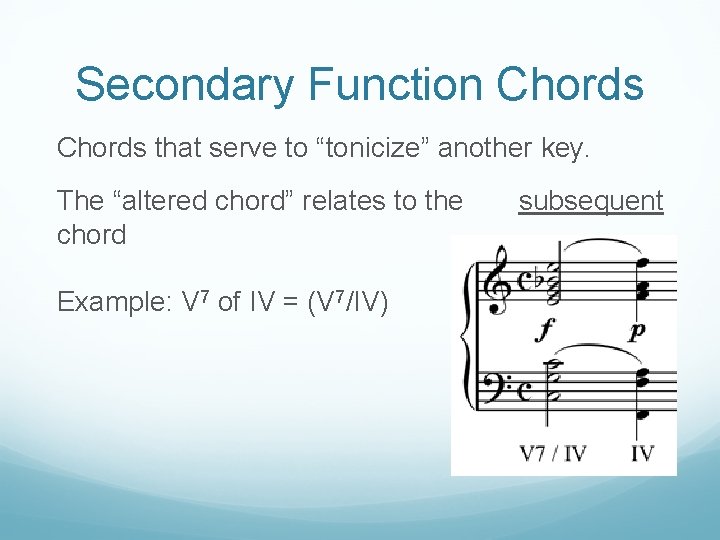
Secondary Function Chords that serve to “tonicize” another key. The “altered chord” relates to the chord Example: V 7 of IV = (V 7/IV) subsequent
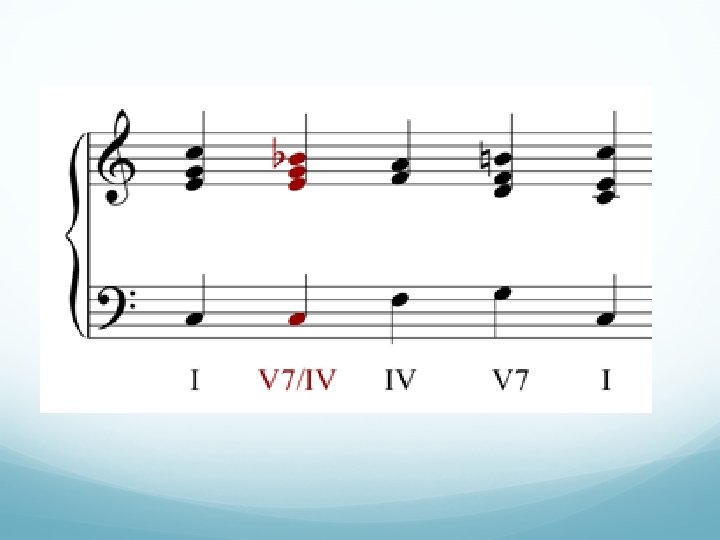
Secondary Dominants (SD’s) A chord that is Major (triad) or Mm 7 th that is not supposed to be that quality will likely be an SD. Look for accidentals (hence altered). “OF” is represented as / Labeled as V(7)/ ___ The OF chord /x is usually the same roman numeral as the subsequent chord x.
Recognizing SD’s 1. ASK: Is the altered chord a Major triad OR Mm seventh (when it isn’t supposed to be)? If YES, it must be an SD. 2. ASK: What is this chord V of? (Find a PERFECT 5 th below the root of the altered chord. ) 3. What is that chord (roman numeral) in the original key?
Recognizing SD’s 4. CHECK YOURSELF: The OF chord (V/x) is almost always the same as the subsequent (next) chord. ex: V/vi - vi ex: V/V - V ex: V/IV - IV
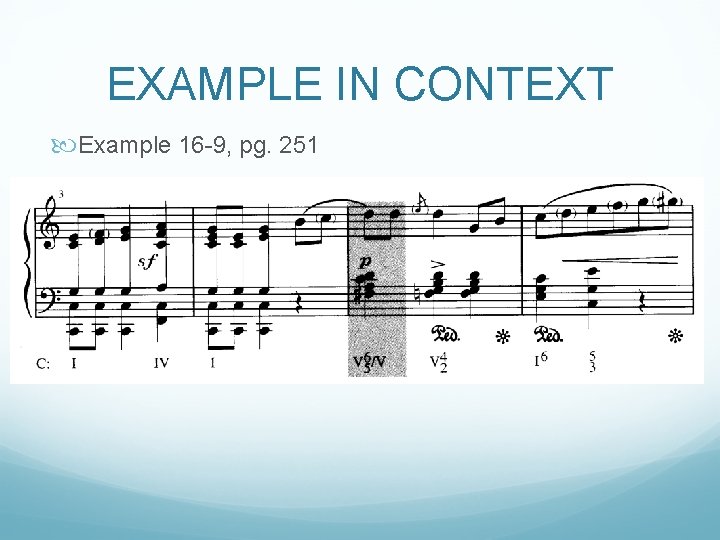
EXAMPLE IN CONTEXT Example 16 -9, pg. 251
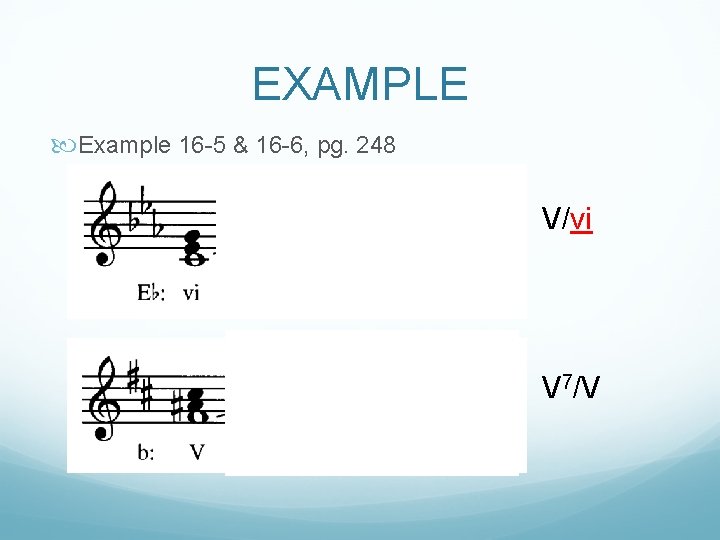
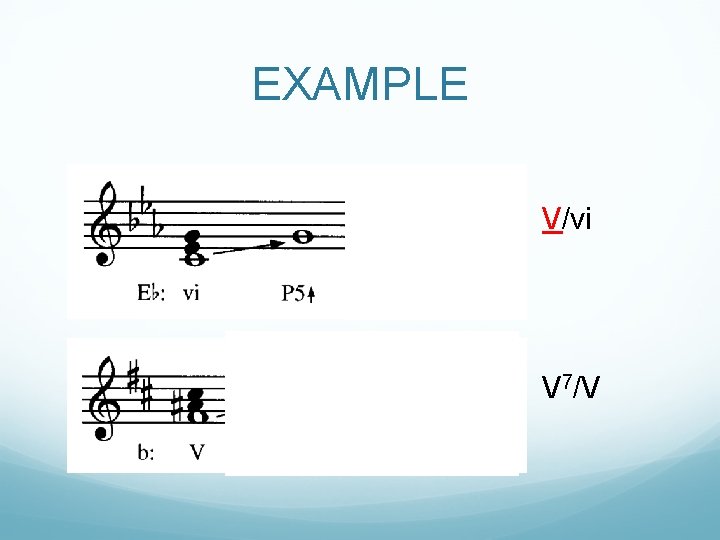
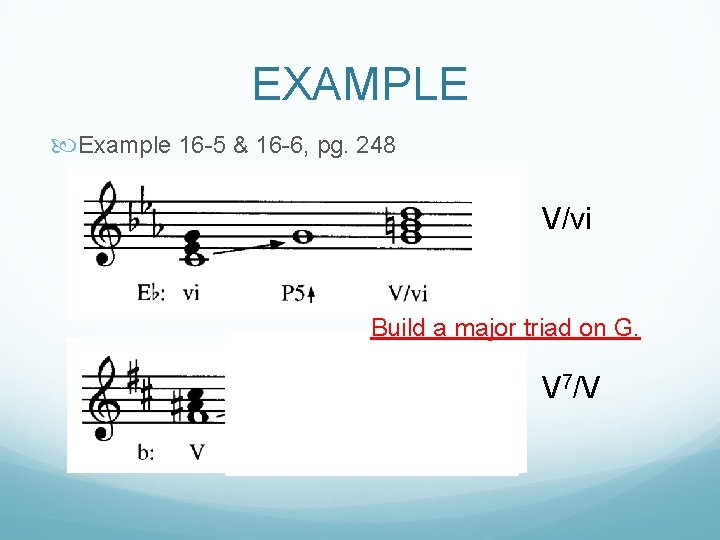
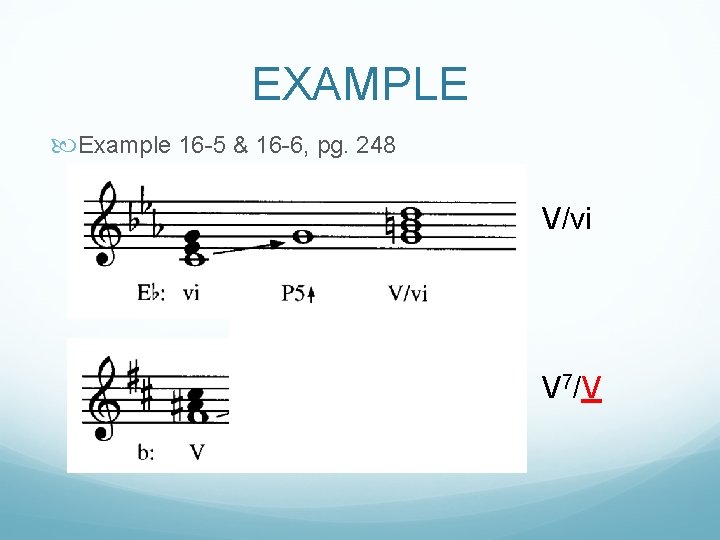
Spelling SD’s 1. Take the OF Chord. ex. C Major: V/vi = a minor 2. Find V (the dominant) of that chord (Go up a Perfect 5 th. ) ex. The V of a minor = E. 3. Spell a Major triad (or Mm 7 th) using that note as the root. ex. Major triad on E = E G# B Mm 7 th = E G# B D
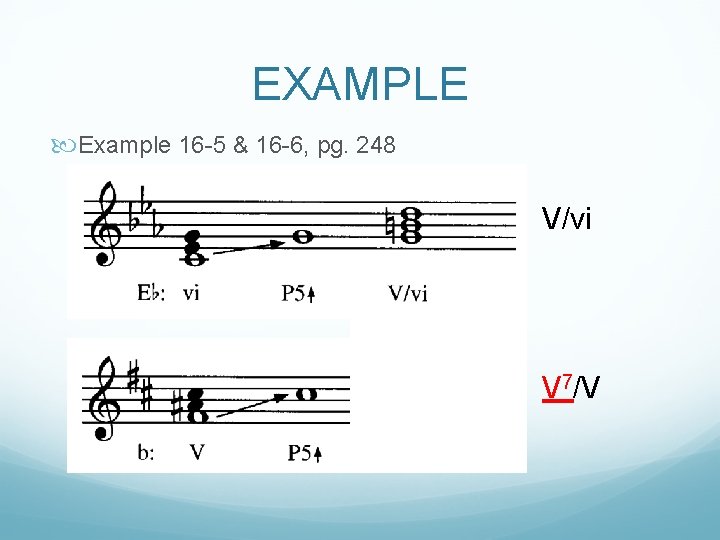
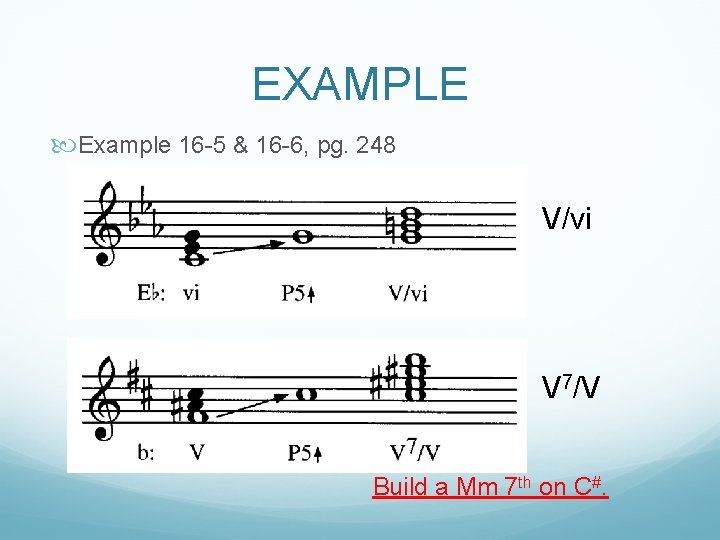
EXAMPLE Example 16 -5 & 16 -6, pg. 248 V/vi V 7/V
EXAMPLE V/vi V 7/V
EXAMPLE Example 16 -5 & 16 -6, pg. 248 V/vi Build a major triad on G. V 7/V
EXAMPLE Example 16 -5 & 16 -6, pg. 248 V/vi V 7/V
EXAMPLE Example 16 -5 & 16 -6, pg. 248 V/vi V 7/V
EXAMPLE Example 16 -5 & 16 -6, pg. 248 V/vi V 7/V Build a Mm 7 th on C#.
So What ? !? ! 1. Secondary dominants are like having a very short, temporary or pretend key. 2. They create an authentic cadence (sounding) relationship (V-I) 3. If you took the secondary dom. and subsequent chords out of context, they will always sound like an authentic cadence. 4. Secondary dominants are sometimes used in key changes (modulations).