
Second Step Student Success Through Prevention A new




- Slides: 35
Second Step: Student Success Through Prevention A new middle school program by Committee for Children (Available June 2008)
Agenda • Program overview and goals • Research foundations • Program specifics – – Levels and lessons Teaching strategies Program themes Contents 2
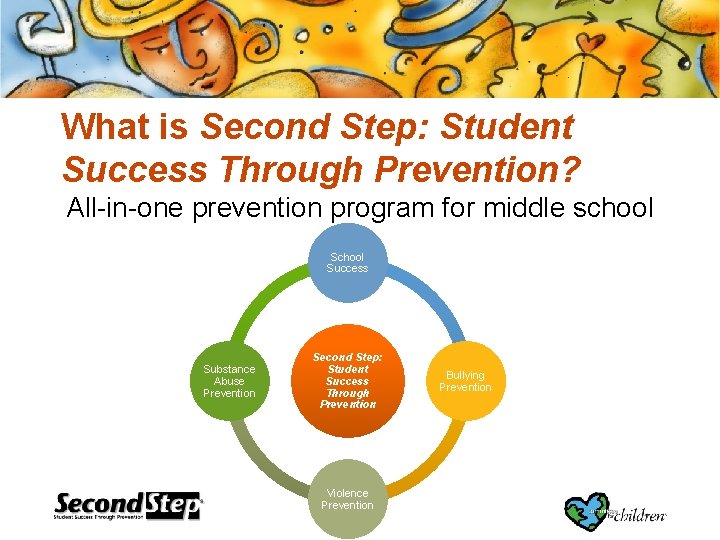
What is Second Step: Student Success Through Prevention? All-in-one prevention program for middle school Success Substance Abuse Prevention Second Step: Student Success Through Prevention Violence 3 Prevention Bullying Prevention
What is Second Step: Student Success Through Prevention? Video Overview http: //www. cfchildren. org/ssms-pptoverview Click on link to view video. Must be in Slide Show view and connected to the Internet to view. 4
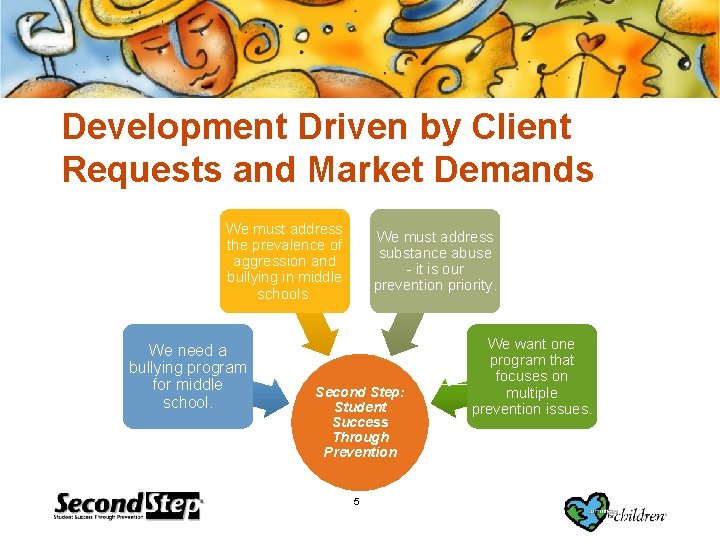
Development Driven by Client Requests and Market Demands We must address the prevalence of aggression and bullying in middle schools. We need a bullying program for middle school. We must address substance abuse - it is our prevention priority. Second Step: Student Success Through Prevention 5 We want one program that focuses on multiple prevention issues.
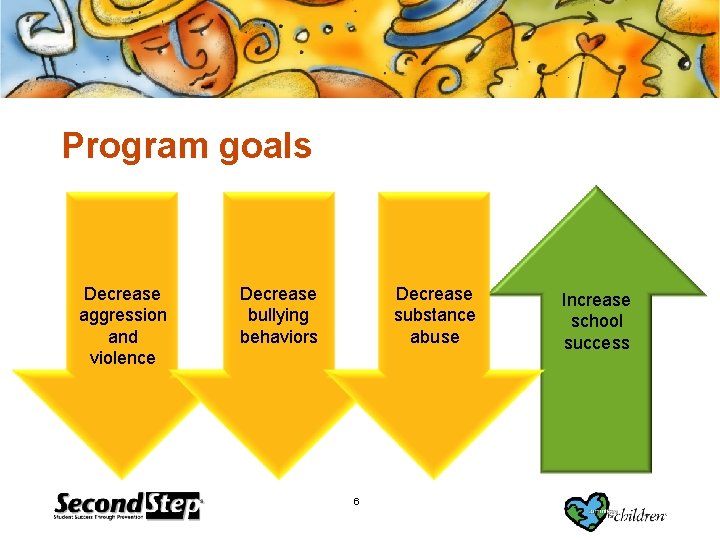
Program goals Decrease aggression and violence Decrease bullying behaviors Decrease substance abuse 6 Increase school success
Research foundations Risk and protective factors Bullying Brain research Developmental needs of young adolescents
Prevention research supports one program targeting multiple issues • Risk and protective factors are at the heart of Second Step: Student Success Through Prevention. – Many of the same factors predict substance abuse, violence, delinquency, and school failure. 8
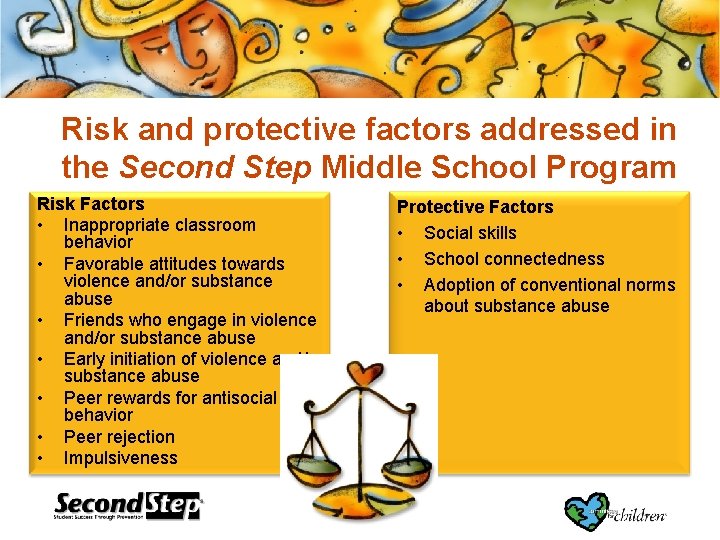
Risk and protective factors addressed in the Second Step Middle School Program Risk Factors • Inappropriate classroom behavior • Favorable attitudes towards violence and/or substance abuse • Friends who engage in violence and/or substance abuse • Early initiation of violence and/or substance abuse • Peer rewards for antisocial behavior • Peer rejection • Impulsiveness Protective Factors • Social skills • School connectedness • Adoption of conventional norms about substance abuse 9
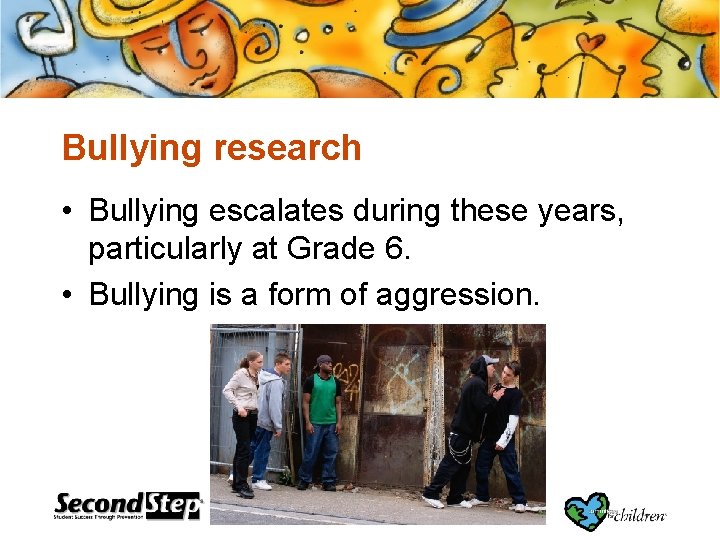
Bullying research • Bullying escalates during these years, particularly at Grade 6. • Bullying is a form of aggression. 10
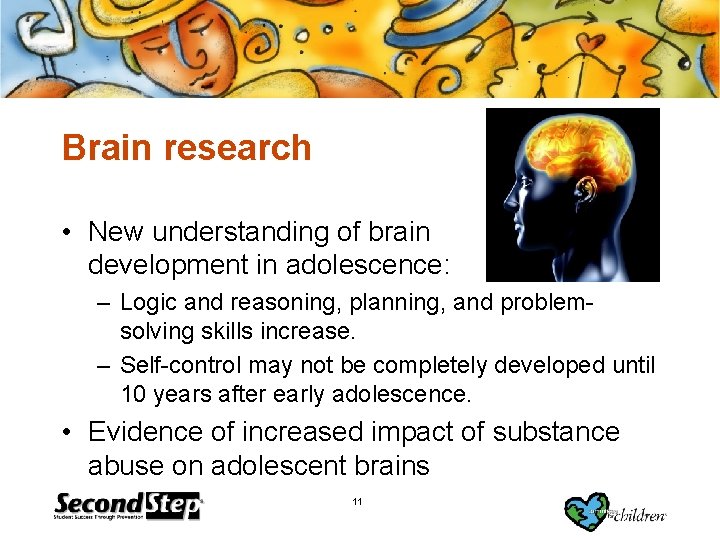
Brain research • New understanding of brain development in adolescence: – Logic and reasoning, planning, and problemsolving skills increase. – Self-control may not be completely developed until 10 years after early adolescence. • Evidence of increased impact of substance abuse on adolescent brains 11
Developmental needs of young adolescents • • • To interact with peers To have practical use for learning To self-reflect To shift type of activity frequently To move around 12
Program details • Levels and lessons • Teaching strategies • Scope of program content
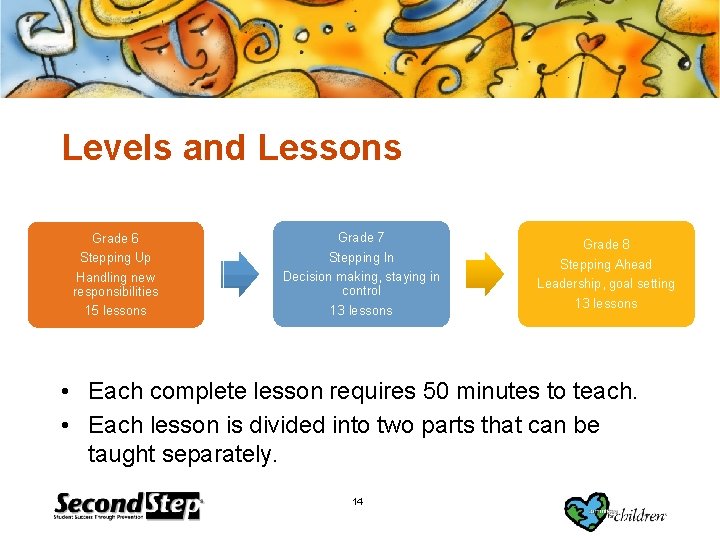
Levels and Lessons Grade 6 Stepping Up Handling new responsibilities 15 lessons Grade 7 Stepping In Decision making, staying in control 13 lessons Grade 8 Stepping Ahead Leadership, goal setting 13 lessons • Each complete lesson requires 50 minutes to teach. • Each lesson is divided into two parts that can be taught separately. 14
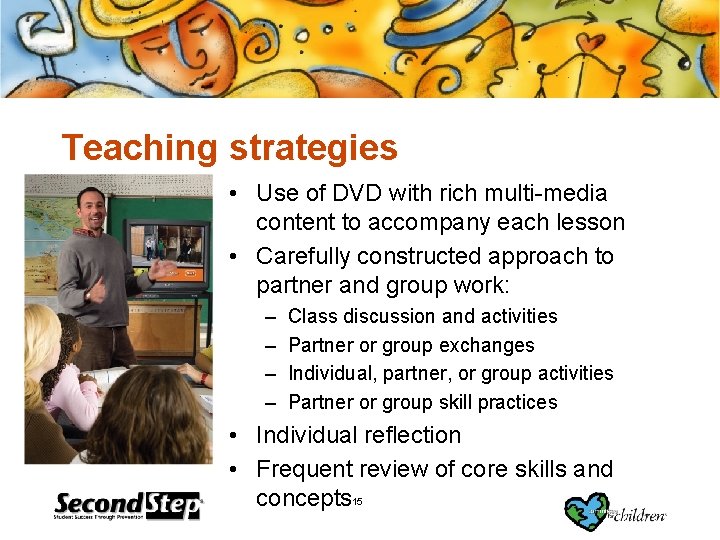
Teaching strategies • Use of DVD with rich multi-media content to accompany each lesson • Carefully constructed approach to partner and group work: – – Class discussion and activities Partner or group exchanges Individual, partner, or group activities Partner or group skill practices • Individual reflection • Frequent review of core skills and concepts 15
http: //www. cfchildren. org/ssms-ppt-addictions Sample video: Skill practice demonstration Grade 8, Lesson 3: “Handling a Grievance” http: //www. cfchildren. org/ssms-ppt-grievance Click on link to view video. Must be in Slide Show view and connected to the Internet to view. 16
Dynamic Lesson Companion DVD • Interviews with teens • Video vignettes • Video demonstrations of skill practice • Audio segments • Screens to guide activities and discussions • Cartoons 17
Increasing student exposure to lesson content • • • Additional practice activity Reflective writing assessment Homework Academic integration activities Journal pages 18
Five Program Themes The program includes the following five themes: • Empathy and communication (all grades) • Bullying prevention (all grades) • Emotion management (all grades) • Coping with stress (Grades 7 and 8) • Problem solving (all grades) • Decision making (Grade 7) • Goal-setting (Grade 8) • Substance abuse prevention (all grades) 19
Empathy and Communication Empathy skills • Empathy—the ability to identify, understand, and respond thoughtfully to the feelings and perspectives of others. – Perspective taking – Checking assumptions 20
Empathy and Communication skills • • Active listening Considering others’ perspectives Communicating assertively Giving constructive feedback Disagreeing respectfully Negotiating and compromising Handling a grievance 21
Empathy and Communication Working in groups • • Active listening (all grades) Respecting others’ ideas (all grades) Including everyone (Grades 7 and 8) Being open-minded (Grade 8) 22
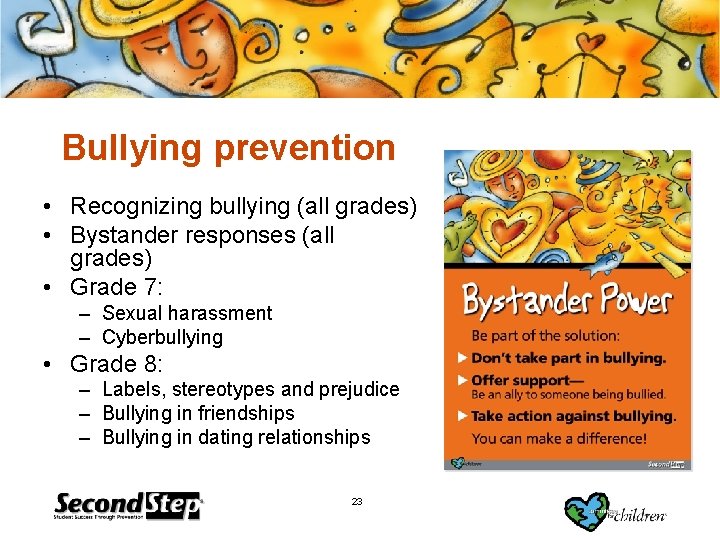
Bullying prevention • Recognizing bullying (all grades) • Bystander responses (all grades) • Grade 7: – Sexual harassment – Cyberbullying • Grade 8: – Labels, stereotypes and prejudice – Bullying in friendships – Bullying in dating relationships 23
Sample video: Bullying prevention Grade 7, Lesson 5: Real Voices http: //www. cfchildren. org/ssms-ppt-voices Click on link to view video. Must be in Slide Show view and connected to the Internet to view. 24
Emotion management Staying in control • Steps for staying in control (All grades) • Focus on anger and checking assumptions (Grade 7) • De-escalating tense situations (Grade 8) 25
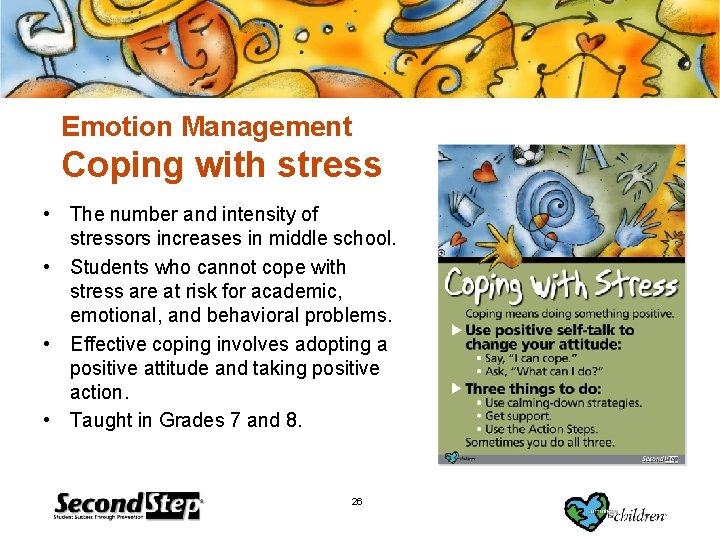
Emotion Management Coping with stress • The number and intensity of stressors increases in middle school. • Students who cannot cope with stress are at risk for academic, emotional, and behavioral problems. • Effective coping involves adopting a positive attitude and taking positive action. • Taught in Grades 7 and 8. 26
Sample video: Emotion management and coping Grade 8, Lesson 8: “Emotion Management” http: //www. cfchildren. org/ssms-ppt-brain Click on link to view video. Must be in Slide Show view and connected to the Internet to view. 27
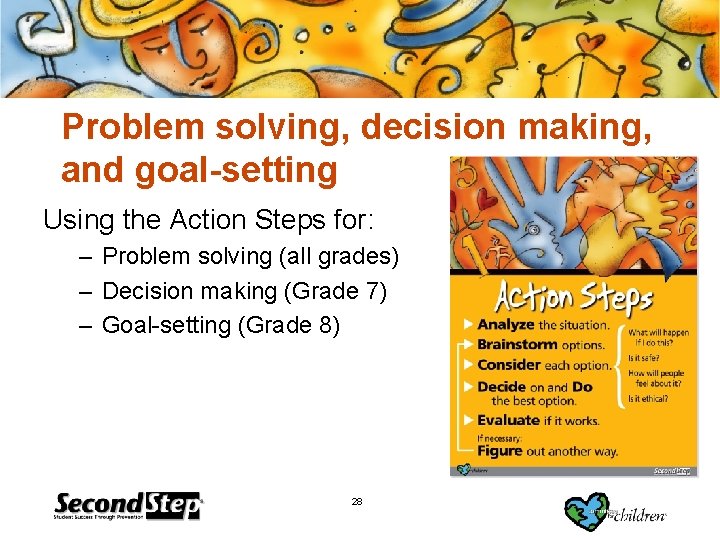
Problem solving, decision making, and goal-setting Using the Action Steps for: – Problem solving (all grades) – Decision making (Grade 7) – Goal-setting (Grade 8) 28
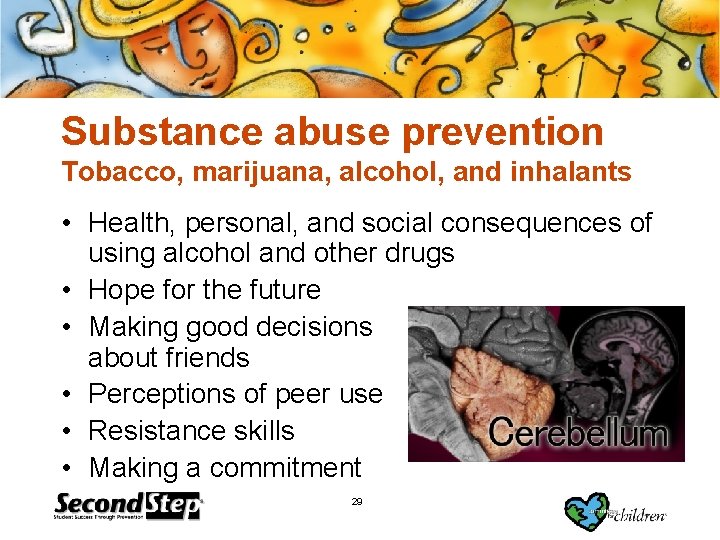
Substance abuse prevention Tobacco, marijuana, alcohol, and inhalants • Health, personal, and social consequences of using alcohol and other drugs • Hope for the future • Making good decisions about friends • Perceptions of peer use • Resistance skills • Making a commitment 29
Sample video: Substance abuse prevention Grade 6, Lesson 12: “Facts About Addiction” http: //www. cfchildren. org/ssms-ppt-addictions Click on link to view video. Must be in Slide Show view and connected to the Internet to view. 30
Applying lesson content to academics • Using Lesson Content Every Day section • Self-regulated learning • Academic integration activities – Language arts and social studies – Health/science – Media literacy • Reflective writing assessment • Alignment with numerous academic and life skills content standards
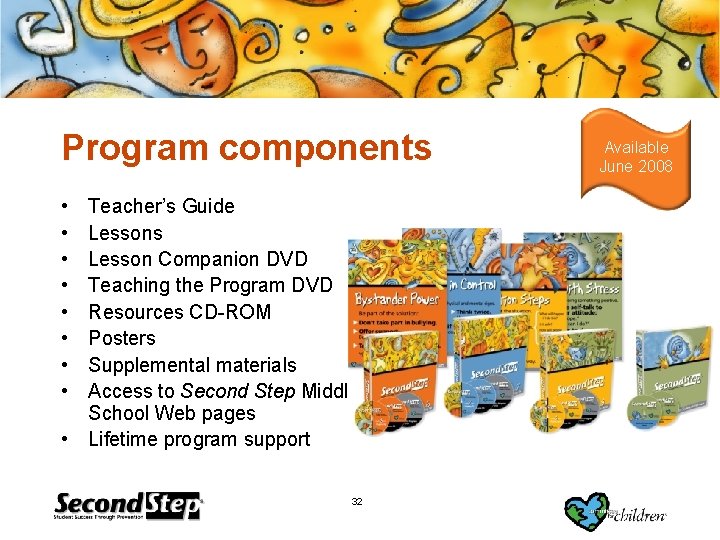
Program components • • Teacher’s Guide Lessons Lesson Companion DVD Teaching the Program DVD Resources CD-ROM Posters Supplemental materials Access to Second Step Middle School Web pages • Lifetime program support 32 Available June 2008
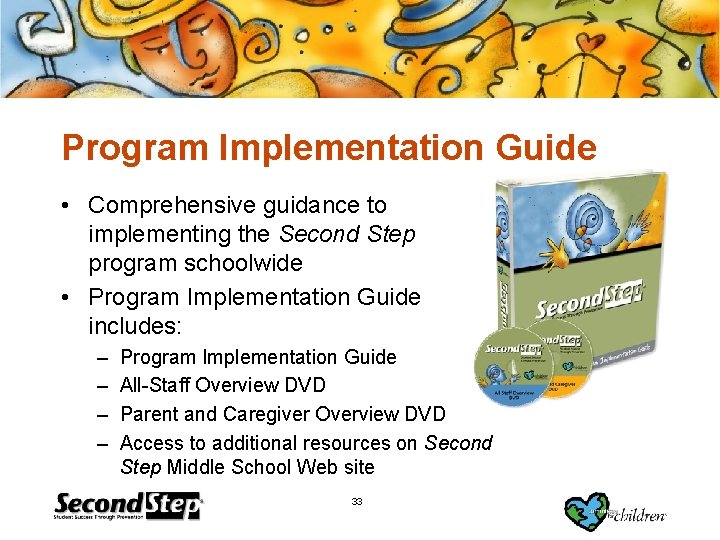
Program Implementation Guide • Comprehensive guidance to implementing the Second Step program schoolwide • Program Implementation Guide includes: – – Program Implementation Guide All-Staff Overview DVD Parent and Caregiver Overview DVD Access to additional resources on Second Step Middle School Web site 33
Client support services • Free support for the life of the program. • Get help with: – – – – Securing sponsorship and buy-in Planning implementation Exploring funding opportunities Training staff Involving families Reinforcing skills Evaluating your success Teaching tips 34