
Sec 3 2 Radioactive Decay c Mc Graw
- Slides: 13
Sec. 3. 2 – Radioactive Decay (c) Mc. Graw Hill Ryerson 2007
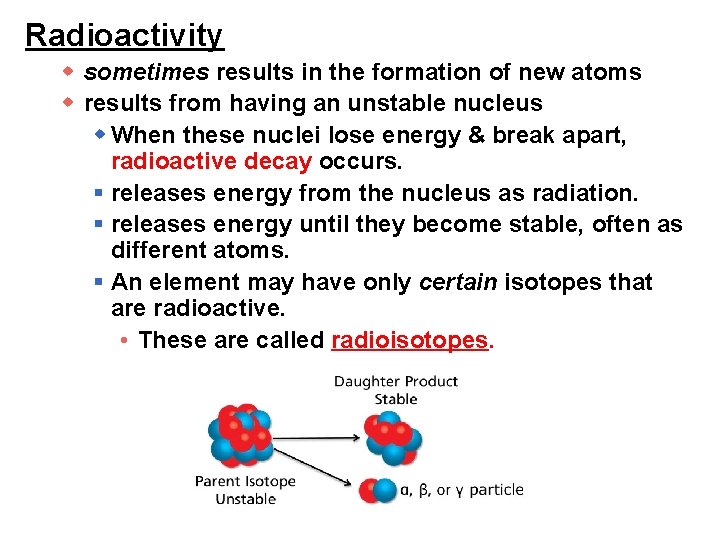
Radioactivity w sometimes results in the formation of new atoms w results from having an unstable nucleus w When these nuclei lose energy & break apart, radioactive decay occurs. § releases energy from the nucleus as radiation. § releases energy until they become stable, often as different atoms. § An element may have only certain isotopes that are radioactive. • These are called radioisotopes.
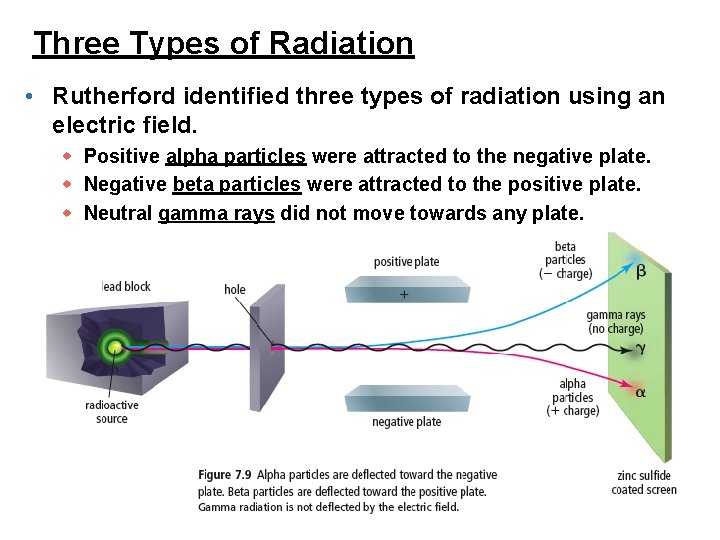
Three Types of Radiation • Rutherford identified three types of radiation using an electric field. w Positive alpha particles were attracted to the negative plate. w Negative beta particles were attracted to the positive plate. w Neutral gamma rays did not move towards any plate.
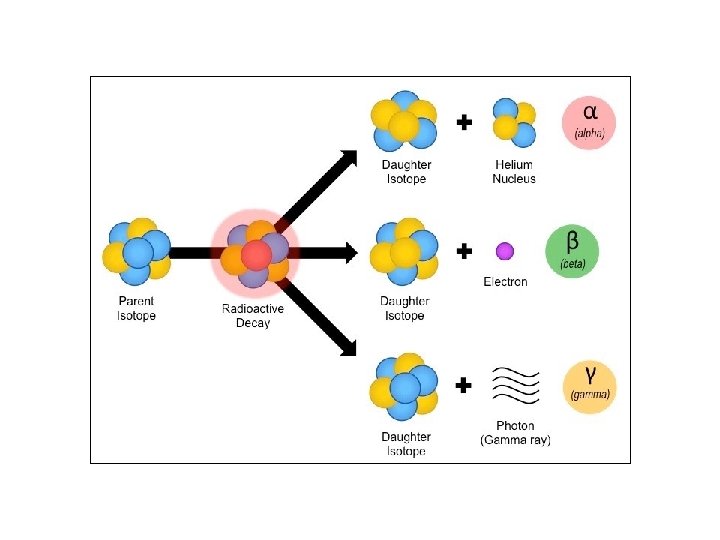
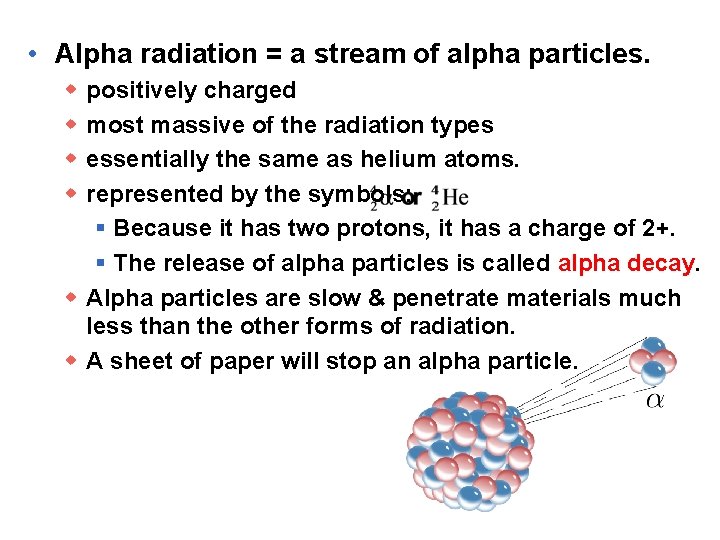
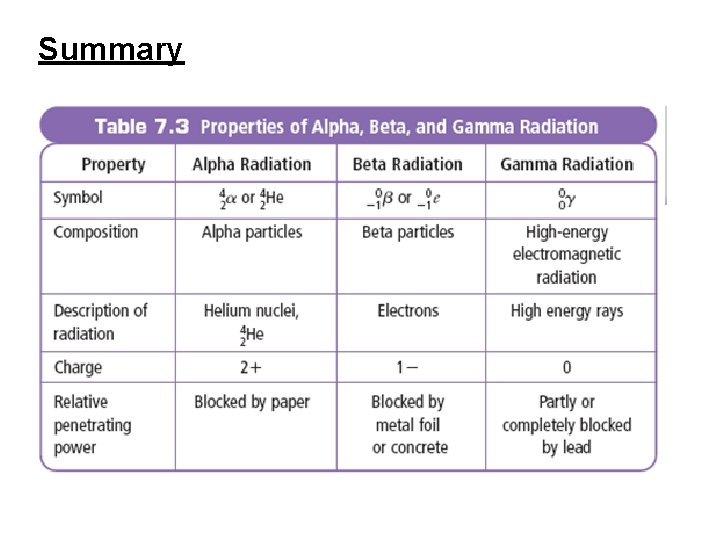
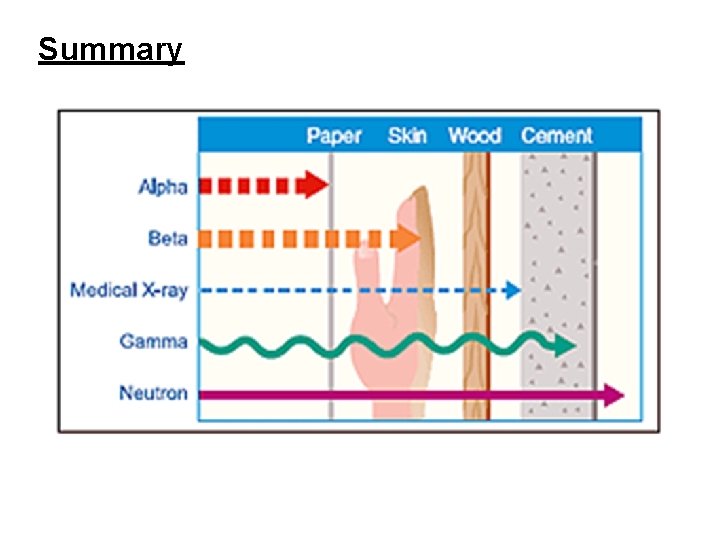
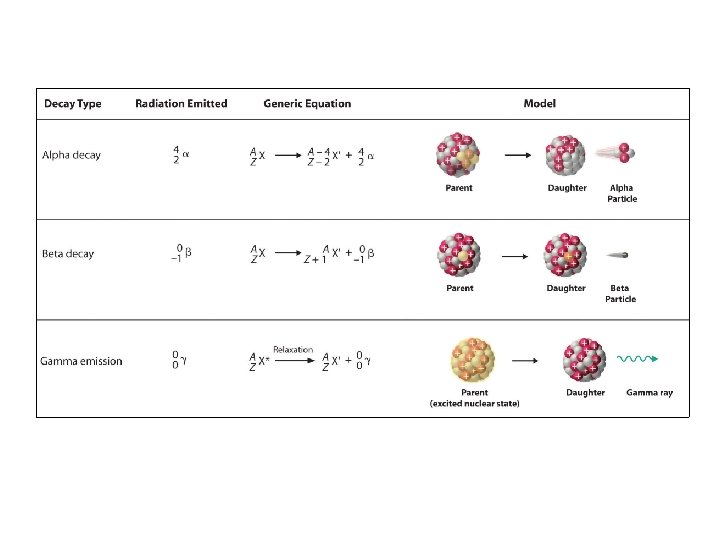
• Alpha radiation = a stream of alpha particles. w w positively charged most massive of the radiation types essentially the same as helium atoms. represented by the symbols: § Because it has two protons, it has a charge of 2+. § The release of alpha particles is called alpha decay. w Alpha particles are slow & penetrate materials much less than the other forms of radiation. w A sheet of paper will stop an alpha particle.
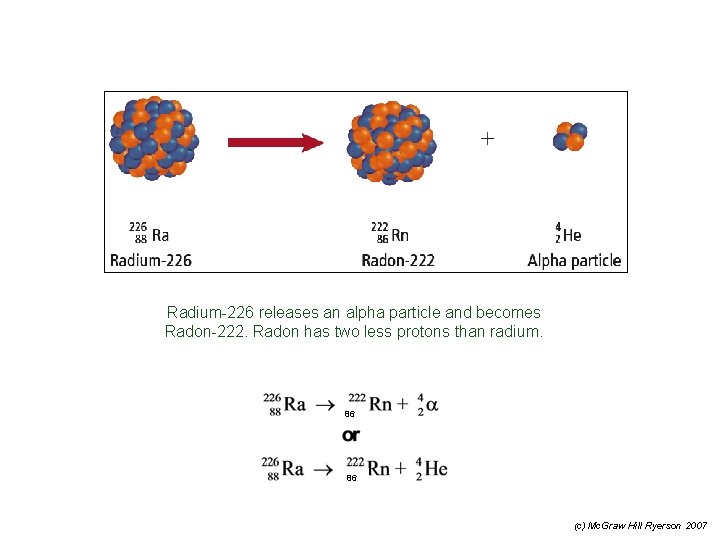
Radium-226 releases an alpha particle and becomes Radon-222. Radon has two less protons than radium. 86 86 (c) Mc. Graw Hill Ryerson 2007
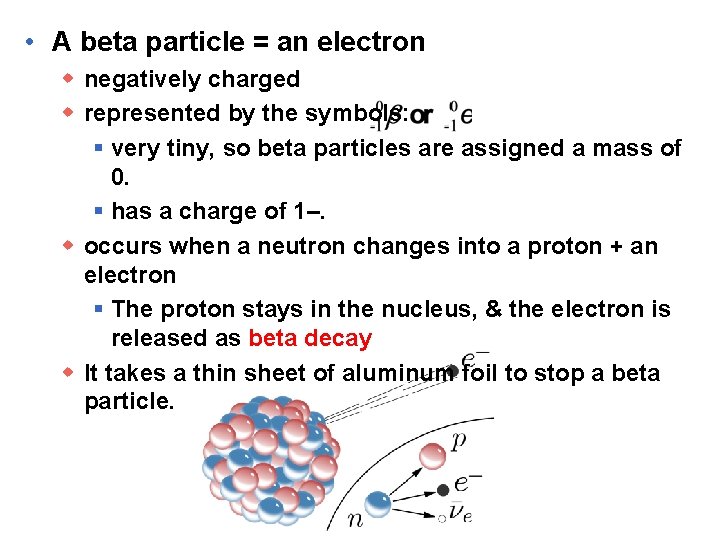
• A beta particle = an electron w negatively charged w represented by the symbols: § very tiny, so beta particles are assigned a mass of 0. § has a charge of 1–. w occurs when a neutron changes into a proton + an electron § The proton stays in the nucleus, & the electron is released as beta decay w It takes a thin sheet of aluminum foil to stop a beta particle.
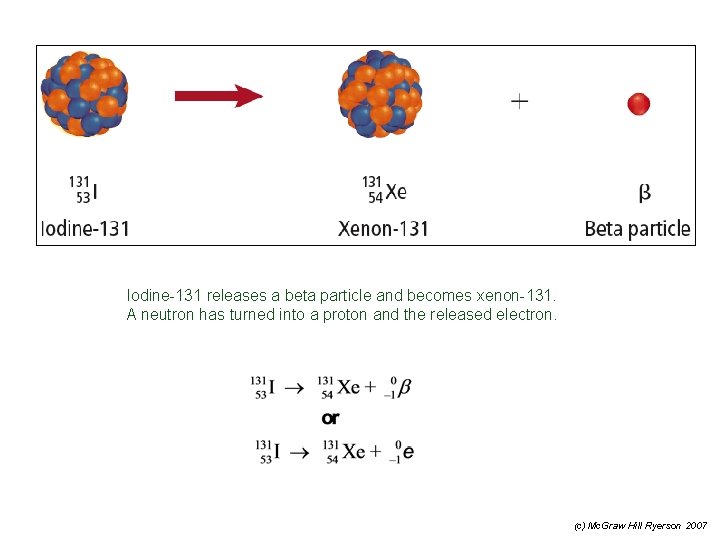
Iodine-131 releases a beta particle and becomes xenon-131. A neutron has turned into a proton and the released electron. (c) Mc. Graw Hill Ryerson 2007
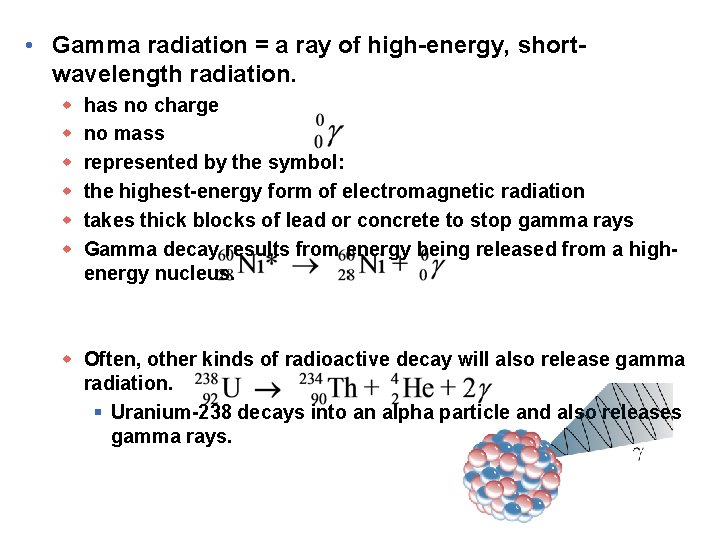
• Gamma radiation = a ray of high-energy, shortwavelength radiation. w w w has no charge no mass represented by the symbol: the highest-energy form of electromagnetic radiation takes thick blocks of lead or concrete to stop gamma rays Gamma decay results from energy being released from a highenergy nucleus. w Often, other kinds of radioactive decay will also release gamma radiation. § Uranium-238 decays into an alpha particle and also releases gamma rays.
Summary
Summary
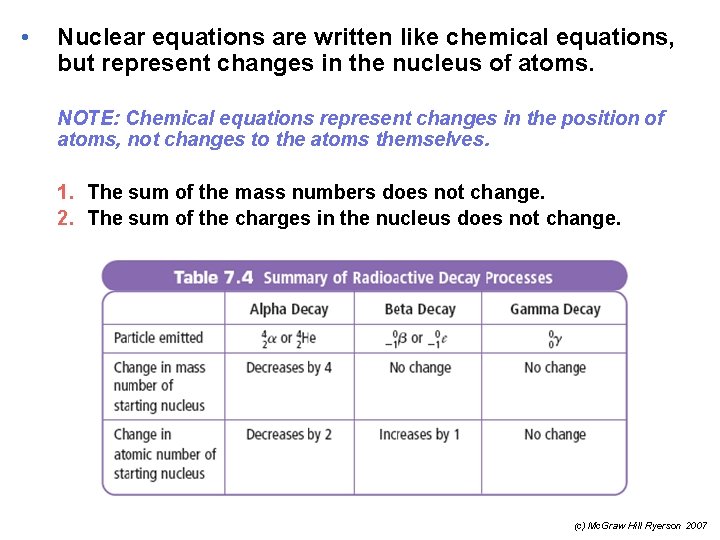
• Nuclear equations are written like chemical equations, but represent changes in the nucleus of atoms. NOTE: Chemical equations represent changes in the position of atoms, not changes to the atoms themselves. 1. The sum of the mass numbers does not change. 2. The sum of the charges in the nucleus does not change. (c) Mc. Graw Hill Ryerson 2007