
Sec 3 2 Chemical Reactions in Animals and
- Slides: 7
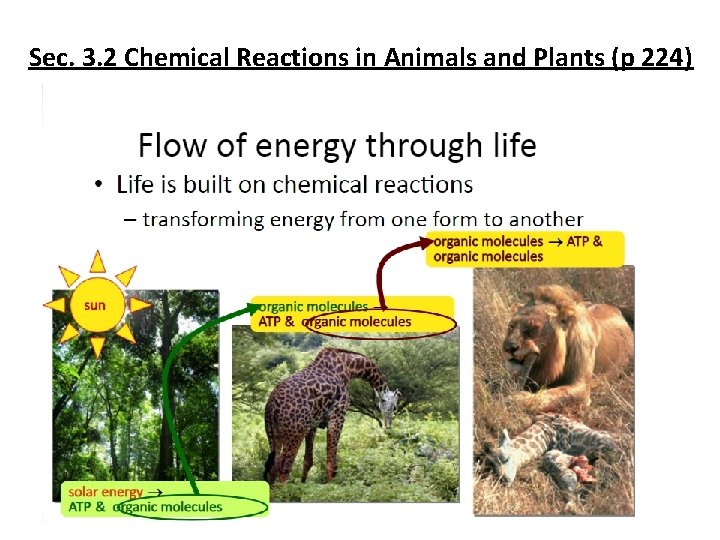
Sec. 3. 2 Chemical Reactions in Animals and Plants (p 224)
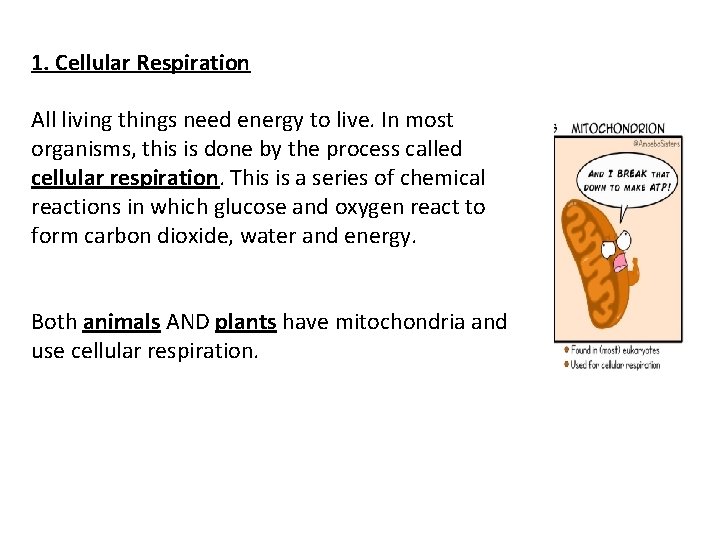
1. Cellular Respiration All living things need energy to live. In most organisms, this is done by the process called cellular respiration. This is a series of chemical reactions in which glucose and oxygen react to form carbon dioxide, water and energy. Both animals AND plants have mitochondria and use cellular respiration.
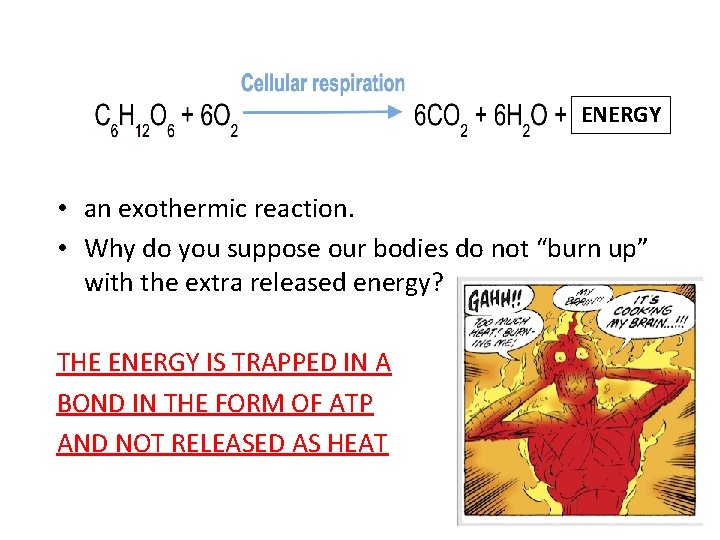
ENERGY • an exothermic reaction. • Why do you suppose our bodies do not “burn up” with the extra released energy? THE ENERGY IS TRAPPED IN A BOND IN THE FORM OF ATP AND NOT RELEASED AS HEAT
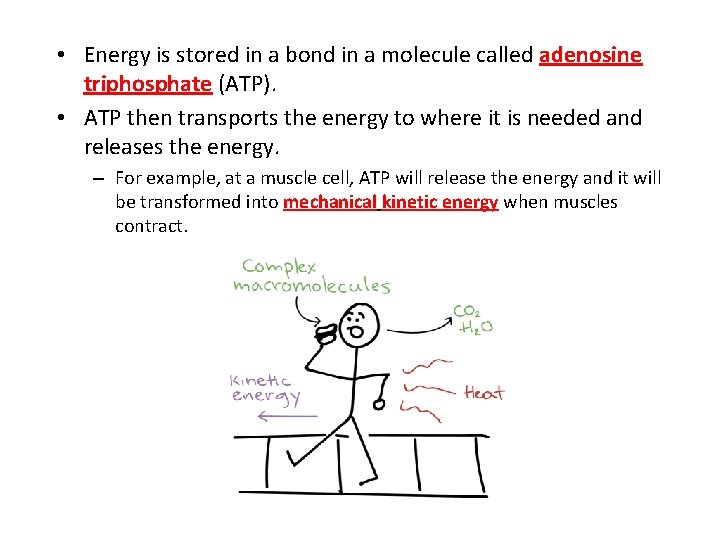
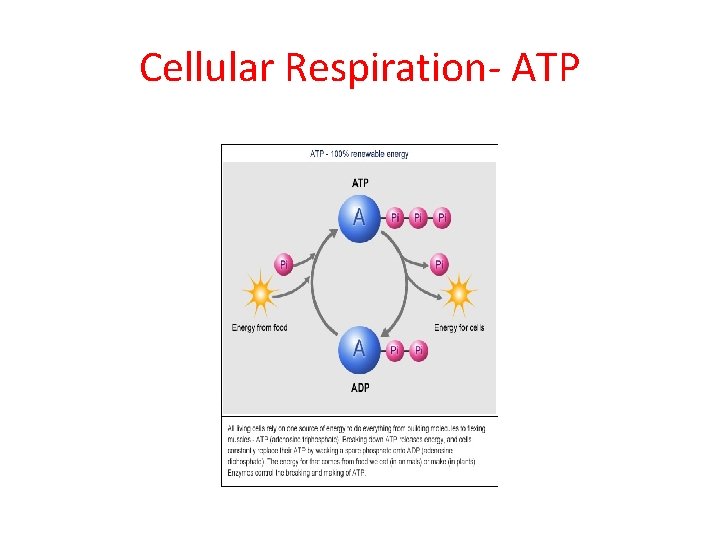
• Energy is stored in a bond in a molecule called adenosine triphosphate (ATP). • ATP then transports the energy to where it is needed and releases the energy. – For example, at a muscle cell, ATP will release the energy and it will be transformed into mechanical kinetic energy when muscles contract.
Cellular Respiration- ATP
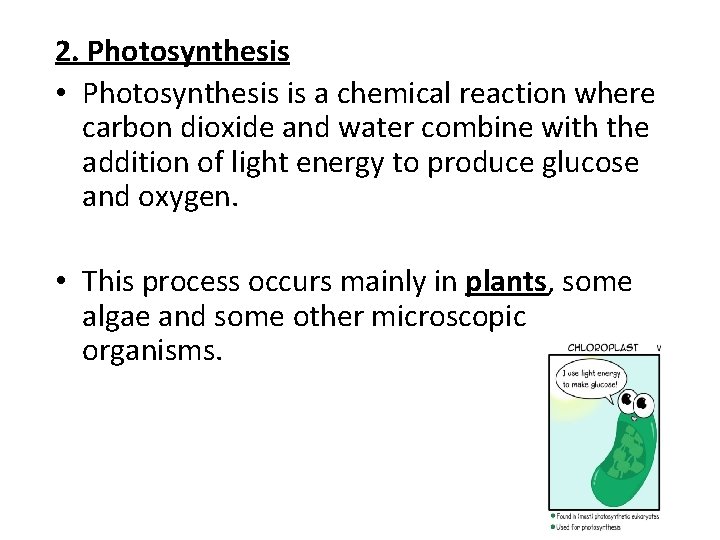
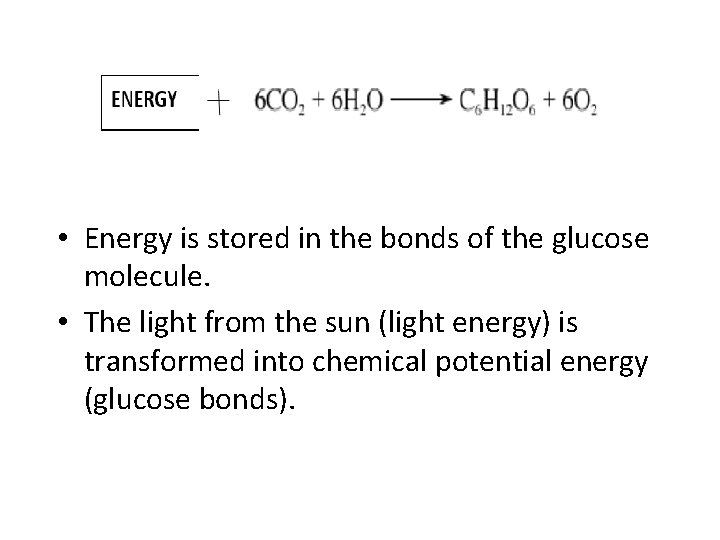
2. Photosynthesis • Photosynthesis is a chemical reaction where carbon dioxide and water combine with the addition of light energy to produce glucose and oxygen. • This process occurs mainly in plants, some algae and some other microscopic organisms.
• Energy is stored in the bonds of the glucose molecule. • The light from the sun (light energy) is transformed into chemical potential energy (glucose bonds).