
Sec 21 Generalizations of the Euler Method Initial
- Slides: 8
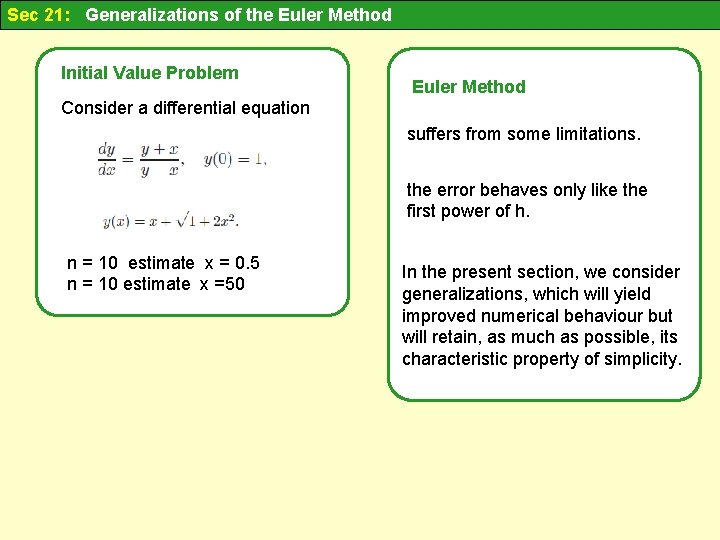
Sec 21: Generalizations of the Euler Method Initial Value Problem Euler Method Consider a differential equation suffers from some limitations. the error behaves only like the first power of h. n = 10 estimate x = 0. 5 n = 10 estimate x =50 In the present section, we consider generalizations, which will yield improved numerical behaviour but will retain, as much as possible, its characteristic property of simplicity.
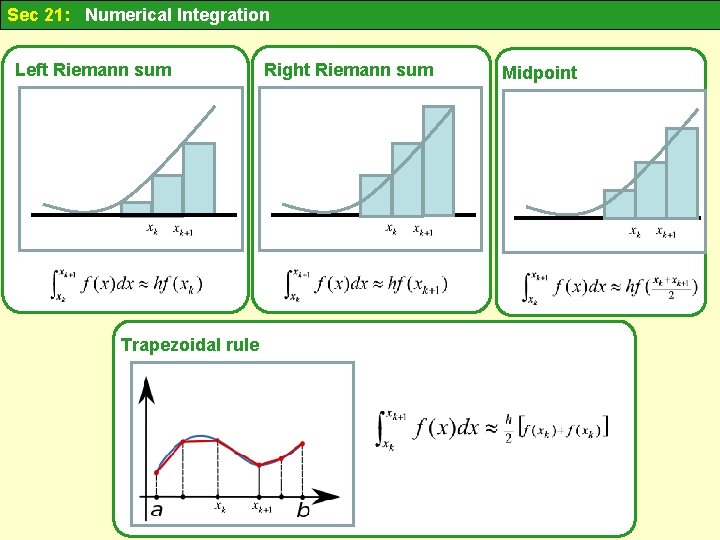
Sec 21: Numerical Integration Left Riemann sum Trapezoidal rule Right Riemann sum Midpoint
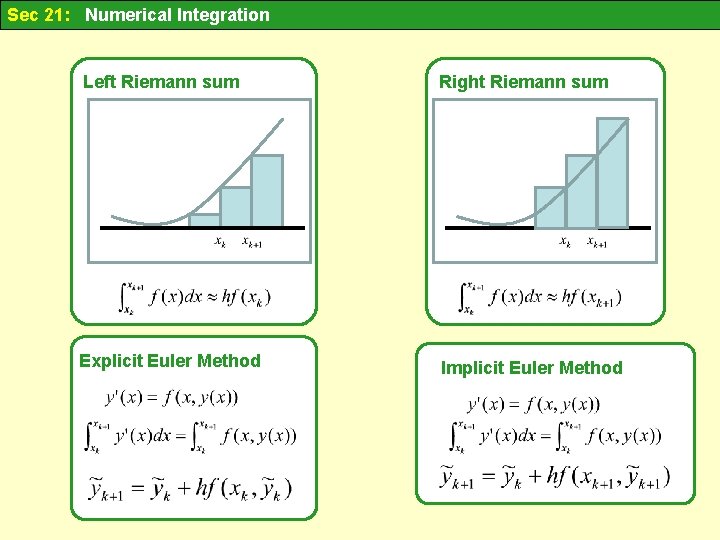
Sec 21: Numerical Integration Left Riemann sum Right Riemann sum Explicit Euler Method Implicit Euler Method
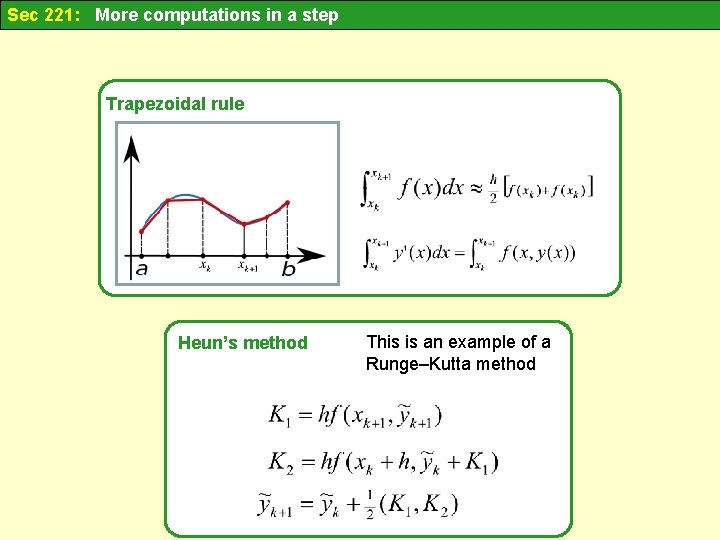
Sec 221: More computations in a step Trapezoidal rule Heun’s method This is an example of a Runge–Kutta method
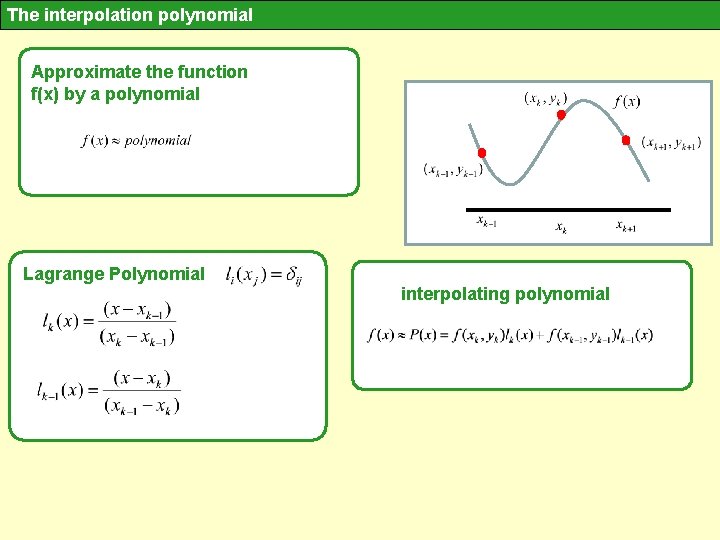
The interpolation polynomial Approximate the function f(x) by a polynomial Lagrange Polynomial interpolating polynomial
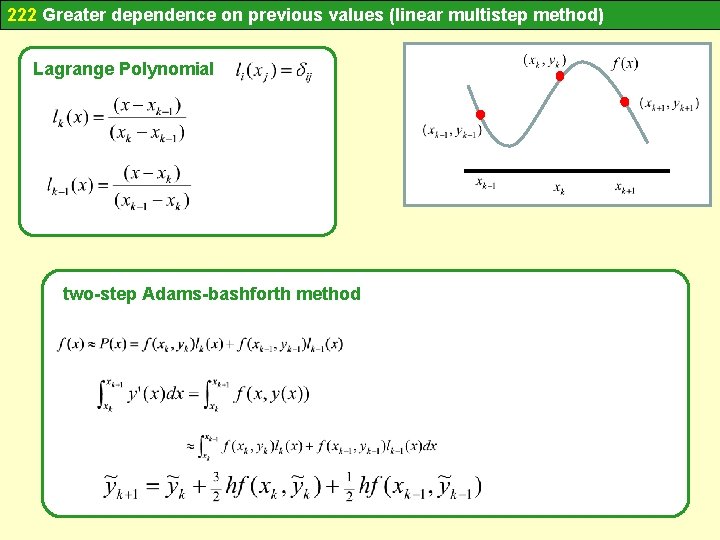
222 Greater dependence on previous values (linear multistep method) Lagrange Polynomial two-step Adams-bashforth method
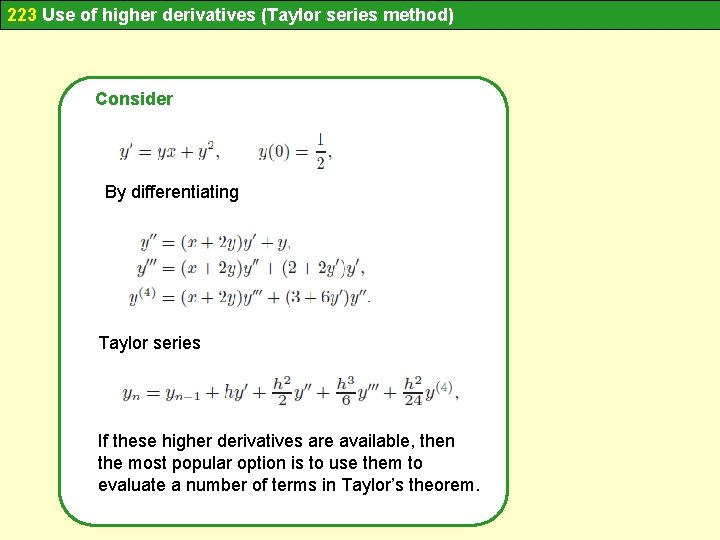
223 Use of higher derivatives (Taylor series method) Consider By differentiating Taylor series If these higher derivatives are available, then the most popular option is to use them to evaluate a number of terms in Taylor’s theorem.
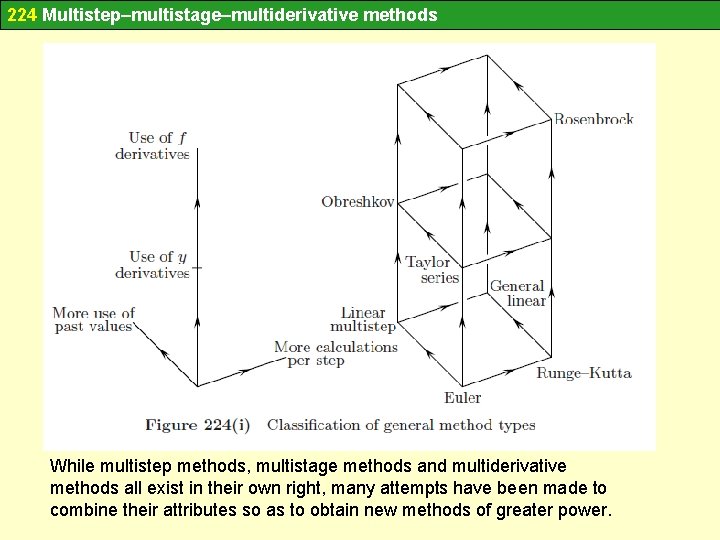
224 Multistep–multistage–multiderivative methods While multistep methods, multistage methods and multiderivative methods all exist in their own right, many attempts have been made to combine their attributes so as to obtain new methods of greater power.