
Seasons on Earth Why do they happen INSOLATION
- Slides: 19
Seasons on Earth Why do they happen?
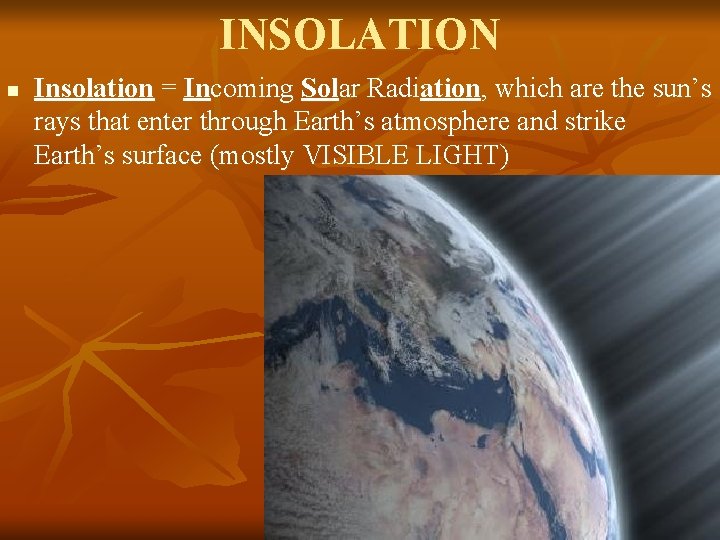
INSOLATION n Insolation = Incoming Solar Radiation, which are the sun’s rays that enter through Earth’s atmosphere and strike Earth’s surface (mostly VISIBLE LIGHT)
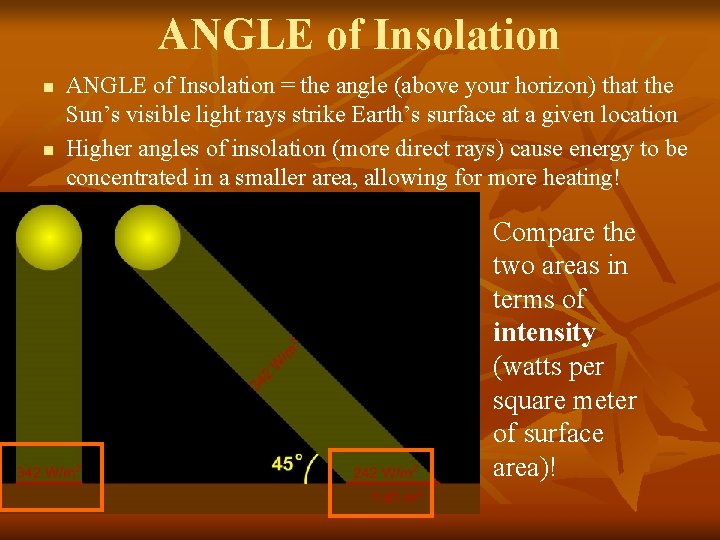
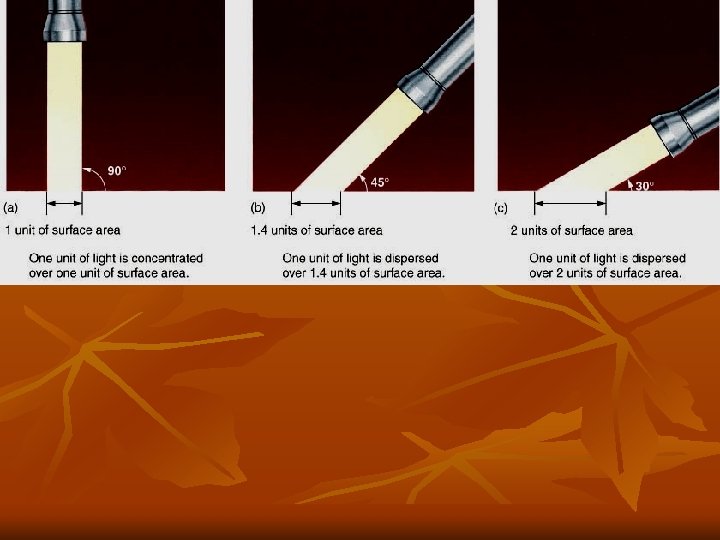
ANGLE of Insolation n n ANGLE of Insolation = the angle (above your horizon) that the Sun’s visible light rays strike Earth’s surface at a given location Higher angles of insolation (more direct rays) cause energy to be concentrated in a smaller area, allowing for more heating! Compare the two areas in terms of intensity (watts per square meter of surface area)!
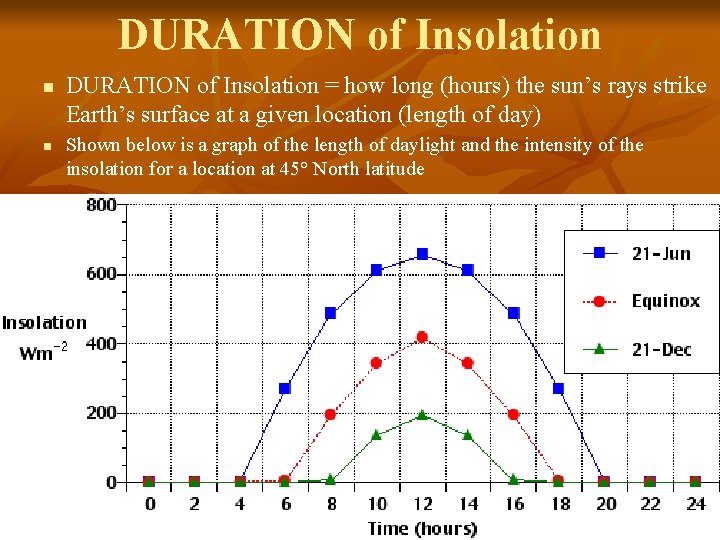
DURATION of Insolation n n DURATION of Insolation = how long (hours) the sun’s rays strike Earth’s surface at a given location (length of day) Shown below is a graph of the length of daylight and the intensity of the insolation for a location at 45° North latitude
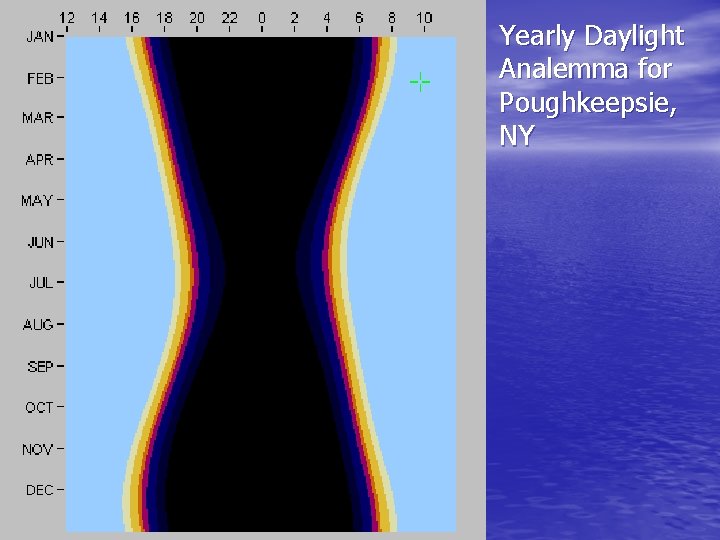
Yearly Daylight Analemma for Poughkeepsie, NY
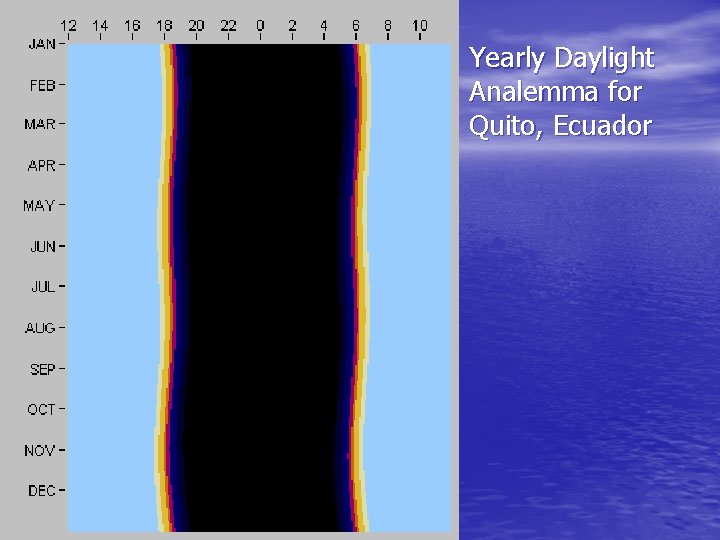
Yearly Daylight Analemma for Quito, Ecuador
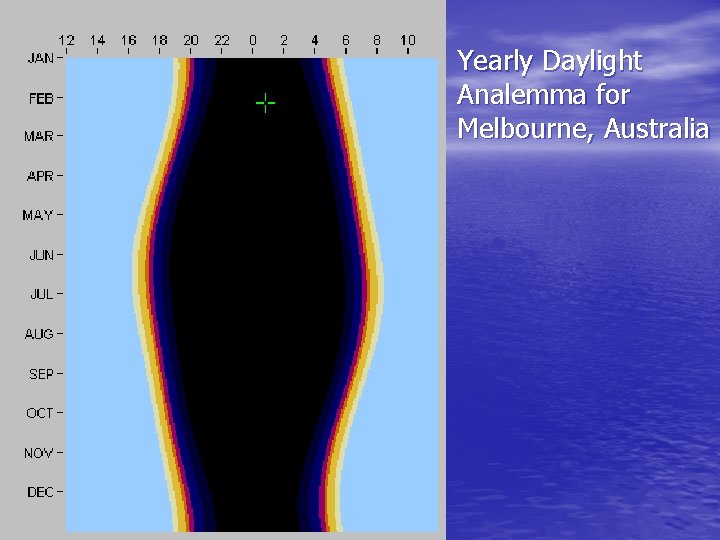
Yearly Daylight Analemma for Melbourne, Australia
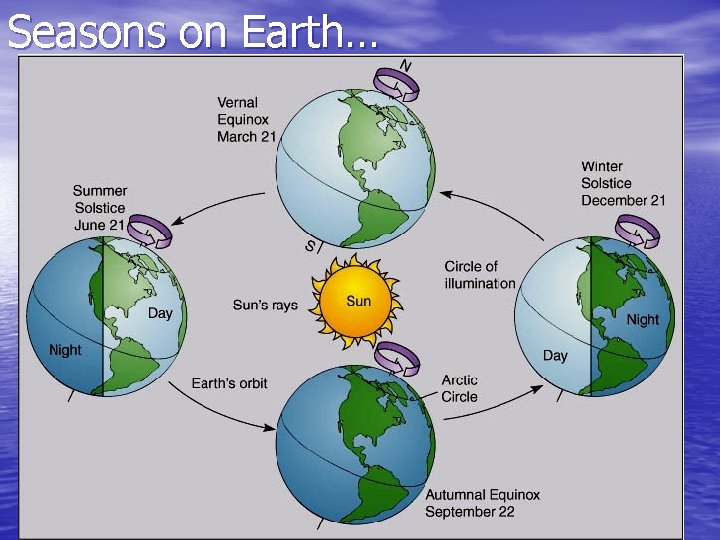
Seasons on Earth…
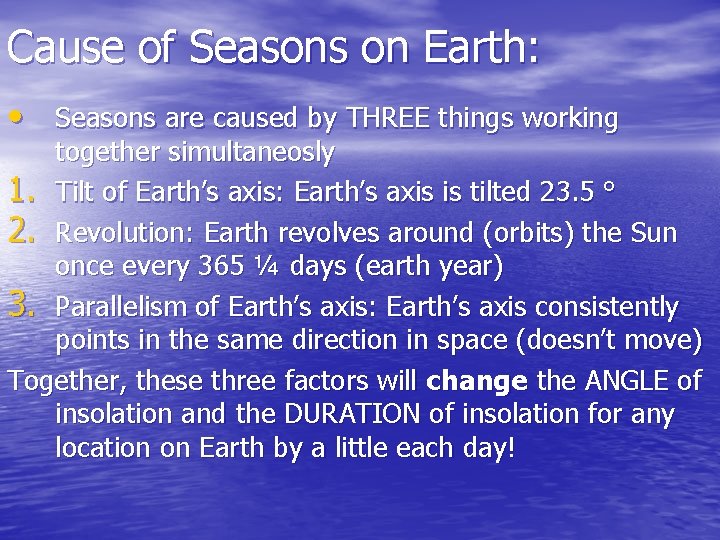
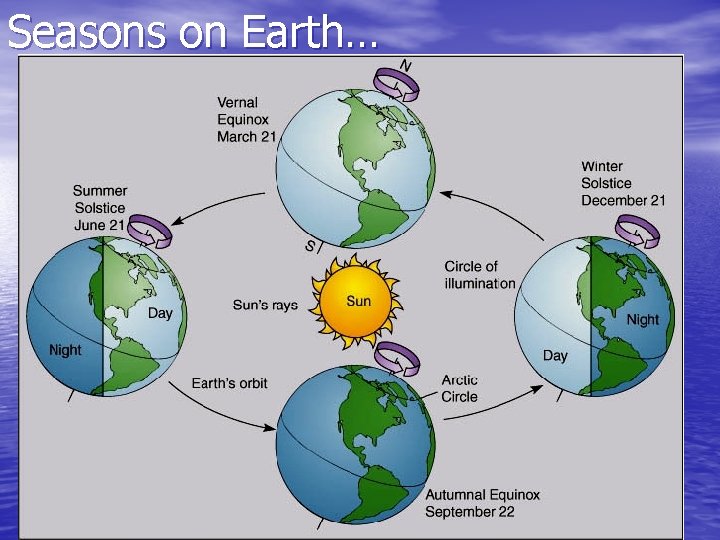
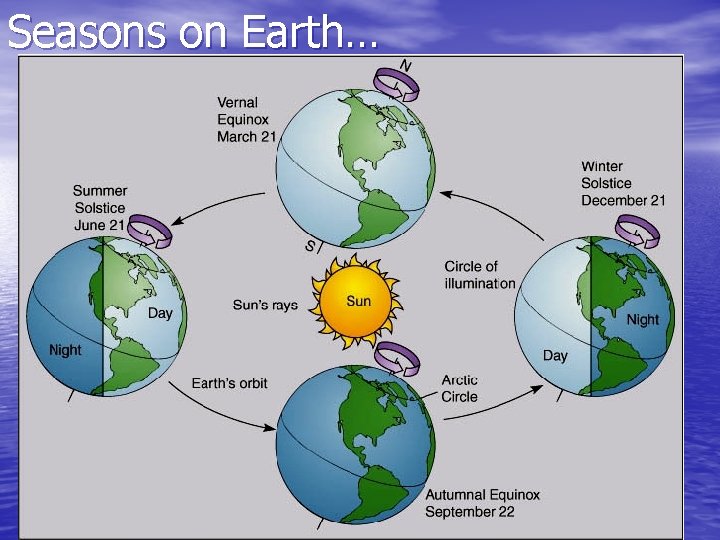
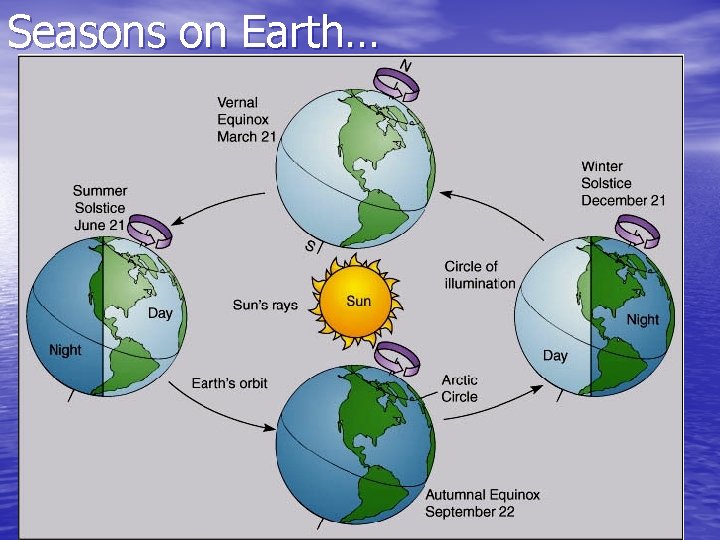
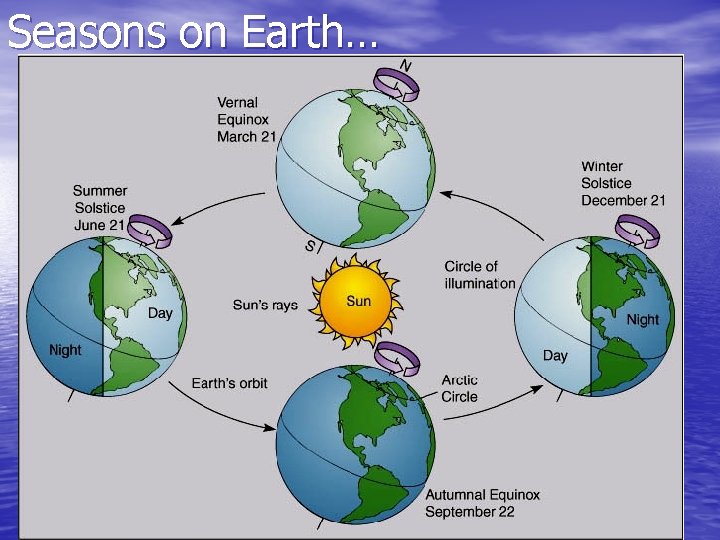
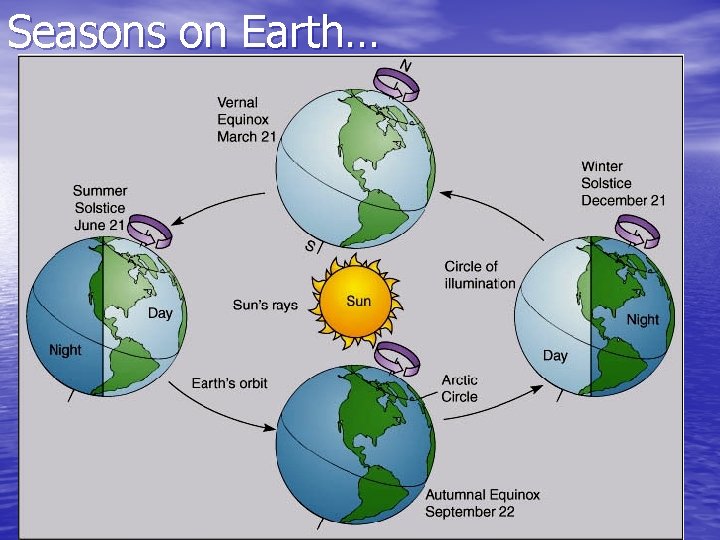
Cause of Seasons on Earth: • Seasons are caused by THREE things working together simultaneosly 1. Tilt of Earth’s axis: Earth’s axis is tilted 23. 5 ° 2. Revolution: Earth revolves around (orbits) the Sun once every 365 ¼ days (earth year) 3. Parallelism of Earth’s axis: Earth’s axis consistently points in the same direction in space (doesn’t move) Together, these three factors will change the ANGLE of insolation and the DURATION of insolation for any location on Earth by a little each day!
Seasons on Earth…
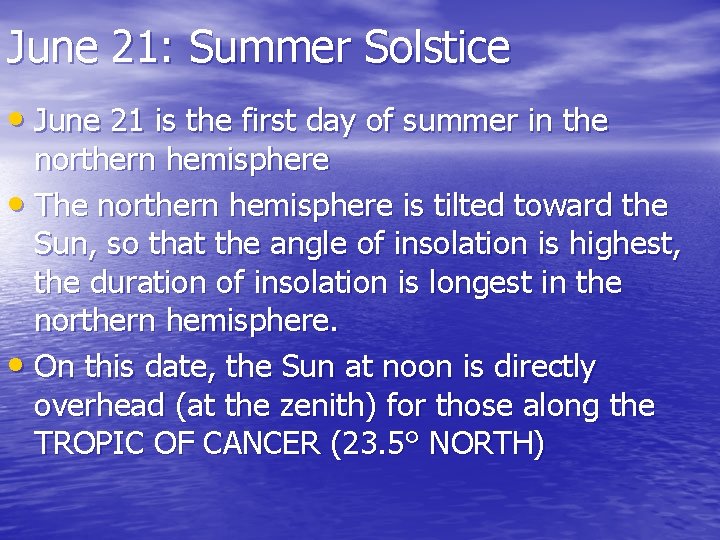
June 21: Summer Solstice • June 21 is the first day of summer in the northern hemisphere • The northern hemisphere is tilted toward the Sun, so that the angle of insolation is highest, the duration of insolation is longest in the northern hemisphere. • On this date, the Sun at noon is directly overhead (at the zenith) for those along the TROPIC OF CANCER (23. 5° NORTH)
Seasons on Earth…
December 21: Winter Solstice • December 21 is the first day of winter in the northern hemisphere • The northern hemisphere is tilted away from the Sun, so that the angle of insolation is lowest, the duration of insolation is shortest in the northern hemisphere. • On this date, the Sun at noon is directly overhead (at the zenith) for those along the TROPIC OF CAPRICORN (23. 5° SOUTH)
Seasons on Earth…
March 21: Spring Equinox • March 21 is the first day of spring in the northern hemisphere • The northern hemisphere is neither tilted toward or away from the Sun, and the most direct sun ray’s are striking the equator • All locations on Earth have a 12 hour day (12 hour duration of insolation) • Days are still getting longer! • On this date, the Sun at noon is directly overhead (at the zenith) for those along the EQUATOR (0°)
Seasons on Earth…
September 23: Fall (Autumn) Equinox • September 23 is the first day of fall (autumn) in the northern hemisphere • The northern hemisphere is neither tilted toward or away from the Sun, and the most direct sun ray’s are striking the equator • All locations on Earth have a 12 hour day (12 hour duration of insolation) • Days are still getting shorter! • On this date, the Sun at noon is directly overhead (at the zenith) for those along the EQUATOR (0°)
Seasons on Earth…