
Searle Associates 7 Key Ingredients of the successful
- Slides: 10
Searle & Associates 7 Key Ingredients of the successful management of controversial development projects
7 Key Ingredients… In my experience, the traditional approach to building a business case for development includes sophisticated demand modelling, finance, technical feasibility assessment, and environmental impact mitigation. But rarely does it proactively plan for the mitigation of conflict and controversy, which can not only risk development approval, but can incur costly delays, legal fees, reputational damage, and the long term erosion of trust between developers and community. In my 25 years of consulting with developers, politicians and communities, I have seen a dramatic increase in successful development approvals, by arming politicians with a robust evidence base and the confidence to make the brave decisions, and give controversial but exciting development projects the green light. In this presentation, I outline my tried and tested 7 key ingredients for preventing and managing conflict and controversy. Catherine Searle Director, Searle & Associates
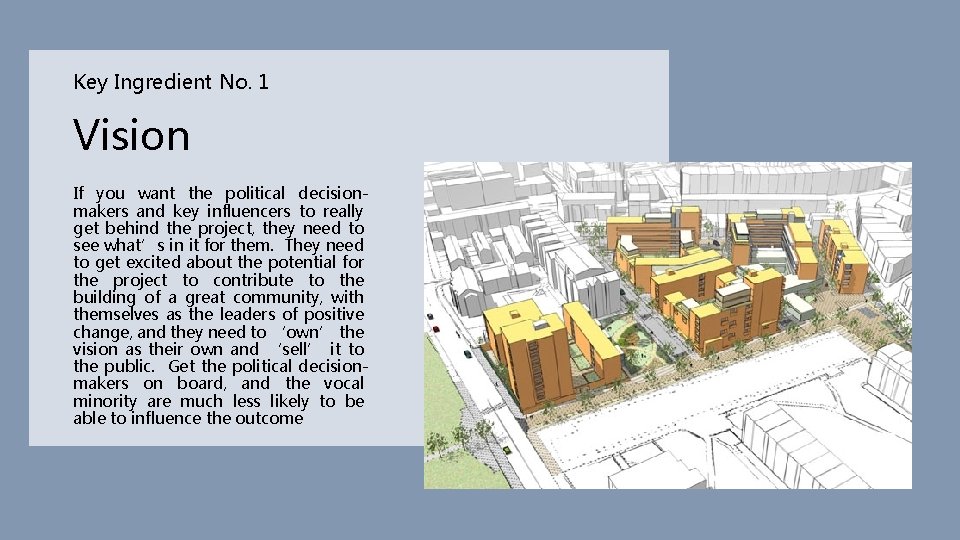
Key Ingredient No. 1 Vision If you want the political decisionmakers and key influencers to really get behind the project, they need to see what’s in it for them. They need to get excited about the potential for the project to contribute to the building of a great community, with themselves as the leaders of positive change, and they need to ‘own’ the vision as their own and ‘sell’ it to the public. Get the political decisionmakers on board, and the vocal minority are much less likely to be able to influence the outcome
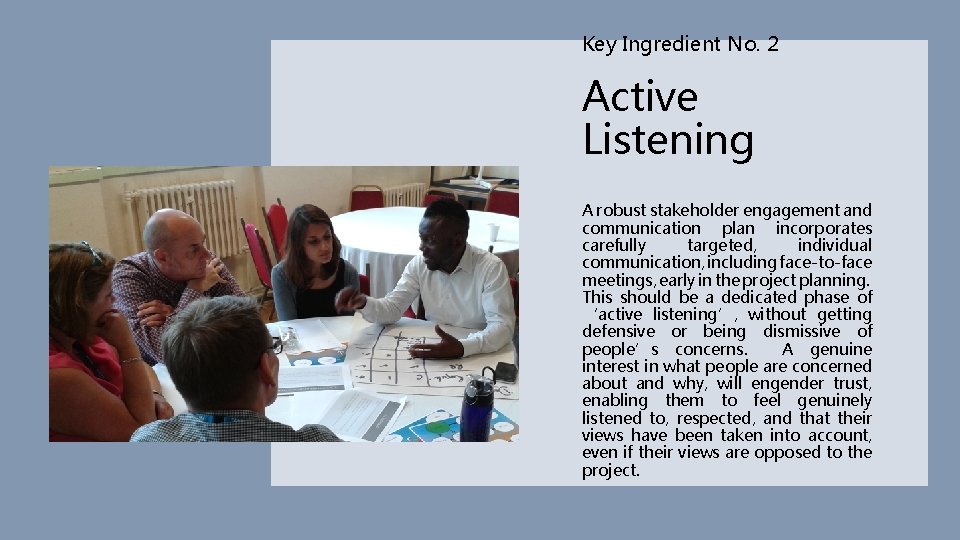
Key Ingredient No. 2 Active Listening A robust stakeholder engagement and communication plan incorporates carefully targeted, individual communication, including face-to-face meetings, early in the project planning. This should be a dedicated phase of ‘active listening’, without getting defensive or being dismissive of people’s concerns. A genuine interest in what people are concerned about and why, will engender trust, enabling them to feel genuinely listened to, respected, and that their views have been taken into account, even if their views are opposed to the project.
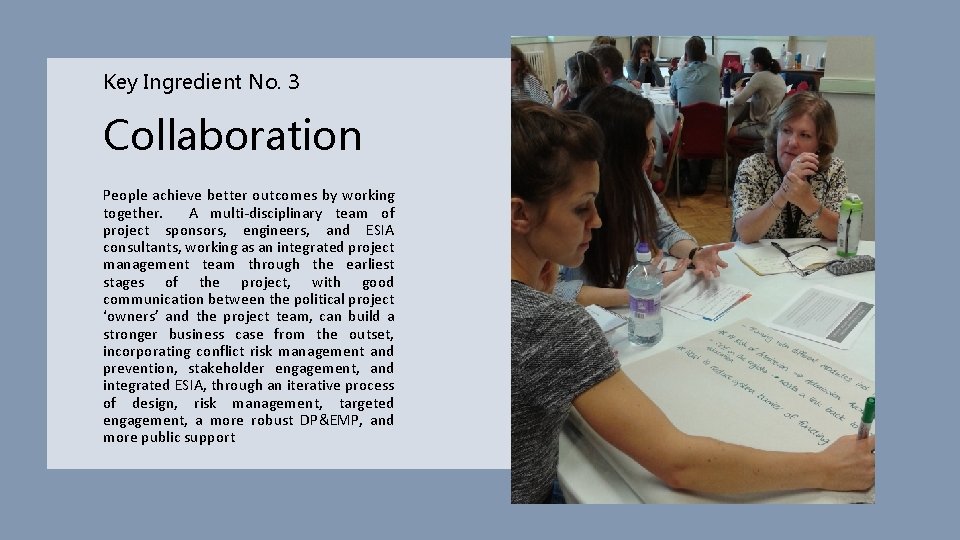
Key Ingredient No. 3 Collaboration People achieve better outcomes by working together. A multi-disciplinary team of project sponsors, engineers, and ESIA consultants, working as an integrated project management team through the earliest stages of the project, with good communication between the political project ‘owners’ and the project team, can build a stronger business case from the outset, incorporating conflict risk management and prevention, stakeholder engagement, and integrated ESIA, through an iterative process of design, risk management, targeted engagement, a more robust DP&EMP, and more public support
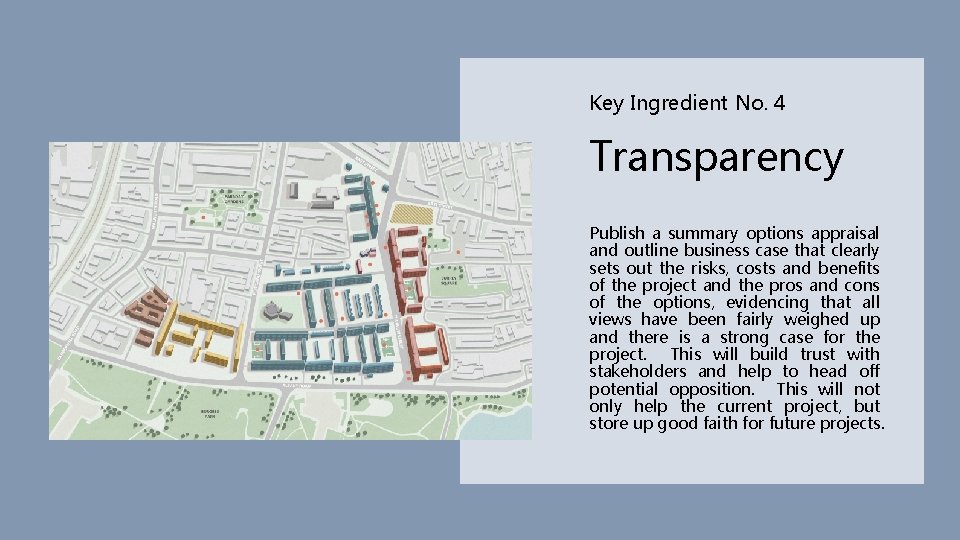
Key Ingredient No. 4 Transparency Publish a summary options appraisal and outline business case that clearly sets out the risks, costs and benefits of the project and the pros and cons of the options, evidencing that all views have been fairly weighed up and there is a strong case for the project. This will build trust with stakeholders and help to head off potential opposition. This will not only help the current project, but store up good faith for future projects.
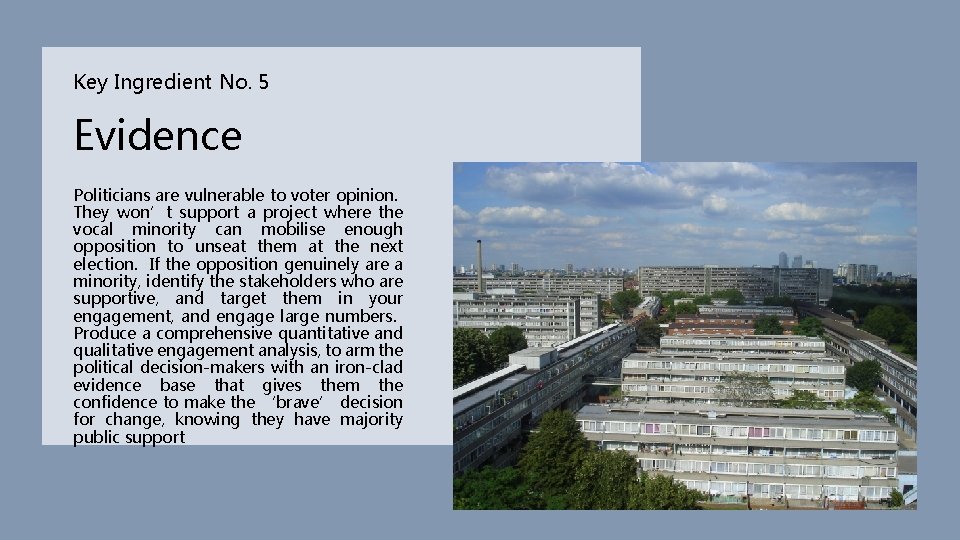
Key Ingredient No. 5 Evidence Politicians are vulnerable to voter opinion. They won’t support a project where the vocal minority can mobilise enough opposition to unseat them at the next election. If the opposition genuinely are a minority, identify the stakeholders who are supportive, and target them in your engagement, and engage large numbers. Produce a comprehensive quantitative and qualitative engagement analysis, to arm the political decision-makers with an iron-clad evidence base that gives them the confidence to make the ‘brave’ decision for change, knowing they have majority public support
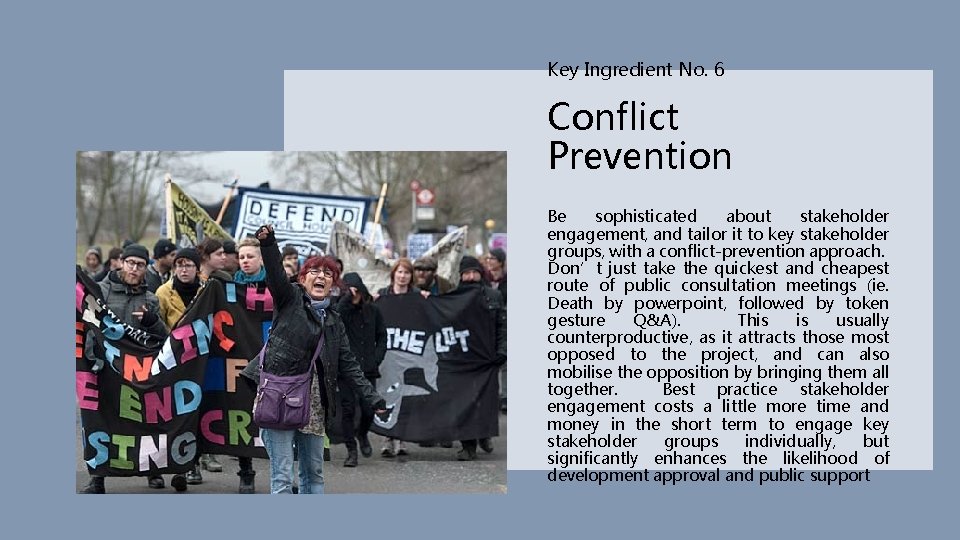
Key Ingredient No. 6 Conflict Prevention Be sophisticated about stakeholder engagement, and tailor it to key stakeholder groups, with a conflict-prevention approach. Don’t just take the quickest and cheapest route of public consultation meetings (ie. Death by powerpoint, followed by token gesture Q&A). This is usually counterproductive, as it attracts those most opposed to the project, and can also mobilise the opposition by bringing them all together. Best practice stakeholder engagement costs a little more time and money in the short term to engage key stakeholder groups individually, but significantly enhances the likelihood of development approval and public support
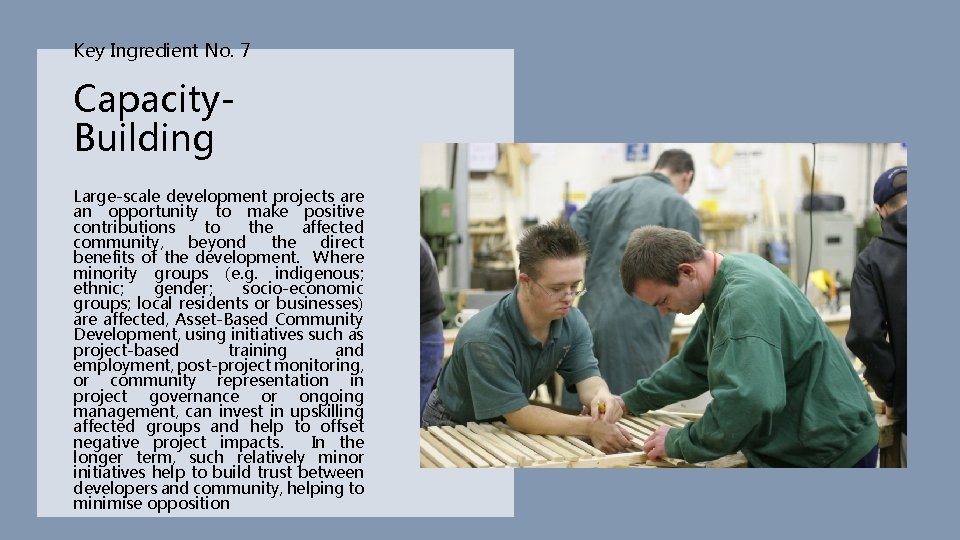
Key Ingredient No. 7 Capacity. Building Large-scale development projects are an opportunity to make positive contributions to the affected community, beyond the direct benefits of the development. Where minority groups (e. g. indigenous; ethnic; gender; socio-economic groups; local residents or businesses) are affected, Asset-Based Community Development, using initiatives such as project-based training and employment, post-project monitoring, or community representation in project governance or ongoing management, can invest in upskilling affected groups and help to offset negative project impacts. In the longer term, such relatively minor initiatives help to build trust between developers and community, helping to minimise opposition
Searle & Associates Conflict management on development projects Conflict Impact Assessment • Political Liaison • Integrated ESIA • Stakeholder Engagement wildcoastconsulting. com. au Email: catherine. searle@wildcoastconsulting. com. au Tel: (+61) 0422 068 247