
Searching the Fire scene Searching the fire scene
- Slides: 12
Searching the Fire scene
Searching the fire scene l Examine as soon as fire is extinguished l Gasoline and kerosene most common accelerants l Evidence of ignition device (candle/matches) could be arson related l Irregular shape pattern on floor/ground means arson-from accelerant
Timelines of investigation l Time works against investigator in an arson case l 1. accelerants evaporate in a few days/hours l 2. Accelerants in soil/vegetation can rapidly degrade—freezing preserves evidence l 3. safety concerns require cleanup/salvage operations begin quickly l 4. Untrained personnel may contaminate scene l No warrant is needed to investigate arson as quick as possible to prevent mishaps
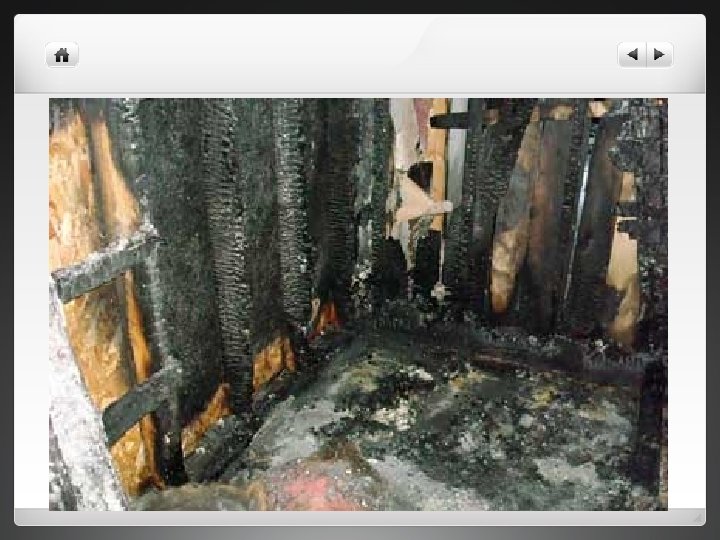
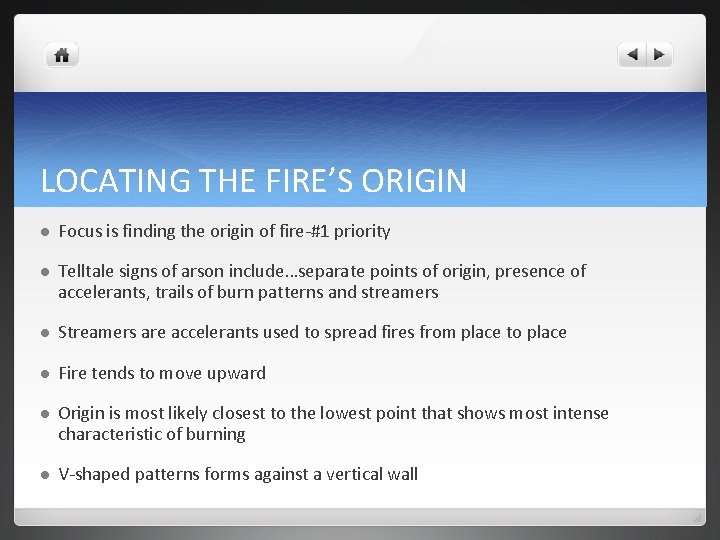
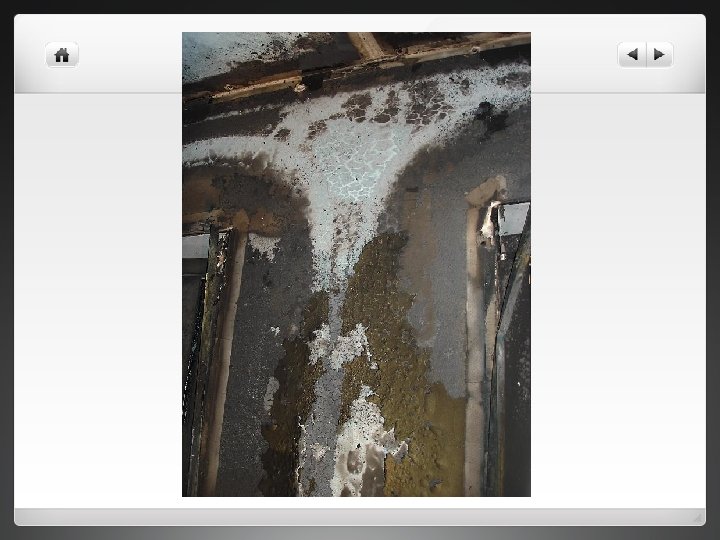
LOCATING THE FIRE’S ORIGIN l Focus is finding the origin of fire-#1 priority l Telltale signs of arson include…separate points of origin, presence of accelerants, trails of burn patterns and streamers l Streamers are accelerants used to spread fires from place to place l Fire tends to move upward l Origin is most likely closest to the lowest point that shows most intense characteristic of burning l V-shaped patterns forms against a vertical wall
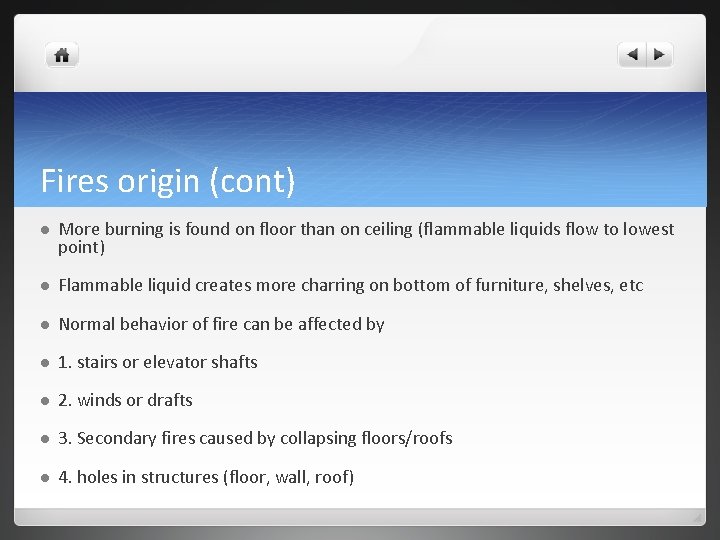
Fires origin (cont) l More burning is found on floor than on ceiling (flammable liquids flow to lowest point) l Flammable liquid creates more charring on bottom of furniture, shelves, etc l Normal behavior of fire can be affected by l 1. stairs or elevator shafts l 2. winds or drafts l 3. Secondary fires caused by collapsing floors/roofs l 4. holes in structures (floor, wall, roof)
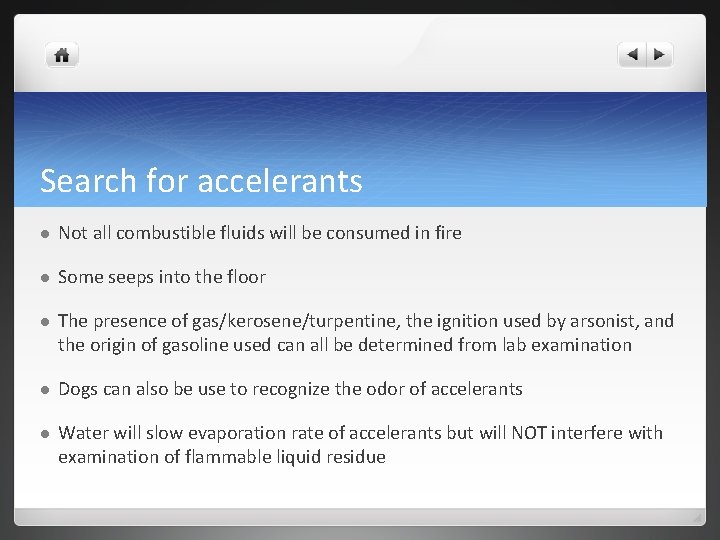
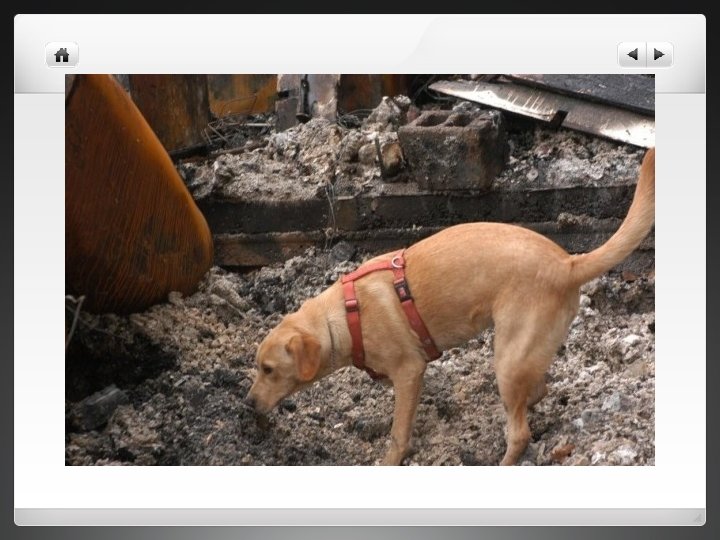
Search for accelerants l Not all combustible fluids will be consumed in fire l Some seeps into the floor l The presence of gas/kerosene/turpentine, the ignition used by arsonist, and the origin of gasoline used can all be determined from lab examination l Dogs can also be use to recognize the odor of accelerants l Water will slow evaporation rate of accelerants but will NOT interfere with examination of flammable liquid residue
Igniters and other evidence l Most common Is a match l Others include: burning cigarette, firearms, ammunition, match striker, electric sparking device, and Molotov cocktail
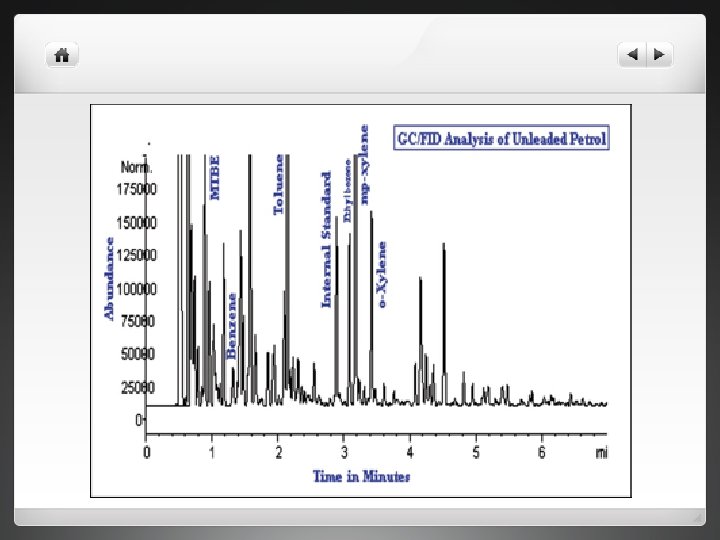
Analysis of Flammable residue l The gas chromatography (GC) is the most sensitive and reliable instrument for characterizing residue l Most arson is started by petroleum distillates (gas/kerosene) l These are made of H and C called hydrocarbons l The GC separates the hydrocarbon components and produces a unique pattern for each petroleum product