
Searching for Strange Quark Stars in the Universe
- Slides: 35
Searching for Strange Quark Stars in the Universe Yong-Feng Huang Collaborators: Tan Lu, Jin-Jun Geng, Yong-Bo Yu Department of Astronomy, Nanjing University
Outline 1. Background: strange quark stars 2. Strange stars vs. neutron stars 3 Strange star-Strange planet system 4. Conclusions
Outline 1. Background: strange quark stars 2. Strange stars vs. neutron stars 3. Strange star-Strange planet system 4. Conclusions
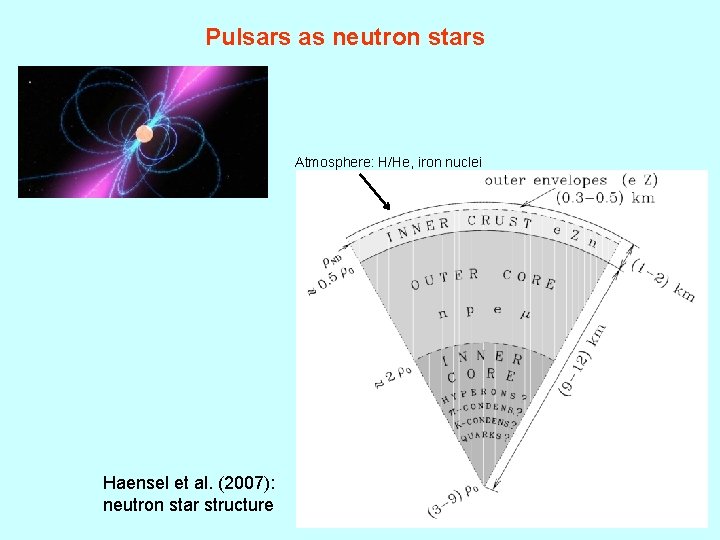
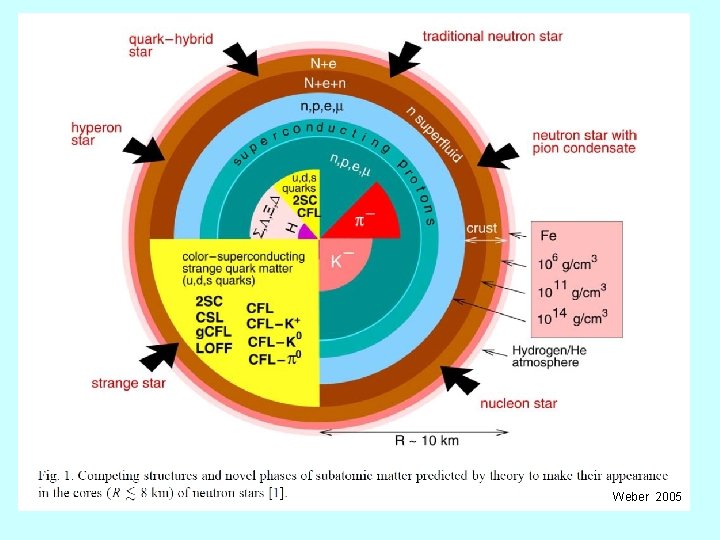
Pulsars as neutron stars Atmosphere: H/He, iron nuclei Haensel et al. (2007): neutron star structure
Weber 2005
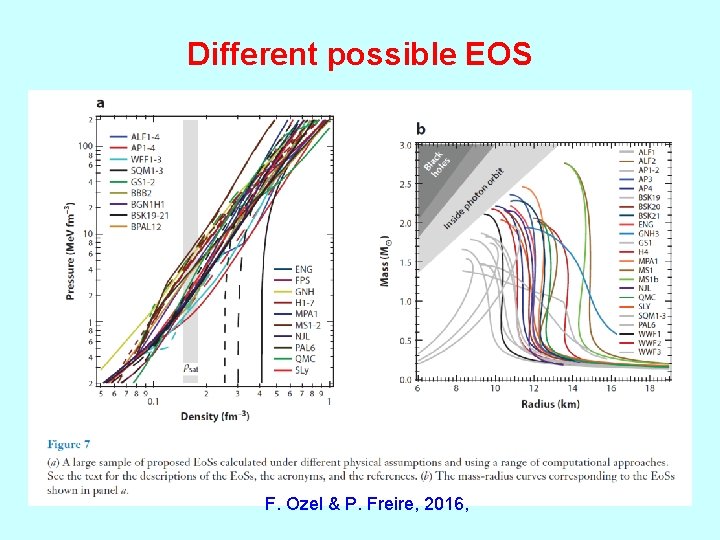
Different possible EOS F. Ozel & P. Freire, 2016,
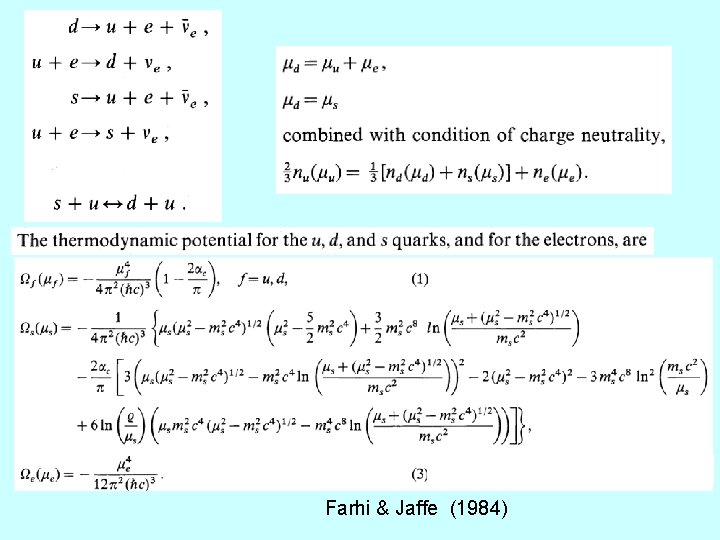
Farhi & Jaffe (1984)
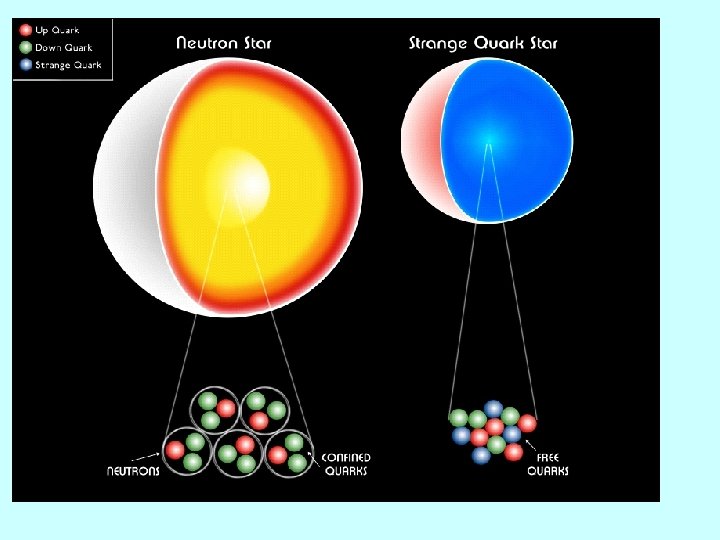
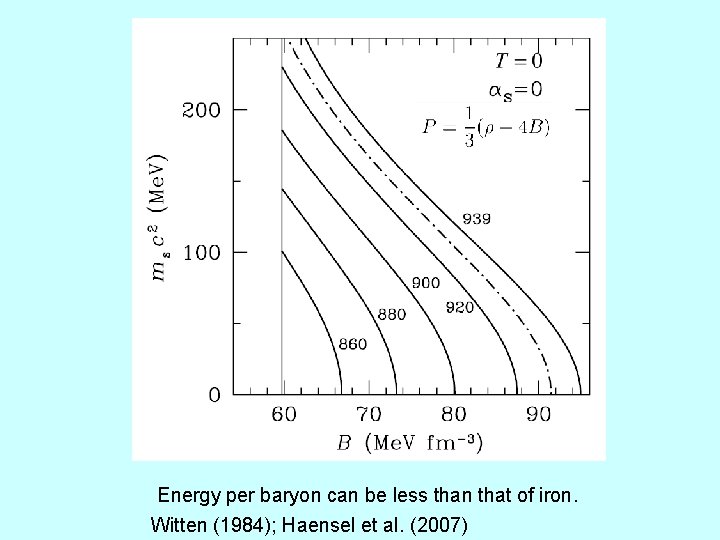
Energy per baryon can be less than that of iron. Witten (1984); Haensel et al. (2007)
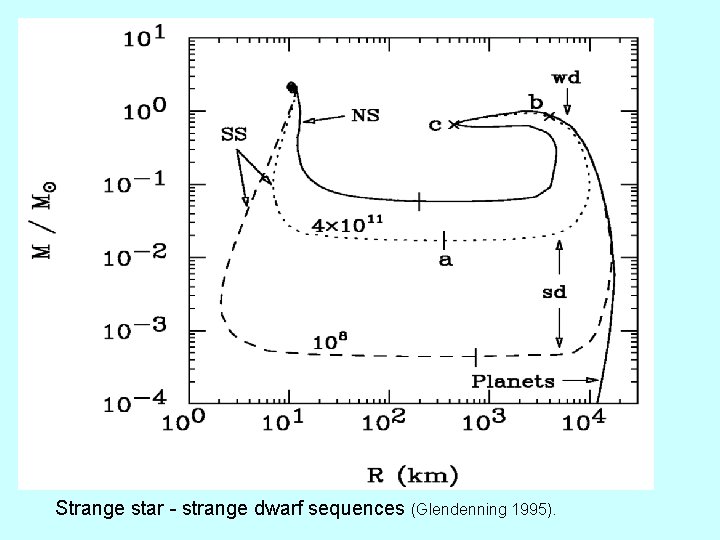
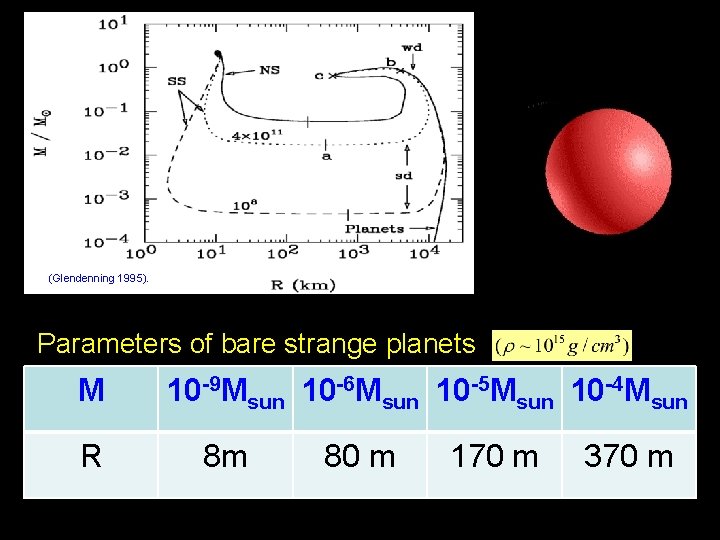
Strange star - strange dwarf sequences (Glendenning 1995).
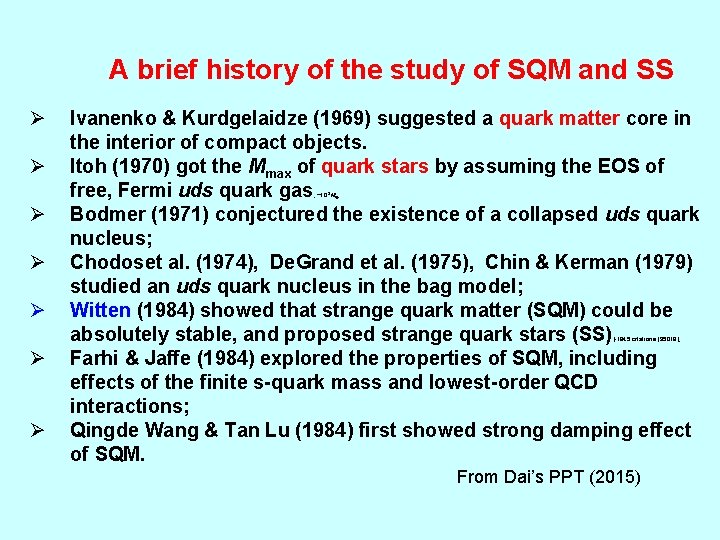
A brief history of the study of SQM and SS Ø Ø Ivanenko & Kurdgelaidze (1969) suggested a quark matter core in the interior of compact objects. Itoh (1970) got the Mmax of quark stars by assuming the EOS of free, Fermi uds quark gas Bodmer (1971) conjectured the existence of a collapsed uds quark nucleus; Chodoset al. (1974), De. Grand et al. (1975), Chin & Kerman (1979) studied an uds quark nucleus in the bag model; Witten (1984) showed that strange quark matter (SQM) could be absolutely stable, and proposed strange quark stars (SS) Farhi & Jaffe (1984) explored the properties of SQM, including effects of the finite s-quark mass and lowest-order QCD interactions; Qingde Wang & Tan Lu (1984) first showed strong damping effect of SQM. , ~10 -3 M⊙; Ø Ø Ø )-1845 citations (95018); Ø Ø From Dai’s PPT (2015)
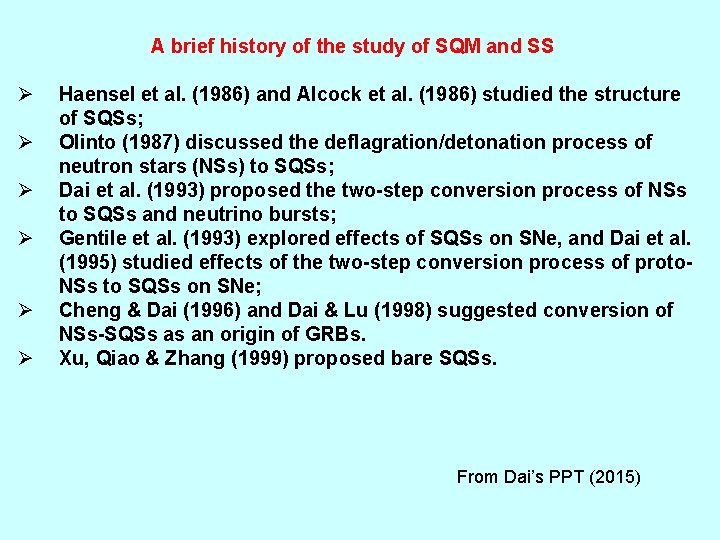
A brief history of the study of SQM and SS Ø Ø Ø Haensel et al. (1986) and Alcock et al. (1986) studied the structure of SQSs; Olinto (1987) discussed the deflagration/detonation process of neutron stars (NSs) to SQSs; Dai et al. (1993) proposed the two-step conversion process of NSs to SQSs and neutrino bursts; Gentile et al. (1993) explored effects of SQSs on SNe, and Dai et al. (1995) studied effects of the two-step conversion process of proto. NSs to SQSs on SNe; Cheng & Dai (1996) and Dai & Lu (1998) suggested conversion of NSs-SQSs as an origin of GRBs. Xu, Qiao & Zhang (1999) proposed bare SQSs. From Dai’s PPT (2015)
Outline 1. Background: strange quark stars 2. Strange stars vs. neutron stars 3. Strange star-Strange planet system 4. Conclusions
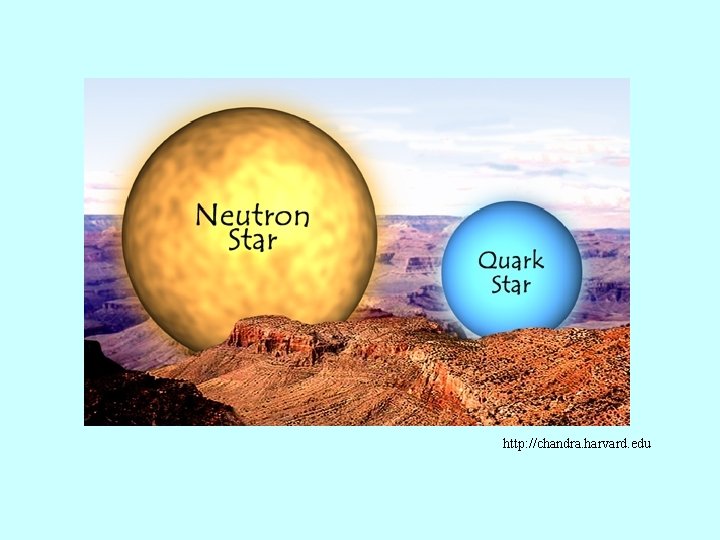
http: //chandra. harvard. edu
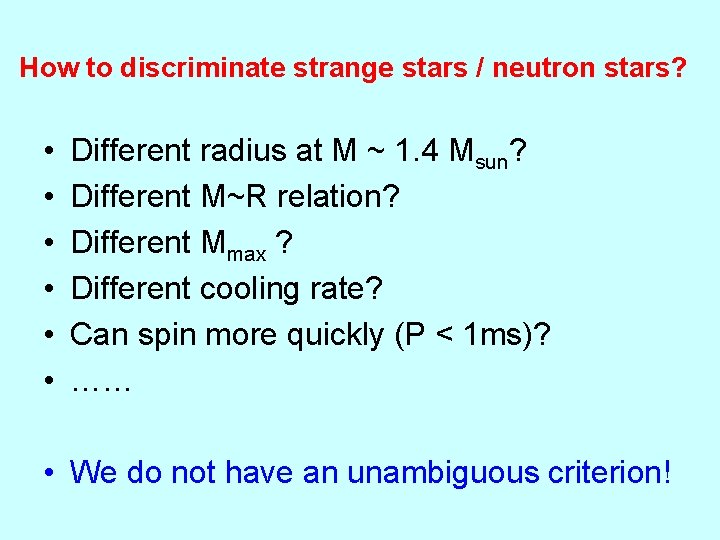
How to discriminate strange stars / neutron stars? • • • Different radius at M ~ 1. 4 Msun? Different M~R relation? Different Mmax ? Different cooling rate? Can spin more quickly (P < 1 ms)? ……
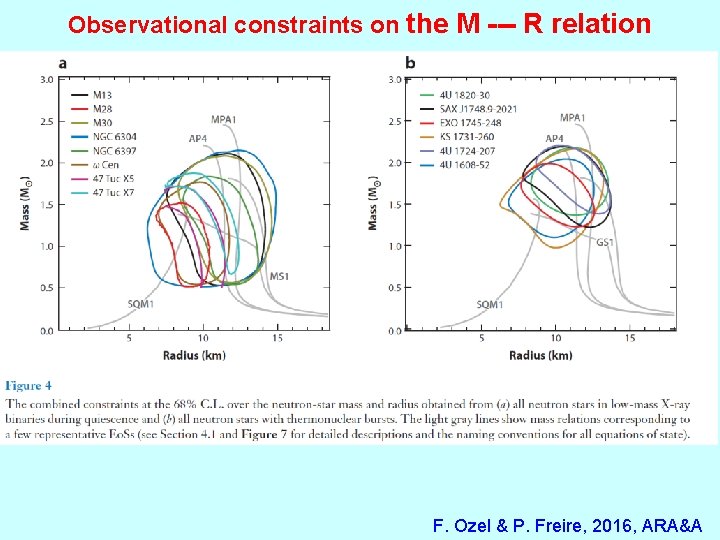
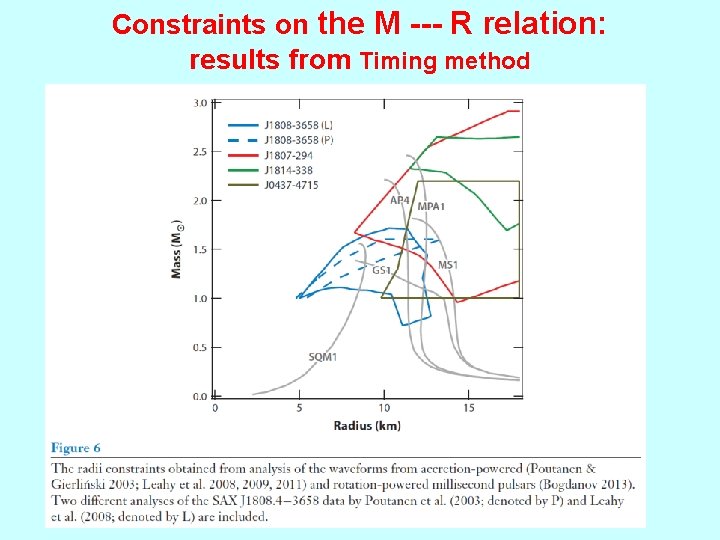
Observational constraints on the M --- R relation F. Ozel & P. Freire, 2016, ARA&A
Constraints on the M --- R relation: results from Timing method
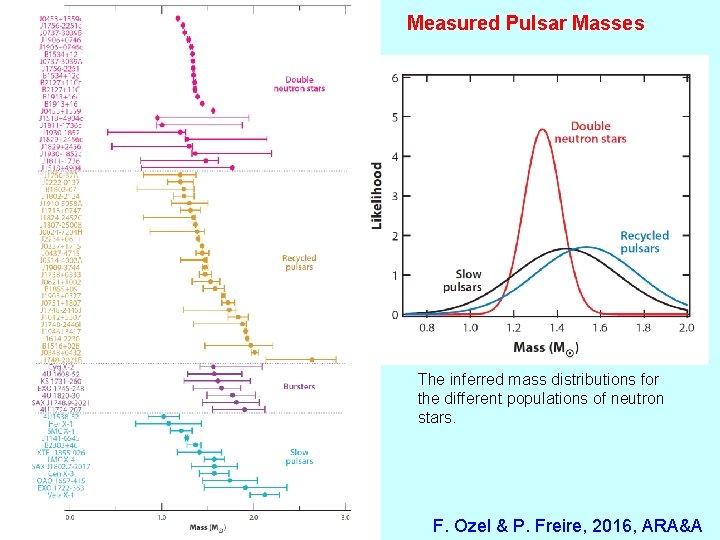
Measured Pulsar Masses The inferred mass distributions for the different populations of neutron stars. F. Ozel & P. Freire, 2016, ARA&A
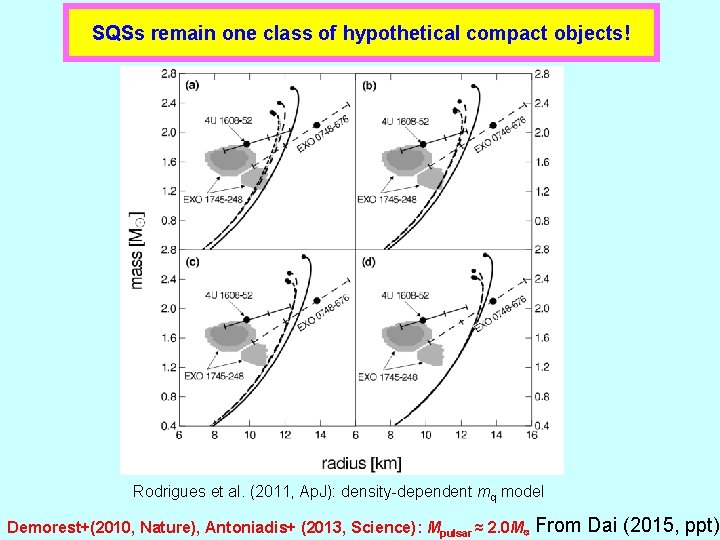
SQSs remain one class of hypothetical compact objects! Rodrigues et al. (2011, Ap. J): density-dependent mq model Demorest+(2010, Nature), Antoniadis+ (2013, Science): Mpulsar ≈ 2. 0 M⊙ From Dai (2015, ppt)
How to discriminate strange stars / neutron stars? • • • Different radius at M ~ 1. 4 Msun? Different M~R relation? Different Mmax ? Different cooling rate? Can spin more quickly (P < 1 ms)? …… • We do not have an unambiguous criterion!
Outline 1. Background: strange quark stars 2. Strange stars vs. neutron stars 3. Strange star-Strange planet system 4. Conclusions
(Glendenning 1995). Parameters of bare strange planets M R : 10 -9 Msun 10 -6 Msun 10 -5 Msun 10 -4 Msun 8 m 80 m 170 m 370 m
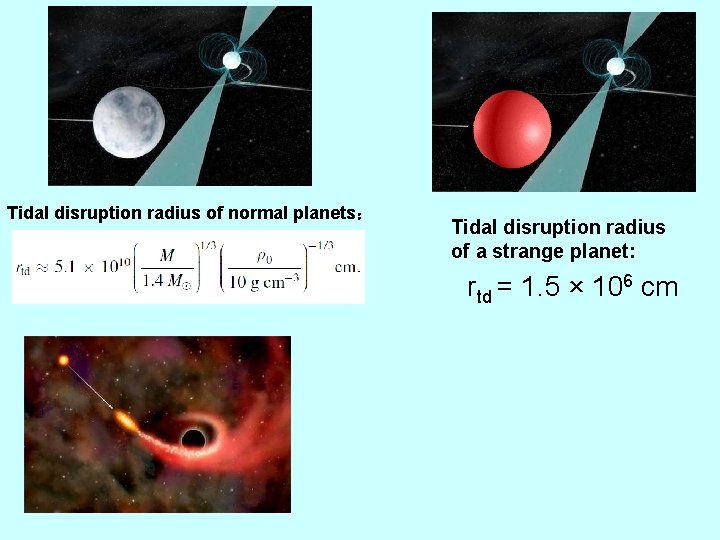
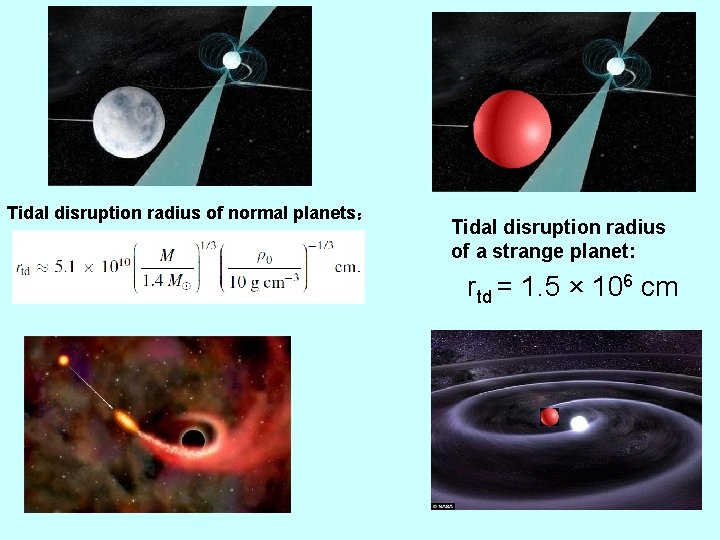
Tidal disruption radius of normal planets: Tidal disruption radius of a strange planet: rtd = 1. 5 × 106 cm
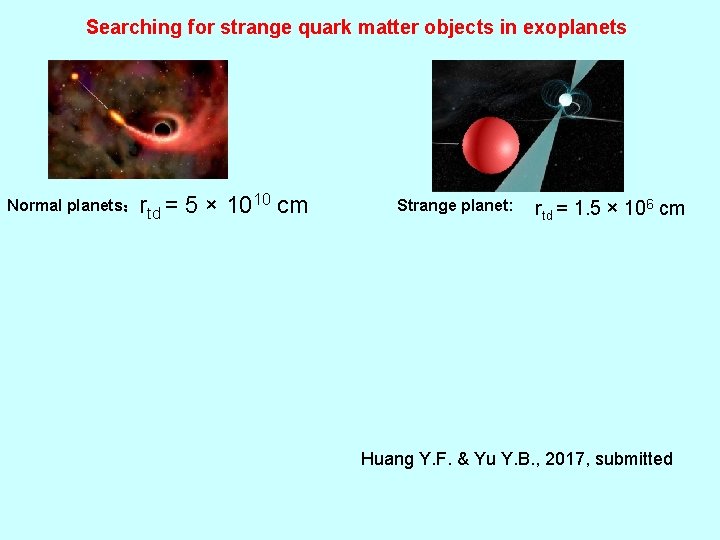
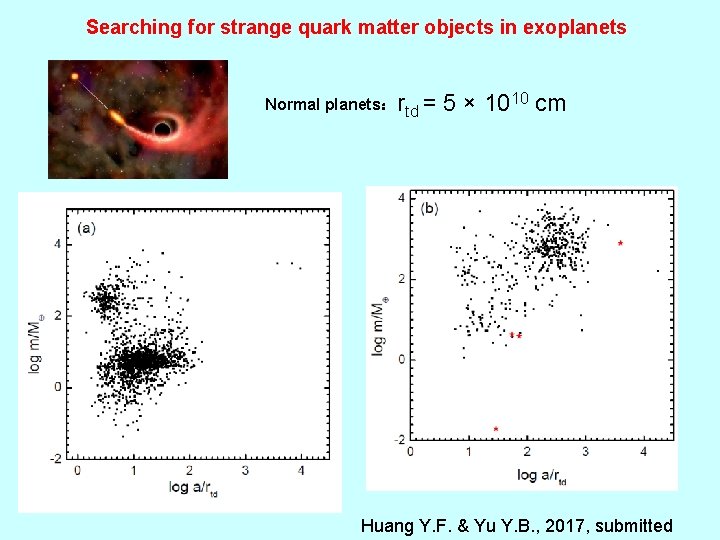
Searching for strange quark matter objects in exoplanets Normal planets:rtd = 5 × 1010 cm Strange planet: rtd = 1. 5 × 106 cm Huang Y. F. & Yu Y. B. , 2017, submitted
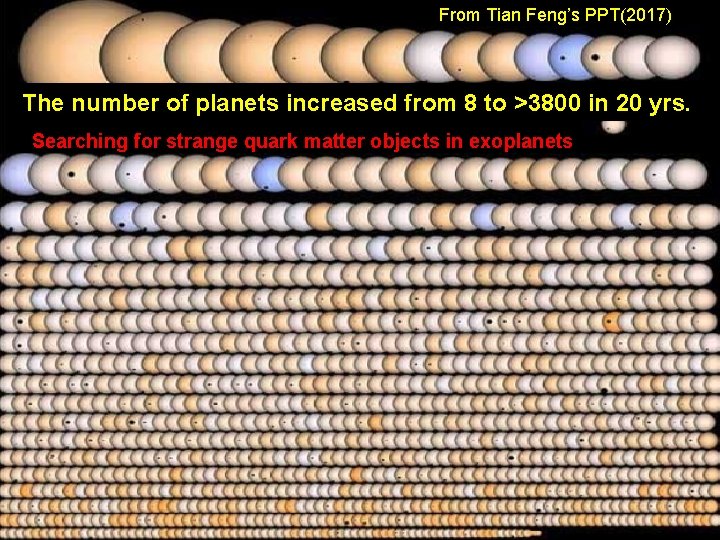
From Tian Feng’s PPT(2017) The number of planets increased from 8 to >3800 in 20 yrs. Searching for strange quark matter objects in exoplanets
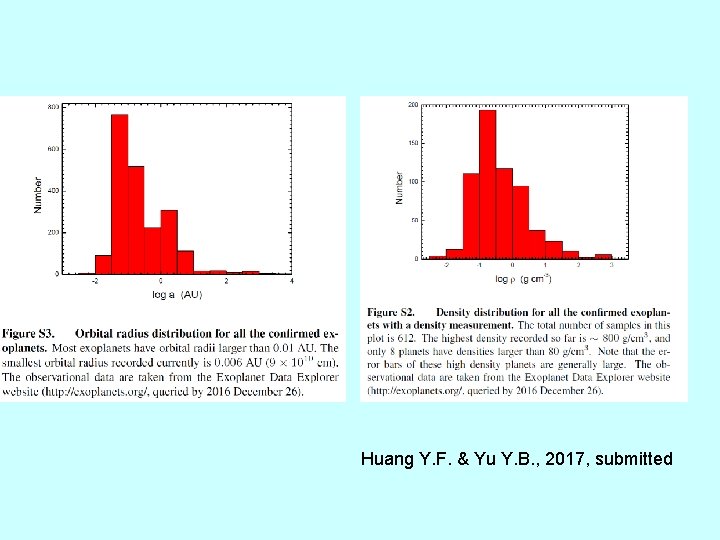
Huang Y. F. & Yu Y. B. , 2017, submitted
Searching for strange quark matter objects in exoplanets Normal planets:rtd = 5 × 1010 cm Huang Y. F. & Yu Y. B. , 2017, submitted
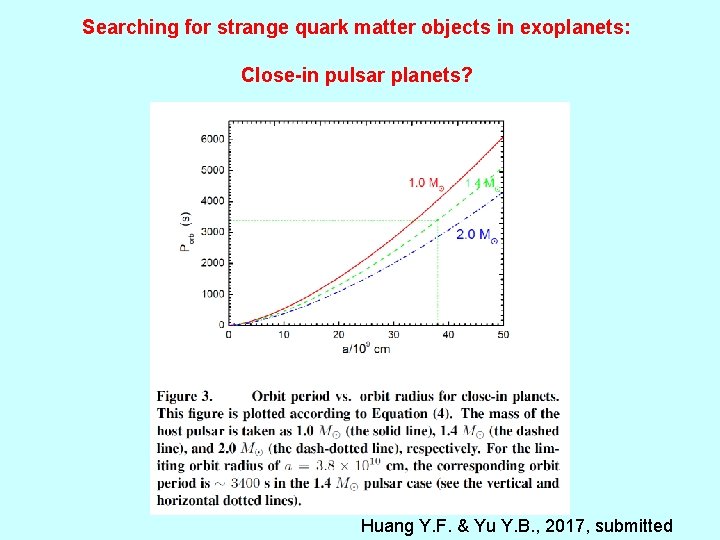
Searching for strange quark matter objects in exoplanets: Close-in pulsar planets? Huang Y. F. & Yu Y. B. , 2017, submitted
Tidal disruption radius of normal planets: Tidal disruption radius of a strange planet: rtd = 1. 5 × 106 cm
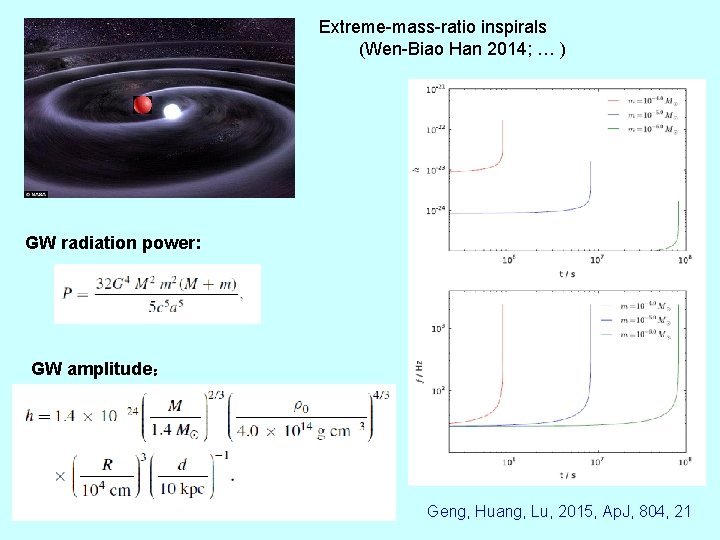
Extreme-mass-ratio inspirals (Wen-Biao Han 2014; … ) GW radiation power: GW amplitude: Geng, Huang, Lu, 2015, Ap. J, 804, 21
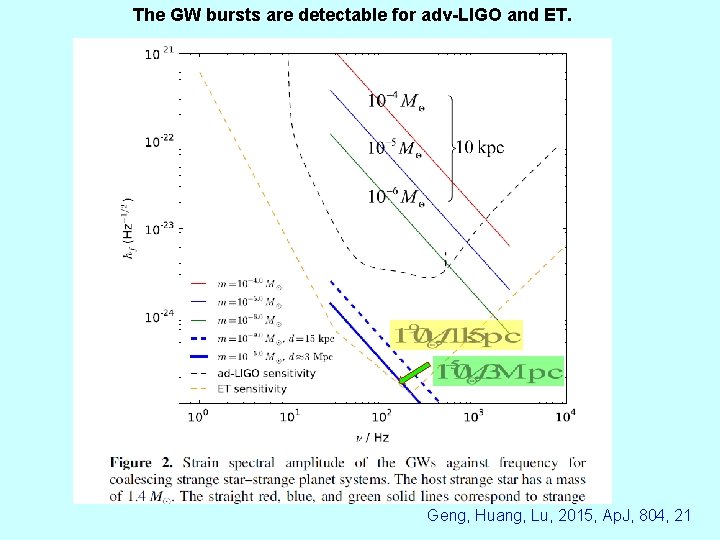
The GW bursts are detectable for adv-LIGO and ET. Geng, Huang, Lu, 2015, Ap. J, 804, 21
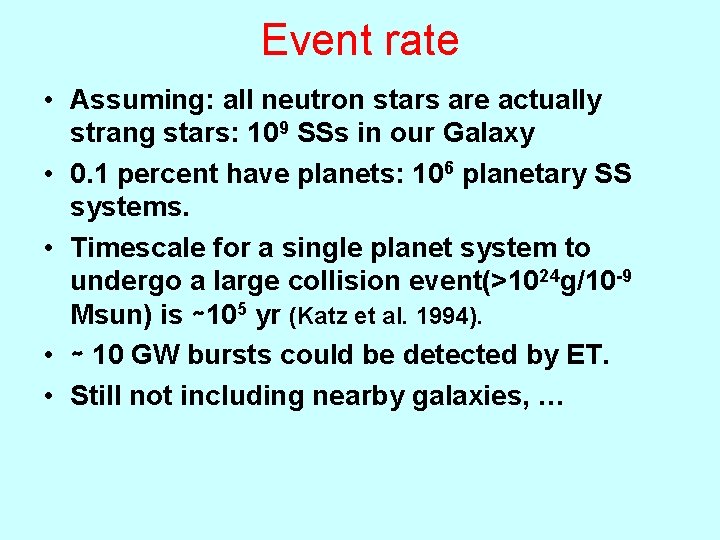
Event rate • Assuming: all neutron stars are actually strang stars: 109 SSs in our Galaxy • 0. 1 percent have planets: 106 planetary SS systems. • Timescale for a single planet system to undergo a large collision event(>1024 g/10 -9 Msun) is ∼ 105 yr (Katz et al. 1994). • ∼ 10 GW bursts could be detected by ET. • Still not including nearby galaxies, …
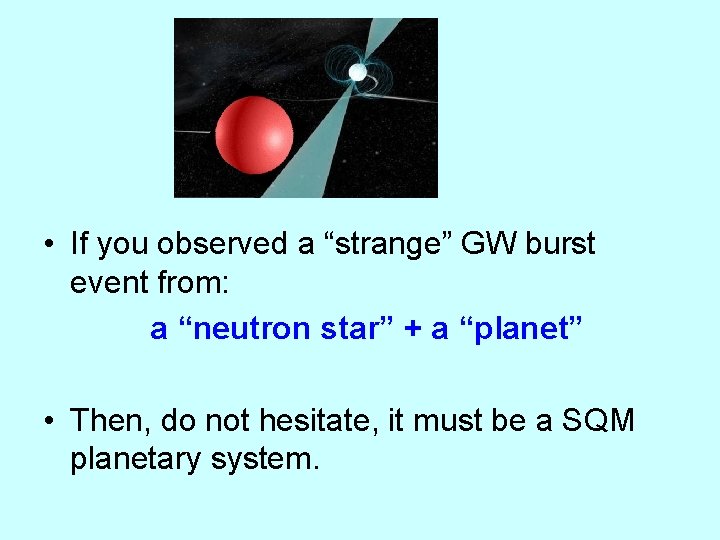
• If you observed a “strange” GW burst event from: a “neutron star” + a “planet” • Then, do not hesitate, it must be a SQM planetary system.
Outline 1. Background: strange quark stars 2. Strange stars vs. neutron stars 3. G-waves from merging SS-Strange planet 4. Conclusions
Conclusions 1. SQM could be the true ground state of hadronic matter. 2. Pulsars may actually be strange stars. 3. Strange planets may exist. 4. Merging S-star/S-planet could produce GW bursts: a unique probe to test the SQM hypothesis. Thank You!