
SEARCHING FOR BETTER FEEDBACK Jemma Sherwood jemmaths MARKING

SEARCHING FOR BETTER FEEDBACK Jemma Sherwood @jemmaths
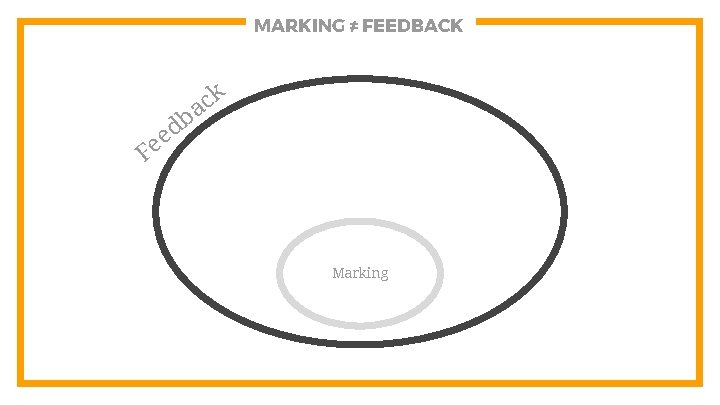
MARKING ≠ FEEDBACK b d e k c a Fe Marking
THE BEHEMOTH IN THE ROOM Marking is king
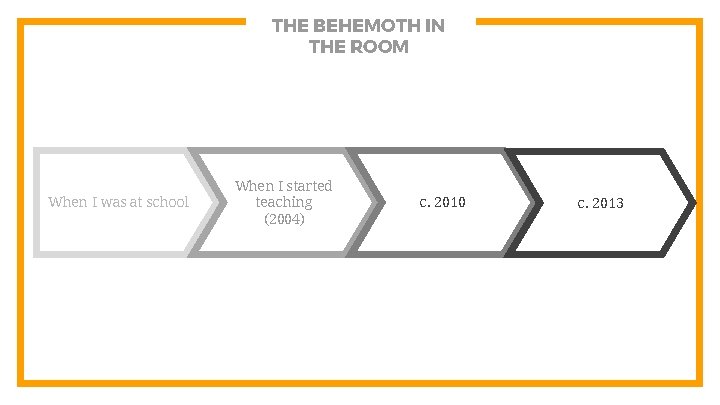
THE BEHEMOTH IN THE ROOM When I was at school When I started teaching (2004) c. 2010 c. 2013
A PROBLEM We don’t actually know if marking is any good
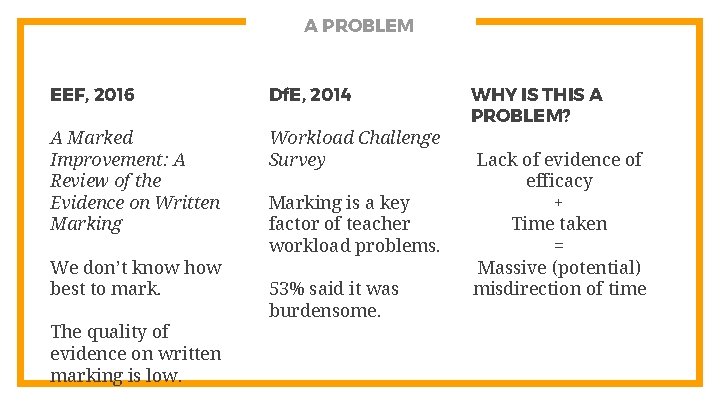
A PROBLEM EEF, 2016 Df. E, 2014 A Marked Improvement: A Review of the Evidence on Written Marking Workload Challenge Survey We don’t know how best to mark. The quality of evidence on written marking is low. Marking is a key factor of teacher workload problems. 53% said it was burdensome. WHY IS THIS A PROBLEM? Lack of evidence of efficacy + Time taken = Massive (potential) misdirection of time
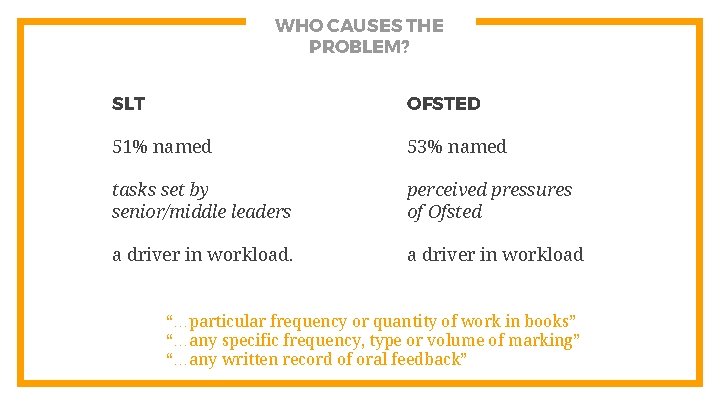
WHO CAUSES THE PROBLEM? SLT OFSTED 51% named 53% named tasks set by senior/middle leaders perceived pressures of Ofsted a driver in workload “…particular frequency or quantity of work in books” “…any specific frequency, type or volume of marking” “…any written record of oral feedback”
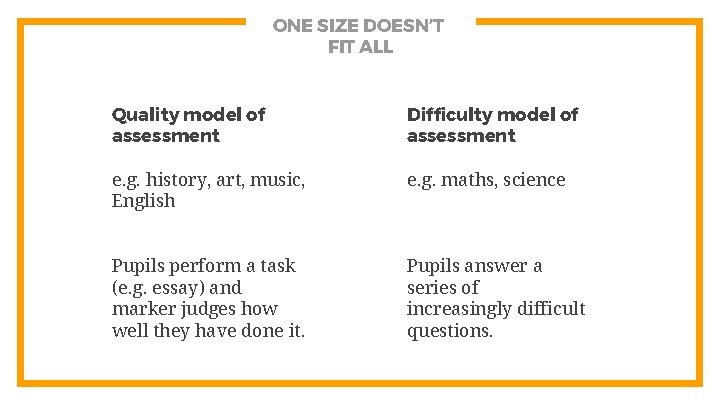
ONE SIZE DOESN’T FIT ALL Quality model of assessment Difficulty model of assessment e. g. history, art, music, English e. g. maths, science Pupils perform a task (e. g. essay) and marker judges how well they have done it. Pupils answer a series of increasingly difficult questions.

SOME THINGS WE DO KNOW Feedback is extremely important
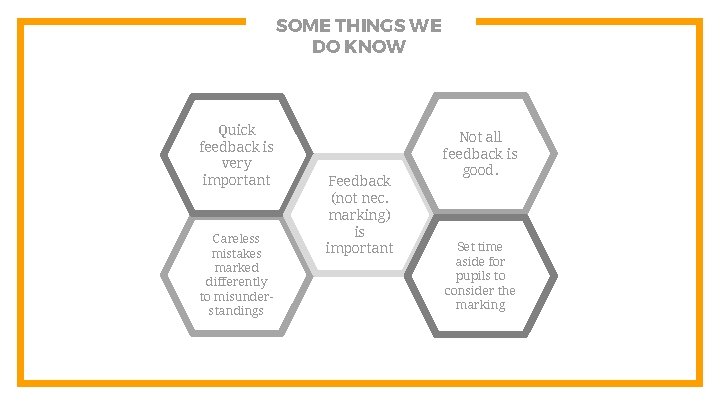
SOME THINGS WE DO KNOW Quick feedback is very important Careless mistakes marked differently to misunderstandings Feedback (not nec. marking) is important Not all feedback is good. Set time aside for pupils to consider the marking
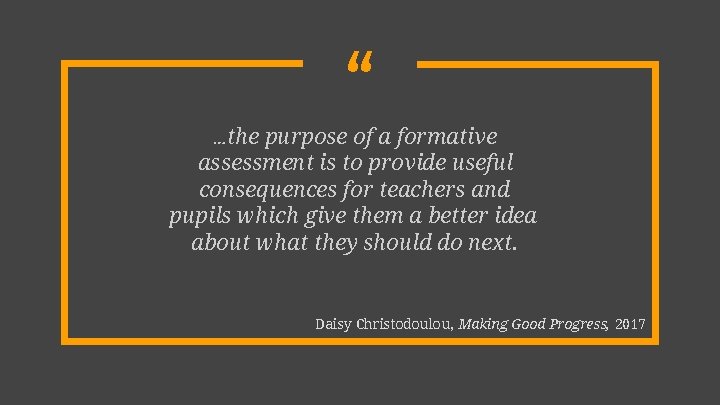
“ …the purpose of a formative assessment is to provide useful consequences for teachers and pupils which give them a better idea about what they should do next. Daisy Christodoulou, Making Good Progress, 2017

WHAT ELSE COULD WE DO? When feedback informs the teachers’ next steps it is most effective
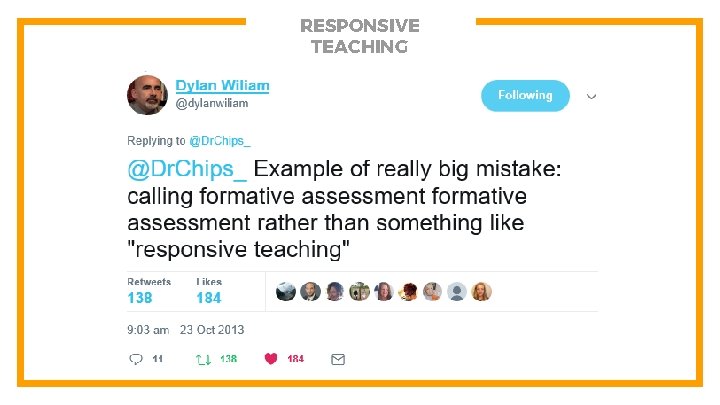
RESPONSIVE TEACHING

RESPONSIVE TEACHING
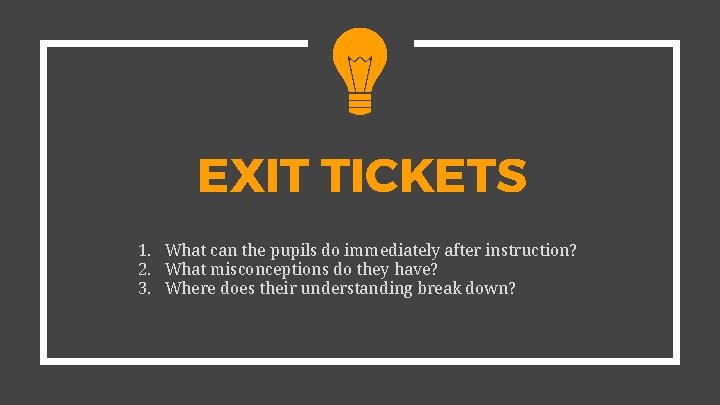
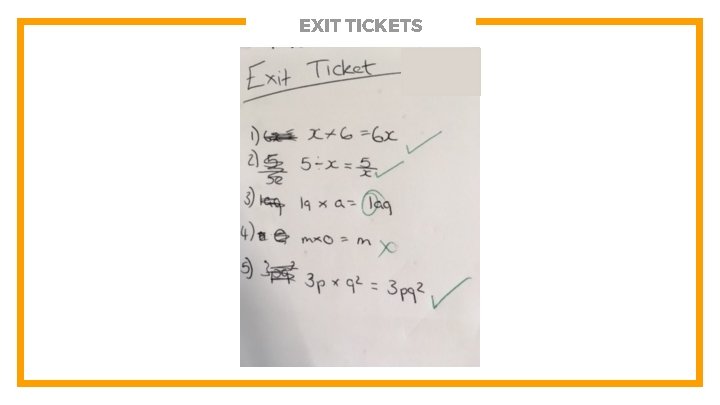
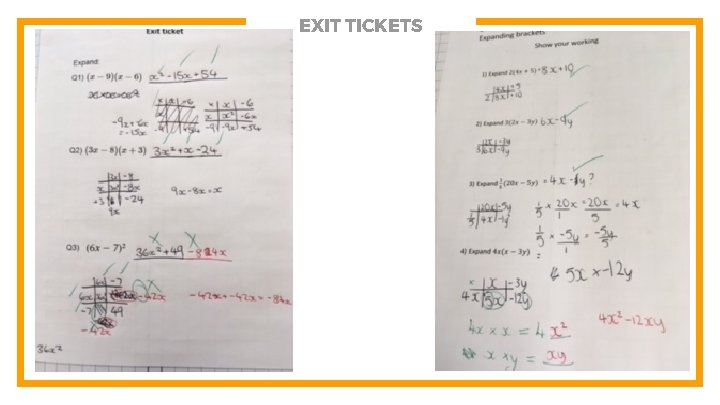
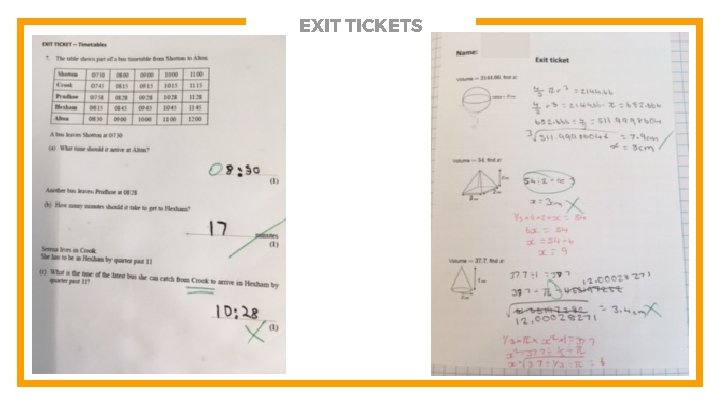
EXIT TICKETS 1. What can the pupils do immediately after instruction? 2. What misconceptions do they have? 3. Where does their understanding break down?
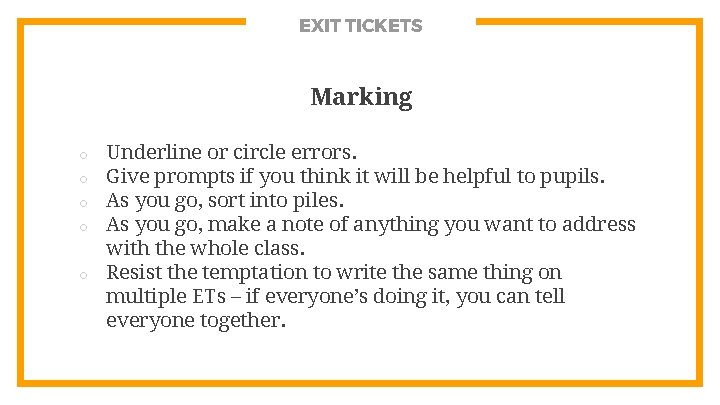
EXIT TICKETS Marking Underline or circle errors. Give prompts if you think it will be helpful to pupils. As you go, sort into piles. As you go, make a note of anything you want to address with the whole class. o Resist the temptation to write the same thing on multiple ETs – if everyone’s doing it, you can tell everyone together. o o
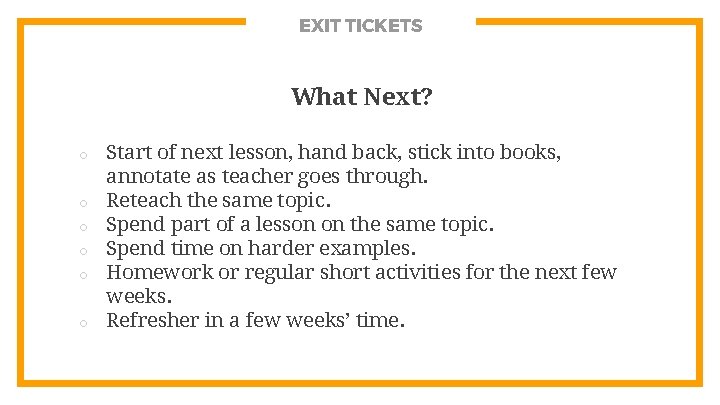
EXIT TICKETS What Next? o o o Start of next lesson, hand back, stick into books, annotate as teacher goes through. Reteach the same topic. Spend part of a lesson on the same topic. Spend time on harder examples. Homework or regular short activities for the next few weeks. Refresher in a few weeks’ time.

EXIT TICKETS
EXIT TICKETS
EXIT TICKETS
EXIT TICKETS
EXIT TICKETS Our Policy o Minimum 50% of lessons. o Circulate in lessons, helping and correcting pupils as they work. o All work is marked (self- or peer-marking) so teacher can check quality and help with mistakes. o Combined with regular low-stakes quizzes, Numeracy Ninjas and half-termly assessments, pupils are getting extremely regular contact.
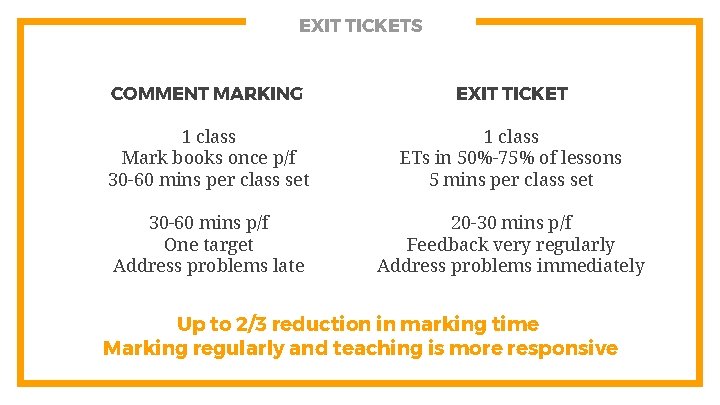
EXIT TICKETS COMMENT MARKING EXIT TICKET 1 class Mark books once p/f 30 -60 mins per class set 1 class ETs in 50%-75% of lessons 5 mins per class set 30 -60 mins p/f One target Address problems late 20 -30 mins p/f Feedback very regularly Address problems immediately Up to 2/3 reduction in marking time Marking regularly and teaching is more responsive
THANKS! Any questions? @jemmaths
- Slides: 24