
Seals and Sealing in Uruk Mesopotamia British Museum
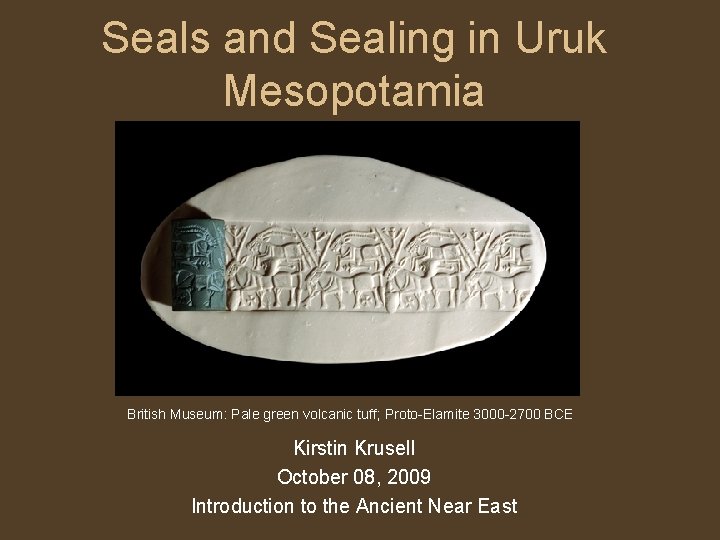
Seals and Sealing in Uruk Mesopotamia British Museum: Pale green volcanic tuff; Proto-Elamite 3000 -2700 BCE Kirstin Krusell October 08, 2009 Introduction to the Ancient Near East
The Uruk Period • Chalcolithic to Early Bronze Age – ca. 4000 -3100 BCE • Named for the Sumerian city of Uruk, also known as Warka or the Biblical Erech – Located on eastern coast of southern Euphrates • Defined by gradual emergence of urban life and cuneiform writing

The Context of Cuneiform • Urbanization and population increase – Need for more sophisticated administrative systems • Earliest known written documents discovered in Uruk – Pictographs gradually transformed into cuneiform • Seals found even earlier than tablets – Devised for more efficient and reliable transactions – Seals cover same geographic scope as cuneiform – Seals dated by cuneiform inscriptions
Cylinder Seals • Variety of materials – stone and mineral: lapis lazuli (imported from Afghanistan), calcite (marble), carnelian, amethyst, steatite (soapstone), hematite – glass, faience, baked clay, wood, bone, shell, ivory, metal • Often pierced lengthwise with caps at either end or topped with animal-shaped knob. – worn on pin/string, or mounted on swivel • Design carved in intaglio – incised on cylinder so that impression yields image in relief
Ancient and Contemporary Uses • Protect private property – seal jars, doors – evidence of tampering is obvious • Notarize/authorize legal transactions – contracts, loans, treaties, etc. – developed from hollow clay balls/tokens • Seals come to be associated with the protection of the owner – used in rituals against illness, jealousy • Vast source of pictorial information – political, cultural, economic, societal aspects – genealogical information
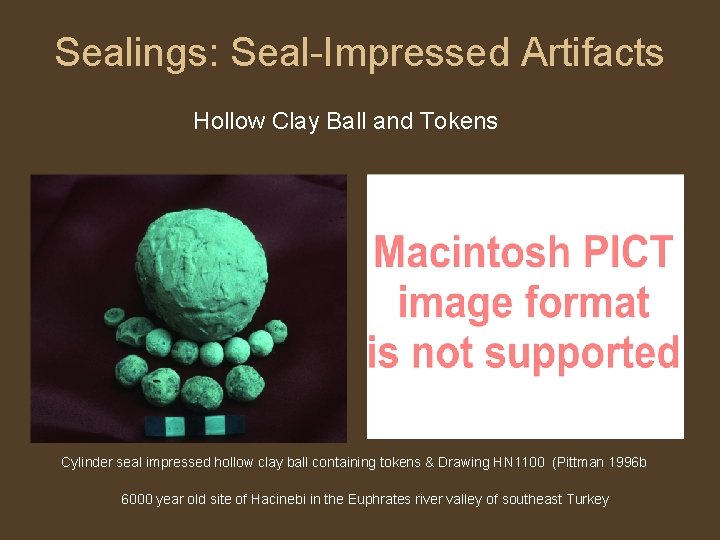
Sealings: Seal-Impressed Artifacts Hollow Clay Ball and Tokens Cylinder seal impressed hollow clay ball containing tokens & Drawing HN 1100 (Pittman 1996 b 6000 year old site of Hacinebi in the Euphrates river valley of southeast Turkey
Jar Stoppers Uruk cylinder-seal impressed jar stopper. "Ears" motif. HN 9410 -Op. 14 locus 80 & Drawing. (Pittman 1999: fig. 3)
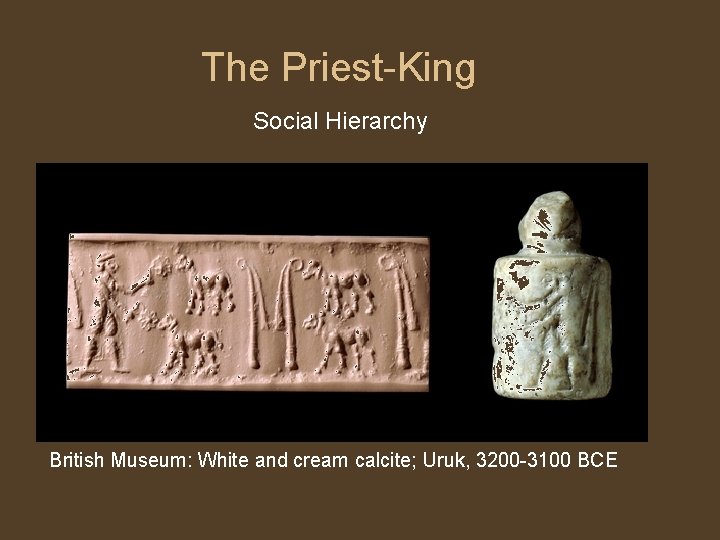
The Priest-King Social Hierarchy British Museum: White and cream calcite; Uruk, 3200 -3100 BCE
Cattle Herd in a Wheat Field Animal Files Department of Oriental Antiquities Limestone, Mesopotamia, Uruk Period (4100 - 3000 BCE).
Monstrous Lions and Lion-Headed Eagles Mythical Beasts Department of Oriental Antiquities; Jasper cylinder seal and impression; Mesopotamia, Uruk Period (4100 BCミ 3000 BC).
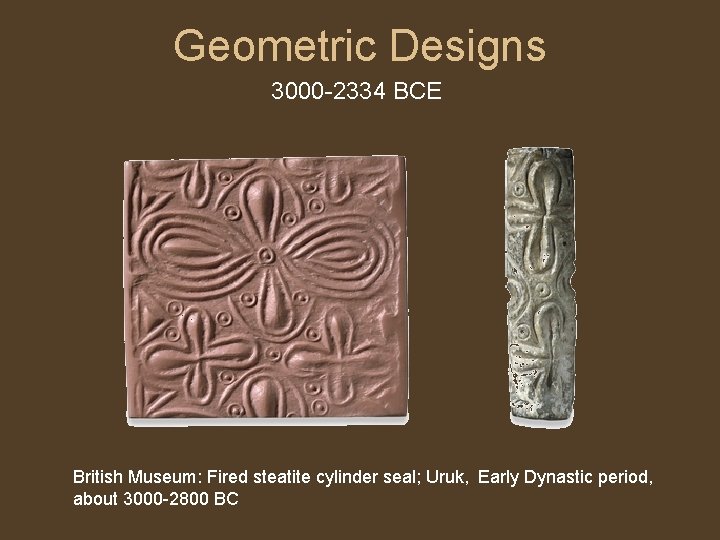
Geometric Designs 3000 -2334 BCE British Museum: Fired steatite cylinder seal; Uruk, Early Dynastic period, about 3000 -2800 BC
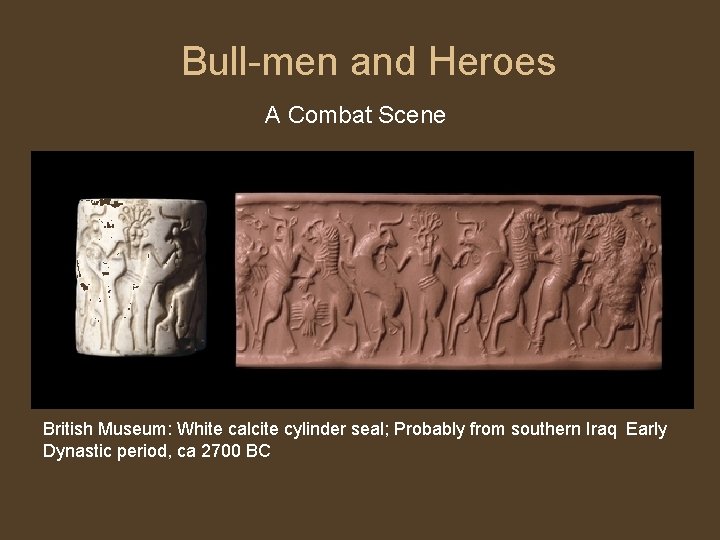
Bull-men and Heroes A Combat Scene British Museum: White calcite cylinder seal; Probably from southern Iraq Early Dynastic period, ca 2700 BC
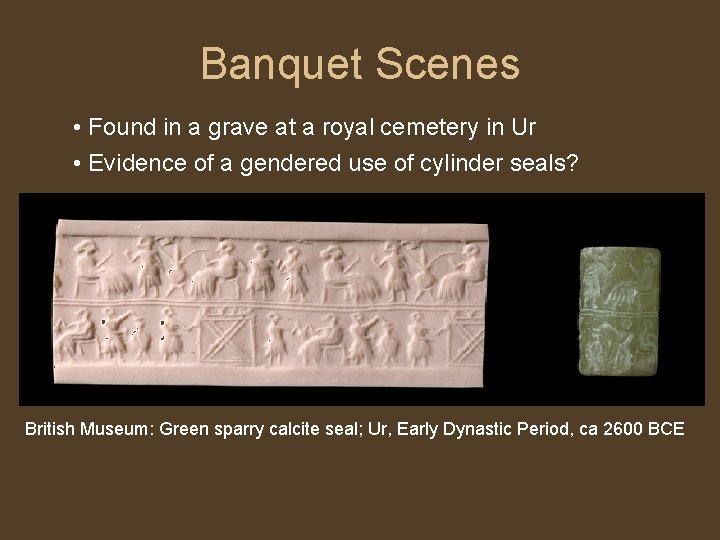
Banquet Scenes • Found in a grave at a royal cemetery in Ur • Evidence of a gendered use of cylinder seals? British Museum: Green sparry calcite seal; Ur, Early Dynastic Period, ca 2600 BCE
Sources • British Museum Website – http: //www. britishmuseum. org/ • Collon, Dominique. First Impression: Cylinder Seals in the Ancient Near East. London: British Museum Press, 1987. • Hacinebi Archaeological Excavations – http: //faculty-web. at. northwestern. edu/anthropology/stein/ • Roaf, Michael. Cultural Atlas of Mesopotamia and the Ancient Near East. Oxfordshire: Andromeda Oxford Ltd, 1990. • Wikimedia Commons – http: //commons. wikimedia. org/wiki/Main_Page
- Slides: 15