
Seafloor massive sulphide SMS deposits Iain Stobbs Ph

Seafloor massive sulphide (SMS) deposits Iain Stobbs Ph. D Student - SPITFIRE University of Southampton & National Oceanography Centre Hydrothermal vent at depth 2. 4 km in the Southern Ocean; (c) NERC Ch. Es. So Consortium

Hydrothermal Seafloor Massive Sulphides (SMS) Middle Valley TAG mound SMS Global distribution of hydrothermal vents (Hannington et al. 2011) - Located at or near ocean spreading ridges Over 500 active hydrothermal venting systems discovered - Medium spreading rate Juan de Fuca Ridge - Sediment rich system - Comparable to ‘Besshi type’ VMS deposits - Slow spreading Mid-Atlantic ridge - Low sedimentation rate - Multiple proven inactive vents within the TAG hydrothermal field - Comparable to ‘Cyprus type’ VMS deposits
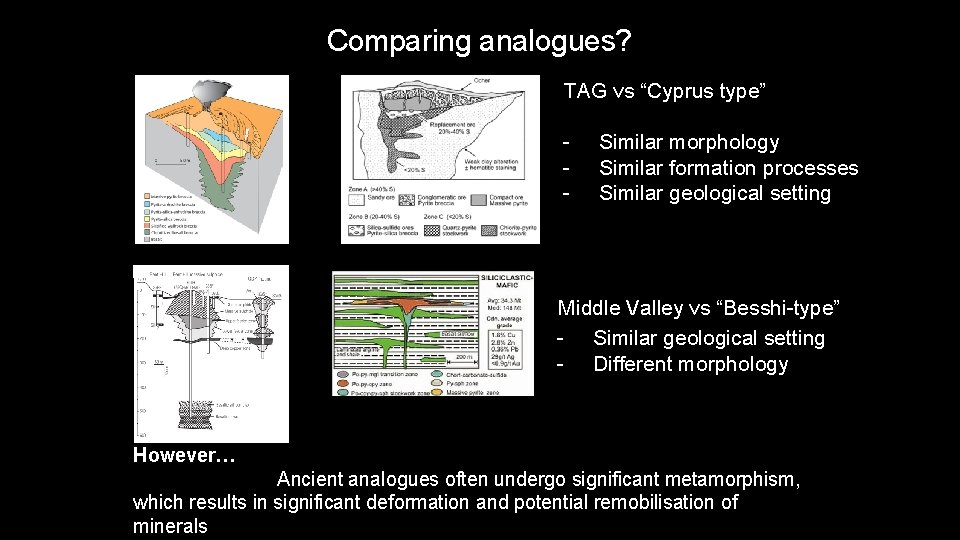
Comparing analogues? TAG vs “Cyprus type” - Similar morphology Similar formation processes Similar geological setting Middle Valley vs “Besshi-type” - Similar geological setting - Different morphology However… Ancient analogues often undergo significant metamorphism, which results in significant deformation and potential remobilisation of minerals

My Research Area – TAG hydrothermal field Double Mound Shinkai Mound Southern Mound -- 2 research cruises focusing on the inactive deposits along the TAG segment - Obtained high resolution bathymetry (up to 0. 5 m resolution), drilled three inactive hydrothermal mounds
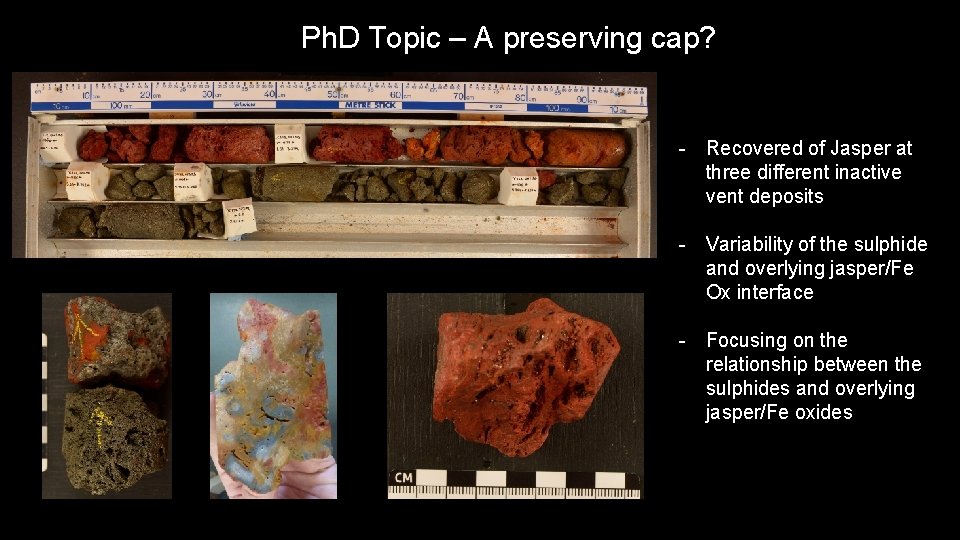
Ph. D Topic – A preserving cap? - Recovered of Jasper at three different inactive vent deposits - Variability of the sulphide and overlying jasper/Fe Ox interface - Focusing on the relationship between the sulphides and overlying jasper/Fe oxides
- Slides: 5