
Seafile Scalable Cloud Storage System Johnathan Xu Seafile
Seafile - Scalable Cloud Storage System Johnathan Xu Seafile Ltd.
Agenda Ø Seafile Introduction Ø Feature Overview Ø System Design & Performance Ø Roadmap
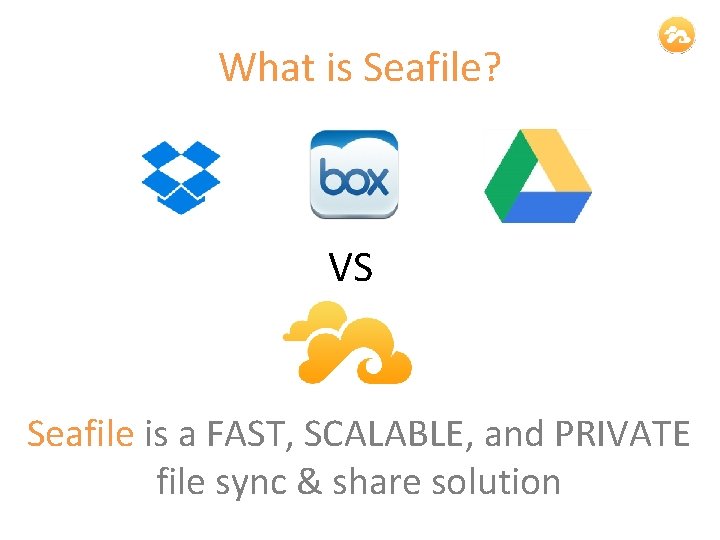
What is Seafile? VS Seafile is a FAST, SCALABLE, and PRIVATE file sync & share solution
What can Seafile do? • Fast and reliable file sync between cloud and devices • Scales to millions of files, PB class storage • High performance, light weight • Productive file collaboration – Groups – File prview, discussion – Message and notification
Who are using Seafile? • https: //github. com/haiwen/seafile 2400+ stars • Estimated at least 100 K users worldwide, most in Europe Universities in Rhineland-Palatine (Germany) belgian royal institute of natural sciences
Agenda Ø Seafile Introduction Ø Feature Overview Ø System Design & Performance Ø Roadmap
File Sync and Share • • Files are organized into Libraries Selective sync library to devices Sync with existing folder Client-side end-to-end data encryption Full platform support: Win, OSX, Linux, mobile Share to a person or a group Read-write and read-only share LDAP/AD integration
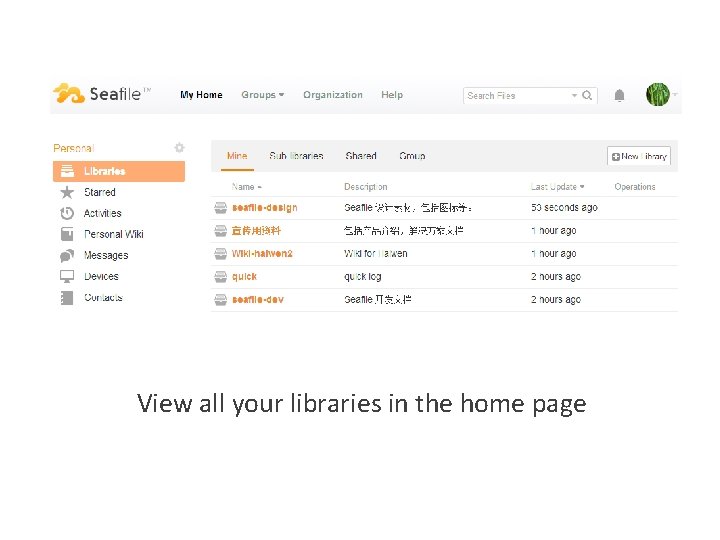
View all your libraries in the home page
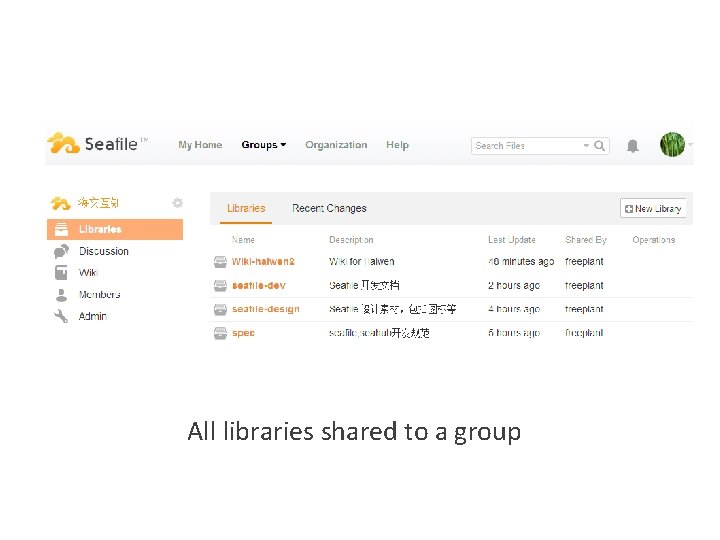
All libraries shared to a group
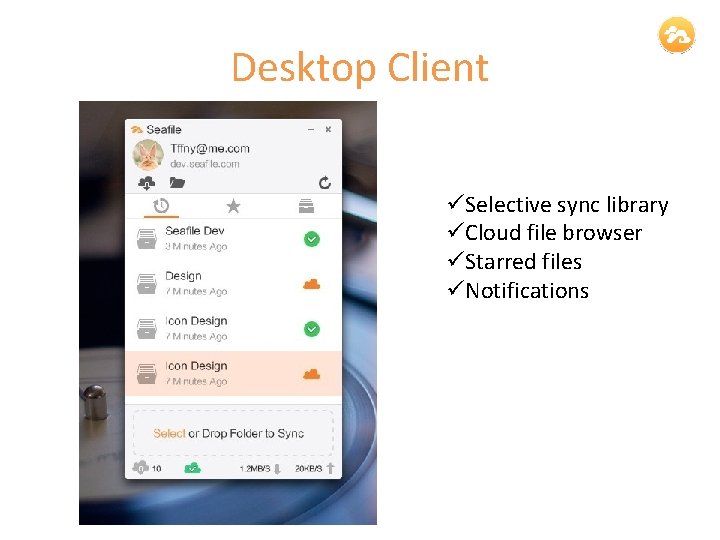
Desktop Client üSelective sync library üCloud file browser üStarred files üNotifications
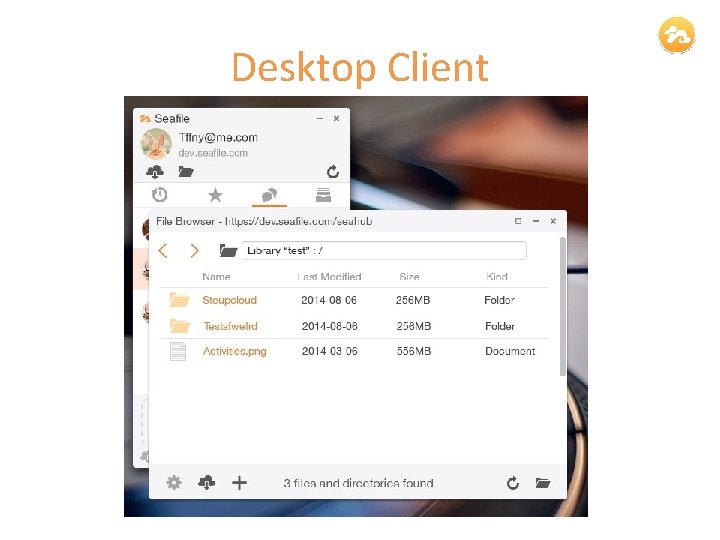
Desktop Client
Collaboration • • File activities Group discussion File discussion Message notifications
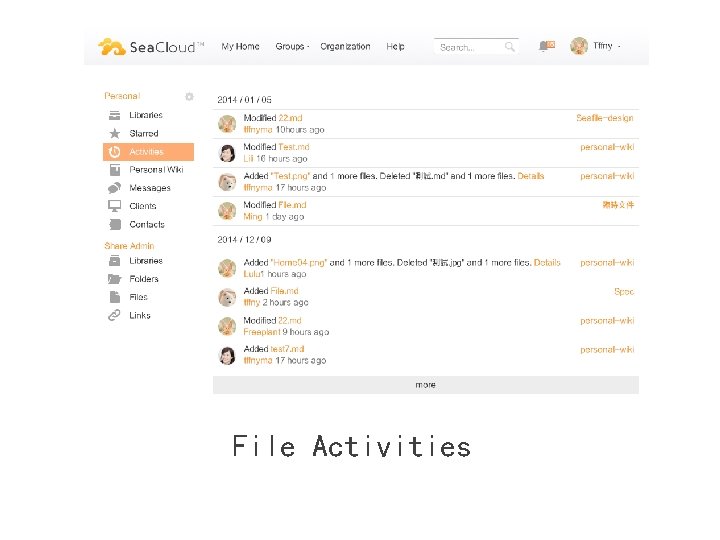
File Activities
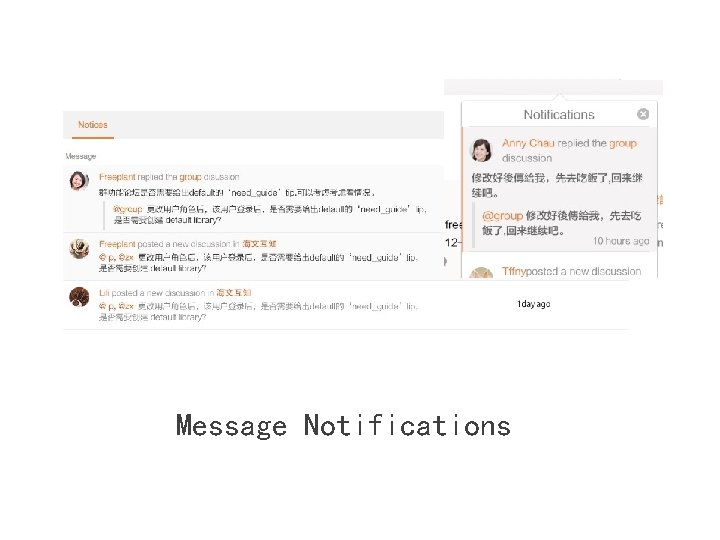
Message Notifications
Agenda Ø Seafile Introduction Ø Feature Overview Ø System Design & Performance Ø Roadmap
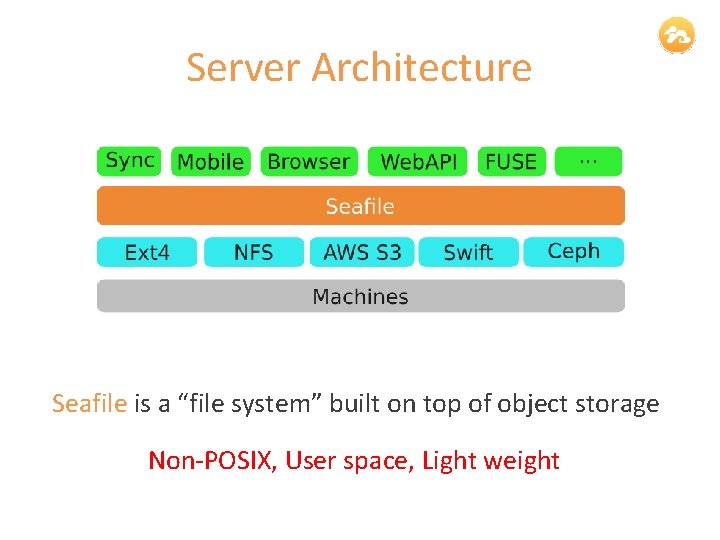
Server Architecture Seafile is a “file system” built on top of object storage Non-POSIX, User space, Light weight
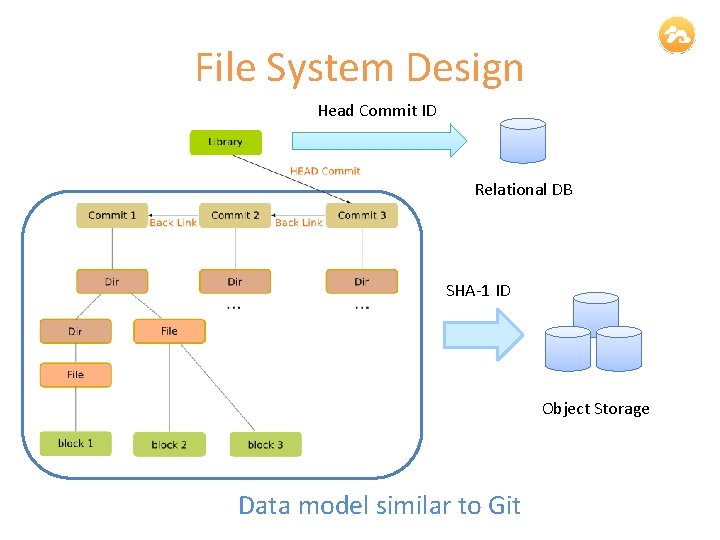
File System Design Head Commit ID Relational DB SHA-1 ID Object Storage Data model similar to Git
Design Advantage • Object storage is more scalable than file system – Heavy DB + Filesystem v. s. Light DB + Object Storage • No database bottleneck – Metadata is in object storage – Filesystem level versioning v. s. File-level versioning • File system designed for syncing – Storage/Network deduplication – No upload/download limit, fast upload • Backend daemons implemented in C
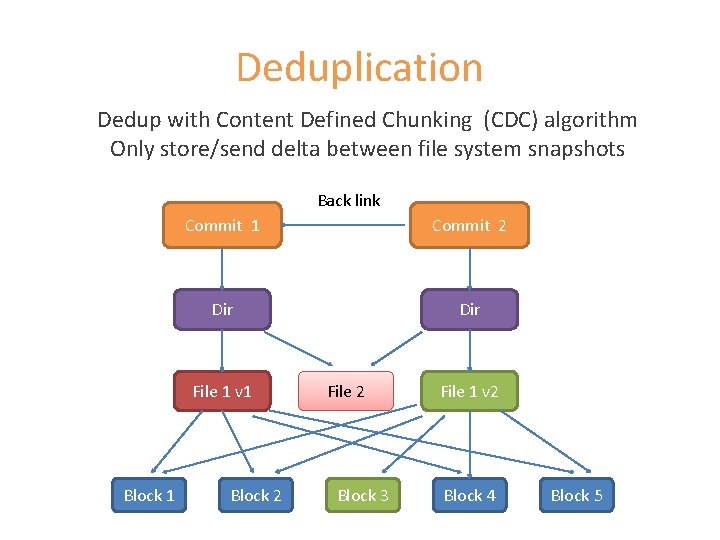
Deduplication Dedup with Content Defined Chunking (CDC) algorithm Only store/send delta between file system snapshots Back link Commit 1 Commit 2 Dir File 1 v 1 Block 2 File 2 Block 3 File 1 v 2 Block 4 Block 5
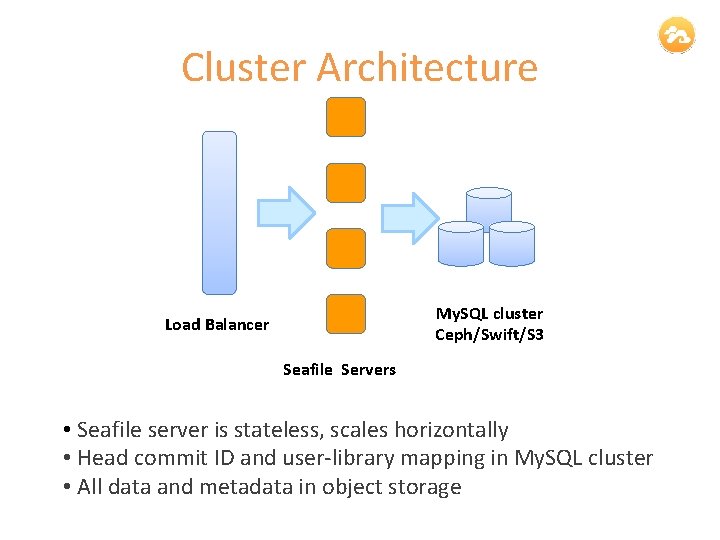
Cluster Architecture My. SQL cluster Ceph/Swift/S 3 Load Balancer Seafile Servers • Seafile server is stateless, scales horizontally • Head commit ID and user-library mapping in My. SQL cluster • All data and metadata in object storage
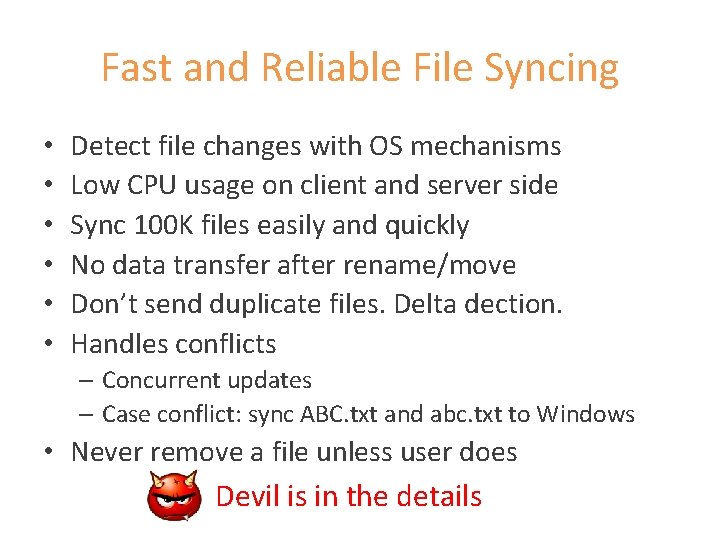
Fast and Reliable File Syncing • • • Detect file changes with OS mechanisms Low CPU usage on client and server side Sync 100 K files easily and quickly No data transfer after rename/move Don’t send duplicate files. Delta dection. Handles conflicts – Concurrent updates – Case conflict: sync ABC. txt and abc. txt to Windows • Never remove a file unless user does Devil is in the details
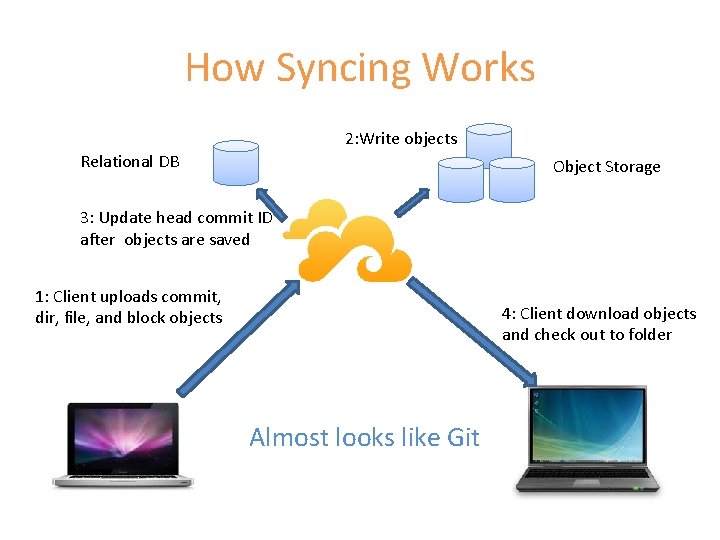
How Syncing Works 2: Write objects Relational DB Object Storage 3: Update head commit ID after objects are saved 1: Client uploads commit, dir, file, and block objects 4: Client download objects and check out to folder Almost looks like Git
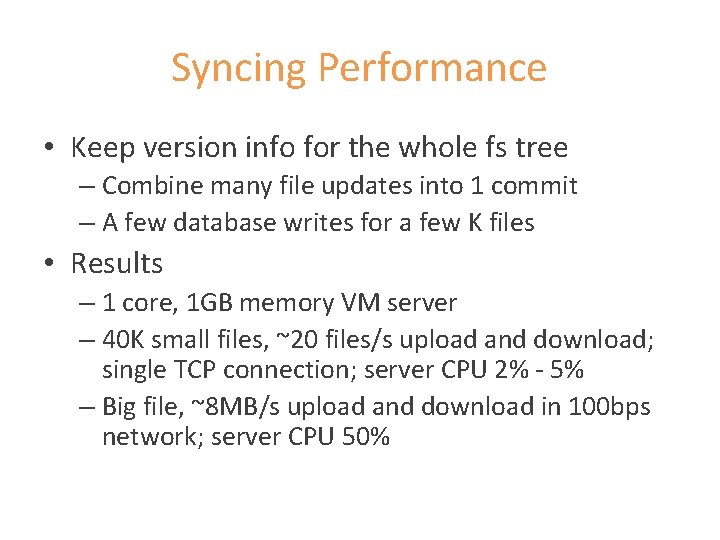
Syncing Performance • Keep version info for the whole fs tree – Combine many file updates into 1 commit – A few database writes for a few K files • Results – 1 core, 1 GB memory VM server – 40 K small files, ~20 files/s upload and download; single TCP connection; server CPU 2% - 5% – Big file, ~8 MB/s upload and download in 100 bps network; server CPU 50%
Agenda Ø Seafile Introduction Ø Feature Overview Ø System Design & Performance Ø Roadmap
Roadmap • Sync & Share – File locking for better collaboration – Hierarchical access control within a library • Auth integration – OAuth – Shibboleth • Improve GUI responsibility with backbone. js
Conclusion • Do one thing and do one thing well – Reliablity – Scalability – Performance Choose any three ; -) • Lightweight DB + Object Storage • Git like data model, no client-side history • Syncing model similar to Git, redesigned for auto syncing
Thanks!
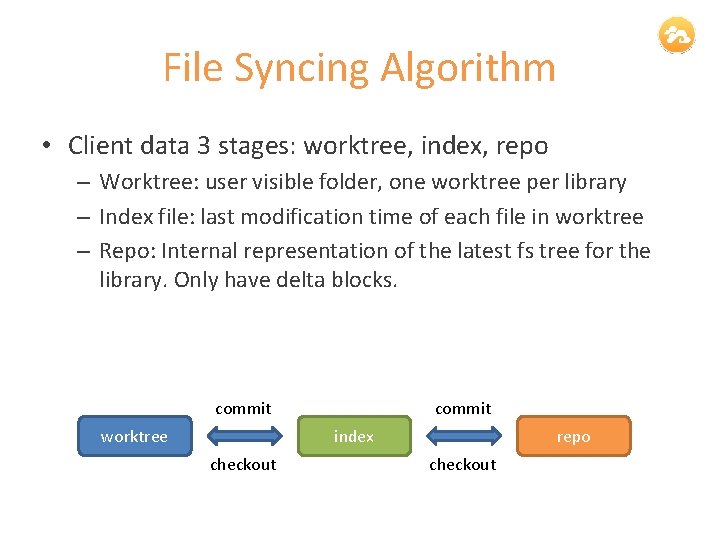
File Syncing Algorithm • Client data 3 stages: worktree, index, repo – Worktree: user visible folder, one worktree per library – Index file: last modification time of each file in worktree – Repo: Internal representation of the latest fs tree for the library. Only have delta blocks. commit worktree commit index checkout repo checkout
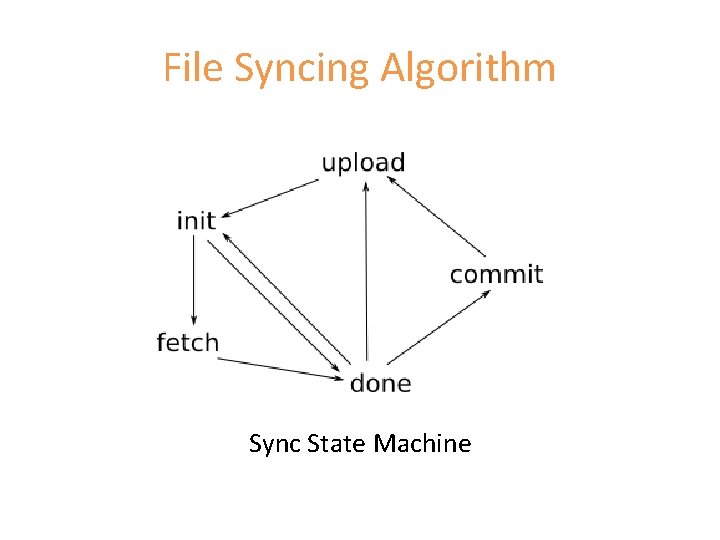
File Syncing Algorithm Sync State Machine
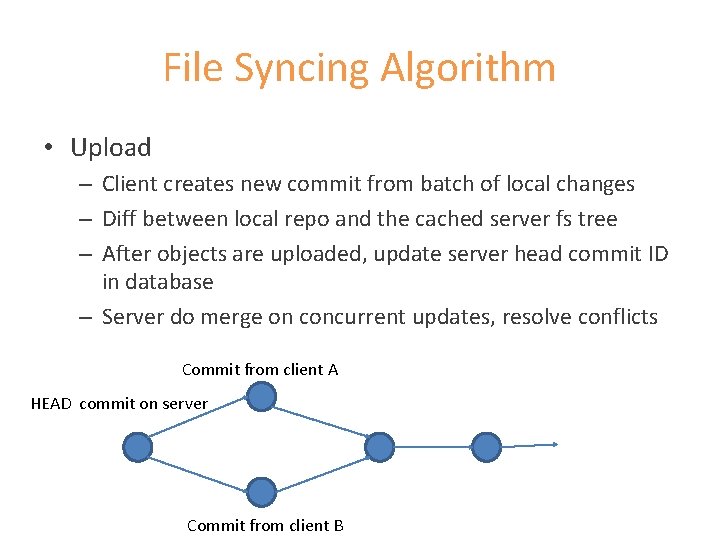
File Syncing Algorithm • Upload – Client creates new commit from batch of local changes – Diff between local repo and the cached server fs tree – After objects are uploaded, update server head commit ID in database – Server do merge on concurrent updates, resolve conflicts Commit from client A HEAD commit on server Commit from client B
File Syncing Algorithm • Version Check(init) – Client caches server’s head commit ID – Compare with server every 30 s, if not the same trigger download • download – Server calculate update list with diff – Client download and apply the update to worktree – Update cached server head commit ID
- Slides: 31