
Sea urchin Echinoidea Sea urchin external dorsal w

- Slides: 73
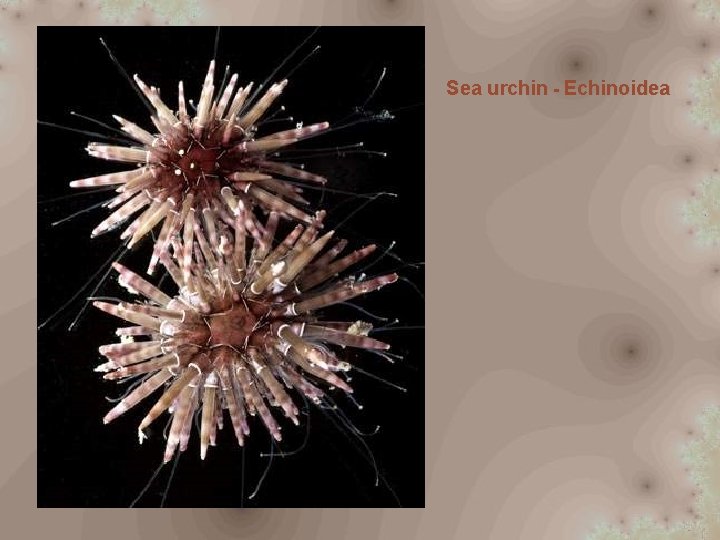
Sea urchin - Echinoidea
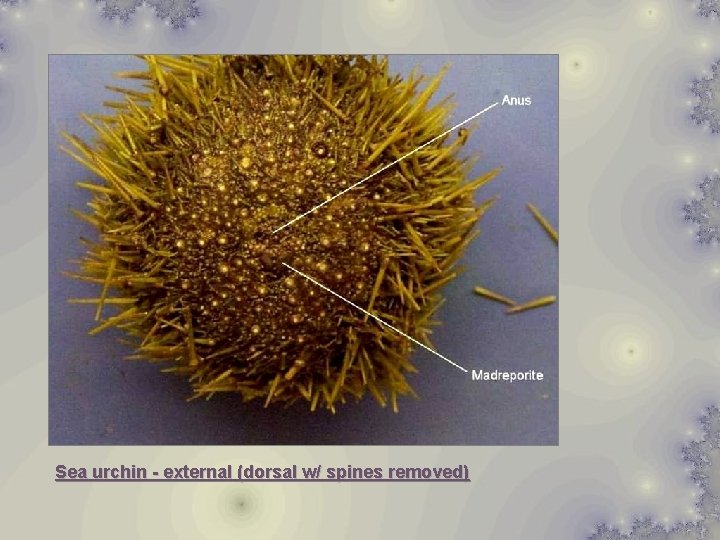
Sea urchin - external (dorsal w/ spines removed)
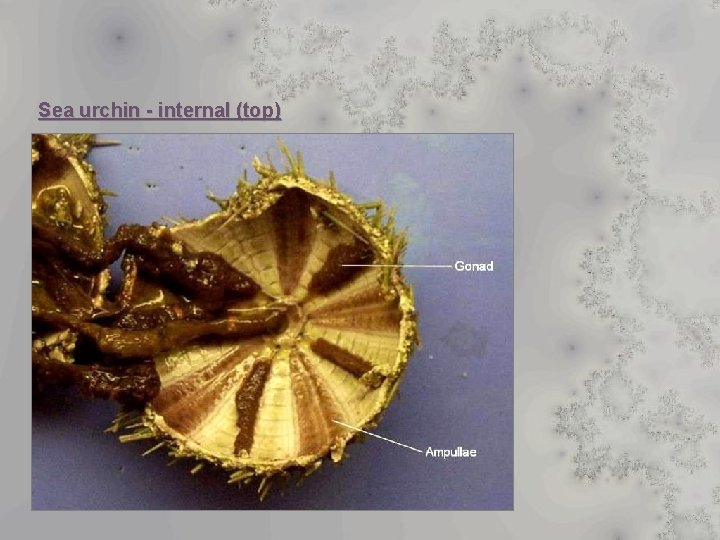
Sea urchin - internal (top)
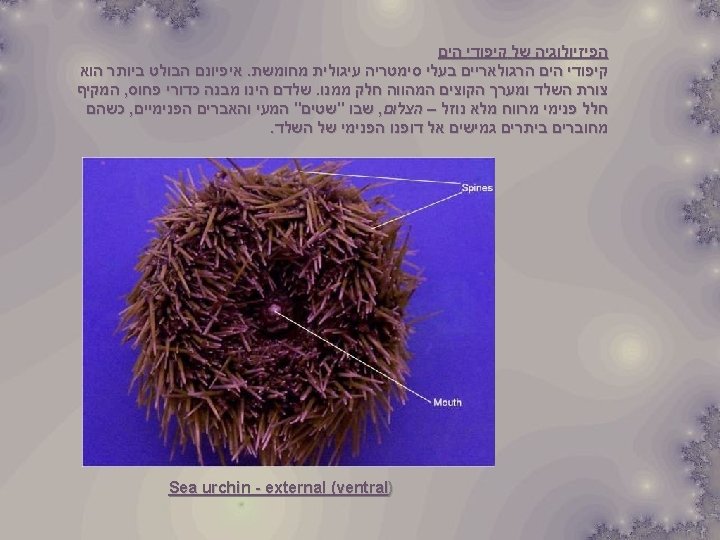
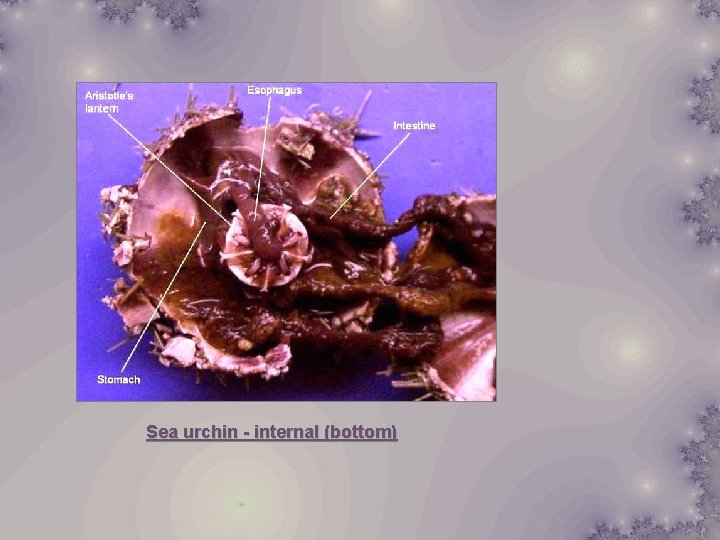
Sea urchin - internal (bottom)
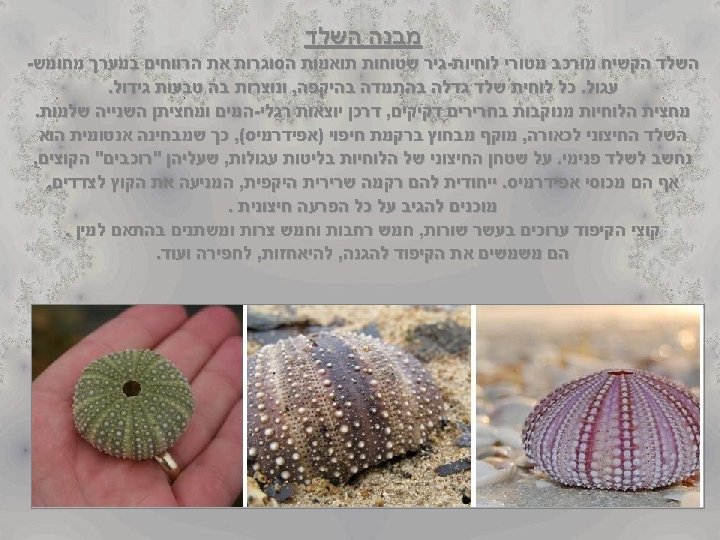
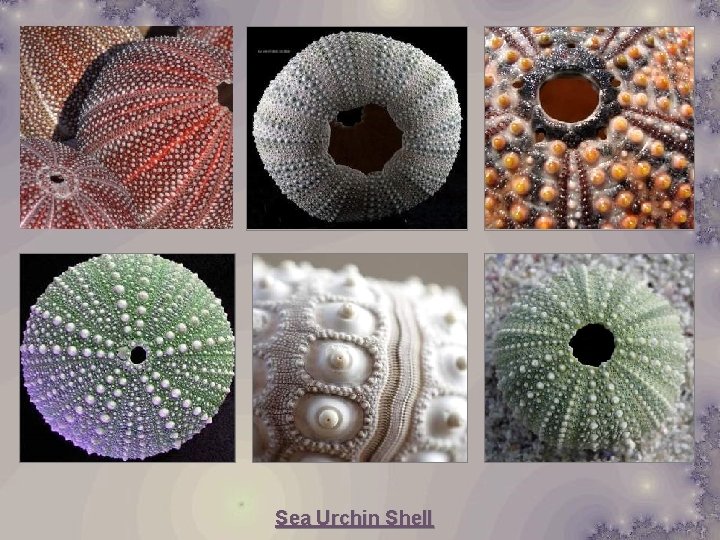
Sea Urchin Shell
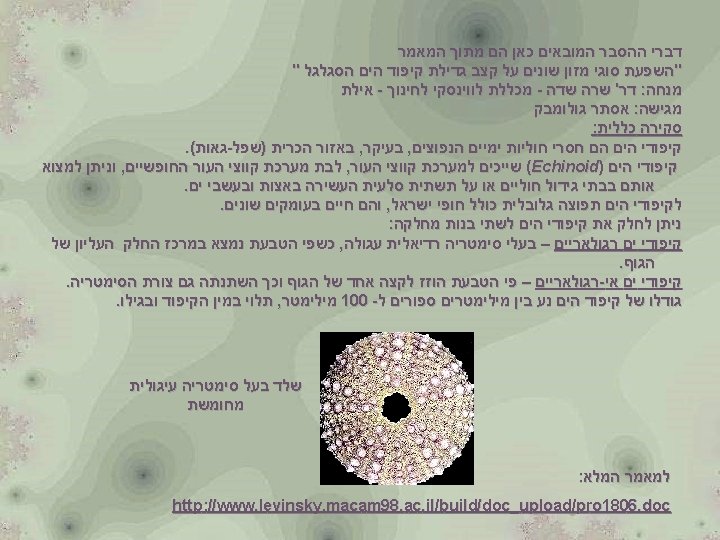
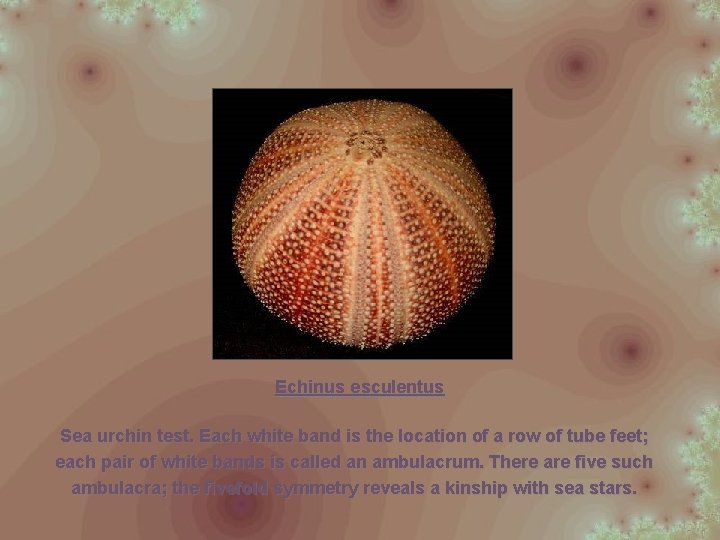
Echinus esculentus Sea urchin test. Each white band is the location of a row of tube feet; each pair of white bands is called an ambulacrum. There are five such ambulacra; the fivefold symmetry reveals a kinship with sea stars.
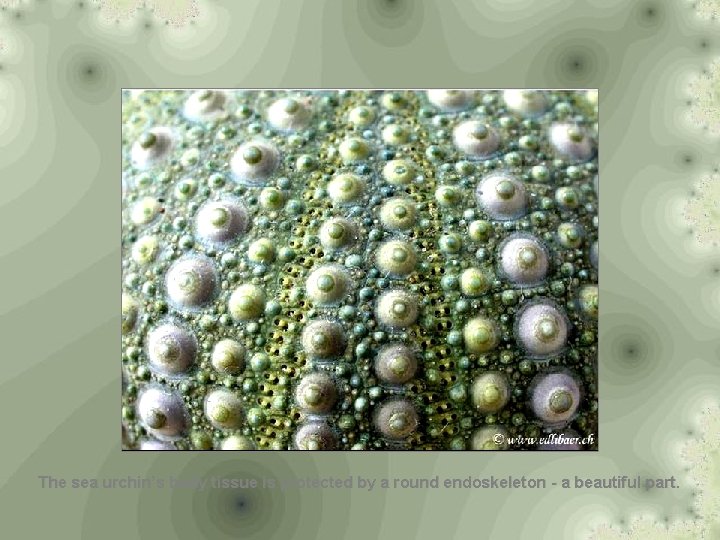
The sea urchin’s body tissue is protected by a round endoskeleton - a beautiful part.
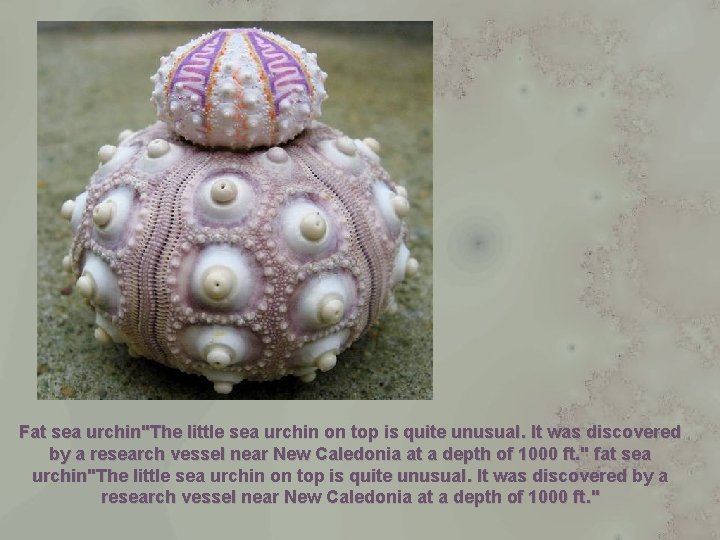
Fat sea urchin"The little sea urchin on top is quite unusual. It was discovered by a research vessel near New Caledonia at a depth of 1000 ft. " fat sea urchin"The little sea urchin on top is quite unusual. It was discovered by a research vessel near New Caledonia at a depth of 1000 ft. "
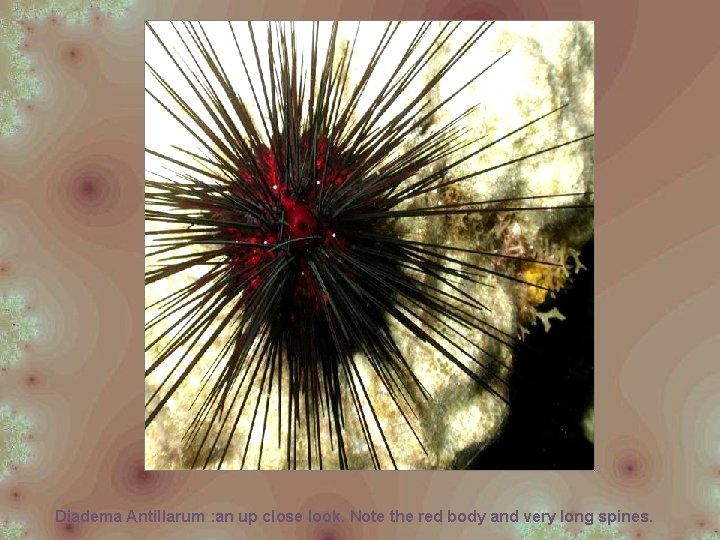
Diadema Antillarum : an up close look. Note the red body and very long spines.
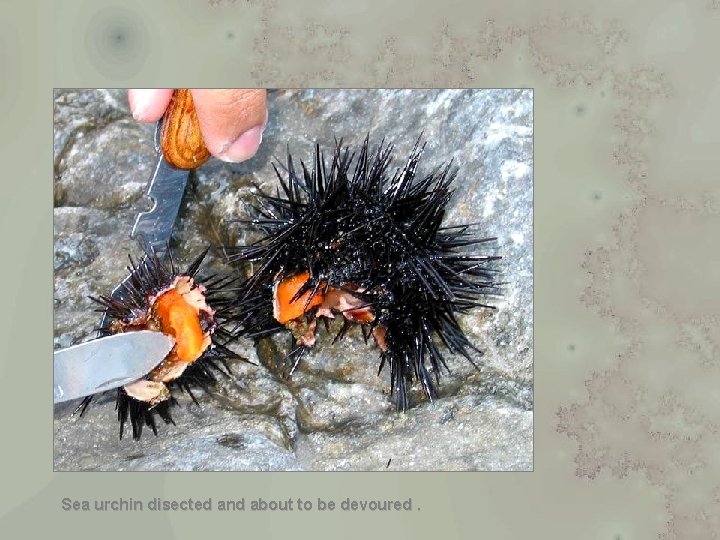
Sea urchin disected and about to be devoured.
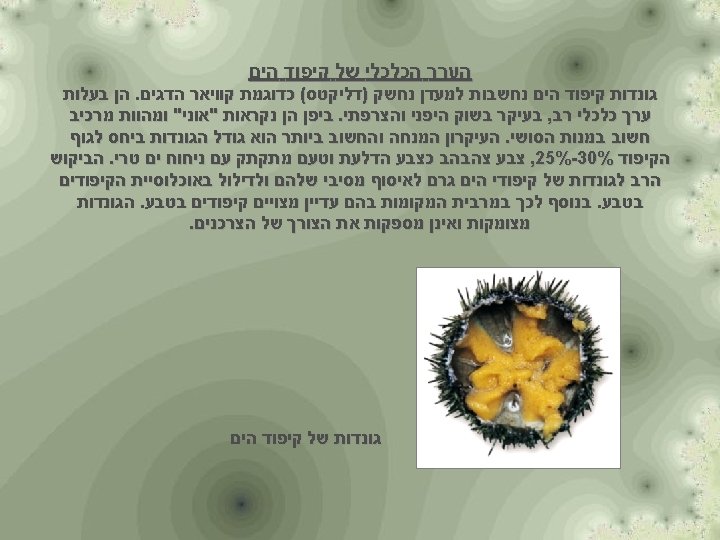
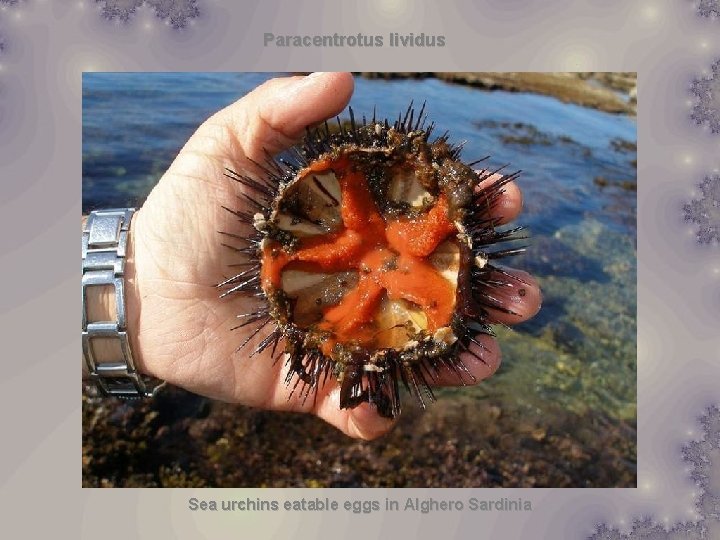
Paracentrotus lividus Sea urchins eatable eggs in Alghero Sardinia
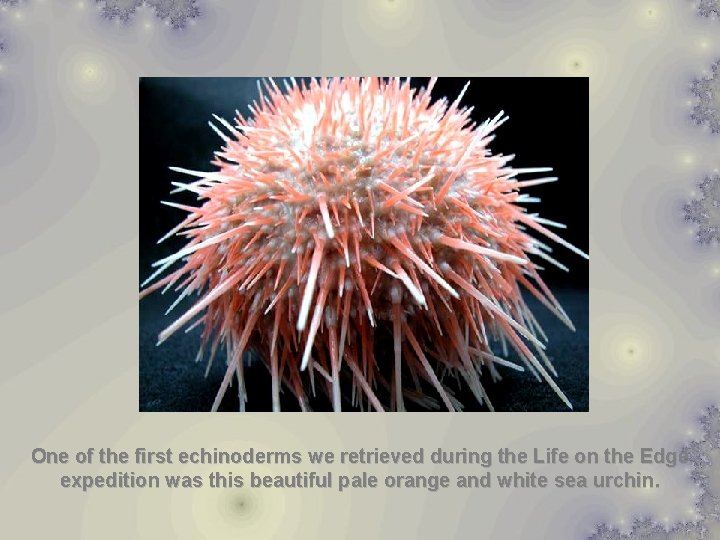
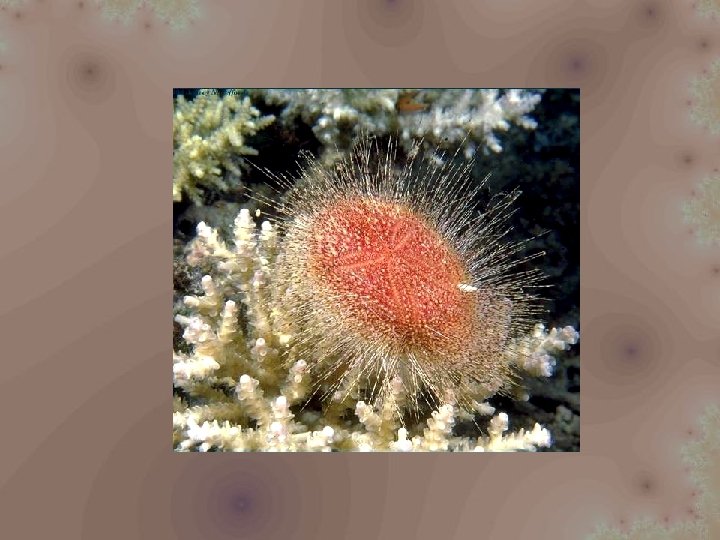
One of the first echinoderms we retrieved during the Life on the Edge expedition was this beautiful pale orange and white sea urchin.
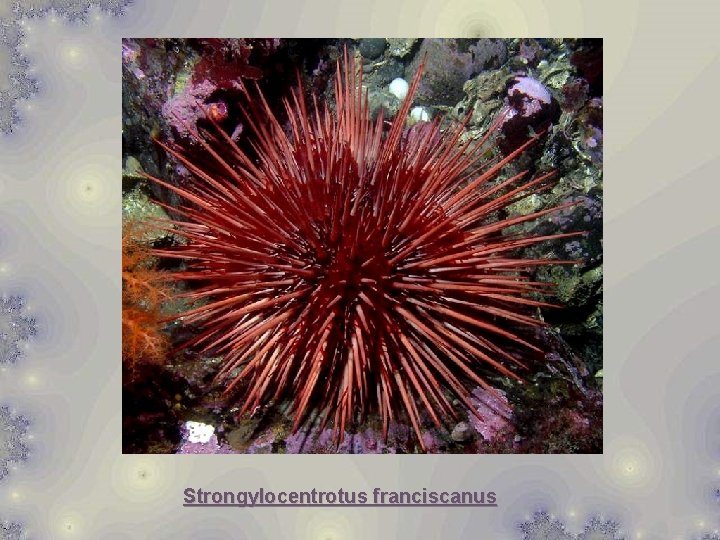
Strongylocentrotus franciscanus
The Echinus Melo or water melon sea urchin Sardinia
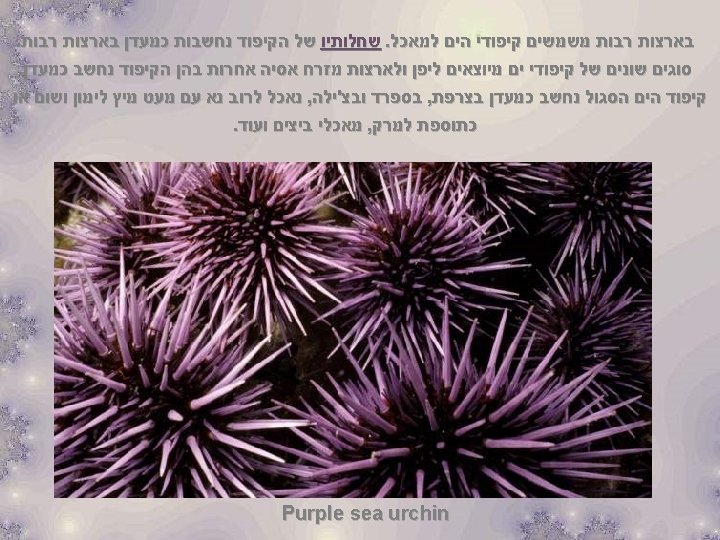
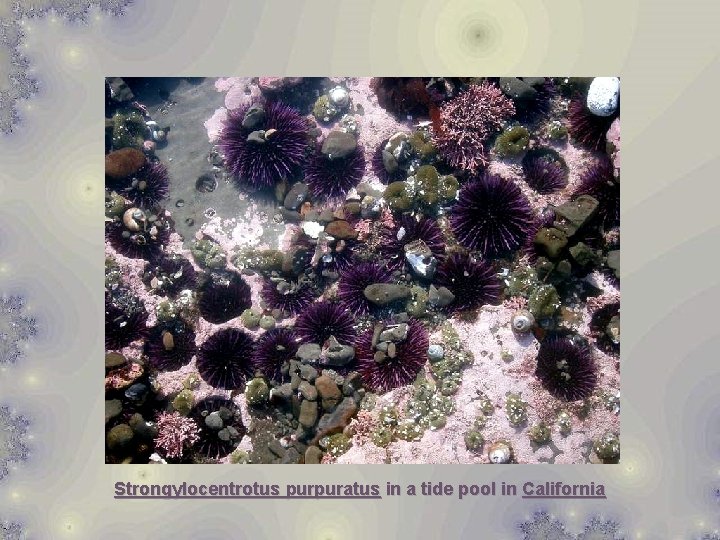
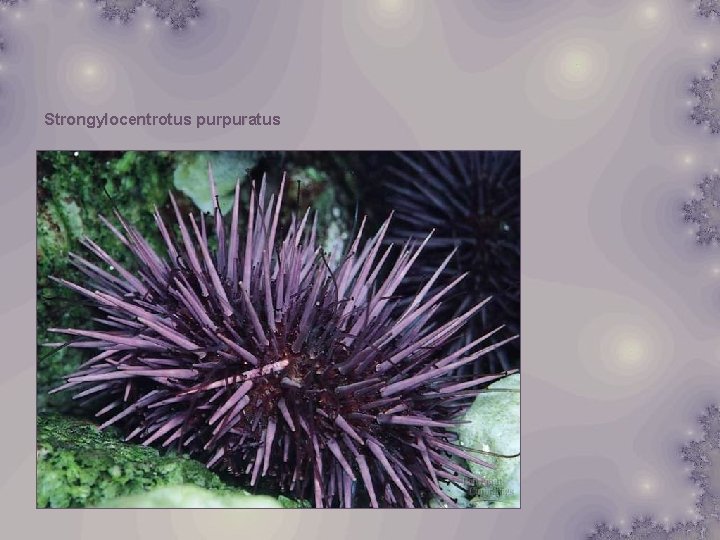
Strongylocentrotus purpuratus in a tide pool in California
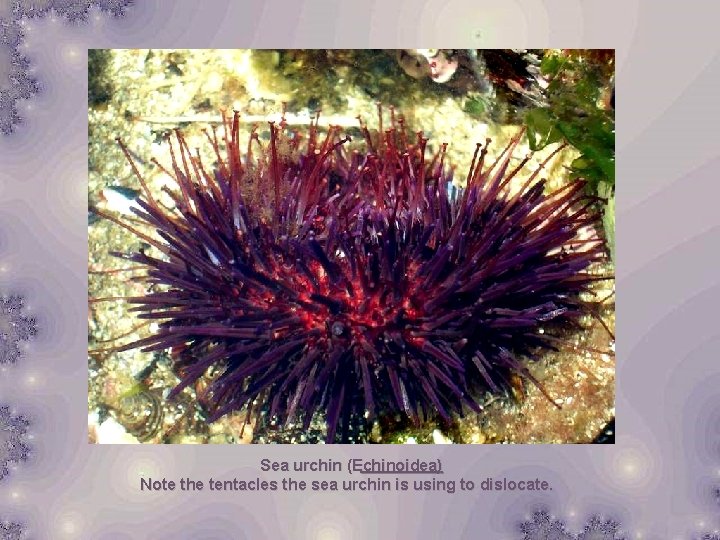
Sea urchin (Echinoidea) Note the tentacles the sea urchin is using to dislocate.
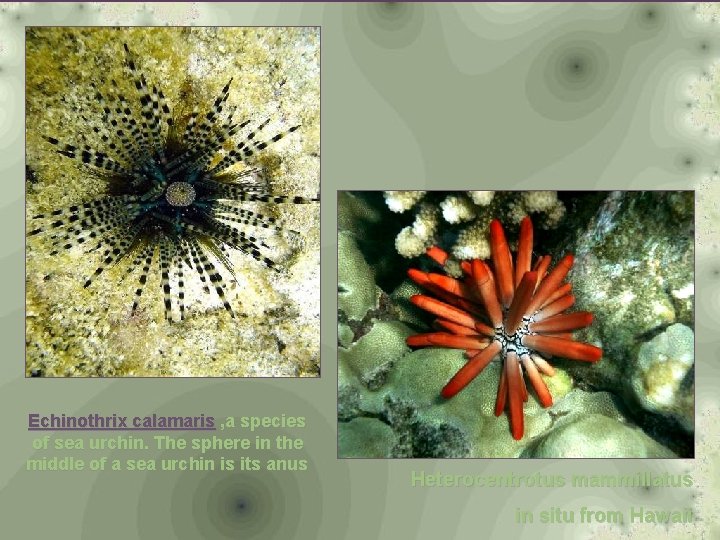
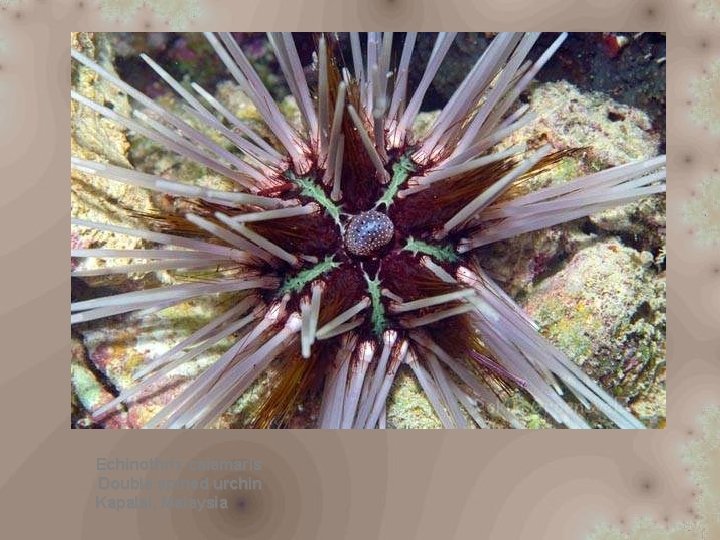
Echinothrix calamaris , a species of sea urchin. The sphere in the middle of a sea urchin is its anus Heterocentrotus mammillatus in situ from Hawaii
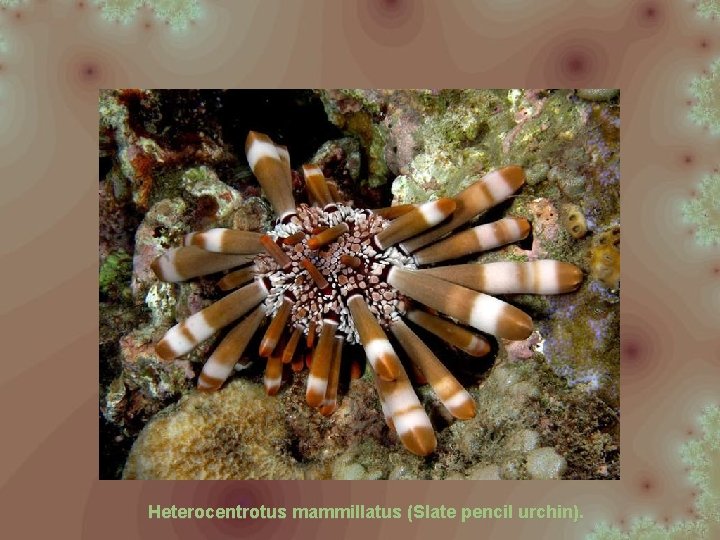
Heterocentrotus mammillatus (Slate pencil urchin).
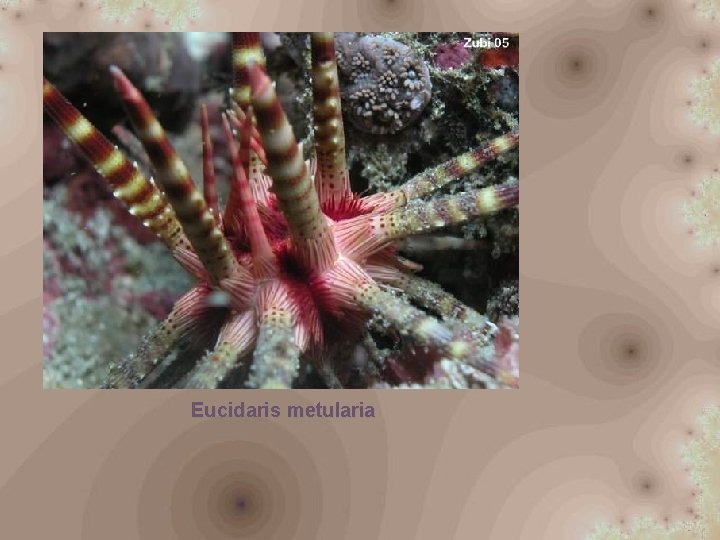
Eucidaris metularia
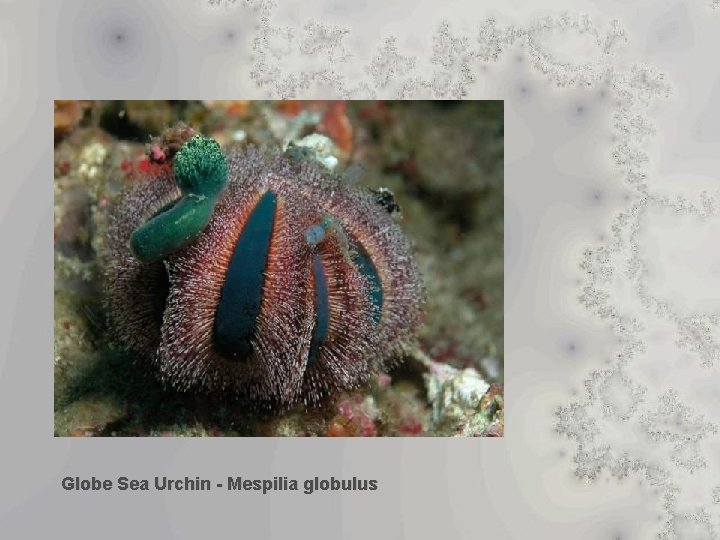
Globe Sea Urchin - Mespilia globulus
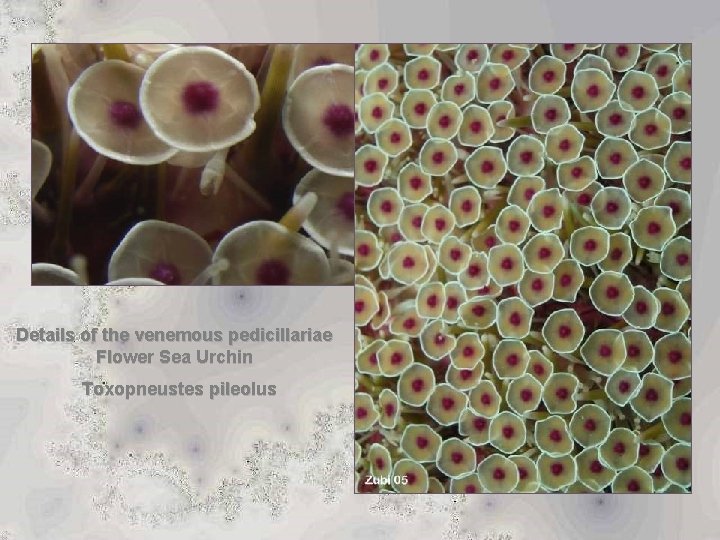
Details of the venemous pedicillariae Flower Sea Urchin Toxopneustes pileolus
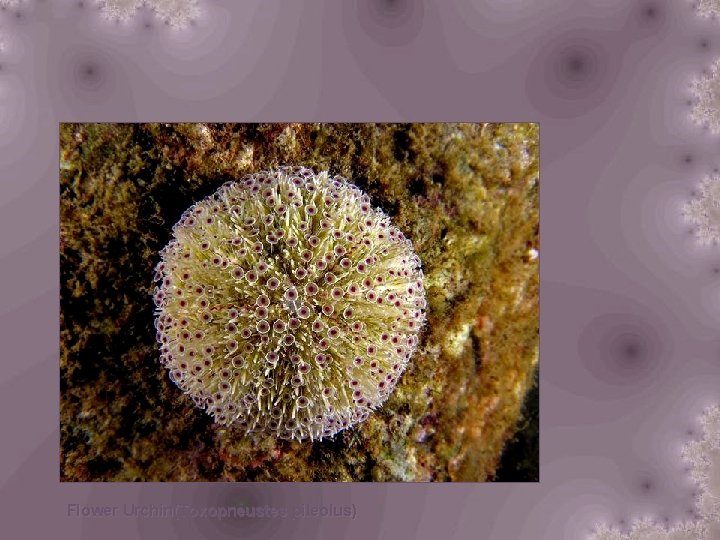
Flower Urchin(Toxopneustes pileolus)
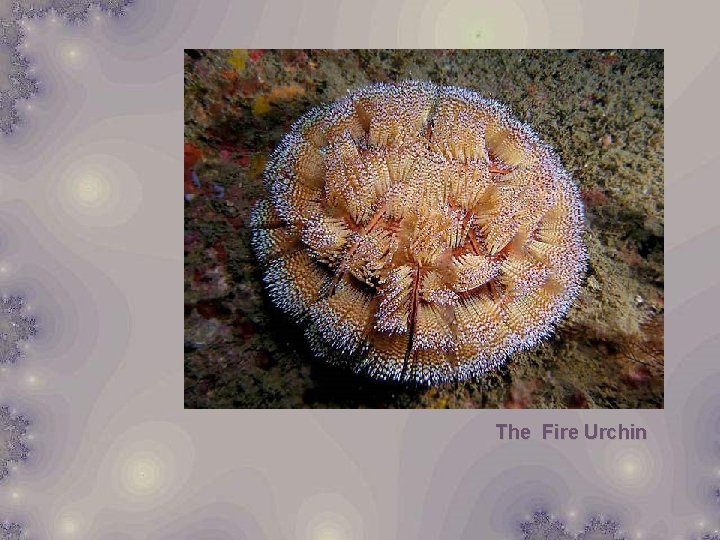
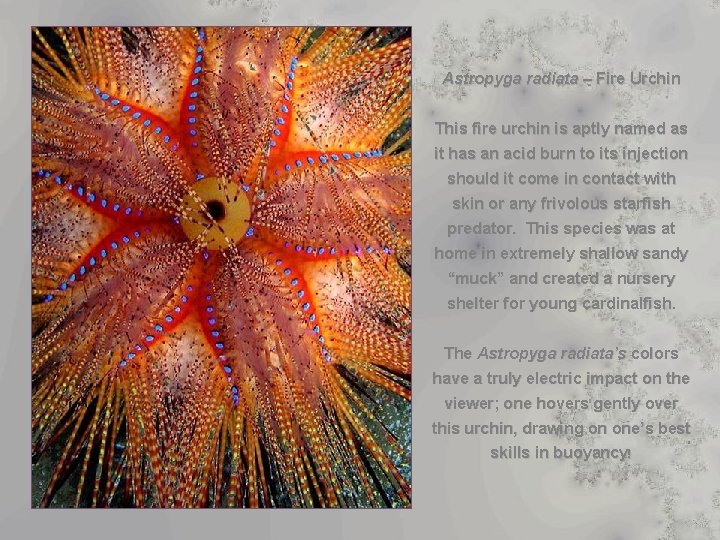
The Fire Urchin
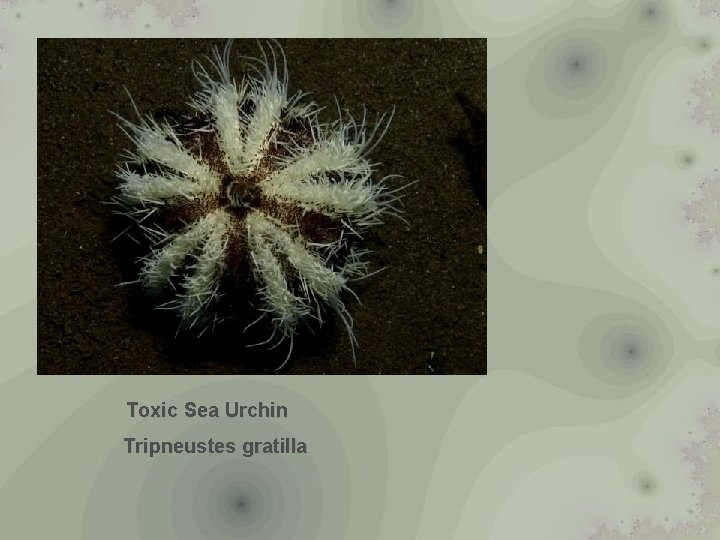
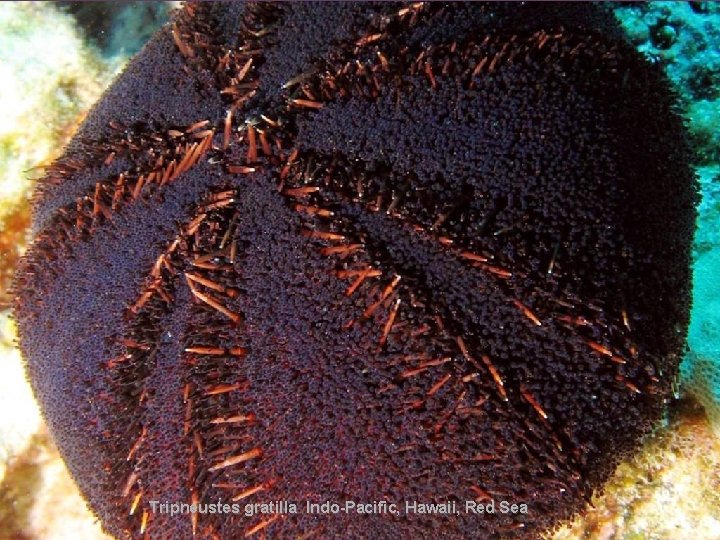
Toxic Sea Urchin Tripneustes gratilla
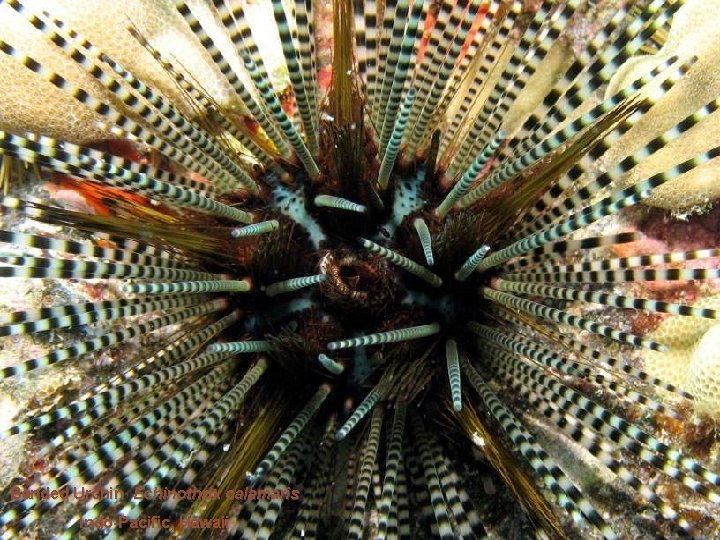
Echinothrix calamaris Double spined urchin Kapalai, Malaysia
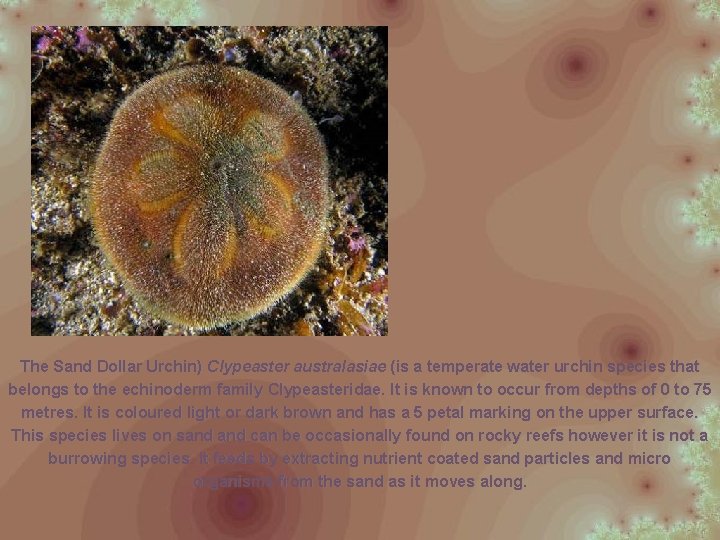
The Sand Dollar Urchin) Clypeaster australasiae (is a temperate water urchin species that belongs to the echinoderm family Clypeasteridae. It is known to occur from depths of 0 to 75 metres. It is coloured light or dark brown and has a 5 petal marking on the upper surface. This species lives on sand can be occasionally found on rocky reefs however it is not a burrowing species. It feeds by extracting nutrient coated sand particles and micro organisms from the sand as it moves along.
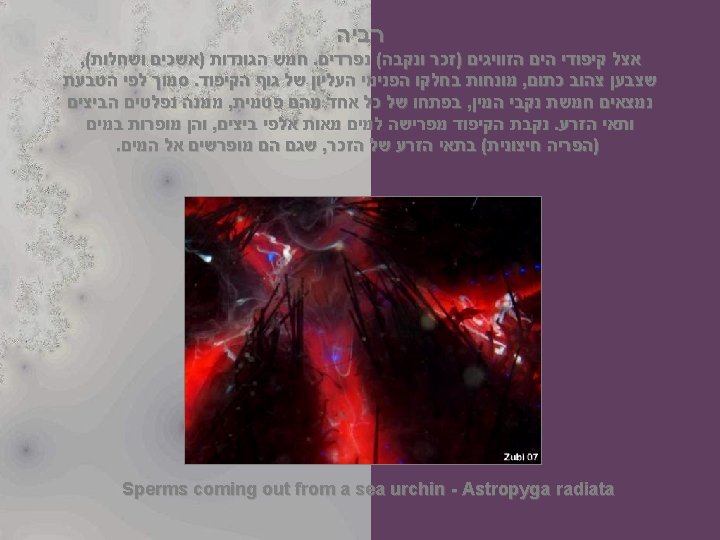
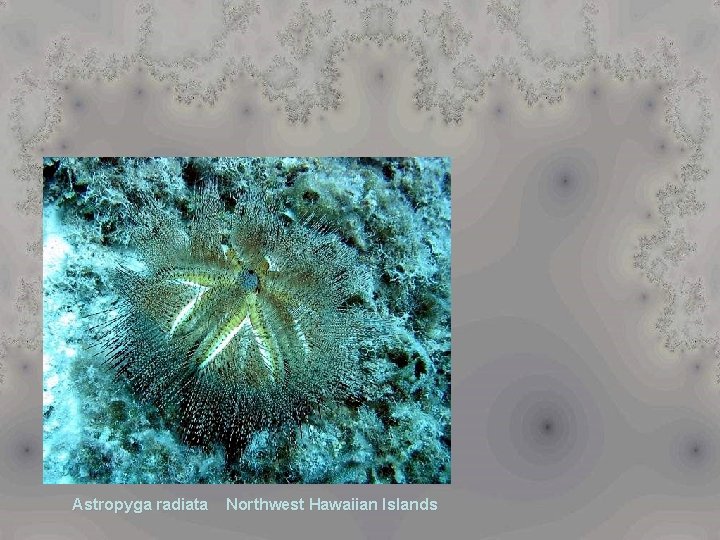
Astropyga radiata – Fire Urchin This fire urchin is aptly named as it has an acid burn to its injection should it come in contact with skin or any frivolous starfish predator. This species was at home in extremely shallow sandy “muck” and created a nursery shelter for young cardinalfish. The Astropyga radiata’s colors have a truly electric impact on the viewer; one hovers gently over this urchin, drawing on one’s best skills in buoyancy!
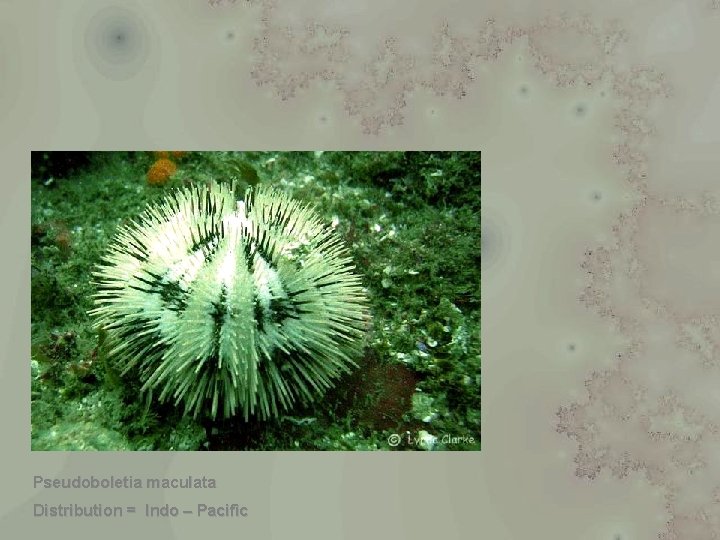
Pseudoboletia maculata Distribution = Indo – Pacific
Tripneustes gratilla Indo-Pacific, Hawaii, Red Sea
Banded Urchin Echinothrix calamaris Indo-Pacific, Hawaii
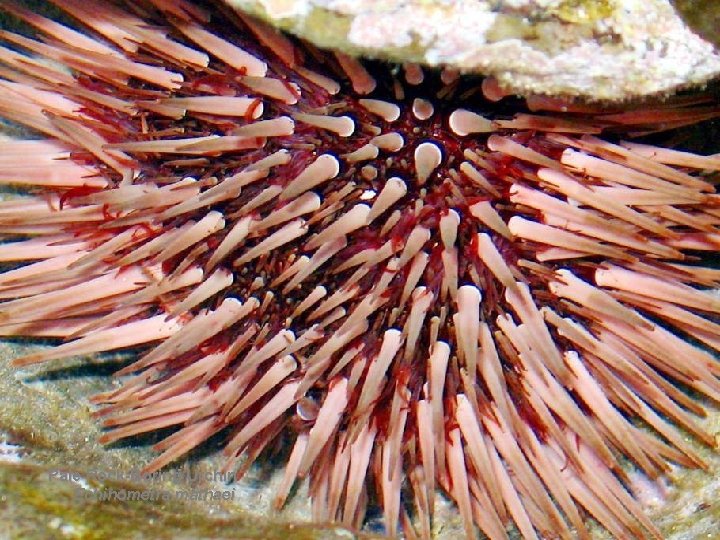
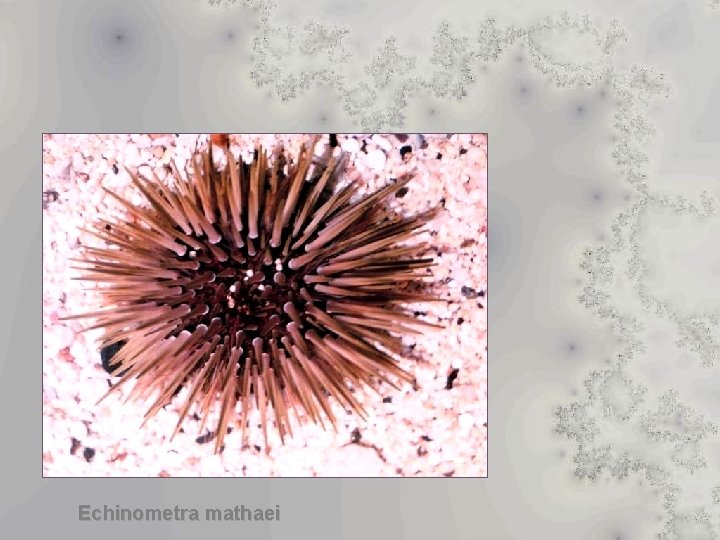
Pale Rock-Boring Urchin Echinometra mathaei
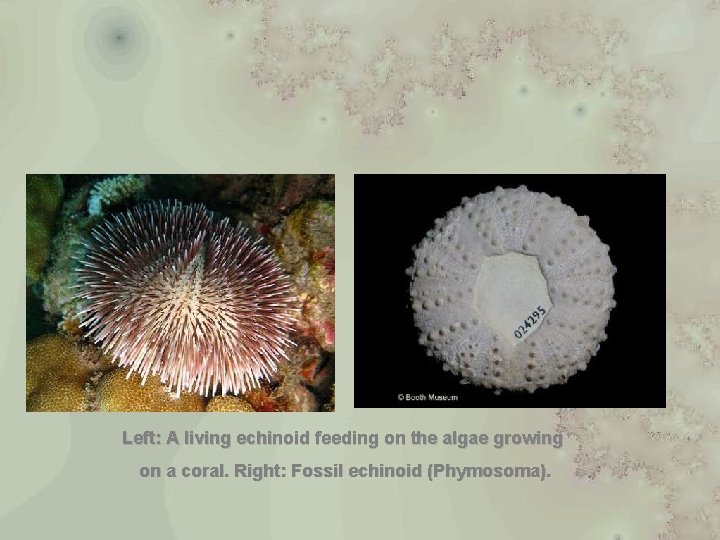
Left: A living echinoid feeding on the algae growing on a coral. Right: Fossil echinoid (Phymosoma).
Echinometra mathaei
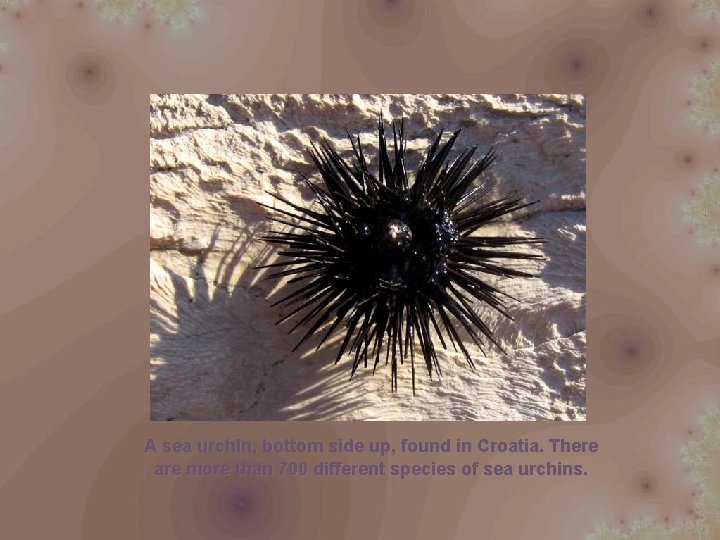
A sea urchin, bottom side up, found in Croatia. There are more than 700 different species of sea urchins.
Strongylocentrotus purpuratus
Astropyga radiata Northwest Hawaiian Islands
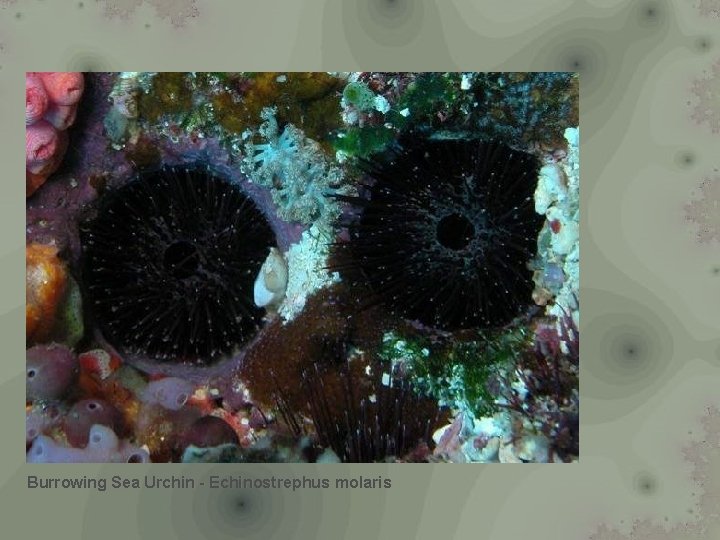
Burrowing Sea Urchin - Echinostrephus molaris
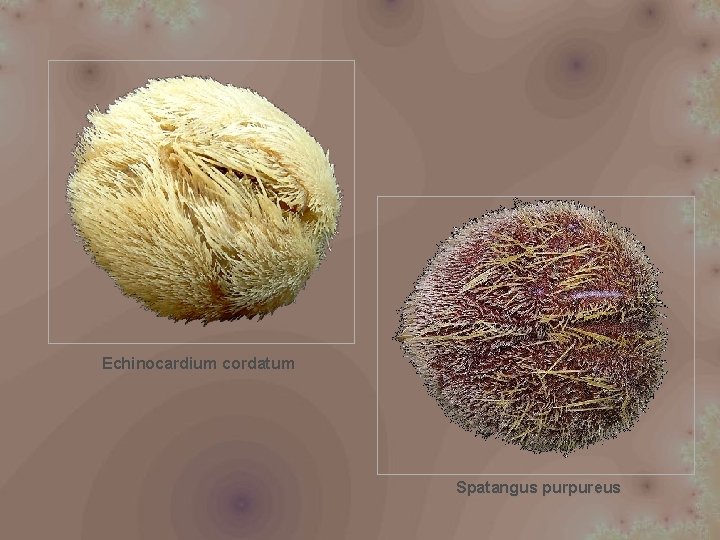
Echinocardium cordatum Spatangus purpureus
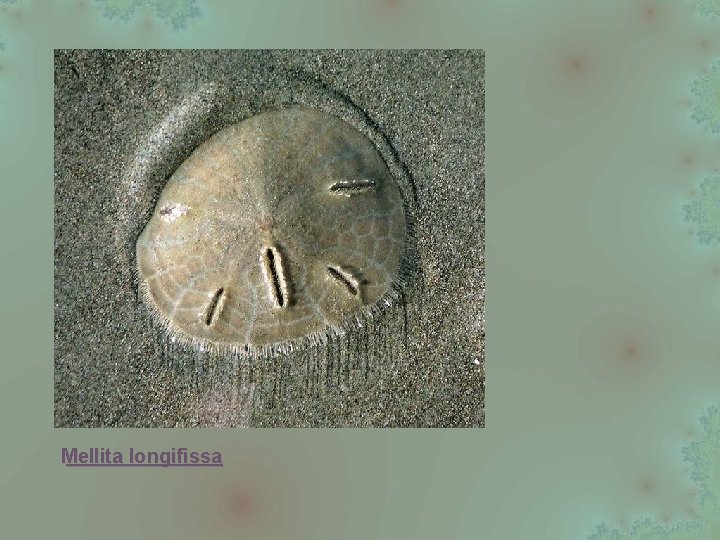
Mellita longifissa
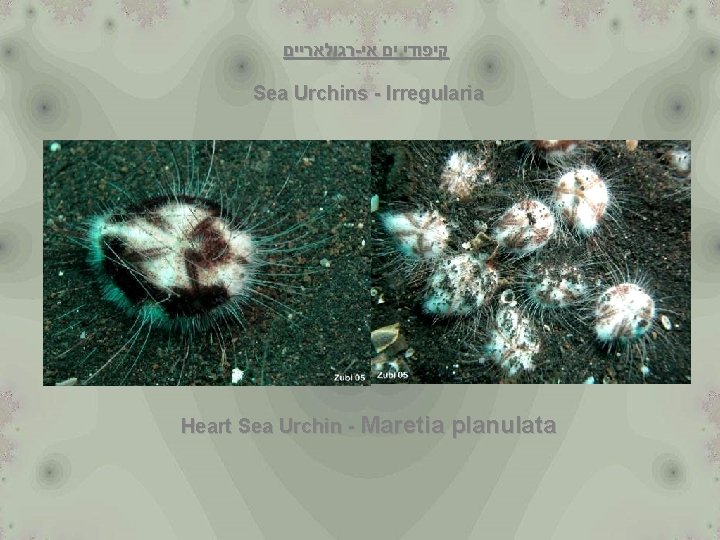
רגולאריים - קיפודי ים אי Sea Urchins - Irregularia Heart Sea Urchin - Maretia planulata
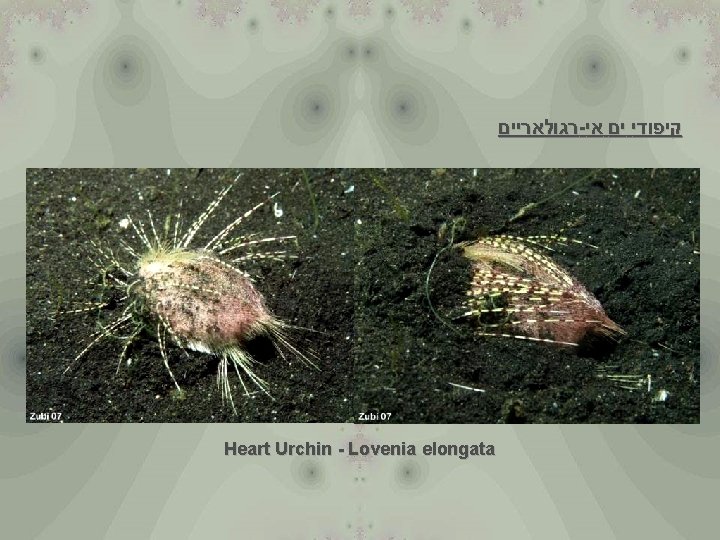
רגולאריים - קיפודי ים אי Heart Urchin - Lovenia elongata
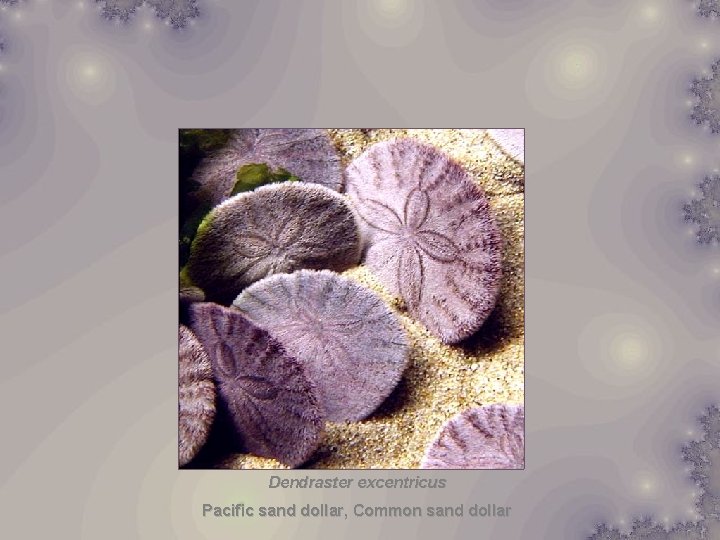
Dendraster excentricus Pacific sand dollar, Common sand dollar
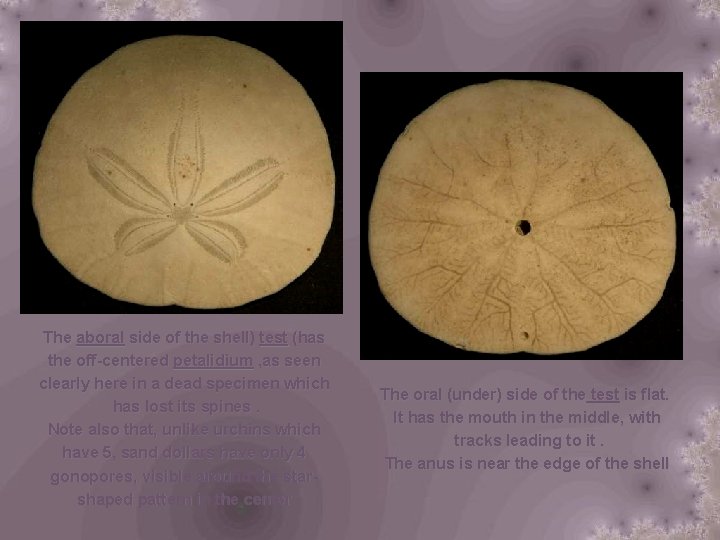
The aboral side of the shell) test (has the off-centered petalidium , as seen clearly here in a dead specimen which has lost its spines. Note also that, unlike urchins which have 5, sand dollars have only 4 gonopores, visible around the starshaped pattern in the center The oral (under) side of the test is flat. It has the mouth in the middle, with tracks leading to it. The anus is near the edge of the shell
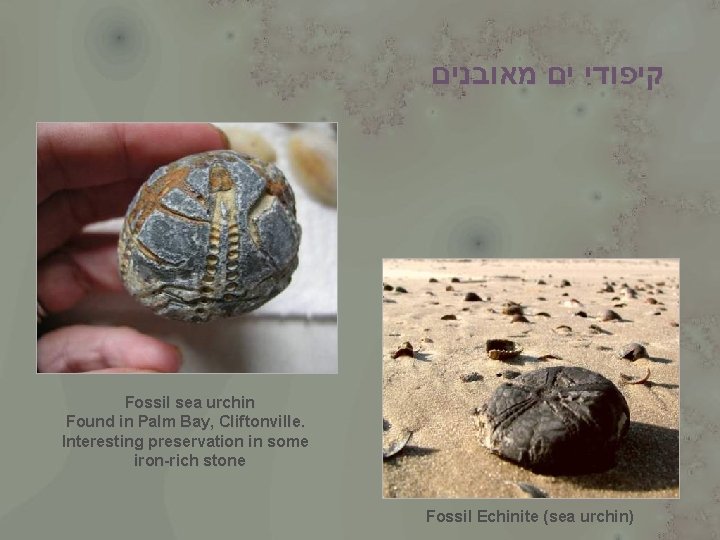
קיפודי ים מאובנים Fossil sea urchin Found in Palm Bay, Cliftonville. Interesting preservation in some iron-rich stone Fossil Echinite (sea urchin)
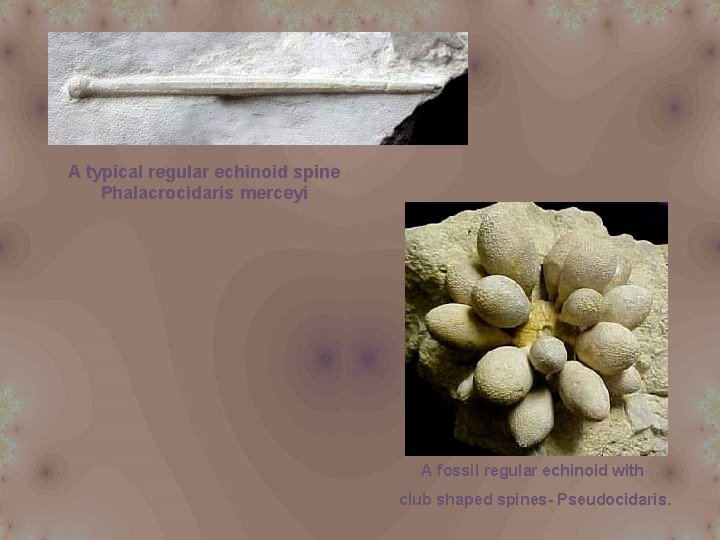
A typical regular echinoid spine Phalacrocidaris merceyi A fossil regular echinoid with club shaped spines- Pseudocidaris.
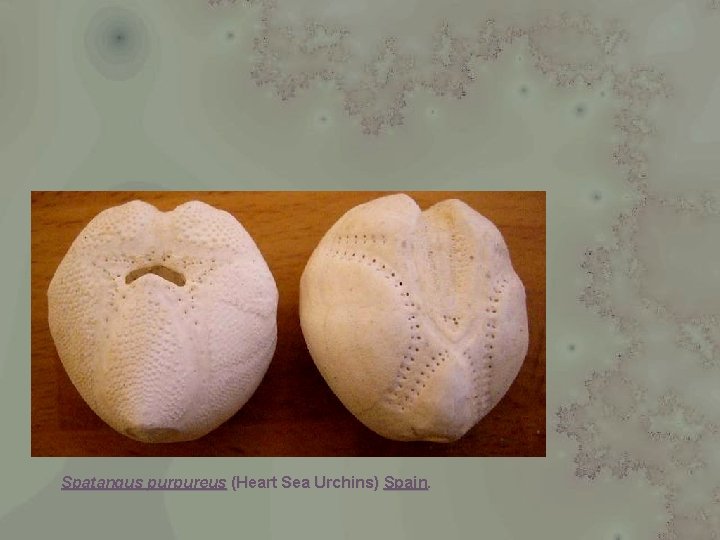
Spatangus purpureus (Heart Sea Urchins) Spain.
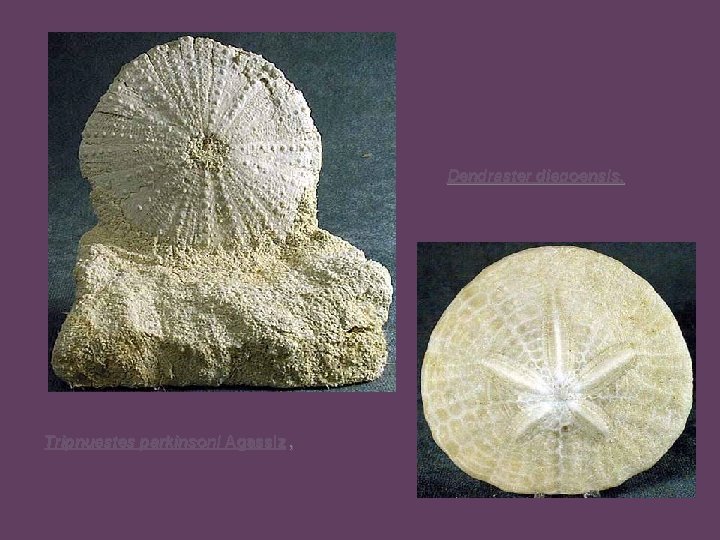
Dendraster diegoensis. Tripnuestes parkinsoni Agassiz ,
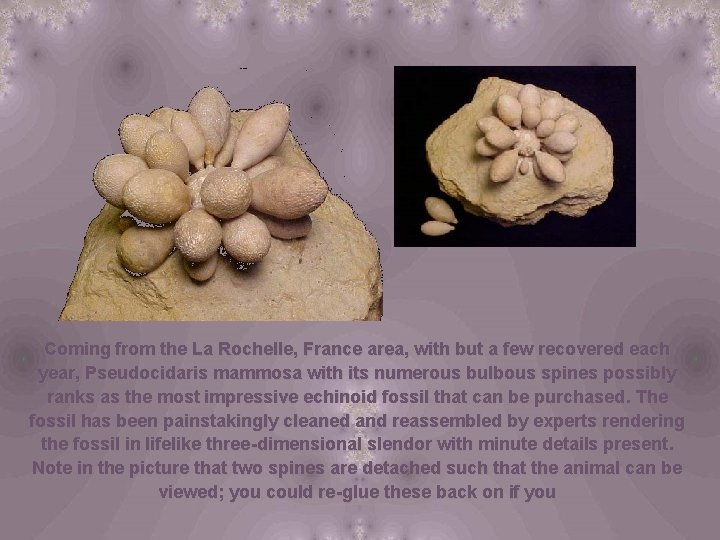
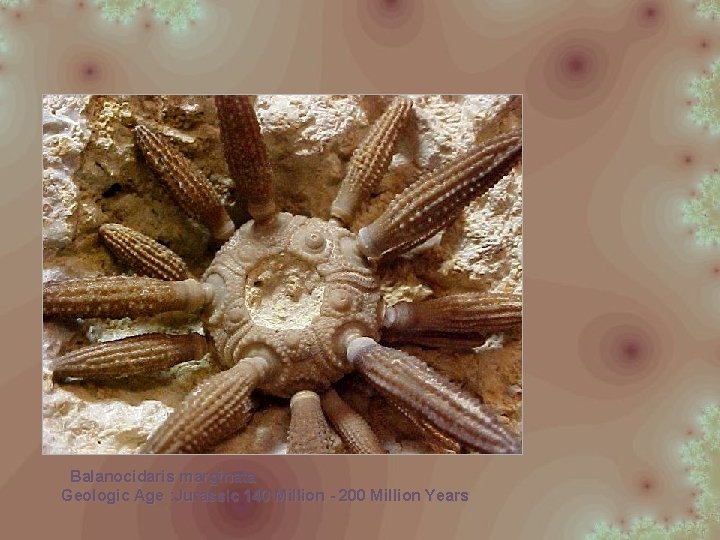
Coming from the La Rochelle, France area, with but a few recovered each year, Pseudocidaris mammosa with its numerous bulbous spines possibly ranks as the most impressive echinoid fossil that can be purchased. The fossil has been painstakingly cleaned and reassembled by experts rendering the fossil in lifelike three-dimensional slendor with minute details present. Note in the picture that two spines are detached such that the animal can be viewed; you could re-glue these back on if you
Balanocidaris marginata Geologic Age : Jurassic 140 Million - 200 Million Years
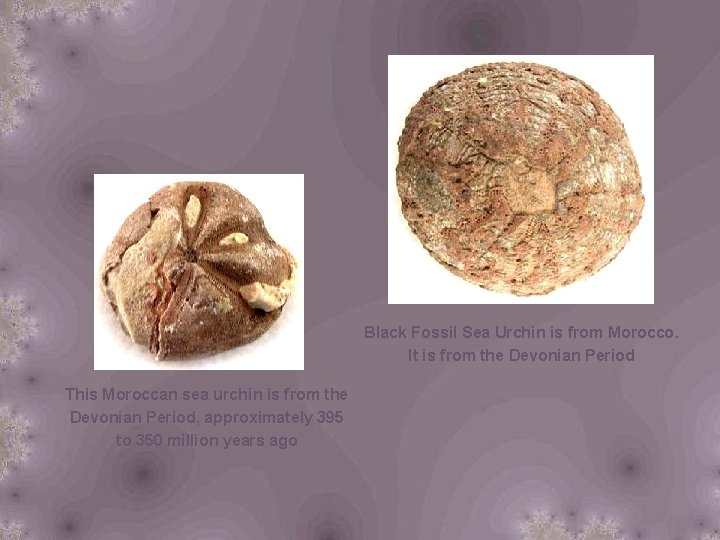
Black Fossil Sea Urchin is from Morocco. It is from the Devonian Period This Moroccan sea urchin is from the Devonian Period, approximately 395 to 350 million years ago
: מקורות http: //www. discoveringfossils. co. uk/echinoids. htm http: //he. wikipedia. http: //en. wikipedia. org/wiki/Sea_urchin http: //www. reef-center. com/modules. php? name=News&file=article&sid=181 http: //www. hayadan. org. il/wp/sea-urchin-diging-technology-0605092/ rydberg. biology. colostate. edu/. . . /echinoidea. htm http: //www. diverosa. com/categories/Starfish&Brittlestars. htm#Sea_urchins http: //www. elasmodiver. com/BCMarinelife/BCML%20 echinodermata. htm http: //school. sapir. ac. il/h_school/hsse/hssesb/sci 7 -05/8 -horesh/r 7/shaar. htm www. discoveringfossils. co. uk/echinoids. htm http: //www. starfish. ch/c-invertebrates/seeigel. html http: //virtualurchin. stanford. edu/urchinanatomy. swf http: //www. scuba-equipment-usa. com/marine/JUL 05/index. html reefguide. org/collectorurchin. html http: //www. diverosa. com/categories/Starfish&Brittlestars. htm#Sea_urchins