
Sea Turtles Leatherback Sea Turtles Seven types of
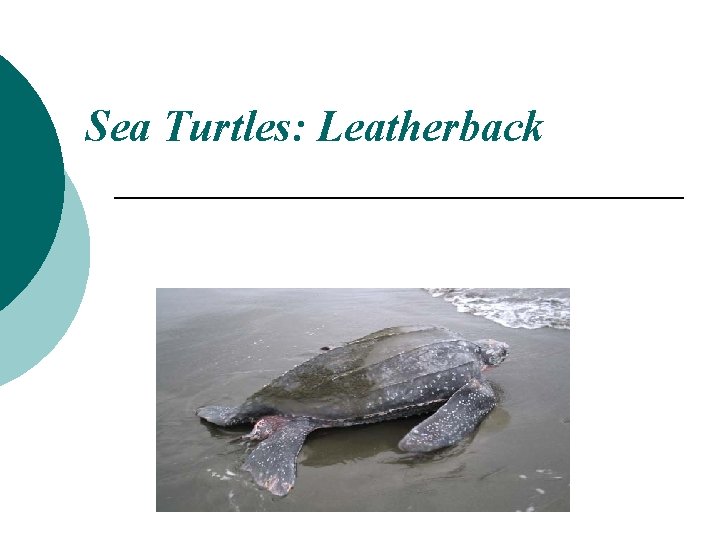
Sea Turtles: Leatherback

Sea Turtles ¡ Seven types of sea turtles: ¡ Loggerhead, Kemp’s Ridley, Olive Ridley ¡ Green, Hawksbill, Flatback ¡ Six of these species are on the redlist as either threatened or endangered ¡ Leatherback is the most critically endangered
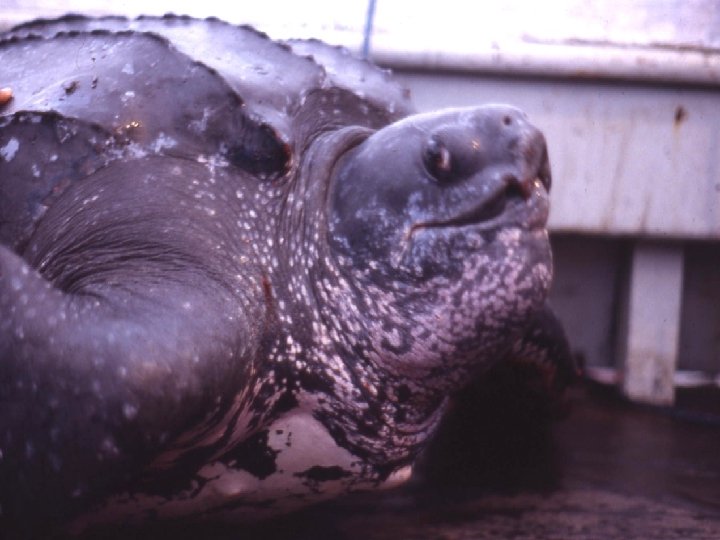
Biology of the Leatherback ¡ Largest living turtle ¡ Averages seven feet ¡ Average weight is 1, 300 pounds ¡ Can grow to 8. 5 feet and 2, 000 pounds
¡ Ability to retain its body heat while swimming through deep waters ¡ Dives to depths of up to 3, 000 feet during the night but active day and night ¡ Travel at a speed of 22 miles per hour ¡ Leatherbacks are the fastest, can dive deeper, and are bigger than any other turtle
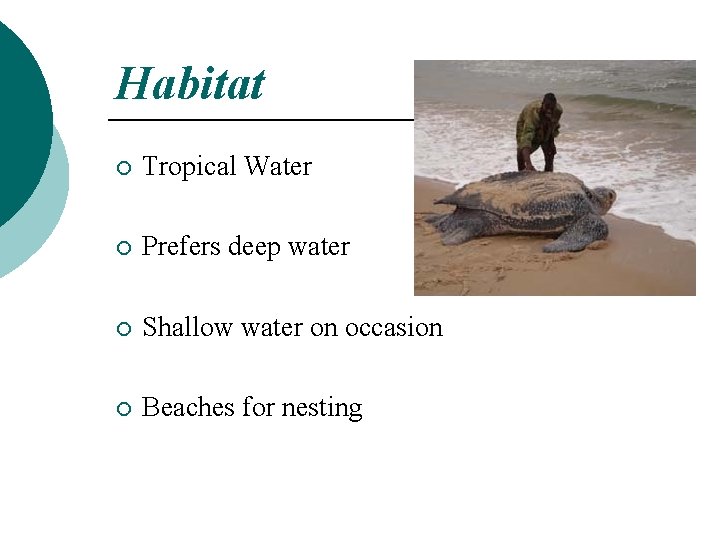
Habitat ¡ Tropical Water ¡ Prefers deep water ¡ Shallow water on occasion ¡ Beaches for nesting
Global Range ¡ Tropical waters of the Atlantic, Pacific, and the Indian Ocean ¡ Extend as far from Newfoundland, British Isles through the Cape of Good Hope entering the Mediterranean Sea
Life Span and Behavior ¡ Leatherbacks can live as old as 30 years and up to 50 years or more ¡ Little is known about their behavior ¡ Sleep while floating on surface of the water ¡ Violent if captured ¡ Extremely vocal when in distress
Diets of the Leatherback ¡ Jellyfish, crabs, shrimp, and mollusks ¡ Snails, algae, sponges, and seaweed ¡ Adults feed independently unless feeding on a large number of jellyfish
Reproduction ¡ Lays eggs on a beach ¡ Nesting seasons (8 -12 days) takes place when female simply chooses an undisturbed area
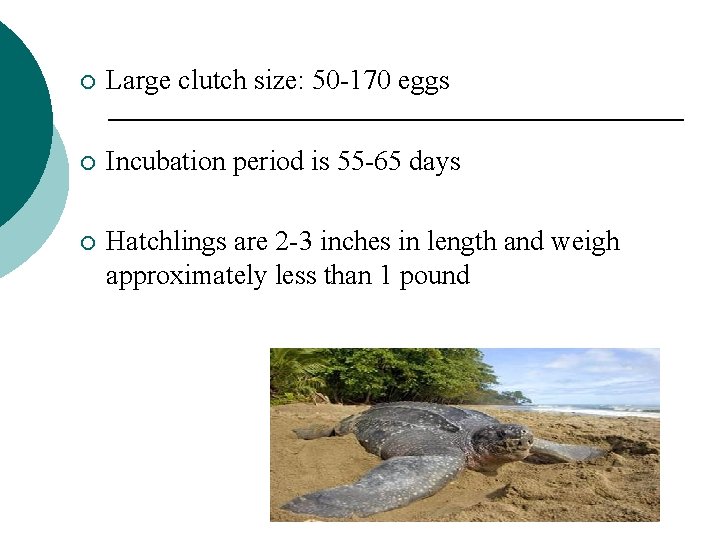
¡ Large clutch size: 50 -170 eggs ¡ Incubation period is 55 -65 days ¡ Hatchlings are 2 -3 inches in length and weigh approximately less than 1 pound
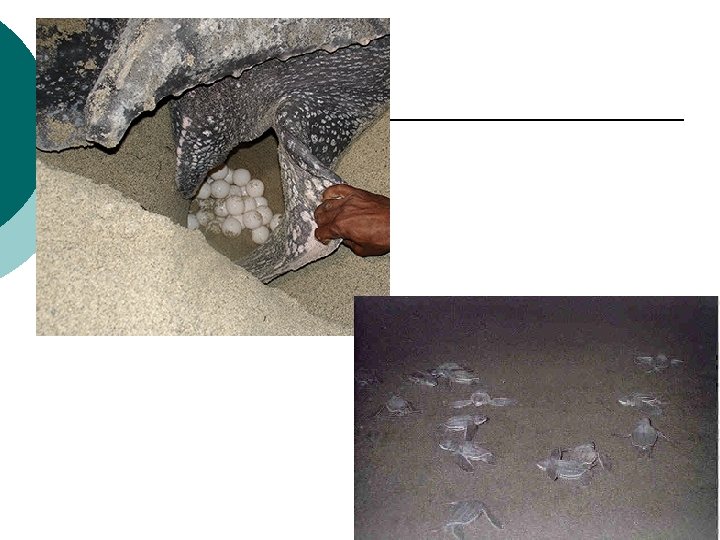

Threats to Sea Turtles ¡ Predators-sharks, raccoons, crabs, and humans ¡ Nesting areas disturbed- human activity and development ¡ Commercial fishing-entanglement -55 thousand sea turtles killed -increasing cause of mortality worldwide
Pollution-balloons, bottles, garbage/ plastic bags -Cannot distinguish between a plastic bag and a jelly fish (main component of diet) -Oil spills and fertilizers (disease now killing turtles is linked to pollution in oceans) ¡ ¡ Artificial lighting- lights from developments discourage females from nesting and hatchlings become disoriented, wandering inland dying of predation and hydration
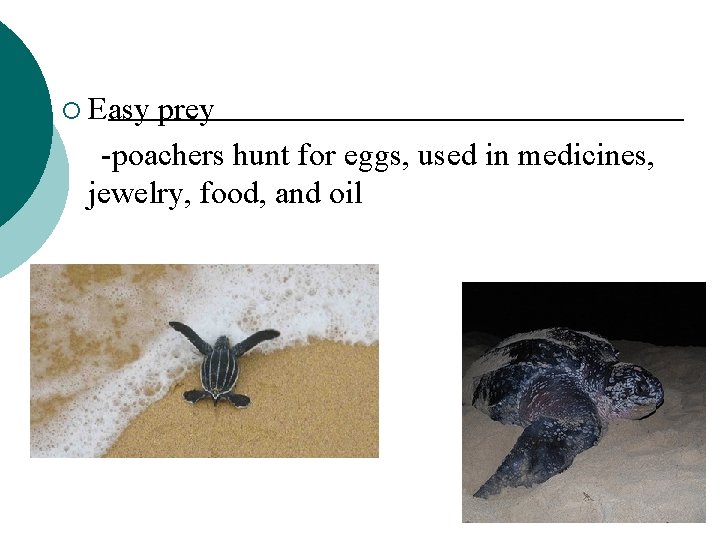
¡ Easy prey -poachers hunt for eggs, used in medicines, jewelry, food, and oil
Conservation ¡ Environmental organizations created to eliminate poachers ¡ Restriction of people at nesting areas ¡ Restrictions on lights near beaches
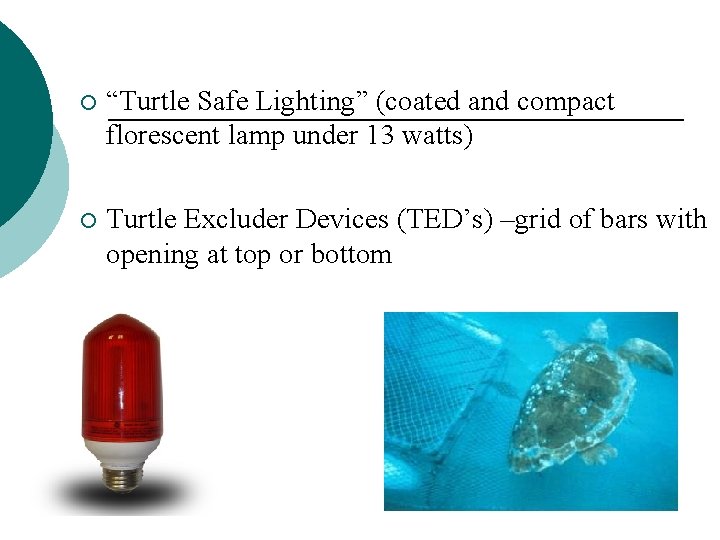
¡ “Turtle Safe Lighting” (coated and compact florescent lamp under 13 watts) ¡ Turtle Excluder Devices (TED’s) –grid of bars with opening at top or bottom
Web Quest ¡ Leatherback turtles webquest
- Slides: 18