
Sea Turtles Introduction Air breathing reptiles Inhabit temperate
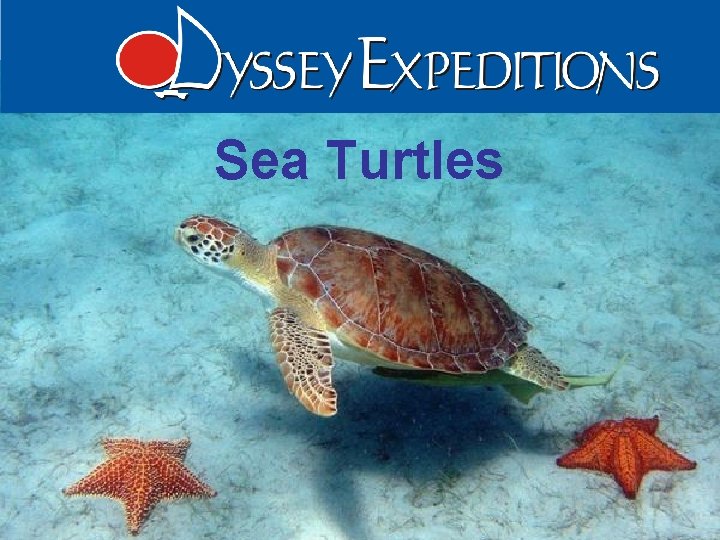
Sea Turtles
Introduction • Air breathing reptiles • Inhabit temperate to tropical seas • Range in size from less than 100 lbs (olive ridley) to 1300 lbs (leatherback) • Shell consists of carapace (upper portion) and plastron (lower portion) • No teeth but have beak like jaws 2
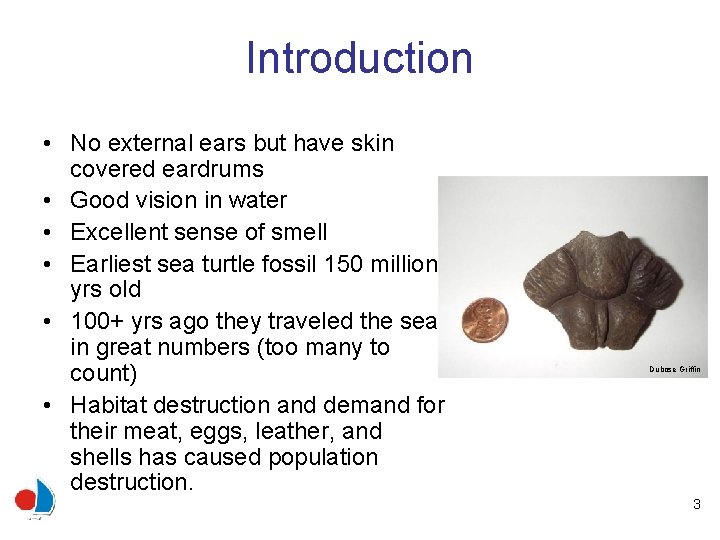
Introduction • No external ears but have skin covered eardrums • Good vision in water • Excellent sense of smell • Earliest sea turtle fossil 150 million yrs old • 100+ yrs ago they traveled the sea in great numbers (too many to count) • Habitat destruction and demand for their meat, eggs, leather, and shells has caused population destruction. Dubose Griffin 3
Growth • Theorized that baby turtles spend their time in sargassum mats • Move to adult feeding grounds when they reach dinner plate size • 15 to 50 years to reach sexual maturity • Thought that some can live over 100 yrs 4
Behavior • • • Generally solitary Feed during the day Can sleep on surface or on the bottom Males very rarely return to land Females return to land only to nest 5
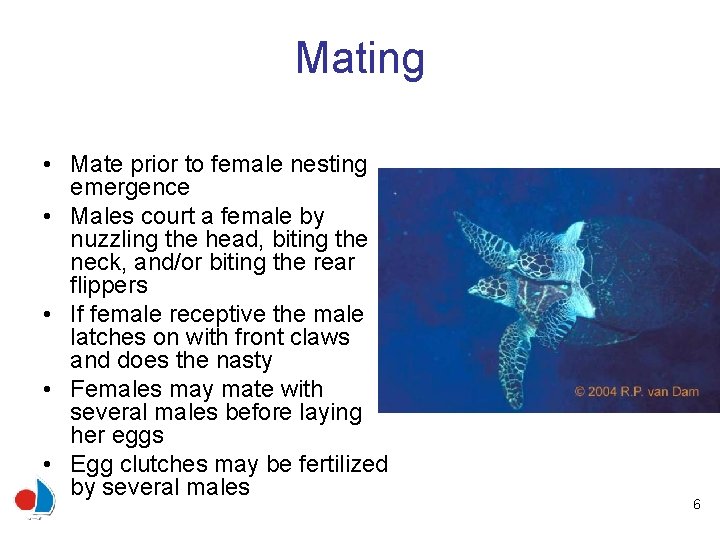
Mating • Mate prior to female nesting emergence • Males court a female by nuzzling the head, biting the neck, and/or biting the rear flippers • If female receptive the male latches on with front claws and does the nasty • Females may mate with several males before laying her eggs • Egg clutches may be fertilized by several males 6
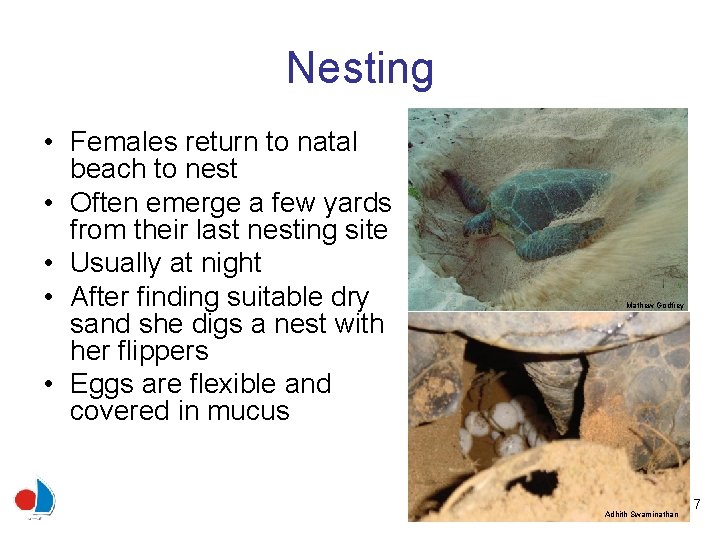
Nesting • Females return to natal beach to nest • Often emerge a few yards from their last nesting site • Usually at night • After finding suitable dry sand she digs a nest with her flippers • Eggs are flexible and covered in mucus Mathew Godfrey Adhith Swaminathan 7
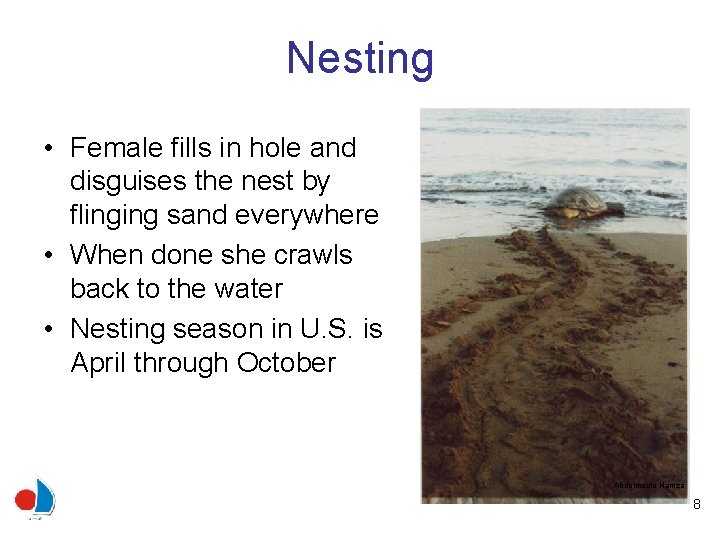
Nesting • Female fills in hole and disguises the nest by flinging sand everywhere • When done she crawls back to the water • Nesting season in U. S. is April through October Abdulmaula Hamza 8
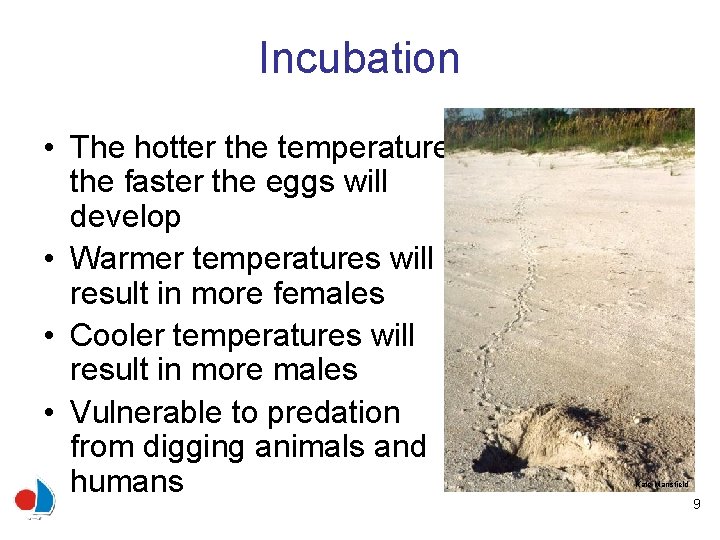
Incubation • The hotter the temperature the faster the eggs will develop • Warmer temperatures will result in more females • Cooler temperatures will result in more males • Vulnerable to predation from digging animals and humans Kate Mansfield 9
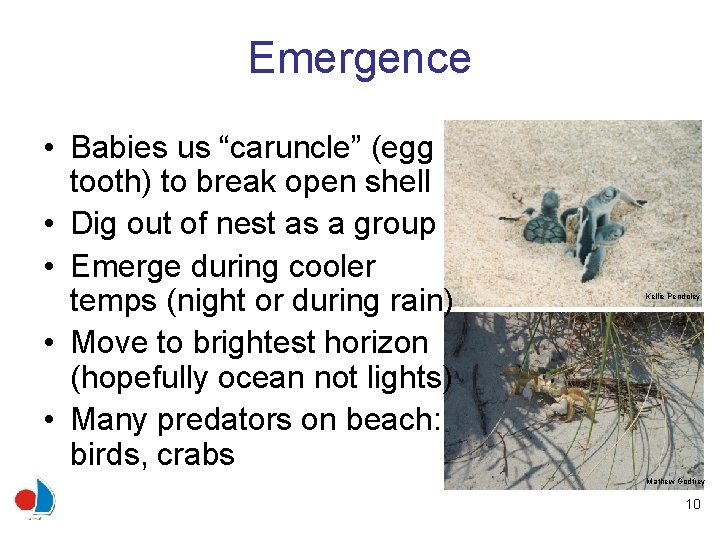
Emergence • Babies us “caruncle” (egg tooth) to break open shell • Dig out of nest as a group • Emerge during cooler temps (night or during rain) • Move to brightest horizon (hopefully ocean not lights) • Many predators on beach: birds, crabs Kellie Pendoley Mathew Godfrey 10
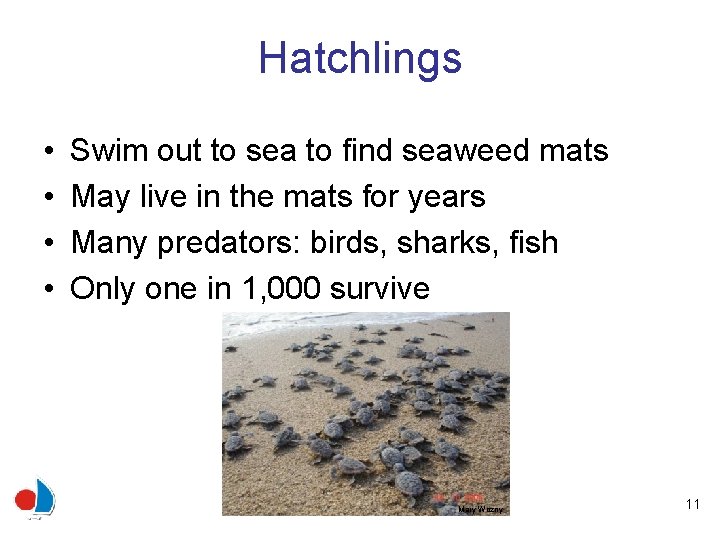
Hatchlings • • Swim out to sea to find seaweed mats May live in the mats for years Many predators: birds, sharks, fish Only one in 1, 000 survive Mary Wozny 11
Navigation • How do sea turtles migrate 100 to 1000 miles and find their way back to their natal beach? • They do not see well out of water so landmarks is unlikely • Theory: They are able to detect the intensity and angle of the earths magnetic field. 12
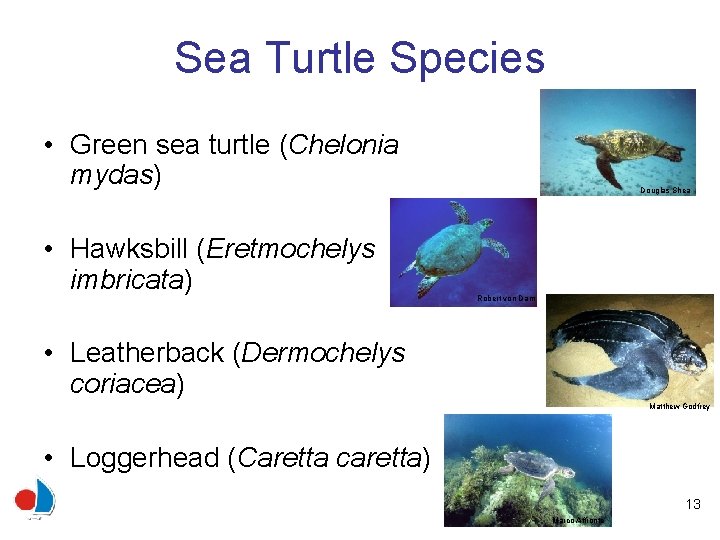
Sea Turtle Species • Green sea turtle (Chelonia mydas) • Hawksbill (Eretmochelys imbricata) Douglas Shea Robert von Dam • Leatherback (Dermochelys coriacea) Matthew Godfrey • Loggerhead (Caretta caretta) 13 Marco Affronte
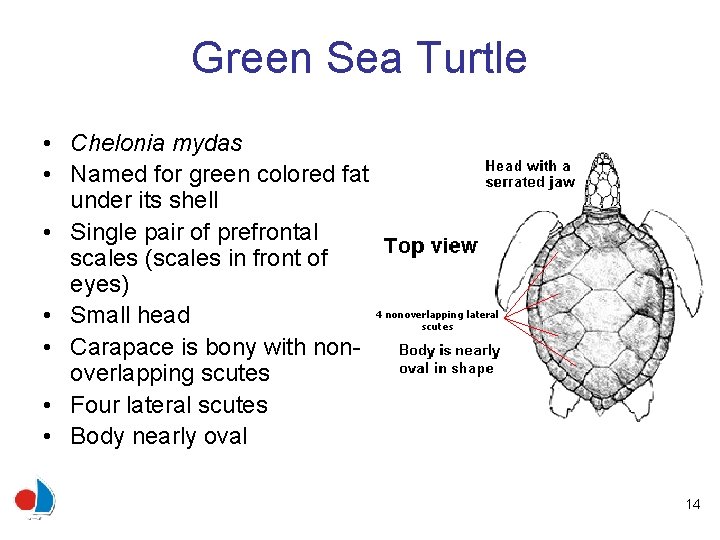
Green Sea Turtle • Chelonia mydas • Named for green colored fat under its shell • Single pair of prefrontal scales (scales in front of eyes) • Small head • Carapace is bony with nonoverlapping scutes • Four lateral scutes • Body nearly oval 4 nonoverlapping lateral scutes 14
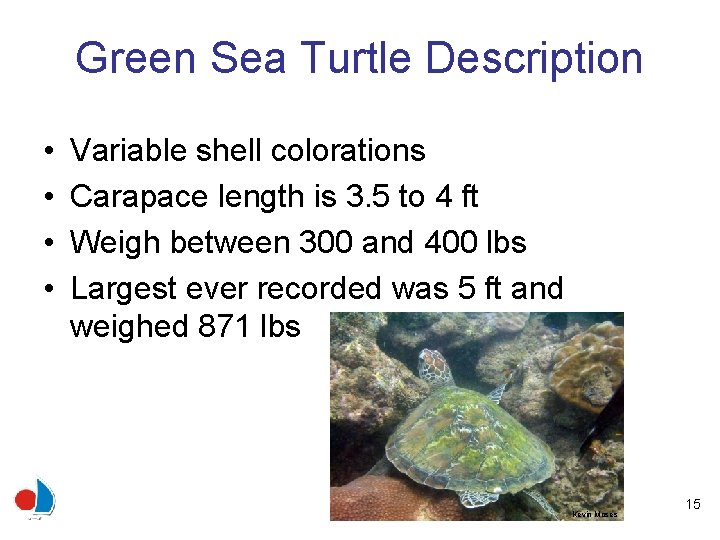
Green Sea Turtle Description • • Variable shell colorations Carapace length is 3. 5 to 4 ft Weigh between 300 and 400 lbs Largest ever recorded was 5 ft and weighed 871 lbs Kevin Moses 15
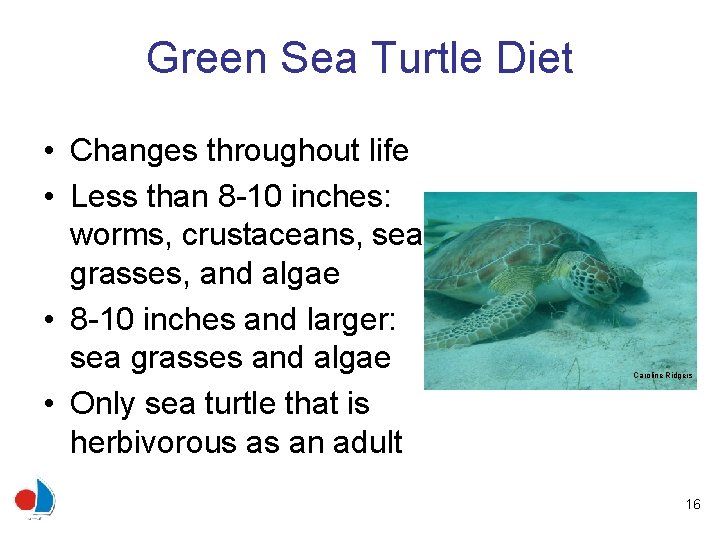
Green Sea Turtle Diet • Changes throughout life • Less than 8 -10 inches: worms, crustaceans, sea grasses, and algae • 8 -10 inches and larger: sea grasses and algae • Only sea turtle that is herbivorous as an adult Caroline Ridgers 16
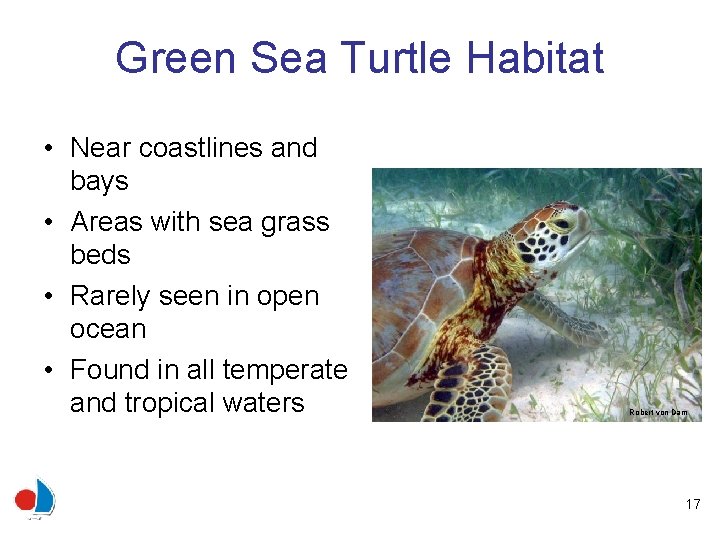
Green Sea Turtle Habitat • Near coastlines and bays • Areas with sea grass beds • Rarely seen in open ocean • Found in all temperate and tropical waters Robert von Dam 17
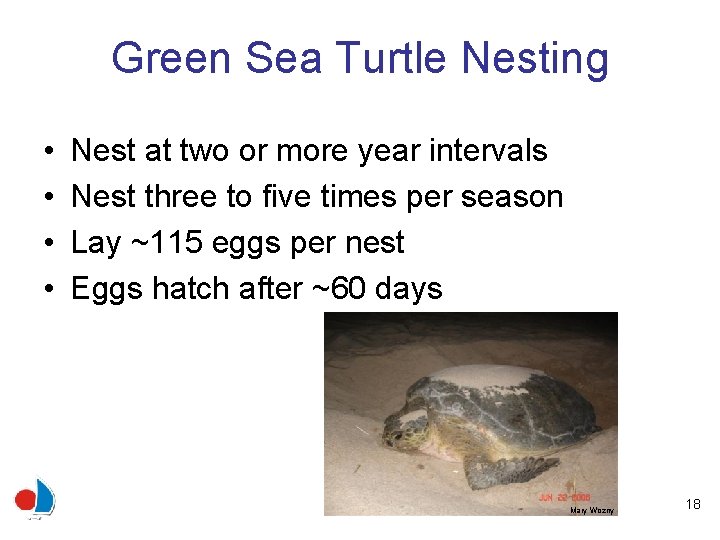
Green Sea Turtle Nesting • • Nest at two or more year intervals Nest three to five times per season Lay ~115 eggs per nest Eggs hatch after ~60 days Mary Wozny 18
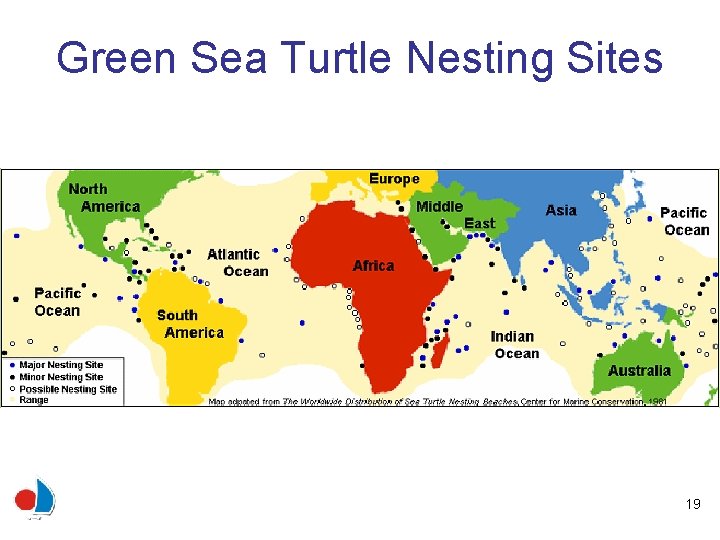
Green Sea Turtle Nesting Sites 19
Green Sea Turtle Status and Threats • United States: Endangered • International: Endangered • Greatest threat is from commercial harvest for eggs and food. • Used for leather and small ones stuffed for souvenirs • Commercial trawling increasing threat • Estimated population: 88, 520 nesting females 20
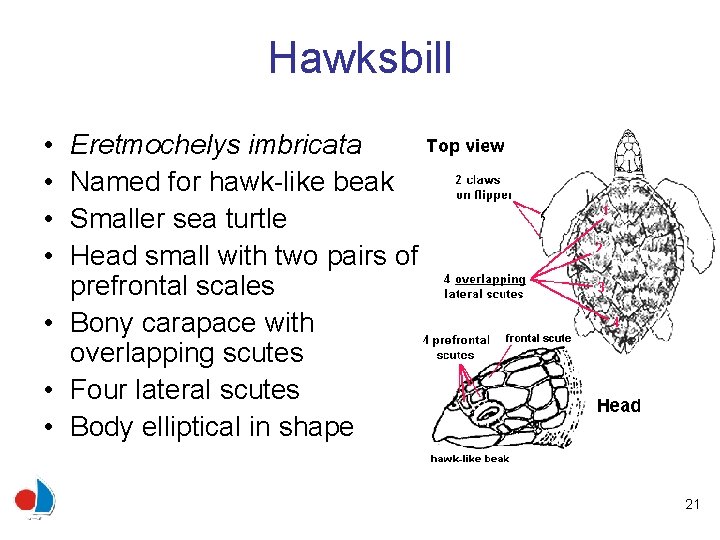
Hawksbill • • Eretmochelys imbricata Named for hawk-like beak Smaller sea turtle Head small with two pairs of prefrontal scales • Bony carapace with overlapping scutes • Four lateral scutes • Body elliptical in shape 21
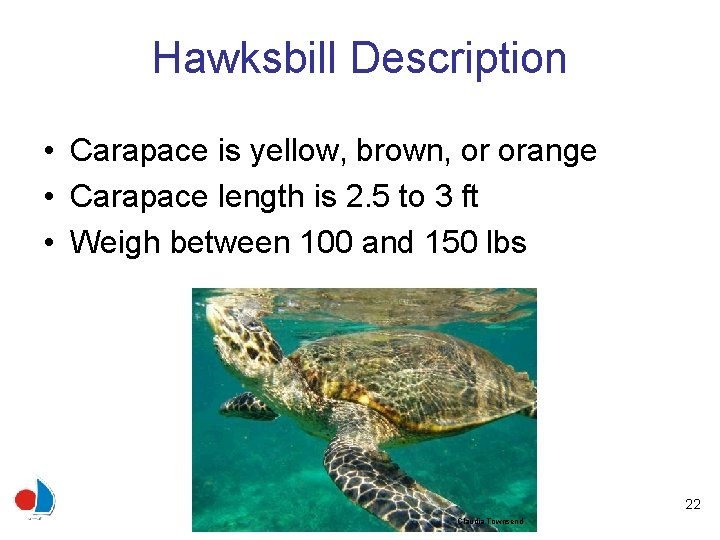
Hawksbill Description • Carapace is yellow, brown, or orange • Carapace length is 2. 5 to 3 ft • Weigh between 100 and 150 lbs 22 Claudia Townsend
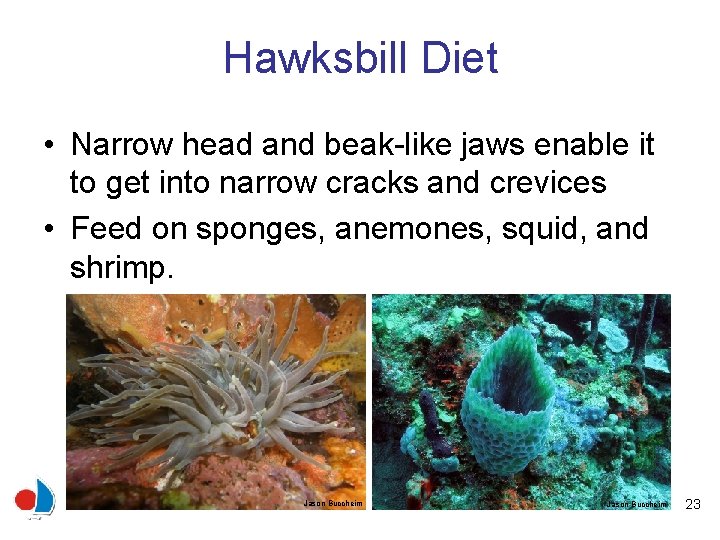
Hawksbill Diet • Narrow head and beak-like jaws enable it to get into narrow cracks and crevices • Feed on sponges, anemones, squid, and shrimp. Jason Buccheim 23
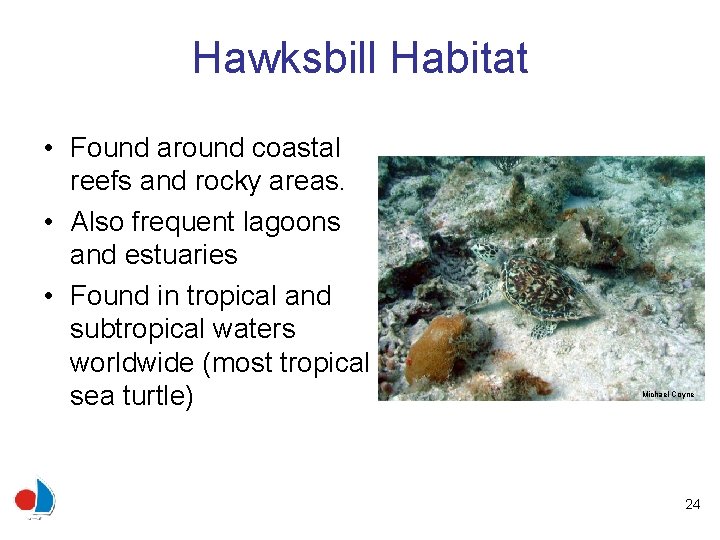
Hawksbill Habitat • Found around coastal reefs and rocky areas. • Also frequent lagoons and estuaries • Found in tropical and subtropical waters worldwide (most tropical sea turtle) Michael Coyne 24
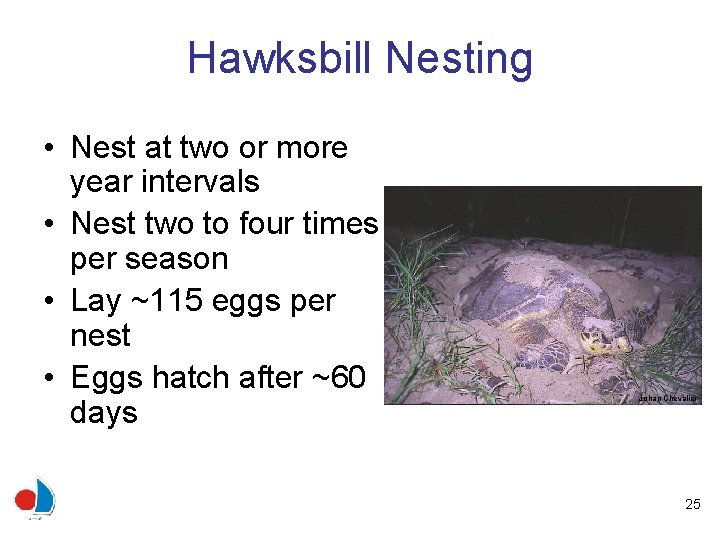
Hawksbill Nesting • Nest at two or more year intervals • Nest two to four times per season • Lay ~115 eggs per nest • Eggs hatch after ~60 days Johan Chevalier 25
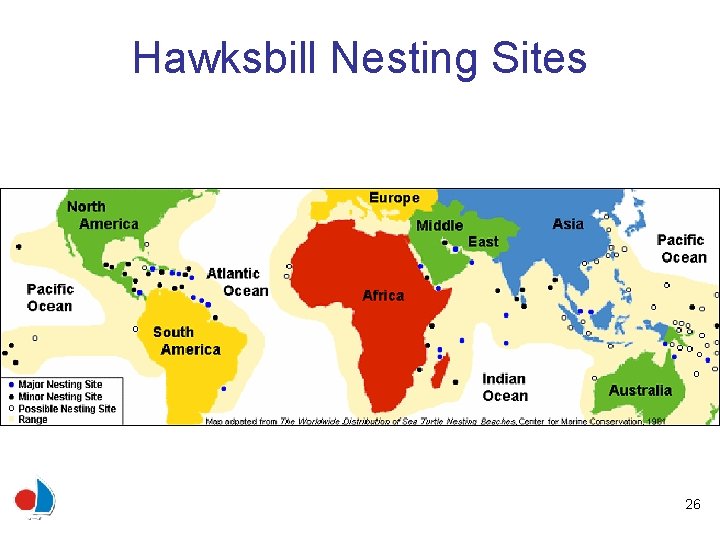
Hawksbill Nesting Sites 26
Hawksbill Status and Threats • • United States: Endangered International: Critically Endangered Harvest for their shell is greatest threat Estimated population: 22, 900 nesting females 27
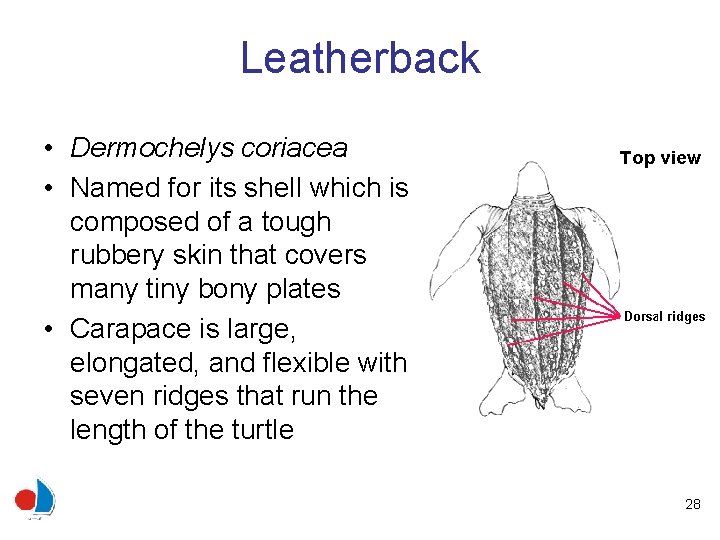
Leatherback • Dermochelys coriacea • Named for its shell which is composed of a tough rubbery skin that covers many tiny bony plates • Carapace is large, elongated, and flexible with seven ridges that run the length of the turtle 28
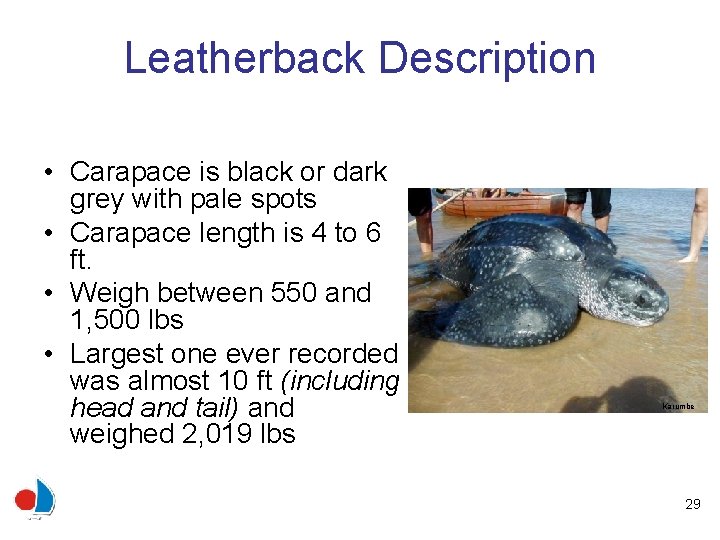
Leatherback Description • Carapace is black or dark grey with pale spots • Carapace length is 4 to 6 ft. • Weigh between 550 and 1, 500 lbs • Largest one ever recorded was almost 10 ft (including head and tail) and weighed 2, 019 lbs Karumbe 29
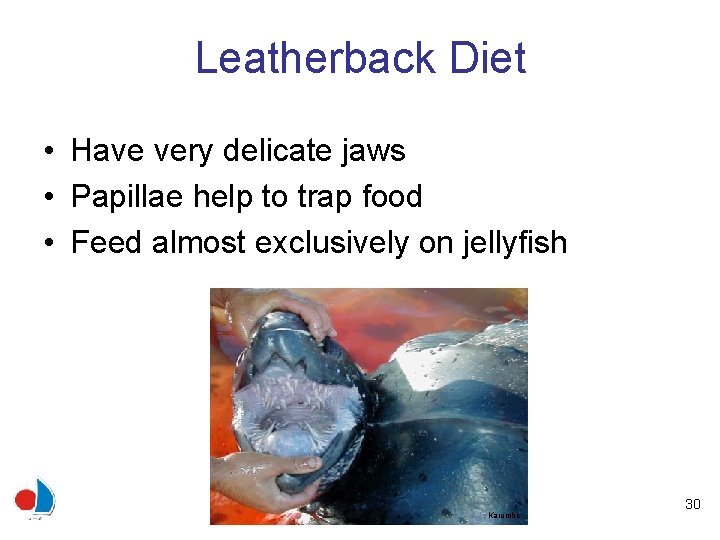
Leatherback Diet • Have very delicate jaws • Papillae help to trap food • Feed almost exclusively on jellyfish Karumbe 30
Leatherback Habitat • Found primarily in the open ocean • Known to be active in water down to 40 F (only reptile known to be active at such a low temp) • Most widely distributed sea turtle • Inhabit oceans worldwide as north as Alaska and as south as South Africa 31
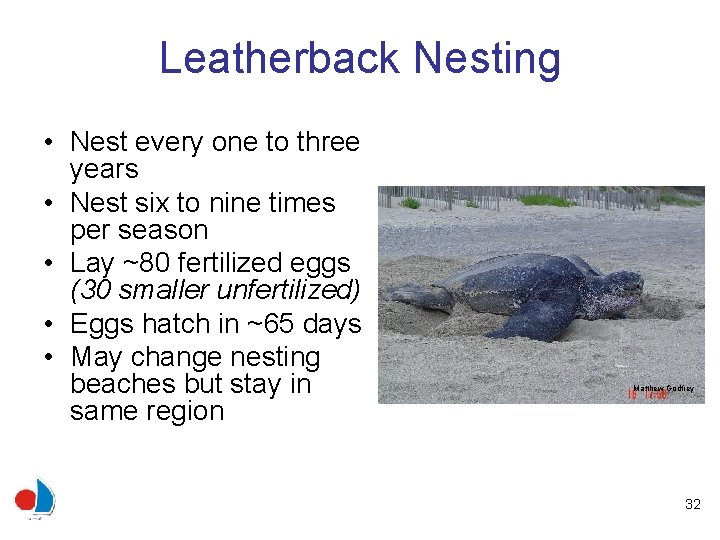
Leatherback Nesting • Nest every one to three years • Nest six to nine times per season • Lay ~80 fertilized eggs (30 smaller unfertilized) • Eggs hatch in ~65 days • May change nesting beaches but stay in same region Matthew Godfrey 32
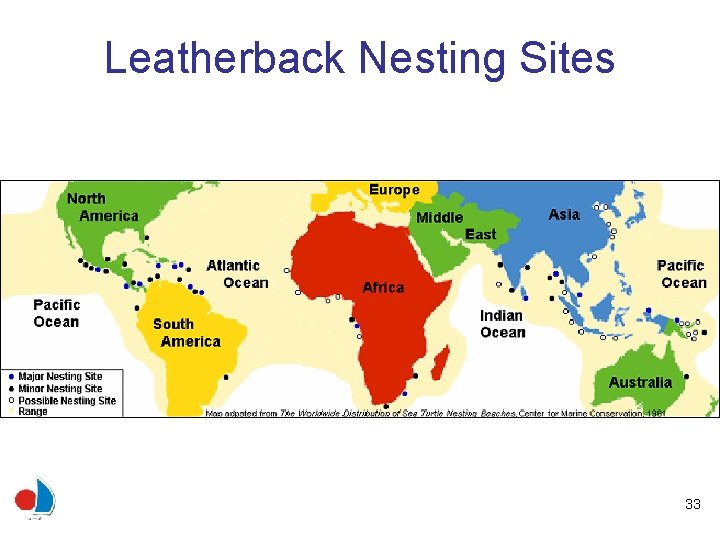
Leatherback Nesting Sites 33
Leatherback Status and Threats • United States: Endangered • International: Critically Endangered • Incidental commercial harvest and pollution are greatest threats – Pollution such as plastic bags and balloons are mistaken as jellyfish • Estimated population: 35, 860 34
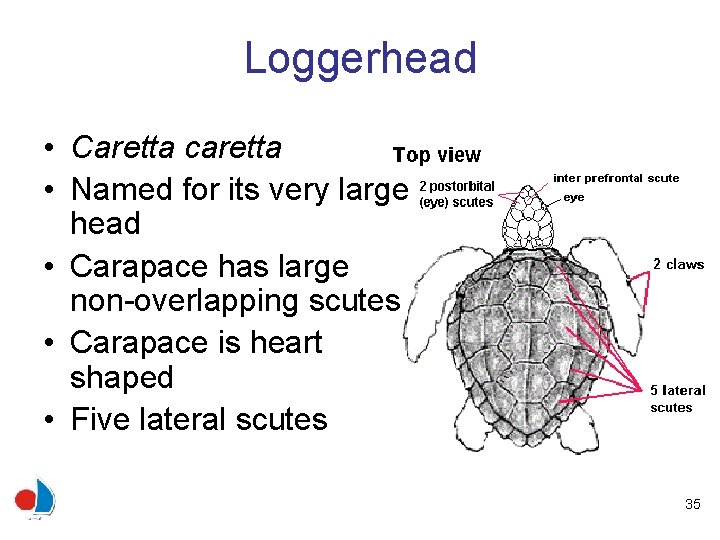
Loggerhead • Caretta caretta • Named for its very large head • Carapace has large non-overlapping scutes • Carapace is heart shaped • Five lateral scutes 35
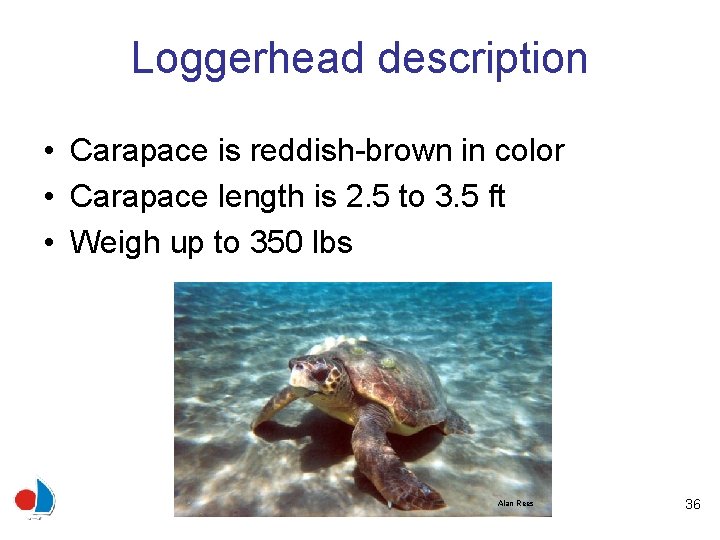
Loggerhead description • Carapace is reddish-brown in color • Carapace length is 2. 5 to 3. 5 ft • Weigh up to 350 lbs Alan Rees 36
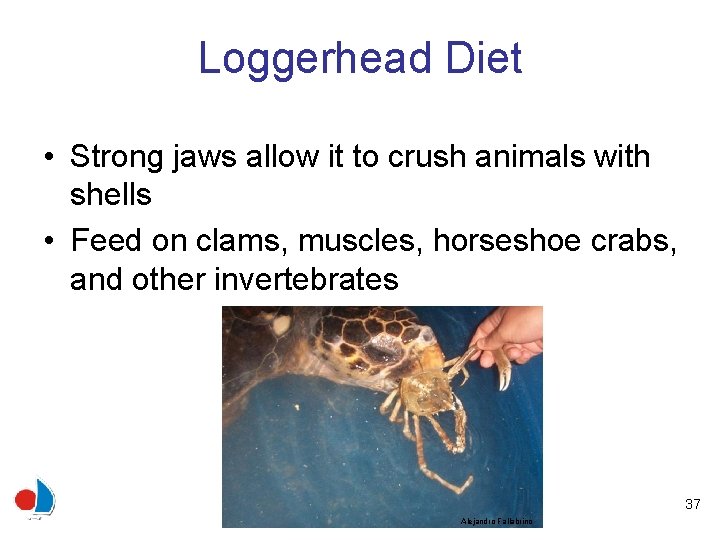
Loggerhead Diet • Strong jaws allow it to crush animals with shells • Feed on clams, muscles, horseshoe crabs, and other invertebrates 37 Alejandro Fallabrino
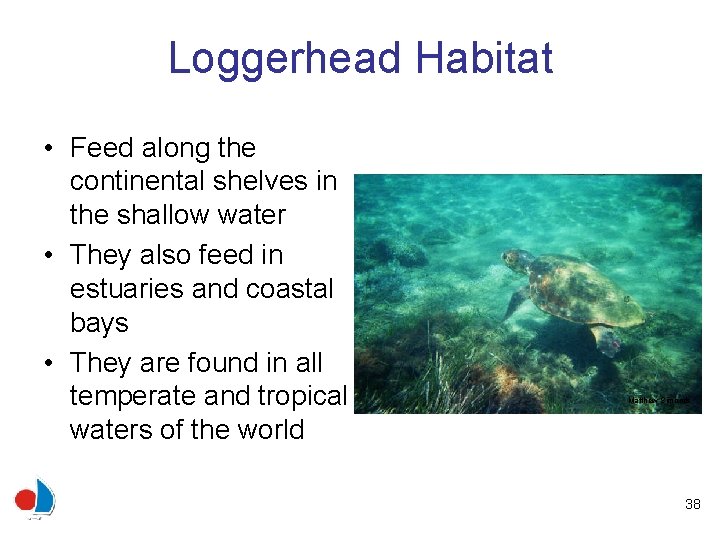
Loggerhead Habitat • Feed along the continental shelves in the shallow water • They also feed in estuaries and coastal bays • They are found in all temperate and tropical waters of the world Matthew Simonds 38
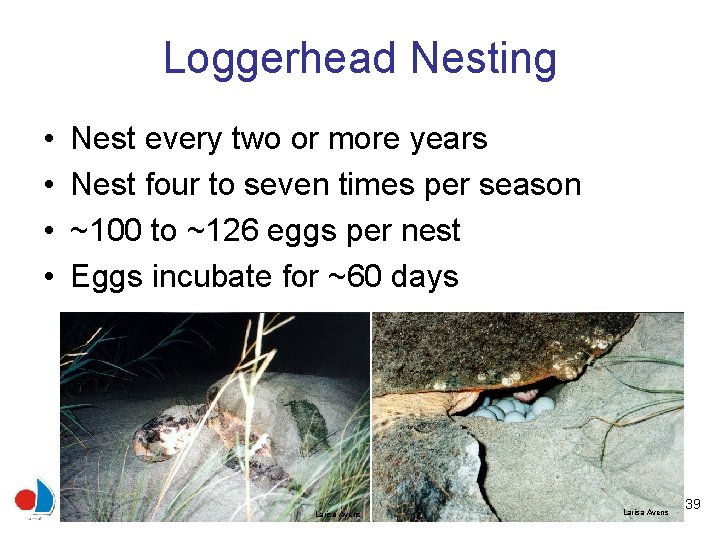
Loggerhead Nesting • • Nest every two or more years Nest four to seven times per season ~100 to ~126 eggs per nest Eggs incubate for ~60 days Larisa Avens 39
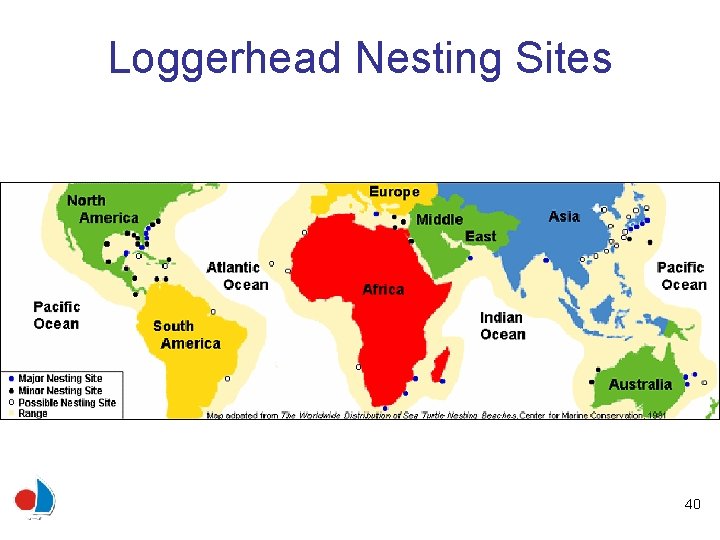
Loggerhead Nesting Sites 40
Loggerhead Status and Threats • United States: Threatened • International: Endangered • Loss of nesting habitat due to development is the greatest threat • Trawling and pollution are other threats • Estimated population: 44, 560 41
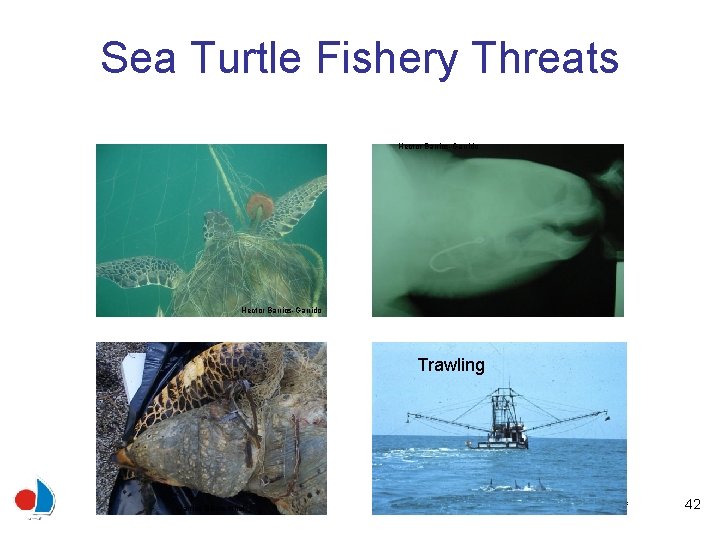
Sea Turtle Fishery Threats Hector Barrios-Garrido Trawling Janice Blumenthal Michael Coyne 42
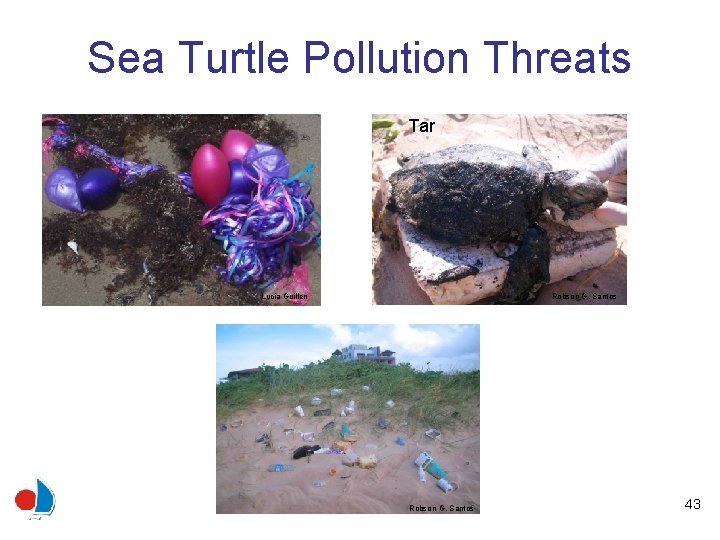
Sea Turtle Pollution Threats Tar Lucia Guillen Robson G. Santos 43
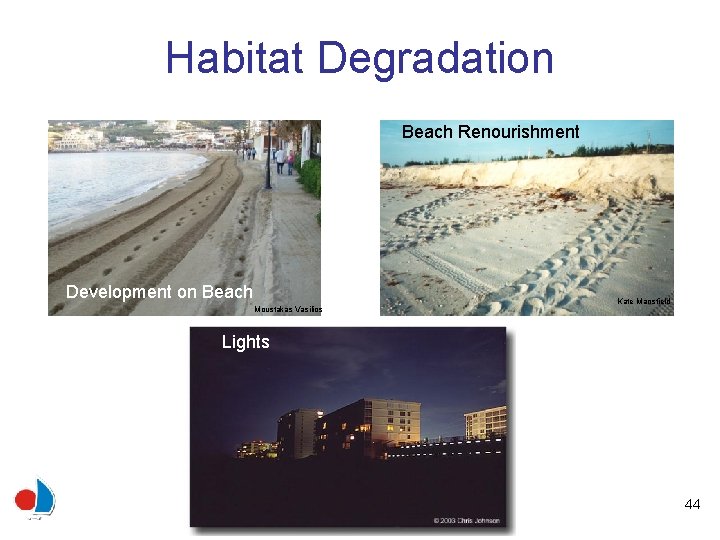
Habitat Degradation Beach Renourishment Development on Beach Moustakas Vasilios Kate Mansfield Lights 44
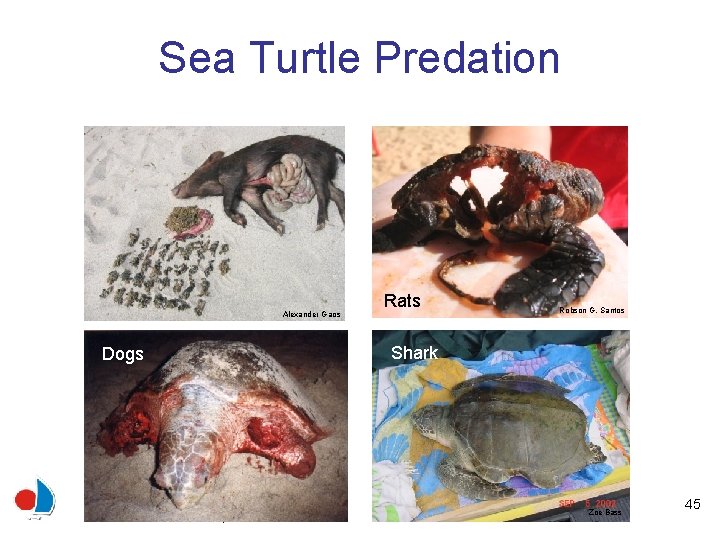
Sea Turtle Predation Alexander Gaos Rats Robson G. Santos Shark Dogs Alejandro Fallabrino Zoe Bass 45
Resources • Hillis-Star, Zandy-Marie, Ralf Boulon and Michael Evans. Sea Turtles of the Virgin Islands and Puerto Rico. 25 Oct. 2006. U. S. Geological Survey Dec. 15, 2006. <http: //biology. usgs. gov/s+t/SNT/noframe/cr 136. htm> • Information on Sea Turtles and Threats To Their Survival. 1995. Caribbean Conservation Corporation & Sea Turtle Survival League. 15 Dec. 2006. <http: //www. cccturtle. org/sea-turtle-information. php> 46
- Slides: 46