
Sea snake 60 species of marine snakes of
- Slides: 10
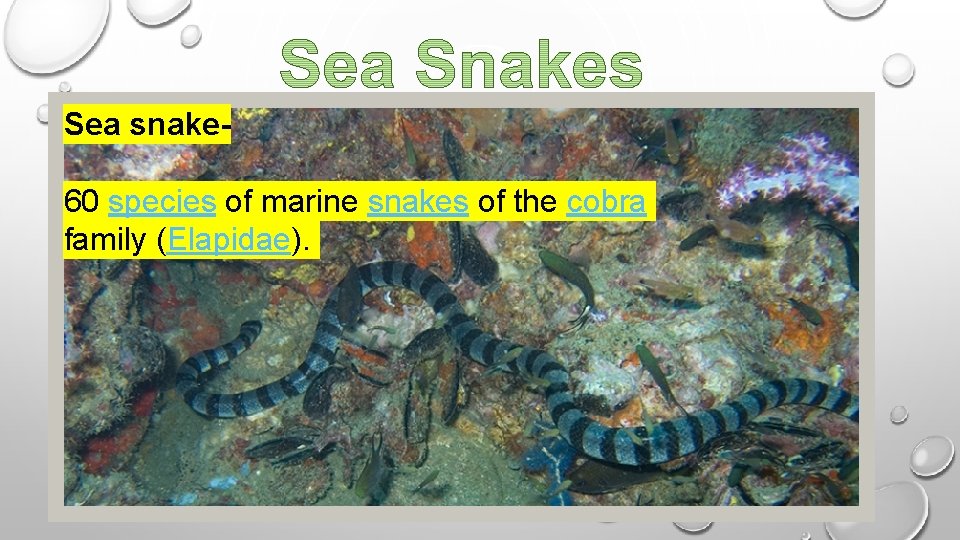
Sea snake 60 species of marine snakes of the cobra family (Elapidae).
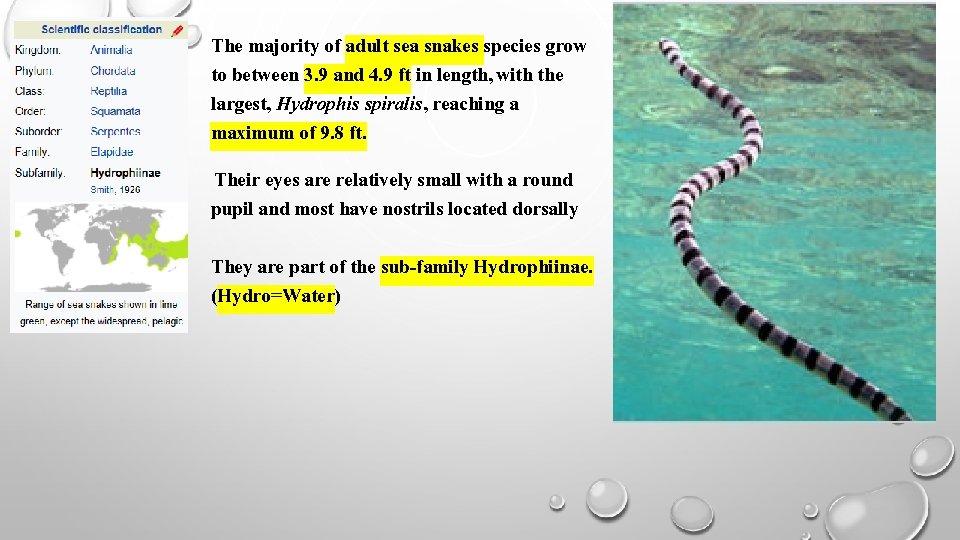
The majority of adult sea snakes species grow to between 3. 9 and 4. 9 ft in length, with the largest, Hydrophis spiralis, reaching a maximum of 9. 8 ft. Their eyes are relatively small with a round pupil and most have nostrils located dorsally They are part of the sub-family Hydrophiinae. (Hydro=Water)
MOST SEA SNAKES ARE COMPLETELY AQUATIC AND HAVE ADAPTED TO SEA ENVIRONMENTS IN MANY WAYS
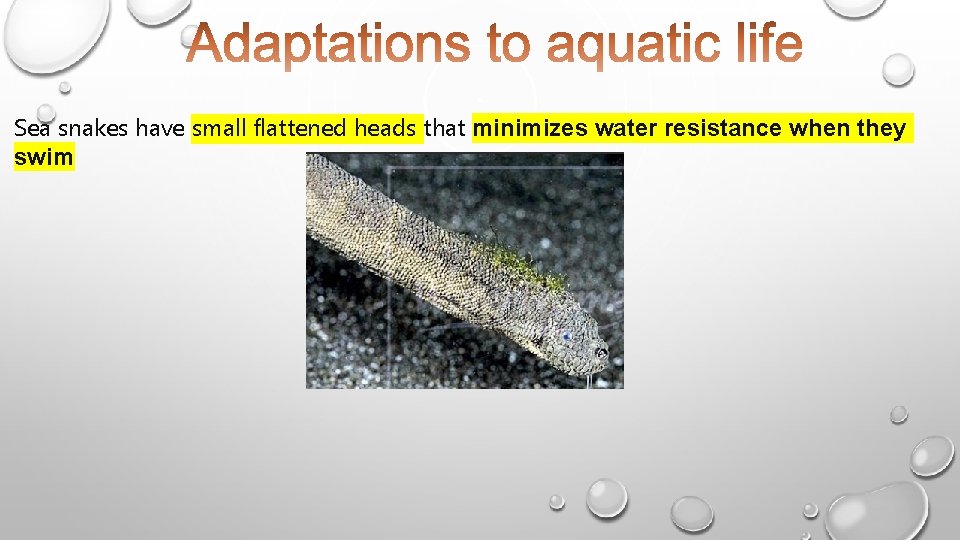
Sea snakes have small flattened heads that minimizes water resistance when they swim
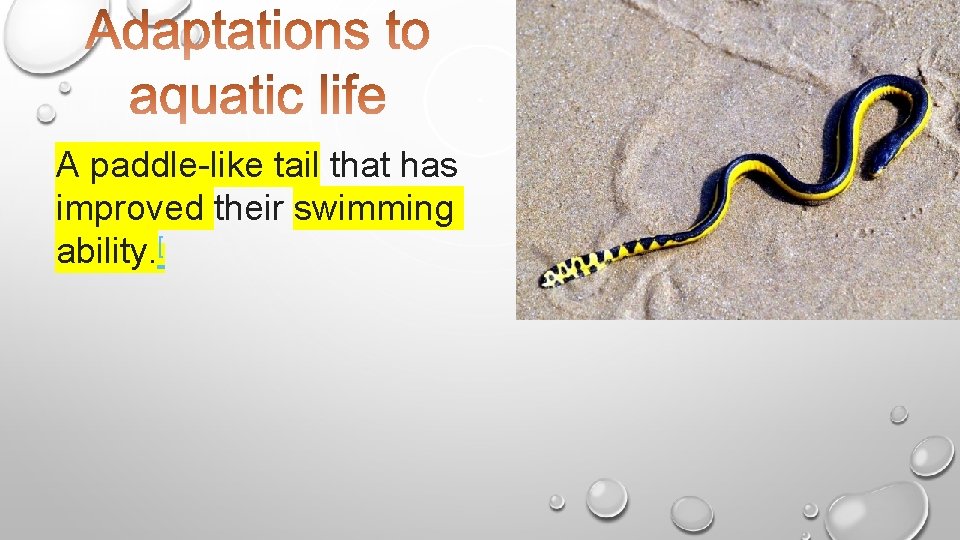
A paddle-like tail that has improved their swimming ability. [
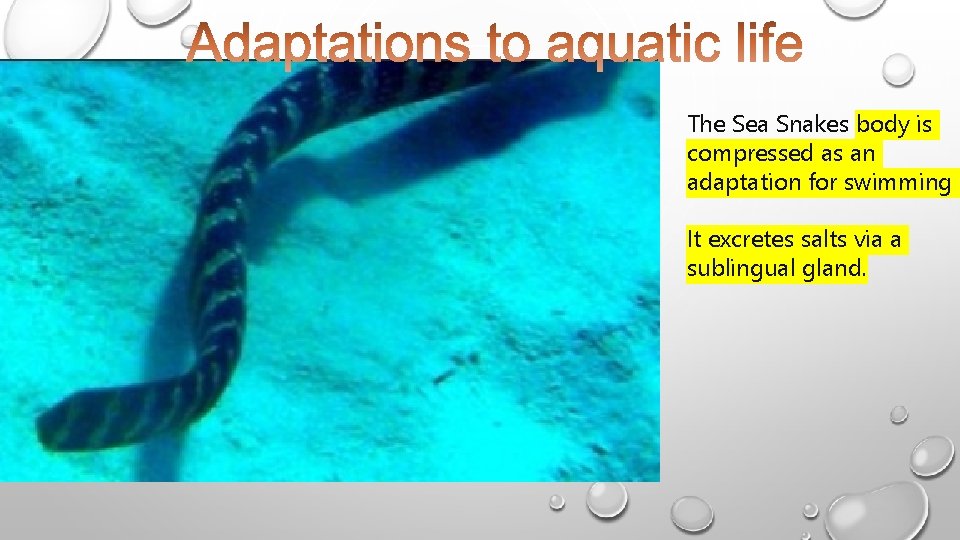
The Sea Snakes body is compressed as an adaptation for swimming It excretes salts via a sublingual gland.
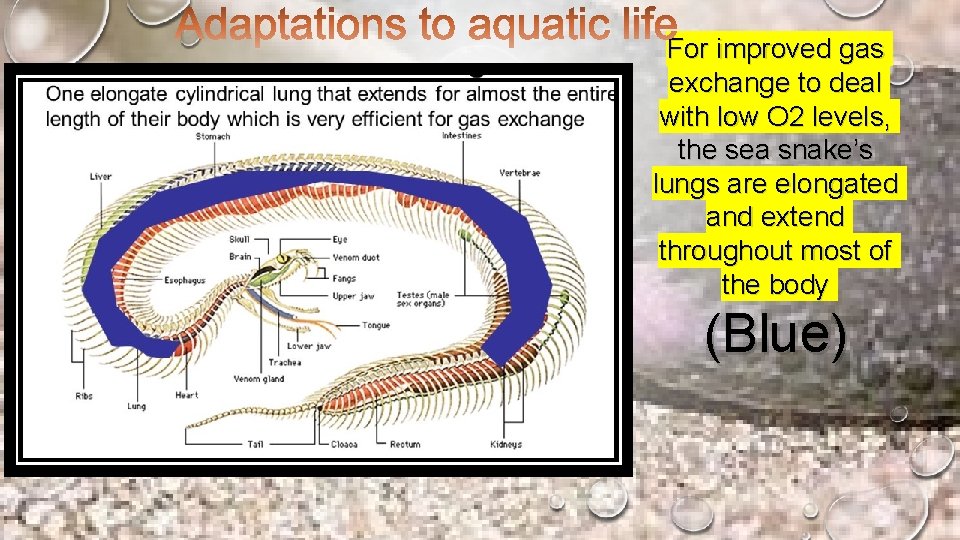
For improved gas exchange to deal with low O 2 levels, the sea snake’s lungs are elongated and extend throughout most of the body (Blue)
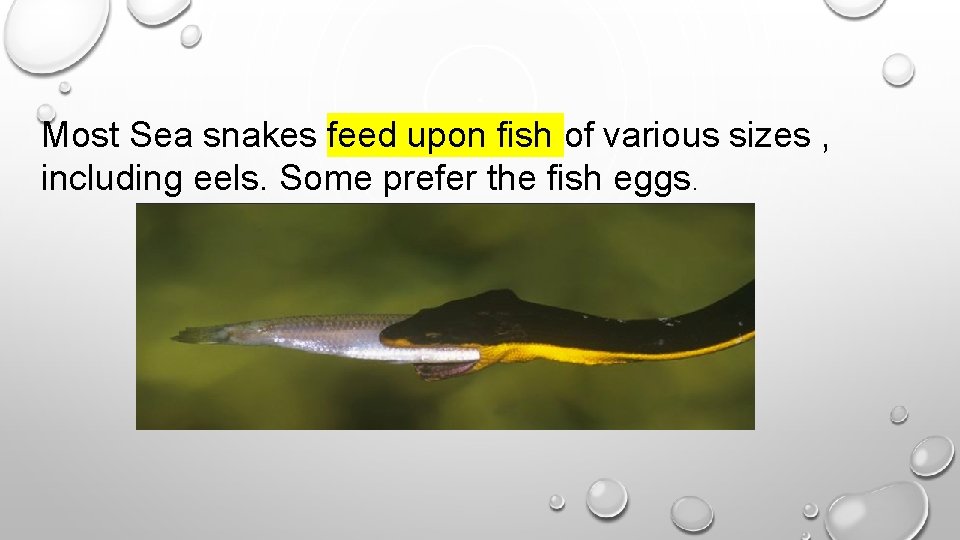
Most Sea snakes feed upon fish of various sizes , including eels. Some prefer the fish eggs.
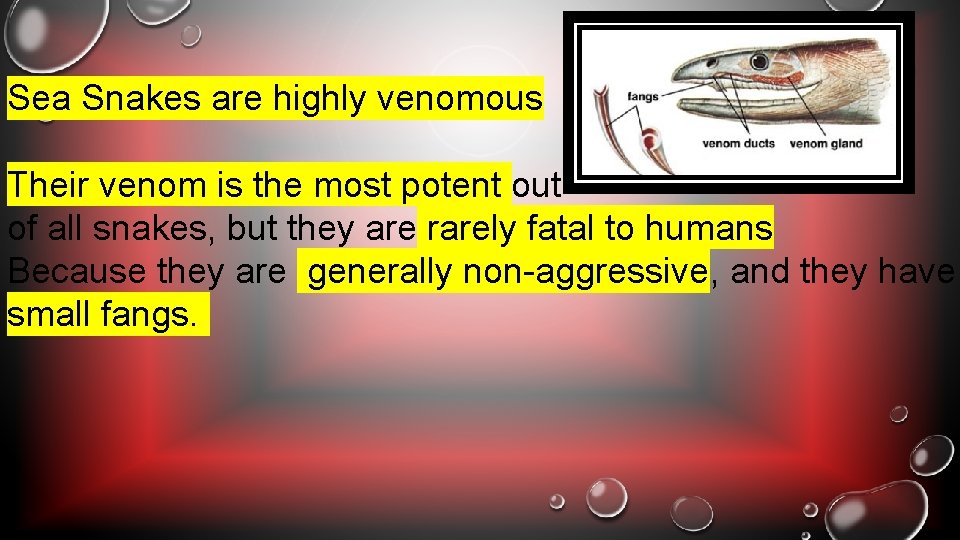
Sea Snakes are highly venomous Their venom is the most potent out of all snakes, but they are rarely fatal to humans Because they are generally non-aggressive, and they have small fangs.
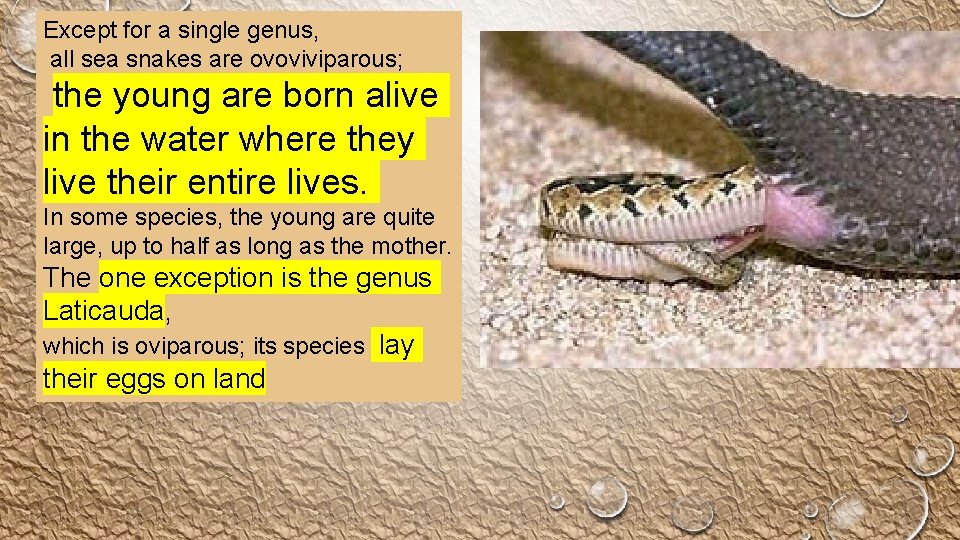
Except for a single genus, all sea snakes are ovoviviparous; the young are born alive in the water where they live their entire lives. In some species, the young are quite large, up to half as long as the mother. The one exception is the genus Laticauda, which is oviparous; its species lay their eggs on land