
Sea Ice Algae The Polar Regions n Antarctic
- Slides: 11
Sea Ice Algae
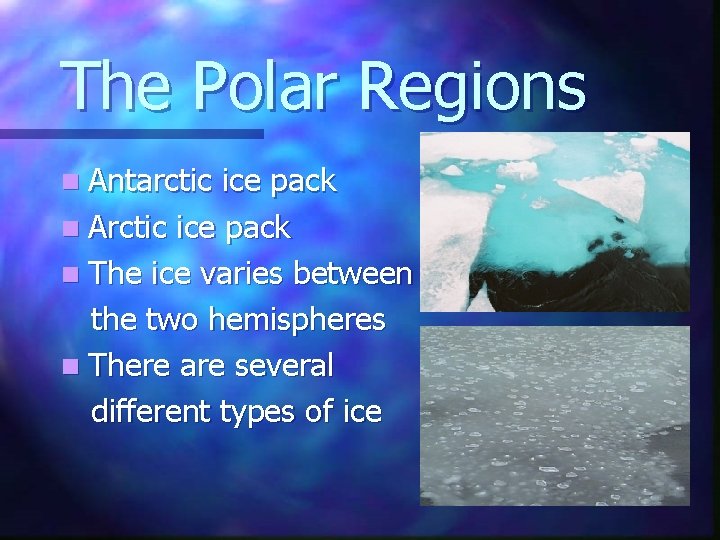
The Polar Regions n Antarctic ice pack n Arctic ice pack n The ice varies between the two hemispheres n There are several different types of ice
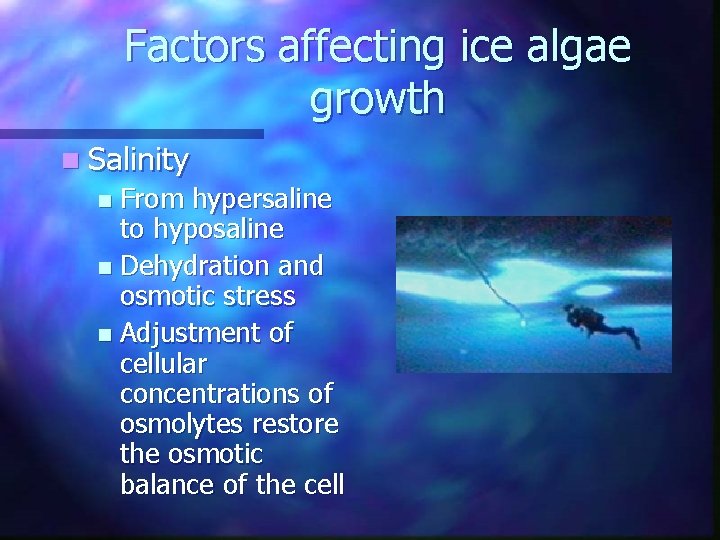
Factors affecting ice algae growth n Salinity From hypersaline to hyposaline n Dehydration and osmotic stress n Adjustment of cellular concentrations of osmolytes restore the osmotic balance of the cell n
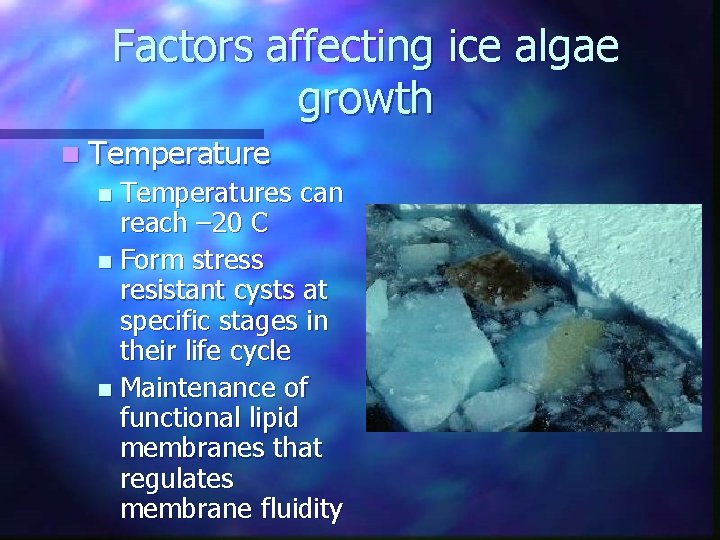
Factors affecting ice algae growth n Temperatures can reach – 20 C n Form stress resistant cysts at specific stages in their life cycle n Maintenance of functional lipid membranes that regulates membrane fluidity n
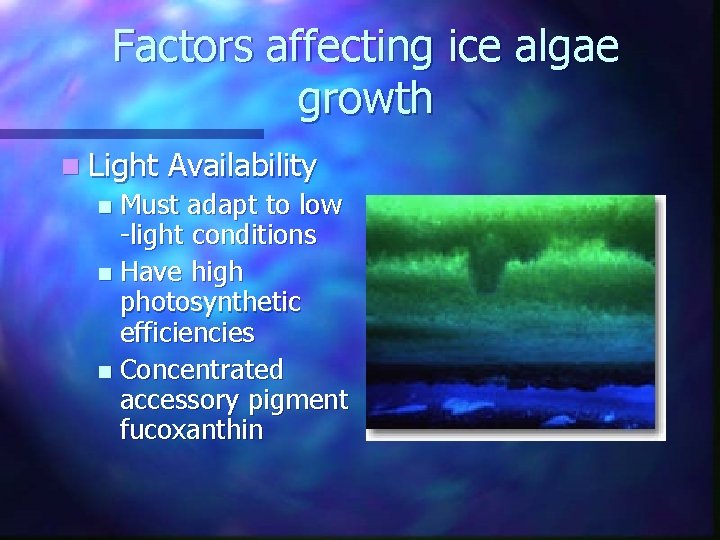
Factors affecting ice algae growth n Light Availability Must adapt to low -light conditions n Have high photosynthetic efficiencies n Concentrated accessory pigment fucoxanthin n
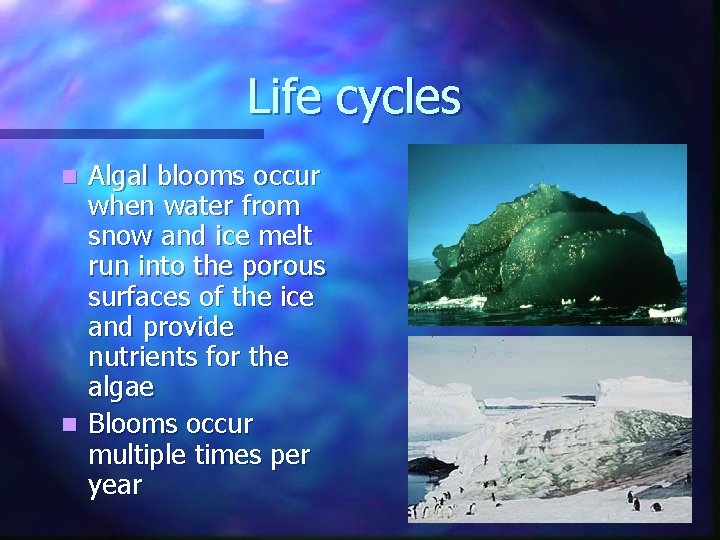
Life cycles Algal blooms occur when water from snow and ice melt run into the porous surfaces of the ice and provide nutrients for the algae n Blooms occur multiple times per year n
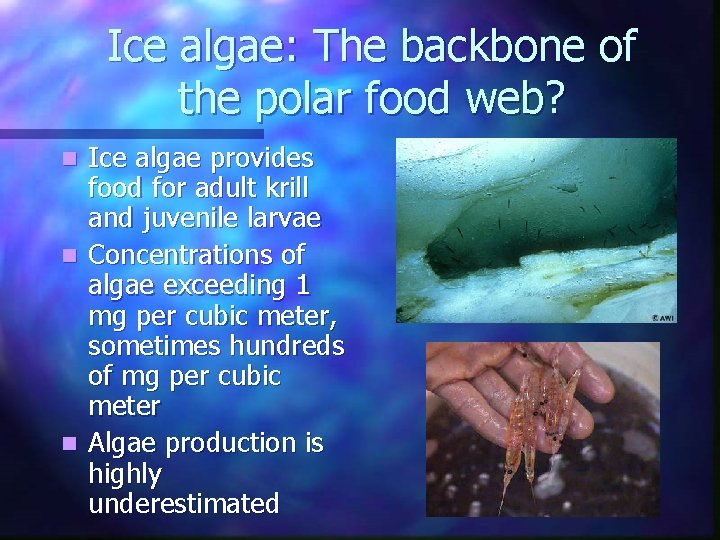
Ice algae: The backbone of the polar food web? Ice algae provides food for adult krill and juvenile larvae n Concentrations of algae exceeding 1 mg per cubic meter, sometimes hundreds of mg per cubic meter n Algae production is highly underestimated n
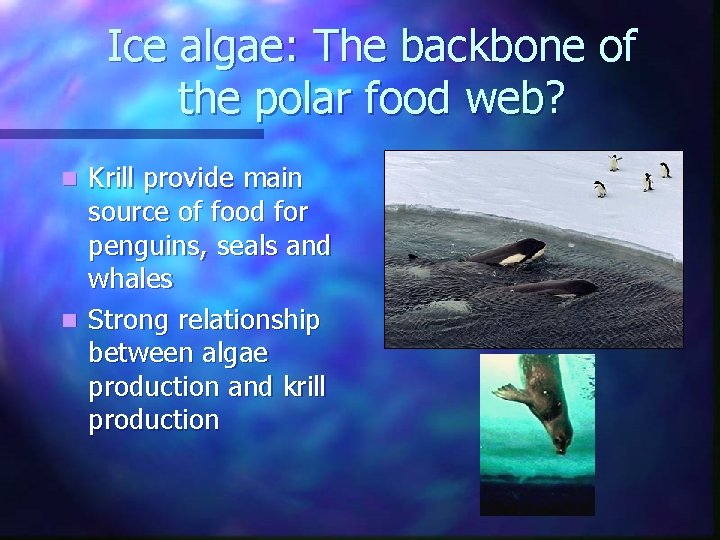
Ice algae: The backbone of the polar food web? Krill provide main source of food for penguins, seals and whales n Strong relationship between algae production and krill production n
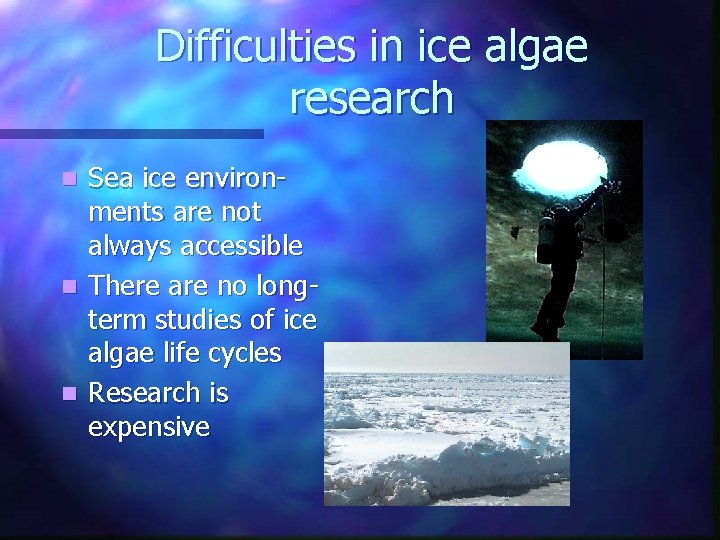
Difficulties in ice algae research Sea ice environments are not always accessible n There are no longterm studies of ice algae life cycles n Research is expensive n
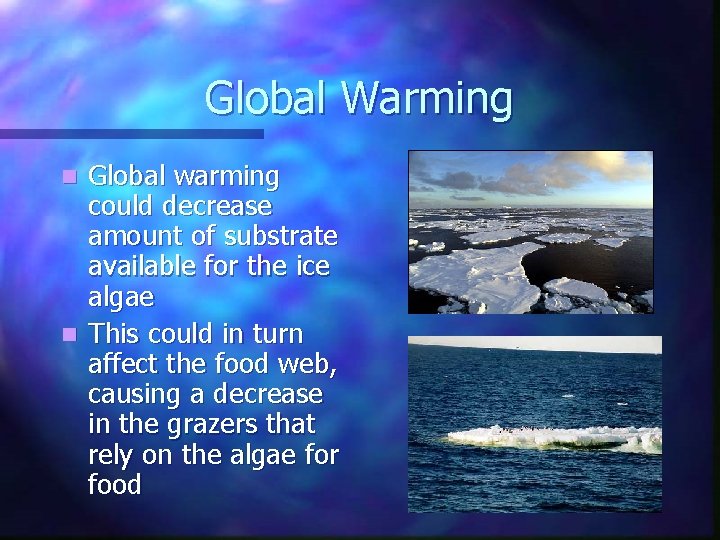
Global Warming Global warming could decrease amount of substrate available for the ice algae n This could in turn affect the food web, causing a decrease in the grazers that rely on the algae for food n
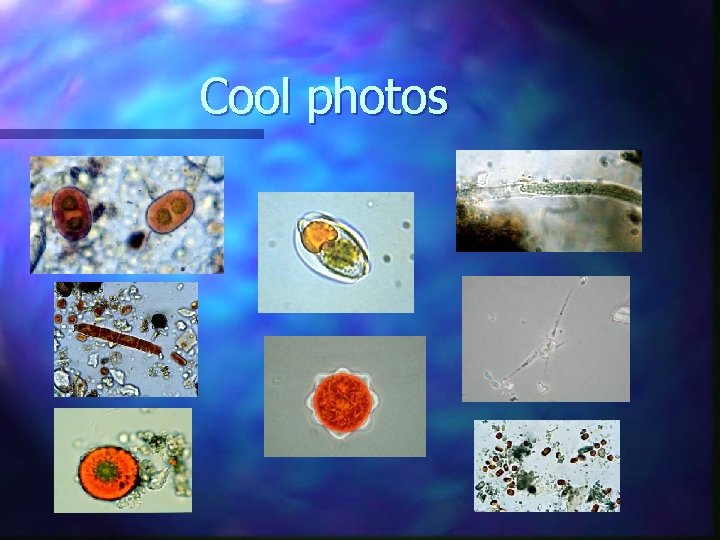
Cool photos