
SDR Applications in Radio Astronomy Marcus Leech Science
- Slides: 21
SDR Applications in Radio Astronomy Marcus Leech Science Radio Laboratories http: //www. science-radio-labs. com
About Me Software developer currently working in media security (DRM). 20 years in network and network security design with Nortel. Former Security Area Director, IETF Former WG Chair AFT and ITRACE working groups Published several RFCs Inventor of record on 11 patents 35 years in computing/software/networking Involved in small-scale radio astronomy since 1986 Began using/promoting SDR techniques in small-scale RA in 2004. Contributor to Gnu Radio Contractor to Ettus Research
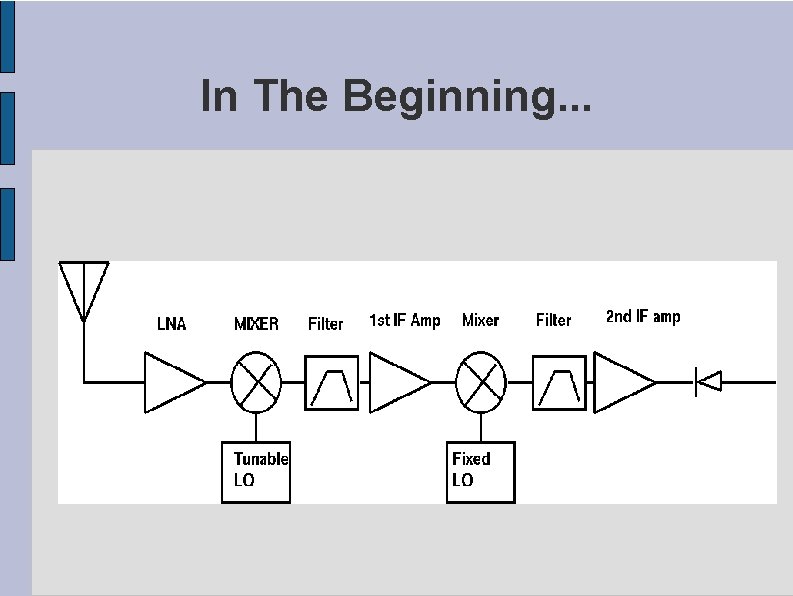
In The Beginning. . .
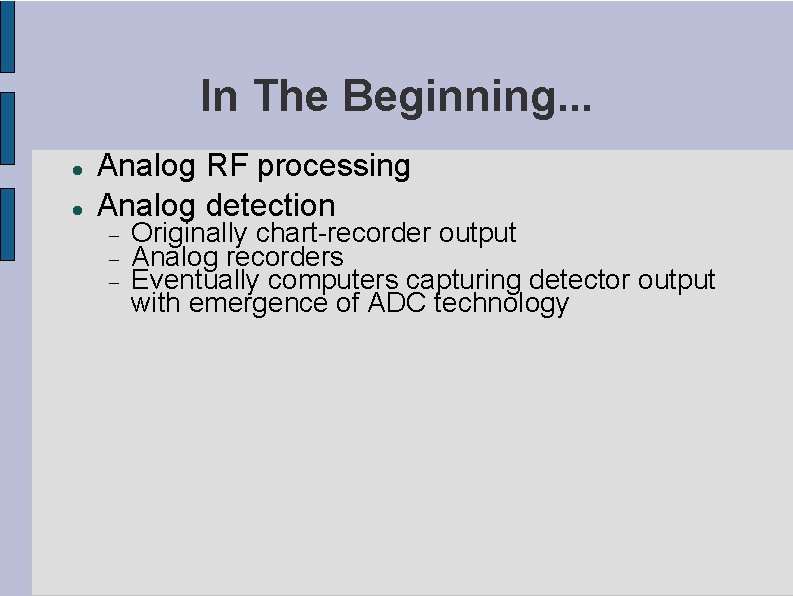
In The Beginning. . . Analog RF processing Analog detection Originally chart-recorder output Analog recorders Eventually computers capturing detector output with emergence of ADC technology
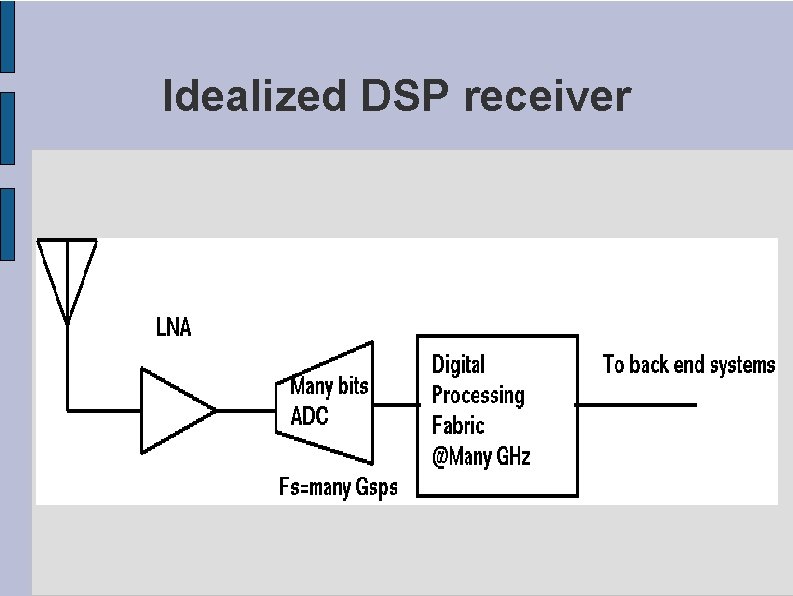
Idealized DSP receiver
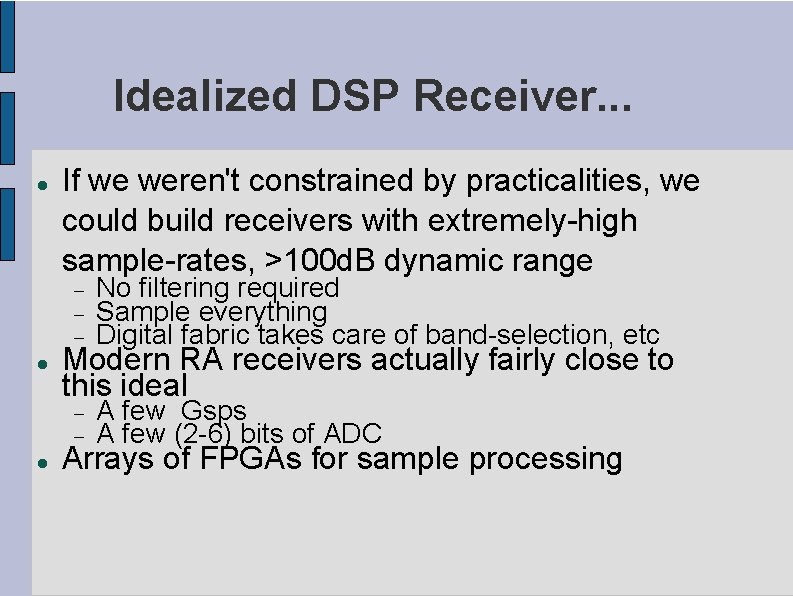
Idealized DSP Receiver. . . If we weren't constrained by practicalities, we could build receivers with extremely-high sample-rates, >100 d. B dynamic range No filtering required Sample everything Digital fabric takes care of band-selection, etc A few Gsps A few (2 -6) bits of ADC Modern RA receivers actually fairly close to this ideal Arrays of FPGAs for sample processing
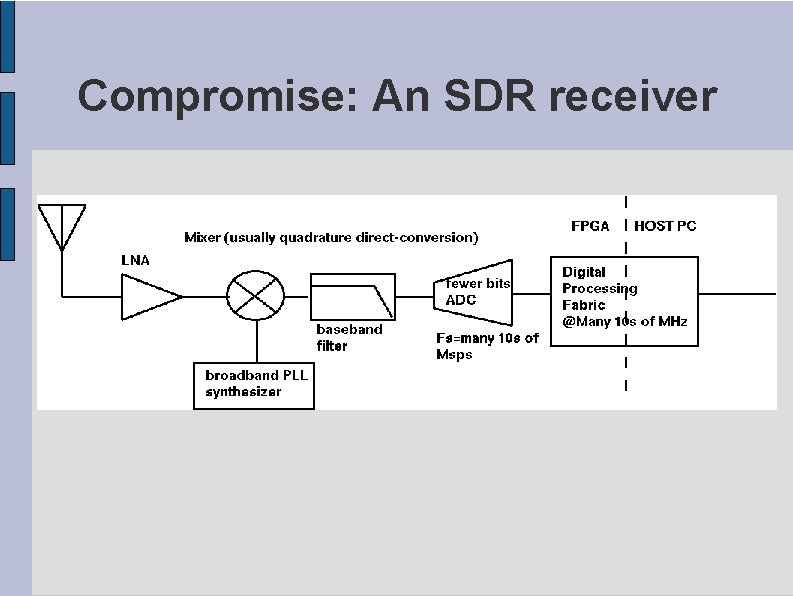
Compromise: An SDR receiver
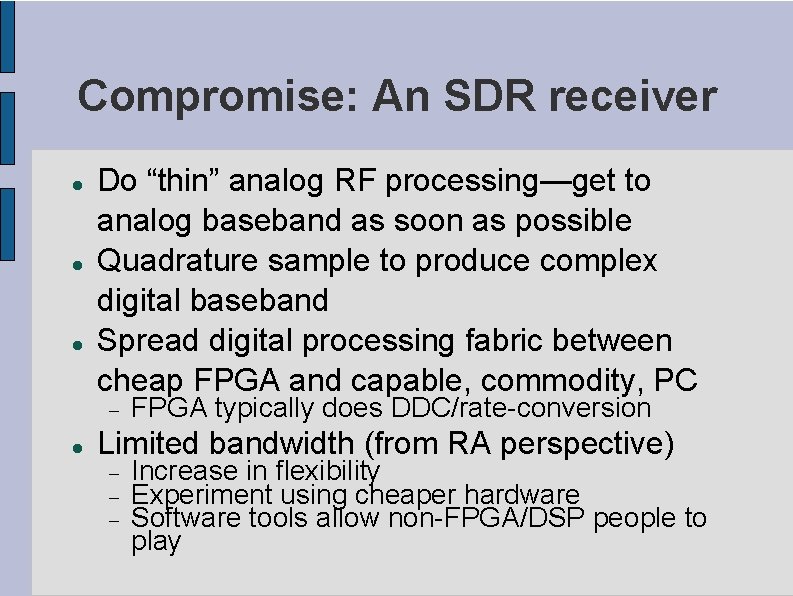
Compromise: An SDR receiver Do “thin” analog RF processing—get to analog baseband as soon as possible Quadrature sample to produce complex digital baseband Spread digital processing fabric between cheap FPGA and capable, commodity, PC FPGA typically does DDC/rate-conversion Limited bandwidth (from RA perspective) Increase in flexibility Experiment using cheaper hardware Software tools allow non-FPGA/DSP people to play
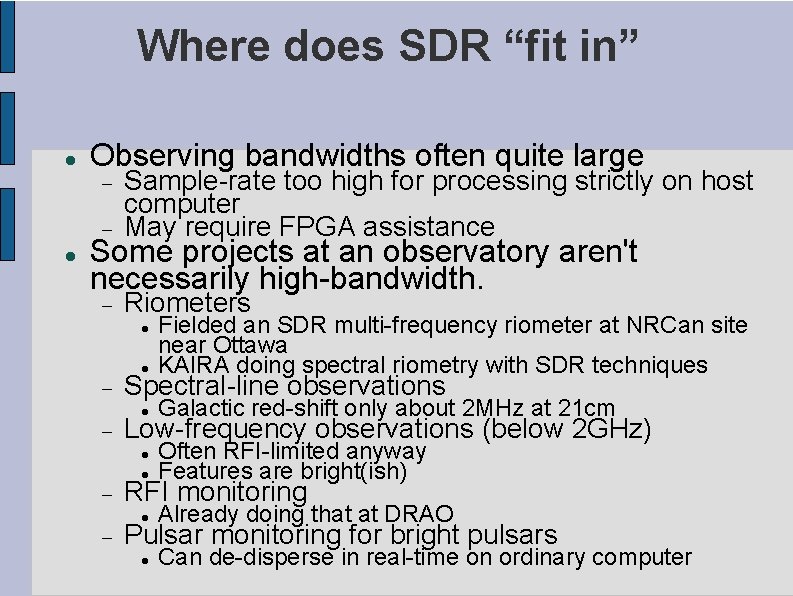
Where does SDR “fit in” Observing bandwidths often quite large Sample-rate too high for processing strictly on host computer May require FPGA assistance Riometers Some projects at an observatory aren't necessarily high-bandwidth. Fielded an SDR multi-frequency riometer at NRCan site near Ottawa KAIRA doing spectral riometry with SDR techniques Galactic red-shift only about 2 MHz at 21 cm Often RFI-limited anyway Features are bright(ish) Already doing that at DRAO Can de-disperse in real-time on ordinary computer Spectral-line observations Low-frequency observations (below 2 GHz) RFI monitoring Pulsar monitoring for bright pulsars
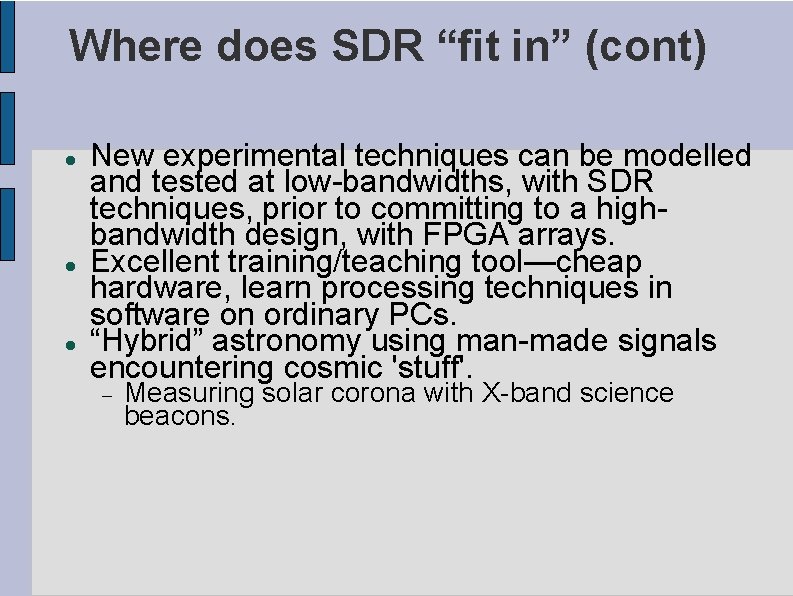
Where does SDR “fit in” (cont) New experimental techniques can be modelled and tested at low-bandwidths, with SDR techniques, prior to committing to a highbandwidth design, with FPGA arrays. Excellent training/teaching tool—cheap hardware, learn processing techniques in software on ordinary PCs. “Hybrid” astronomy using man-made signals encountering cosmic 'stuff'. Measuring solar corona with X-band science beacons.
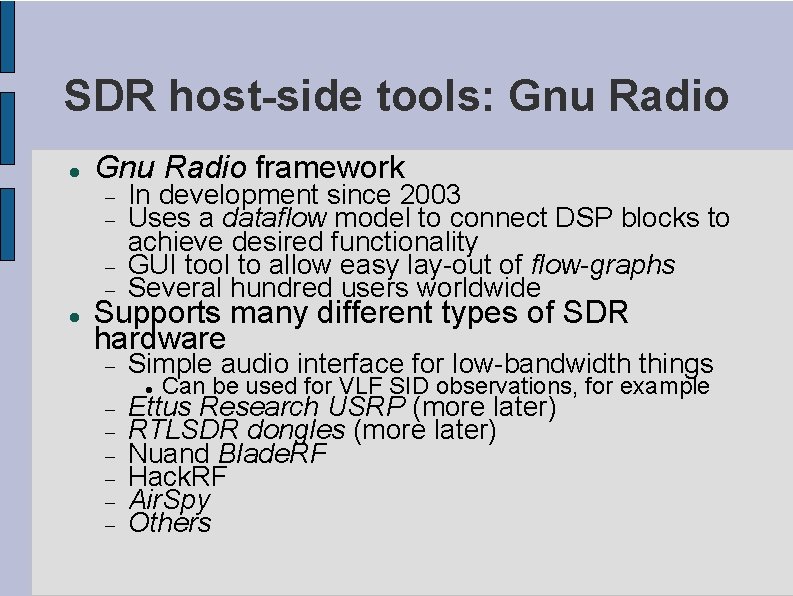
SDR host-side tools: Gnu Radio framework In development since 2003 Uses a dataflow model to connect DSP blocks to achieve desired functionality GUI tool to allow easy lay-out of flow-graphs Several hundred users worldwide Simple audio interface for low-bandwidth things Supports many different types of SDR hardware Can be used for VLF SID observations, for example Ettus Research USRP (more later) RTLSDR dongles (more later) Nuand Blade. RF Hack. RF Air. Spy Others
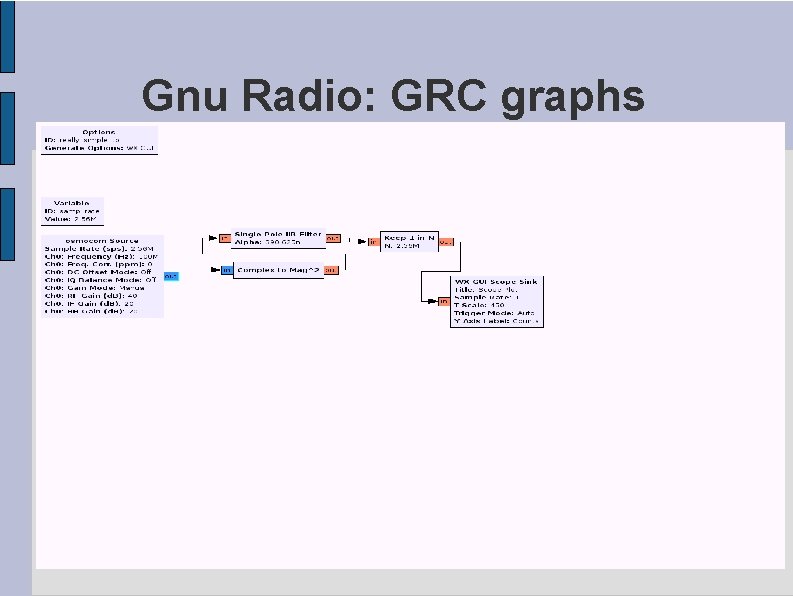
Gnu Radio: GRC graphs
Gnu Radio Demo: RTLSDR interferometer We'll show the construction of a really-simple two-element correlation interferometer with two shared-clock dongles.
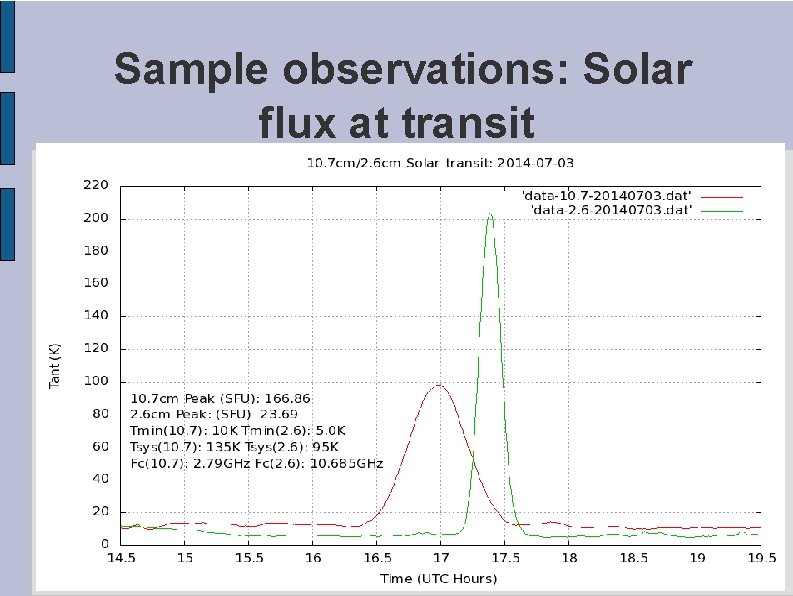
Sample observations: Solar flux at transit
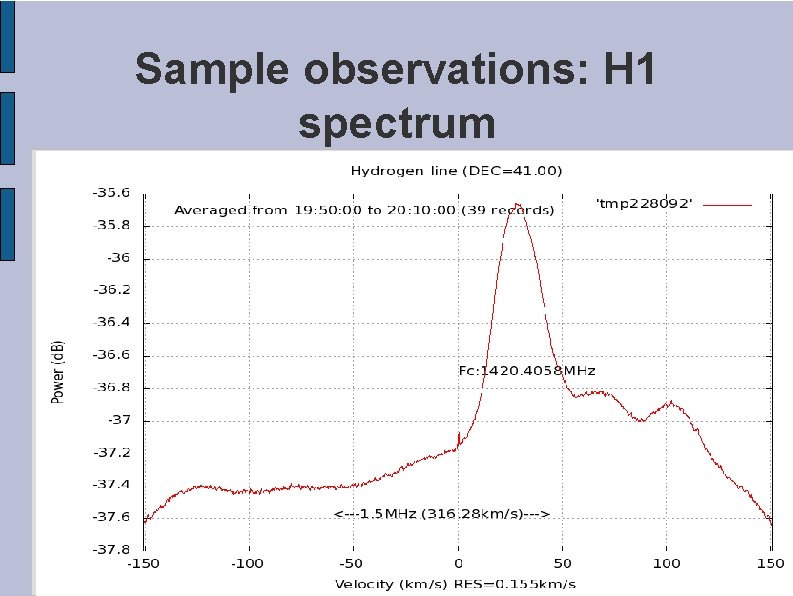
Sample observations: H 1 spectrum
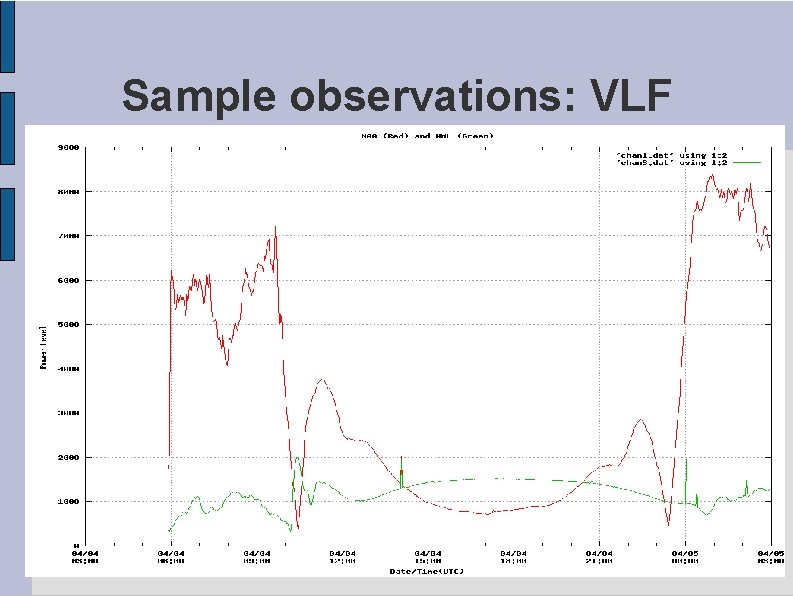
Sample observations: VLF
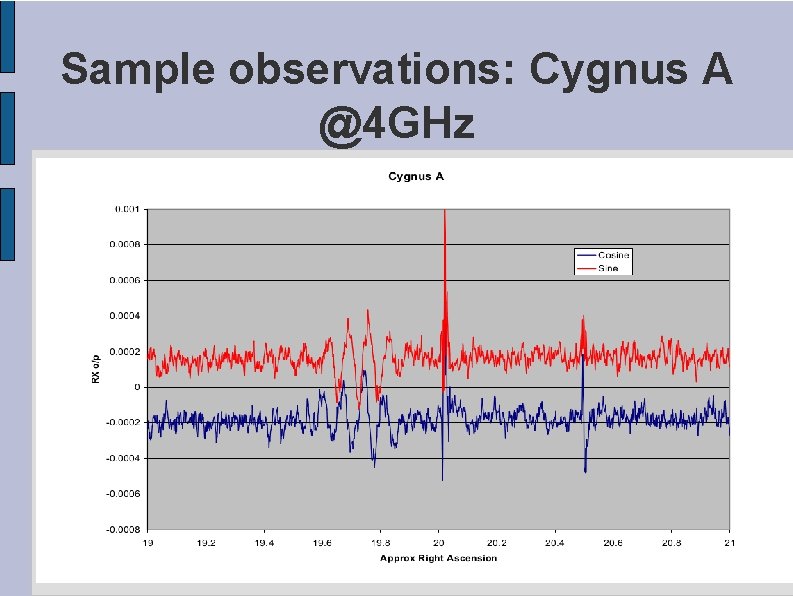
Sample observations: Cygnus A @4 GHz
Hardware: Getting started RTL-SDR dongles RTL 2832 U DVB-T USB-2. 0 chip R 820 T tuner Primarily designed as DVB-T tuner for Pcs Semi-serendipitous “bypass mode” allows receiving down-sampled ADC samples from tuner. 8 -bits Up to 2. 56 Msps Tunable from 24. 5 MHz to 1750 MHz Available from many places $10. 00 or less on e. Bay Noo. Elec imports and sells from Markham, ON Can be made coherent with some work
Hardware: Moving up Ettus Research (www. ettus. com) Pioneered inexpensive SDR platforms in 2004 Now extensive product line-up: USRP 1 B 200 and B 210 (DRAO has a B 200) * E 310 * X 300 and X 310 N 200 and N 210 E 100 E 110 * = no daughtercard required Daughtercards to cover various frequency ranges: USRP 1 sold thousands WBX 25 MHz to 2. 2 GHz SBX 400 MHz to 4. 4 GHz CBX 1200 MHz to 6 GHz UBX (pre-release) 10 MHz to 6 GHz Ettus acquired by National Instruments in 2010 Much co-development and synergy in product lines Lab. View support for some Ettus hardware: N 2 xx and
Beyond SDR: Hybrid FPGA+SDR framwork: RFNo. C New development by Ettus Research, targetted at X 3 x 0 and E 310 platforms. Take advantage of large FPGA fabric Pre-defined “compute modules” in FPGA Interconnect with a packet-switched crossbar. Don't have to be a FPGA/verilog expert to leverage compute power of FPGA Integrated into Gnu Radio FFT+integrator+decimator module coming soon Runtime configuration Connect producer/consumer in easy, natural, way BETA availabilty by end-of-year 2014. I'm encouraging them to implement RAfriendly modules sooner rather than later.
Further explorations Ettus radios Gnu Radio main page RTLSDR starter page REDDIT channel for RTLSDR http: //www. ettus. com http: //www. gnuradio. org http: //sdr. osmocom. org/trac/wiki/rtl-sdr http: //www. reddit. com/r/RTLSDR