
Scurit des Rseaux Master CSI 2 J Btrma
Sécurité des Réseaux, Master CSI 2 J. Bétréma, La. BRI, Université Bordeaux 1 Communications sans fil
Bandes de fréquences Source: Andy Dornan The Essential Guide to Wireless Communications Applications Prentice Hall
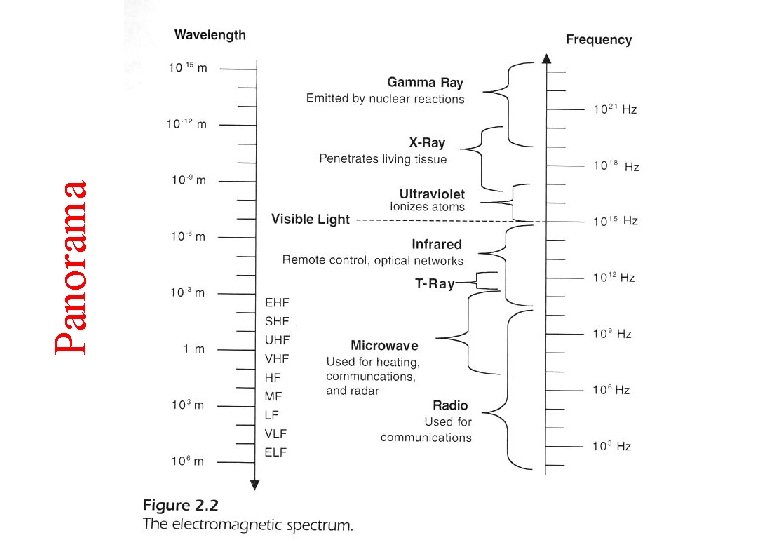
Panorama
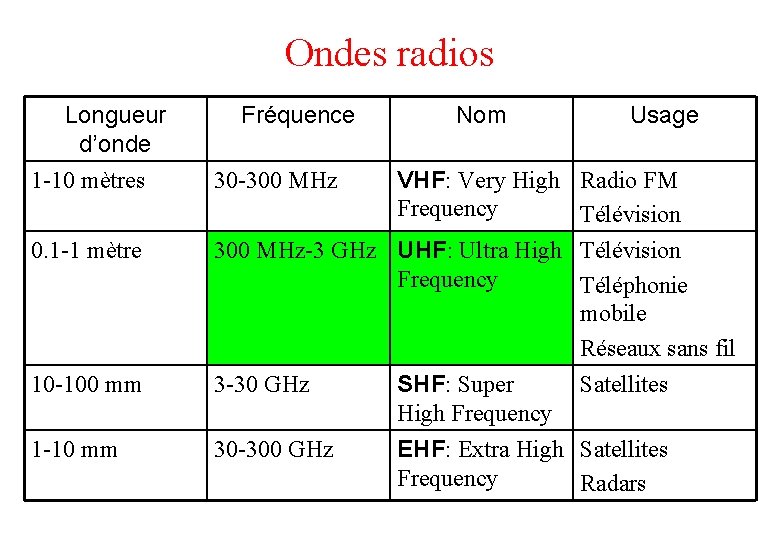
Ondes radios Longueur d’onde 1 -10 mètres 0. 1 -1 mètre 10 -100 mm 1 -10 mm Fréquence 30 -300 MHz Nom Usage VHF: Very High Radio FM Frequency Télévision 300 MHz-3 GHz UHF: Ultra High Télévision Frequency Téléphonie mobile Réseaux sans fil 3 -30 GHz SHF: Super Satellites High Frequency 30 -300 GHz EHF: Extra High Satellites Frequency Radars
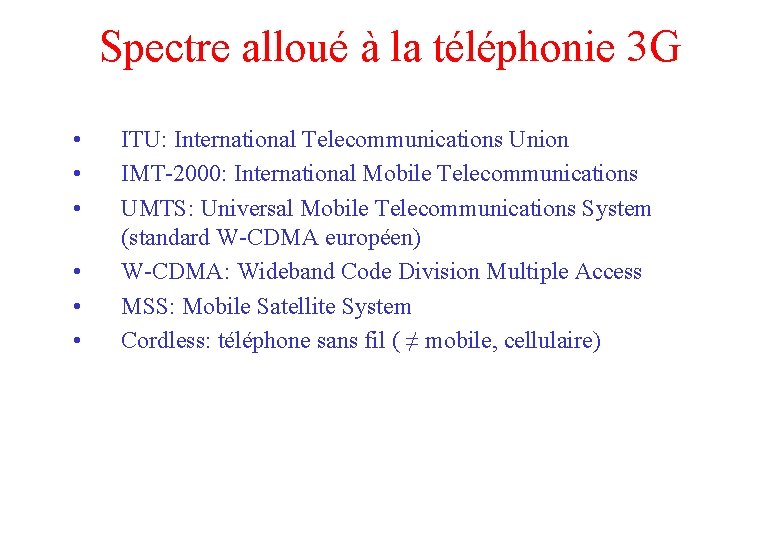
Spectre alloué à la téléphonie 3 G • • • ITU: International Telecommunications Union IMT-2000: International Mobile Telecommunications UMTS: Universal Mobile Telecommunications System (standard W-CDMA européen) W-CDMA: Wideband Code Division Multiple Access MSS: Mobile Satellite System Cordless: téléphone sans fil ( ≠ mobile, cellulaire)
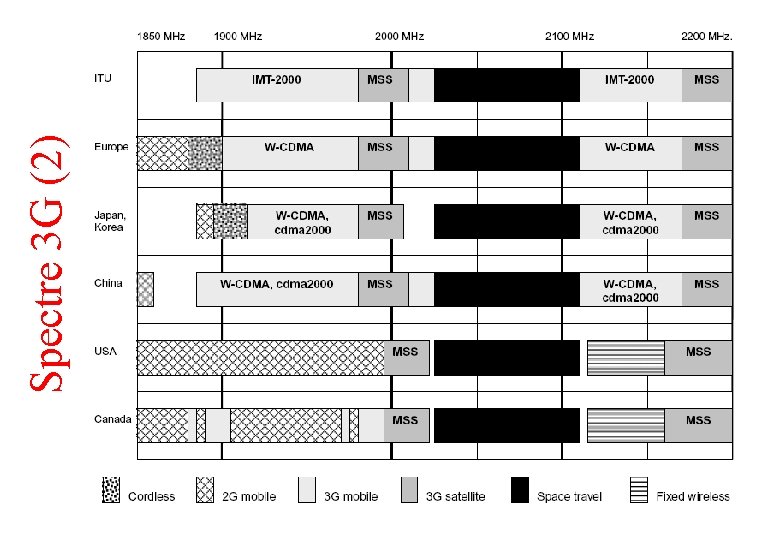
Spectre 3 G (2)
ISM Industrial, Scientific and Medical: 2. 4 -2. 5 GHz • • Wi-Fi (802. 11) et Bluetooth Fours à micro-ondes, etc. Pas de licence compétition
GSM Combine: • • FDMA : multiplexage fréquentiel (Frequency Division Multiple Access) ; chaque canal (unidirectionnel) occupe une bande passante de 200 k. Hz TDMA : multiplexage temporel (Time Division Multiple Access) ; chaque canal est divisé en 8 slots (slot = tranche, créneau)
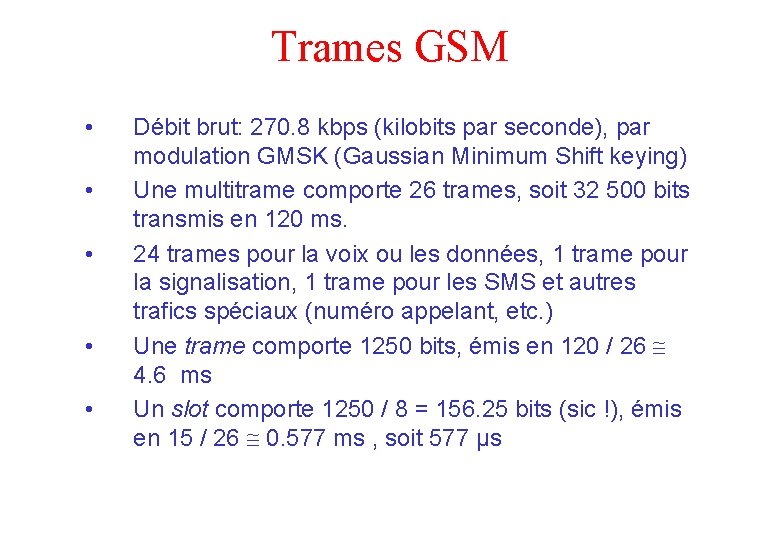
Trames GSM • • • Débit brut: 270. 8 kbps (kilobits par seconde), par modulation GMSK (Gaussian Minimum Shift keying) Une multitrame comporte 26 trames, soit 32 500 bits transmis en 120 ms. 24 trames pour la voix ou les données, 1 trame pour la signalisation, 1 trame pour les SMS et autres trafics spéciaux (numéro appelant, etc. ) Une trame comporte 1250 bits, émis en 120 / 26 4. 6 ms Un slot comporte 1250 / 8 = 156. 25 bits (sic !), émis en 15 / 26 0. 577 ms , soit 577 μs
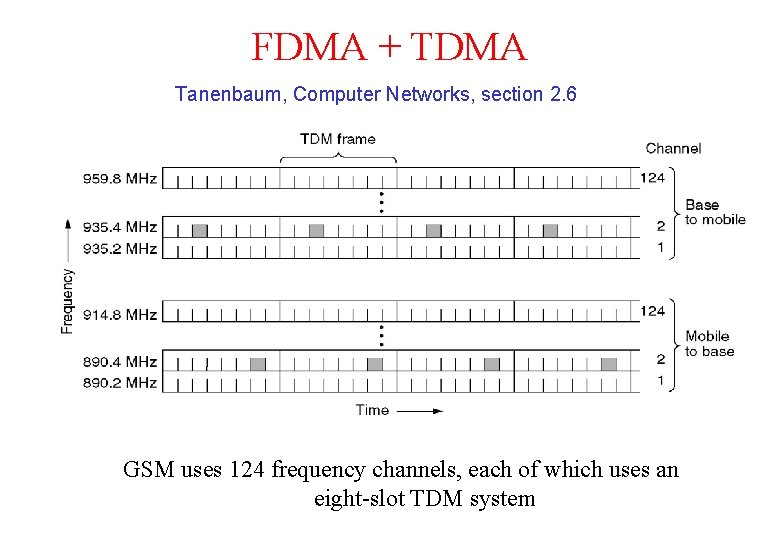
FDMA + TDMA Tanenbaum, Computer Networks, section 2. 6 GSM uses 124 frequency channels, each of which uses an eight-slot TDM system
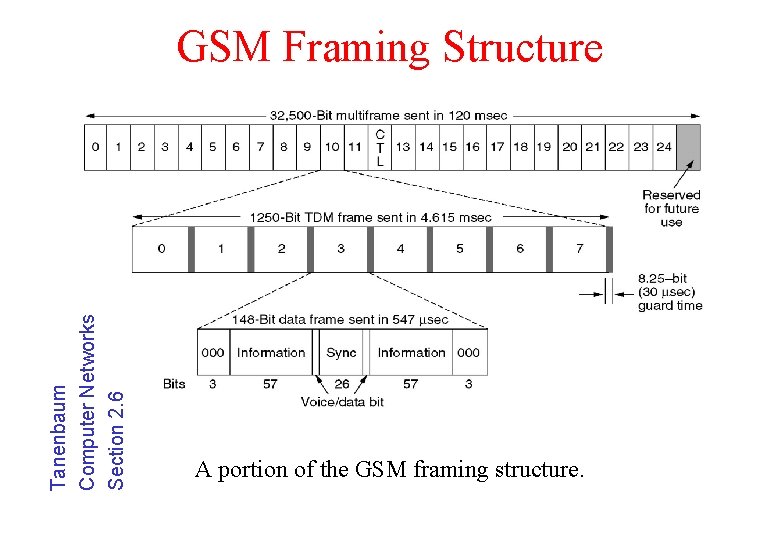
Tanenbaum Computer Networks Section 2. 6 GSM Framing Structure A portion of the GSM framing structure.
R. Levine Digital Switching Lectures April 17 & 24, 2001 Cellular & PCS Two suggested reference books by L. Harte and R. Levine : Cellular and PCS: The Big Picture (1997) GSM Super. Phones (1999) both published by Mc. Graw-Hill
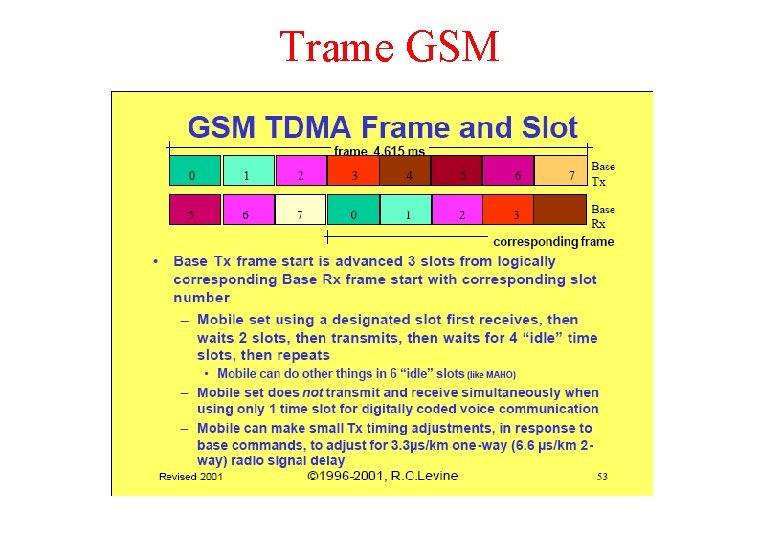
Trame GSM
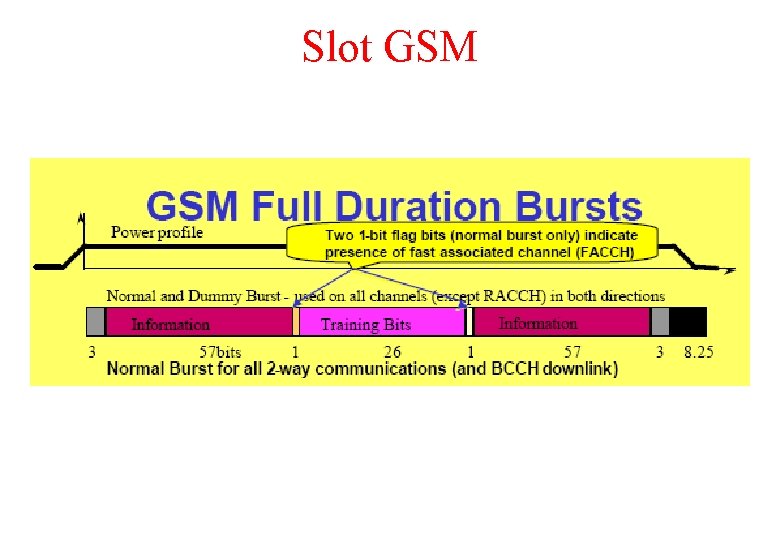
Slot GSM
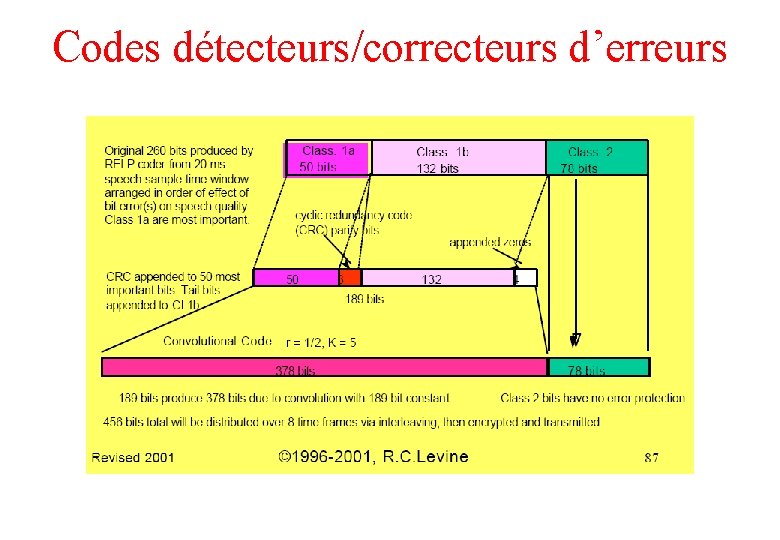
Codes détecteurs/correcteurs d’erreurs
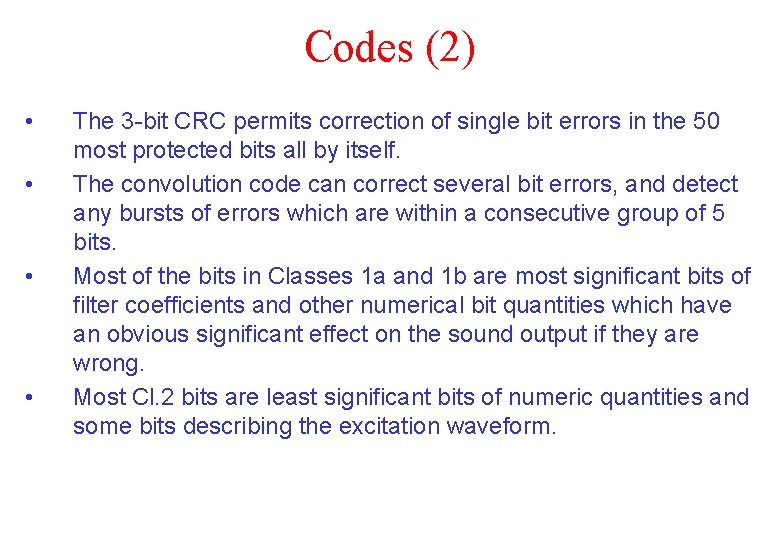
Codes (2) • • The 3 -bit CRC permits correction of single bit errors in the 50 most protected bits all by itself. The convolution code can correct several bit errors, and detect any bursts of errors which are within a consecutive group of 5 bits. Most of the bits in Classes 1 a and 1 b are most significant bits of filter coefficients and other numerical bit quantities which have an obvious significant effect on the sound output if they are wrong. Most Cl. 2 bits are least significant bits of numeric quantities and some bits describing the excitation waveform.
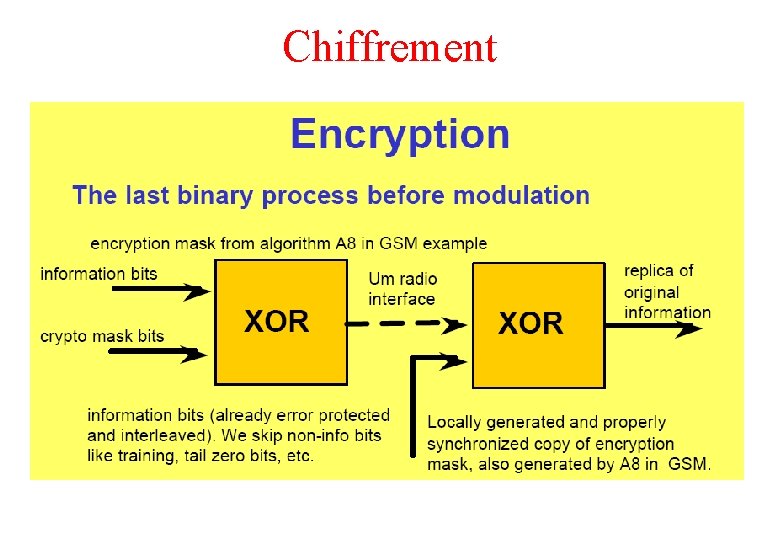
Chiffrement
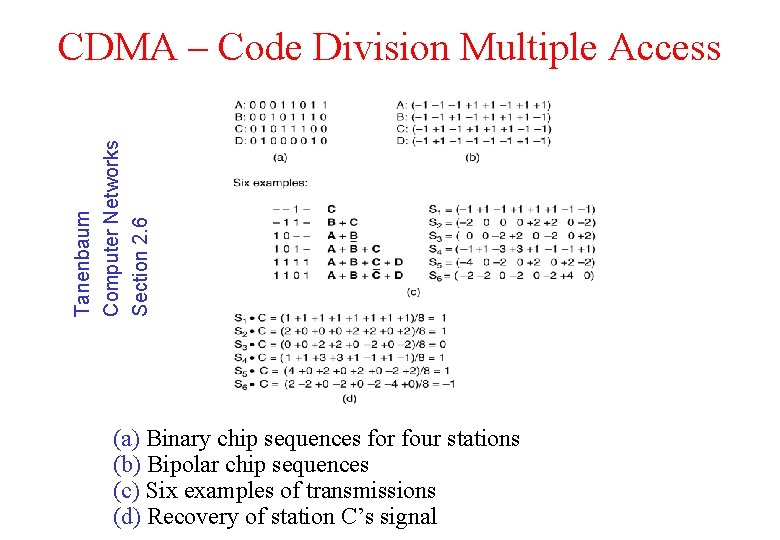
Tanenbaum Computer Networks Section 2. 6 CDMA – Code Division Multiple Access (a) Binary chip sequences for four stations (b) Bipolar chip sequences (c) Six examples of transmissions (d) Recovery of station C’s signal
- Slides: 18