
Scribbling Can be random marks on paper Marks


Scribbling Can be random marks on paper Marks can be large, circular and resemble drawing When the intention is to convey a message, it’s early literacy!

Letter-like Symbols Letter/number like forms emerge Child often uses same three letters Often letters from own name Writer can talk about own writings
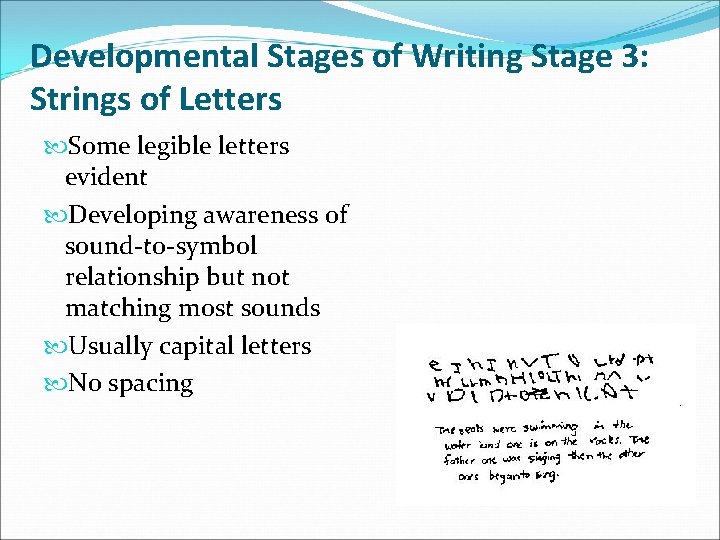
Developmental Stages of Writing Stage 3: Strings of Letters Some legible letters evident Developing awareness of sound-to-symbol relationship but not matching most sounds Usually capital letters No spacing
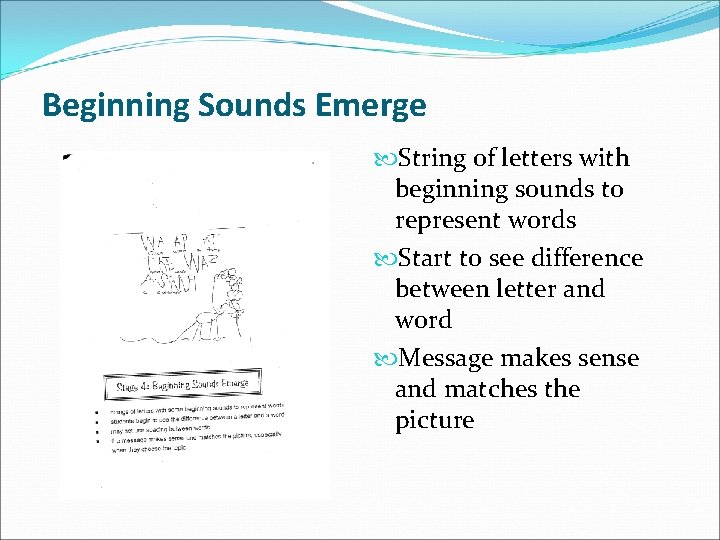
Beginning Sounds Emerge String of letters with beginning sounds to represent words Start to see difference between letter and word Message makes sense and matches the picture
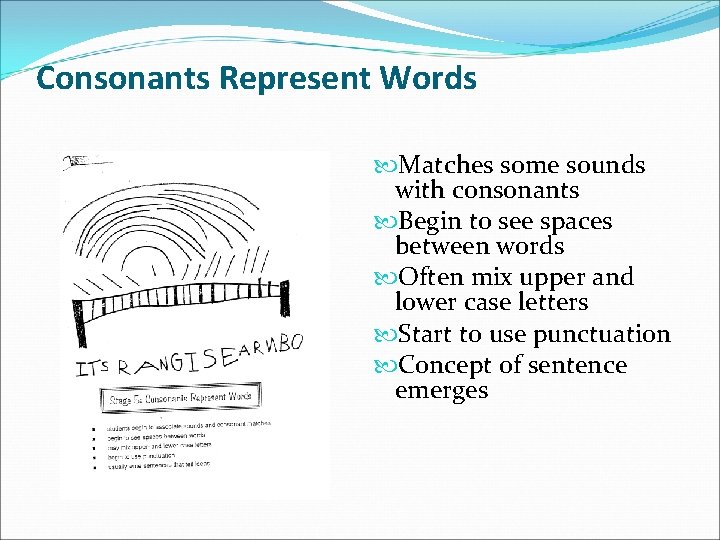
Consonants Represent Words Matches some sounds with consonants Begin to see spaces between words Often mix upper and lower case letters Start to use punctuation Concept of sentence emerges
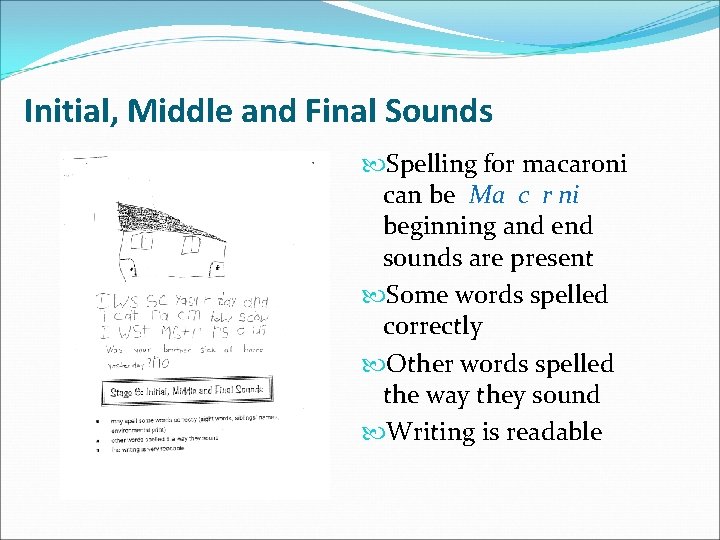
Initial, Middle and Final Sounds Spelling for macaroni can be Ma c r ni beginning and end sounds are present Some words spelled correctly Other words spelled the way they sound Writing is readable
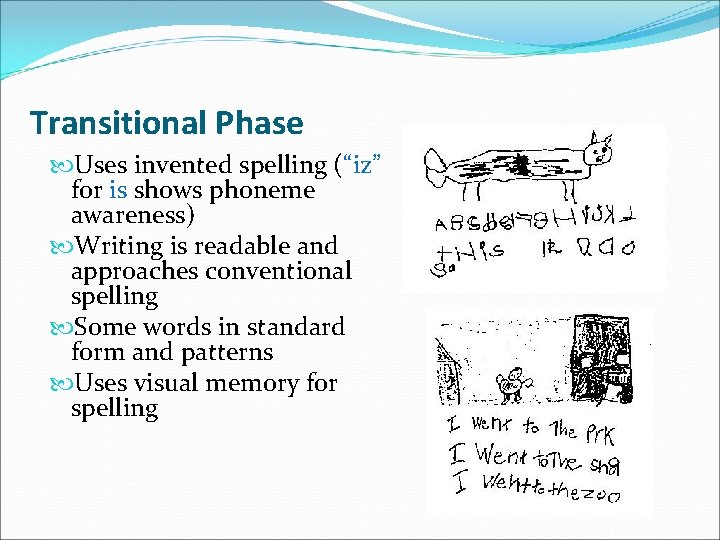
Transitional Phase Uses invented spelling (“iz” for is shows phoneme awareness) Writing is readable and approaches conventional spelling Some words in standard form and patterns Uses visual memory for spelling
Standard Spelling Most words are spelled correctly Writers starting to understand root words, compound words, contractions and punctuation
- Slides: 9