
Screening Elderly Clinic Patients for Early Dementia Psychological

- Slides: 57
Screening Elderly Clinic Patients for Early Dementia: Psychological Tests, Brain Scans, Genetic Tests, and CSF Biomarkers J. Wesson Ashford, M. D. , Ph. D. Stanford / VA Alzheimer’s Center VAMC, Palo Alto, California May 16, 2005 Stanford University Medical Center Slides at: www. medafile. com (Dr. Ashford’s lectures)
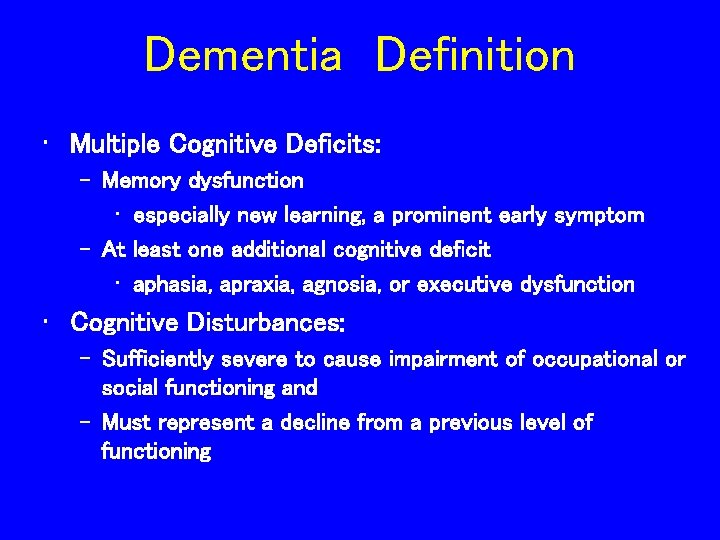
Dementia Definition • Multiple Cognitive Deficits: – Memory dysfunction • especially new learning, a prominent early symptom – At least one additional cognitive deficit • aphasia, apraxia, agnosia, or executive dysfunction • Cognitive Disturbances: – Sufficiently severe to cause impairment of occupational or social functioning and – Must represent a decline from a previous level of functioning
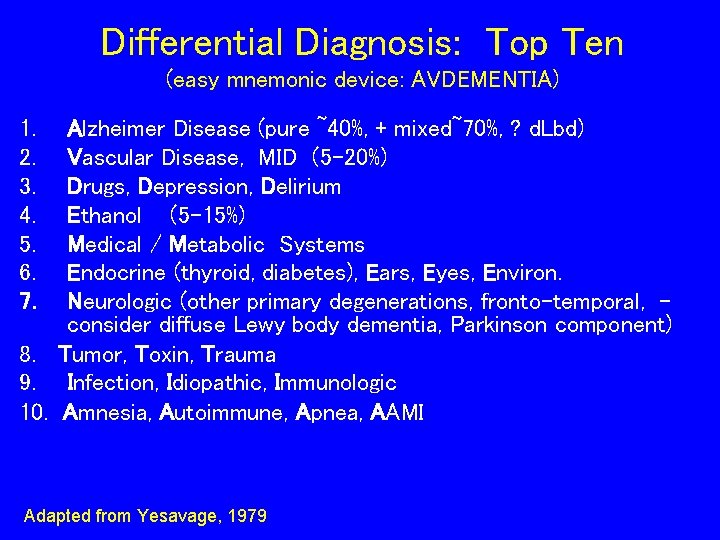
Differential Diagnosis: Top Ten (easy mnemonic device: AVDEMENTIA) 1. 2. 3. 4. 5. 6. 7. Alzheimer Disease (pure ~40%, + mixed~70%, ? d. Lbd) Vascular Disease, MID (5 -20%) Drugs, Depression, Delirium Ethanol (5 -15%) Medical / Metabolic Systems Endocrine (thyroid, diabetes), Ears, Eyes, Environ. Neurologic (other primary degenerations, fronto-temporal, consider diffuse Lewy body dementia, Parkinson component) 8. Tumor, Toxin, Trauma 9. Infection, Idiopathic, Immunologic 10. Amnesia, Autoimmune, Apnea, AAMI Adapted from Yesavage, 1979
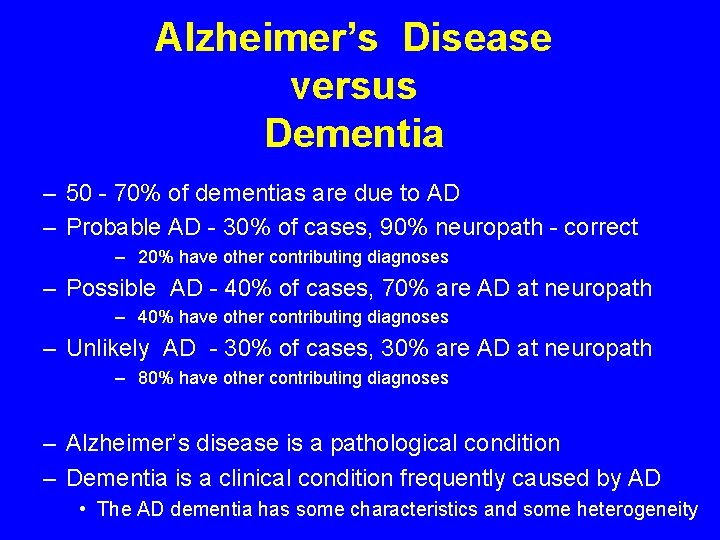
Alzheimer’s Disease versus Dementia – 50 - 70% of dementias are due to AD – Probable AD - 30% of cases, 90% neuropath - correct – 20% have other contributing diagnoses – Possible AD - 40% of cases, 70% are AD at neuropath – 40% have other contributing diagnoses – Unlikely AD - 30% of cases, 30% are AD at neuropath – 80% have other contributing diagnoses – Alzheimer’s disease is a pathological condition – Dementia is a clinical condition frequently caused by AD • The AD dementia has some characteristics and some heterogeneity
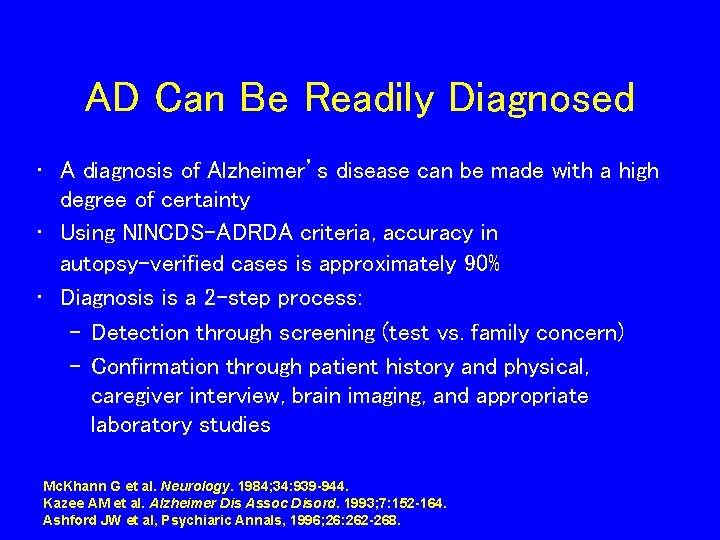
AD Can Be Readily Diagnosed • A diagnosis of Alzheimer’s disease can be made with a high degree of certainty • Using NINCDS-ADRDA criteria, accuracy in autopsy-verified cases is approximately 90% • Diagnosis is a 2 -step process: – Detection through screening (test vs. family concern) – Confirmation through patient history and physical, caregiver interview, brain imaging, and appropriate laboratory studies Mc. Khann G et al. Neurology. 1984; 34: 939 -944. Kazee AM et al. Alzheimer Dis Assoc Disord. 1993; 7: 152 -164. Ashford JW et al, Psychiaric Annals, 1996; 26: 262 -268.
AD is Under-diagnosed • Early Alzheimer’s disease is subtle, the diagnosis continues to be missed – it is easy for family members to avoid the problem and compensate for the patient – physicians tend to miss the initial signs and symptoms • Less than half of AD patients are diagnosed – Estimates are that 25% to 50% of cases remain undiagnosed – Diagnoses are missed at all levels of severity: mild, moderate, severe • No definitive laboratory test for diagnosing AD exists – Efforts to develop biomarkers, early recognition by brain scan Evans DA. Milbank Quarterly. 1990; 68: 267 -289
Reasons to Diagnose Alzheimer’s Disease Early Social / financial • Undiagnosed AD patients often face avoidable social and financial problems • Early education of caregivers of how to handle patient (choices, getting started) • Advance planning while patient is competent (will, proxy, power of attorney, advance directives) • Reduce family stress and misunderstanding (blame, denial) • • Promote safety (driving, compliance, cooking, etc. ) Patient’s and Family’s right to know, especially about genetic risks • • Opportunity to reduce caregiver burden Promote advocacy for research and treatment development
Reasons to Diagnose Alzheimer’s Disease Early Medical • Early diagnosis and appropriate intervention may lessen disease burden and early treatment may improve overall course substantially – Neurophysiological pathways in patients with AD are still viable and are a target for treatment • Specific treatments now available (anti-cholinesterases, memantine) – Improve cognition – Improve function (ADLs) – Delay conversion to AD from Mild Cognitive Impairment – Slow underlying disease process, the sooner the better – Decreased development of behavior problems – Delay nursing home placement, possibly over 20 months – Delay nursing home placement longer if started earlier
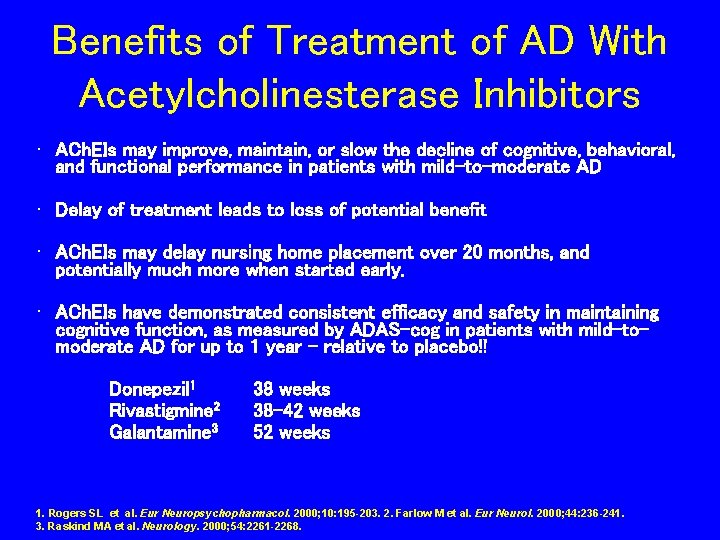
Benefits of Treatment of AD With Acetylcholinesterase Inhibitors • ACh. EIs may improve, maintain, or slow the decline of cognitive, behavioral, and functional performance in patients with mild-to-moderate AD • Delay of treatment leads to loss of potential benefit • ACh. EIs may delay nursing home placement over 20 months, and potentially much more when started early. • ACh. EIs have demonstrated consistent efficacy and safety in maintaining cognitive function, as measured by ADAS-cog in patients with mild-tomoderate AD for up to 1 year – relative to placebo!! Donepezil 1 Rivastigmine 2 Galantamine 3 38 weeks 38– 42 weeks 52 weeks 1. Rogers SL et al. Eur Neuropsychopharmacol. 2000; 10: 195 -203. 2. Farlow M et al. Eur Neurol. 2000; 44: 236 -241. 3. Raskind MA et al. Neurology. 2000; 54: 2261 -2268.
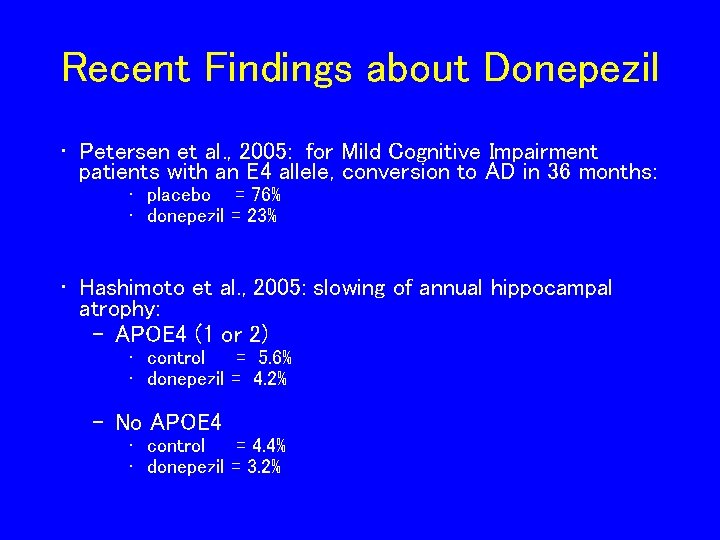
Recent Findings about Donepezil • Petersen et al. , 2005: for Mild Cognitive Impairment patients with an E 4 allele, conversion to AD in 36 months: • placebo = 76% • donepezil = 23% • Hashimoto et al. , 2005: slowing of annual hippocampal atrophy: – APOE 4 (1 or 2) • control = 5. 6% • donepezil = 4. 2% – No APOE 4 • control = 4. 4% • donepezil = 3. 2%
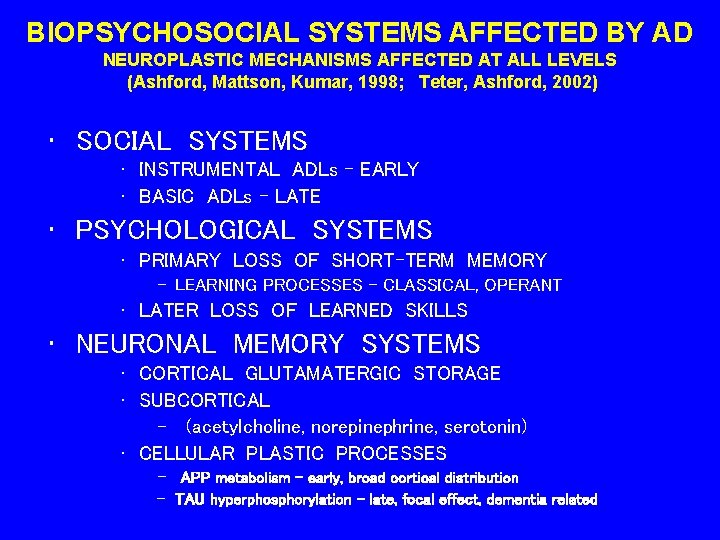
BIOPSYCHOSOCIAL SYSTEMS AFFECTED BY AD NEUROPLASTIC MECHANISMS AFFECTED AT ALL LEVELS (Ashford, Mattson, Kumar, 1998; Teter, Ashford, 2002) • SOCIAL SYSTEMS • INSTRUMENTAL ADLs - EARLY • BASIC ADLs - LATE • PSYCHOLOGICAL SYSTEMS • PRIMARY LOSS OF SHORT-TERM MEMORY – LEARNING PROCESSES – CLASSICAL, OPERANT • LATER LOSS OF LEARNED SKILLS • NEURONAL MEMORY SYSTEMS • CORTICAL GLUTAMATERGIC STORAGE • SUBCORTICAL – (acetylcholine, norepinephrine, serotonin) • CELLULAR PLASTIC PROCESSES – APP metabolism – early, broad cortical distribution – TAU hyperphosphorylation – late, focal effect, dementia related
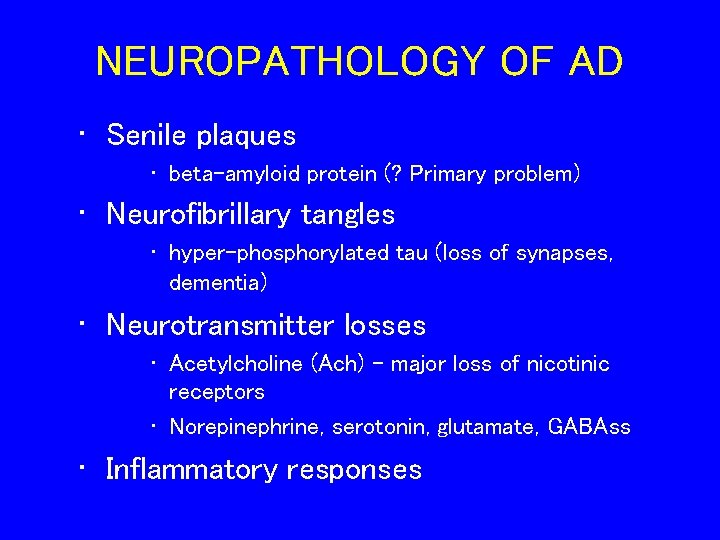
NEUROPATHOLOGY OF AD • Senile plaques • beta-amyloid protein (? Primary problem) • Neurofibrillary tangles • hyper-phosphorylated tau (loss of synapses, dementia) • Neurotransmitter losses • Acetylcholine (Ach) – major loss of nicotinic receptors • Norepinephrine, serotonin, glutamate, GABAss • Inflammatory responses
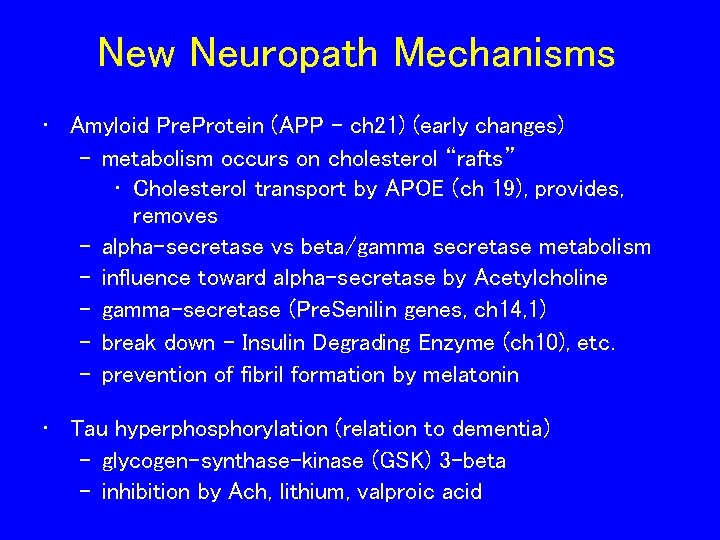
New Neuropath Mechanisms • Amyloid Pre. Protein (APP - ch 21) (early changes) – metabolism occurs on cholesterol “rafts” • Cholesterol transport by APOE (ch 19), provides, removes – alpha-secretase vs beta/gamma secretase metabolism – influence toward alpha-secretase by Acetylcholine – gamma-secretase (Pre. Senilin genes, ch 14, 1) – break down - Insulin Degrading Enzyme (ch 10), etc. – prevention of fibril formation by melatonin • Tau hyperphosphorylation (relation to dementia) – glycogen-synthase-kinase (GSK) 3 -beta – inhibition by Ach, lithium, valproic acid
Early Recognition of AD: Consensus Statement (AAGP, AGS, Alzheimer’s Association) • AD continues to be missed as diagnosis • AD is unrecognized and under-reported – patients do not realize – families tend to compensate • Effective treatment and management techniques are available – (ACh. EIs, memantine FDA approved) – Several other approaches are beneficial Small et al. , JAMA, 1997
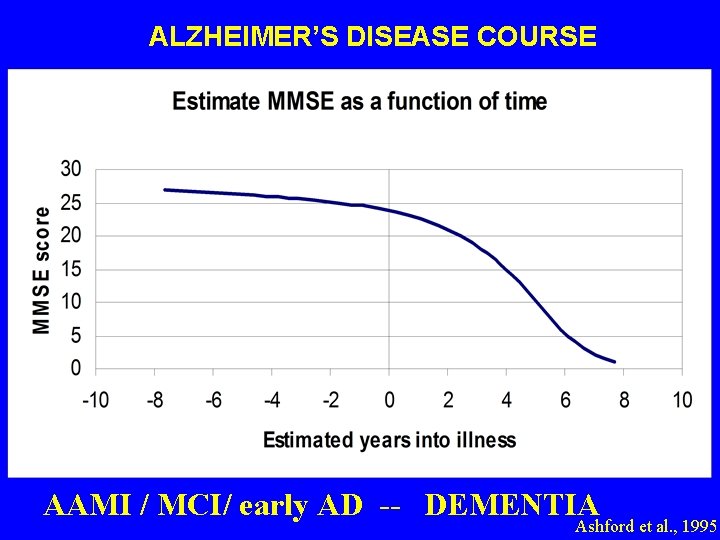
UNDERLYING CONTINUUM OF ALZHEIMER SEVERITY (unidimensional) • CROSS-SECTIONAL MEASURES – DEMENTIA SEVERITY (cognitive, ADL) • COGNITIVE SCALE SCORE • Z-SCORE • PRINCIPAL COMPONENT ANALYSIS – BRAIN ATROPHY, DYSFUNCTION – AUTOPSY MEASURES: plaques, tangles – TIME TO DEATH • LONGITUDINAL MEASUREMENT – TIME INTO THE DISEASE PROCESS • CONSIDERABLE HETEROGENEITY IN DISEASE PRESENTATION AND BRAIN DISTRIBUTION
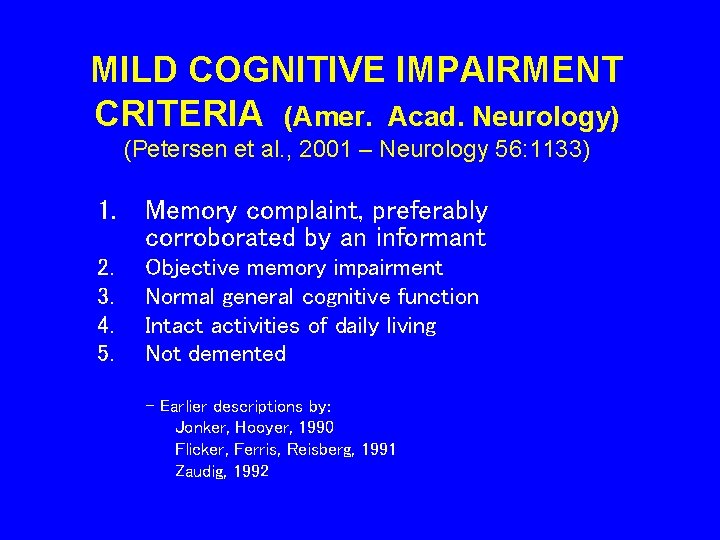
MILD COGNITIVE IMPAIRMENT CRITERIA (Amer. Acad. Neurology) (Petersen et al. , 2001 – Neurology 56: 1133) 1. Memory complaint, preferably corroborated by an informant 2. 3. 4. 5. Objective memory impairment Normal general cognitive function Intact activities of daily living Not demented - Earlier descriptions by: Jonker, Hooyer, 1990 Flicker, Ferris, Reisberg, 1991 Zaudig, 1992
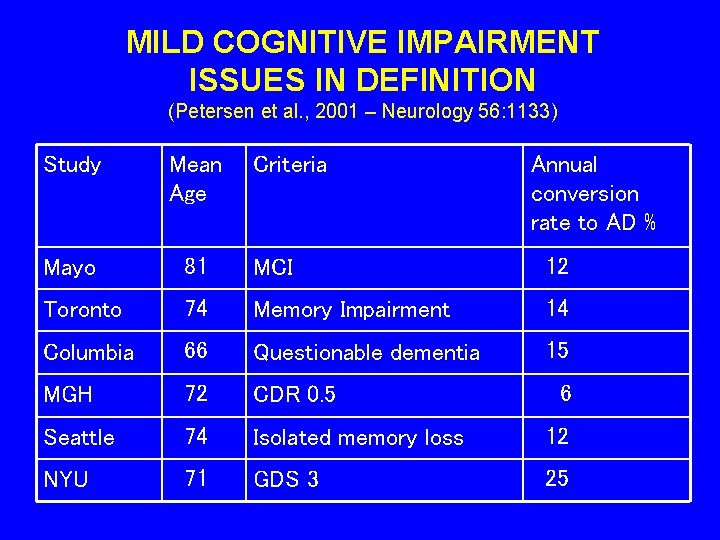
MILD COGNITIVE IMPAIRMENT ISSUES IN DEFINITION (Petersen et al. , 2001 – Neurology 56: 1133) Study Mean Age Criteria Annual conversion rate to AD % Mayo 81 MCI 12 Toronto 74 Memory Impairment 14 Columbia 66 Questionable dementia 15 MGH 72 CDR 0. 5 Seattle 74 Isolated memory loss 12 NYU 71 GDS 3 25 6
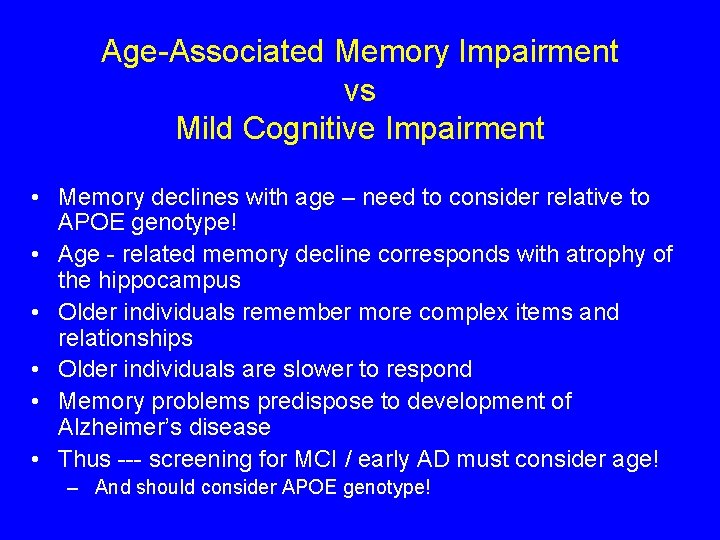
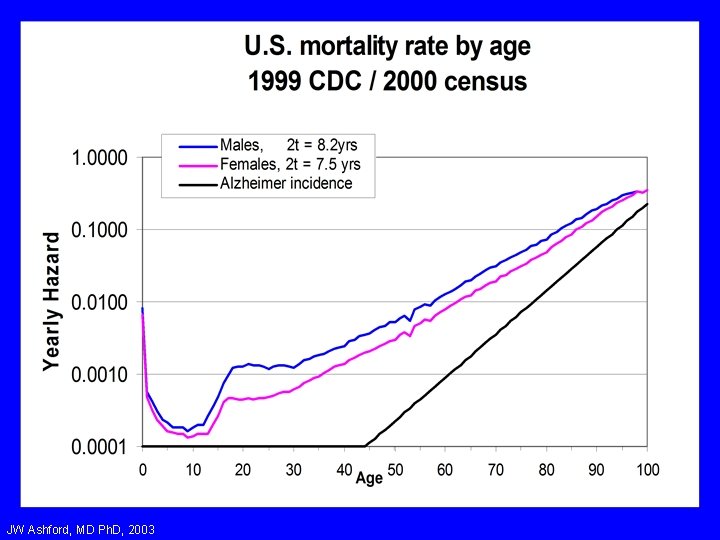
Age-Associated Memory Impairment vs Mild Cognitive Impairment • Memory declines with age – need to consider relative to APOE genotype! • Age - related memory decline corresponds with atrophy of the hippocampus • Older individuals remember more complex items and relationships • Older individuals are slower to respond • Memory problems predispose to development of Alzheimer’s disease • Thus --- screening for MCI / early AD must consider age! – And should consider APOE genotype!
ALZHEIMER’S DISEASE COURSE AAMI / MCI/ early AD -- DEMENTIA Ashford et al. , 1995
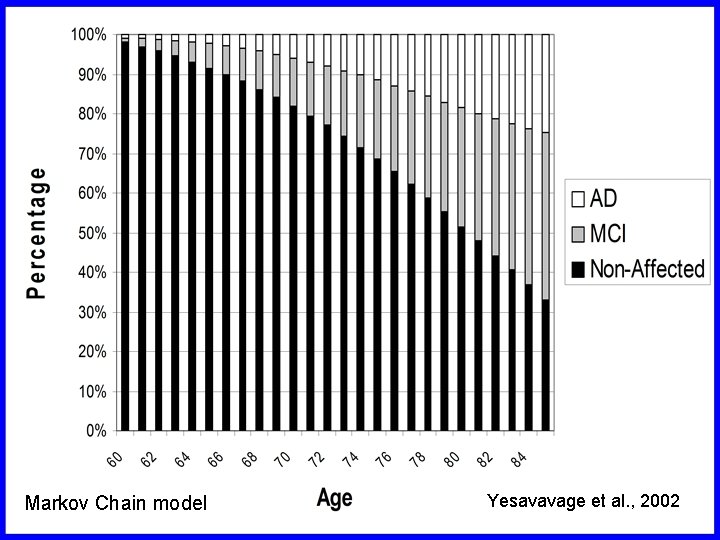
Markov Chain model Yesavavage et al. , 2002
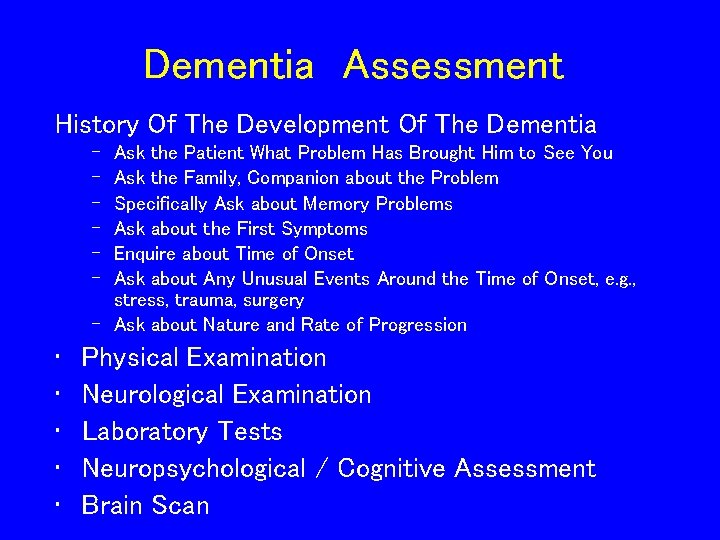
Dementia Assessment History Of The Development Of The Dementia – – – Ask the Patient What Problem Has Brought Him to See You Ask the Family, Companion about the Problem Specifically Ask about Memory Problems Ask about the First Symptoms Enquire about Time of Onset Ask about Any Unusual Events Around the Time of Onset, e. g. , stress, trauma, surgery – Ask about Nature and Rate of Progression • • • Physical Examination Neurological Examination Laboratory Tests Neuropsychological / Cognitive Assessment Brain Scan
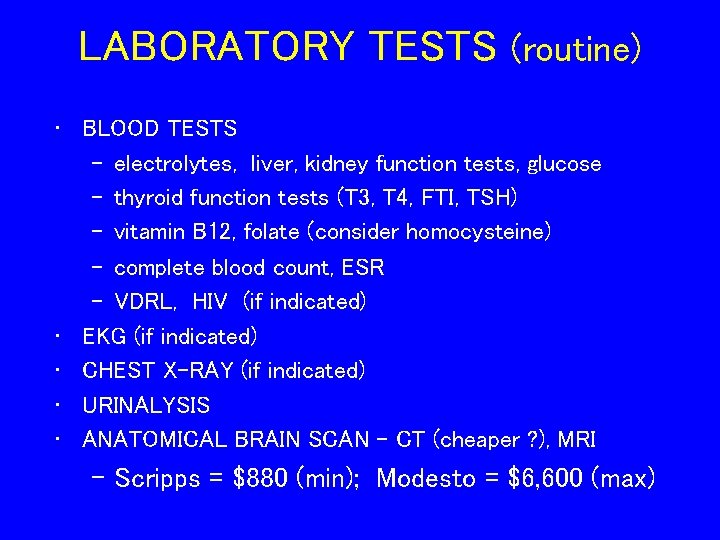
LABORATORY TESTS (routine) • BLOOD TESTS – electrolytes, liver, kidney function tests, glucose – thyroid function tests (T 3, T 4, FTI, TSH) – vitamin B 12, folate (consider homocysteine) – complete blood count, ESR – VDRL, HIV (if indicated) • EKG (if indicated) • CHEST X-RAY (if indicated) • URINALYSIS • ANATOMICAL BRAIN SCAN – CT (cheaper ? ), MRI – Scripps = $880 (min); Modesto = $6, 600 (max)
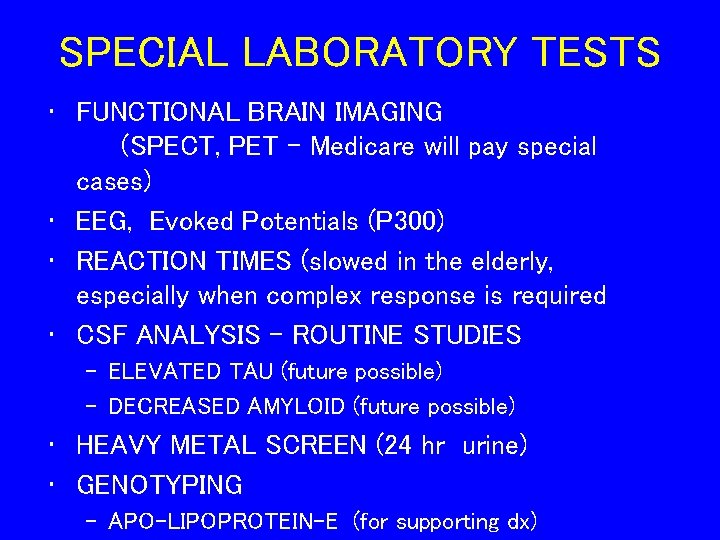
SPECIAL LABORATORY TESTS • FUNCTIONAL BRAIN IMAGING (SPECT, PET – Medicare will pay special cases) • EEG, Evoked Potentials (P 300) • REACTION TIMES (slowed in the elderly, especially when complex response is required • CSF ANALYSIS - ROUTINE STUDIES – ELEVATED TAU (future possible) – DECREASED AMYLOID (future possible) • HEAVY METAL SCREEN (24 hr urine) • GENOTYPING – APO-LIPOPROTEIN-E (for supporting dx)
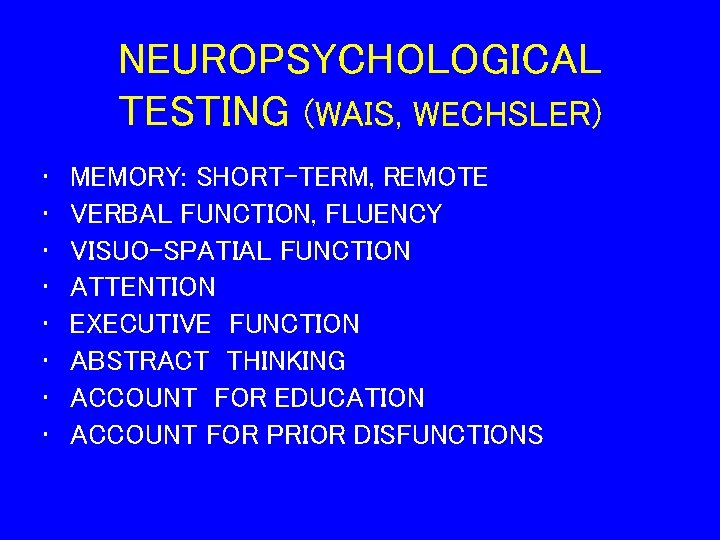
NEUROPSYCHOLOGICAL TESTING (WAIS, WECHSLER) • • MEMORY: SHORT-TERM, REMOTE VERBAL FUNCTION, FLUENCY VISUO-SPATIAL FUNCTION ATTENTION EXECUTIVE FUNCTION ABSTRACT THINKING ACCOUNT FOR EDUCATION ACCOUNT FOR PRIOR DISFUNCTIONS
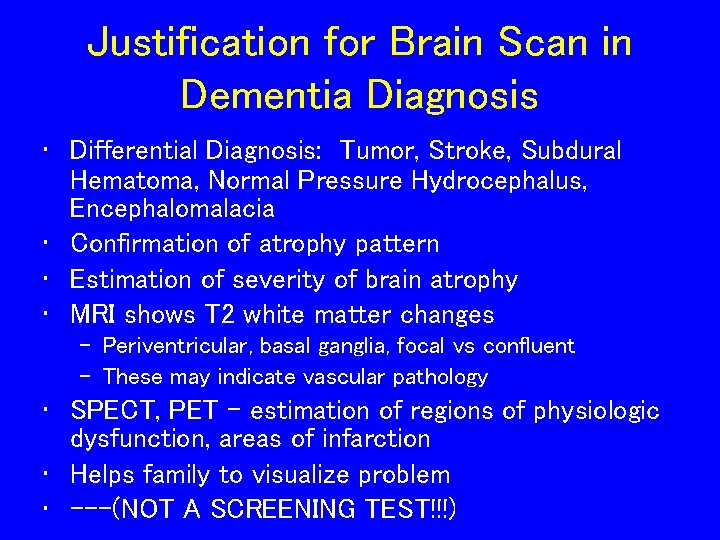
Justification for Brain Scan in Dementia Diagnosis • Differential Diagnosis: Tumor, Stroke, Subdural Hematoma, Normal Pressure Hydrocephalus, Encephalomalacia • Confirmation of atrophy pattern • Estimation of severity of brain atrophy • MRI shows T 2 white matter changes – Periventricular, basal ganglia, focal vs confluent – These may indicate vascular pathology • SPECT, PET - estimation of regions of physiologic dysfunction, areas of infarction • Helps family to visualize problem • ---(NOT A SCREENING TEST!!!)
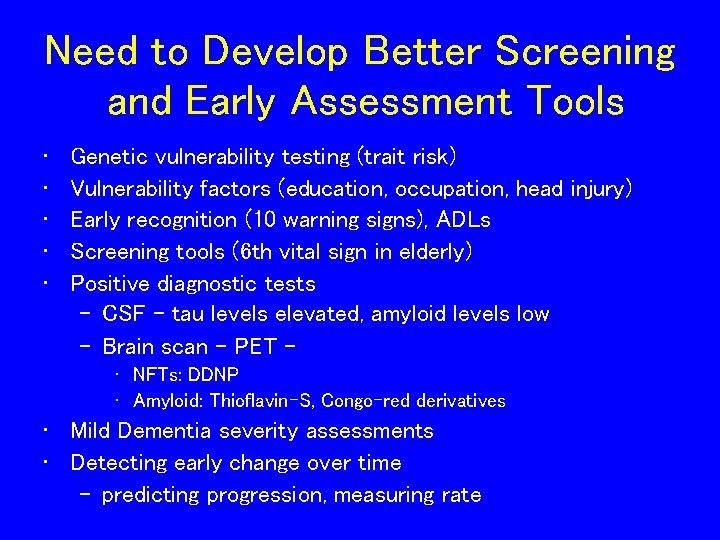
Need to Develop Better Screening and Early Assessment Tools • • • Genetic vulnerability testing (trait risk) Vulnerability factors (education, occupation, head injury) Early recognition (10 warning signs), ADLs Screening tools (6 th vital sign in elderly) Positive diagnostic tests – CSF – tau levels elevated, amyloid levels low – Brain scan – PET – • NFTs: DDNP • Amyloid: Thioflavin-S, Congo-red derivatives • Mild Dementia severity assessments • Detecting early change over time – predicting progression, measuring rate
Need for a Brief Screening Test for Alzheimer’s Disease • Recent evidence of benefits of anticholinesterase agents in the treatment of mild Alzheimer’s disease – Improvement of cognition – Slowing of progression
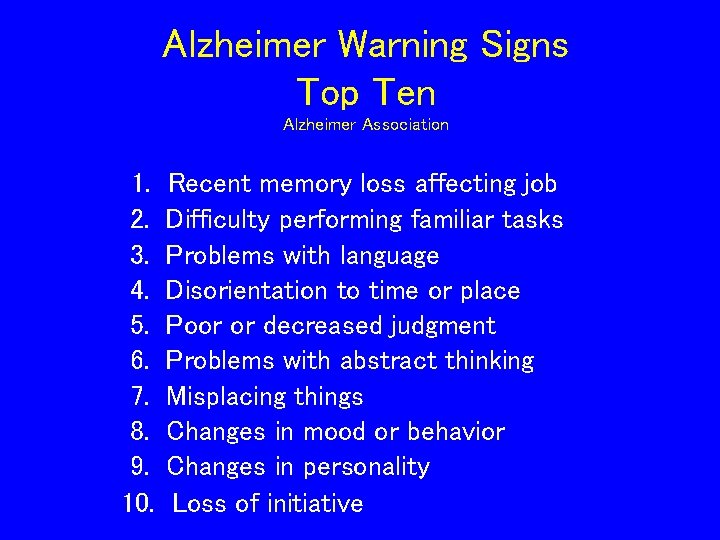
Alzheimer Warning Signs Top Ten Alzheimer Association 1. 2. 3. 4. 5. 6. 7. 8. 9. 10. Recent memory loss affecting job Difficulty performing familiar tasks Problems with language Disorientation to time or place Poor or decreased judgment Problems with abstract thinking Misplacing things Changes in mood or behavior Changes in personality Loss of initiative
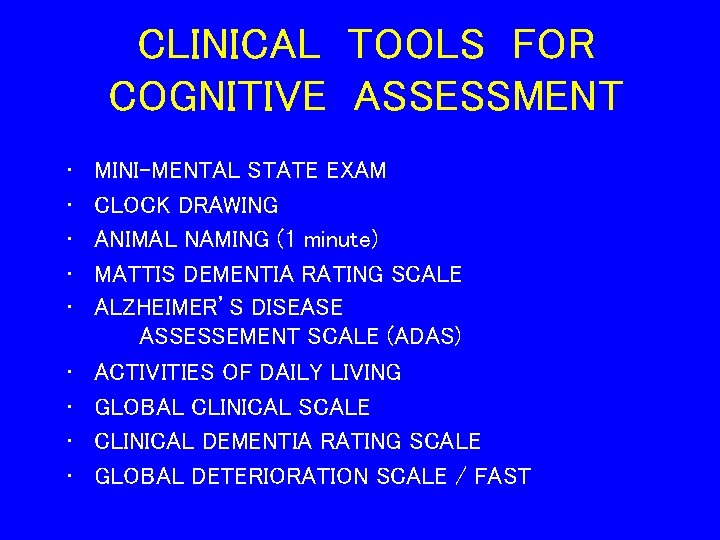
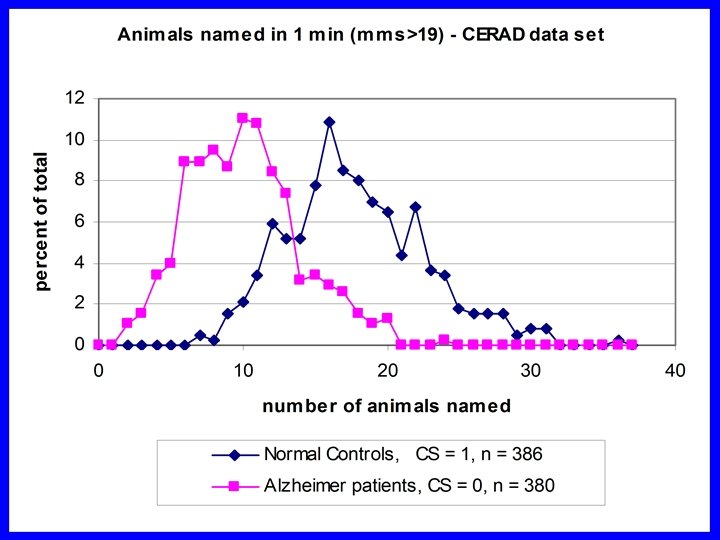
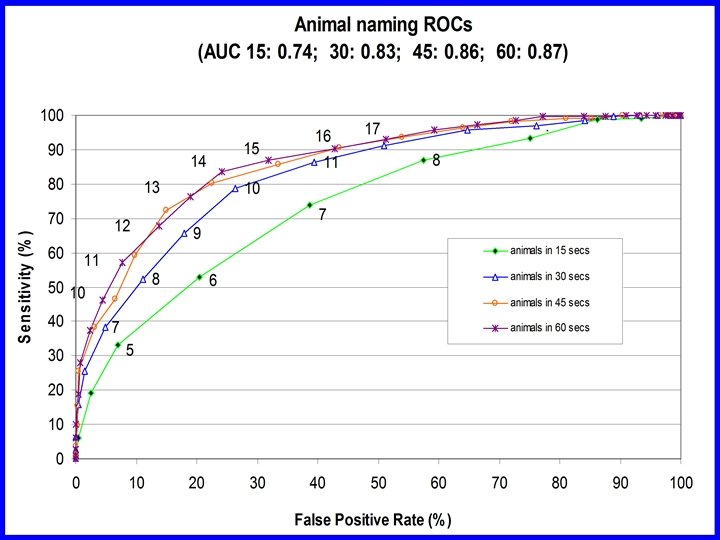
CLINICAL TOOLS FOR COGNITIVE ASSESSMENT • • • MINI-MENTAL STATE EXAM CLOCK DRAWING ANIMAL NAMING (1 minute) MATTIS DEMENTIA RATING SCALE ALZHEIMER’S DISEASE ASSESSEMENT SCALE (ADAS) ACTIVITIES OF DAILY LIVING GLOBAL CLINICAL SCALE CLINICAL DEMENTIA RATING SCALE GLOBAL DETERIORATION SCALE / FAST
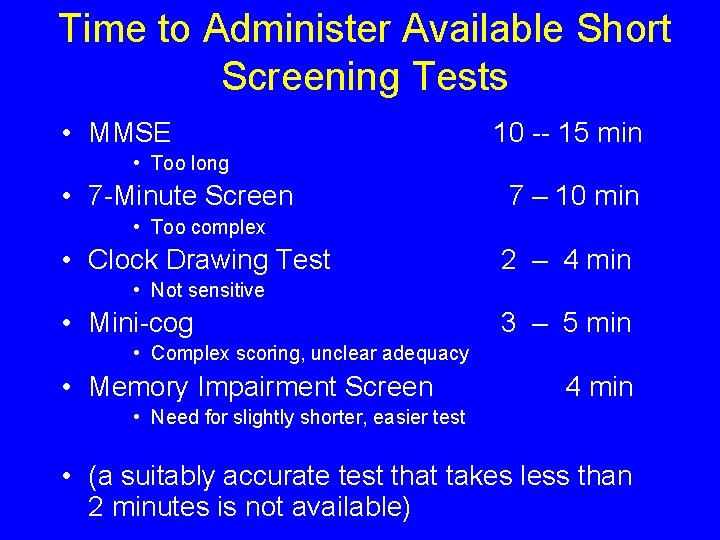
Time to Administer Available Short Screening Tests • MMSE 10 -- 15 min • Too long • 7 -Minute Screen 7 – 10 min • Too complex • Clock Drawing Test 2 – 4 min • Not sensitive • Mini-cog 3 – 5 min • Complex scoring, unclear adequacy • Memory Impairment Screen 4 min • Need for slightly shorter, easier test • (a suitably accurate test that takes less than 2 minutes is not available)
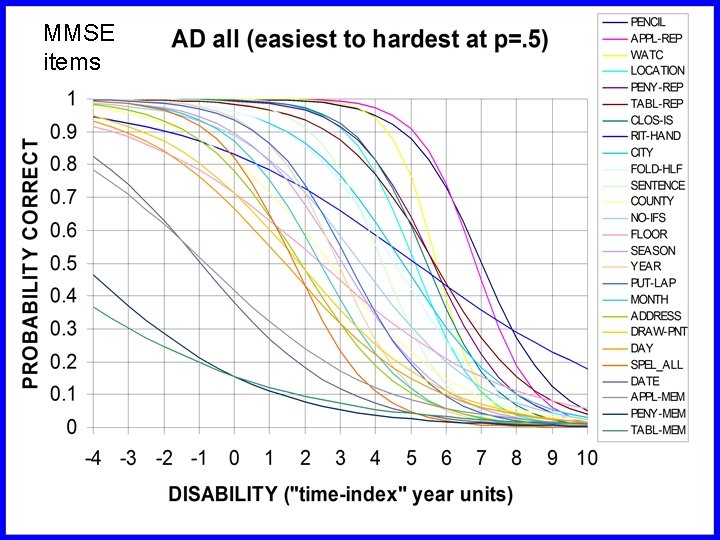
MMSE items Mini-Mental State Exam items
JW Ashford, MD Ph. D, 2001
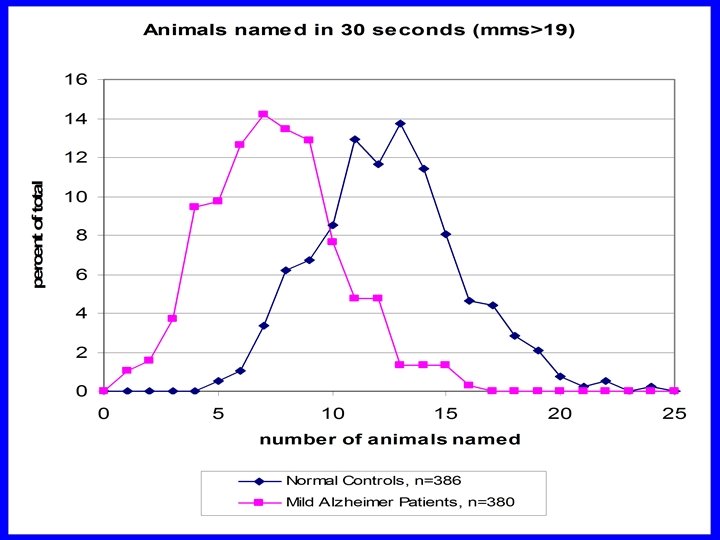
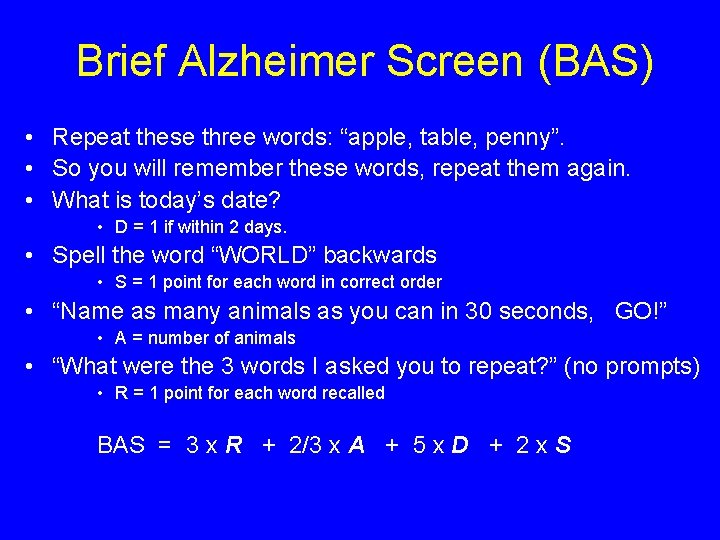
Brief Alzheimer Screen (BAS) • Repeat these three words: “apple, table, penny”. • So you will remember these words, repeat them again. • What is today’s date? • D = 1 if within 2 days. • Spell the word “WORLD” backwards • S = 1 point for each word in correct order • “Name as many animals as you can in 30 seconds, GO!” • A = number of animals • “What were the 3 words I asked you to repeat? ” (no prompts) • R = 1 point for each word recalled BAS = 3 x R + 2/3 x A + 5 x D + 2 x S
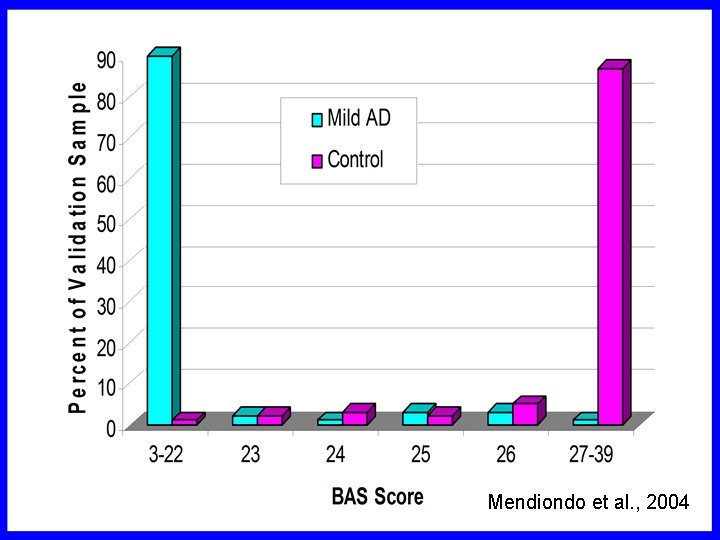
JW Ashford, MD Ph. D, 2001 Mendiondo et al. , 2004
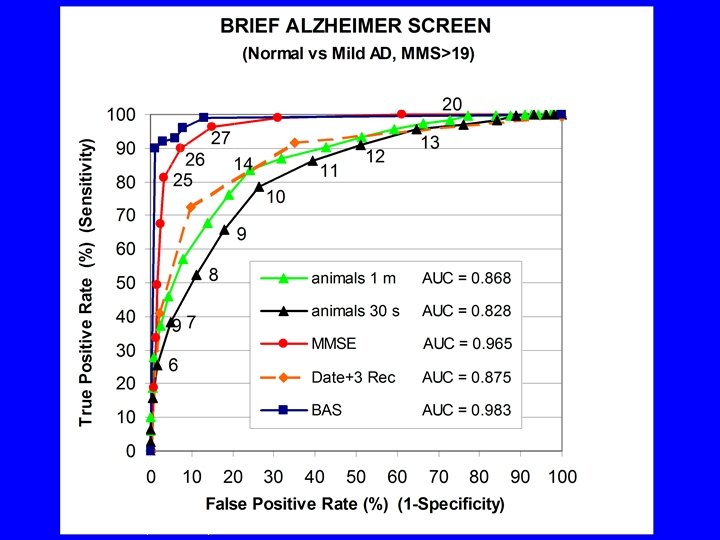
JW Ashford, MD Ph. D, 2003
CONCLUSIONS on the BAS • A single cut-off score provides reasonable sensitivity and specificity for the diagnosis of AD within 2 – 3 minutes • Two cut-off points divide the population into 3 tiers – the first cut-off indicates a low likelihood of dementia – the second indicates a high likelihood of dementia – the remaining group falls into a ‘gray area’ in need of closer scrutiny, follow-up, and more extensive testing • A suitably short screen can be administered yearly to individuals over 60 y/o as a 6 th vital sign • Next direction – use of IRT to locate level of impairment
Dementia Screening Test Requirements • Need test to screen patients for Alzheimer’s disease • Test needs to be on multiple platforms: – – – Doctor’s offices Best if computerized for rapid, objective assessment World-Wide Web – based testing, CD-distribution KIOSK administration – drug stores, shopping malls • Test needs to be very brief (about 1 -minute) • Multiple test forms needed so it can be repeated often (quarterly) • Screening should be done yearly after age 50, and repeated every 3 months for individuals over 65 years of age or with concerns • Any change over time needs to be detected • The test cost should be nominal
MEMTRAX - Memory Test (to detect AD onset) • New test to screen patients for AD: – World-Wide Web – based testing, – CD-distribution – KIOSK administration • Determine level of ability / impairment • Test takes about 1 -minute • Test can be repeated often (e. g. , quarterly) • Any change over time can be detected • Free test is at: www. medafile. com
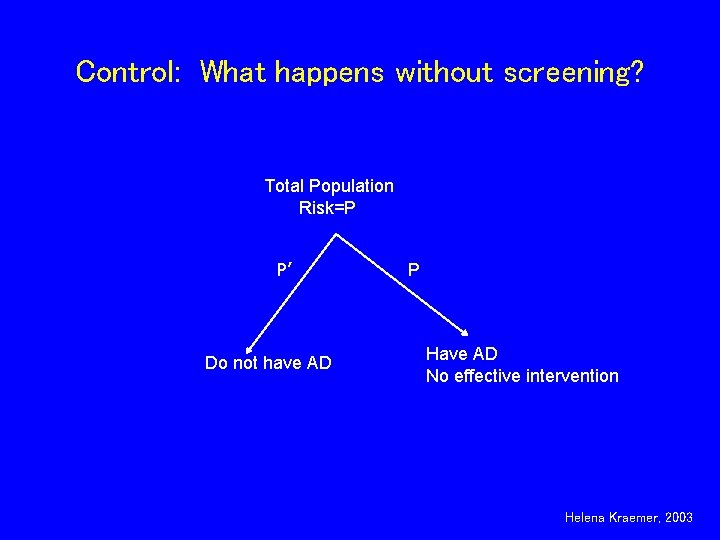
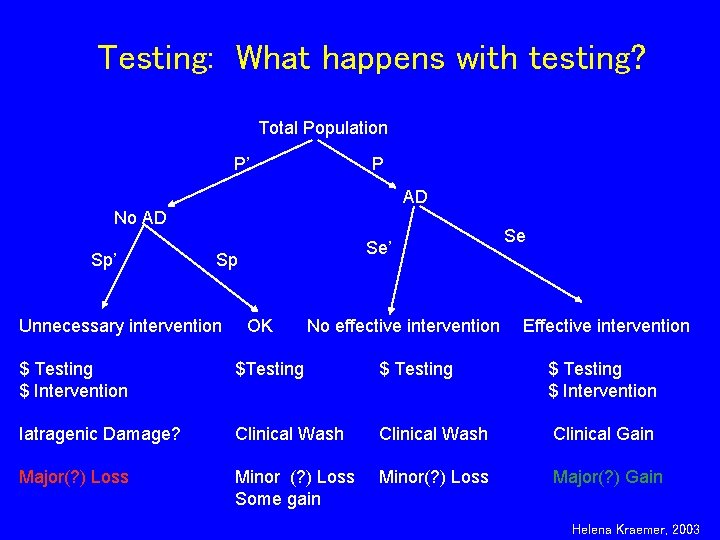
Issues in Screening • ROC analysis provides independent values for how the screening test values affect the normal and patient populations, then plots their relationship with respect to each other (specificity vs sensitivity respectively) – data must be derived from the represented population!!! • The value of the test must be calculated with respect to the risk of the disease, in the specific population to which it is being applied – Risk is affected by age, genotype, many other factors – Accounting for a priori probability is Bayesian analysis • The cost of the applying the test and the costs of false positive and false negative results as well as the benefits of correct positive and negative results must be assessed • Alzheimer’s disease is not a dichotomous diagnosis in early stages, but a continuum, which would be better assessed with a probabilistic statement, that would be better calculated from Item Response Theory • Item Response Theory and Factor Analysis allow combination of many test component items Kraemer, 1992; Ashford & Schmitt, 2001
Control: What happens without screening? Total Population Risk=P P’ Do not have AD P Have AD No effective intervention Helena Kraemer, 2003
Testing: What happens with testing? Total Population P’ P AD No AD Sp’ Se’ Sp Unnecessary intervention OK No effective intervention Se Effective intervention $ Testing $ Intervention $Testing $ Intervention Iatragenic Damage? Clinical Wash Clinical Gain Major(? ) Loss Minor (? ) Loss Some gain Minor(? ) Loss Major(? ) Gain Helena Kraemer, 2003
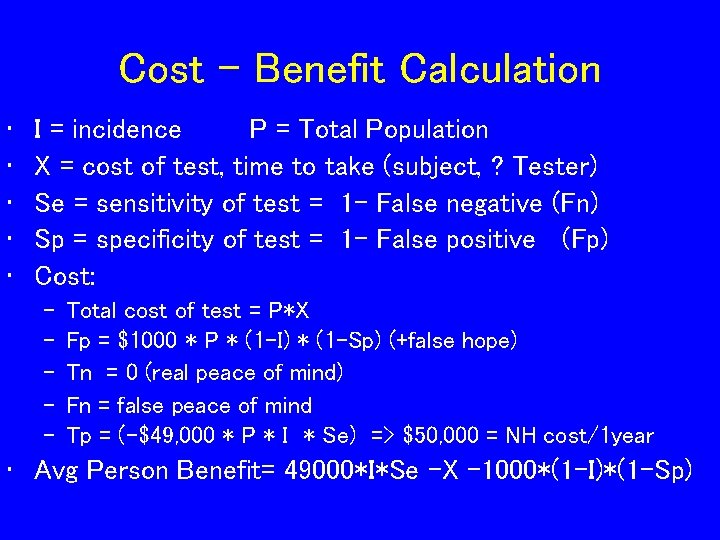
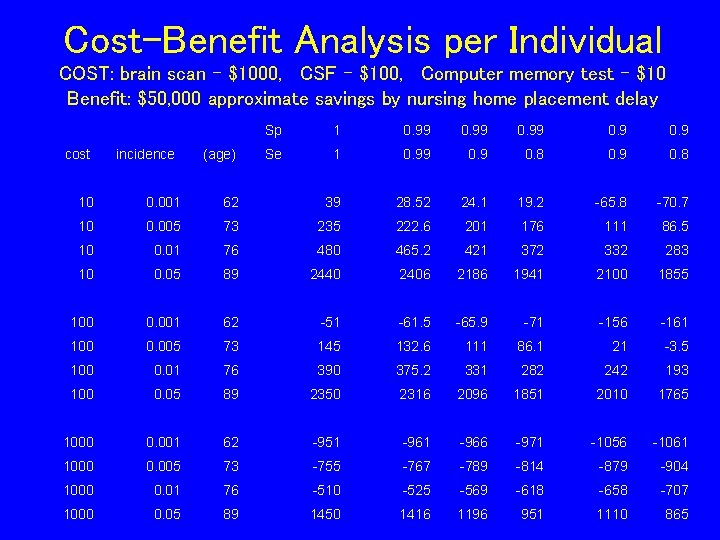
Cost – Benefit Calculation • • • I = incidence P = Total Population X = cost of test, time to take (subject, ? Tester) Se = sensitivity of test = 1 - False negative (Fn) Sp = specificity of test = 1 - False positive (Fp) Cost: – – – Total cost of test = P*X Fp = $1000 * P * (1 -I) * (1 -Sp) (+false hope) Tn = 0 (real peace of mind) Fn = false peace of mind Tp = (-$49, 000 * P * I * Se) => $50, 000 = NH cost/1 year • Avg Person Benefit= 49000*I*Se -X -1000*(1 -I)*(1 -Sp)
JW Ashford, MD Ph. D, 2003
Cost-Benefit Analysis per Individual COST: brain scan - $1000, CSF - $100, Computer memory test - $10 Benefit: $50, 000 approximate savings by nursing home placement delay cost incidence (age) Sp 1 0. 99 0. 9 Se 1 0. 99 0. 8 0. 9 0. 8 10 0. 001 62 39 28. 52 24. 1 19. 2 -65. 8 -70. 7 10 0. 005 73 235 222. 6 201 176 111 86. 5 10 0. 01 76 480 465. 2 421 372 332 283 10 0. 05 89 2440 2406 2186 1941 2100 1855 100 0. 001 62 -51 -61. 5 -65. 9 -71 -156 -161 100 0. 005 73 145 132. 6 111 86. 1 21 -3. 5 100 0. 01 76 390 375. 2 331 282 242 193 100 0. 05 89 2350 2316 2096 1851 2010 1765 1000 0. 001 62 -951 -966 -971 -1056 -1061 1000 0. 005 73 -755 -767 -789 -814 -879 -904 1000 0. 01 76 -510 -525 -569 -618 -658 -707 1000 0. 05 89 1450 1416 1196 951 1110 865
APO-E genotype and AD risk 46 Million in US > 60 y/o //// 4 Million have AD (data from Saunders et al. , 1993; Farrer et al. , 1997) JW Ashford, MD Ph. D, 2003
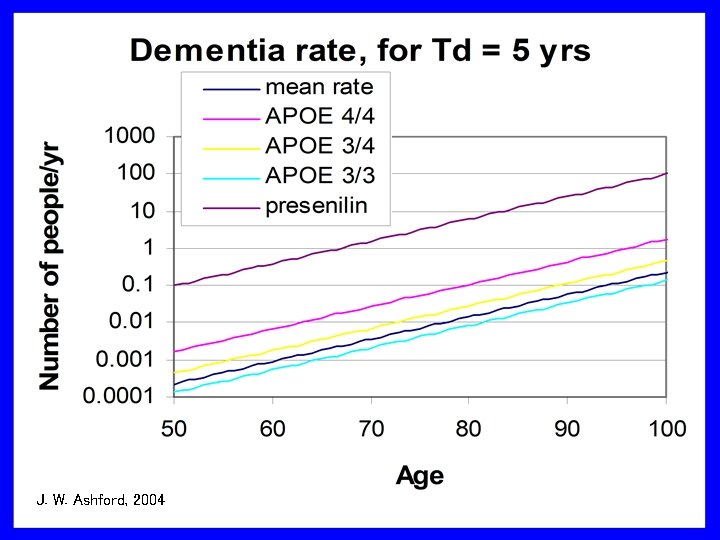
J. W. Ashford, 2004
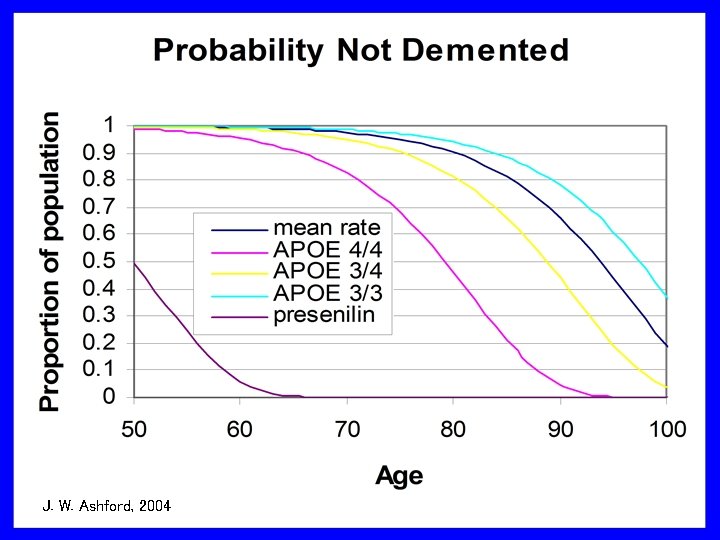
J. W. Ashford, 2004
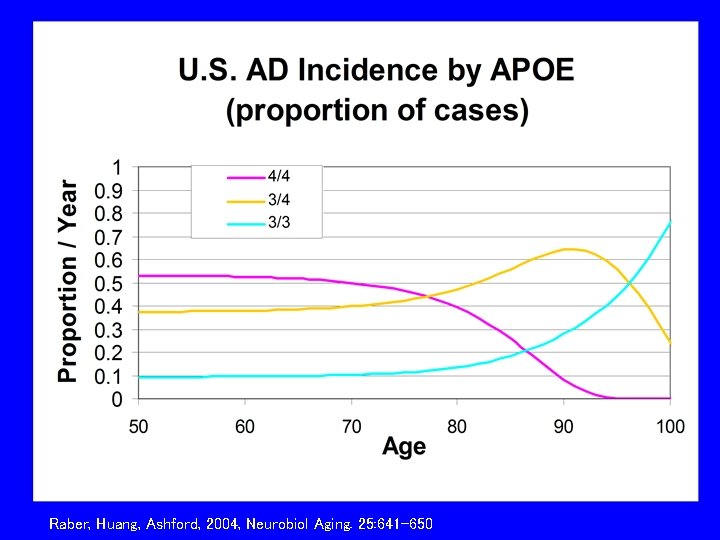
Raber, Huang, Ashford, 2004, Neurobiol Aging. 25: 641 -650
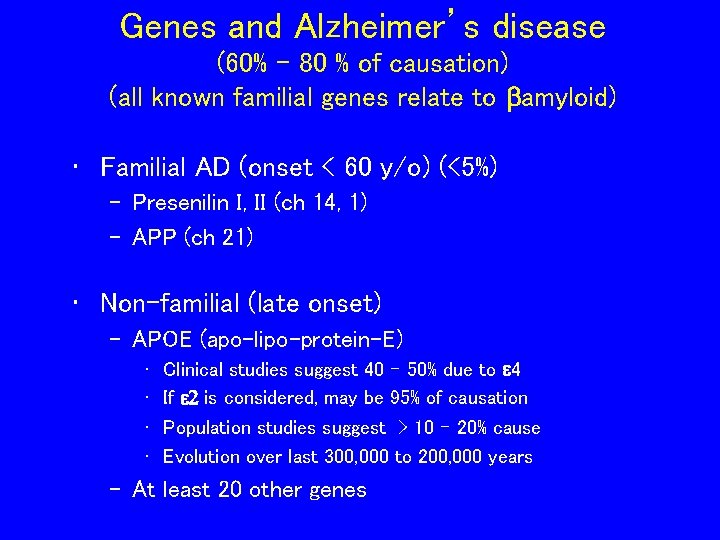
Genes and Alzheimer’s disease (60% - 80 % of causation) (all known familial genes relate to bamyloid) • Familial AD (onset < 60 y/o) (<5%) – Presenilin I, II (ch 14, 1) – APP (ch 21) • Non-familial (late onset) – APOE (apo-lipo-protein-E) • • Clinical studies suggest 40 – 50% due to e 4 If e 2 is considered, may be 95% of causation Population studies suggest > 10 – 20% cause Evolution over last 300, 000 to 200, 000 years – At least 20 other genes
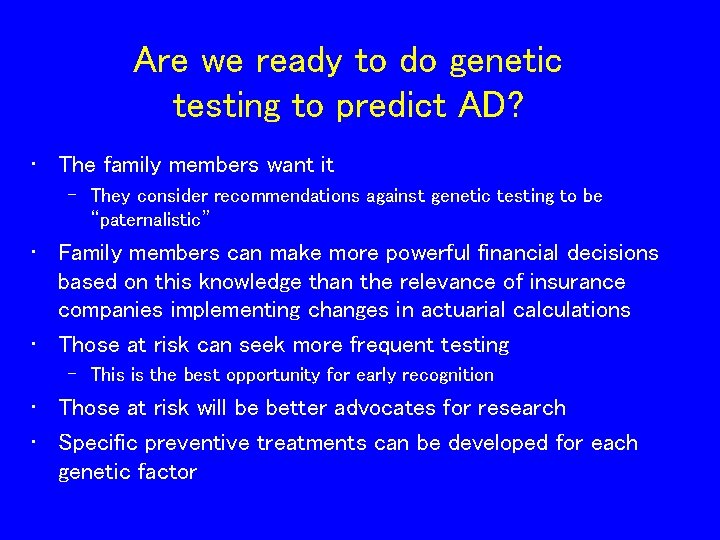
Are we ready to do genetic testing to predict AD? • The family members want it – They consider recommendations against genetic testing to be “paternalistic” • Family members can make more powerful financial decisions based on this knowledge than the relevance of insurance companies implementing changes in actuarial calculations • Those at risk can seek more frequent testing – This is the best opportunity for early recognition • Those at risk will be better advocates for research • Specific preventive treatments can be developed for each genetic factor
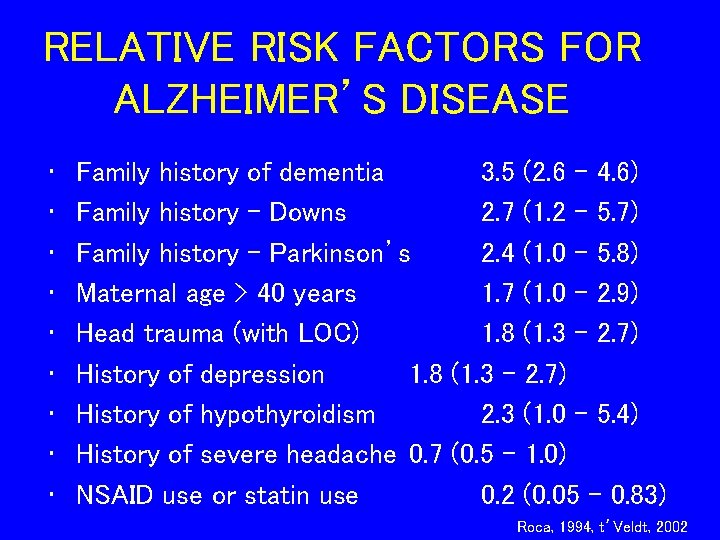
RELATIVE RISK FACTORS FOR ALZHEIMER’S DISEASE • • • Family history of dementia 3. 5 (2. 6 - 4. 6) Family history – Downs 2. 7 (1. 2 - 5. 7) Family history - Parkinson’s 2. 4 (1. 0 - 5. 8) Maternal age > 40 years 1. 7 (1. 0 - 2. 9) Head trauma (with LOC) 1. 8 (1. 3 - 2. 7) History of depression 1. 8 (1. 3 - 2. 7) History of hypothyroidism 2. 3 (1. 0 - 5. 4) History of severe headache 0. 7 (0. 5 - 1. 0) NSAID use or statin use 0. 2 (0. 05 – 0. 83) Roca, 1994, t’Veldt, 2002
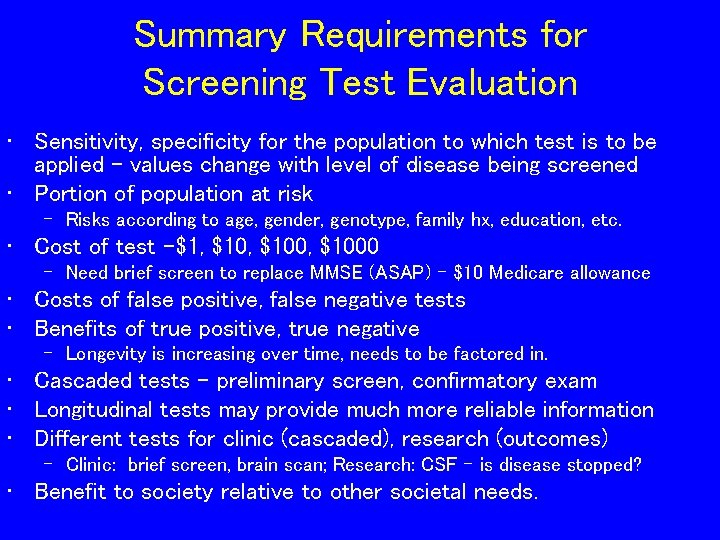
Summary Requirements for Screening Test Evaluation • Sensitivity, specificity for the population to which test is to be applied – values change with level of disease being screened • Portion of population at risk – Risks according to age, gender, genotype, family hx, education, etc. • Cost of test -$1, $100, $1000 – Need brief screen to replace MMSE (ASAP) - $10 Medicare allowance • Costs of false positive, false negative tests • Benefits of true positive, true negative – Longevity is increasing over time, needs to be factored in. • Cascaded tests – preliminary screen, confirmatory exam • Longitudinal tests may provide much more reliable information • Different tests for clinic (cascaded), research (outcomes) – Clinic: brief screen, brain scan; Research: CSF - is disease stopped? • Benefit to society relative to other societal needs.
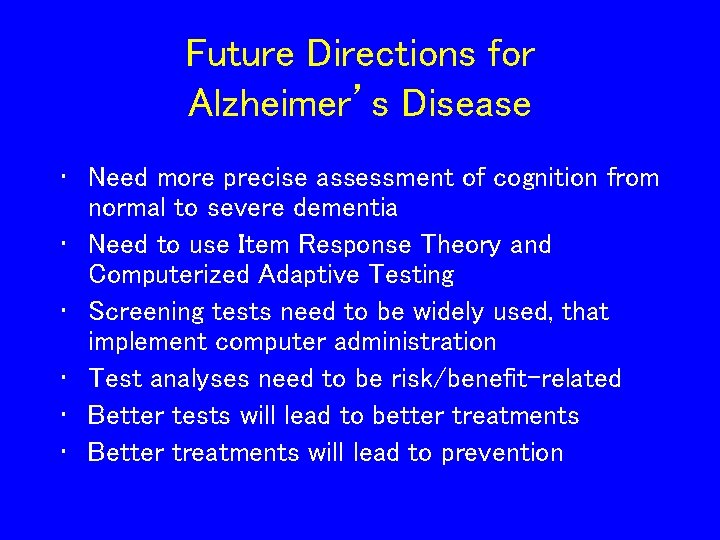
Future Directions for Alzheimer’s Disease • Need more precise assessment of cognition from normal to severe dementia • Need to use Item Response Theory and Computerized Adaptive Testing • Screening tests need to be widely used, that implement computer administration • Test analyses need to be risk/benefit-related • Better tests will lead to better treatments • Better treatments will lead to prevention
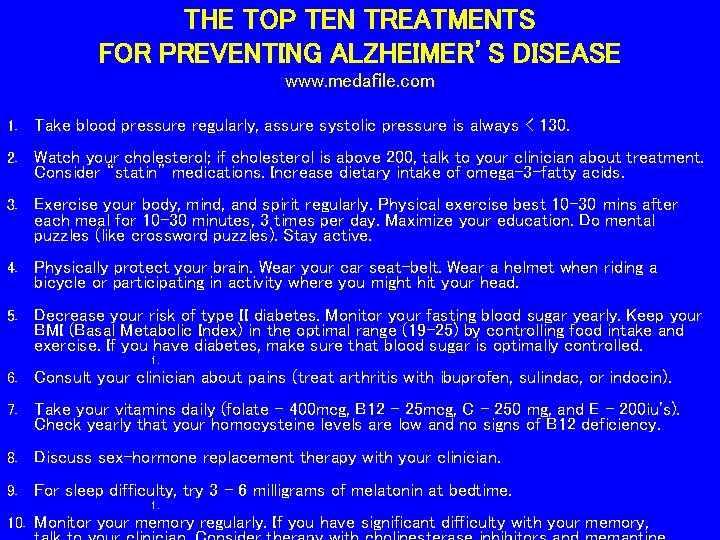
THE TOP TEN TREATMENTS FOR PREVENTING ALZHEIMER’S DISEASE www. medafile. com 1. Take blood pressure regularly, assure systolic pressure is always < 130. 2. Watch your cholesterol; if cholesterol is above 200, talk to your clinician about treatment. Consider “statin” medications. Increase dietary intake of omega-3 -fatty acids. 3. Exercise your body, mind, and spirit regularly. Physical exercise best 10 -30 mins after each meal for 10 -30 minutes, 3 times per day. Maximize your education. Do mental puzzles (like crossword puzzles). Stay active. 4. Physically protect your brain. Wear your car seat-belt. Wear a helmet when riding a bicycle or participating in activity where you might hit your head. 5. Decrease your risk of type II diabetes. Monitor your fasting blood sugar yearly. Keep your BMI (Basal Metabolic Index) in the optimal range (19 -25) by controlling food intake and exercise. If you have diabetes, make sure that blood sugar is optimally controlled. 1. 6. Consult your clinician about pains (treat arthritis with ibuprofen, sulindac, or indocin). 7. Take your vitamins daily (folate - 400 mcg, B 12 - 25 mcg, C - 250 mg, and E - 200 iu's). Check yearly that your homocysteine levels are low and no signs of B 12 deficiency. 8. Discuss sex-hormone replacement therapy with your clinician. 9. For sleep difficulty, try 3 - 6 milligrams of melatonin at bedtime. 1. 10. Monitor your memory regularly. If you have significant difficulty with your memory,
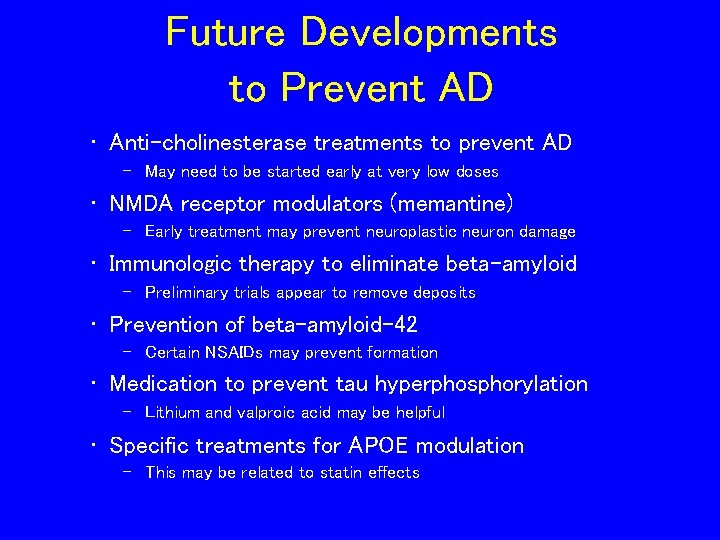
Future Developments to Prevent AD • Anti-cholinesterase treatments to prevent AD – May need to be started early at very low doses • NMDA receptor modulators (memantine) – Early treatment may prevent neuroplastic neuron damage • Immunologic therapy to eliminate beta-amyloid – Preliminary trials appear to remove deposits • Prevention of beta-amyloid-42 – Certain NSAIDs may prevent formation • Medication to prevent tau hyperphosphorylation – Lithium and valproic acid may be helpful • Specific treatments for APOE modulation – This may be related to statin effects