
Screening Balancing the Benefits and Risks Ann Richardson
Screening: Balancing the Benefits and Risks Ann Richardson Wayne Francis Cancer Epidemiology Research Group
The aim of screening is to detect disease early, in order to improve the outcome for people with the disease.
Benefits and harms of screening Benefits: Harms: Extra years of life for some people diagnosed by screening. Earlier diagnosis but no extra years of life for some people. Simpler treatment for some people with early disease. Over-treatment of some people with early disease. Reassurance for those with negative screen results. False reassurance for those with false-negative results. Anxiety and sometimes physical harm for people with false-positive results.
Benefits and harms of screening Harms: Earlier diagnosis but no extra years of life for some people. Over-treatment of some people with early disease. False reassurance for those with false-negative results. Anxiety and sometimes physical harm for people with false-positive results.
“All screening programmes cause harm. Some do good as well. ” (Muir Gray 1997)
The balance of benefit and harm of cancer screening may differ according to: • • • The screening test The screening interval The eligible age range The quality of the screening programme The type of cancer being screened for
Are there three categories of cancer screening? 1. Cervical and bowel cancer • • Recognised premalignant phase, and effective treatment for precancer Screening reduces incidence and mortality 2. Breast and prostate cancer • Screening reduces mortality at the expense of overdiagnosis and increased incidence 3. Melanoma and thyroid cancer • Screening increases incidence but has not been shown to reduce mortality (Forbes and Ramirez 2014, Esserman et al 2013)
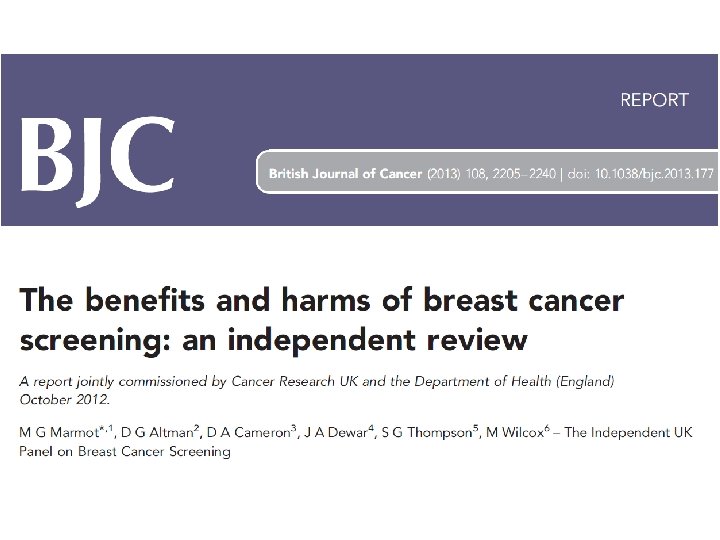
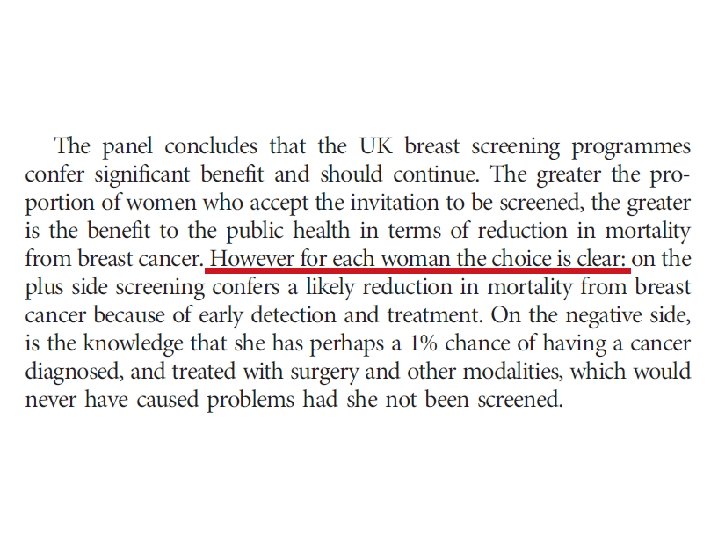
Surveys in Europe and the US suggest that most people overestimate the benefits of cancer screening (Waller et al 2015, Gigerenzer et al 2009, Schwartz et al 2004)
People differ in how they weigh up the benefits and harms of screening, including their willingness to accept overdiagnosis in cancer screening. (Van den Bruel et al 2015, Plumb et al 2014)
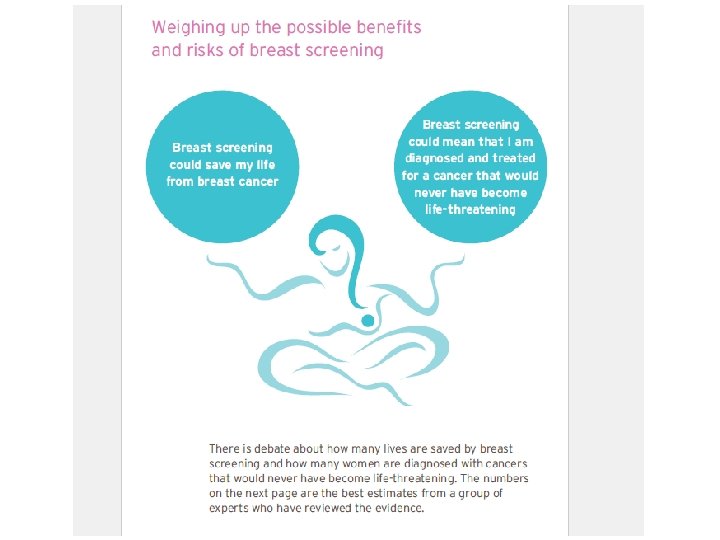
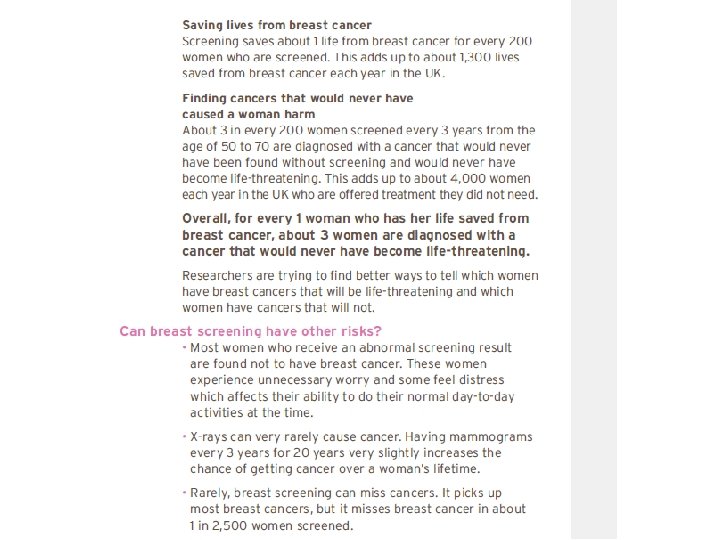
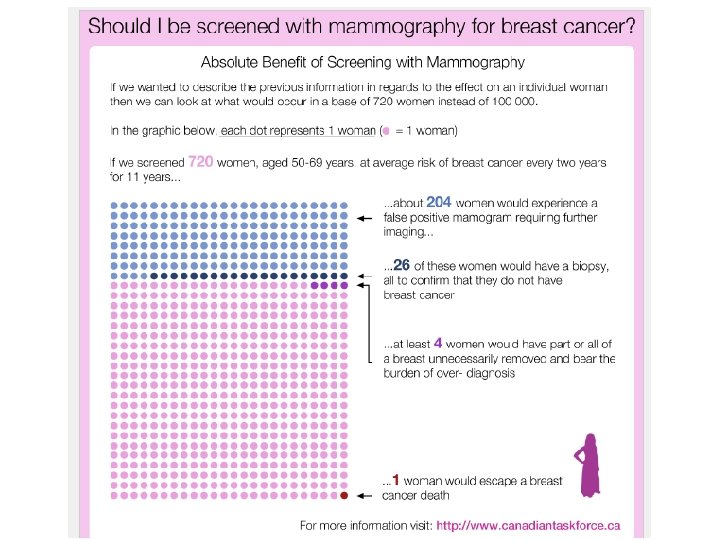
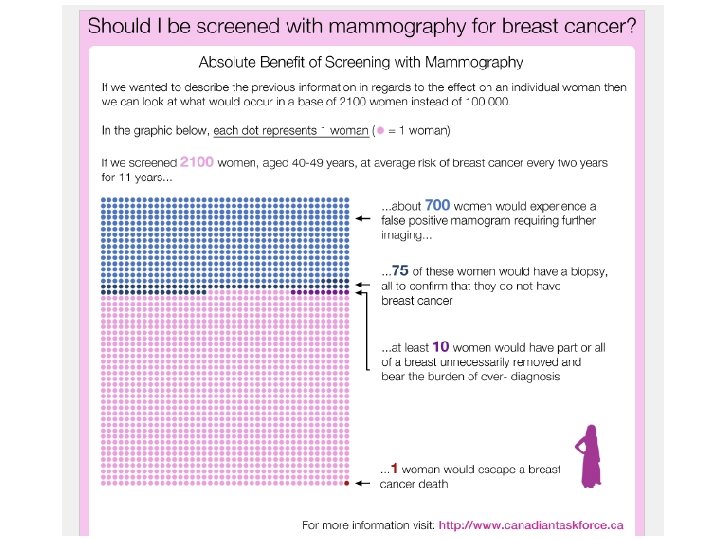
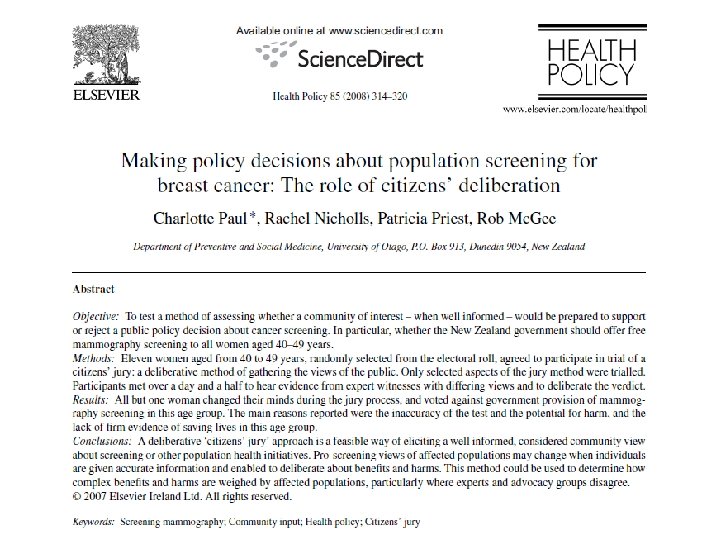
The challenge What is the best way to provide accurate information about the benefits and risks of cancer screening, so people can make an informed choice about whether to participate?
“There is a responsibility to effectively communicate all relevant information to people who are invited to participate in a screening programme so they are able to make an informed decision about whether to take part. ” Judi Strid and Betsy Marshall, 2006
- Slides: 19