
Scottish education The School system OVERVIEW ACCESSING SCHOOL
- Slides: 18
Scottish education The School system
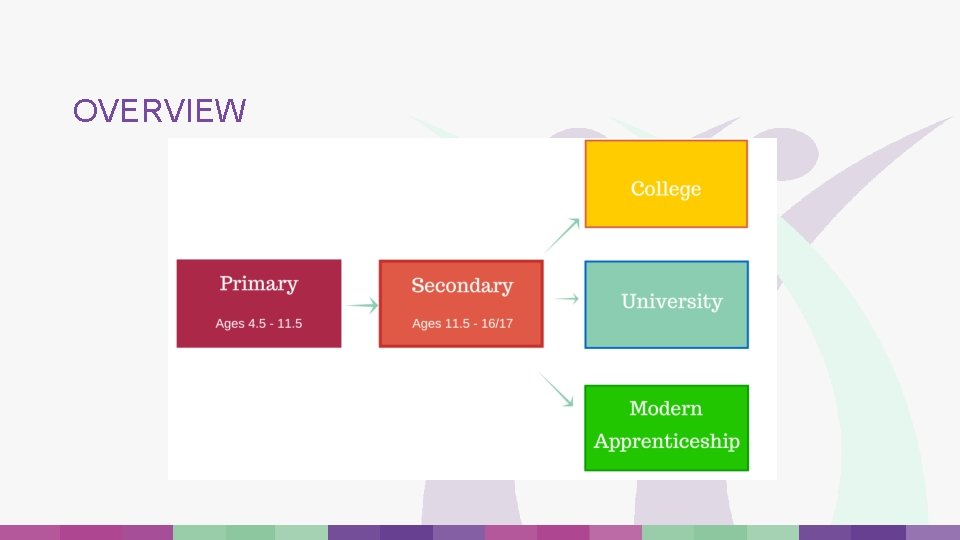
OVERVIEW
ACCESSING SCHOOL • Schooling is free to all children • Children need to be enrolled at a given school, normally within walking distance • Transition to secondary will be automatic in most cases, but children joining later will need enrolled • The are Catholic schools in addition to the nondenominational schools, which operate a parallel system
AGES • P 1 -P 7 • Ages 4 ½ to 11 ½ • S 1 -S 6 • 11 ½ to 17 (compulsory to 16) • Classes are taken in order and children move up automatically: children will be matched to class by age, not by ability • Schools do not select pupils by ability, but teach all pupils in an area
CURRICULUM FOR EXCELLENCE • This is the national curriculum that all Scottish pupils follow • This is recently introduced (2010) • Designed to develop skills rather than specific knowledge • Learners will be: • • Confident individuals Responsible citizens Effective contributors Successful learners
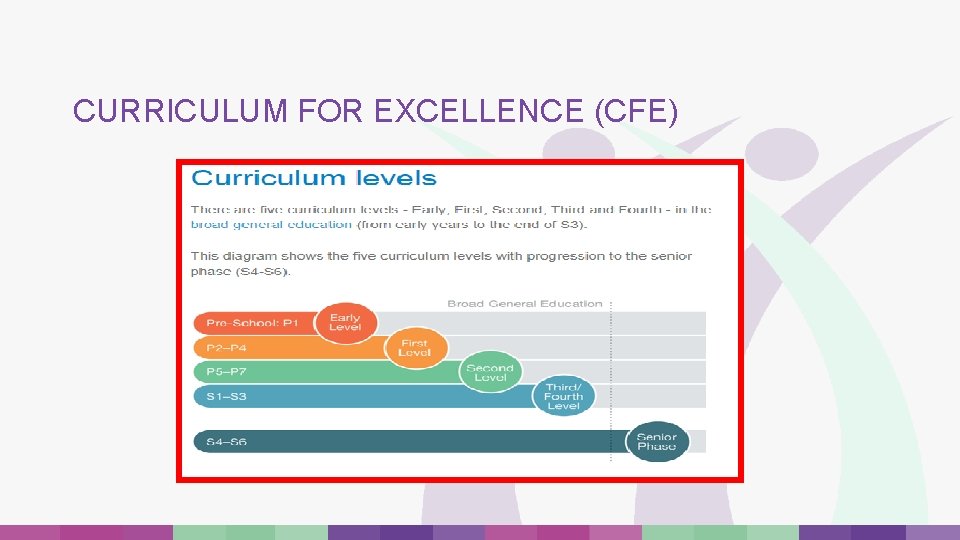
CURRICULUM FOR EXCELLENCE (CFE)
AREAS OF STUDY IN CFE • • Literacy Numeracy & Mathematics Religious & Moral Education Health & Well Being Technologies Expressive Arts Social Studies Sciences
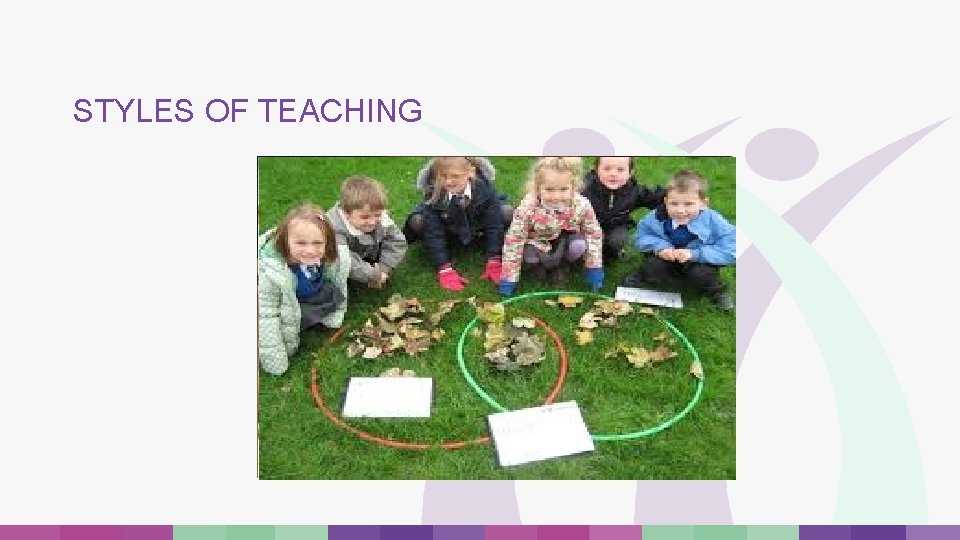
STYLES OF TEACHING
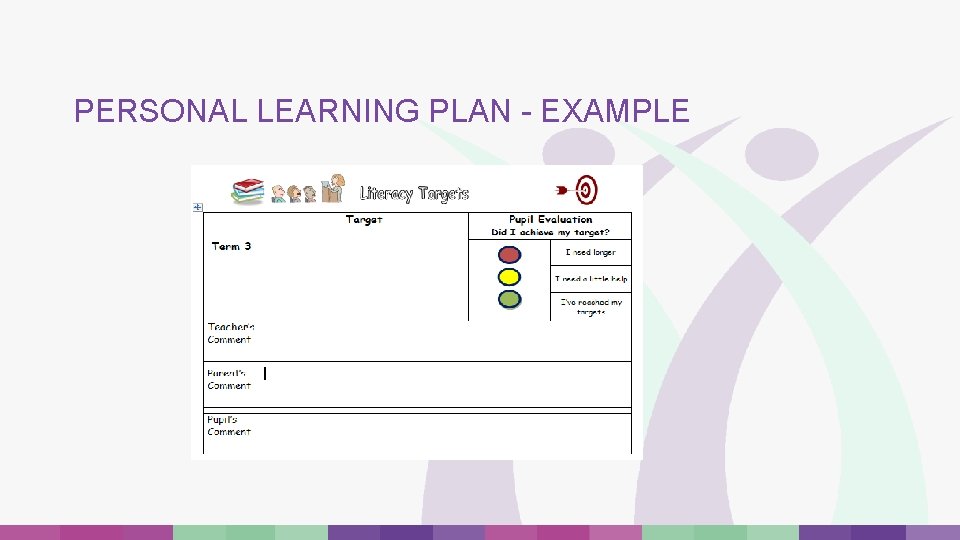
PERSONAL LEARNING PLAN - EXAMPLE
HOMEWORK • Homework Diary – record homework • • • Reading Research Maths Subject Homework Revision
ASSESSMENTS • Formative assessment - thinking time, 2 stars and a wish, thumbs up/down • Summative assessments • • Spelling Reporting, learning logs, report cards
OPTIONS • In S 3, pupils will normally choose 7 subjects to study in S 4 and 5 • English and Mathematics are compulsory and are taken in addition to these 7 • Different schools have different possibilities; speak to the school in advance to find out more • If options are not possible within a school, ask about the possibility of external placements • http: //parents. myworldofwork. co. uk/
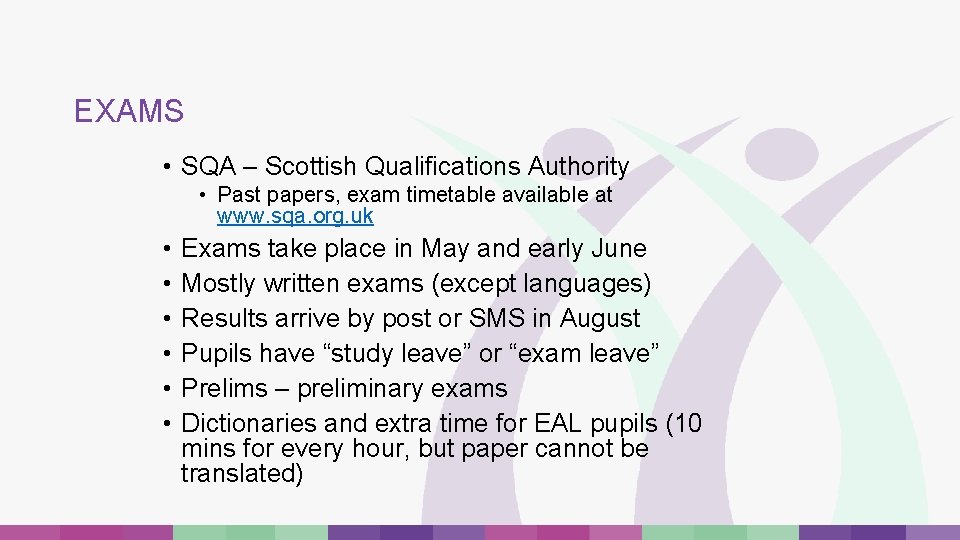
EXAMS • SQA – Scottish Qualifications Authority • Past papers, exam timetable available at www. sqa. org. uk • • • Exams take place in May and early June Mostly written exams (except languages) Results arrive by post or SMS in August Pupils have “study leave” or “exam leave” Prelims – preliminary exams Dictionaries and extra time for EAL pupils (10 mins for every hour, but paper cannot be translated)
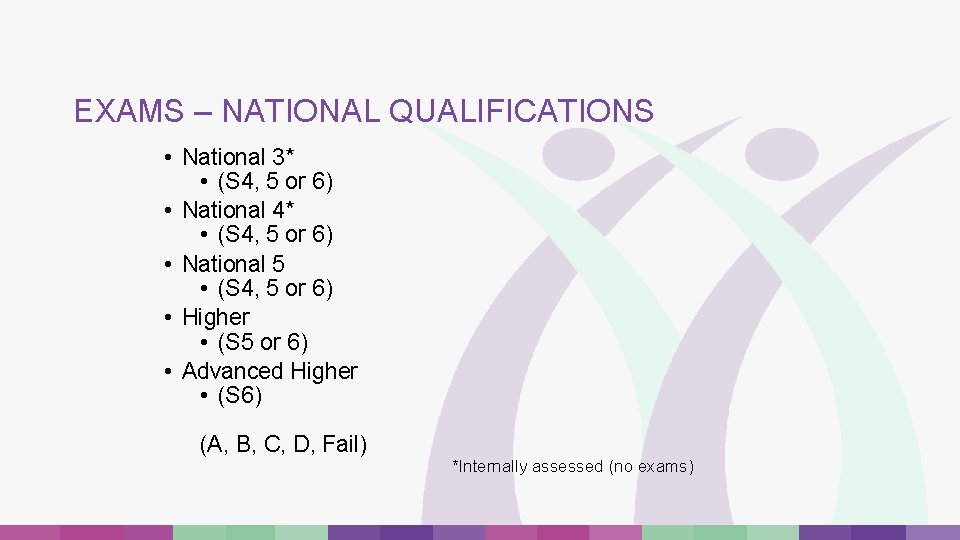
EXAMS – NATIONAL QUALIFICATIONS • National 3* • (S 4, 5 or 6) • National 4* • (S 4, 5 or 6) • National 5 • (S 4, 5 or 6) • Higher • (S 5 or 6) • Advanced Higher • (S 6) (A, B, C, D, Fail) *Internally assessed (no exams)
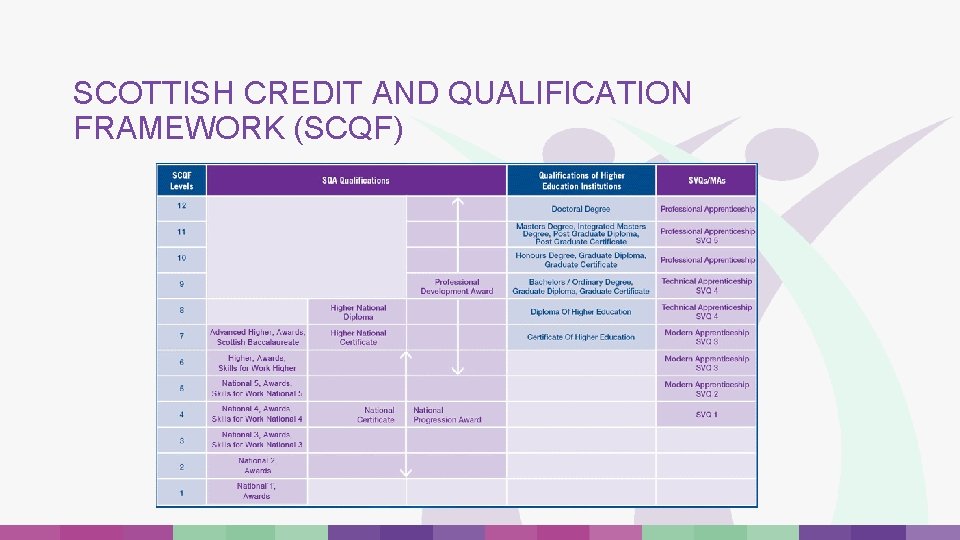
SCOTTISH CREDIT AND QUALIFICATION FRAMEWORK (SCQF)
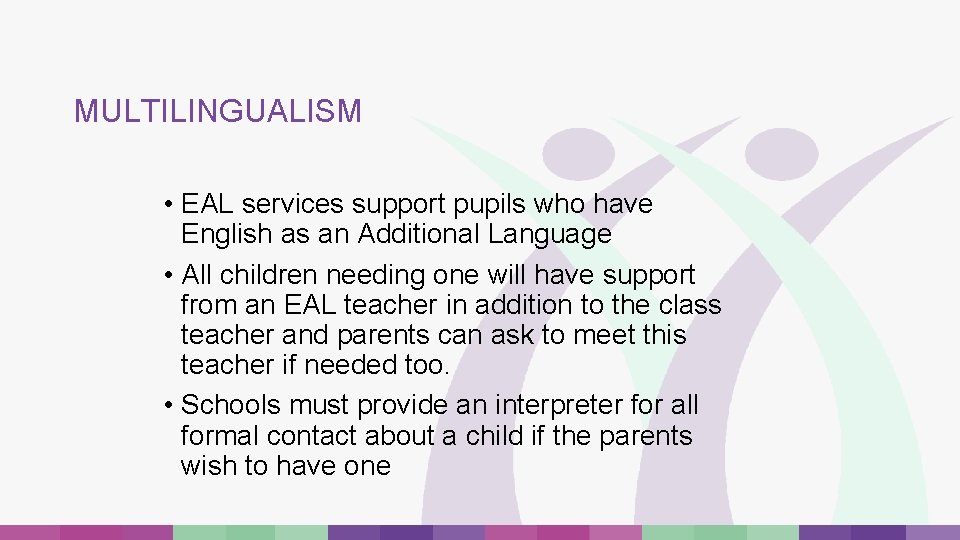
MULTILINGUALISM • EAL services support pupils who have English as an Additional Language • All children needing one will have support from an EAL teacher in addition to the class teacher and parents can ask to meet this teacher if needed too. • Schools must provide an interpreter for all formal contact about a child if the parents wish to have one
1+2 • New policy that should be in place in all schools by 2020 • All school children should learn 2 languages in addition to English (1+2) • First additional language (L 1) starts at P 1 and it must be possible to study this through to National level • 2 nd additional language should start in P 5 • There are no additional requirements for this language • Children who start bilingual may have to do 2+2
SUPPORT FOR LEARNING – MULTILINGUAL FAMILIES • Using the child’s first language to support their learning in English causes no problems; in fact it helps! • All of the suggested activities function in other languages e. g. : • • Reading stories together Asking questions Using numeracy in shopping trips Go to the library together • www. readwritecount. scot