
Scottish Attainment Challenge Stewarton Academy Numeracy Strategies Aims





- Slides: 84
Scottish Attainment Challenge Stewarton Academy Numeracy Strategies
Aims • To investigate why mathematical mindsets are important. • To determine some key strategies in relation to calculations. • To improve confidence in particular strategies
Let’s do some maths!
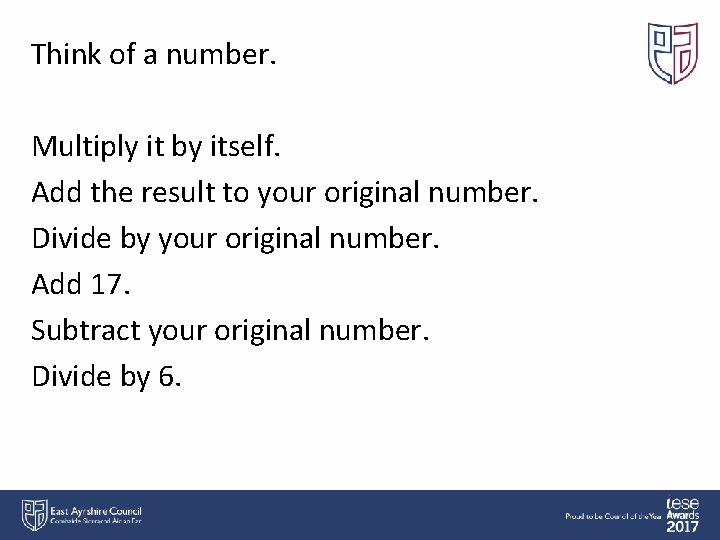
Think of a number. Multiply it by itself. Add the result to your original number. Divide by your original number. Add 17. Subtract your original number. Divide by 6.
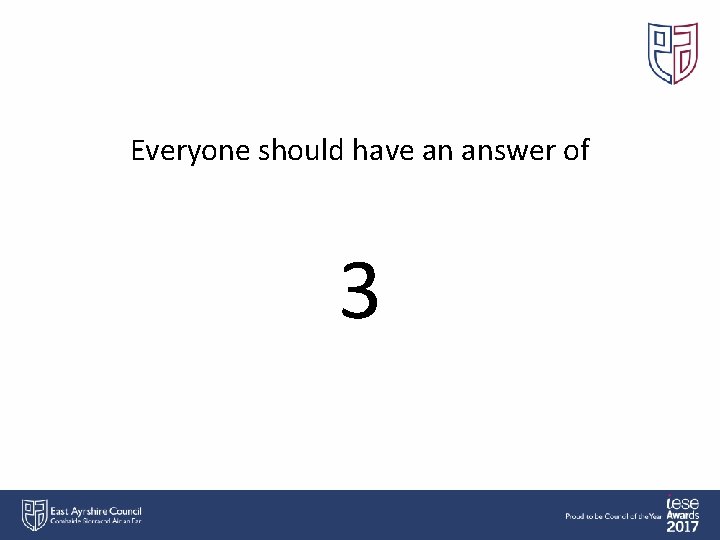
Everyone should have an answer of 3
Have you heard/said? ‘He/she is just not a maths person. He/she gets it from me. I was never very good at maths at school either’ (usually followed by laughter) ‘Don’t worry, obviously you don’t have a maths brain. You are better suited to ………’ ‘I am never going to get this’
Making Maths Count Scotland has a maths problem. Too many of us are happy to label ourselves as “no good with numbers. ” This attitude is deep-rooted and is holding our country back educationally and economically.
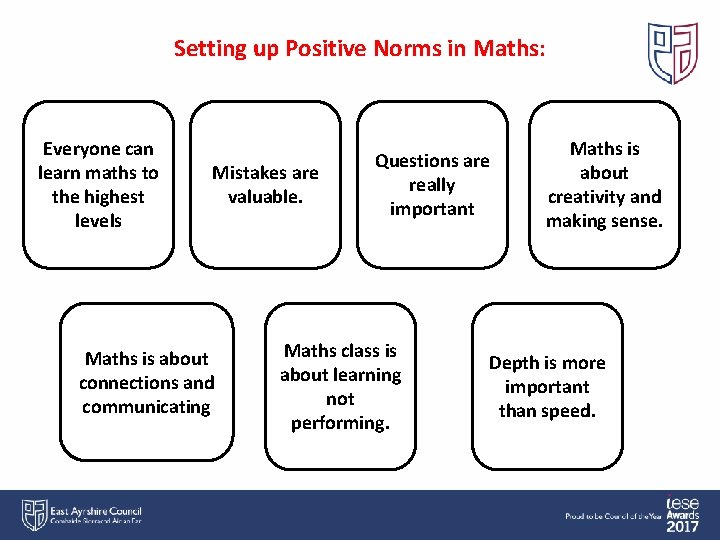
Setting up Positive Norms in Maths: Everyone can learn maths to the highest levels Mistakes are valuable. Maths is about connections and communicating Questions are really important Maths class is about learning not performing. Maths is about creativity and making sense. Depth is more important than speed.
Research findings • If a parent, communicates a negative attitude towards mathematics their child’s attainment in mathematics will decline immediately.
Research findings • ‘Encouraging students to use only one method (algorithmic) to solve problems, they lose some of their capacity for flexible and creative thought. They become less willing to attempt problems in alternative ways and become afraid to take risks’ Narode, Board and Devenport (1993)
How to develop Mathematical Mindsets Step 1 : Focus on work, effort, struggle and persistence Realise that hard work is the key to success not natural ability Step 2 : Choose challenging tasks and focus on strategies rather that end outcome. Reflect on strategies that work and don’t work Step 3 : Face setbacks. See mistakes or dead ends as opportunities to learn more. There is a wealth of resources on www. youcubed. org
The power of Yet. I can’t do this………………. . YET! I am not capable of solving this problem ……. . YET!
What is a Number Talk? d l i u b to y g e t a r t s n i a y s c i n k e l i ic ta f r f e e b d n m a y e c h A nu a t r h u g c c u a o , r y h t t i l i g l n a i t k n n e i flexib h m t , l f a o c i g t a n i r m a e h h s t a d n m a , f o n io t a l u c i t ar s strategies. math
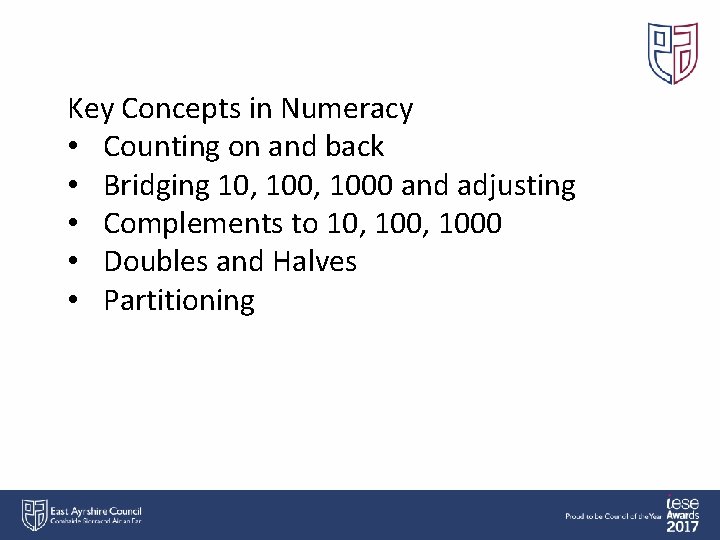
Key Concepts in Numeracy • Counting on and back • Bridging 10, 1000 and adjusting • Complements to 10, 1000 • Doubles and Halves • Partitioning
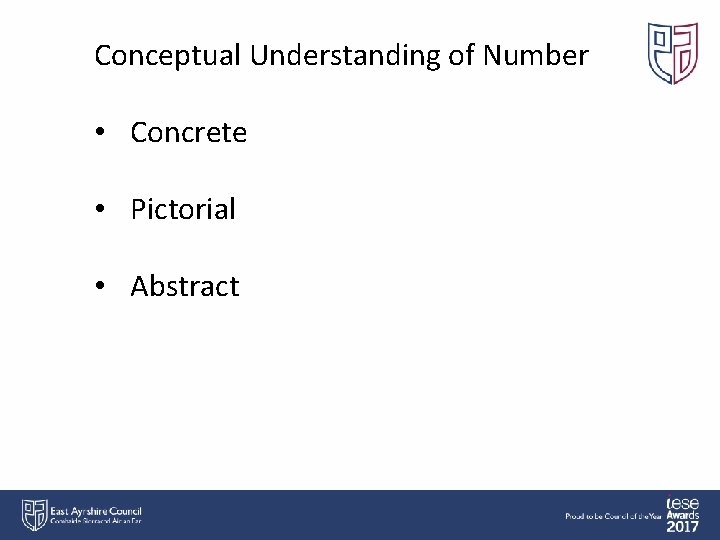
Conceptual Understanding of Number • Concrete • Pictorial • Abstract
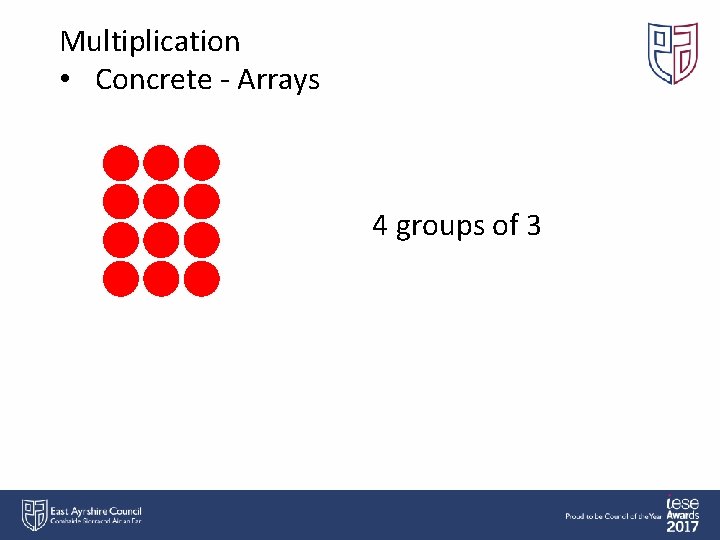
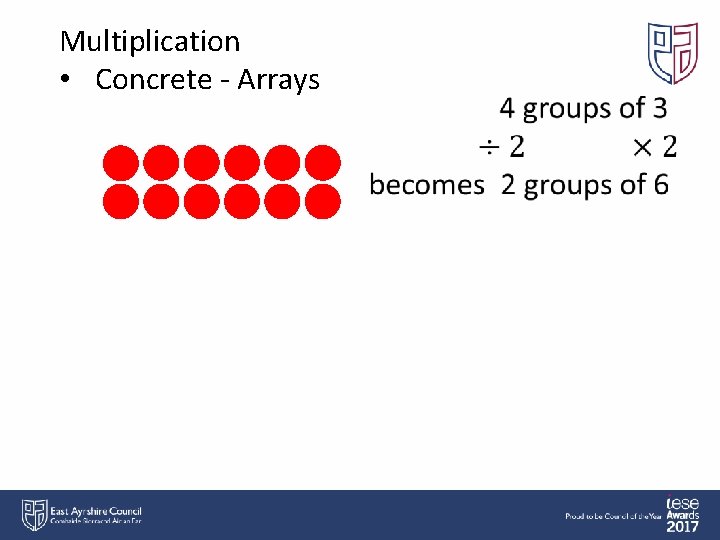
Multiplication • Concrete - Arrays 4 groups of 3
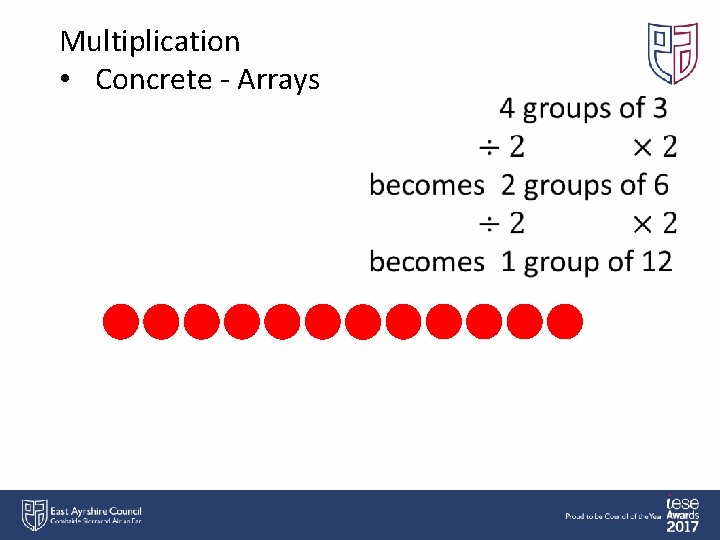
Multiplication • Concrete - Arrays
Multiplication • Concrete - Arrays
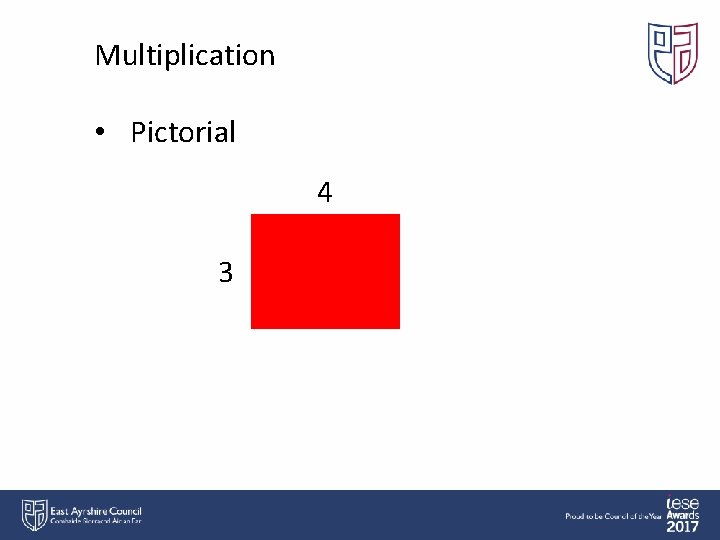
Multiplication • Pictorial 4 3
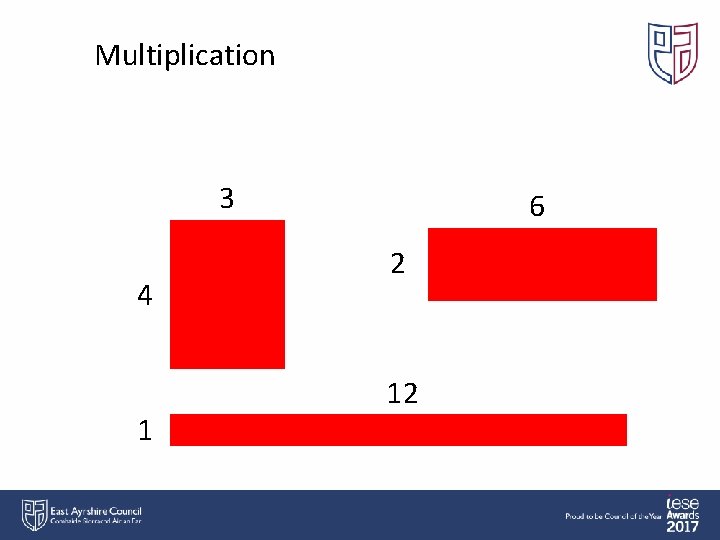
Multiplication 3 4 1 6 2 12
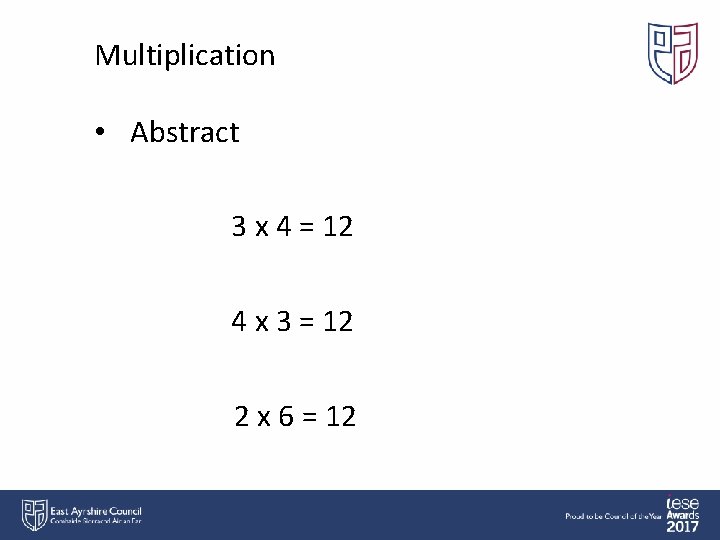
Multiplication • Abstract 3 x 4 = 12 4 x 3 = 12 2 x 6 = 12
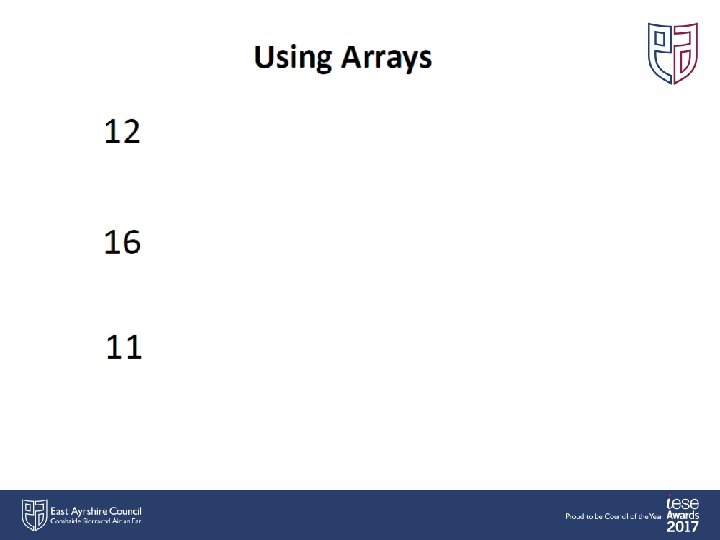
Arrays
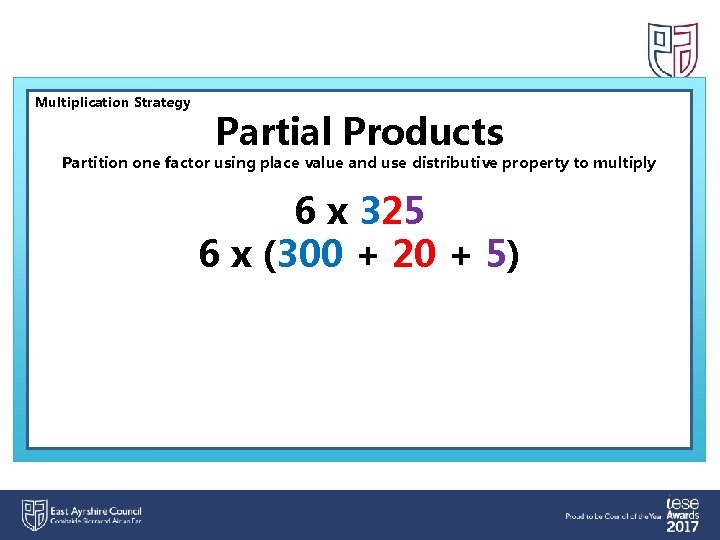
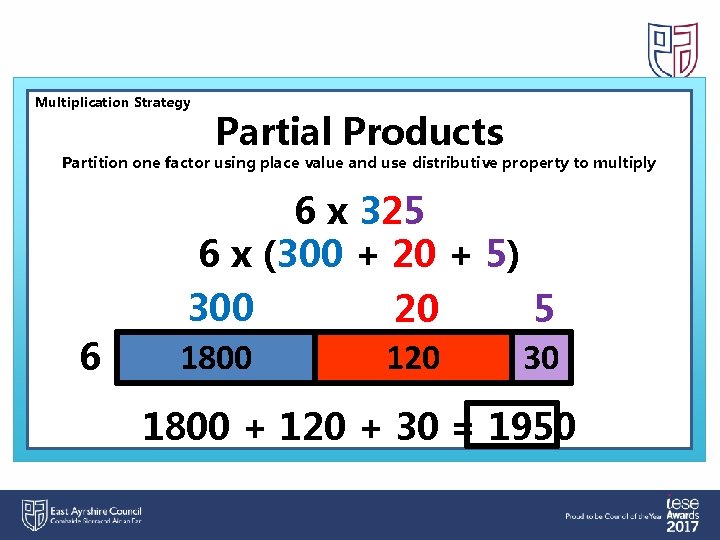
Multiplication Strategy Partial Products Partition one factor using place value and use distributive property to multiply 6 x 325 6 x (300 + 20 + 5) 6
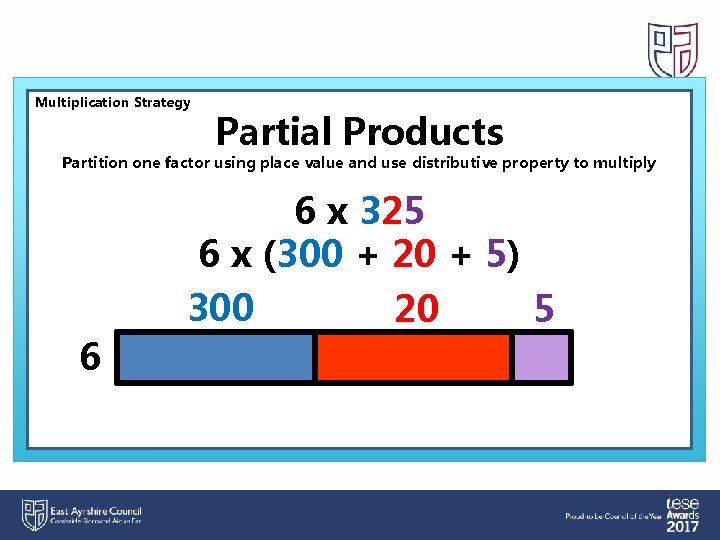
Multiplication Strategy Partial Products Partition one factor using place value and use distributive property to multiply 6 x 325 6 x (300 + 20 + 5) 6 300 6 20 5
Multiplication Strategy Partial Products Partition one factor using place value and use distributive property to multiply 6 x 325 6 x (300 + 20 + 5) 6 6 300 1800 20 120 5 30 1800 + 120 + 30 = 1950
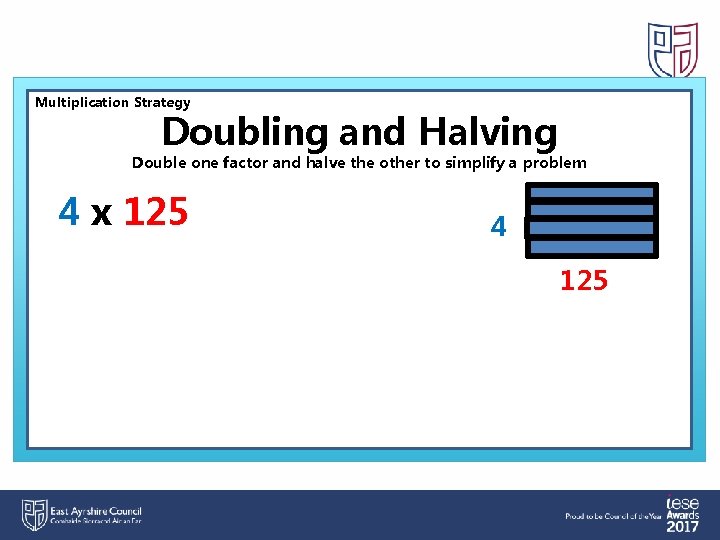
Multiplication Strategy Doubling and Halving Double one factor and halve the other to simplify a problem 4 x 125 4 6 125
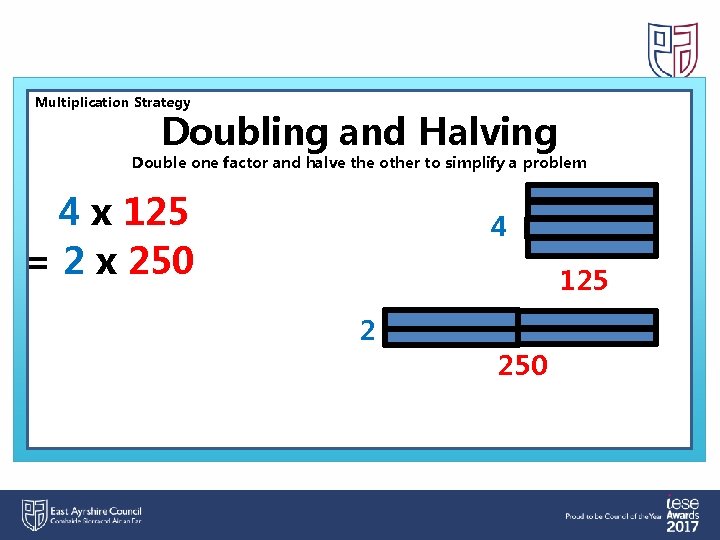
Multiplication Strategy Doubling and Halving Double one factor and halve the other to simplify a problem 4 x 125 = 2 x 250 4 125 6 2 250
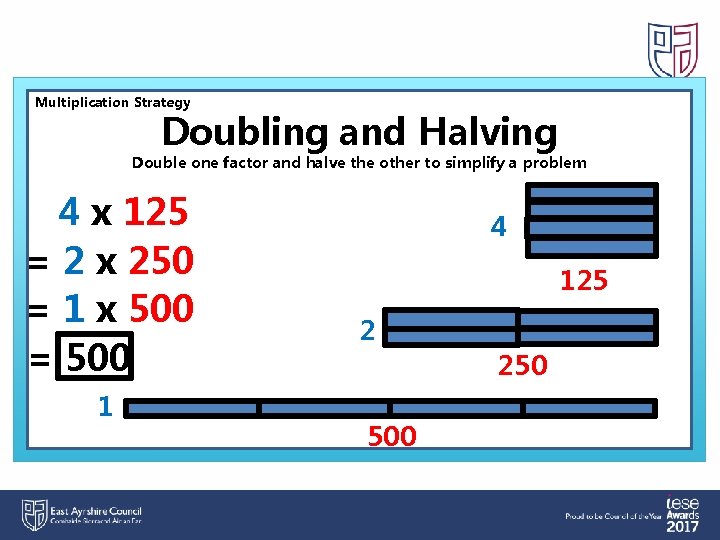
Multiplication Strategy Doubling and Halving Double one factor and halve the other to simplify a problem 4 x 125 = 2 x 250 = 1 x 500 = 500 1 4 125 6 2 500 250
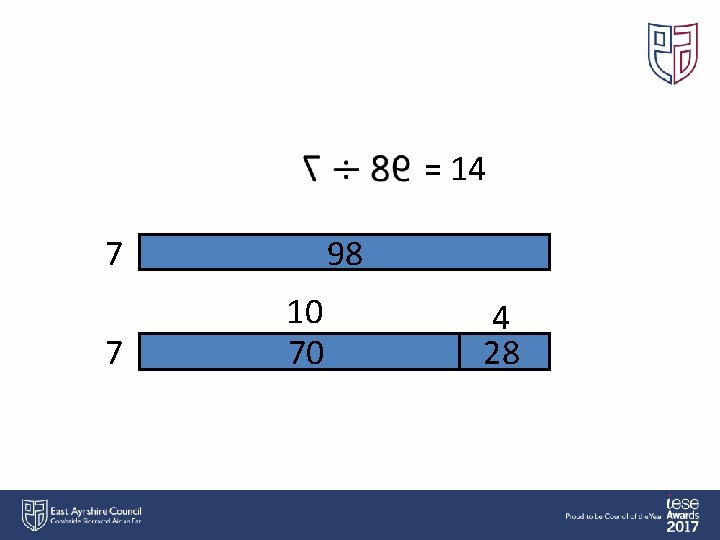
= 14 7 7 98 10 70 4 28
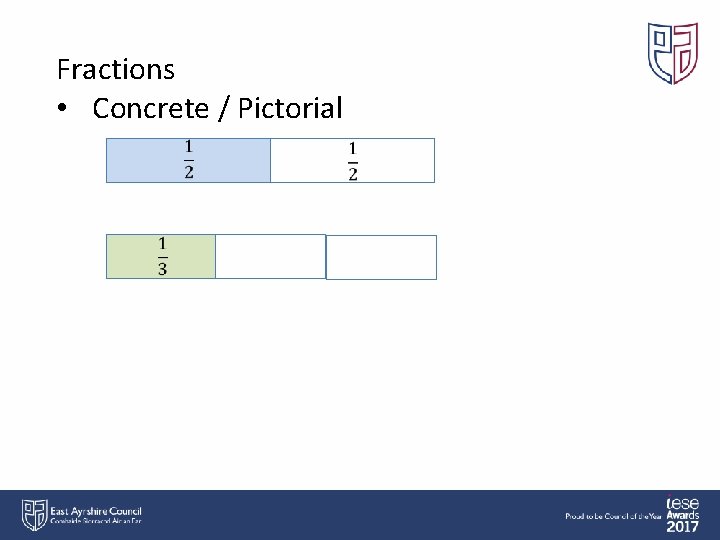
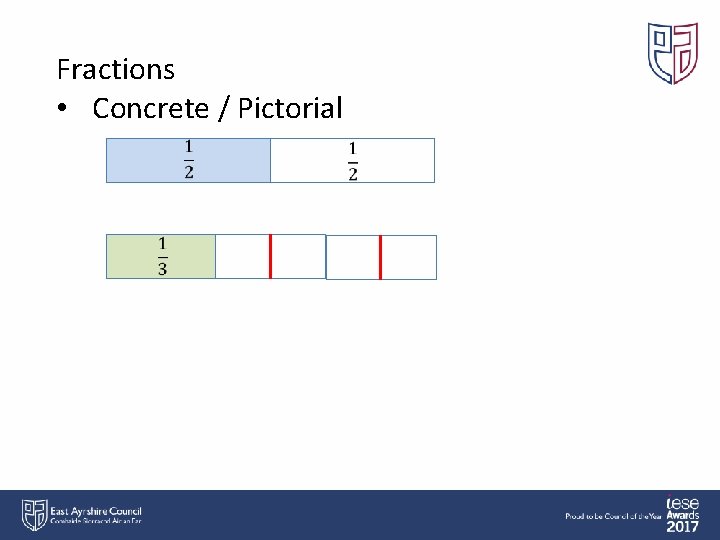
Fractions • Concrete / Pictorial
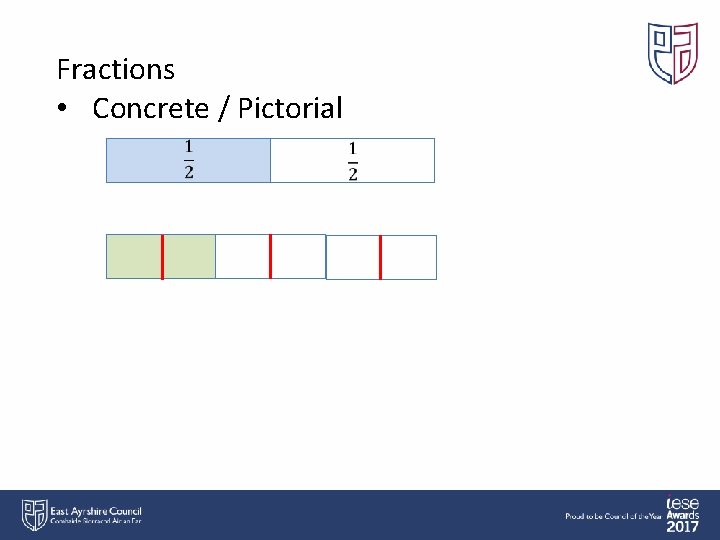
Fractions • Concrete / Pictorial
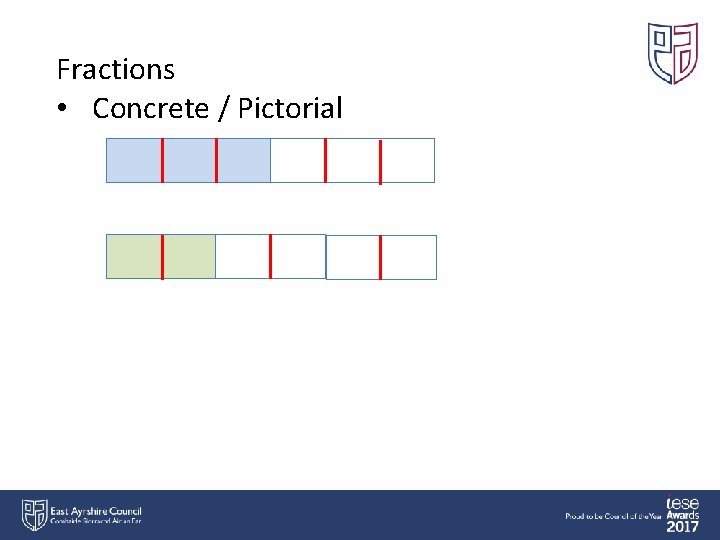
Fractions • Concrete / Pictorial
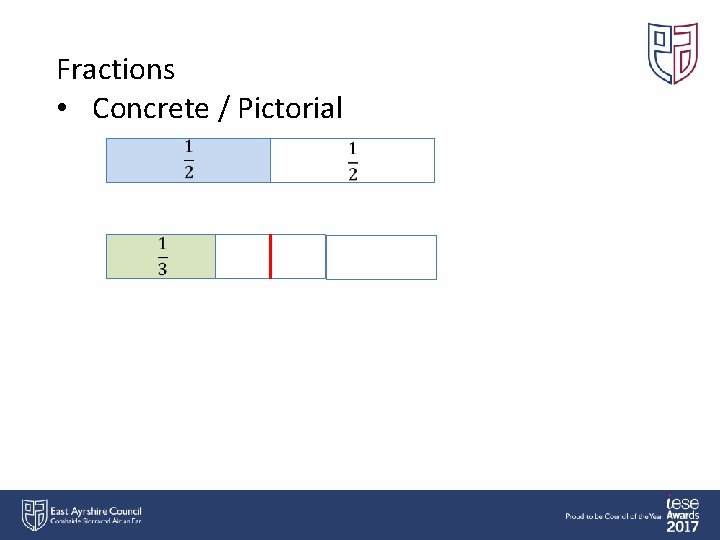
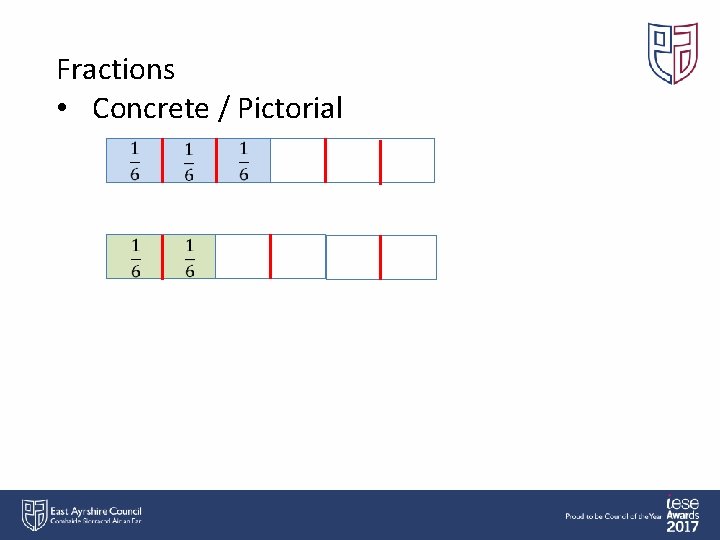
Fractions • Concrete / Pictorial
Fractions • Concrete / Pictorial
Fractions • Concrete / Pictorial
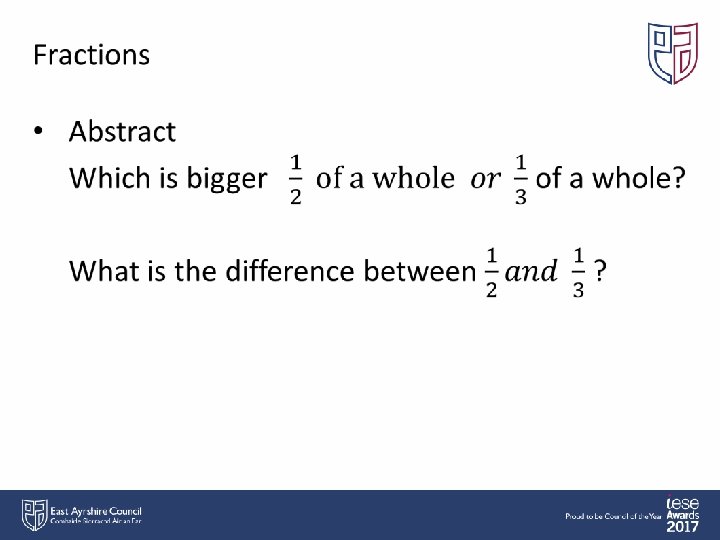
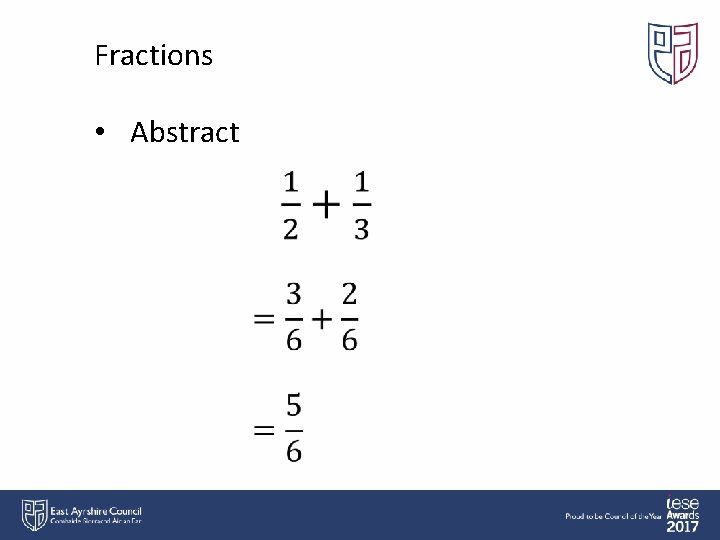
Fractions • Abstract
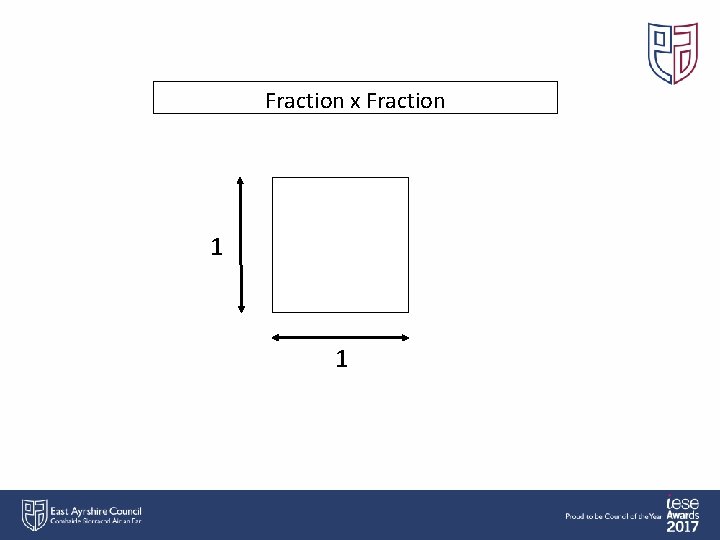
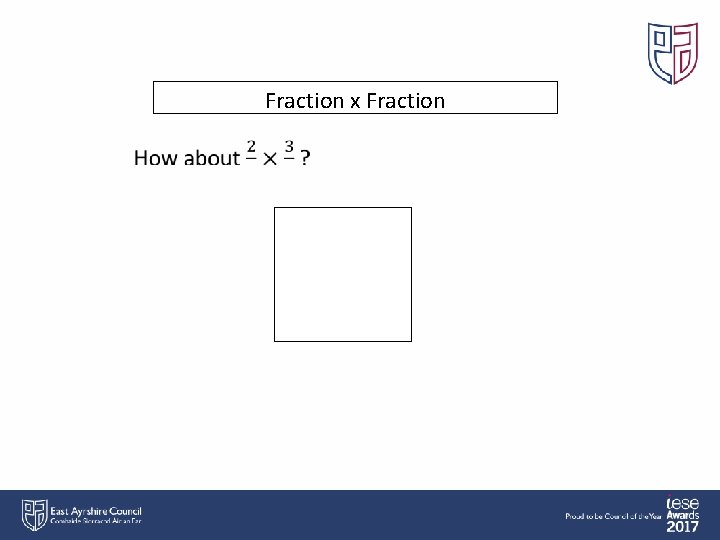
Fraction x Fraction 1 1
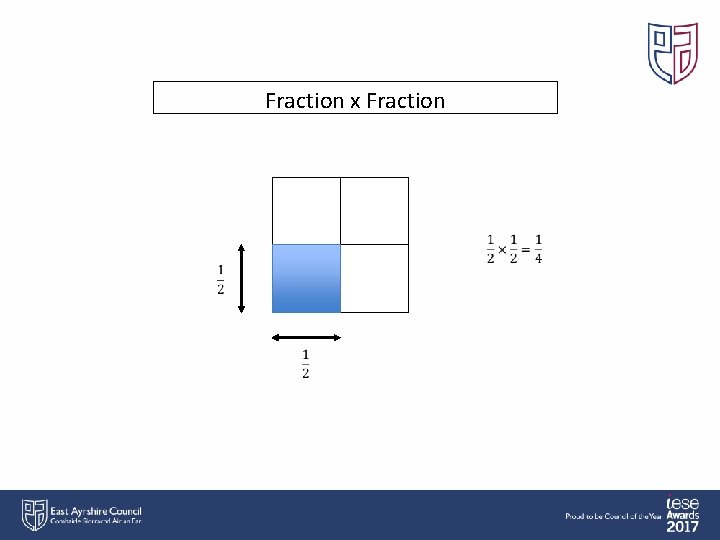
Fraction x Fraction
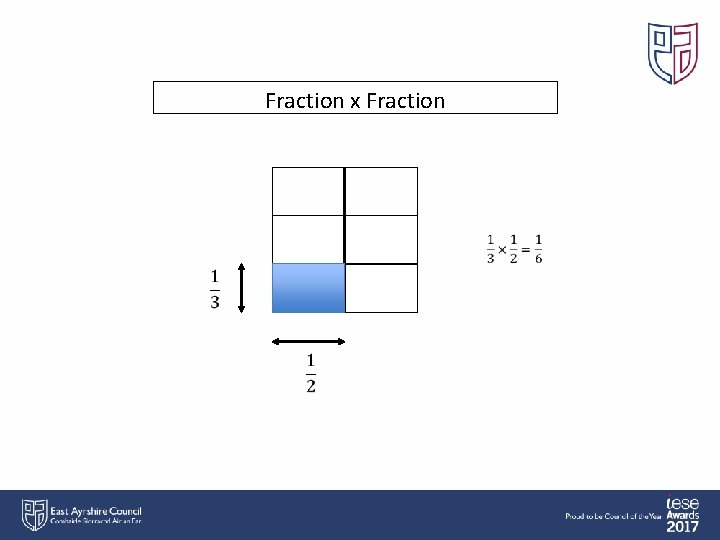
Fraction x Fraction
Fraction x Fraction
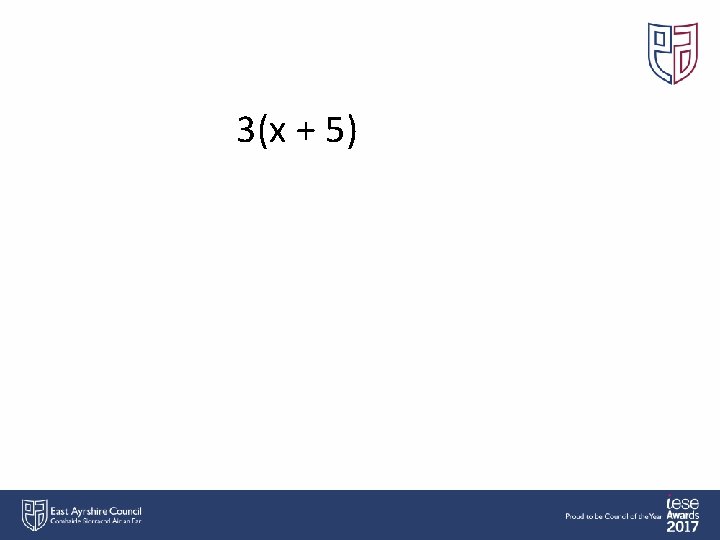
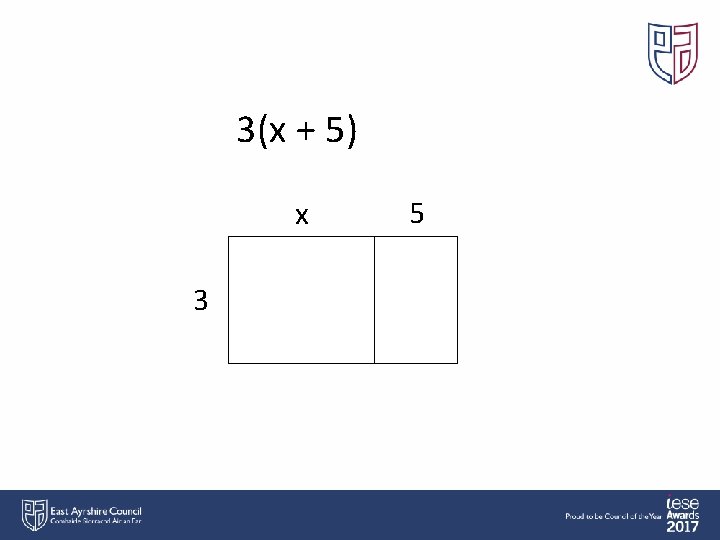
3(x + 5)
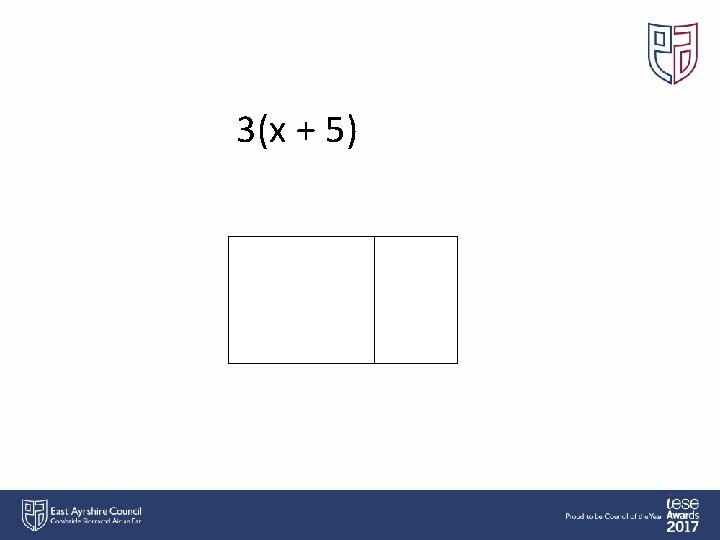
3(x + 5)
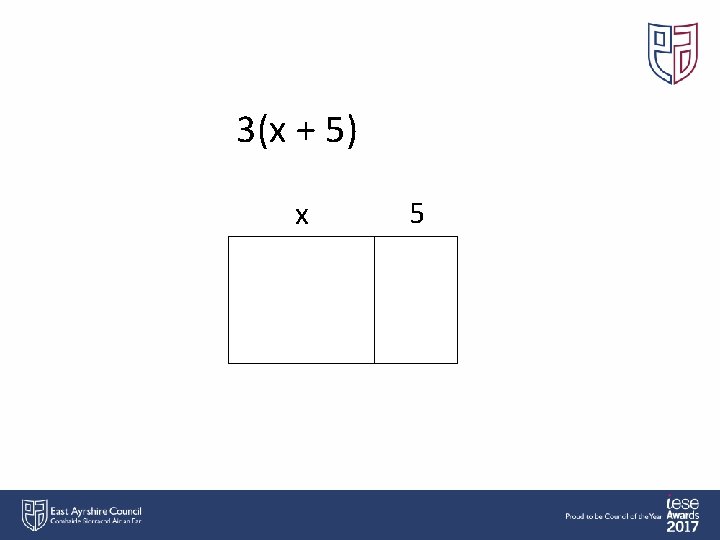
3(x + 5) x 5
3(x + 5) x 3 5
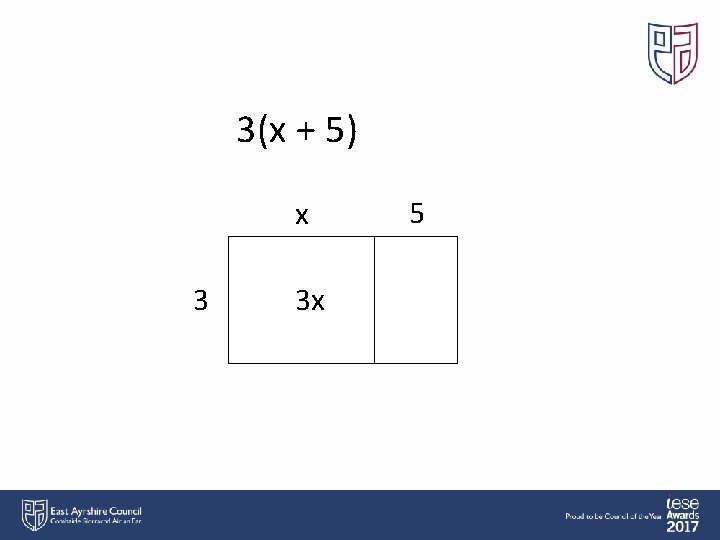
3(x + 5) x 3 3 x 5
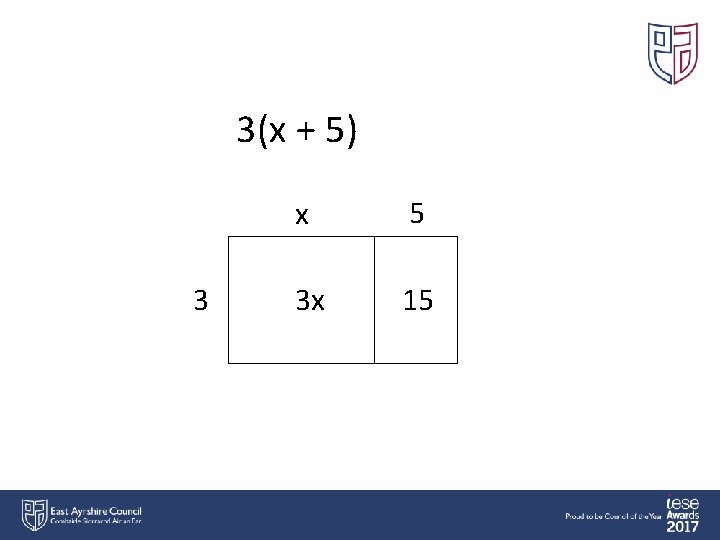
3(x + 5) 3 x 5 3 x 15
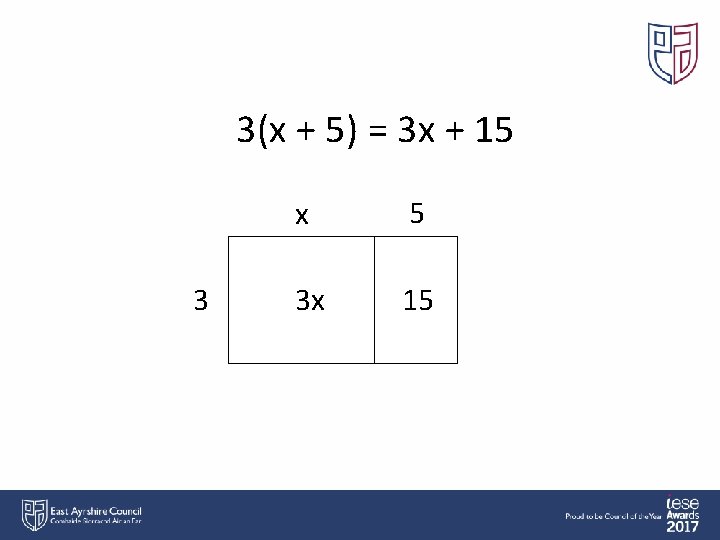
3(x + 5) = 3 x + 15 3 x 5 3 x 15
Empty Number Lines
Addition Strategy Add Up In Chunks Keep the first number whole, add the second number in friendly chunks 209 + 124 209
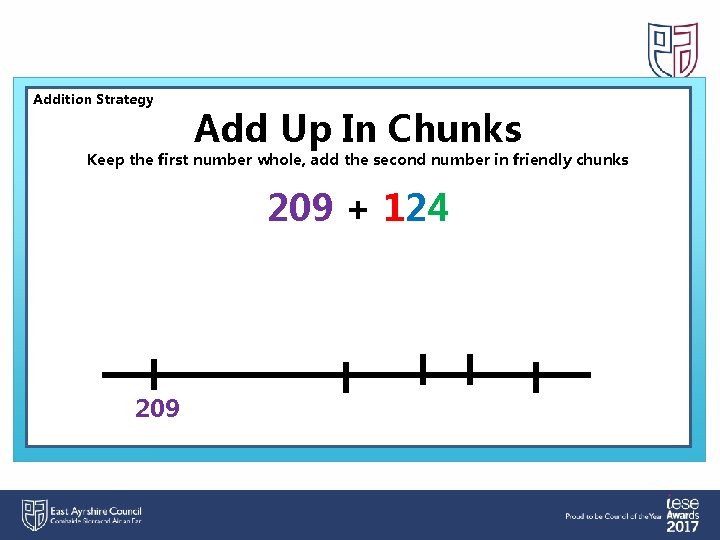
Addition Strategy Add Up In Chunks Keep the first number whole, add the second number in friendly chunks 209 + 124 209
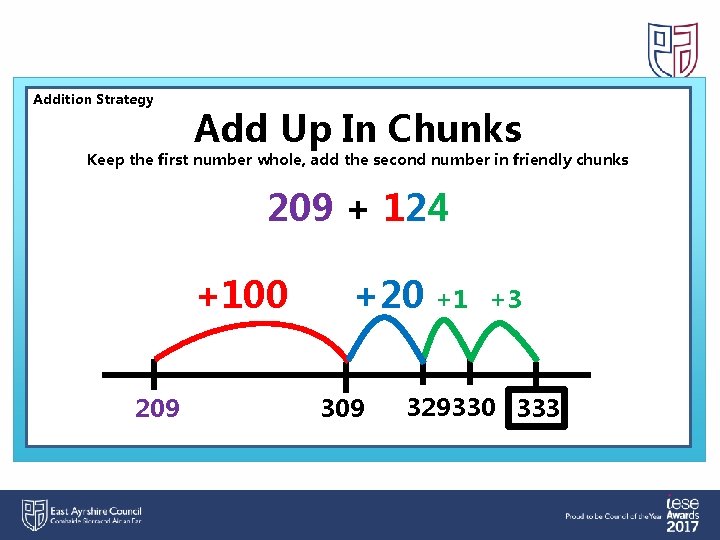
Addition Strategy Add Up In Chunks Keep the first number whole, add the second number in friendly chunks 209 + 124 +100 209 +20 +1 309 +3 329330 333
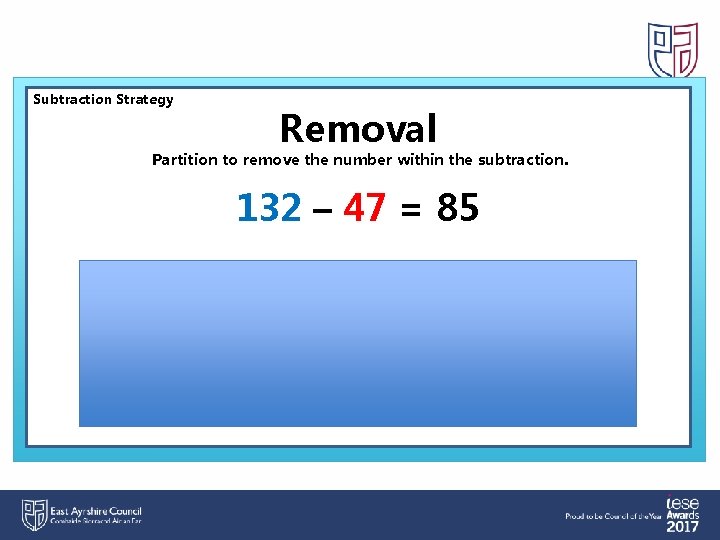
Subtraction Strategy Removal Partition to remove the number within the subtraction. 132 – 47 = 85 132
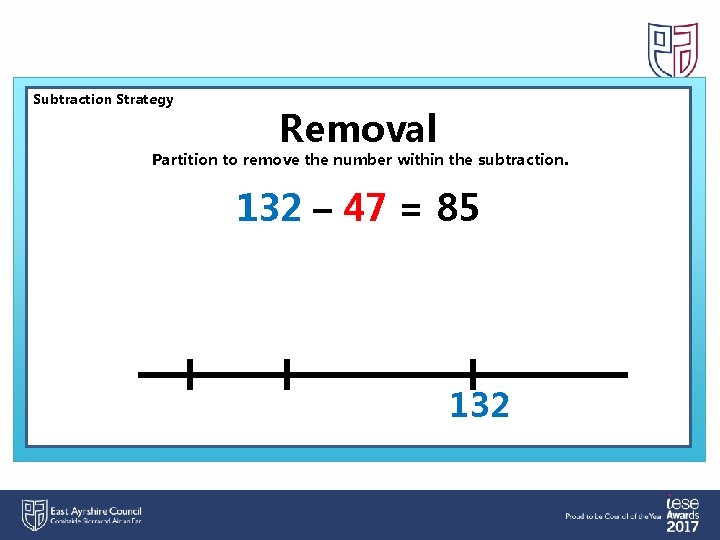
Subtraction Strategy Removal Partition to remove the number within the subtraction. 132 – 47 = 85 132
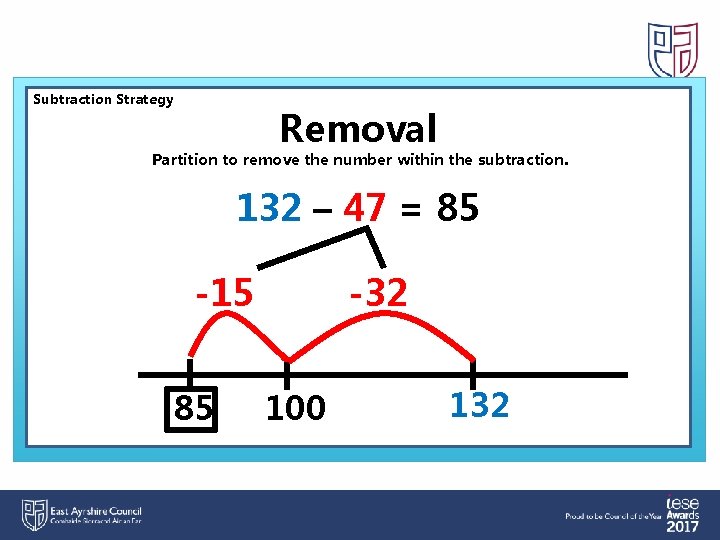
Subtraction Strategy Removal Partition to remove the number within the subtraction. 132 – 47 = 85 -32 -15 85 100 132
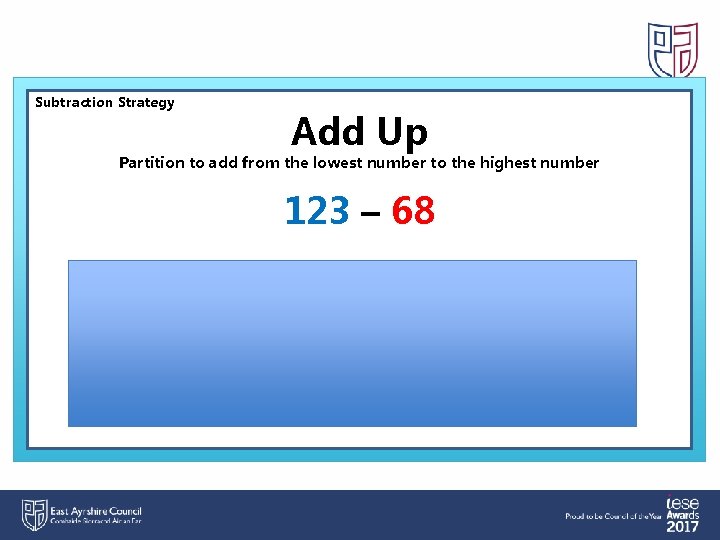
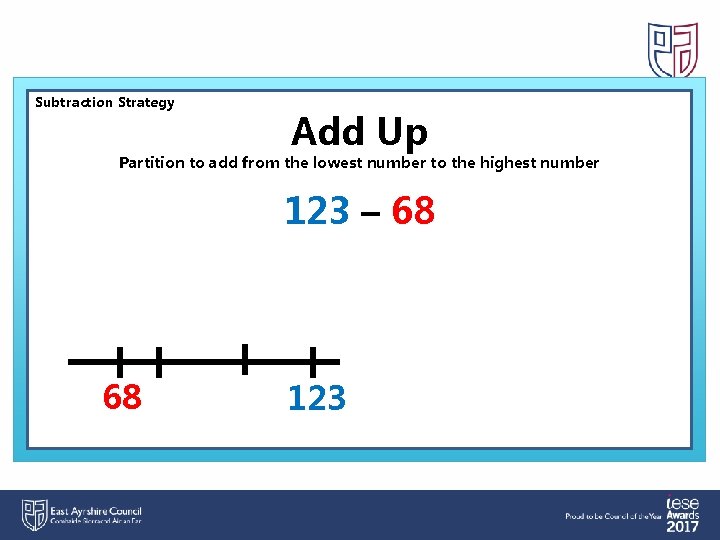
Subtraction Strategy Add Up Partition to add from the lowest number to the highest number 123 – 68 68 123
Subtraction Strategy Add Up Partition to add from the lowest number to the highest number 123 – 68 68 123
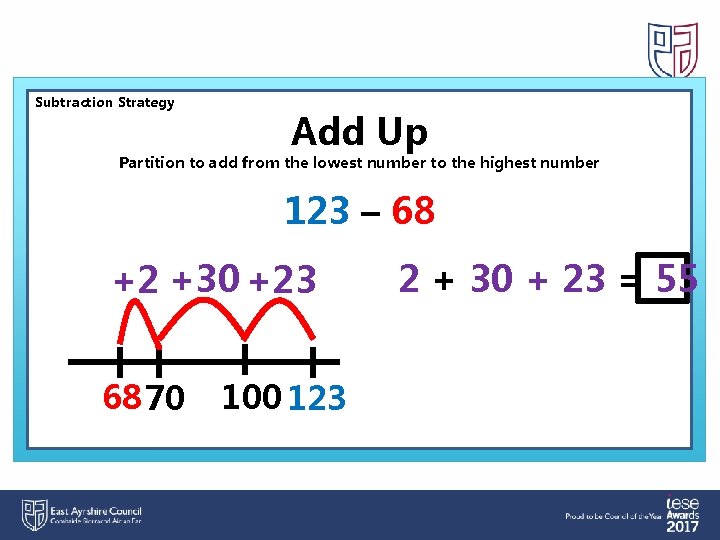
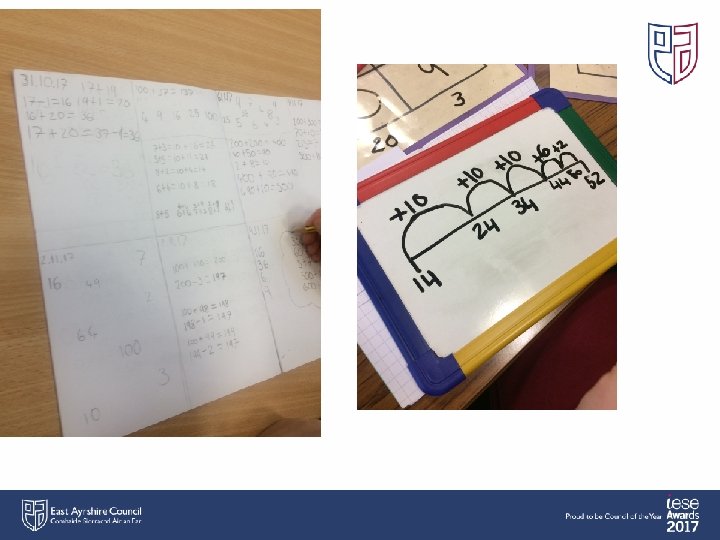
Subtraction Strategy Add Up Partition to add from the lowest number to the highest number 123 – 68 +2 +30 +23 68 70 100 123 2 + 30 + 23 = 55
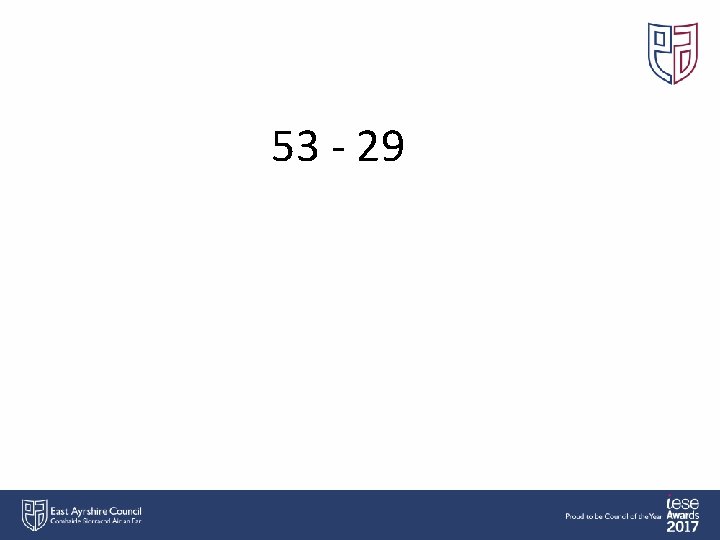
53 - 29
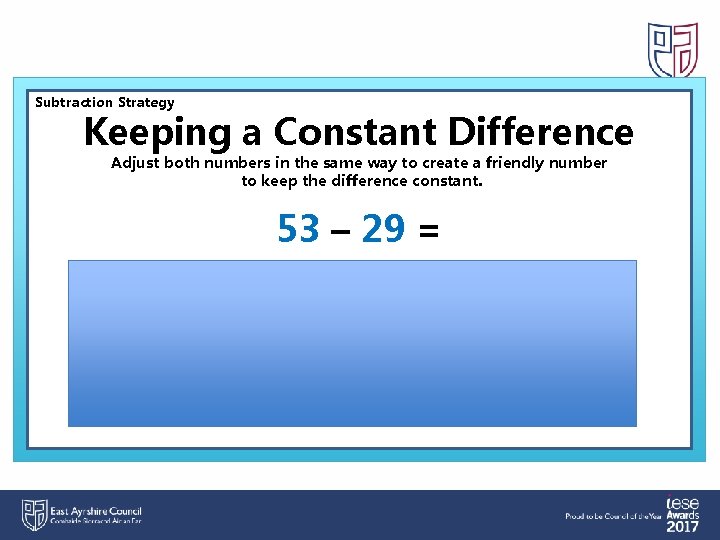
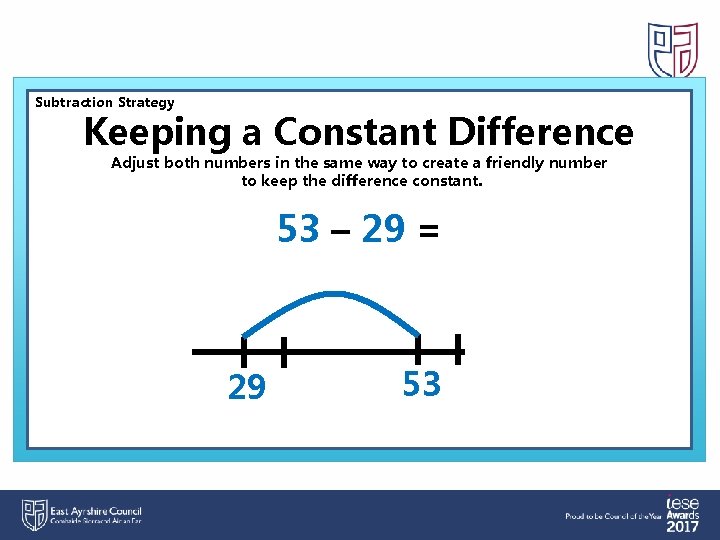
Subtraction Strategy Keeping a Constant Difference Adjust both numbers in the same way to create a friendly number to keep the difference constant. 53 – 29 = 29 53
Subtraction Strategy Keeping a Constant Difference Adjust both numbers in the same way to create a friendly number to keep the difference constant. 53 – 29 = 29 53
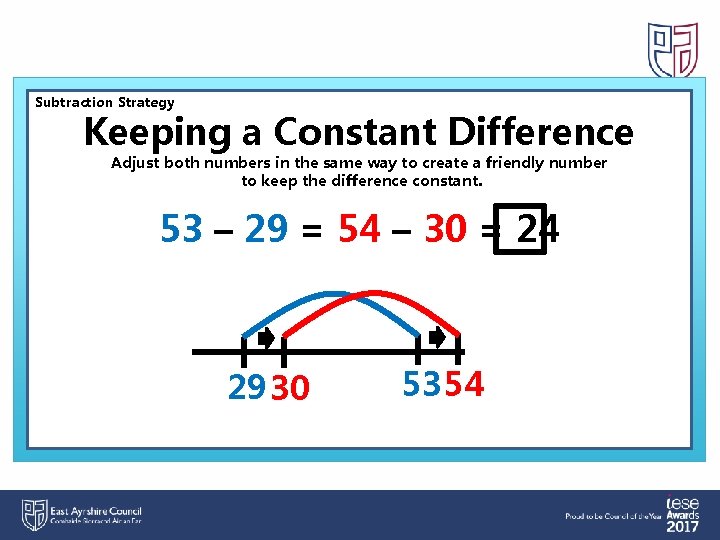
Subtraction Strategy Keeping a Constant Difference Adjust both numbers in the same way to create a friendly number to keep the difference constant. 53 – 29 = 54 – 30 = 24 29 30 5354
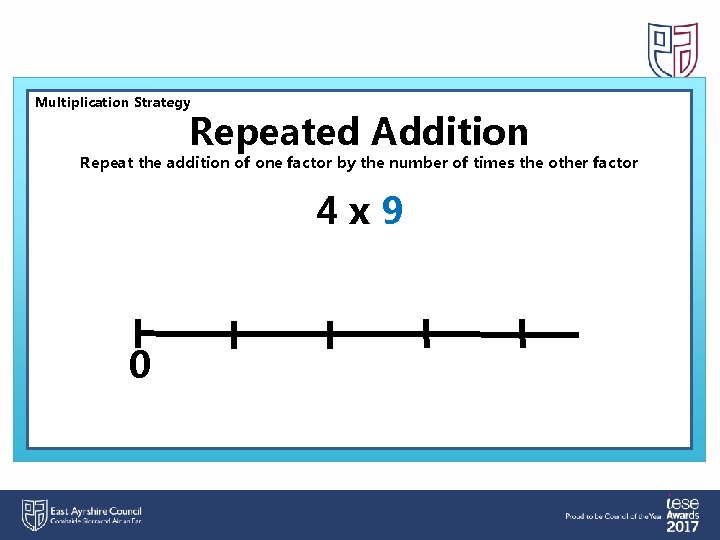
Multiplication Strategy Repeated Addition Repeat the addition of one factor by the number of times the other factor 4 x 9 0
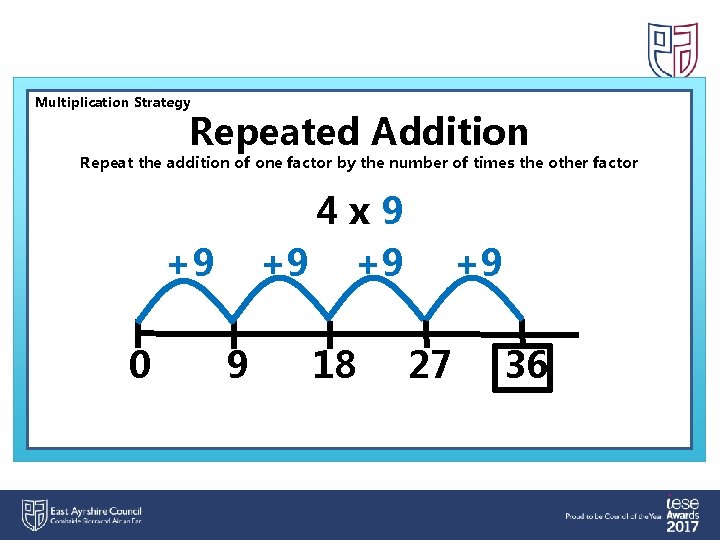
Multiplication Strategy Repeated Addition Repeat the addition of one factor by the number of times the other factor 4 x 9 +9 +9 +9 0 9 18 +9 27 36
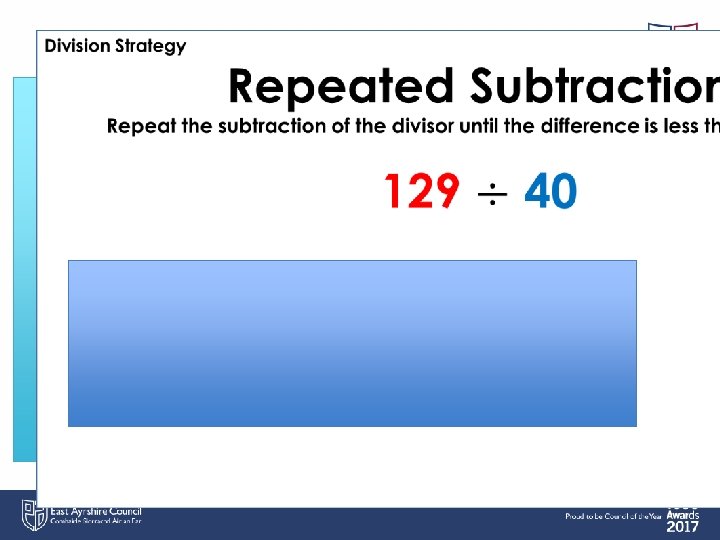
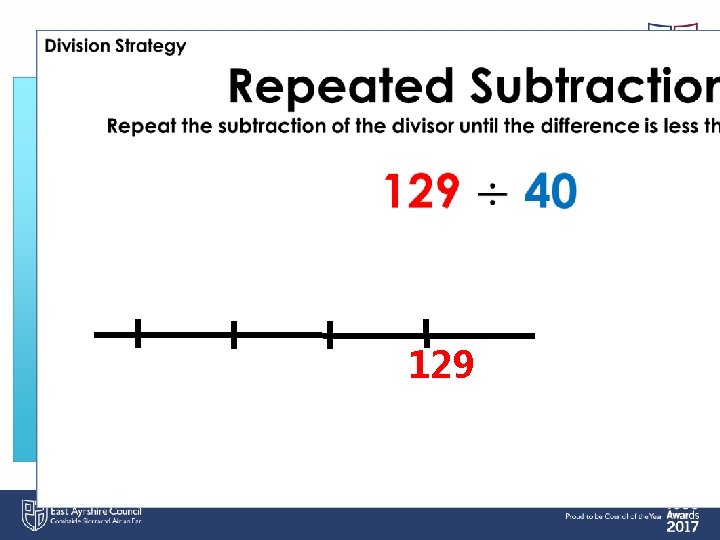
129
129
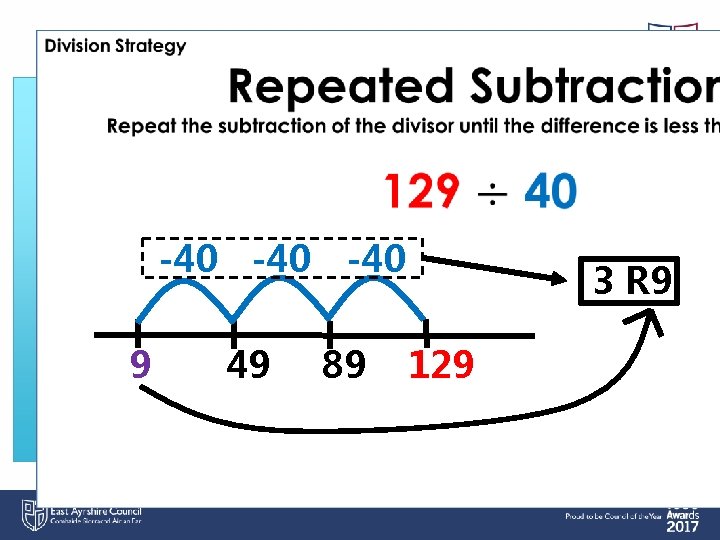
-40 -40 9 49 89 3 R 9 129
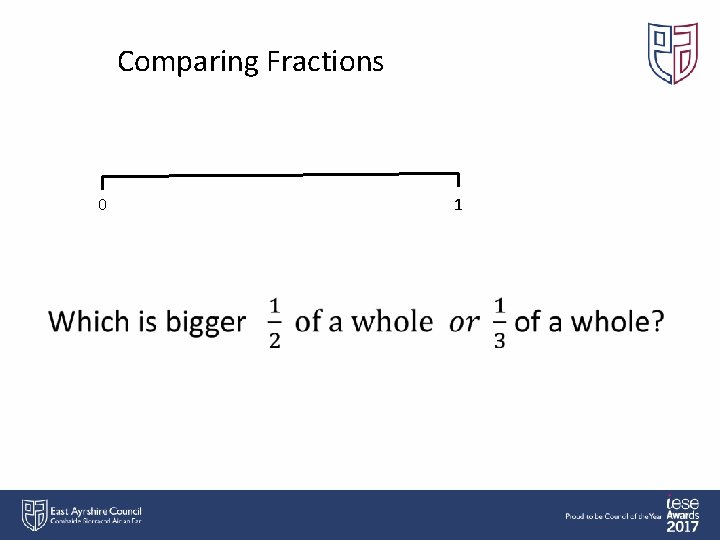
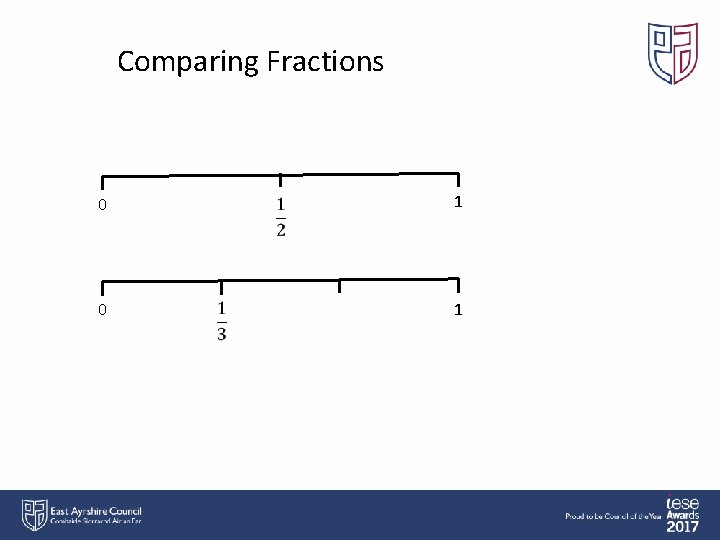
Comparing Fractions 0 1
Comparing Fractions 0 1
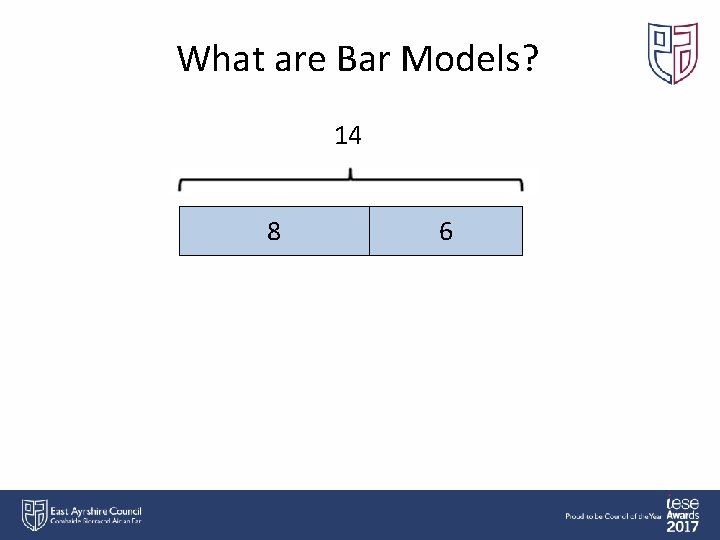
What are Bar Models? 14 8 6
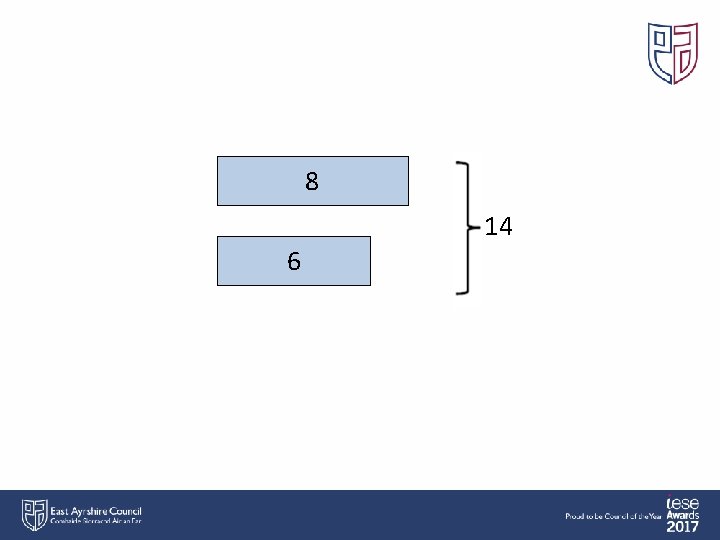
8 14 6
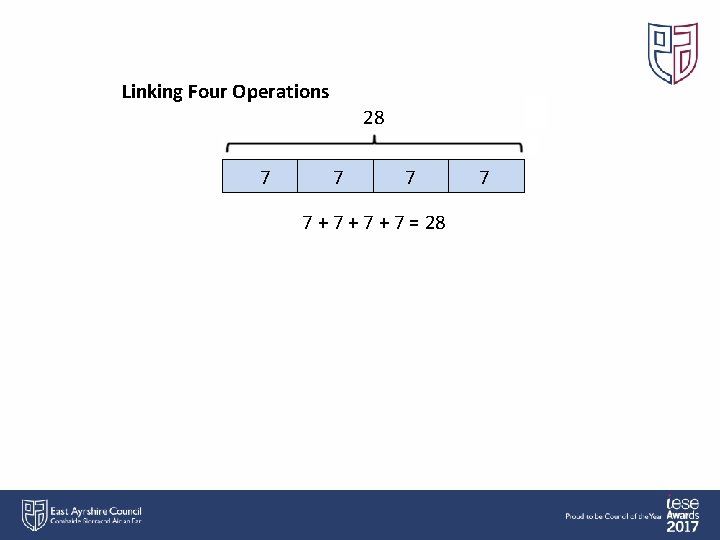
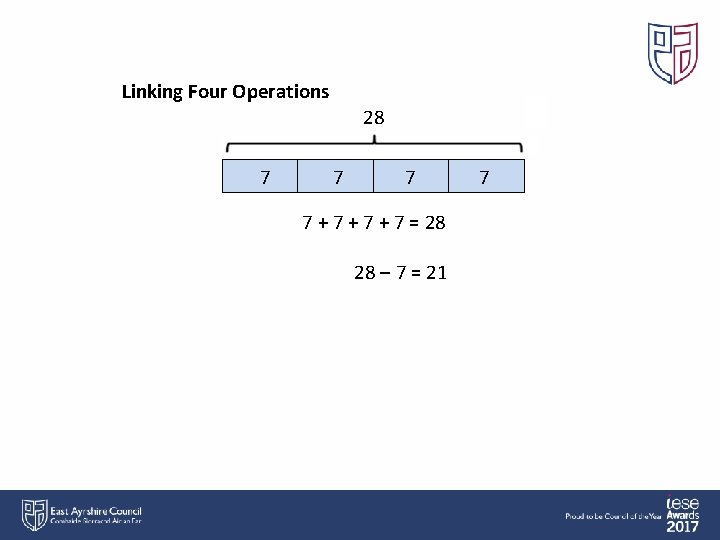
Linking Four Operations 28 7 7 + 7 + 7 = 28 7
Linking Four Operations 28 7 7 + 7 + 7 = 28 28 – 7 = 21 7
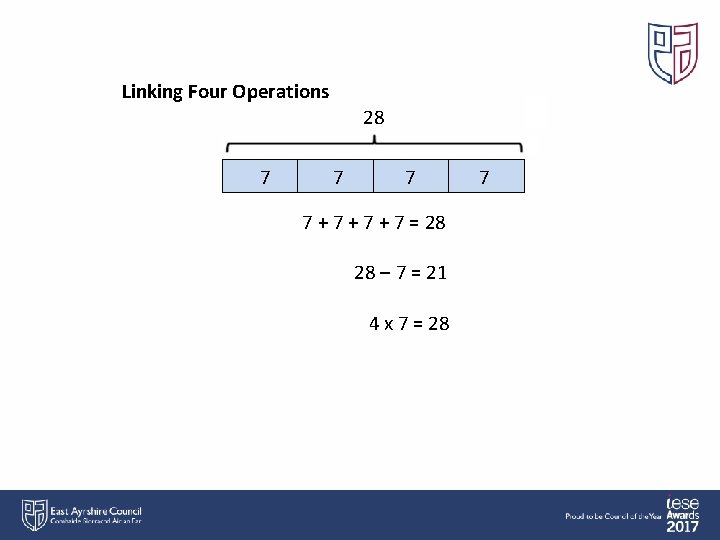
Linking Four Operations 28 7 7 + 7 + 7 = 28 28 – 7 = 21 4 x 7 = 28 7
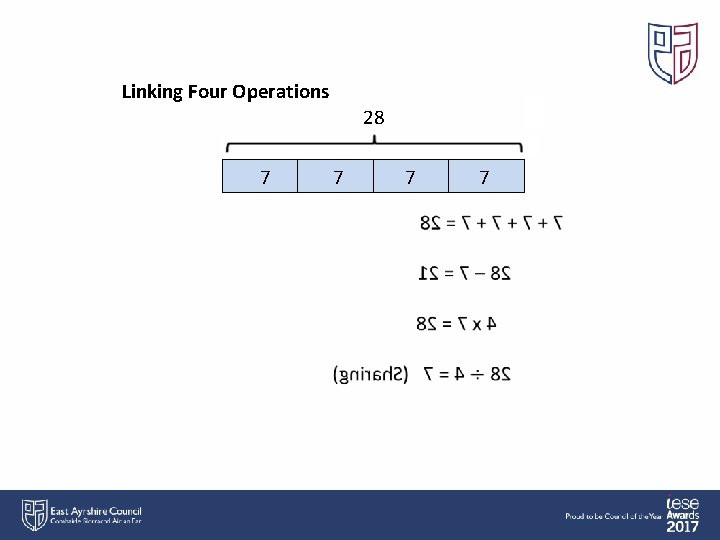
Linking Four Operations 28 7 7
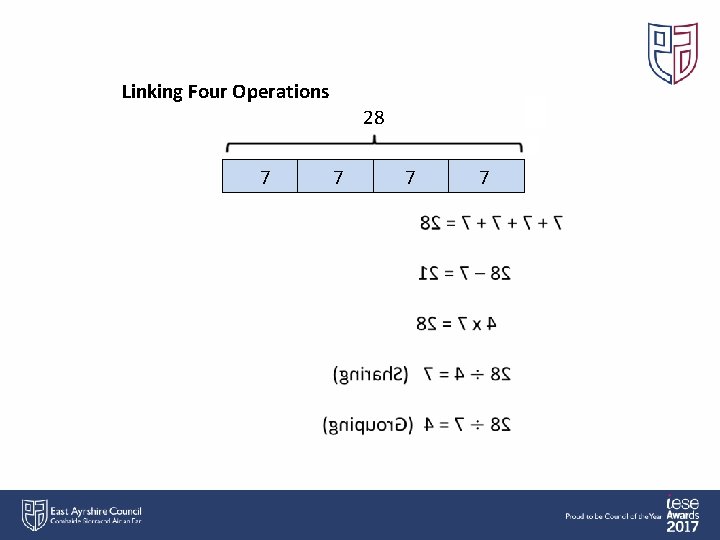
Linking Four Operations 28 7 7
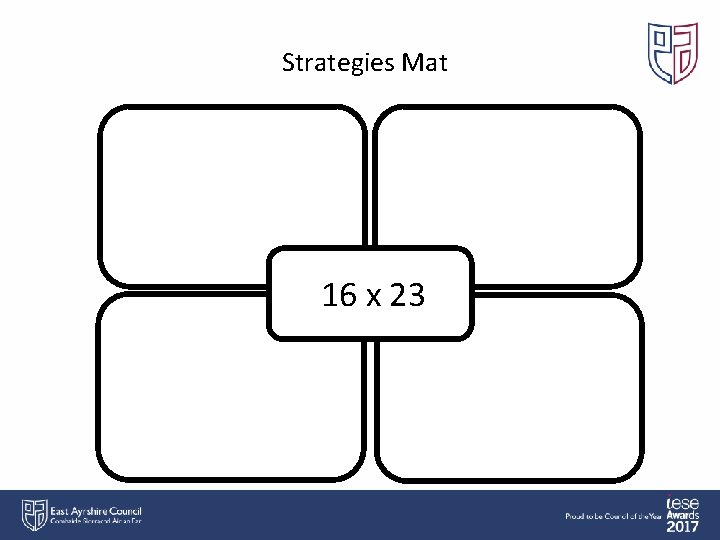
Strategies Mat 16 x 23
https: //gfletchy. com/progression-videos/ https: //www. youcubed. org/