
Scotland Introduccin Introduction Introduction Escocia Pas del Reino
- Slides: 35
Scotland
Introducción (Introduction) Introduction • Escocia: País del Reino Unido de Gran Bretaña e Irlanda del Norte. • (Scotland: Country of the United Kingdom of Great Britain and Northern Ireland. ) Ireland • Edimburgo es la capital de Escocia y principal centro económico y cultural. • (Edinburgh is the capital of Scotland principal economic and cultural center. ) center
El nacimiento del reino escocés (The birth of the Scotland kingdom) • Los 4. 000 años que siguieron a la construcción de monumentos tales como el extraordinario monumento megalítico Calanais Stones en las islas del oeste y el imponente Ring of Brodgar en las islas Orcadas presenciaron el paso de los romanos y la llegada de los escoceses mismos desde Irlanda. En aquel periodo, Escocia misma estaba forjándose una identidad, como prueba el hecho de que Kenneth Mac. Alpin se coronase como rey de los escoceses, lo que marcaría el inicio del reino escocés que abarcaría el periodo comprendido entre la mitad del siglo IX hasta finales del XIII. • 4. 000 years that Calanais Stones followed to the construction of such monuments as the extraordinary megalithic monument in the islands of the west and the investor Ring of Brodgar in the islands Orkneys attended the step of the Romans and the arrival of the Scots themselves from Ireland. In that period, Scotland itself was forging an identity, in proof the fact that Kenneth Mac. Alpin was crowning as king of the Scots, which it would mark the beginning of the Scotch kingdom that would include the period understood between the half of the IX century up to ends of the XIII.
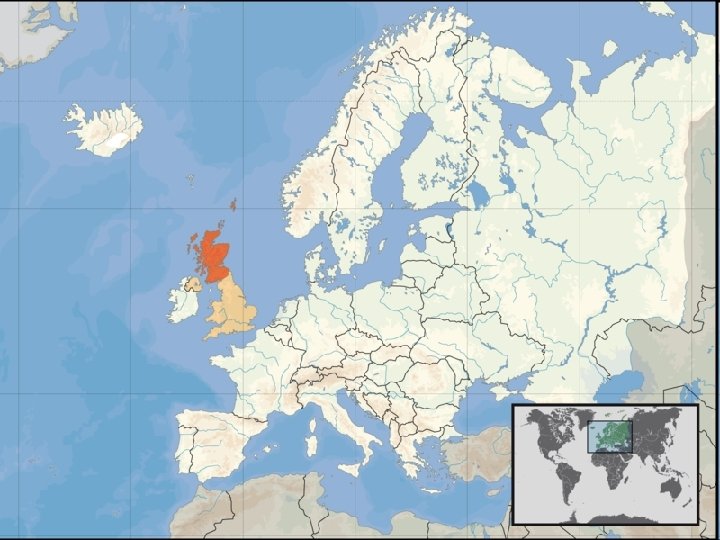
Ubicación geográfica (Geographical location)
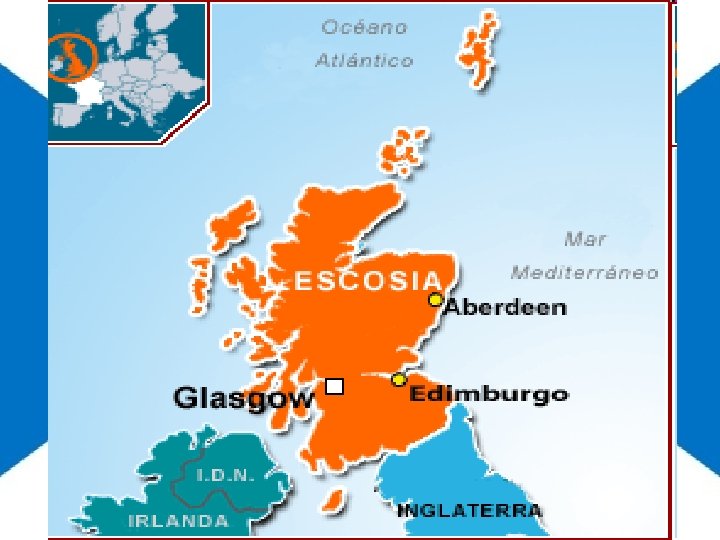
Escocia limita al norte con el océano Atlántico, al este con el mar del Norte, al sureste con Inglaterra, al sur con el entrante Solway Firth y con el mar de Irlanda, y al oeste con el canal del Norte, que lo separa de la isla de Irlanda, y con el océano Atlántico. Scotland borders in the northern part on the Atlantic Ocean, in the eastern part on the sea of the North, to the south-east on England, in the southern part on the next Solway Firth and on the sea of Ireland, and in the western part on the channel of the North, which separates it from the island of Ireland, and on the Atlantic Ocean.
• Escocia tiene 78. 790 km² de superficie, incluidos los territorios insulares, y aproximadamente 1. 692 km² de aguas interiores. • (Scotland has 78. 790 km ² of surface, included the insular territories, and approximately 1. 692 km ² of interior waters. ) waters
Costumbres (Customs) Customs
Matrimonio y familia (Marriage and family) family • Las familias que vivían en las Tierras Altas eran leales al clan, una unidad que unía a los familiares con un ancestro común o algún otro vínculo de lealtad. • (The families that were living in the High Earths were loyal to the clan, a unit that was joining the relatives with a common ancestor or some another link of loyalty. ) loyalty
• Cada clan sigue estando encabezado por un jefe, pero su cargo es principalmente simbólico y está representado por un tartán, un tejido a cuadros propio. • (Every clan continues being headed by a chief, but his post is principally symbolic and is represented by a plaid, a fabric to pictures own. ) own • En las áreas rurales, la familia extensa todavía puede ser importante, pero en las áreas urbanas las familias tienden a ser pequeñas, aunque generalmente permanecen muy unidas. • (In the rural areas, the extensive family still can be important, but in the urban areas the families tend to be small, though generally they remain very united. ) united
la comida (The food) food • La cocina escocesa se caracteriza por la simplicidad, empleando los productos naturales autóctonos (lácteos, carne, pescado, frutas y verduras) y renunciando a las especias y hierbas. • (The Scotch kitchen(cuisine) is characterized by the simplicity, using the natural autochthonous products (lacteal, meat, fish, fruits and vegetables) and resigning the spices and grasses(herbs). ) grasses(herbs
• Algunos de los platos tradicionales escoceses son el Scotch broth o "caldo escocés", el porridge o papilla de avena es el desayuno tradicional de escocia. • (Some of the traditional Scotch plates are the Scotch broth or " Scotch broth ", the porridge or pap of oats is the traditional breakfast of escocia. ) escocia • También el haggis, considerado el "plato nacional escocés", pudo surgir originalmente al transportar carne en una tripa de cerdo o cordero. El haggis es similar a una morcilla, aunque con carne de cordero o incluso de ciervo. • (Also the haggis, considered the " national Scotch plate ", could arise originally on having transported meat in a gut of pork or lamb. The haggis is similar to a pudding, though with lamb or even of deer. ) deer
Hábitos sociales (Social habits) habits • Es costumbre presentarse con un apretón de manos, y son habituales saludos ingleses como Hello (Hola) y How do you do? (¿Cómo está usted? ). • (It is a custom to appear with a hand squeeze, and they are habitual English regards as Hello (hola) and How do you do? (Como esta usted? ). ) • En Escocia, las visitas a las casas suelen concertarse previamente. Sólo los amigos íntimos y los familiares pasan a verse sin anunciarse. • (In Scotland, the visits to the houses are in the habit of reaching agreement before. Only the close friends and the relatives happen (pass) to turn without promising to be. ) be
Deportes en Escocia (Sports in Scotland) Scotland
El fútbol (The football) football • El deporte más popular en Escocia es el fútbol. • (The most popular sport in Scotland is the football. ) • De hecho la Copa de Escocia es el trofeo nacional de fútbol más antiguo del mundo. ) • (In fact the Glass of Scotland is the most ancient national trophy of football of the world. ) world • Los equipos de fútbol más importantes de Escocia son el Celtic Football Club y el Rangers Football Club, ambos de Glasgow • (The most important soccer teams of Scotland are the Celtic Football Club and the Rangers Football Club, both of Glasgow )
El rugby (The rugby) rugby • El rugby es también muy popular en Escocia: la Selección de rugby de Escocia (que disputa partidos como local en el estadio de Murrayfield) participa en el Torneo de las Seis Naciones desde la fundación, y lo ha ganado en 14 ocasiones. • The rugby is also very popular in Scotland: the Selection of rugby of Scotland (that disputes parties (games) as place in Murrayfield's stadium) takes part in the Tilt of Six Nations from the foundation, and has gained (earned) it in 14 occasions.
El golf (The golf) golf • El golf, fue inventado en Escocia en el siglo XIV o XV • (The golf, it was invented in Scotland in the XIV century or the XV) XV • St. Andrews, en el condado de Fife, es internacionalmente conocido como la "cuna del golf" y para muchos golfistas el Old Course de St Andrews, considerado como el campo de golf más antiguo del mundo, hay muchos otros campos de golf famosos en Escocia, incluyendo los de Carnoustie, Gleneagles, Muirfield o Royal Troon. • (St. Andrews, in Fife's county, is internationally an acquaintance as the " cradle of the golf " and for many golfers St Andrews's Old Course, considered as the most ancient golf course of the world, there are many other famous golf courses in Scotland, including those of Carnoustie, Gleneagles, Muirfield or Royal Troon. ) Troon
Los deportes de invierno son (The winter sports are) are • El curling (en el que dos equipos de cuatro componentes lanzan "piedras" de granito sobre una pista de hielo hasta alcanzar un objetivo) • The curling (in which two equipments (teams) of four components throw (launch) "stones" of granite on a track of ice up to reaching an aim (lens))
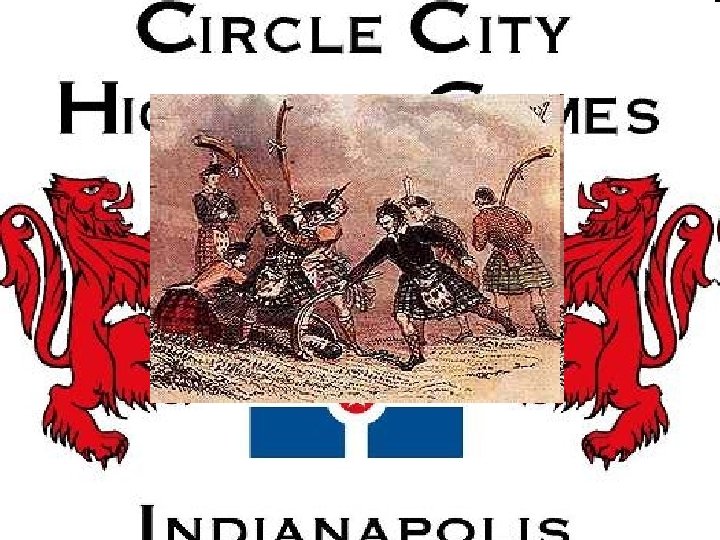
• Los Juegos de las Tierras Altas se celebran en muchas partes de las Tierras Altas durante el verano. Son una clase de competiciones deportivas tradicionales, que incluyen el lanzamiento del caber (un tronco apenas desbastado) y el lanzamiento de martillo (una pesada bola de metal atada a una cadena). Los participantes suelen llevar trajes típicos y los músicos tocan la tradicional gaita. • The Games of the High Earths are celebrated in many parts of the High Earths during the summer. They are a class of sports traditional competitions, which include the launch of to fit (a trunk you upset refined) and the launch of hammer (a heavy ball of metal tied to a chain). The participants are in the habit of taking typical suits and the musicians have the traditional gaita or bigpipe.
• Otros elementos distintivos del deporte escocés son los Highland Games o "juegos de la montaña", así como algunos deportes celtas, como el curling o el shinty • Other distinctive elements of the Scotch sport are the Highland Games or " games of the mountain ", as well as some Celtic sports, as the curling or the shinty
• shinty Highland Games
Dinero (Money) Money • La libra escocesa fue la moneda de curso legal en el Reino de Escocia antes de su unión política y monetaria con el Reino de Inglaterra en 1707. Fue introducida por David I siguiendo el modelo monetario inglés y francés, por lo que cada libra escocesa se dividía en 20 chelines y cada uno de estos chelines, en 12 peniques. Más tarde la moneda escocesa fue devaluada en relación a la libra esterlina y, en épocas de Jacobo III, la libra esterlina tenía un valor de cuatro libras escocesas. • The pund scots was the legal tender in the Kingdom of Scotland before his political and monetary union with the Kingdom of England in 1707. It was introduced by David I following the monetary model Englishman and Frenchman, for what every Scotch pound was dividing in 20 shillings and each of these shillings, in 12 pences. Later the Scotch currency was devaluated in relation to the pound sterling and, in epochs of Jacobo III, the pound sterling had a value of four Scotch pounds
Fiestas (tradiciones) Holidays (traditions) • Traditionally, in Hogmanay the children go at the edge of the neighbors to sing and to shout Hogmanay! And to receive cakes of oats in exchange. • Tradicionalmente, en Hogmanay los niños van a la puerta de los vecinos para cantar y gritar Hogmanay! y recibir tortas de avena a cambio.
• Otra tradición ligada a la Nochevieja es el first-footer, o primera persona que cruza el umbral de una casa después de la medianoche. Si esa persona tiene el pelo moreno y lleva regalos, la familia tendrá buena suerte durante el resto del año. • Another tradition tied to the New Year's Eve is the first-footer, or the first person who crosses the threshold of a house after the midnight. If this person has the brown hair and takes gifts, the family will have good luck during the rest of the year.
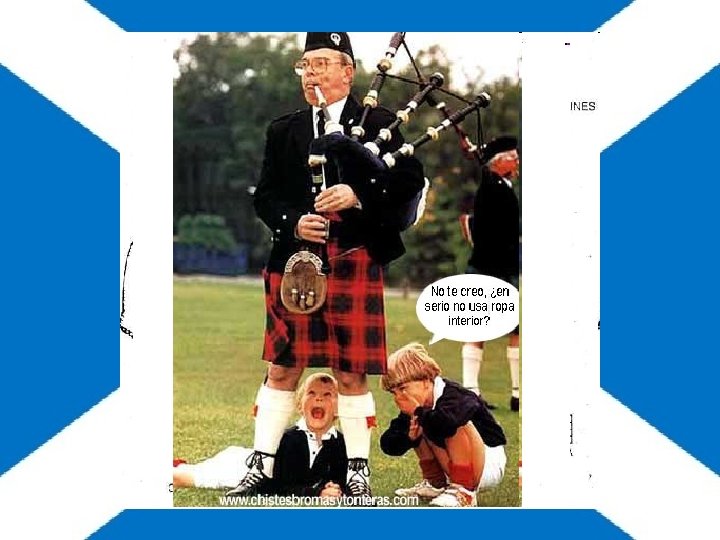
La Música The Music • Ocupa un importante lugar en la cultura escocesa. El instrumento tradicional escocés más destacable es la gaita, en particular la gaita de las Highlands, un instrumento de viento consistente en uno o más tubos sonoros alimentados por una reserva de aire contenida en una bolsa. • It occupies an important place in the Scotch culture. The most prominent traditional Scotch instrument is the bagpipe (gaita) especially the bagpipe of the Highlands, an instrument of wind consisting of one or more sonorous pipes fed by an air reservation contained in a bag.
Gaita bigpipe
• El Clàrsach o arpa celta, los violines y el acordeón también son instrumentos tradicionales escoceses, especialmente los dos últimos, que forman parte de una típica banda para danzas tradicionales escocesas. • The Clàrsach or Celtic harp, the violins and the acordeón also are traditional Scotch instruments, specially both last ones, which form a part of a typical band for traditional Scotch dances.
Bebidas (licores) Drunk (liquors) • La bebida internacionalmente más reconocida de Escocia es el whisky, el origen del whisky en Escocia parece remontarse al siglo IV o V, cuando los monjes del continente trajeron consigo la destilación. Durante siglos la producción de whisky escocés se mantuvo estable, pero su explosión definitiva se produjo en el siglo XIX. • The drink internationally more recognized of Scotland is the whiskey, the origin of the whiskey in Scotland seems to go back to the 4 th century or V, when the monks of the continent brought I obtain the distillation. For centuries the production of Scotch whiskey was kept stable, but his definitive explosion took place in the XIX century.
• También la cerveza es una bebida popular entre los escoceses: las ales de Escocia se caracterizan por su color oscuro y su sabor a malta. • Also the beer is a popular drink between the Scots: the ales of Scotland are characterized by his dark color and his flavor to malt. • Entre las bebidas no alcohólicas, la más característica de Escocia es Irn-Bru, refresco que compite en popularidad con la Coca-Cola. • Between the not alcoholic drinks, the most typical of Scotland it is Irn-Bru, refreshment that competes in popularity with the Coca Cola.
Lenguas Languages • Las lenguas habladas en la actualidad o en el pasado en Escocia se dividen en dos familias: lenguas celtas y lenguas germánicas. La única lengua celta que todavía se conserva en Escocia es el gaélico escocés, Además, en la Escocia actual se hablan dos lenguas germánicas: el escocés y el inglés de Escocia. • The languages spoken at present or in the past in Scotland they divide in two families: Celtic languages and Germanic languages. The only Celtic language that still remains in Scotland is the Scotch Gael, In addition, in the current Scotland two Germanic languages are spoken: the Scot and the English of Scotland
• El escocés (en inglés, Scots o Lowland Scots) se habla en el sur de Escocia, en la zona conocida como Lowlands. Proviene de una variante septentrional denominado inglés medio conocida como "escocés antiguo". Según el censo de 2001, aproximadamente un 30% de la población se consideraba hablante fluido de scots. El inglés de Escocia, por su parte, es el dialecto estándar del idioma inglés hablado en Escocia. • The Scot (in English, Scots or Lowland Scots) speaks himself in the south of Scotland, in the zone known as Lowlands. It comes from a north variant of the average English called known as " ancient Scot ". According to the census of 2001, approximately 30 % of the population he was considered to be a fluid speaker of scots. The Englishman of Scotland, for your part, is the standard dialect of the language English spoken in Scotland.
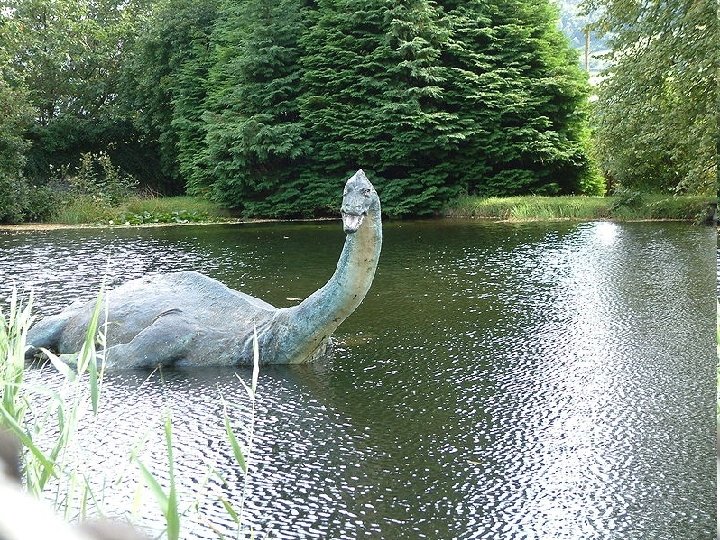
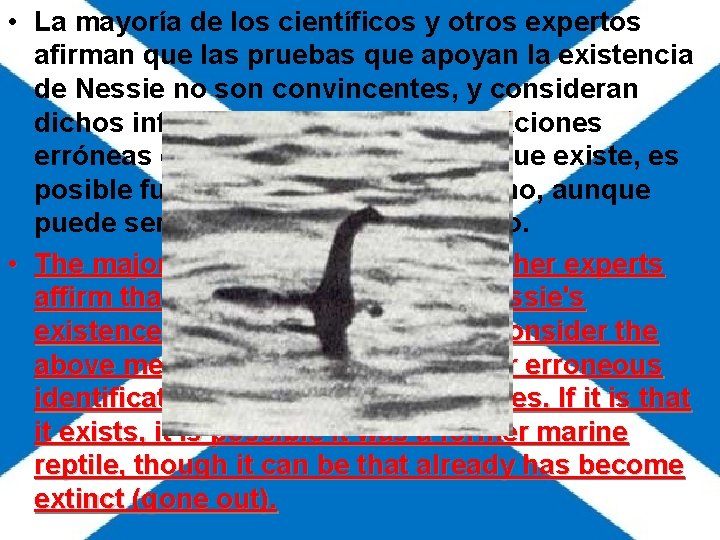
Leyendas Legends • El monstruo del lago Ness, llamado Nessie, es el nombre de una criatura legendaria que se dice habita en el lago Ness, un profundo lago de agua dulce (conocido en Escocia como Loch Ness) cerca de la ciudad de Inverness • The monster of the lake Ness, called Nessie, is the name of a legendary creature that is said Ness lives in the lake, a deep lake of sweet water (acquaintance in Scotland like Loch Ness) near Inverness's city
• La mayoría de los científicos y otros expertos afirman que las pruebas que apoyan la existencia de Nessie no son convincentes, y consideran dichos informes fraudes o identificaciones erróneas de criaturas reales. Si es que existe, es posible fuera un antiguo reptil marino, aunque puede ser que ya se haya extinguido. • The majority of the scientists and other experts affirm that the tests that support Nessie's existence are not convincing, and consider the above mentioned formless frauds or erroneous identifications of royal (real) creatures. If it is that it exists, it is possible it was a former marine reptile, though it can be that already has become extinct (gone out).
Bibliografía Bibliography • http: //sucesosparanormales. files. wordp ress. com/2009/04/fotografia-falsa. jpg • es. wikipedia. org/wiki/Escocia • international. visitscotland. com/es/ • www. geocities. com/jesplugues • www. elalmanaque. com/TURISMO/esco cia