
SCOPE VALIDATION BRAD ELDRIDGE KYTC The farther back
SCOPE VALIDATION BRAD ELDRIDGE, KYTC “The farther back you can look, the farther forward you are likely to see. ” -Winston Churchill
Project Scoping Involves getting information to start a project, and identifying the features the product would have in order to meet its stakeholder’s requirements. A series of project-focused activities that develop key design parameters and other project requirements.

Pitfall of Inadequate Scope Over come negative impact of scope creep and scope changes
Benefits of Project Scoping Statistical Evidence indicates that earlier and more detailed scoping efforts can reduce total design and construction cost by as much as 20% and shorten total design and construction schedule by as much as 39%. (NCHRP Report 821 - Effective Project Scoping)
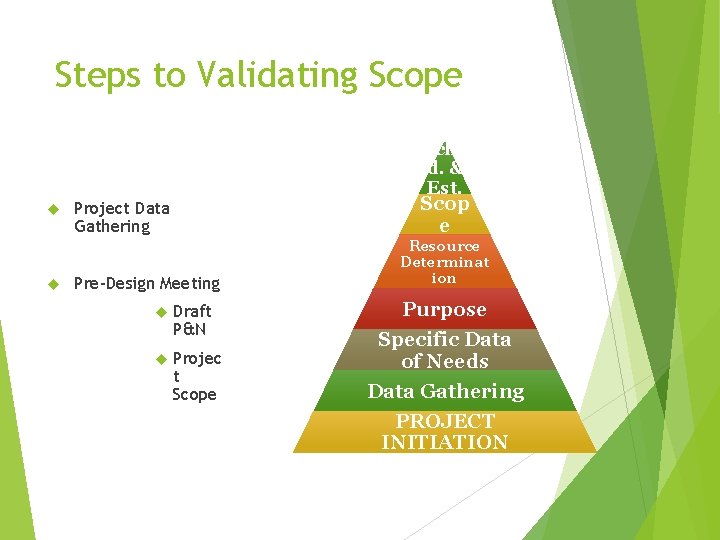
Steps to Validating Scope Sche d. & Est. Scop e Project Data Gathering Pre-Design Meeting Draft P&N Projec t Scope Resource Determinat ion Purpose Specific Data of Needs Data Gathering PROJECT INITIATION
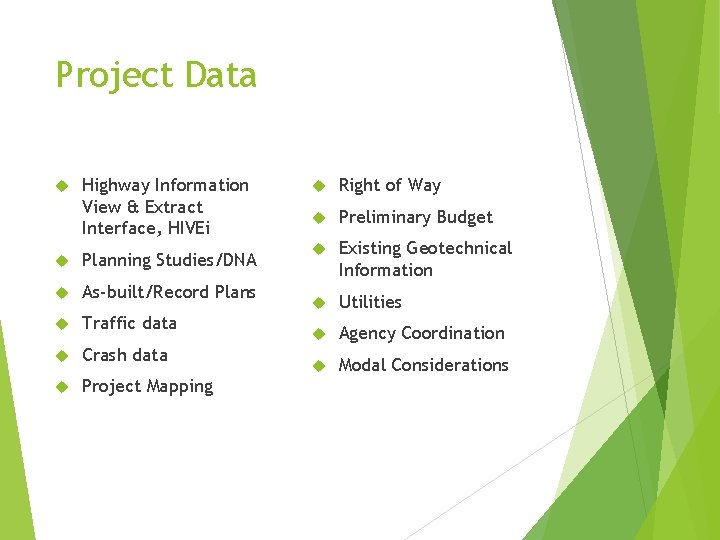
Project Data Highway Information View & Extract Interface, HIVEi Planning Studies/DNA As-built/Record Plans Traffic data Crash data Project Mapping Right of Way Preliminary Budget Existing Geotechnical Information Utilities Agency Coordination Modal Considerations
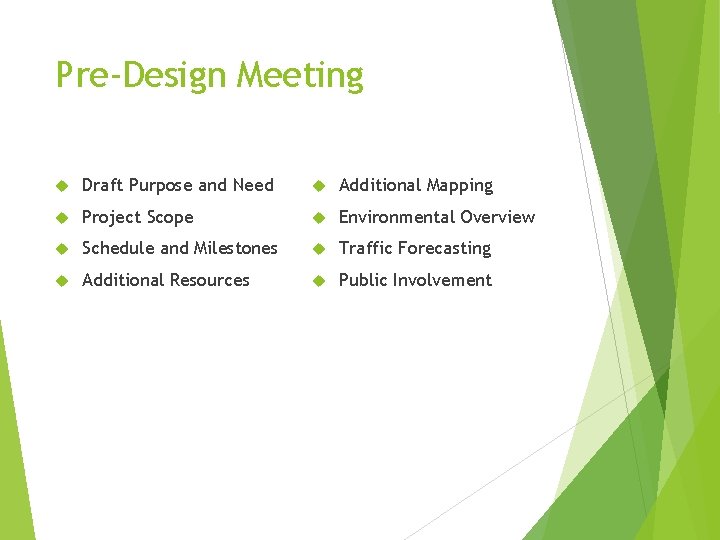
Pre-Design Meeting Draft Purpose and Need Additional Mapping Project Scope Environmental Overview Schedule and Milestones Traffic Forecasting Additional Resources Public Involvement
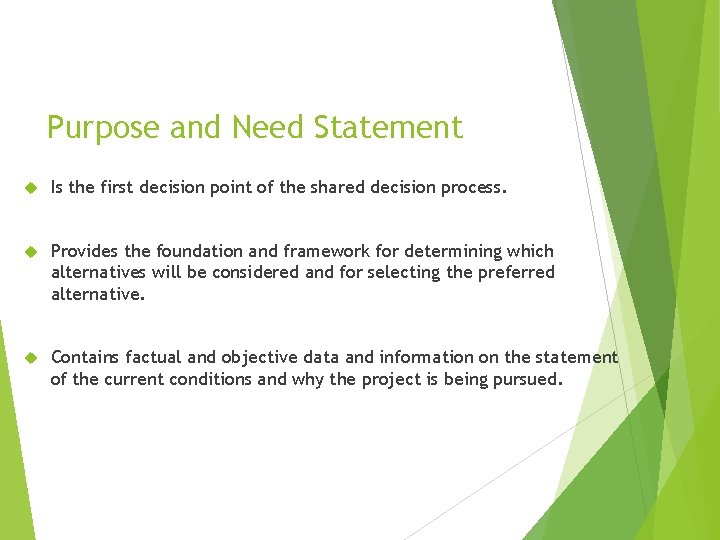
Purpose and Need Statement Is the first decision point of the shared decision process. Provides the foundation and framework for determining which alternatives will be considered and for selecting the preferred alternative. Contains factual and objective data and information on the statement of the current conditions and why the project is being pursued.
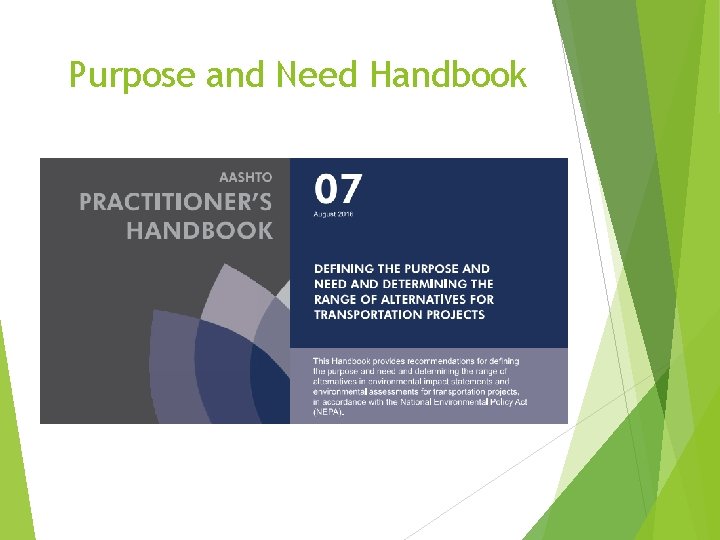
Purpose and Need Handbook
Developing a Project Scope Type of Project Proposed Access Control Project Description Possible Funding Types Draft Purpose and Need Roadway Characteristics Potential Environmental Actions Potential Options to Consider Right of Way Requirements Number of Drainage Structures Anticipated Utility Requirements Design Criteria

Results of Scope Validation Draft purpose and need General concept of what project should accomplish (and will not) Potential impacts and associated risks Baseline scope of work, cost, and schedule
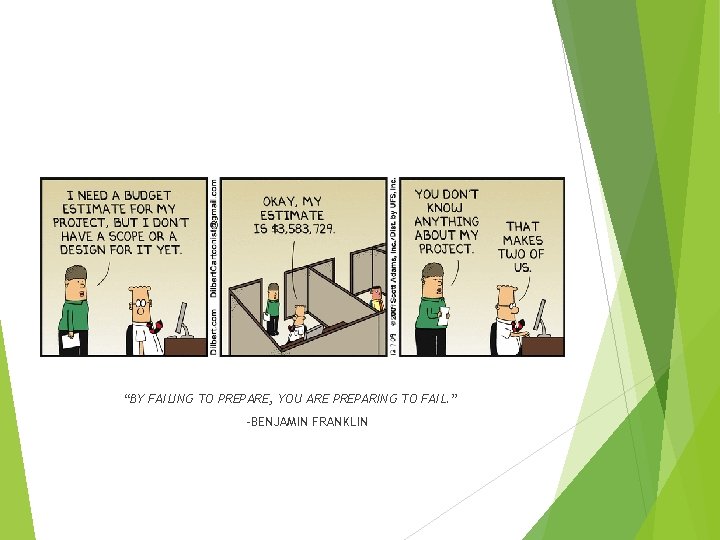
“BY FAILING TO PREPARE, YOU ARE PREPARING TO FAIL. ” -BENJAMIN FRANKLIN

Thank You
- Slides: 13