
SCOPE AND IMPORTANCE OF ENVIRONMENT ENVIRONMENTAL HYGIENE 10182021
- Slides: 20
“SCOPE AND IMPORTANCE OF ENVIRONMENT & ENVIRONMENTAL HYGIENE” 10/18/2021 1
Environment: It is the sum total of all external conditions and influences affecting the life and development of any living being. Hygiene: is the science of health encompassing everything that contributes to a healthful living. Environmental hygiene: The branch of public health that is concerned with the control of all those factors in man’s surrounding or physical environment which may have deleterious effect on human health and well being. It should not only aim at preserving the health but also improving it. or All those aspects of public health that are determined by physical, chemical, biological, social and psychological factors in the environment. It also includes theories and practices of assessing, correcting, controlling and preventing the factors present in the environment that can potentially affect the health of present and future generations. 10/18/2021 2
OBJECTIVES • Prevention and control of biological hazards. • Prevention and control of chemical hazards. • Prevention and control of physical hazards. • Prevention and control of sociological and psychological hazards. 10/18/2021 3
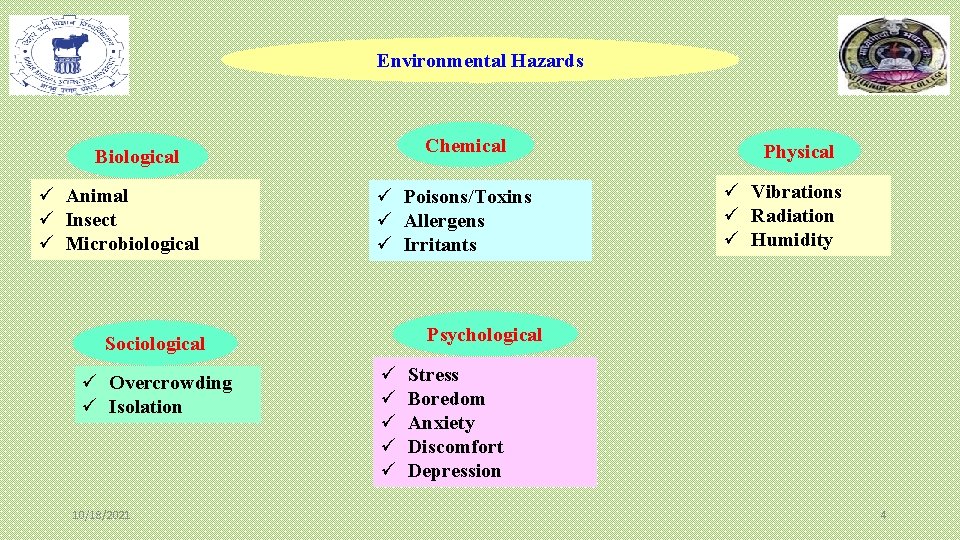
Environmental Hazards Chemical Biological ü Animal ü Insect ü Microbiological ü Poisons/Toxins ü Allergens ü Irritants 10/18/2021 ü Vibrations ü Radiation ü Humidity Psychological Sociological ü Overcrowding ü Isolation Physical ü ü ü Stress Boredom Anxiety Discomfort Depression 4
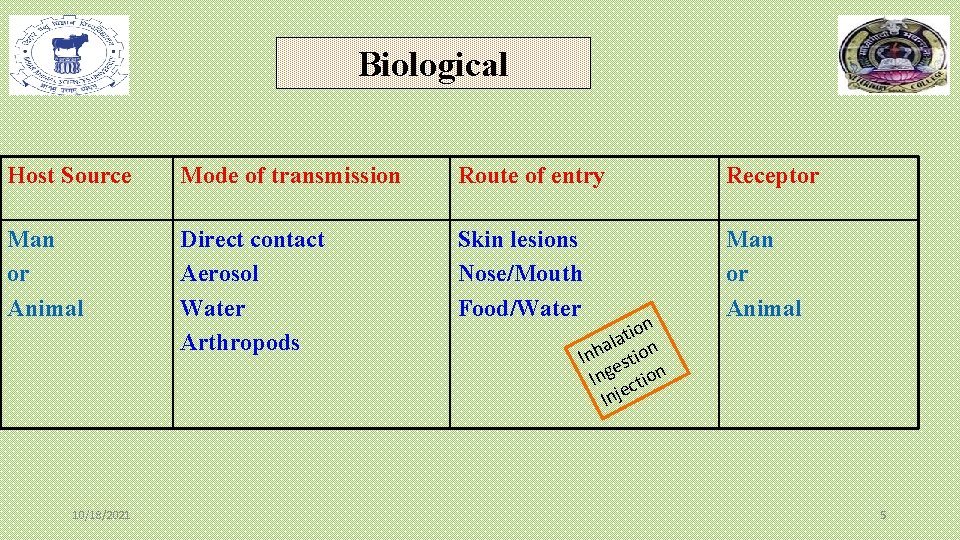
Biological Host Source Mode of transmission Route of entry Receptor Man or Animal Direct contact Aerosol Water Arthropods Skin lesions Nose/Mouth Food/Water Man or Animal 10/18/2021 n o i t la n a h In estio Ing ction Inje 5
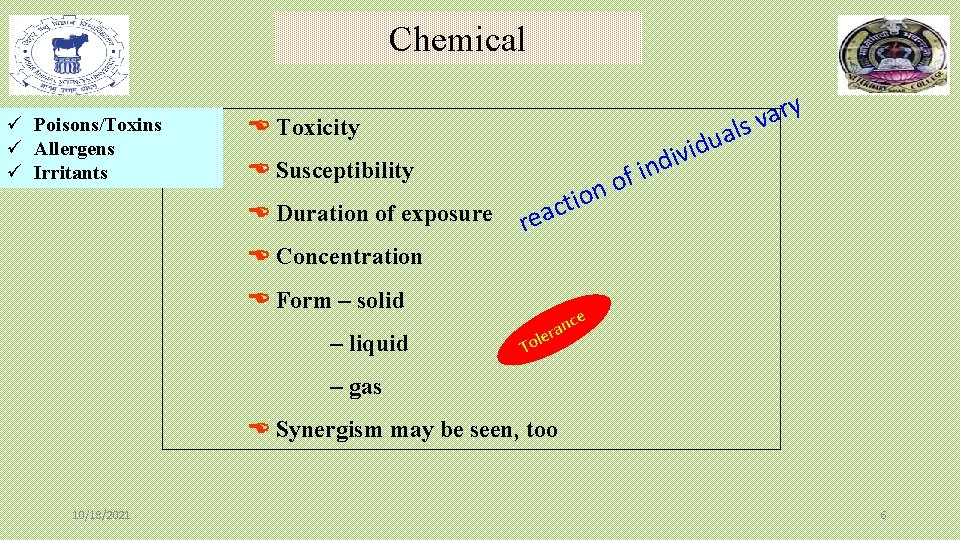
Chemical ü Poisons/Toxins ü Allergens ü Irritants l a u d i v i nd Toxicity Susceptibility Duration of exposure y r a sv fi o n o i t c ea r Concentration Form – solid – liquid e To nc a r le – gas Synergism may be seen, too 10/18/2021 6
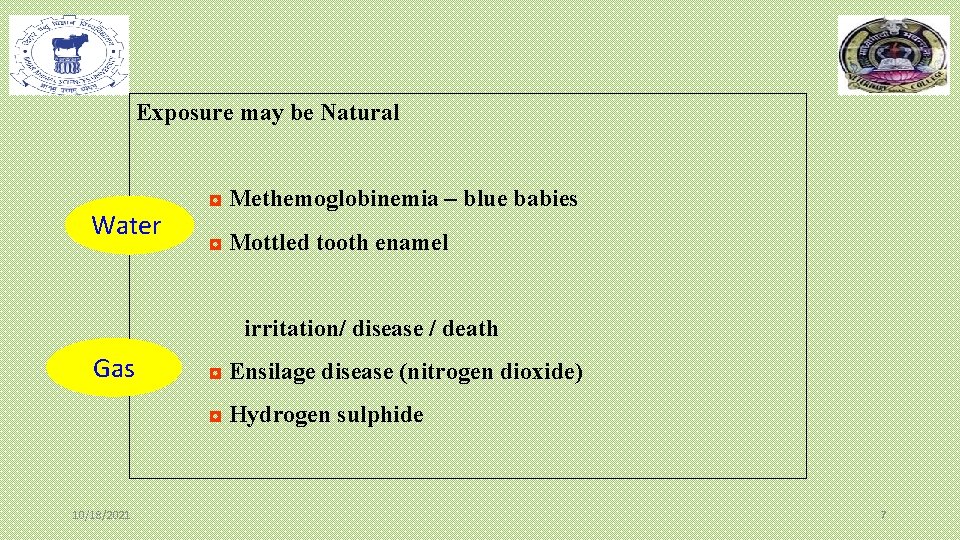
Exposure may be Natural Water ◘ Methemoglobinemia – blue babies ◘ Mottled tooth enamel irritation/ disease / death Gas ◘ Ensilage disease (nitrogen dioxide) ◘ Hydrogen sulphide 10/18/2021 7
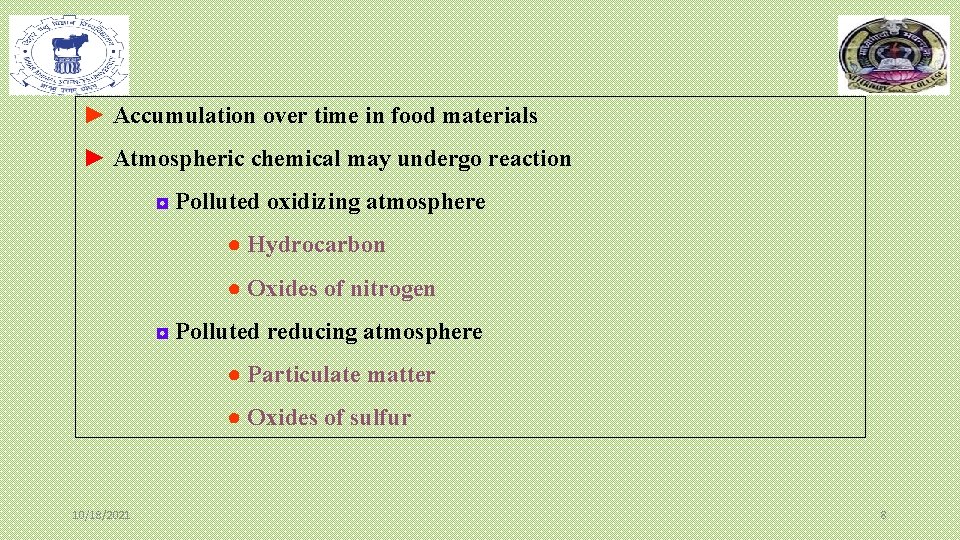
► Accumulation over time in food materials ► Atmospheric chemical may undergo reaction ◘ Polluted oxidizing atmosphere ● Hydrocarbon ● Oxides of nitrogen ◘ Polluted reducing atmosphere ● Particulate matter ● Oxides of sulfur 10/18/2021 8
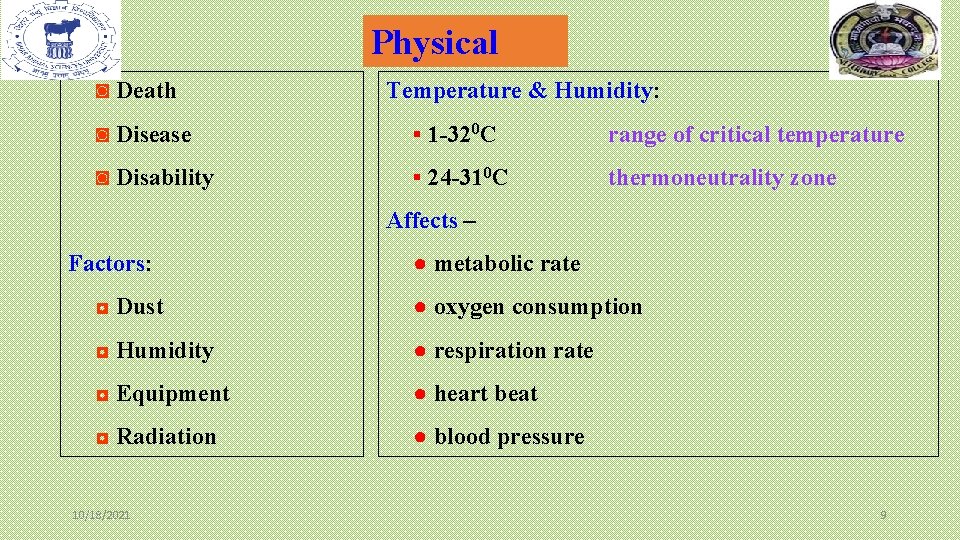
Physical ◙ Death Temperature & Humidity: ◙ Disease ▪ 1 -320 C range of critical temperature ◙ Disability ▪ 24 -310 C thermoneutrality zone Affects – Factors: ● metabolic rate ◘ Dust ● oxygen consumption ◘ Humidity ● respiration rate ◘ Equipment ● heart beat ◘ Radiation ● blood pressure 10/18/2021 9
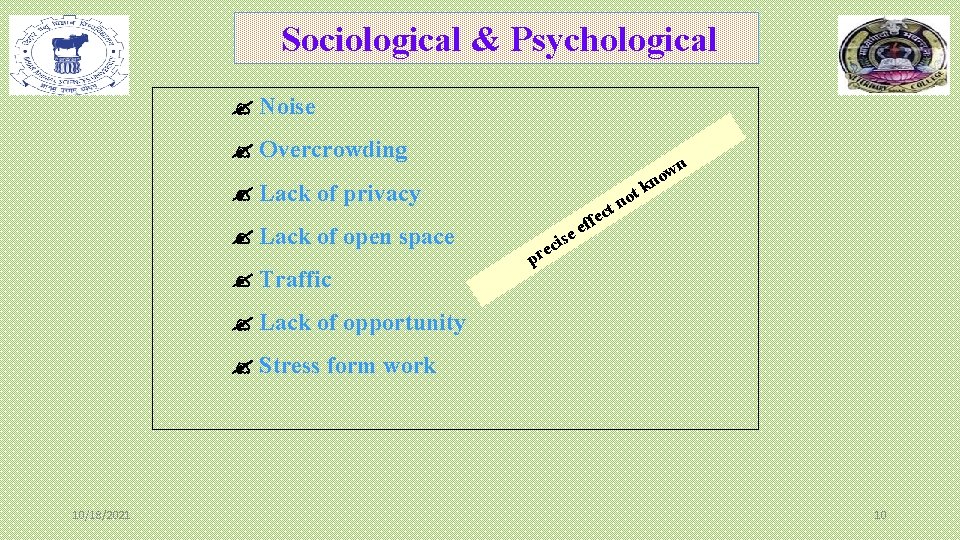
Sociological & Psychological Noise Overcrowding Lack of privacy Lack of open space Traffic se i c e r ct e f ef tk o n wn o n p Lack of opportunity Stress form work 10/18/2021 10
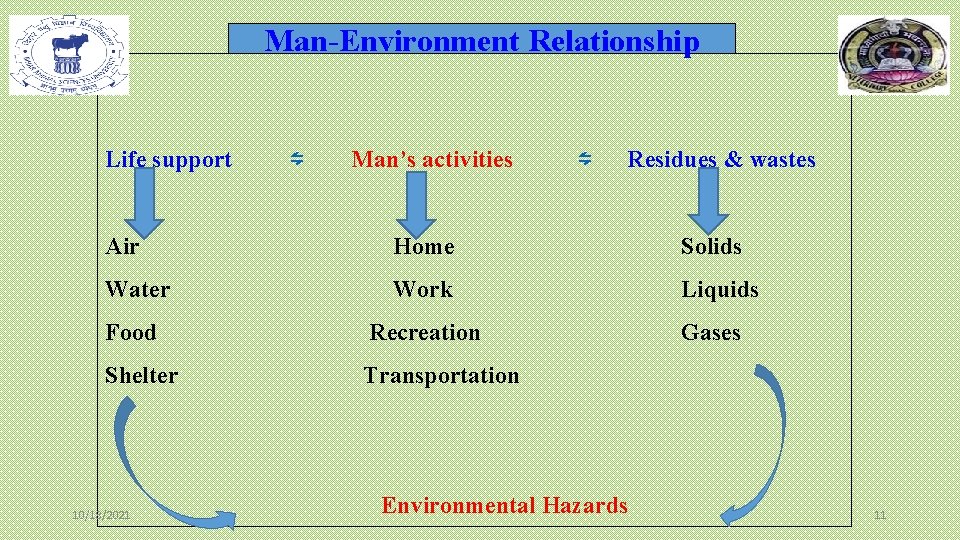
Man-Environment Relationship Life support ⇋ Man’s activities ⇋ Residues & wastes Air Home Solids Water Work Liquids Food Recreation Shelter Transportation 10/18/2021 Environmental Hazards Gases 11
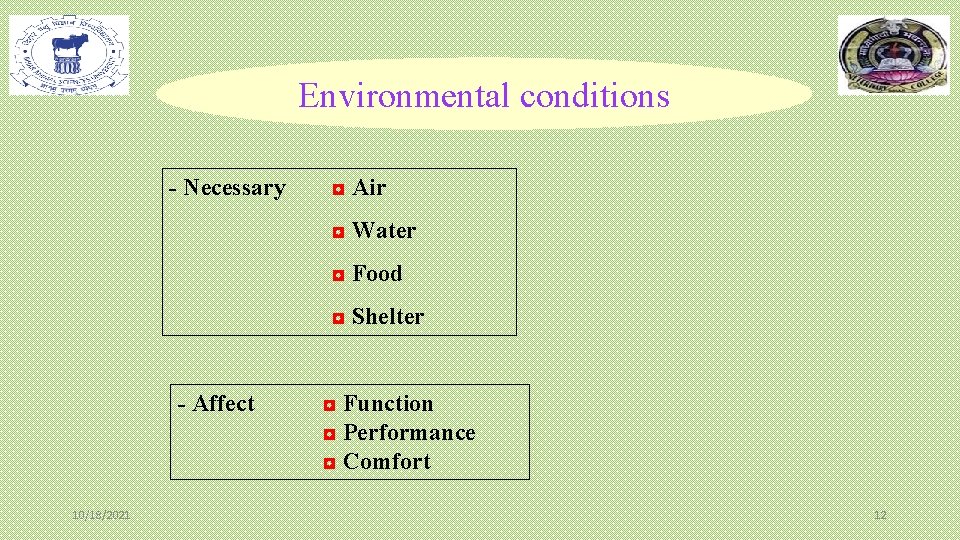
Environmental conditions - Necessary ◘ Air ◘ Water ◘ Food ◘ Shelter - Affect 10/18/2021 ◘ Function ◘ Performance ◘ Comfort 12
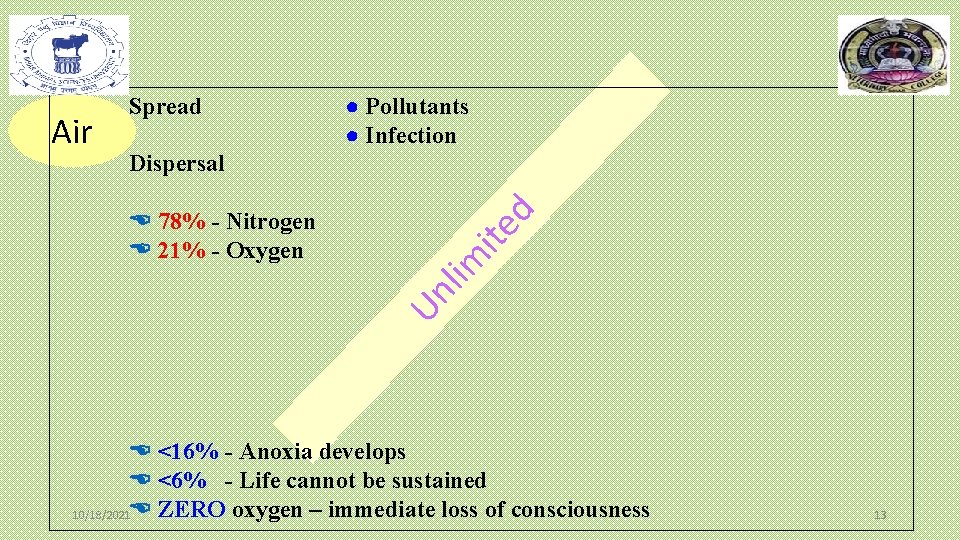
● Pollutants ● Infection ite Un 78% - Nitrogen 21% - Oxygen d Dispersal lim Air Spread <16% - Anoxia develops <6% - Life cannot be sustained 10/18/2021 ZERO oxygen – immediate loss of consciousness 13
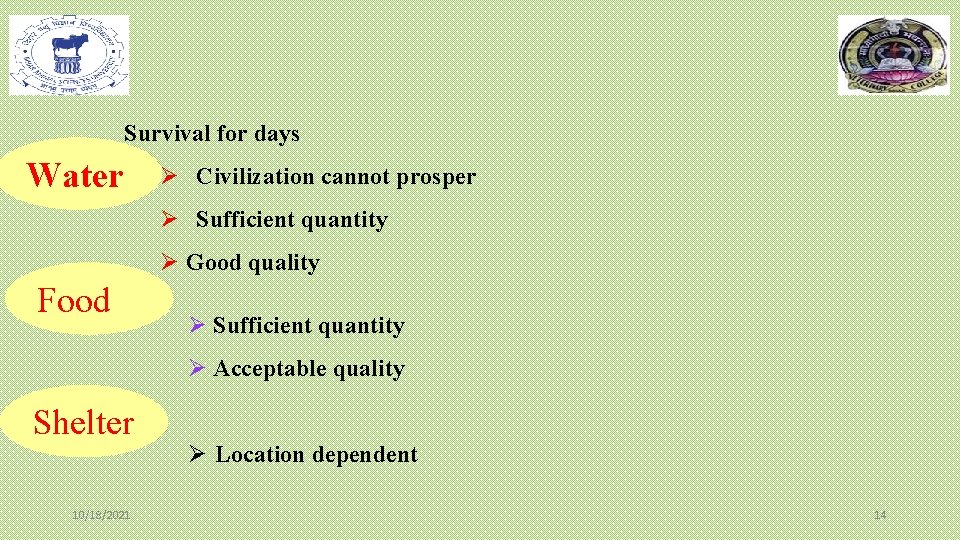
Survival for days Water Ø Civilization cannot prosper Ø Sufficient quantity Ø Good quality Food Ø Sufficient quantity Ø Acceptable quality Shelter 10/18/2021 Ø Location dependent 14
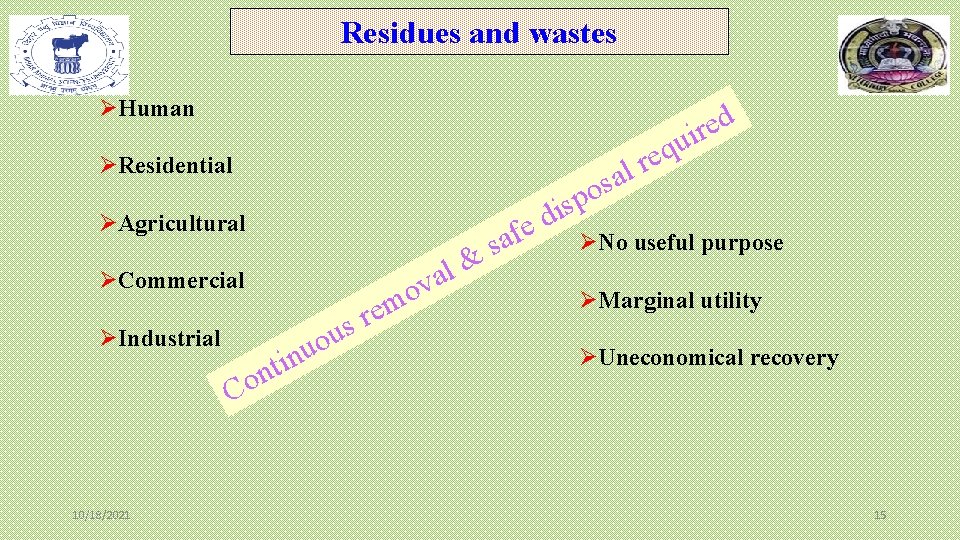
Residues and wastes ØHuman d e r ui q e r al ØResidential s o p s i d e f ØAgricultural l a v o m e r s ØCommercial ØIndustrial C i t n o 10/18/2021 u o nu a s & ØNo useful purpose ØMarginal utility ØUneconomical recovery 15
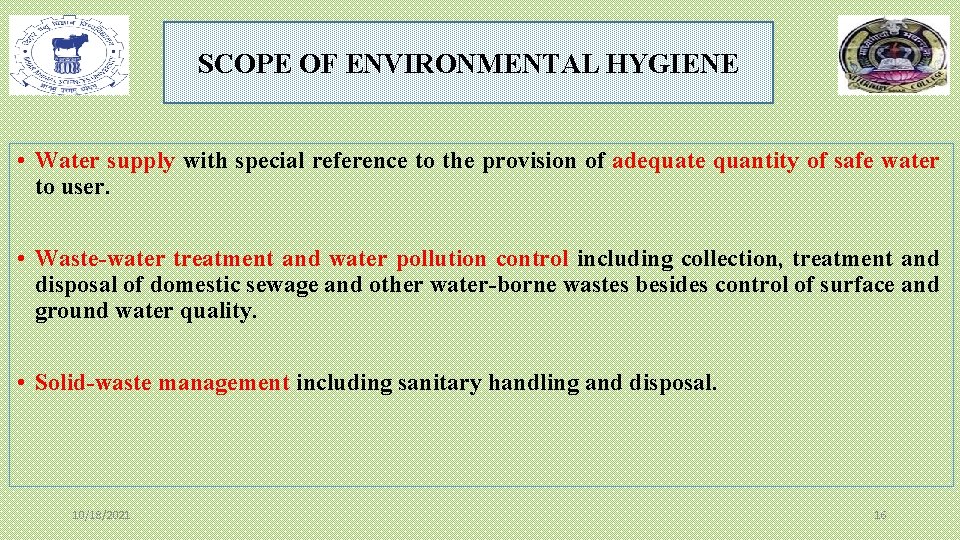
SCOPE OF ENVIRONMENTAL HYGIENE • Water supply with special reference to the provision of adequate quantity of safe water to user. • Waste-water treatment and water pollution control including collection, treatment and disposal of domestic sewage and other water-borne wastes besides control of surface and ground water quality. • Solid-waste management including sanitary handling and disposal. 10/18/2021 16
• Vector control. • Prevention and control of soil pollution by human excreta and substances detrimental to human, animal and plant life. • Food hygiene including milk hygiene. • Air pollution control. • Radiation pollution control. • Noise pollution control. 10/18/2021 17
• Occupational health particularly the control of physical, chemical and biological hazards. • Housing and its immediate environment with particular reference to the public health aspects of residential, public and institutional buildings. • Urban and regional planning. • Environmental health aspects of air, sea or land transport. • Accident prevention. 10/18/2021 18
• Public recreation and tourism particularly environmental health aspect of public beaches, swimming pools, camping sites etc. • Sanitation measures during epidemics, emergencies, disaster and population migration. • Wild life and forest conservation. • Preventive measures to ensure freedom from health risk of the general environment. 10/18/2021 19
Reference books/sources 1. Text book of Elements of Veterinary Public Health By A. T. Sherikar, V. N. Bachhil and D. C. Thapliyal, ICAR, New Delhi 2. Park’s Textbook of Preventive and Social Medicine, 24 th Edition By: K. Park, Banarsidas Bhanot Publishers. 10/18/2021 20