
SCITT Session 10 Solving problems involving Statistics June
SCITT Session 10 Solving problems involving Statistics June 2020 Distance Learning
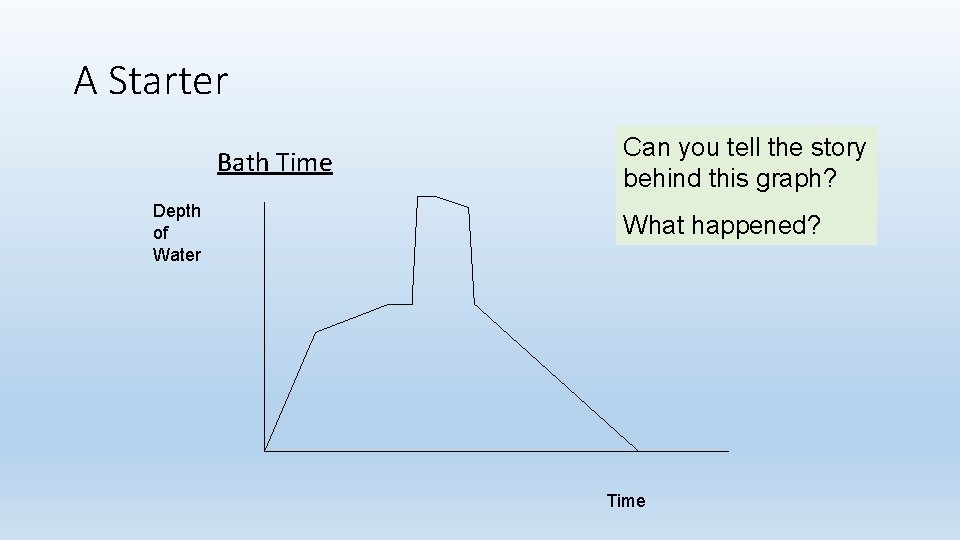
A Starter Bath Time Depth of Water Can you tell the story behind this graph? What happened? Time
Employees of the future • One of the biggest requirements of Fortune 500 companies for their future employees is the ability to handle statistical information. We live in a data-rich world! • What is the role of Statistics in business? Statistics is the science involved in collecting, analysing, and presenting numerical data. It plays an important role in business because it allows businesses to measure performance and forecast future targets. Businesses use statistics to study facts and financial information.
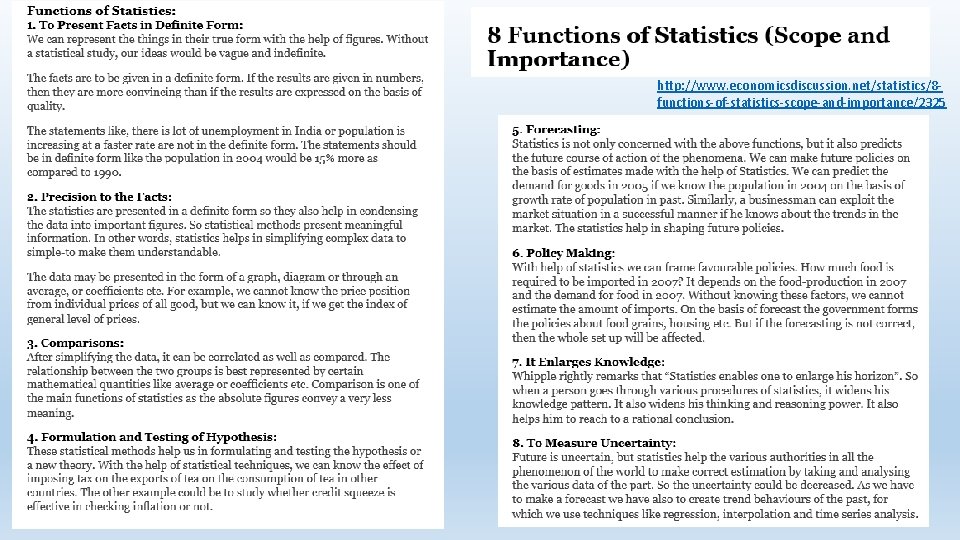
http: //www. economicsdiscussion. net/statistics/8 functions-of-statistics-scope-and-importance/2325
Garfield (2002) • In primary school education two concepts are explicitly taught: statistical literacy and statistical reasoning • Statistical literacy - how to access statistical information, including organising data, building and presenting tables, working with different representations of data • Statistical reasoning - a higher-level skill, that is, how children reason with statistical concepts and make sense of statistical information.
What is data? What is it? Facts News Numbers Measure Words Pictures Sounds Symbols Make a list of any data you might use in a typical day… Informati on
Mathematical Language used in Statistics Research any terminology you are unsure of: count sort order set match pictogram Venn Diagram Carroll Diagram axes Tree Diagram block graph line graph total tally frequency questionnaire interval classify value grouped data Average - mean/ mode/ median range pie chart scatter-graph maximum minimum
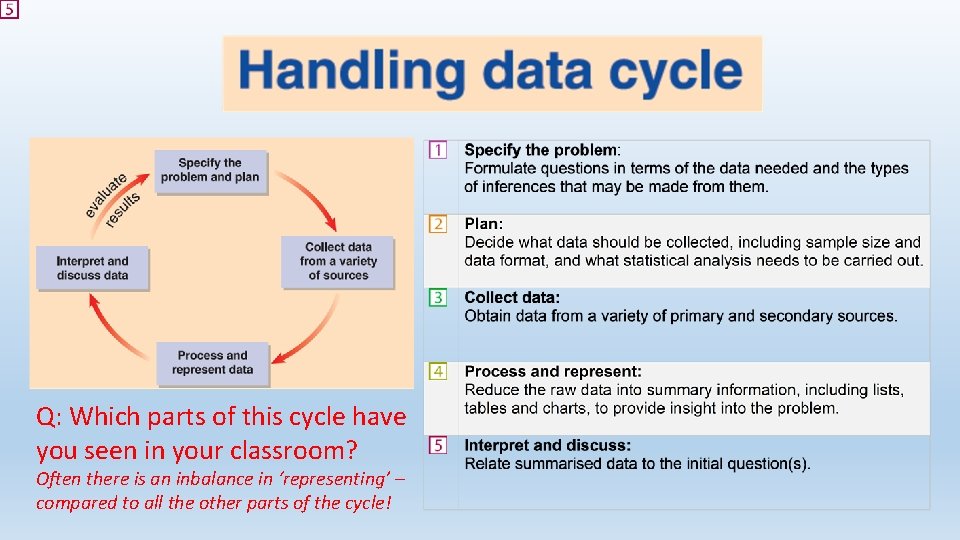
Q: Which parts of this cycle have you seen in your classroom? Often there is an inbalance in ‘representing’ – compared to all the other parts of the cycle!
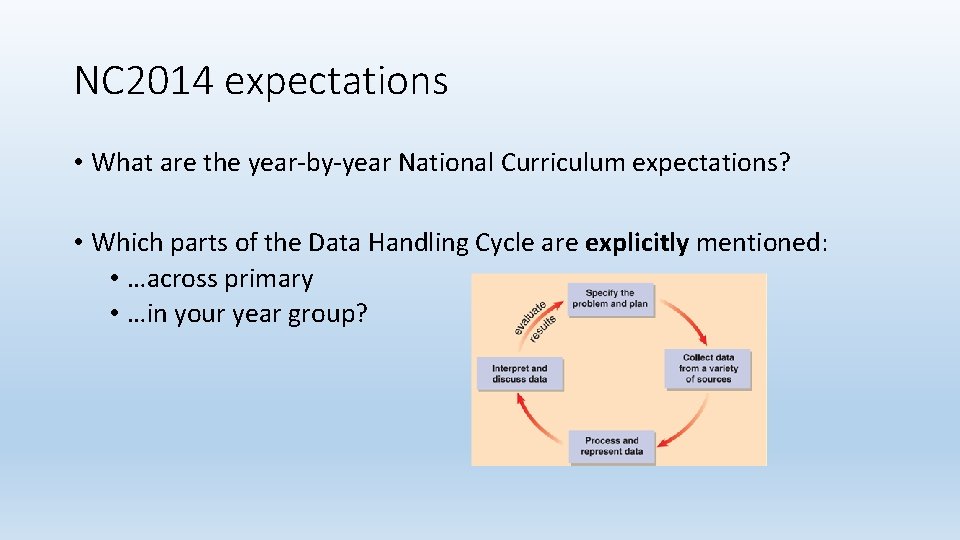
NC 2014 expectations • What are the year-by-year National Curriculum expectations? • Which parts of the Data Handling Cycle are explicitly mentioned: • …across primary • …in your year group?
Different levels of graph comprehension Shaughnessy; Garfield; Greer (1996) & Shaughnessy (2007) • The simplest level of comprehension, known as “reading the data”, requires local action and specifies how a literal reading of the graph only responds to explicitly represented facts and thus does not involve interpreting the information it contains. • “Reading between the data” involves comparing and interpreting data values, integrating the data in the graph, finding relationships between quantities, and applying simple mathematical procedures to the data, understanding both the basic structure of the graph and the relationships it contains. • “Reading beyond the data” involves the extrapolation of data, predicting and inferring from implicit information in the graph, and it requires context knowledge of the data presented. • Finally, the last stage would be “reading behind the data”, which is seen to be an extension of the 3 previous stages and examines the use of the graph, and relating the graphical information with the context for analysis and causal reasoning. Ben Craddock found this as part of his assignment reading… thank you, Ben!
The th 4 level: “Reading behind the data” • Consider the use of statistics during this time of national crisis… • What data is being shown? • What data is NOT being shown? • How accurate is the data? • Is some data ‘misrepresenting’ the situation? (These questions also become relevant whenever party-political elections take place!)
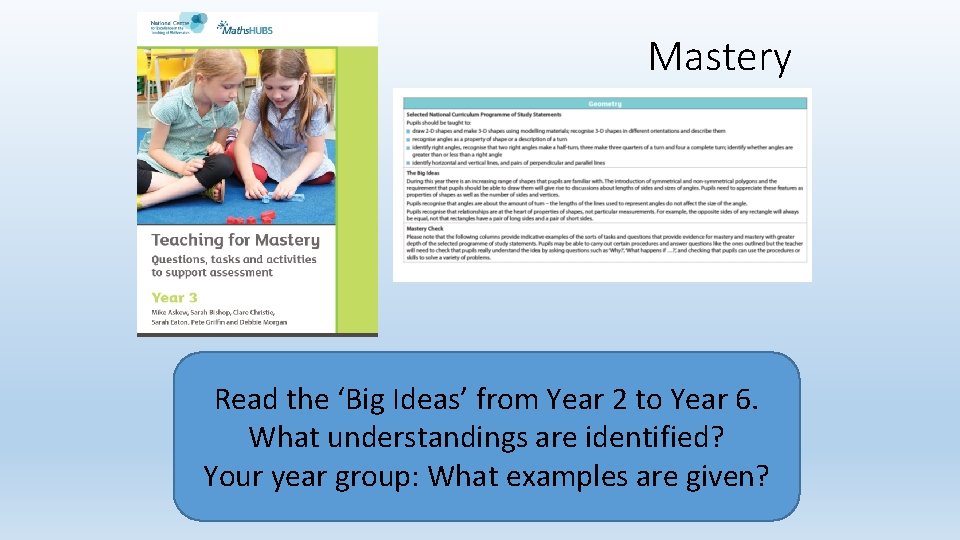
Mastery Read the ‘Big Ideas’ from Year 2 to Year 6. What understandings are identified? Your year group: What examples are given?
Different representations…
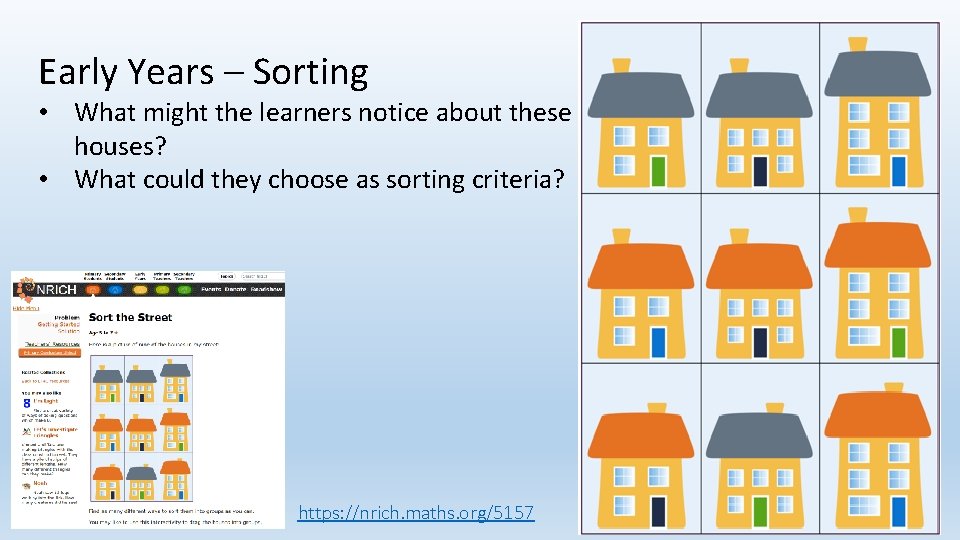
Early Years – Sorting • What might the learners notice about these houses? • What could they choose as sorting criteria? https: //nrich. maths. org/5157
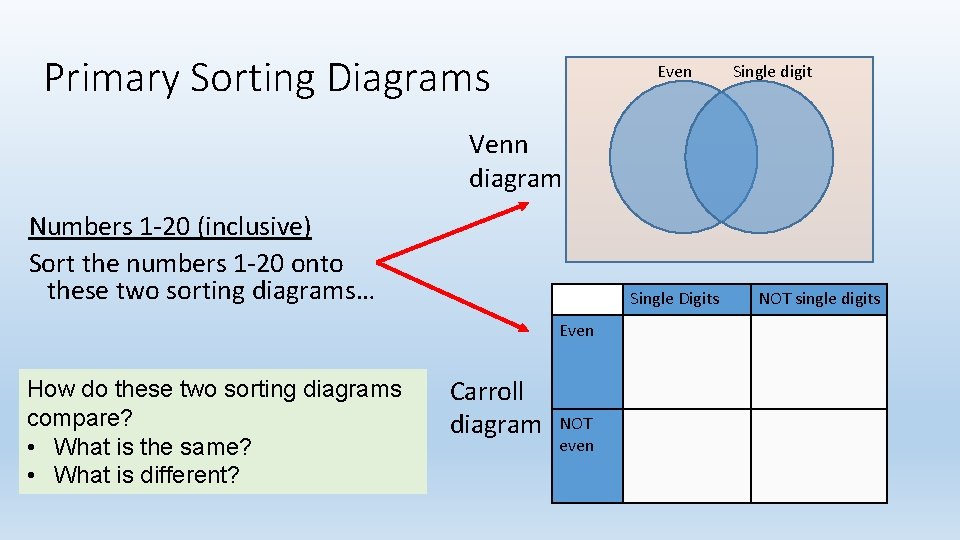
Primary Sorting Diagrams Even Single digit Venn diagram Numbers 1 -20 (inclusive) Sort the numbers 1 -20 onto these two sorting diagrams… Single Digits Even How do these two sorting diagrams compare? • What is the same? • What is different? Carroll diagram NOT even NOT single digits
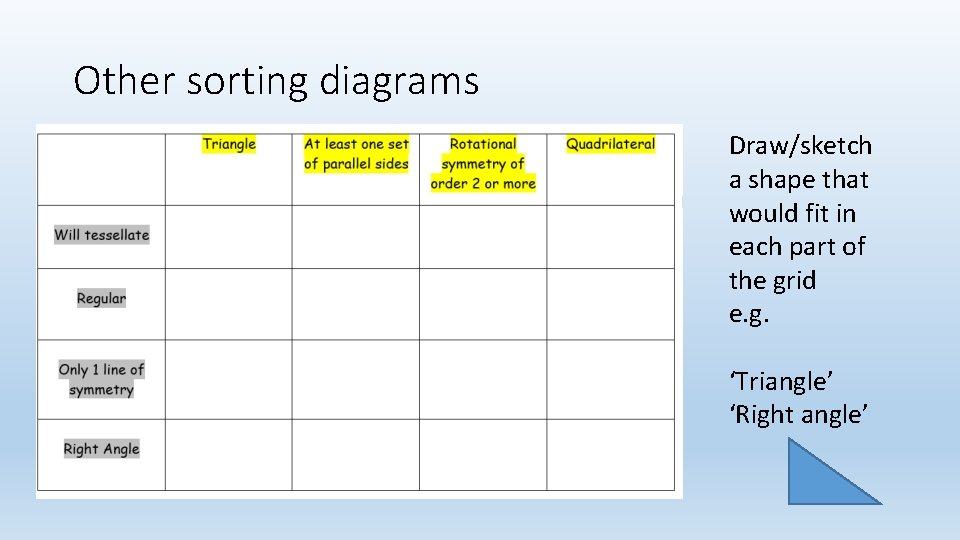
Other sorting diagrams Draw/sketch a shape that would fit in each part of the grid e. g. ‘Triangle’ ‘Right angle’
Prediction BEFORE YOU LOOK AT THE NEXT SLIDE… (DON’T CHEAT!!) • Sketch all the different data representations that you would expect to see in primary • How many can you find?
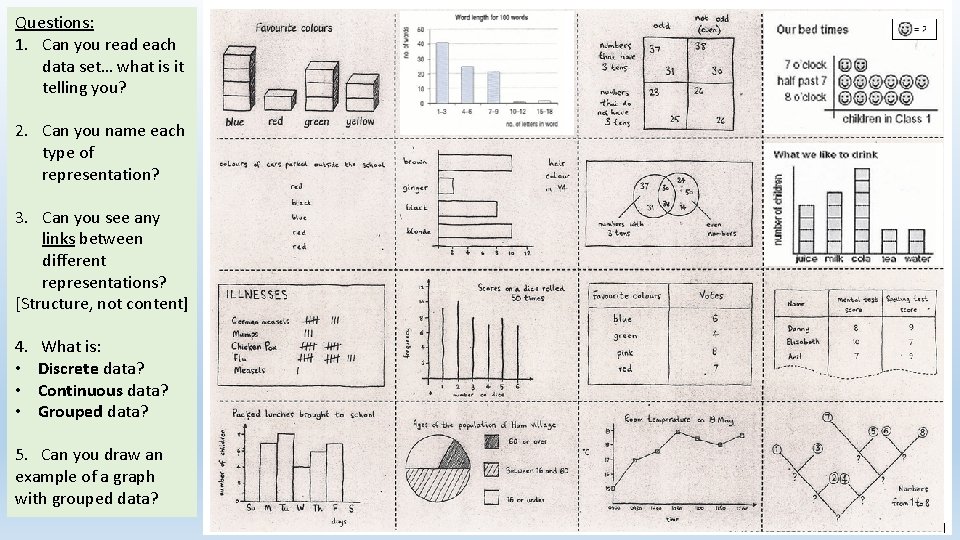
Questions: 1. Can you read each data set… what is it telling you? 2. Can you name each type of representation? 3. Can you see any links between different representations? [Structure, not content] 4. • • • What is: Discrete data? Continuous data? Grouped data? 5. Can you draw an example of a graph with grouped data?
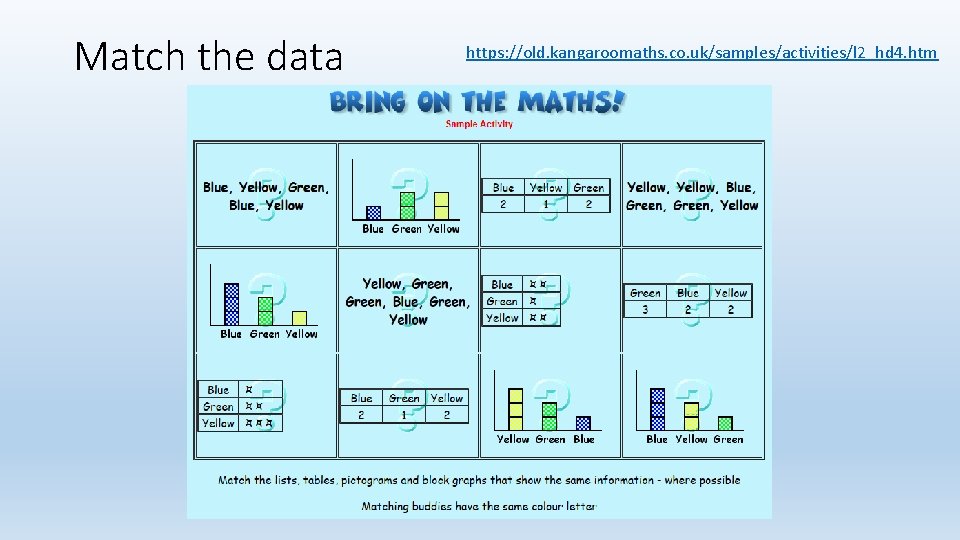
Match the data https: //old. kangaroomaths. co. uk/samples/activities/l 2_hd 4. htm
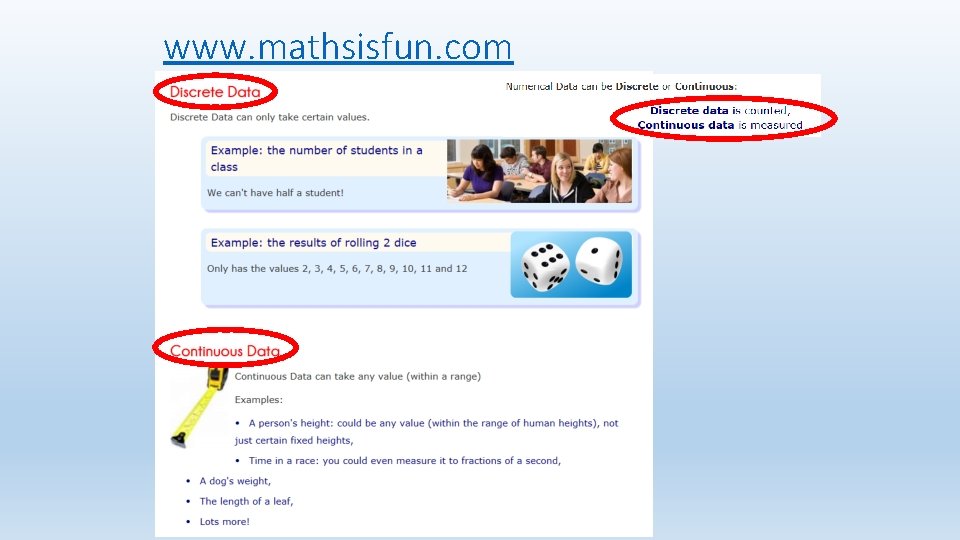
www. mathsisfun. com

Finding Teaching Ideas…
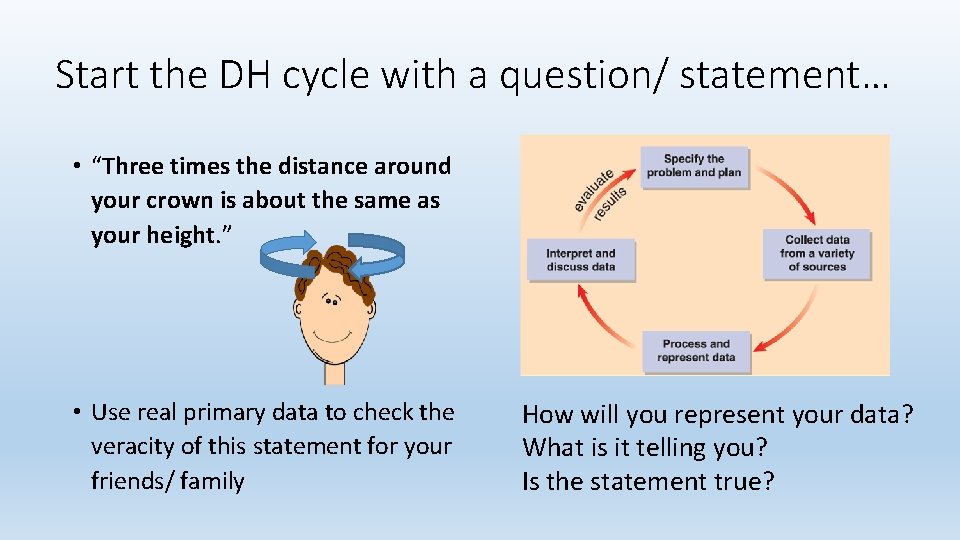
Start the DH cycle with a question/ statement… • “Three times the distance around your crown is about the same as your height. ” • Use real primary data to check the veracity of this statement for your friends/ family How will you represent your data? What is it telling you? Is the statement true?
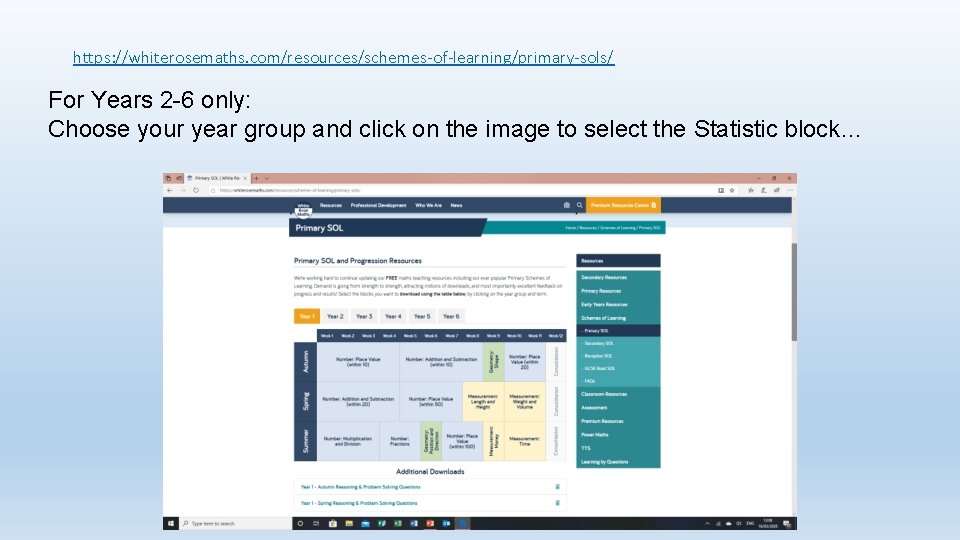
https: //whiterosemaths. com/resources/schemes-of-learning/primary-sols/ For Years 2 -6 only: Choose your year group and click on the image to select the Statistic block…
Other materials to access • https: //www. ncetm. org. uk/resources/41211 Follow the link to the Planning Resource Tool (Dulux paint chart) and go to find teaching ideas for your year group • Derek Haylock ‘Mathematics Explained for Primary Teachers’ • Deboys and Pitt ‘Lines of Development in Primary Mathematics’ Sections 1, 2 and 3 [note ‘Pictorial Representation’]
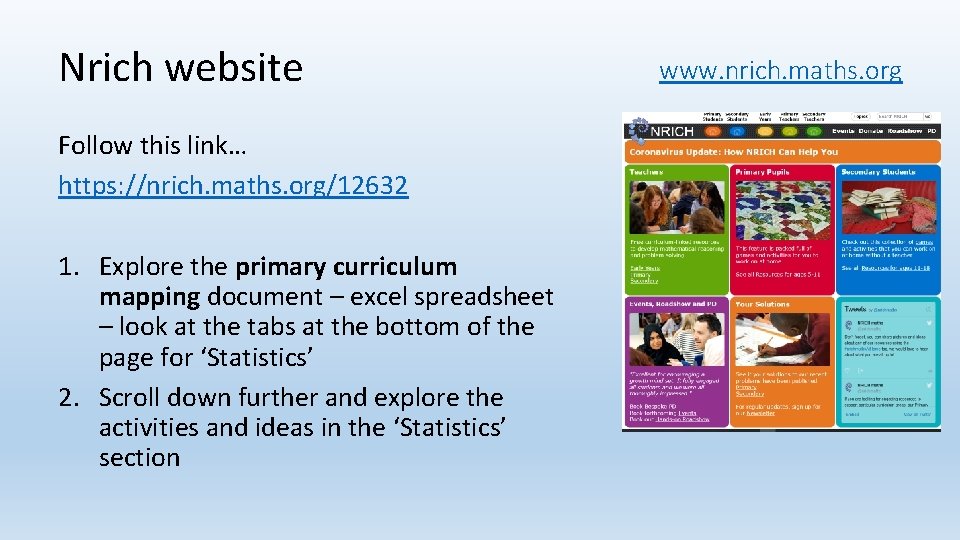
Nrich website Follow this link… https: //nrich. maths. org/12632 1. Explore the primary curriculum mapping document – excel spreadsheet – look at the tabs at the bottom of the page for ‘Statistics’ 2. Scroll down further and explore the activities and ideas in the ‘Statistics’ section www. nrich. maths. org
In Summary: 1. Are you clear about progression across primary within this aspect? 2. Have you accessed teaching points and ideas for Statistics for your year group? 3. Have you identified CPA learning opportunities for use in the classroom? Reflect in your notes: What have you learned about the teaching and learning of this aspect of maths? Any questions… • If you have any questions that have been raised or have not been answered, contact me! • 30 min Zoom tutorials can be booked through Claire Rackham PLEASE NOTE: We had provisionally planned to add in an extra maths task following on from this day – this is no longer happening
- Slides: 26