
SCITT English course days Day 5 Teaching Vocabulary
SCITT English course days Day 5 – Teaching Vocabulary and Spoken Language
Entry ticket – Give me five �Give me five strategies for teaching/ practising reading �Give me five active reading strategies
Easily confused words no. 4 �Use less when referring to a single item or an item without a plural e. g. time �Use fewer when referring to more than one item �There are. . . pigeons in Trafalgar Square than there used to be �We are using. . . bags �You will need. . . . medicine this time �Less is also used with numbers when they are on their own and with expressions of measurement or time � His weight fell from 18 stone to less than 12 �Their marriage lasted less than two years. �Heath Square is less than four miles away from Dublin city centre
Day 5 – Teaching vocabulary and Spoken language �You will �Explore the spoken language curriculum �Know why talk is important �Consider issues when planning, and assessing, talk �Develop a range of approaches to teaching talk �Understand how vocabulary develops �Be able to teach vocabulary
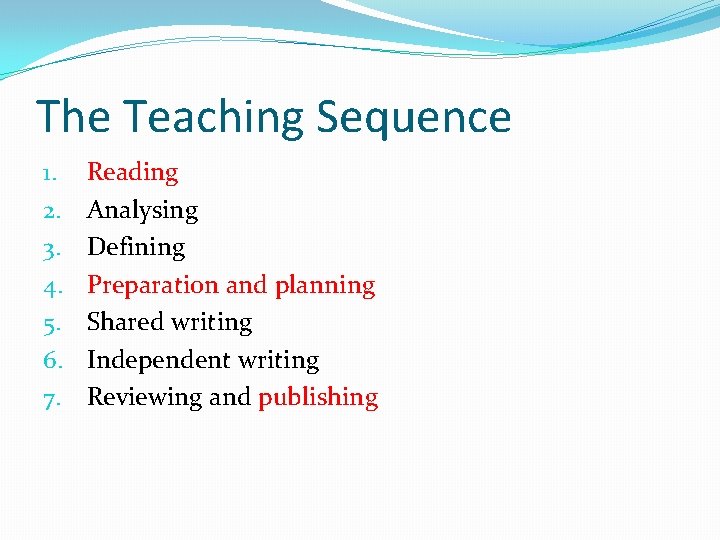
The Teaching Sequence 1. 2. 3. 4. 5. 6. 7. Reading Analysing Defining Preparation and planning Shared writing Independent writing Reviewing and publishing
What is distinctive about spoken language?
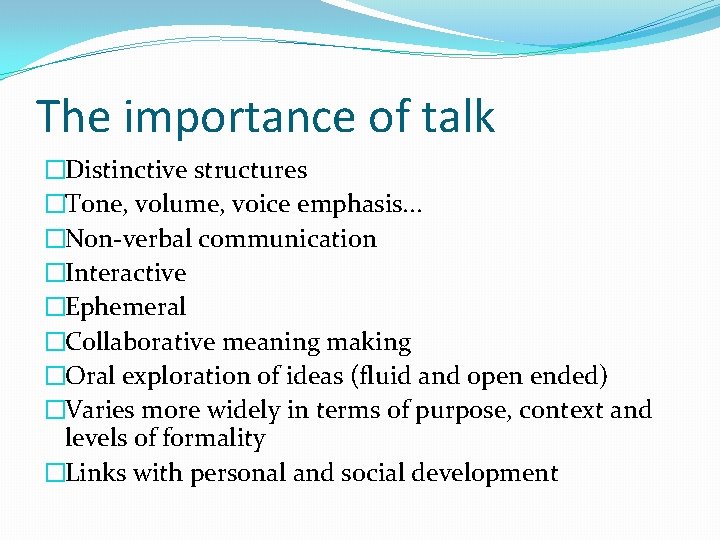
The importance of talk �Distinctive structures �Tone, volume, voice emphasis. . . �Non-verbal communication �Interactive �Ephemeral �Collaborative meaning making �Oral exploration of ideas (fluid and open ended) �Varies more widely in terms of purpose, context and levels of formality �Links with personal and social development
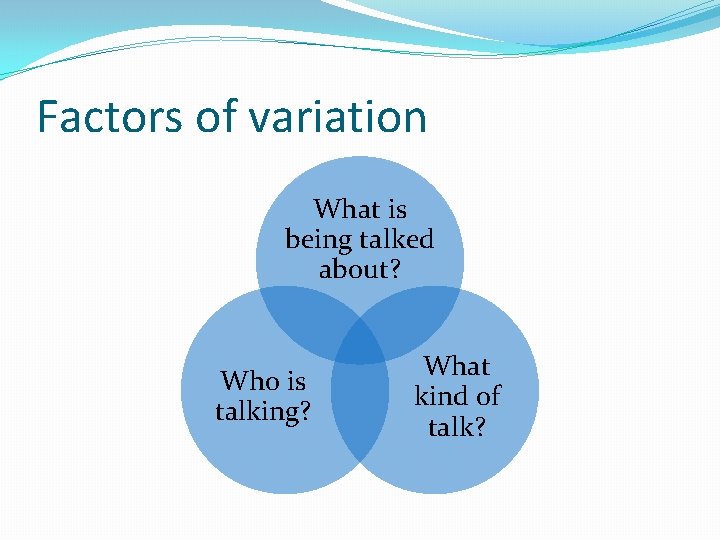
Factors of variation What is being talked about? Who is talking? What kind of talk?
Exploring the factors �What is being talked about? �Specific vocabulary and expressions �Who is talking? �Language associated with different roles �Formality �What kind of talk? �Structured or unstructured
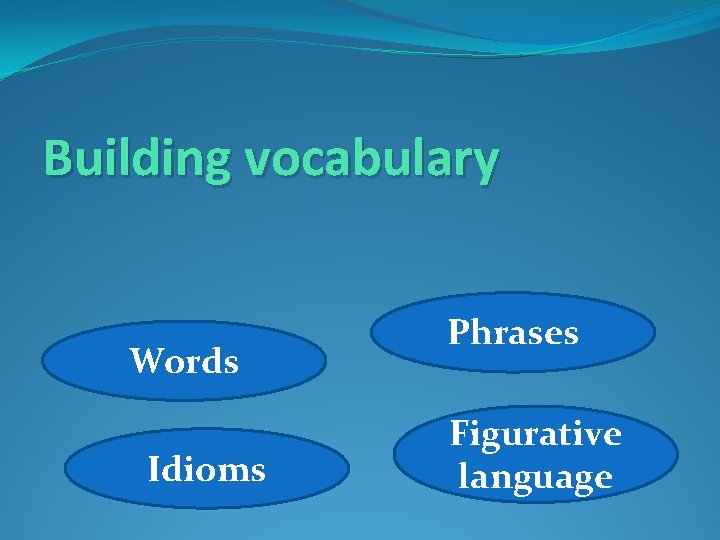
Building vocabulary Words Idioms Phrases Figurative language
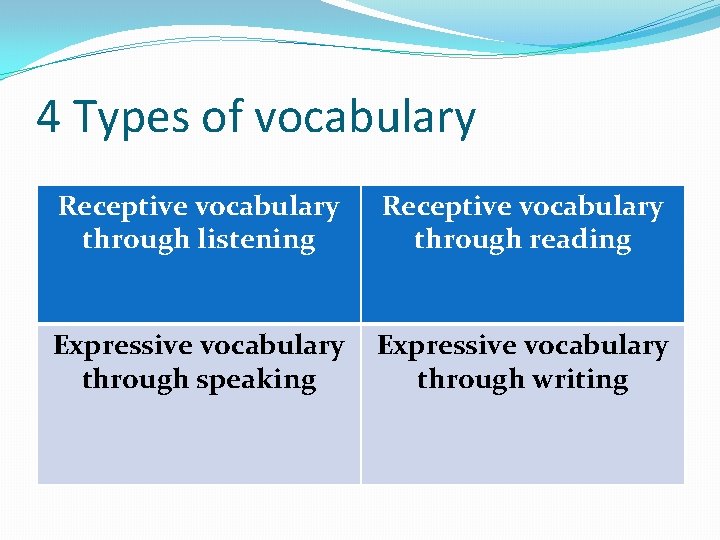
4 Types of vocabulary Receptive vocabulary through listening Receptive vocabulary through reading Expressive vocabulary through speaking Expressive vocabulary through writing
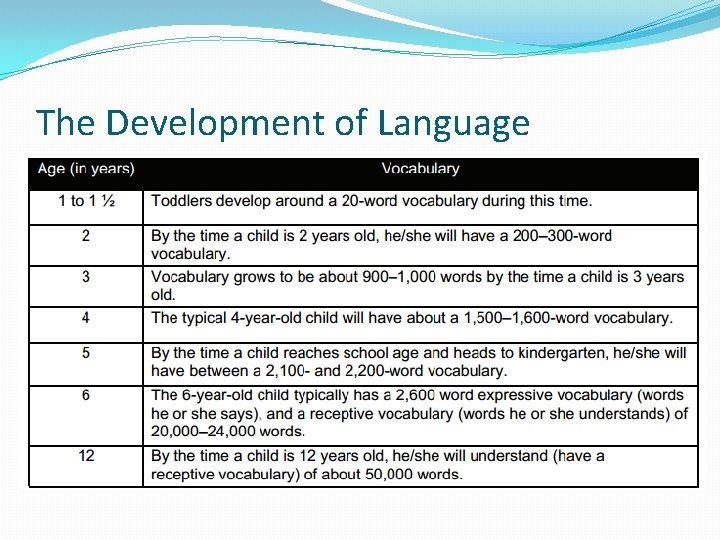
The Development of Language
Explicit teaching and learning “ Education is the process of preparing us for the big world and the big world has big words. The more big words I know, the better I will survive in it. Because there are hundreds of thousands of big words in English, I cannot learn them all. But this doesn’t mean I shouldn’t try to learn some” David Crystal in ‘words, words’
Breadth or depth? “ When it comes to vocabulary knowledge and school success, ‘word depth’ is probably more important than the breadth of our vocabulary” Alex Quigley in ‘Closing the Vocabulary Gap’
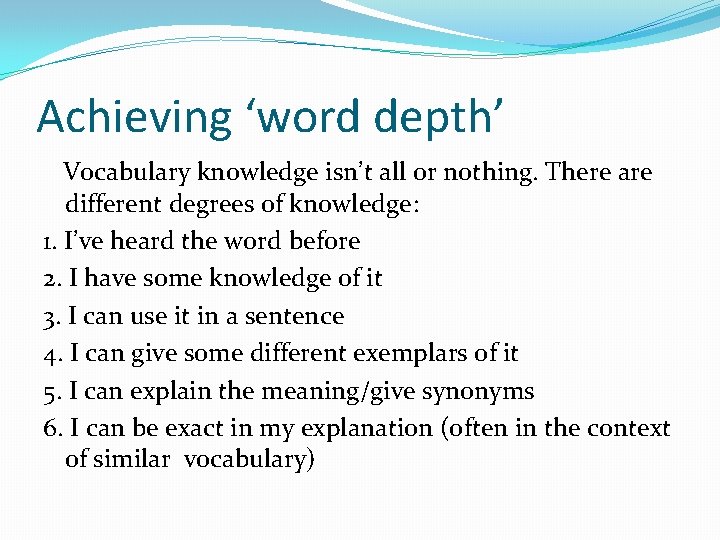
Achieving ‘word depth’ Vocabulary knowledge isn’t all or nothing. There are different degrees of knowledge: 1. I’ve heard the word before 2. I have some knowledge of it 3. I can use it in a sentence 4. I can give some different exemplars of it 5. I can explain the meaning/give synonyms 6. I can be exact in my explanation (often in the context of similar vocabulary)
Without ‘word depth’ �The writing will sound forced or ‘flowery’ �The vocabulary will often be used incorrectly or placed in wrong locations �The teacher is tempted to over-scaffold to make it work �Grammar starts to fall apart �In serious cases the level of the writing drops due to grammar issues and lack of purpose
Achieving ‘word depth’ Vocabulary knowledge isn’t all or nothing. There are different degrees of knowledge: 1. I’ve heard the word before 2. I have some knowledge of it 3. I can use it in a sentence 4. I can give some different exemplars of it 5. I can explain the meaning/give synonyms 6. I can give a theoretical definition/ superior concept
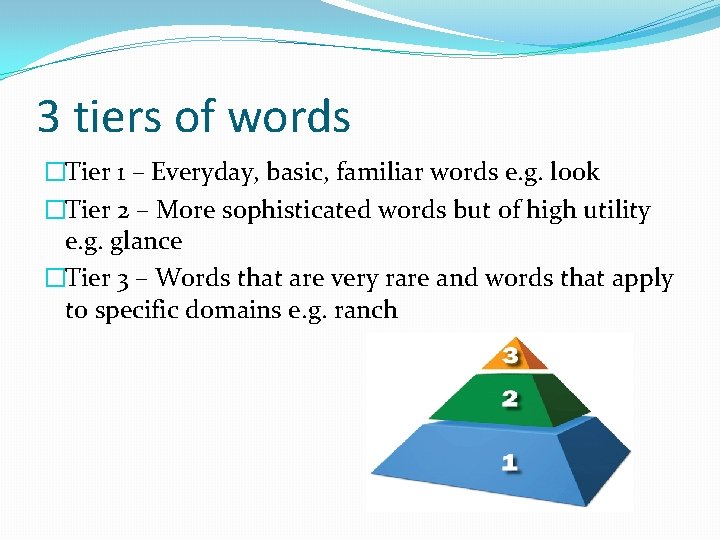
3 tiers of words �Tier 1 – Everyday, basic, familiar words e. g. look �Tier 2 – More sophisticated words but of high utility e. g. glance �Tier 3 – Words that are very rare and words that apply to specific domains e. g. ranch
Which tier are they? �Leaf �Lurch �Magnesium �Coracle �Limp �Gloom �Pulpit �less �Cautious �Swim �Gracefully �cellar �Vain �Clear
Indirect and direct teaching �Indirect �Engaging in oral language �Listening to adults read �Reading themselves �Direct �Teaching specific words before reading �Teaching words over a unit �Repeated exposure to vocabulary in many contexts
Supporting early vocabulary �Don’t rely on incidental learning �Listen in order to encourage talking �Model good listening and speaking �Provide good models of spoken English �Ask open questions �Develop simple responses �Develop key vocabulary �Avoid colloquialisms �Use guided talk �Use the role play area to explicitly teach spoken language
The basics �Lots of reading �Talk about words �Teach new words �Use dictionaries and thesauruses �High expectations �Trouble-shoot �Not too flowery! �Teach how to find context clues
Teaching vocabulary through a unit 1. 2. 3. 4. 5. 6. Choose a set of tier 2 words that have mileage from your text Introduce in context Provide friendly explanations Provide some additional contexts Build in lots of opportunities to use the words Add to success criteria
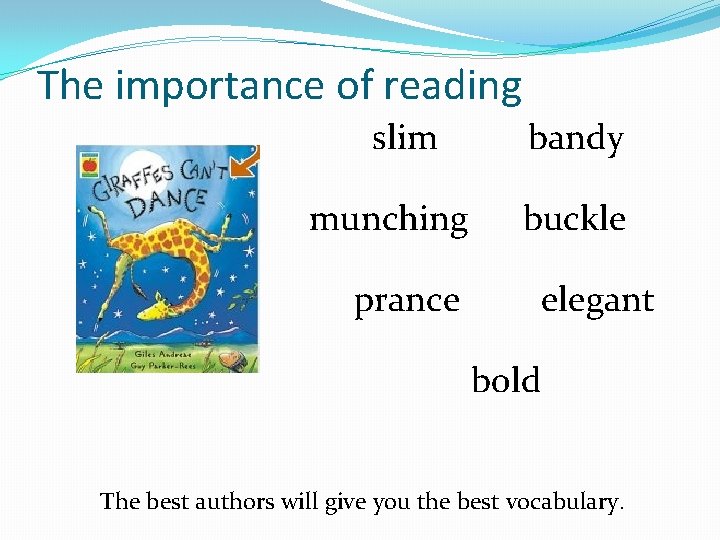
The importance of reading slim munching prance bandy buckle elegant bold The best authors will give you the best vocabulary.
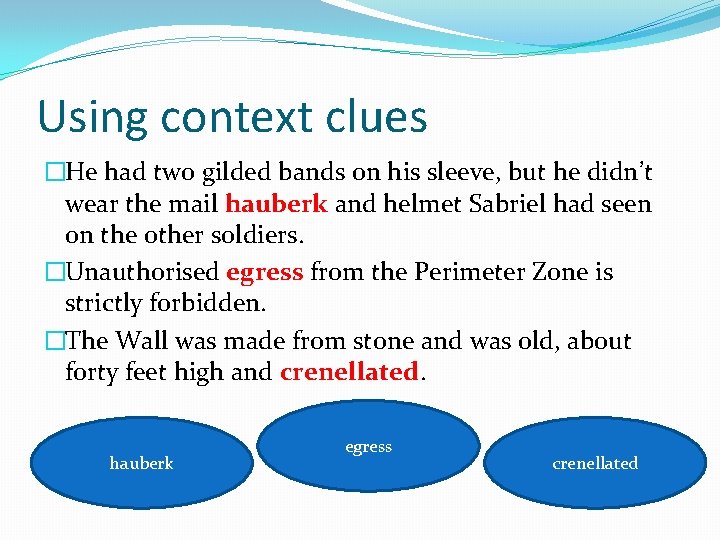
Using context clues �He had two gilded bands on his sleeve, but he didn’t wear the mail hauberk and helmet Sabriel had seen on the other soldiers. �Unauthorised egress from the Perimeter Zone is strictly forbidden. �The Wall was made from stone and was old, about forty feet high and crenellated. hauberk egress crenellated
Friendly explanations �Devious – If someone is devious , he is using sneaky and secretive ways to do something dishonest. �Exotic – Something that is exotic is unusual and interesting because it comes from another country far away �Jaded -. . . �Vivid -. . .
Ideas for additional contexts �Matching �Cloze �Complete the sentence �Correct or incorrect �Questions �Writing own sentences / paragraphs
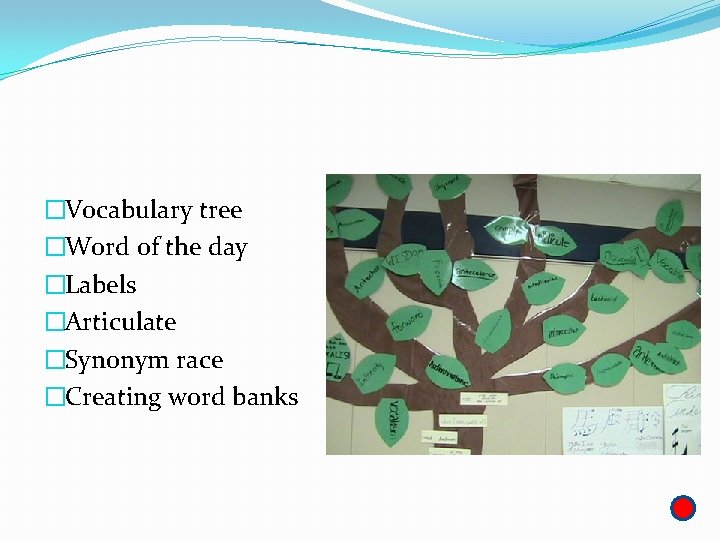
�Vocabulary tree �Word of the day �Labels �Articulate �Synonym race �Creating word banks
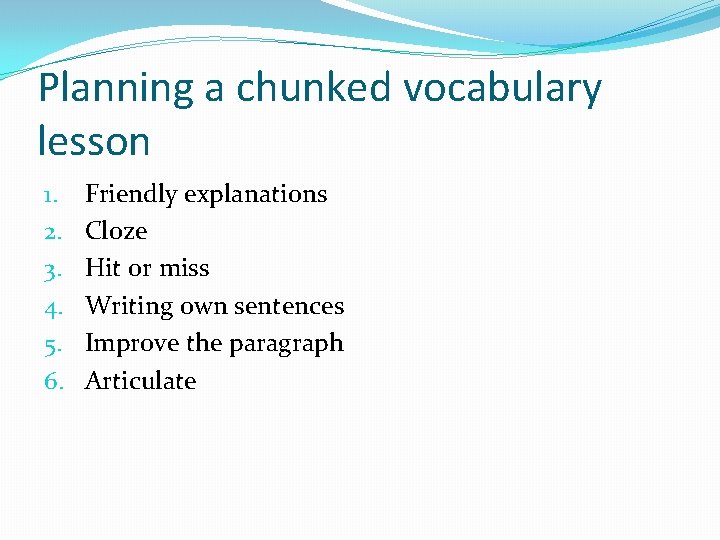
Planning a chunked vocabulary lesson 1. 2. 3. 4. 5. 6. Friendly explanations Cloze Hit or miss Writing own sentences Improve the paragraph Articulate
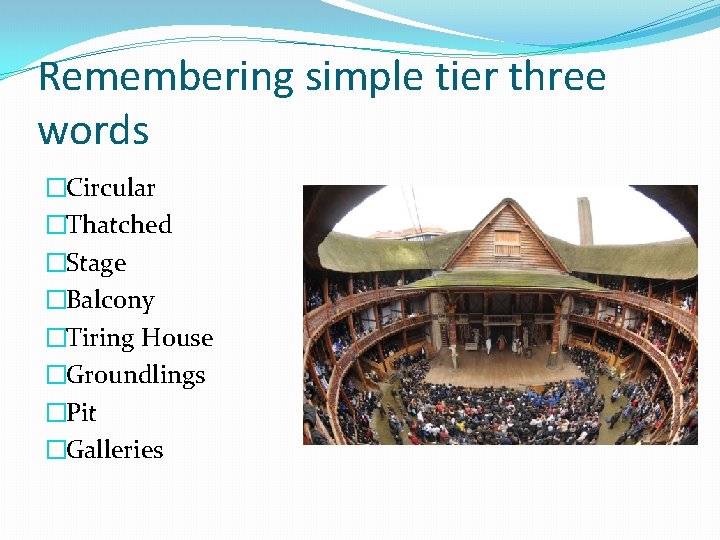
Remembering simple tier three words �Circular �Thatched �Stage �Balcony �Tiring House �Groundlings �Pit �Galleries
Using morphemic analysis to develop ‘word consciousness’ “As they approached the city they were much impressed by the richness of everything. “Surely they have more than they need, ” said the grocer hopefully. ”
Hope – wish, expect or look forward to something �Hopefully �Hopelessly �Hopelessness Explore the ‘help’ family
The Speaking and Listening classroom
What do you need? �A classroom environment which supports spoken language �Direct teaching of spoken language �Application of spoken language across the curriculum �Basic assessment of spoken language
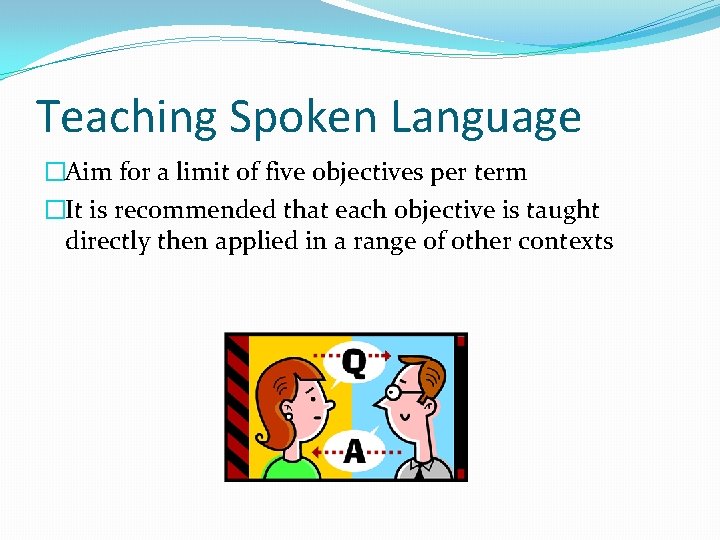
Teaching Spoken Language �Aim for a limit of five objectives per term �It is recommended that each objective is taught directly then applied in a range of other contexts
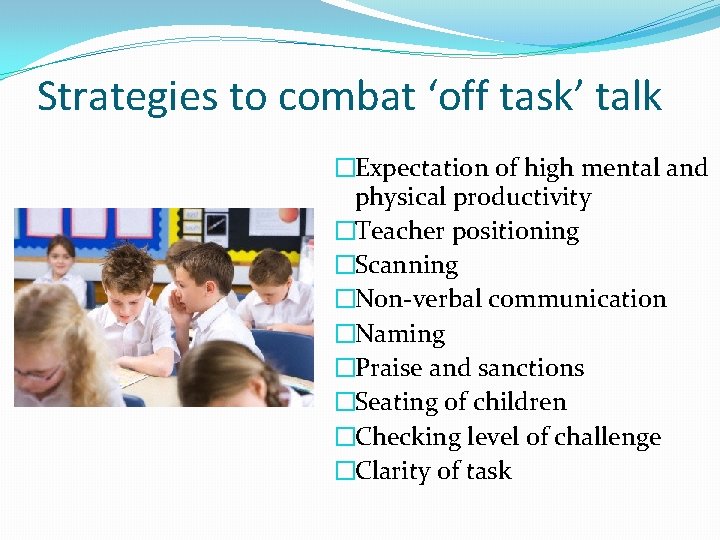
Strategies to combat ‘off task’ talk �Expectation of high mental and physical productivity �Teacher positioning �Scanning �Non-verbal communication �Naming �Praise and sanctions �Seating of children �Checking level of challenge �Clarity of task
Key skills of spoken language �Speaking �Organising �Sustaining �Adapting �Listening �Discussion �Drama �Talking about talk

Talking about talk
How? �Give children linguistic prompts to support their talk �Discuss and demonstrate how to do a task �Use TV and radio as models �Introduce and teach appropriate vocabulary e. g. Audience, formal, emphasis etc. �Use paired presenting (critical friend) �Build in lots of reflection time and include self and peer assessment �Give feedback on the talk
Speaking
Spoken Language - speaking �Clarity and making talk interesting at first �Awareness of audience builds in LKS 2 �This extends in UKS 2 and builds in a range of effects and purposes
Some speaking activities �Guided talk �Radio broadcast �Puppet shows �Just a minute �Debates �Presentations �Commentary �Storytelling
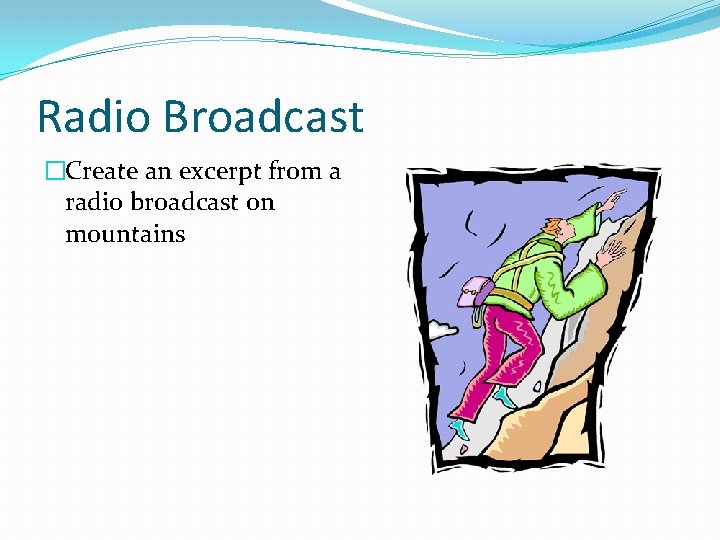
Radio Broadcast �Create an excerpt from a radio broadcast on mountains
Listening and discussion
Spoken language - listening �Listening and responding at KS 1 �Then conversing and evaluating �At UKS 2, analysing talk
Some listening activities �Babble gabble �Word tennis �Barrier games �Telephone conversations �Listening frames
Spoken language - discussion �Basic etiquette of working in a group at KS 1 �At LKS 2, using a range of groupwork techniques �At UKS 2 the focus should be on making groupwork more streamlined and also debate
Children need varied experience of groups, including… �For different purposes, such as investigating, problem solving, sorting, planning, predicting, reporting and evaluating �With different outcomes, such as carrying out an experiment, making a presentation or constructing a model �Learning to use talk in different ways, such as discussing, hypothesising, questioning and reflecting �In different types and sizes of groups
Classroom Techniques �Talk partners �Connections tasks �Information gap �Group roles �Envoys �Snowballing �Jigsaw �Ordering e. g. Diamond Nine �Mantle of the Expert

Drama
Uses of drama �As an art form itself �To develop understanding in reading �To prepare for writing �To enhance learning in other subjects �To develop social and emotional understanding
Building drama �Character, voice and movement can be focuses throughout �Each year should involve an element of performance �These can build up to also involve children in sound, lights, props, staging etc
Mini scene VH – I come to destroy you Prince Dracula. D – You cannot destroy me. I am stronger than you. VH – You fiend of hell! D – Can you not feel my power? VH – I won’t give in. D – Already your eyes are closing. VH – (weaker) I won’t give in D – Soon you will be completely asleep.
- Slides: 53