
SCITT Day 8 2016 Pattern algebra and number
SCITT Day 8 2016 Pattern, algebra and number sequences
Day 8 of 10 Today we will… Associated Issues • understand how work with pattern in key stage 1 and lower key stage 2 provides the foundation for algebraic thinking; • develop algebraic thinking as a way expressing generality; • Promoting mathematical thinking with appropriate and challenging questioning. • ‘Say what you see’ - using real-life patterns to talk about patterns and relationships • review aspects of measures with practical materials and estimation.
Assignment • Knowledge Quartet (T & C) • NC aims (especially #2 and #3) • Discussion re. ‘mastery’ Practicalities… • Hand in to Carole W - week beginning Mon 11 th April 2016 • Two copies (only one set of appendices)

White Rose Maths Hub http: //www. trinitytsa. co. uk http: //tinyurl. com/z 26 lags
Questions • Do we really think about the questions we ask? • Do we? • Should we? • Can we? • Socrates was one of the greatest educators who taught by asking questions and thus drawing out answers from his pupils. ('ex duco', meaning to 'lead out', is the root of 'education')
What is Dialogic Teaching? Dialogic teaching (Alexander, R. J. , 2008) • interactions which encourage students to think, and to think in different ways • questions which invite much more than simple recall • answers which are justified, followed up and built upon rather than merely received • feedback which informs and leads thinking forward as well as encourages • contributions which are extended rather than fragmented NCETM Primary Magazine Issue 74: Maths in the Staff Room
4 types of questions for Primary… • Conceptual clarification questions What exactly are they asking or thinking - 'tell me more' to go deeper. • Probing rationale, reasons and evidence Digging into their reasoning/ argument rather than taking it is ‘a given’ • Questioning viewpoints and perspectives Arguments are made from a position. Challenge that from another position. • Questions about the question Return the question. Use their question against themselves - ‘bounce the ball back’
Mike Askew article - Private talk, public conversation • Talking in pairs isn’t always beneficial – Engagement by really listening or are they mentally rehearsing? Paired Calculations – Without pupil ownership… opens the ears! Solver – recorder – One piece of paper – solver is the talker, recorder can only write what the solver tells them [then swap]
NCETM – ‘Teach, Learn, Confuse’ • The focus on mastery in the National Curriculum is a focus on understanding. Understanding builds from experiencing a concept in lots of different ways in different contexts. • One of the most striking observations about the lessons taught by teachers from Shanghai, as part of the national England-China project, has been that the teachers focus on provoking misconceptions. • One of the visiting teachers explained this as: ‘Teach, Learn, Confuse. ’
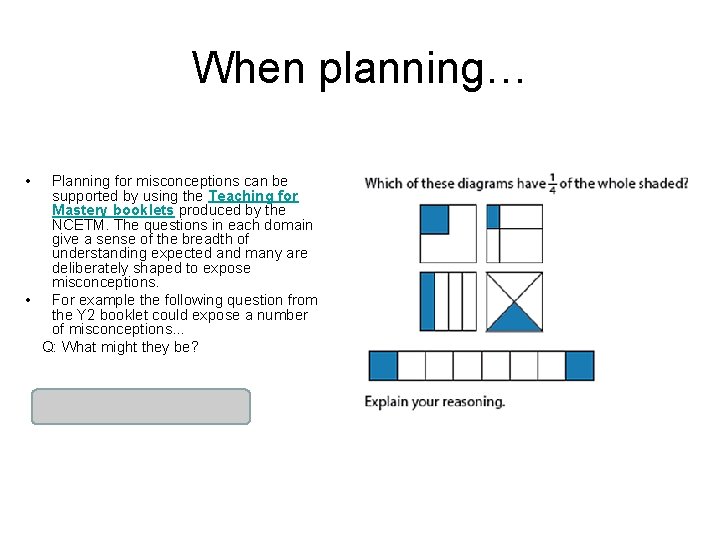
When planning… • Planning for misconceptions can be supported by using the Teaching for Mastery booklets produced by the NCETM. The questions in each domain give a sense of the breadth of understanding expected and many are deliberately shaped to expose misconceptions. • For example the following question from the Y 2 booklet could expose a number of misconceptions… Q: What might they be?
Strengthening the Power of Talk 1. How we facilitate feedback; 2. How we respond to pupils; 3. Ensure pupils use correct mathematical vocabulary; 4. Develop mathematical talk through sorting; 5. Develop the pupils’ vocabulary of reasoning; 6. Use discussion of errors to deepen thinking; 7. Change the nature of the tasks we
Pupil talk • Sentence structures
From DAY 7… ‘Rules and describing patterns’ • Create a repeating pattern • Can you predict what the next number will be? • Can you say what the pattern is in words? • Can you say what the 10 th number will be? • The 20 th? The 100 th? …The nth ?
The Origin • At the heart of sequences is recognition of repetition or development in time, which can be detected through behaviour such as copying, continuing and devising repeating patterns. • The root of sequences lie in our experience of rhythm, rhymes, seasons, moon phases, day and night….
Making Patterns Continue this rhythm with me… Clap, click, clap, click… Now make your own… and teach your partner
Guess My Rule Yes No I have a rule… • Choose any number – it will either fit my rule, or not fit my rule. • Can you work out my rule? • Can you test your thinking with ‘No’ (or ‘Yes’) examples?
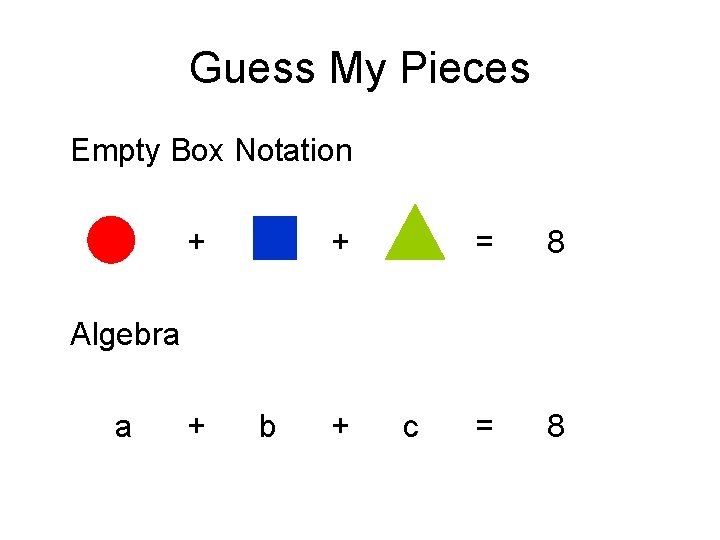
Guess My Pieces Empty Box Notation + + = 8 Algebra a + b + c
Create • Create your own ‘guess my tiles’ for another pair…
Algebra • Seeing patterns and relationships – predicting and exploring existing – Creating own patterns and communicate to others – Making connections • Deducing or suggest rules that govern a sequence • Can help pupils to develop an awareness of patterns in the environment (visual, auditory, tactile)
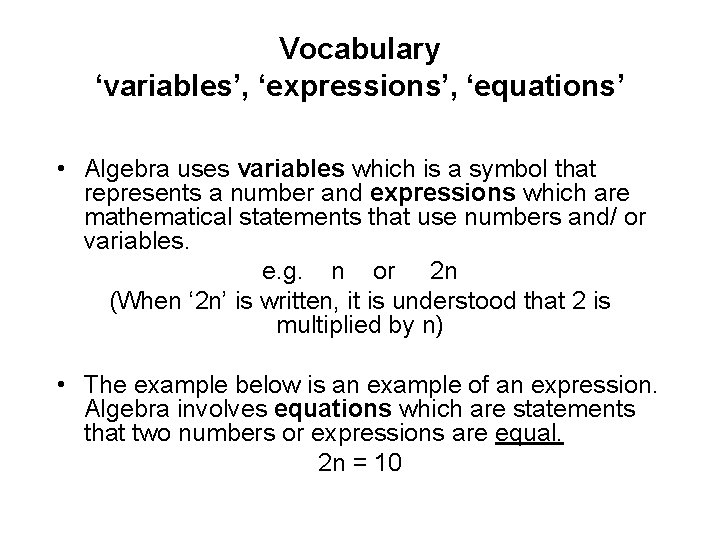
Vocabulary ‘variables’, ‘expressions’, ‘equations’ • Algebra uses variables which is a symbol that represents a number and expressions which are mathematical statements that use numbers and/ or variables. e. g. n or 2 n (When ‘ 2 n’ is written, it is understood that 2 is multiplied by n) • The example below is an example of an expression. Algebra involves equations which are statements that two numbers or expressions are equal. 2 n = 10
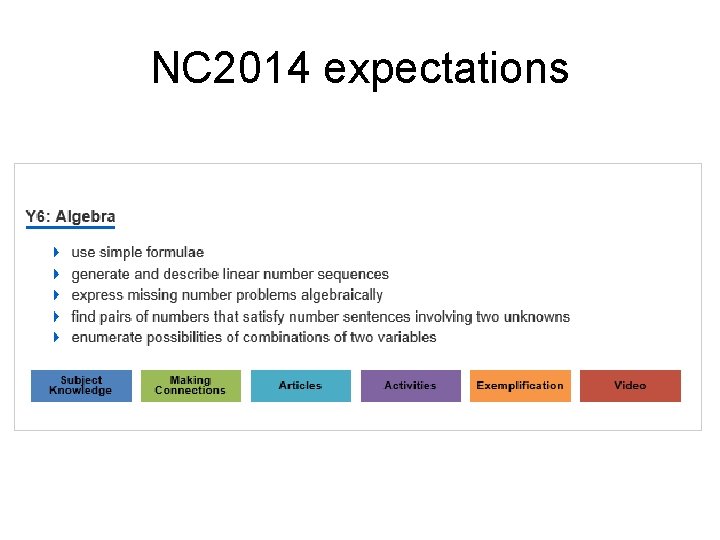
NC 2014 expectations
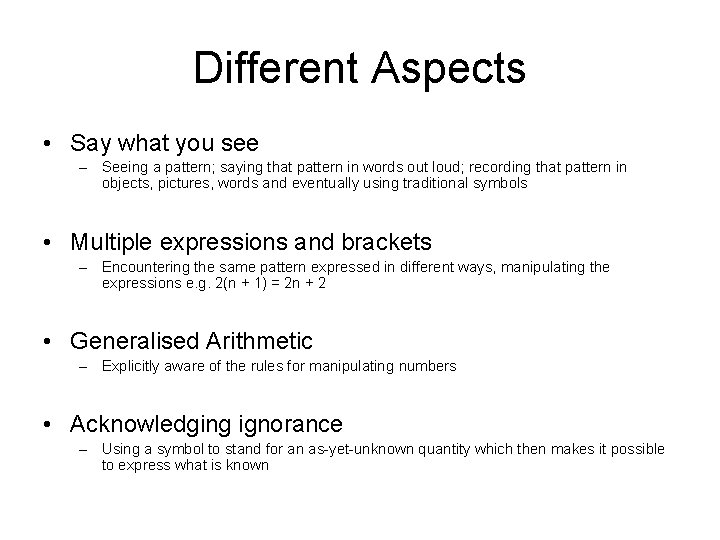
Different Aspects • Say what you see – Seeing a pattern; saying that pattern in words out loud; recording that pattern in objects, pictures, words and eventually using traditional symbols • Multiple expressions and brackets – Encountering the same pattern expressed in different ways, manipulating the expressions e. g. 2(n + 1) = 2 n + 2 • Generalised Arithmetic – Explicitly aware of the rules for manipulating numbers • Acknowledging ignorance – Using a symbol to stand for an as-yet-unknown quantity which then makes it possible to express what is known
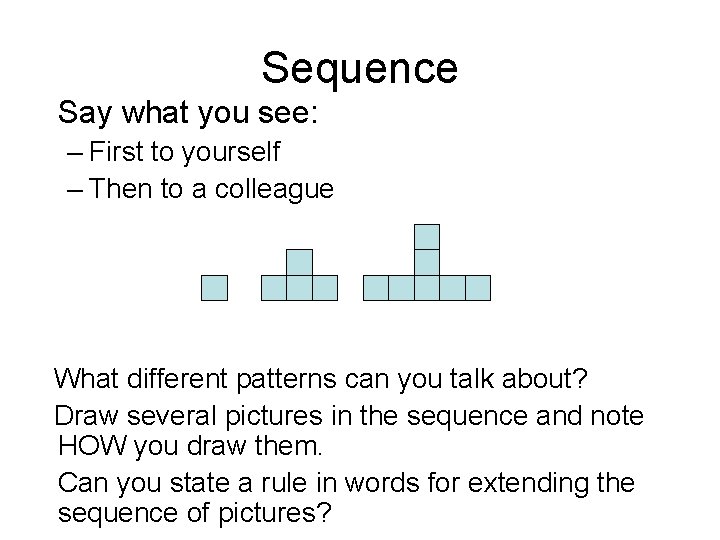
Sequence Say what you see: – First to yourself – Then to a colleague What different patterns can you talk about? Draw several pictures in the sequence and note HOW you draw them. Can you state a rule in words for extending the sequence of pictures?
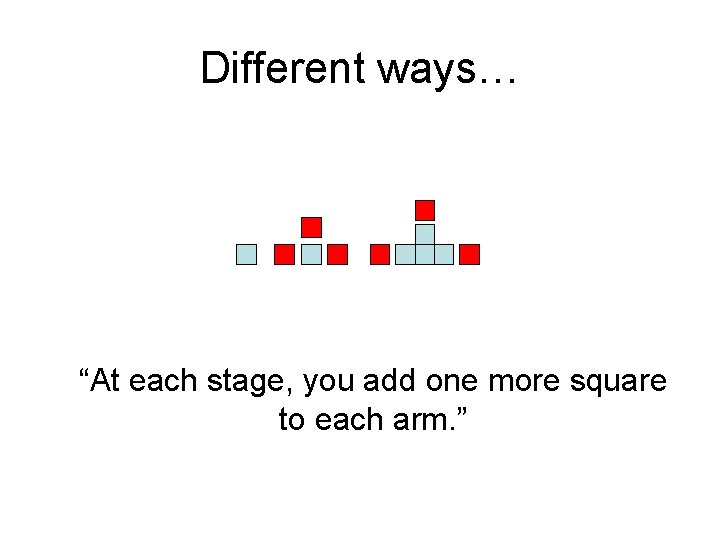
Different ways… “At each stage, you add one more square to each arm. ”
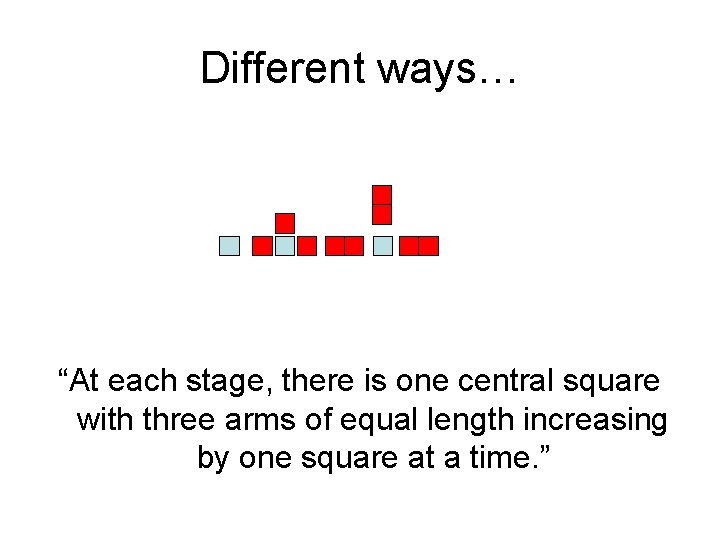
Different ways… “At each stage, there is one central square with three arms of equal length increasing by one square at a time. ”
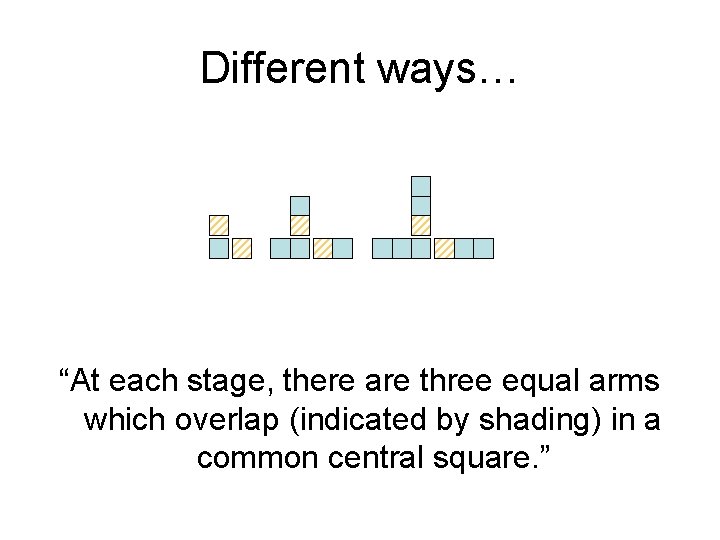
Different ways… “At each stage, there are three equal arms which overlap (indicated by shading) in a common central square. ”
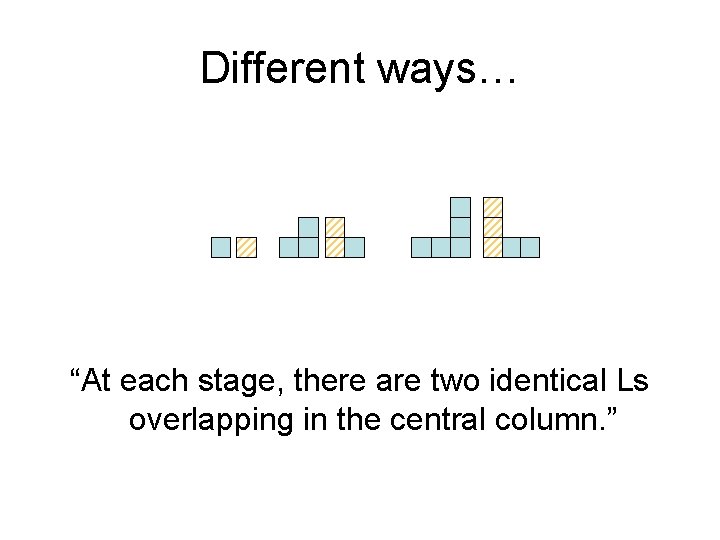
Different ways… “At each stage, there are two identical Ls overlapping in the central column. ”
Finding rules and describing patterns Skill set: • Decide on the information you need to describe and continue the pattern • Give examples to match a given statement and ones which don’t • Describe a rule of a pattern or relationship in words or pictures • Use a rule to decide whether a given number/ object will be in the sequence or not
Sequences – The First Yellow Circle 1 2 3 4 5 6 7 8 9 1 4 7
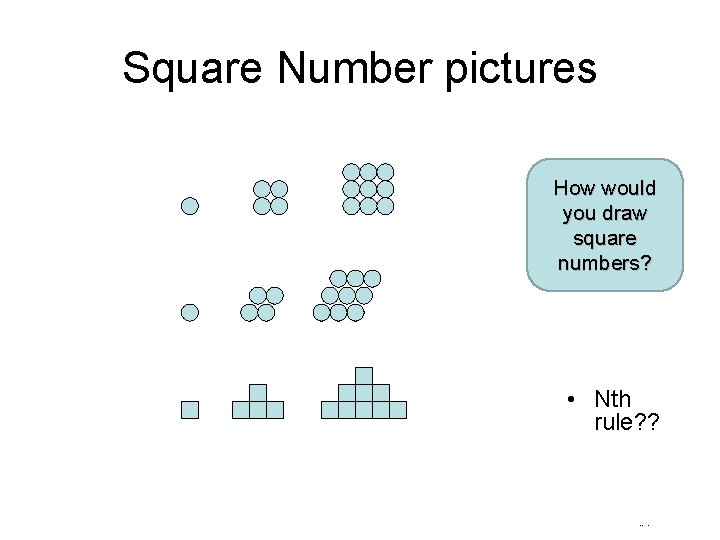
Square Number pictures How would you draw square numbers? • Nth rule? ? ….
‘Seeing’ and ‘saying’ On the next screen you will see some number sequences… Look at each pattern carefully. • • Can you see how the pattern is made? Can you describe it to a friend? What will the next number be? And the next one…?
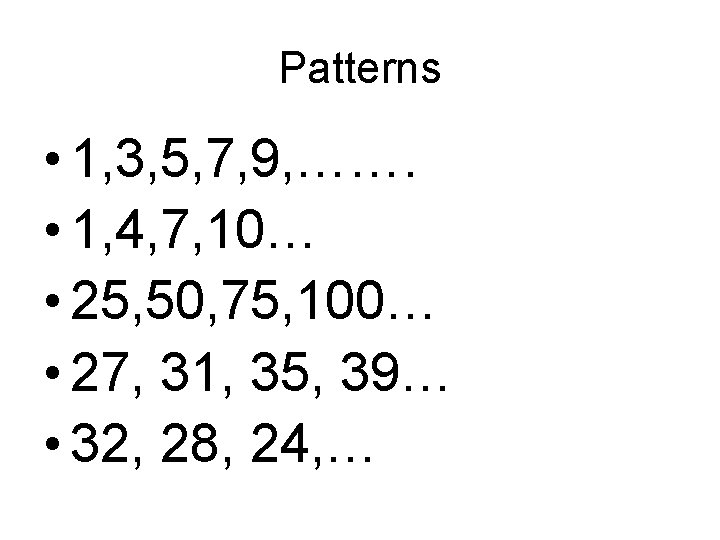
Patterns • 1, 3, 5, 7, 9, ……. • 1, 4, 7, 10… • 25, 50, 75, 100… • 27, 31, 35, 39… • 32, 28, 24, …
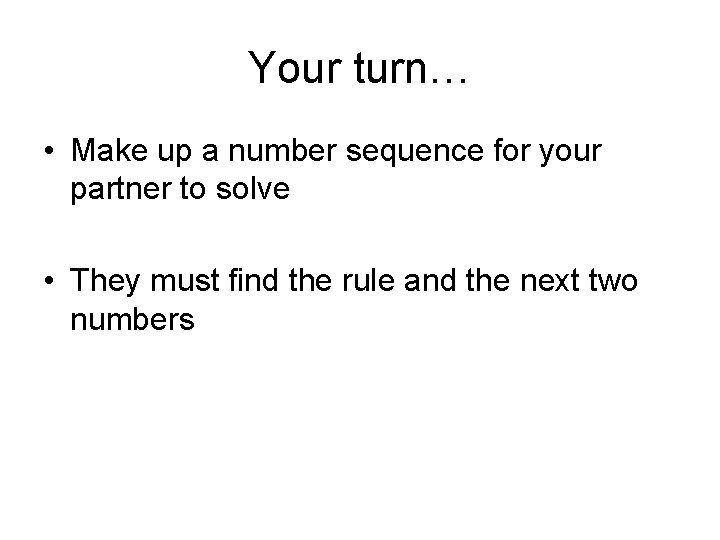
Your turn… • Make up a number sequence for your partner to solve • They must find the rule and the next two numbers
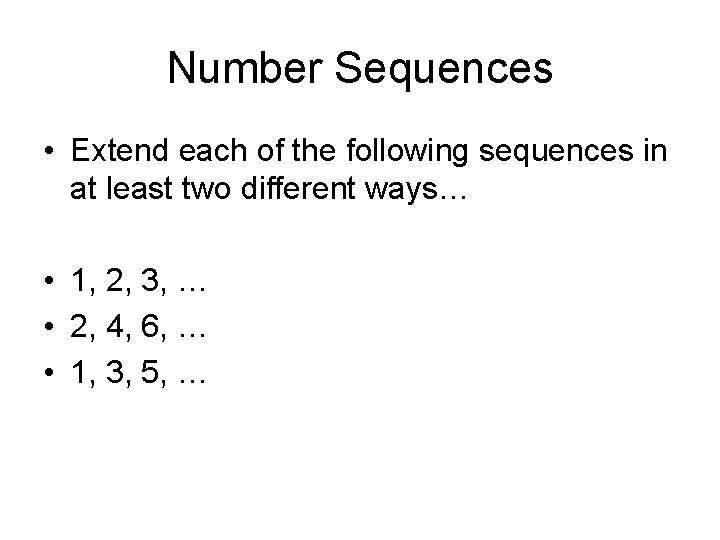
Number Sequences • Extend each of the following sequences in at least two different ways… • 1, 2, 3, … • 2, 4, 6, … • 1, 3, 5, …
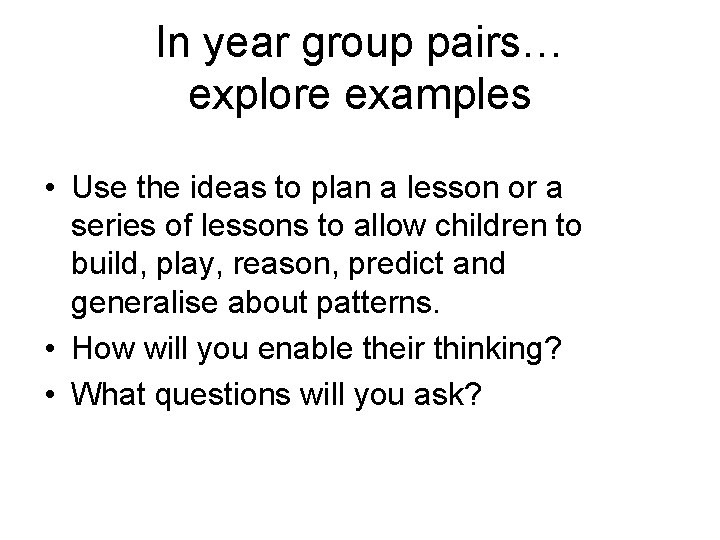
In year group pairs… explore examples • Use the ideas to plan a lesson or a series of lessons to allow children to build, play, reason, predict and generalise about patterns. • How will you enable their thinking? • What questions will you ask?
Measures • Where/ why do we measure? – Subjects / contexts • What do we need to measure for? • How do we measure? – Measuring instruments – Scales – Units
‘Frames of reference’ for estimating Estimate • How many ‘giant footsteps’ to the door? • How many hands high is the IAW? • How long is your table? • How much liquid does a mug hold? • How much does a shoe weigh? What helped you • How far is it to Birmingham? to estimate? • Set other examples for your group…
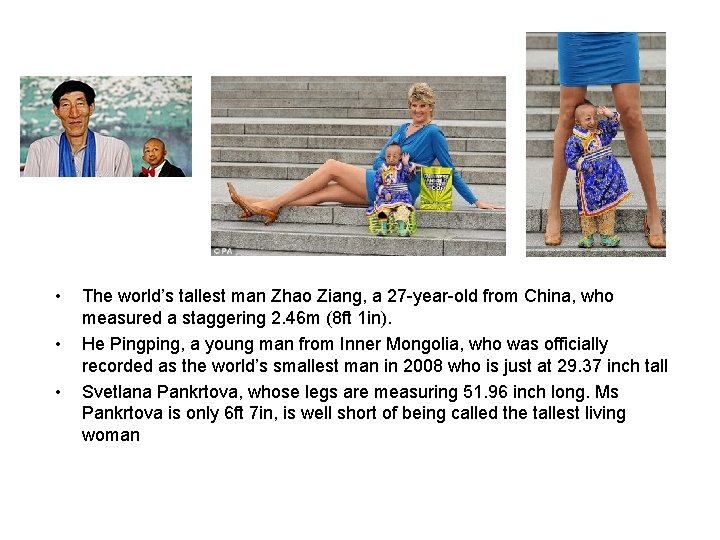
• • • The world’s tallest man Zhao Ziang, a 27 -year-old from China, who measured a staggering 2. 46 m (8 ft 1 in). He Pingping, a young man from Inner Mongolia, who was officially recorded as the world’s smallest man in 2008 who is just at 29. 37 inch tall Svetlana Pankrtova, whose legs are measuring 51. 96 inch long. Ms Pankrtova is only 6 ft 7 in, is well short of being called the tallest living woman
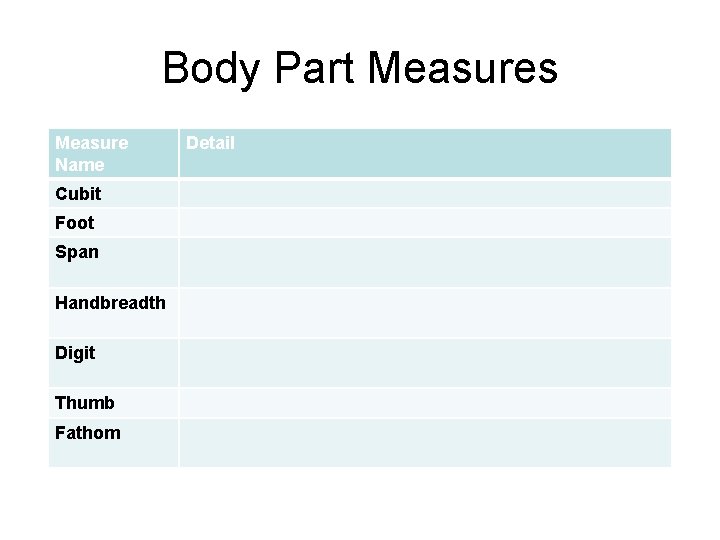
Body Part Measures Measure Name Cubit Foot Span Handbreadth Digit Thumb Fathom Detail
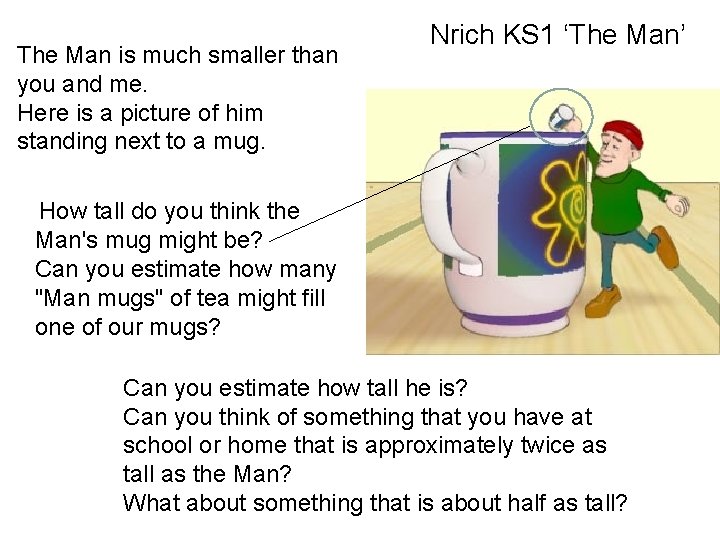
The Man is much smaller than you and me. Here is a picture of him standing next to a mug. Nrich KS 1 ‘The Man’ How tall do you think the Man's mug might be? Can you estimate how many "Man mugs" of tea might fill one of our mugs? Can you estimate how tall he is? Can you think of something that you have at school or home that is approximately twice as tall as the Man? What about something that is about half as tall?
Nrich KS 2 - Olympic Starters • 1896 - Thomas Burke • 1924 - Jackson Scholz from the USA won the from USA won the 100 m in 12 secs 200 m in just over 21 secs • 1906 - Ray Ewry from • 1906 - Peter O'Connor from Ireland won a the United States jumped 1 m 56 cms silver medal, he jumped [about] 15 metres. How would you perform against these measurements?
Software to Support • • Measuring Cylinder ITP Thermometer ITP Measuring Scales ITP Ruler ITP (ITP – Interactive Teaching Program) • Other online resources?
TASKS Task 4 (Hand in Day 9) Deliver a Problem Solving lesson to a group, or class, of children. Focus on one set of skills that you wish to make explicit to learners. Evaluate the lesson – how & when did you make the skills explicit? How successful were the learners in acquiring them, what do they need to do next? Task 5 (Bring to Day 10) Identify a learning objective that requires consolidation. Create a game (or other practical activity) for your learners to use in class (& at home? )
- Slides: 45