
Scientists throughout History Kinetic Energy and milie du

- Slides: 19
Scientists throughout History: Kinetic Energy and Émilie du Châtelet Rebecca Wenning
Part I • Historical background
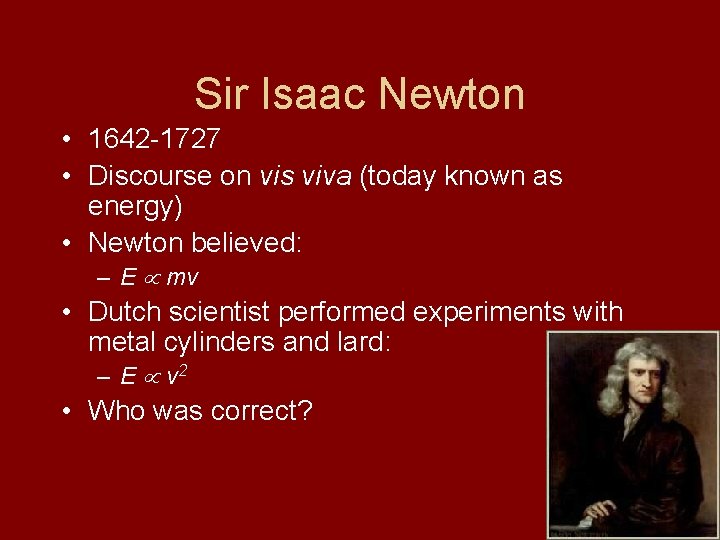
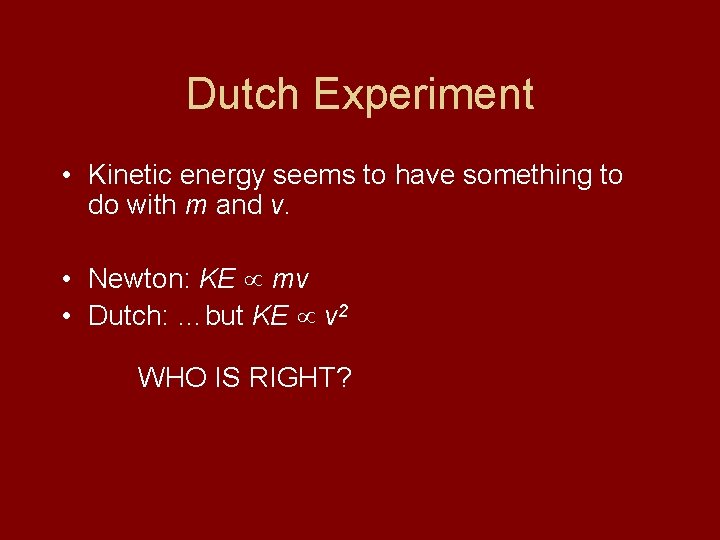
Sir Isaac Newton • 1642 -1727 • Discourse on vis viva (today known as energy) • Newton believed: – E mv • Dutch scientist performed experiments with metal cylinders and lard: – E v 2 • Who was correct?
Émilie du Châtelet • 1706 -1749: Only recently recognized by French National Library on her 300 th birthday
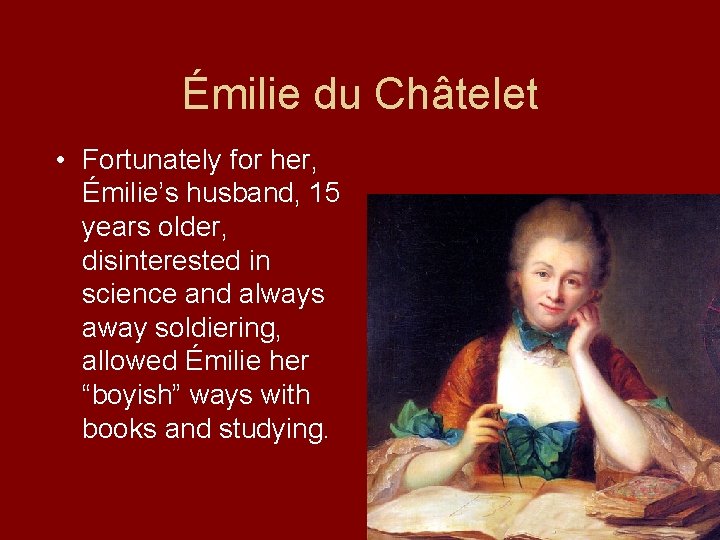
Émilie du Châtelet • Fortunately for her, Émilie’s husband, 15 years older, disinterested in science and always away soldiering, allowed Émilie her “boyish” ways with books and studying.
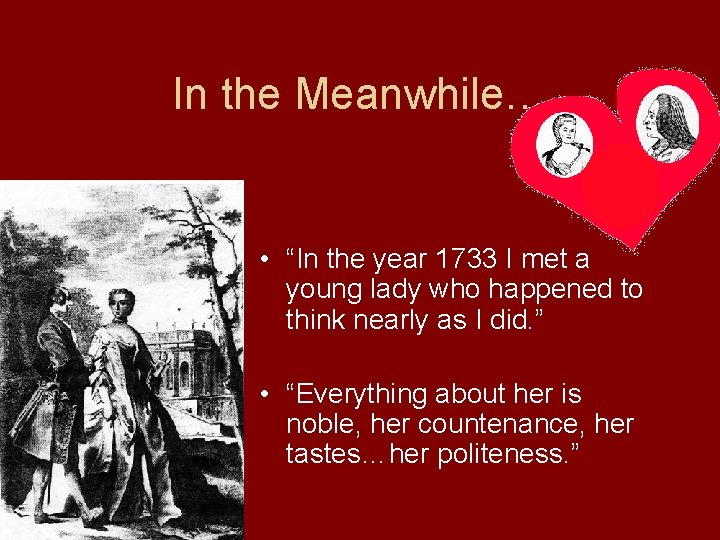
In the Meanwhile… • “In the year 1733 I met a young lady who happened to think nearly as I did. ” • “Everything about her is noble, her countenance, her tastes…her politeness. ”
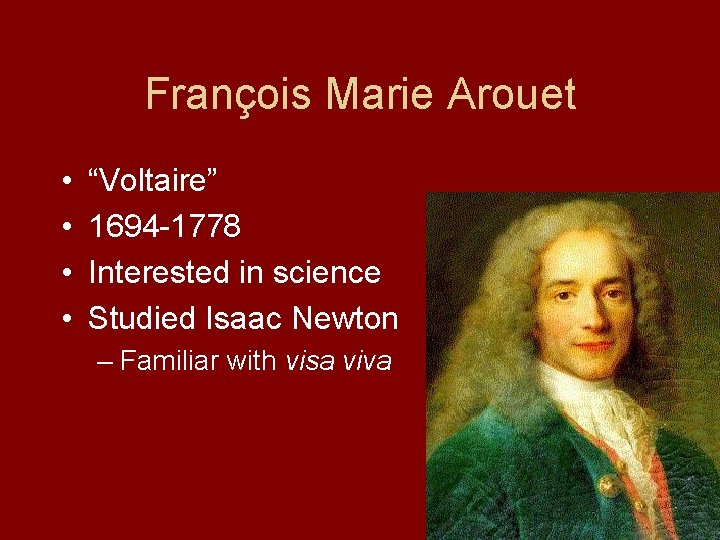
François Marie Arouet • • “Voltaire” 1694 -1778 Interested in science Studied Isaac Newton – Familiar with visa viva
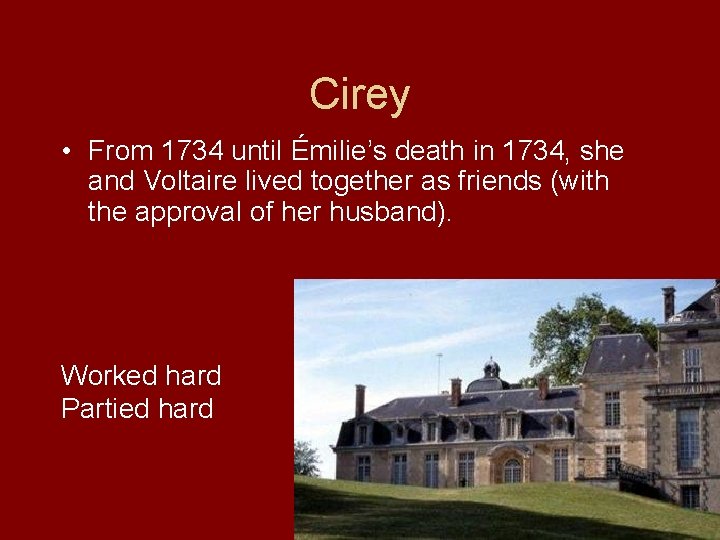
Cirey • From 1734 until Émilie’s death in 1734, she and Voltaire lived together as friends (with the approval of her husband). Worked hard Partied hard
Exile • Voltaire angered French government with his political writings • Fled to Holland from political persecution – Saw work of Dutch scientist
The Experiment • Following Voltaire’s trip to Holland, Voltaire explains to Émilie the energy experiment he saw. • She is already busy: – Mathematical, philosophical, and religious papers – Paper on nature of fire (would have won competition had she not been a woman) – Paper on color (discovered infrared radiation) – First translation of Newton’s Principia
Dutch Experiment • Kinetic energy seems to have something to do with m and v. • Newton: KE mv • Dutch: …but KE v 2 WHO IS RIGHT?
Part II • Experimentation
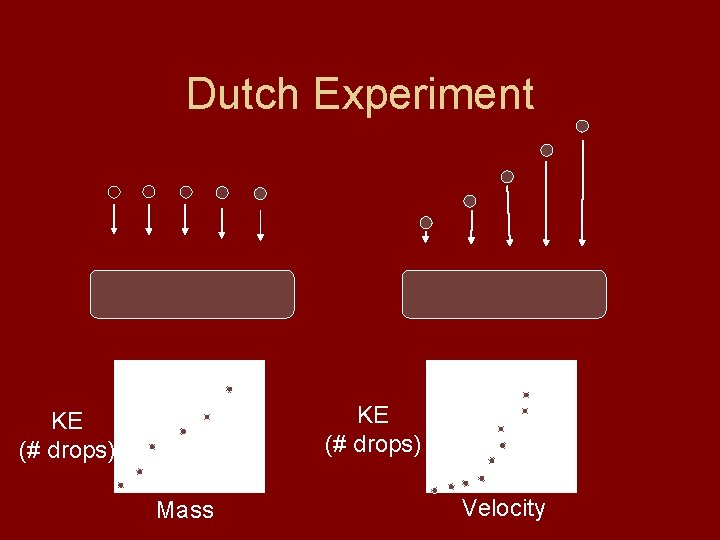
Dutch Experiment KE (# drops) Mass Velocity
Close of an Epoch • Émilie performs the experiment and determines that E=mv 2, not E=mv. • At 42, she becomes pregnant, but becomes ill with an infection and died before giving birth. • “I have lost…half of myself, a soul for which my soul seems to have been made. ” ~Voltaire
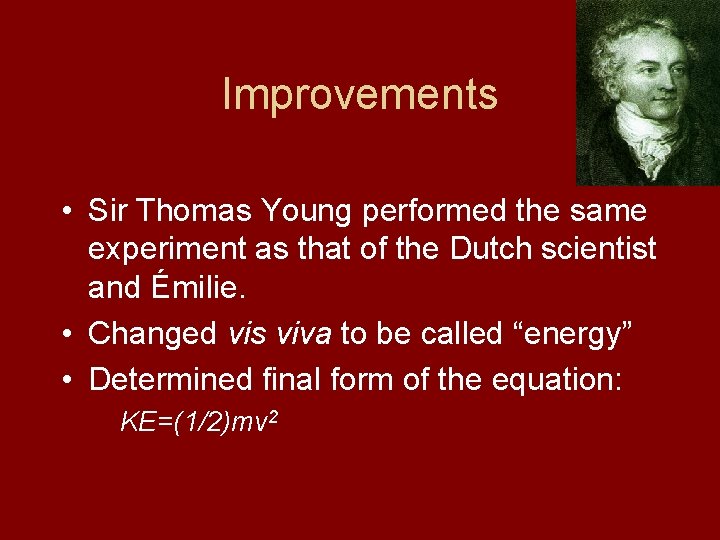
Improvements • Sir Thomas Young performed the same experiment as that of the Dutch scientist and Émilie. • Changed vis viva to be called “energy” • Determined final form of the equation: KE=(1/2)mv 2
Issues to Consider I • Who got credit for KE equation? Who should have gotten it? • In which instances of life was Émilie oppressed as a woman scientist? • Who were the people and what were the contexts under which she was oppressed?
Issues to Consider II • Beyond “fairness” issues, what are the negative consequences of oppression of any minority group in science? • Have you ever felt oppressed in science? When? Why?
Issues to Consider III • According to S & E statistics, is there still likely oppression of women? • What are some of the institutions and contexts under which women are oppressed? • Are there any other minority groups in S & E that are oppressed?
Issues to Consider IV • What are the solutions to oppression of minorities (females, in particular) in S & E? • Are solutions actually needed? Maybe fewer women want S & E careers -should there be 50 -50 percentage rates?