
Scientifically Science is more than just knowing and
- Slides: 18
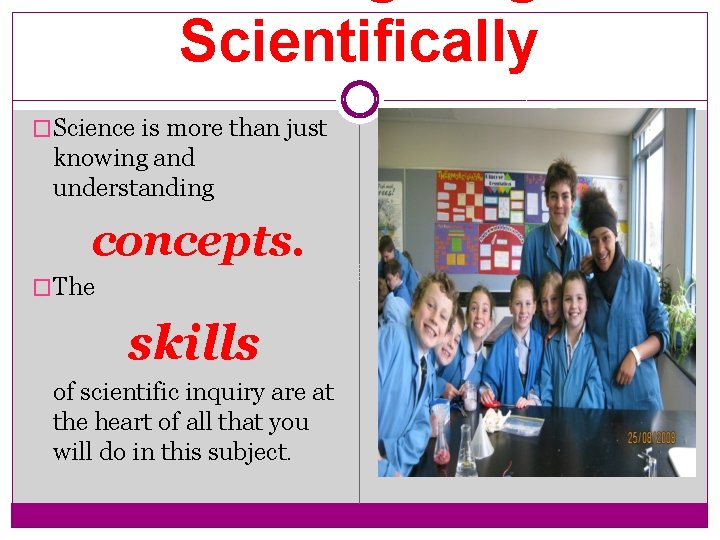
Scientifically �Science is more than just knowing and understanding concepts. �The skills of scientific inquiry are at the heart of all that you will do in this subject.
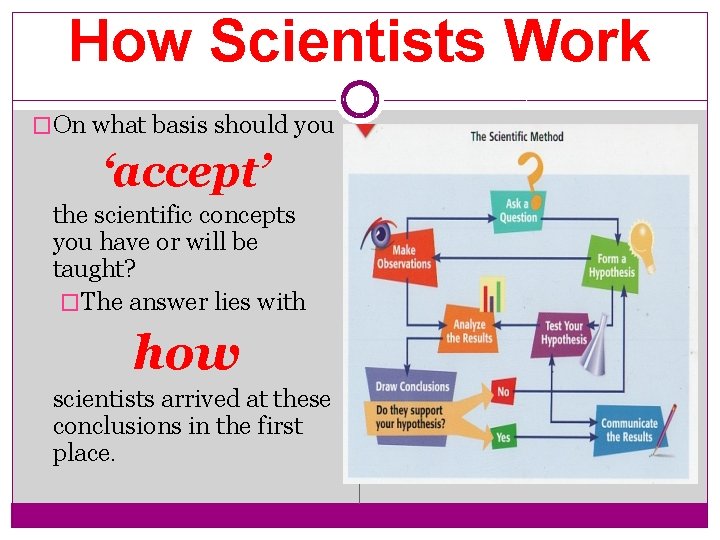
How Scientists Work �On what basis should you ‘accept’ the scientific concepts you have or will be taught? �The answer lies with how scientists arrived at these conclusions in the first place.
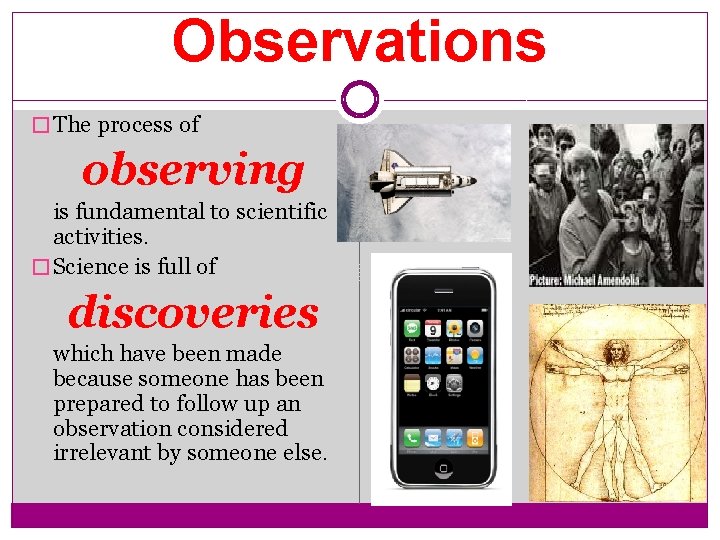
Observations � The process of observing is fundamental to scientific activities. � Science is full of discoveries which have been made because someone has been prepared to follow up an observation considered irrelevant by someone else.
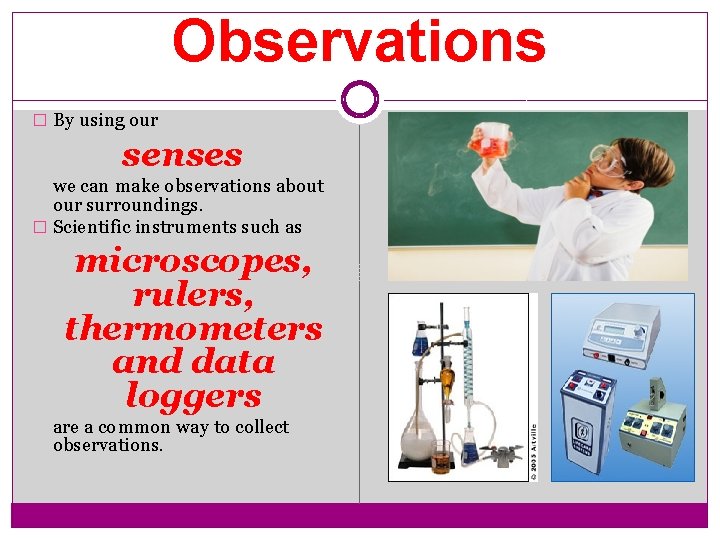
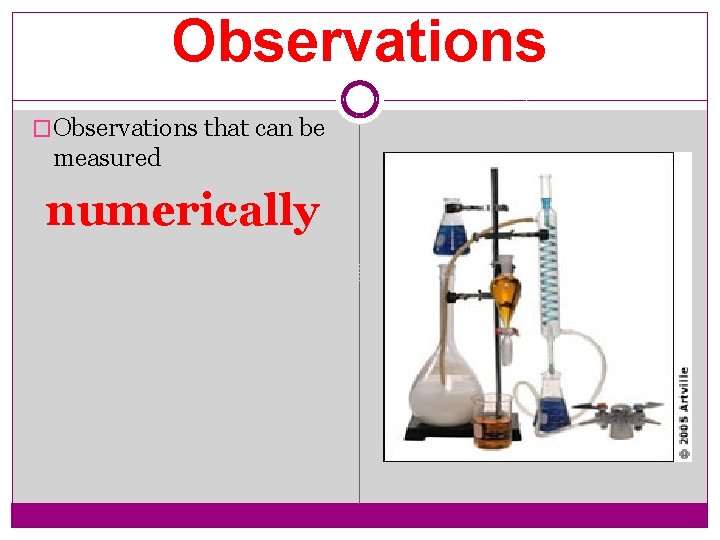
Observations � By using our senses we can make observations about our surroundings. � Scientific instruments such as microscopes, rulers, thermometers and data loggers are a common way to collect observations.
Observations �Observations that can be measured numerically
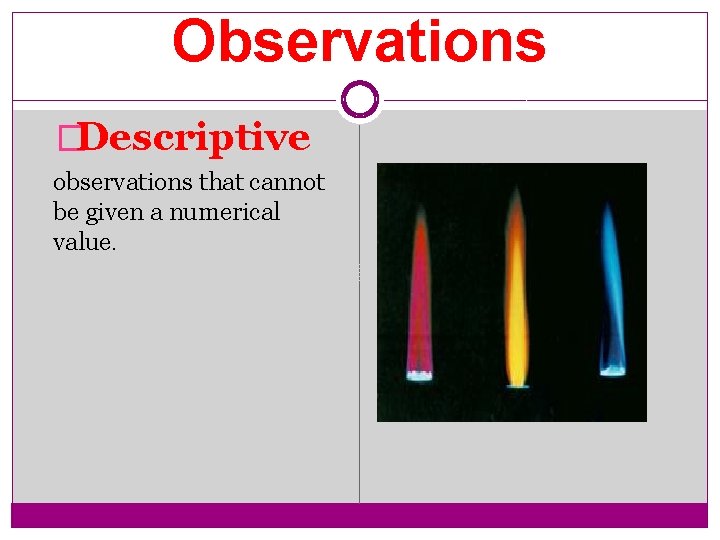
Observations �Descriptive observations that cannot be given a numerical value.
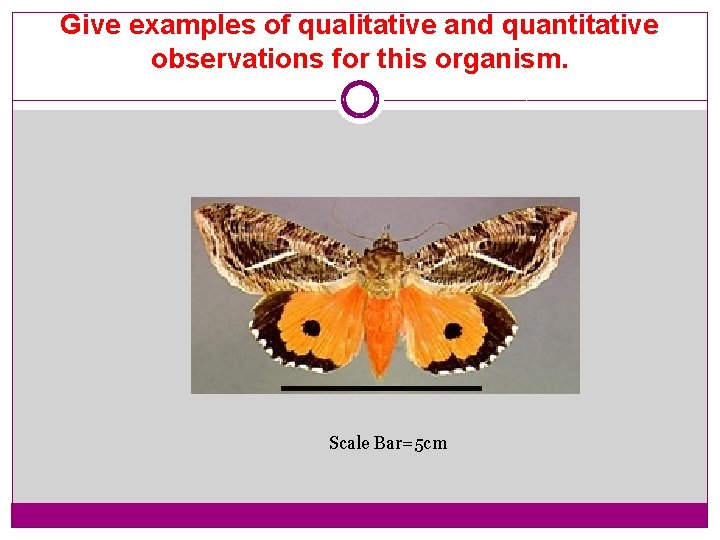
Give examples of qualitative and quantitative observations for this organism. Scale Bar=5 cm
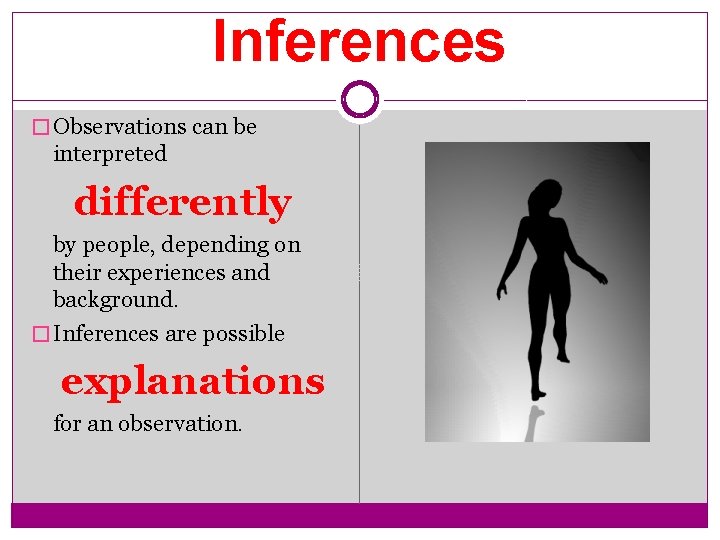
Inferences � Observations can be interpreted differently by people, depending on their experiences and background. � Inferences are possible explanations for an observation.
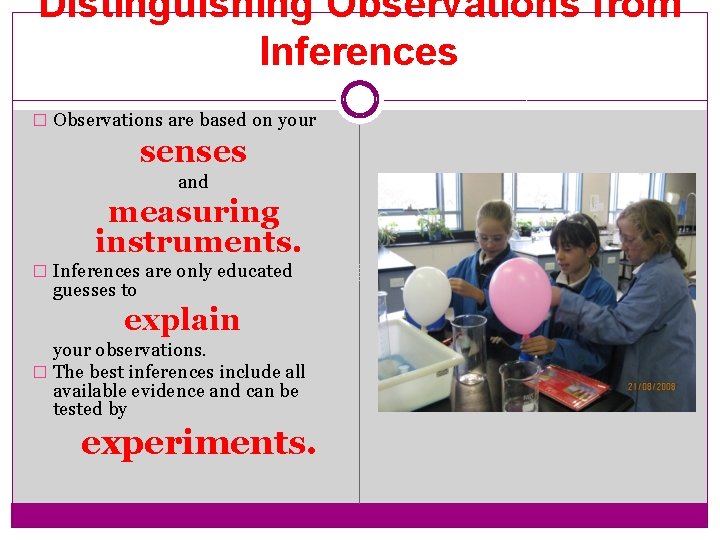
Distinguishing Observations from Inferences � Observations are based on your senses and measuring instruments. � Inferences are only educated guesses to explain your observations. � The best inferences include all available evidence and can be tested by experiments.
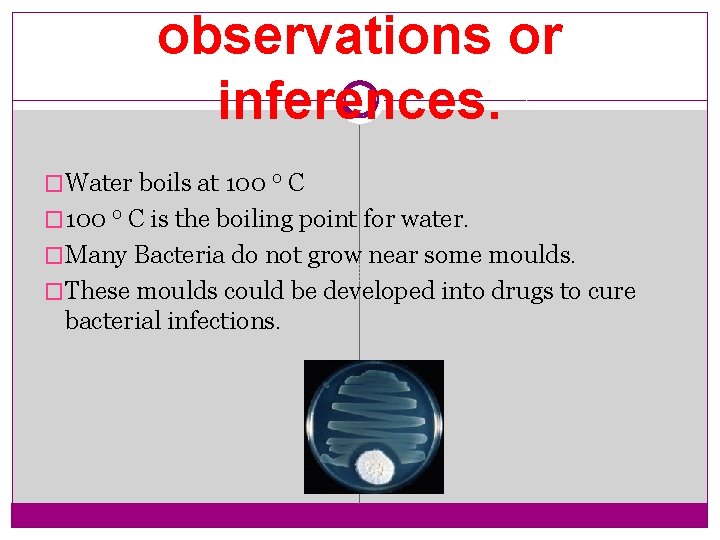
observations or inferences. �Water boils at 100 0 C � 100 0 C is the boiling point for water. �Many Bacteria do not grow near some moulds. �These moulds could be developed into drugs to cure bacterial infections.
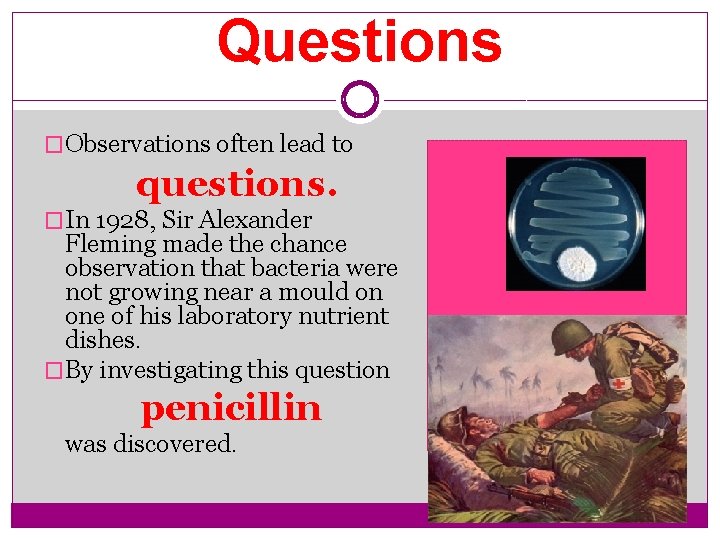
Questions �Observations often lead to questions. �In 1928, Sir Alexander Fleming made the chance observation that bacteria were not growing near a mould on one of his laboratory nutrient dishes. �By investigating this question penicillin was discovered.
Hypotheses �An inference or question can be formulated into a hypothesis �This is a tentative answer or educated guess to a question or problem. �A hypothesis is based on evidence and careful observations.
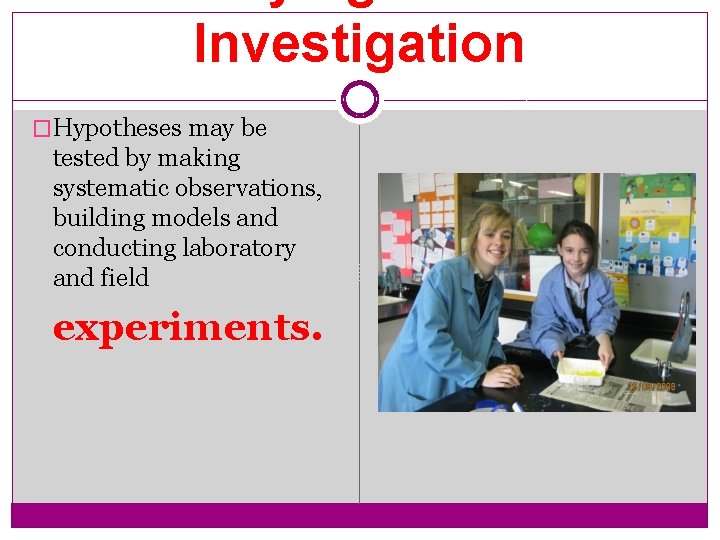
Investigation �Hypotheses may be tested by making systematic observations, building models and conducting laboratory and field experiments.
Investigation � Whatever method is chosen to test a hypothesis, it must be described in enough detail for others to be able to repeat it. � If others cannot repeat the experiment and obtain the same results, the test is not considered reliable.
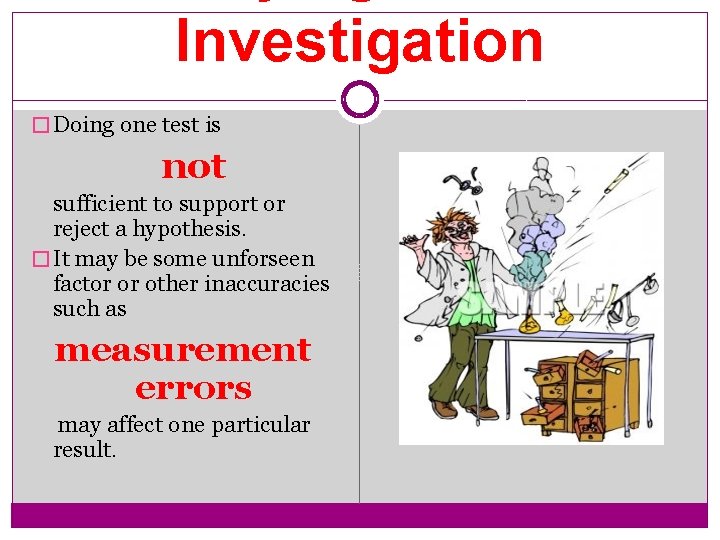
Investigation � Doing one test is not sufficient to support or reject a hypothesis. � It may be some unforseen factor or other inaccuracies such as measurement errors may affect one particular result.
Investigation � The same test is normally carried out a number of times under the same conditions at different times. � Increasing the sample size is another way to improve reliability of results.
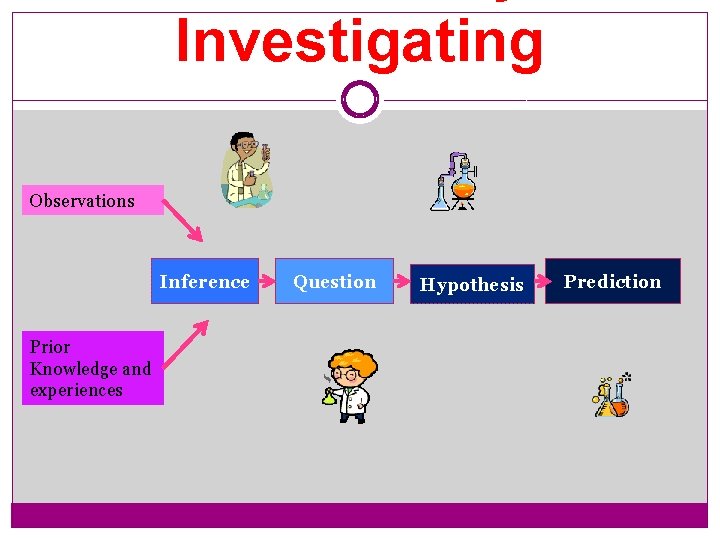
Investigating Observations Inference Prior Knowledge and experiences Question Hypothesis Prediction
Principle � When the results of a scientific investigation repeatedly support a hypothesis, it may become a theory or principle and the hypothesis is accepted as scientific truth.