
Scientific Method What is the scientific method v
- Slides: 22
Scientific Method
What is the scientific method? v The scientific method is the basic method, guide, and system, by which we originate, refine, extend, and apply knowledge in all fields. v An organized approach that characterizes science
How do we (scientists) answer questions about the world?
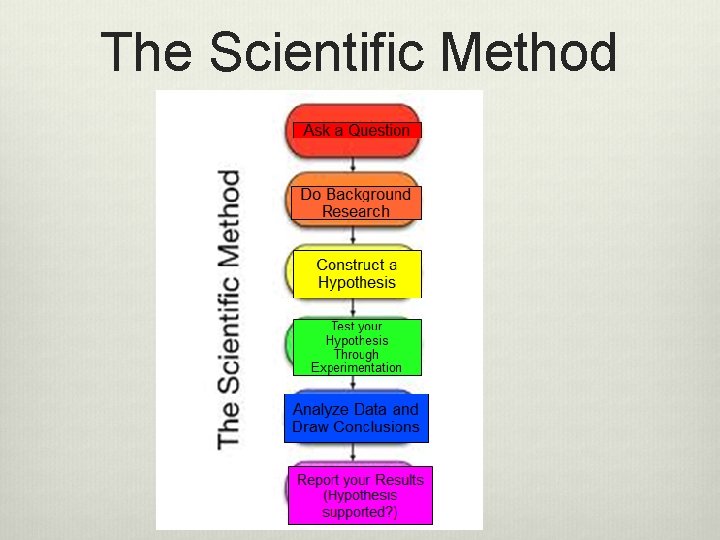
The Scientific Method
Step 1: Ask a Question v Who? v What? v When? v Where? v Why? v How? The answer needs to be something you can MEASURE. Preferably a number.
Step 2: Background Research v Background research needed to formulate hypothesis. v Background research from reliable source.
Step 3: Formulate a Hypothesis v Your hypothesis must be an IF…. THEN…. . BECAUSE statement. independent variable and a dependent variable. v It must contain an v Must be a testable statement.
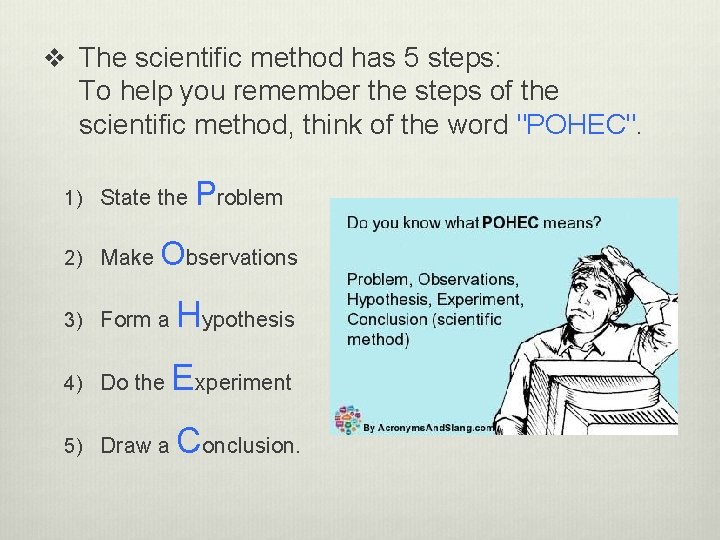
v The scientific method has 5 steps: To help you remember the steps of the scientific method, think of the word "POHEC". 1) State the 2) Make Problem Observations 3) Form a Hypothesis 4) Do the Experiment 5) Draw a Conclusion.
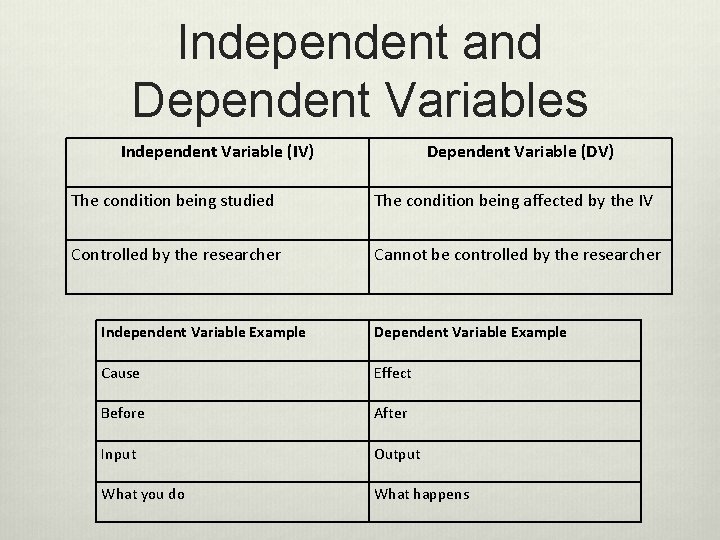
Independent and Dependent Variables Independent Variable (IV) Dependent Variable (DV) The condition being studied The condition being affected by the IV Controlled by the researcher Cannot be controlled by the researcher Independent Variable Example Dependent Variable Example Cause Effect Before After Input Output What you do What happens
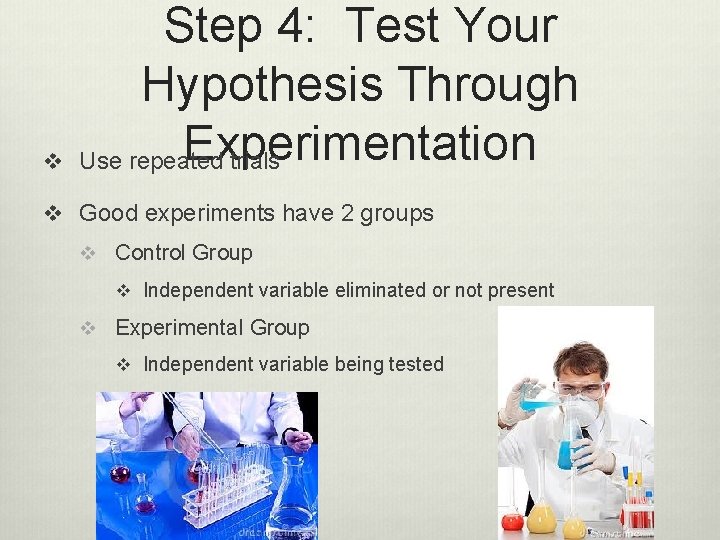
v Step 4: Test Your Hypothesis Through Experimentation Use repeated trials v Good experiments have 2 groups v Control Group v Independent variable eliminated or not present v Experimental Group v Independent variable being tested
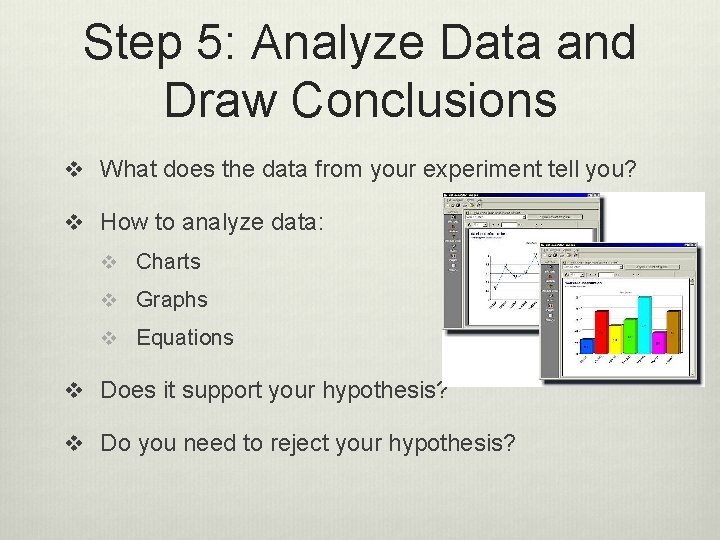
Step 5: Analyze Data and Draw Conclusions v What does the data from your experiment tell you? v How to analyze data: v Charts v Graphs v Equations v Does it support your hypothesis? v Do you need to reject your hypothesis?
Step 6: Report Your Results v If data does not support your hypothesis, revise it and retest. v If your data supports your hypothesis: v Repeat the experiment several times. v Publish in peer reviewed publications. v Brag about it! Yay!
Activity v Explain how you would test one of the following questions using the scientific method: v Are male manatees always larger than female manatees? v Does caffeine make people hyper? v Does studying more help students to do better on tests? v Is penicillin a more effective antibiotic against coli than tetracycline? E.
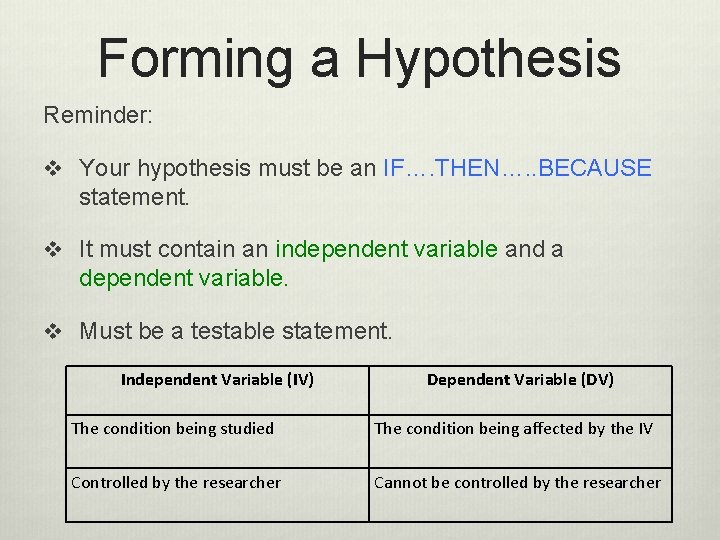
Forming a Hypothesis Reminder: v Your hypothesis must be an IF…. THEN…. . BECAUSE statement. v It must contain an independent variable and a dependent variable. v Must be a testable statement. Independent Variable (IV) Dependent Variable (DV) The condition being studied The condition being affected by the IV Controlled by the researcher Cannot be controlled by the researcher
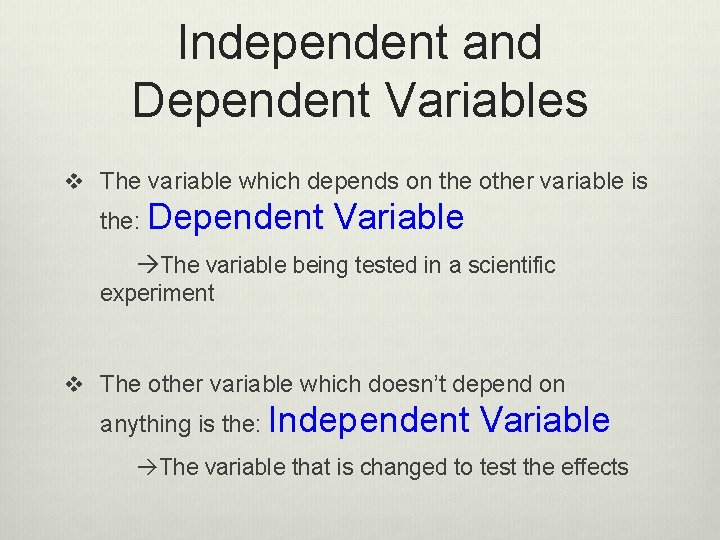
Independent and Dependent Variables v The variable which depends on the other variable is the: Dependent Variable The variable being tested in a scientific experiment v The other variable which doesn’t depend on anything is the: Independent Variable The variable that is changed to test the effects
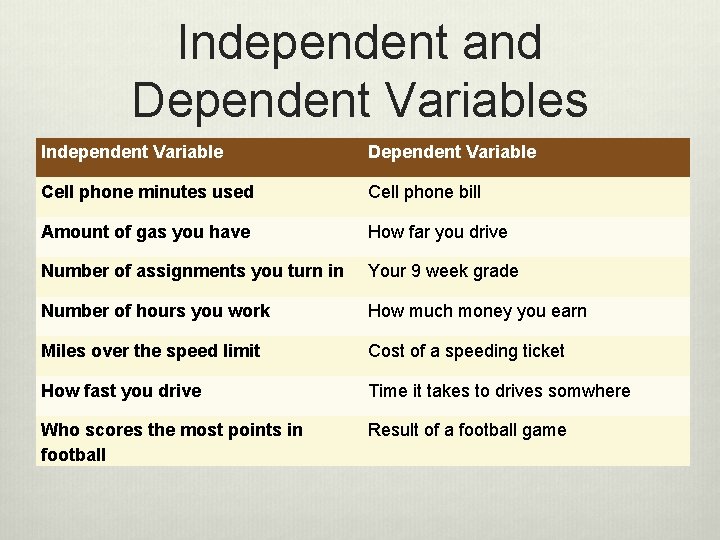
Independent and Dependent Variables Independent Variable Dependent Variable Cell phone minutes used Cell phone bill Amount of gas you have How far you drive Number of assignments you turn in Your 9 week grade Number of hours you work How much money you earn Miles over the speed limit Cost of a speeding ticket How fast you drive Time it takes to drives somwhere Who scores the most points in football Result of a football game
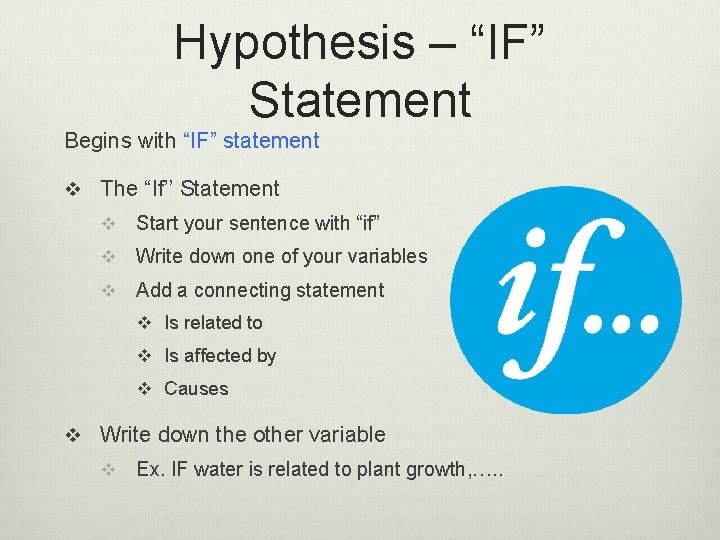
Hypothesis – “IF” Statement Begins with “IF” statement v The “If’’ Statement v Start your sentence with “if” v Write down one of your variables v Add a connecting statement v Is related to v Is affected by v Causes v Write down the other variable v Ex. IF water is related to plant growth, …. .
Hypothesis – “THEN” Statement The “Then”Statement v Write the word THEN v Make a comment about the relationship between the two variables v EX. THEN the more you water plants, the bigger they will grow
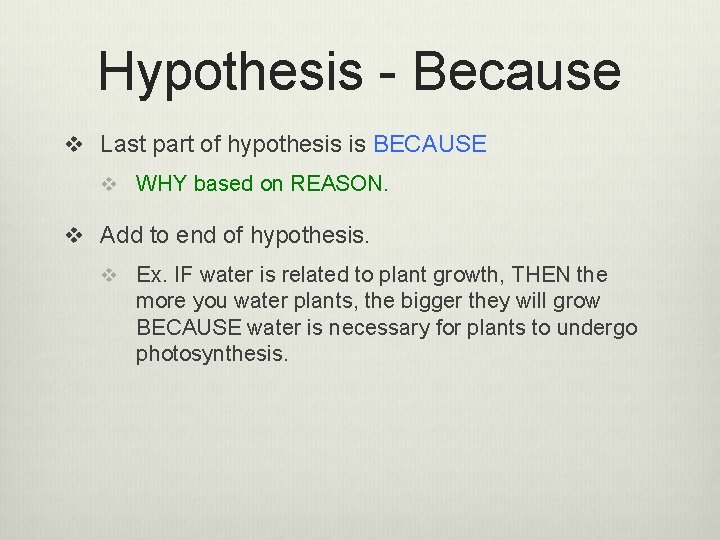
Hypothesis - Because v Last part of hypothesis is BECAUSE v WHY based on REASON. v Add to end of hypothesis. v Ex. IF water is related to plant growth, THEN the more you water plants, the bigger they will grow BECAUSE water is necessary for plants to undergo photosynthesis.
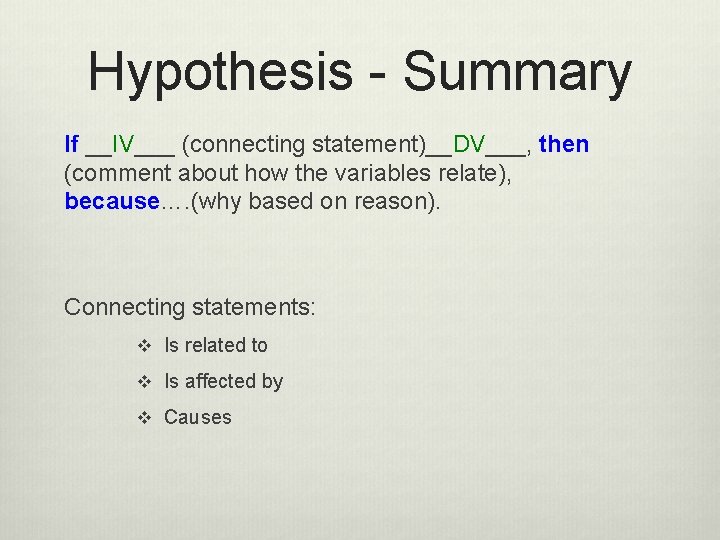
Hypothesis - Summary If __IV___ (connecting statement)__DV___, then (comment about how the variables relate), because…. (why based on reason). Connecting statements: v Is related to v Is affected by v Causes
Examples v IF skin cancer is related to ultraviolet light, THEN people with a high exposure to UV light will have a higher frequency of skin cancer because UV radiation causes DNA mutations. v IF the frequency of winning the lottery is related to the frequency of buying lottery tickets, THEN the more lottery tickets that you buy the better your chance of winning because of probability.
Hypothesis Writing Practice! 1. Chocolate may cause pimples. 2. Salt in soil may affect plant growth. 3. Bacterial growth may be affected by temperature. 4. Temperature may cause leaves to change color.