
SCIENTIFIC METHOD QUESTION OF THE DAY Which of

- Slides: 14
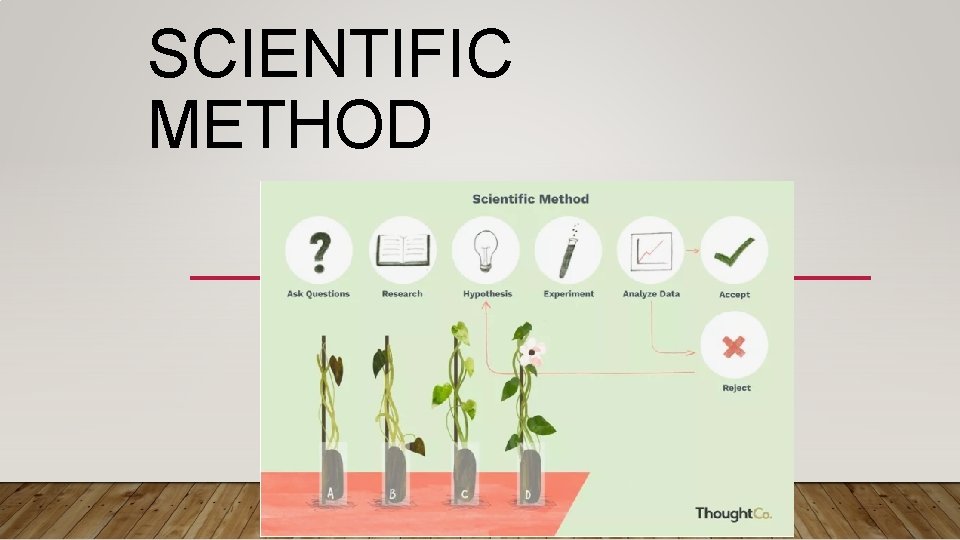
SCIENTIFIC METHOD
QUESTION OF THE DAY • Which of the following investments would give you the greatest return over time? 1. Mutual funds 2. RRSPs & RESPs 3. Scientific research 4. Government bonds
WHY WE SHOULD INVEST IN RAT MASSAGE https: //www. youtube. com/watch? v=n. DU 3 i 2 VWd. TQ
WHAT IS SCIENCE? • Science is a way of studying the natural world through a structure of questioning and experimenting. It is not static, meaning that as new facts and studies arise, our understanding of the world begins to change
THE SCIENTIFIC METHOD HTTPS: //WWW. YOUTUBE. COM/WATCH? V=ZDVOZ 8 GBFC&AB_CHANNEL=SARAHSTEPHENS
THE SCIENTIFIC METHOD • The steps to the scientific method are as follows:
HYPOTHESIS • A hypothesis is an educated guess about how things work • It makes a prediction about an outcome and attempts to answer a question • Ex: IF the witch weighs as much as a duck, THEN she will float
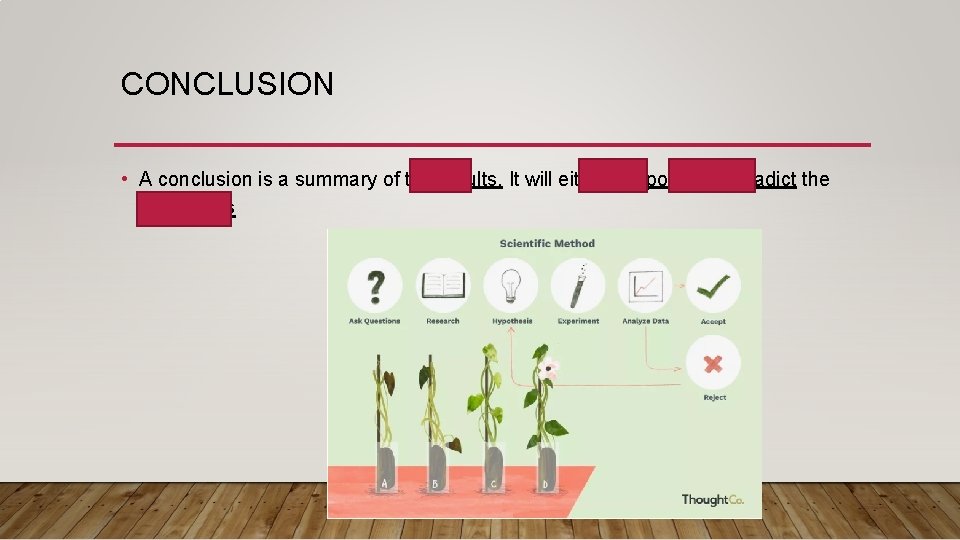
CONCLUSION • A conclusion is a summary of the results. It will either support or contradict the hypothesis
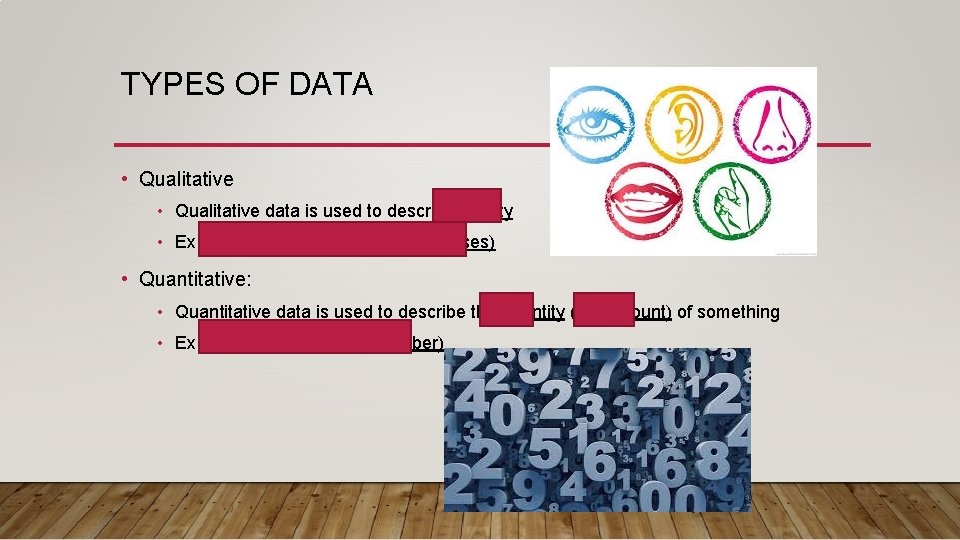
TYPES OF DATA • Qualitative data is used to describe quality • Ex: texture, colour, smell, etc (5 senses) • Quantitative: • Quantitative data is used to describe the quantity (the amount) of something • Ex: weight, mass, age (a number)
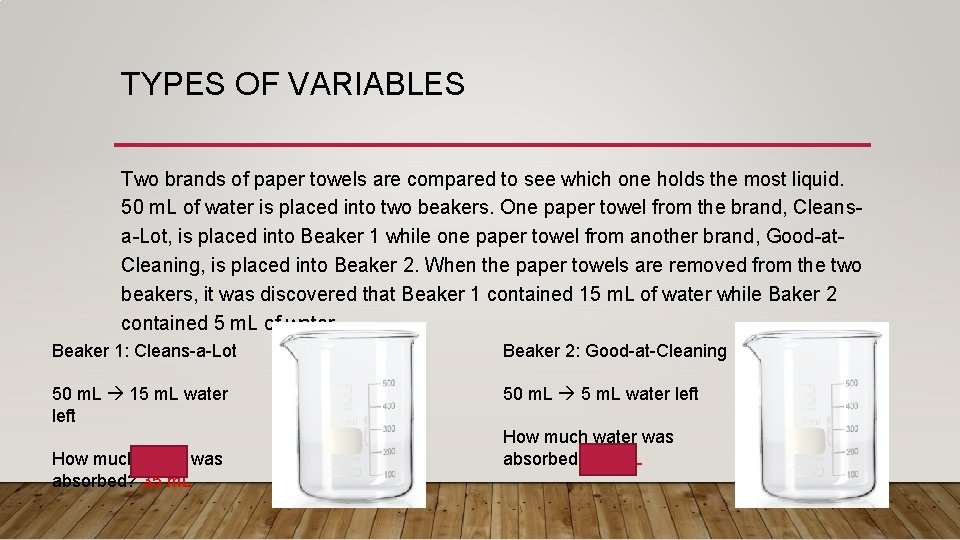
TYPES OF VARIABLES Two brands of paper towels are compared to see which one holds the most liquid. 50 m. L of water is placed into two beakers. One paper towel from the brand, Cleansa-Lot, is placed into Beaker 1 while one paper towel from another brand, Good-at. Cleaning, is placed into Beaker 2. When the paper towels are removed from the two beakers, it was discovered that Beaker 1 contained 15 m. L of water while Baker 2 contained 5 m. L of water Beaker 1: Cleans-a-Lot Beaker 2: Good-at-Cleaning 50 m. L 15 m. L water left 50 m. L 5 m. L water left How much water was absorbed? 35 m. L How much water was absorbed? 45 m. L
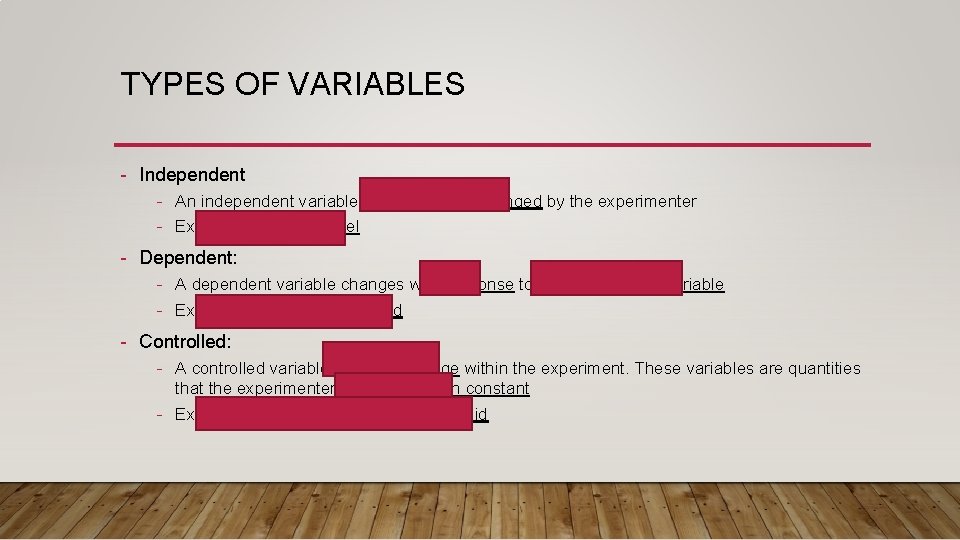
TYPES OF VARIABLES - Independent - An independent variable is purposefully changed by the experimenter - Ex: brand of paper towel - Dependent: - A dependent variable changes with response to the independent variable - Ex: amount of water absorbed - Controlled: - A controlled variable does not change within the experiment. These variables are quantities that the experimenter wants to remain constant - Ex: amount of water to start; type of liquid
TO DO NOW • Complete the practice • Announcements: • Next TWO classes are lab days! (Mon & Tues, Sept 13 -14) • In THREE classes (Wednesday, Sept 15) there will be a QUIZ on Safety, WHMIS, Scientific Method, and Lab Equipment
KAHOOT: SCIENTIFIC METHOD HTTPS: //PLAY. KAHOOT. IT/V 2/LOBBY? QUIZID=831 DE 573 -990 F-42 EA-9 F 851 E 503 EBA 9 FC 4