
Scientific Method Microscopes and the Metric System Science
- Slides: 18
Scientific Method, Microscopes, and the Metric System
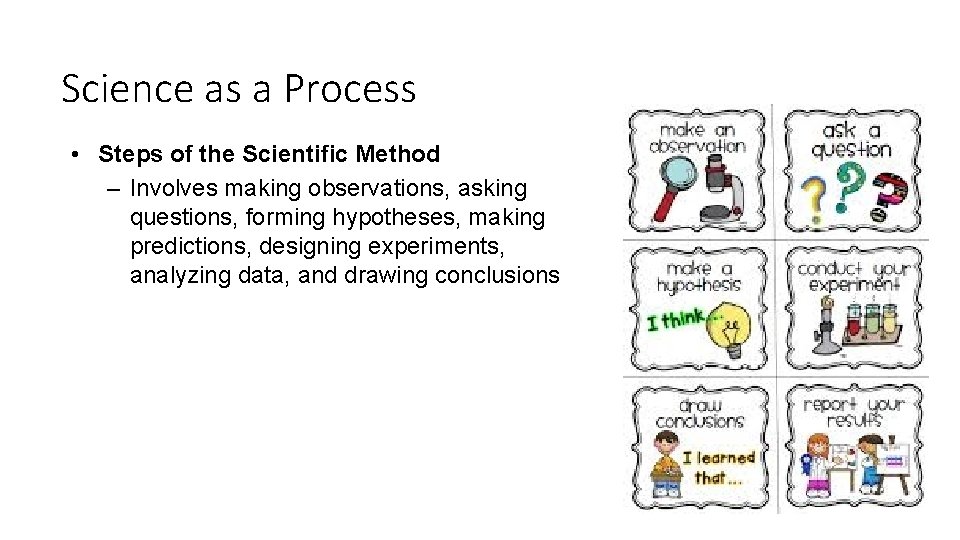
Science as a Process • Steps of the Scientific Method – Involves making observations, asking questions, forming hypotheses, making predictions, designing experiments, analyzing data, and drawing conclusions
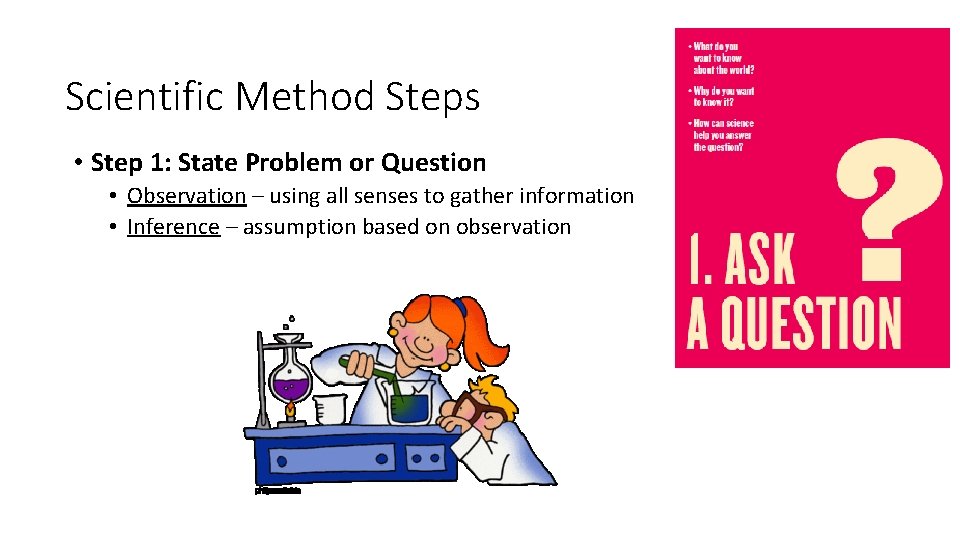
Scientific Method Steps • Step 1: State Problem or Question • Observation – using all senses to gather information • Inference – assumption based on observation
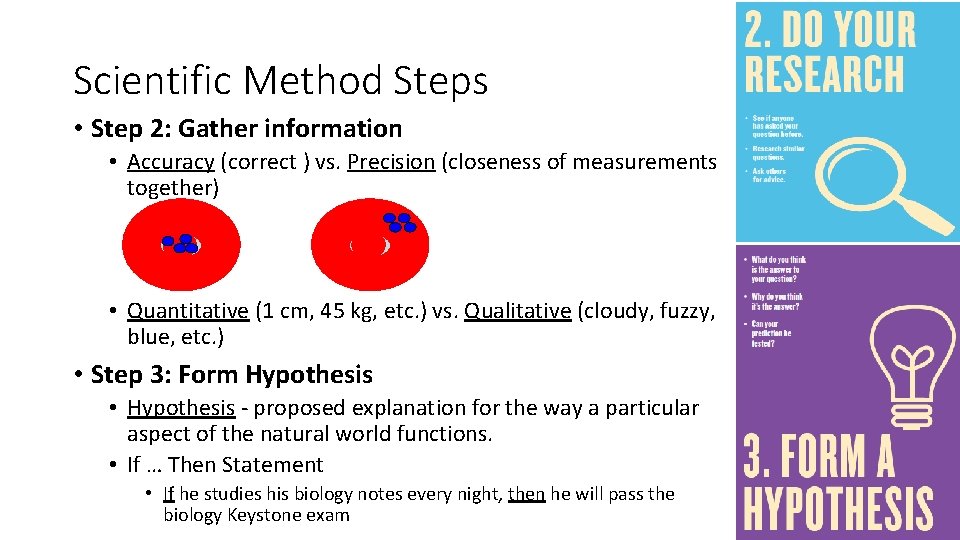
Scientific Method Steps • Step 2: Gather information • Accuracy (correct ) vs. Precision (closeness of measurements together) • Quantitative (1 cm, 45 kg, etc. ) vs. Qualitative (cloudy, fuzzy, blue, etc. ) • Step 3: Form Hypothesis • Hypothesis - proposed explanation for the way a particular aspect of the natural world functions. • If … Then Statement • If he studies his biology notes every night, then he will pass the biology Keystone exam.
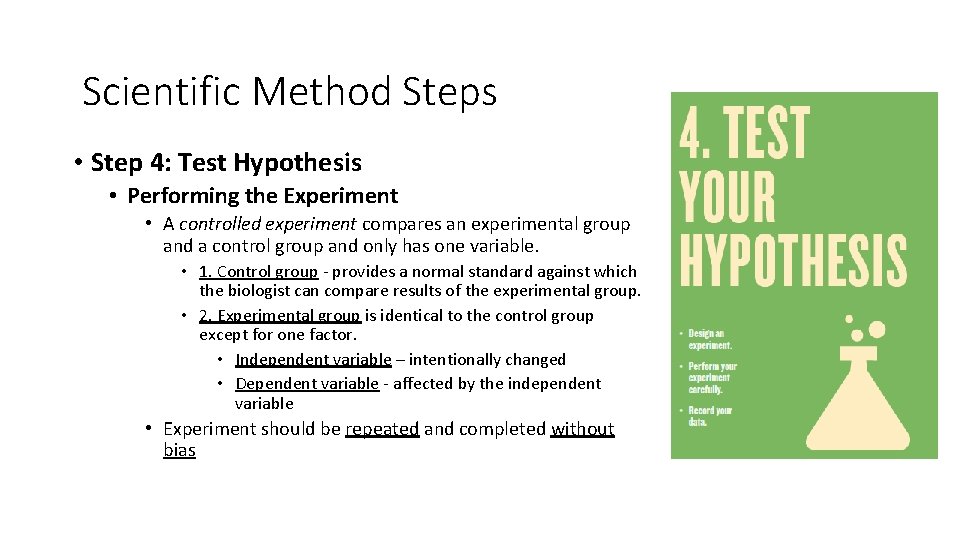
Scientific Method Steps • Step 4: Test Hypothesis • Performing the Experiment • A controlled experiment compares an experimental group and a control group and only has one variable. • 1. Control group - provides a normal standard against which the biologist can compare results of the experimental group. • 2. Experimental group is identical to the control group except for one factor. • Independent variable – intentionally changed • Dependent variable - affected by the independent variable • Experiment should be repeated and completed without bias
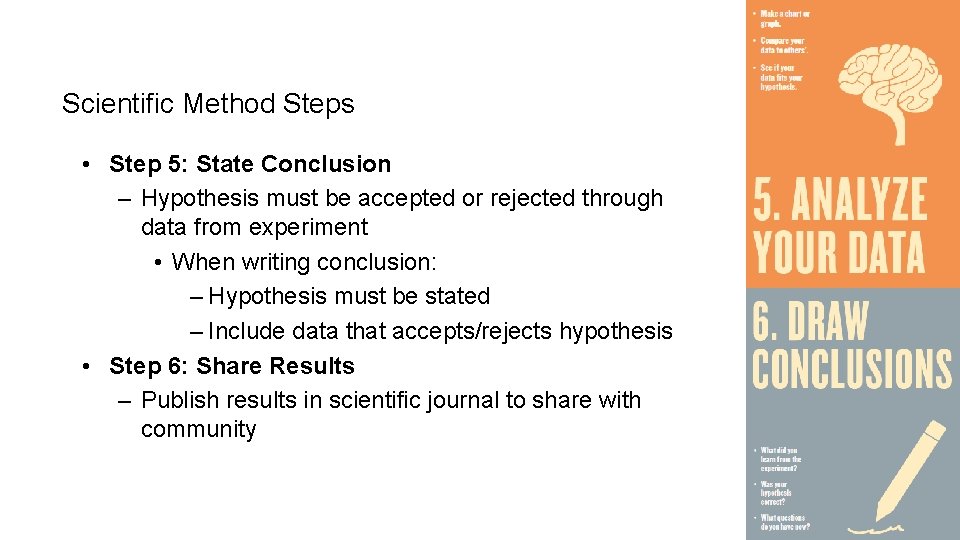
Scientific Method Steps • Step 5: State Conclusion – Hypothesis must be accepted or rejected through data from experiment • When writing conclusion: – Hypothesis must be stated – Include data that accepts/rejects hypothesis • Step 6: Share Results – Publish results in scientific journal to share with community
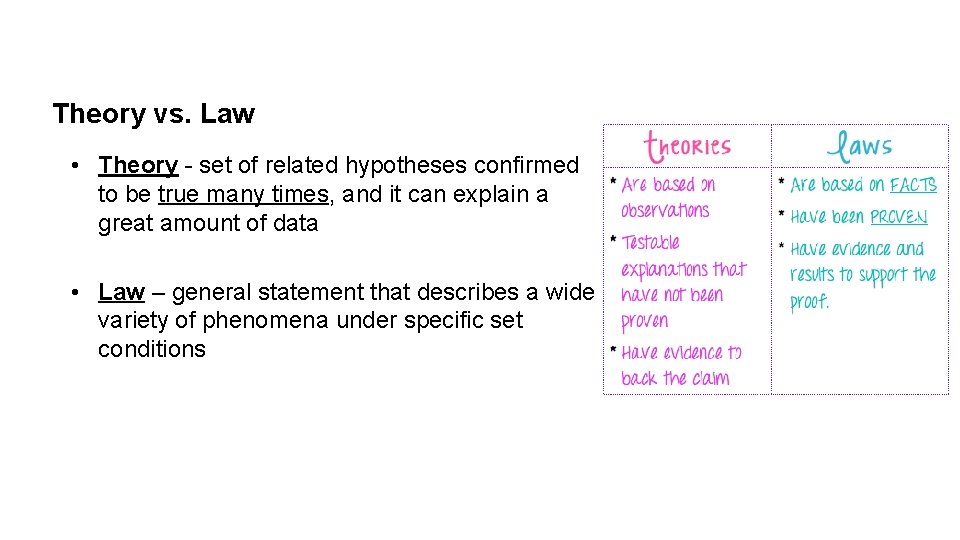
Theory vs. Law • Theory - set of related hypotheses confirmed to be true many times, and it can explain a great amount of data • Law – general statement that describes a wide variety of phenomena under specific set conditions
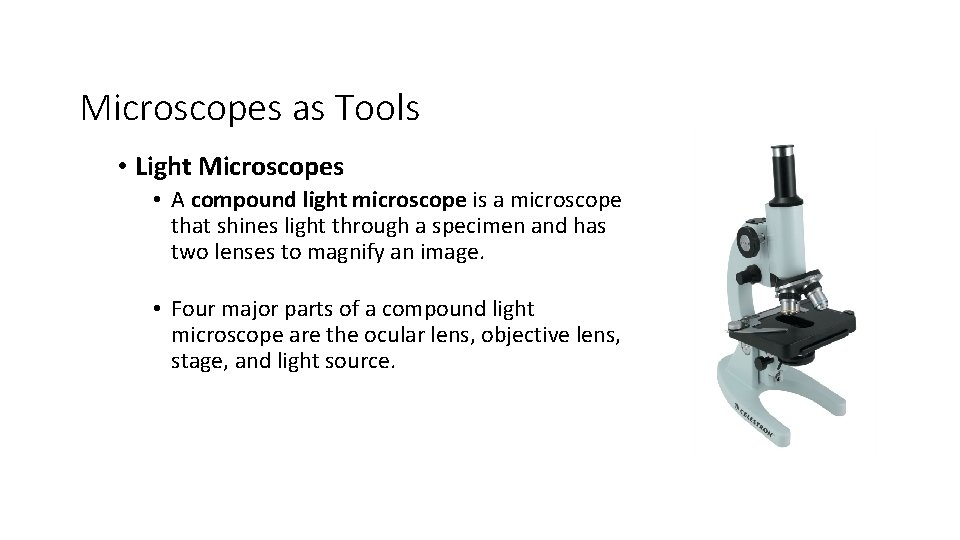
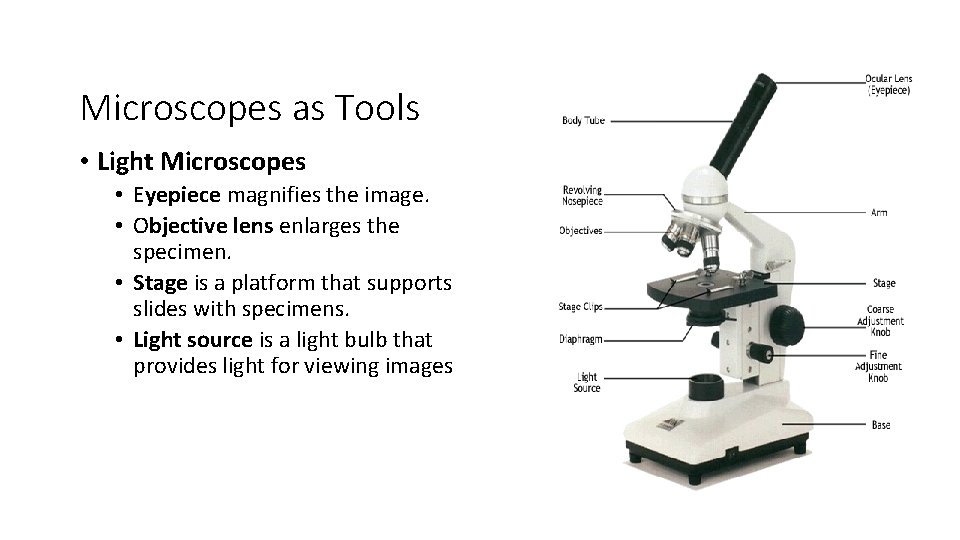
Microscopes as Tools • Light Microscopes • A compound light microscope is a microscope that shines light through a specimen and has two lenses to magnify an image. • Four major parts of a compound light microscope are the ocular lens, objective lens, stage, and light source.
Microscopes as Tools • Light Microscopes • Eyepiece magnifies the image. • Objective lens enlarges the specimen. • Stage is a platform that supports slides with specimens. • Light source is a light bulb that provides light for viewing images.
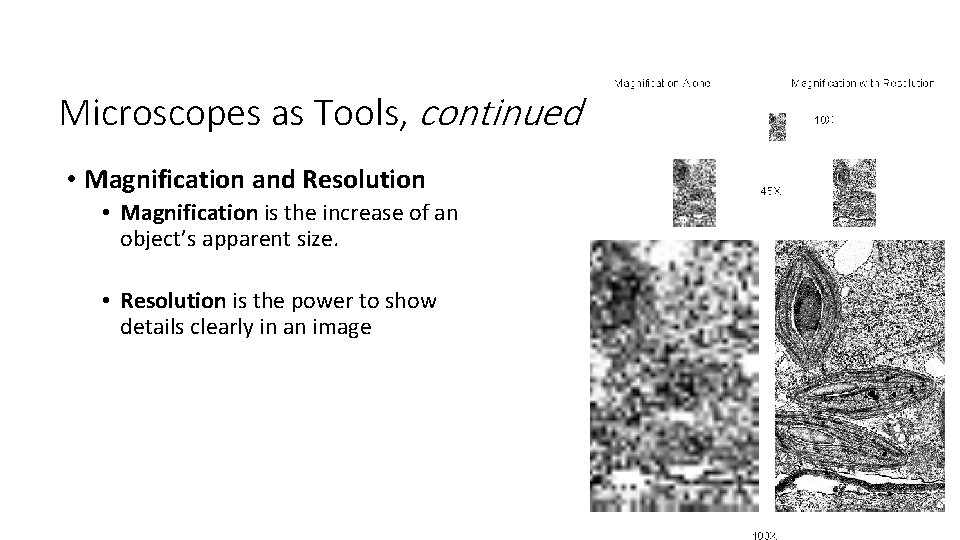
Microscopes as Tools, continued • Magnification and Resolution • Magnification is the increase of an object’s apparent size. • Resolution is the power to show details clearly in an image.
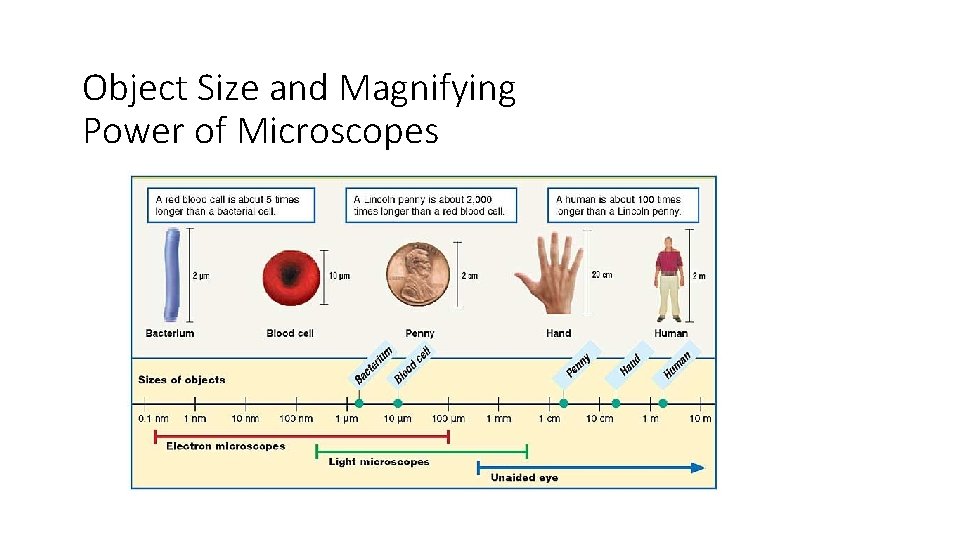
Object Size and Magnifying Power of Microscopes
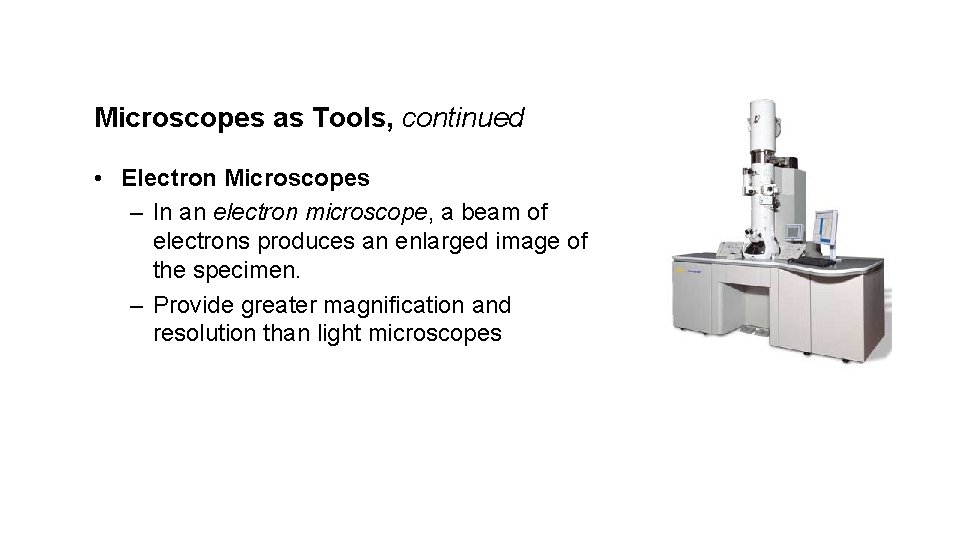
Microscopes as Tools, continued • Electron Microscopes – In an electron microscope, a beam of electrons produces an enlarged image of the specimen. – Provide greater magnification and resolution than light microscopes
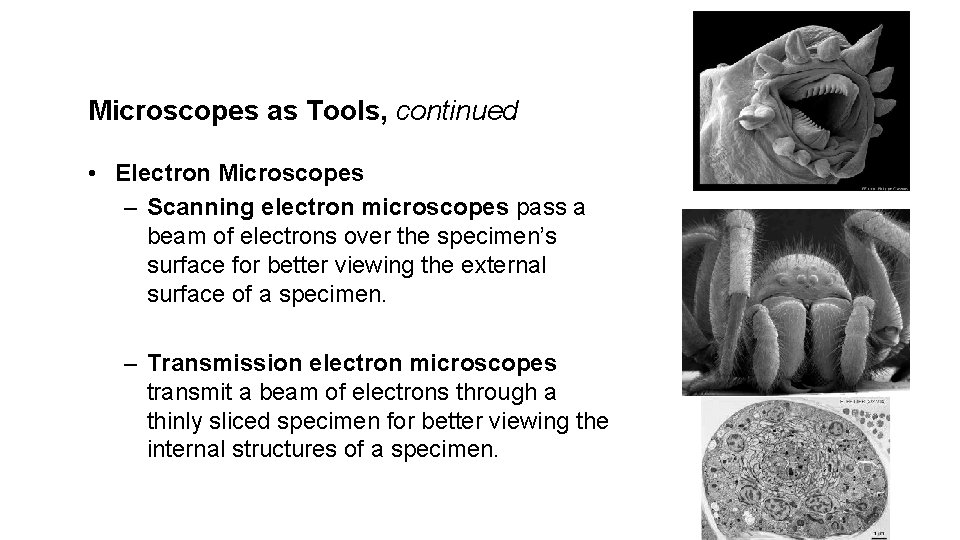
Microscopes as Tools, continued • Electron Microscopes – Scanning electron microscopes pass a beam of electrons over the specimen’s surface for better viewing the external surface of a specimen. – Transmission electron microscopes transmit a beam of electrons through a thinly sliced specimen for better viewing the internal structures of a specimen.
Quick Review • Why are microscope an important tool for the scientific community?
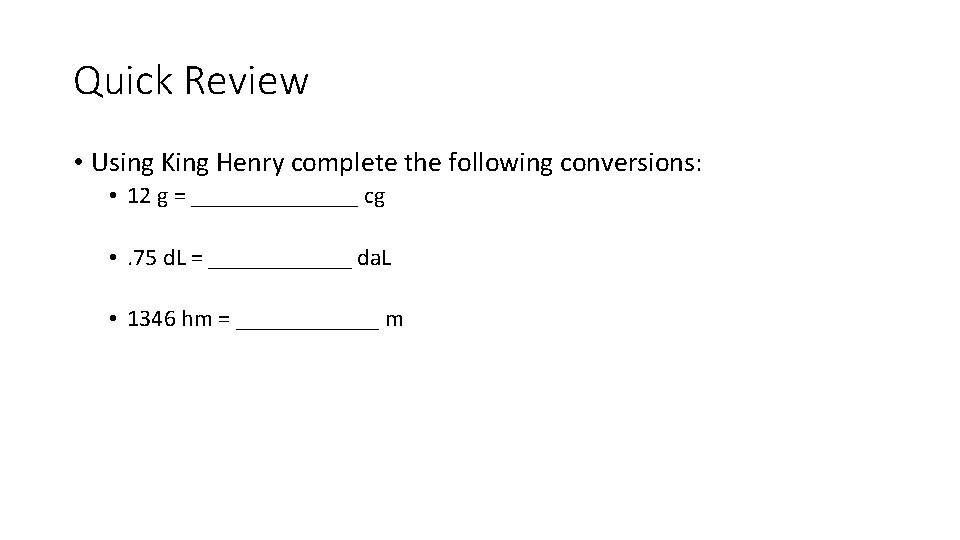
Units of Measurement • Base and Other Units – Scientists use a single, standard system of measurement, called the metric system – King Henry (KHDSDCM) – use for conversions • • • Kilo (k) Hecto (h) Deca (da) Standard (m, l, g) Deci (d) Centi (c) Milli (m) Ex. 18 m = 1800 cm Ex. 2. 4 dag = 0. 024 kg
Quick Review • Using King Henry complete the following conversions: • 12 g = _______ cg • . 75 d. L = ______ da. L • 1346 hm = ______ m
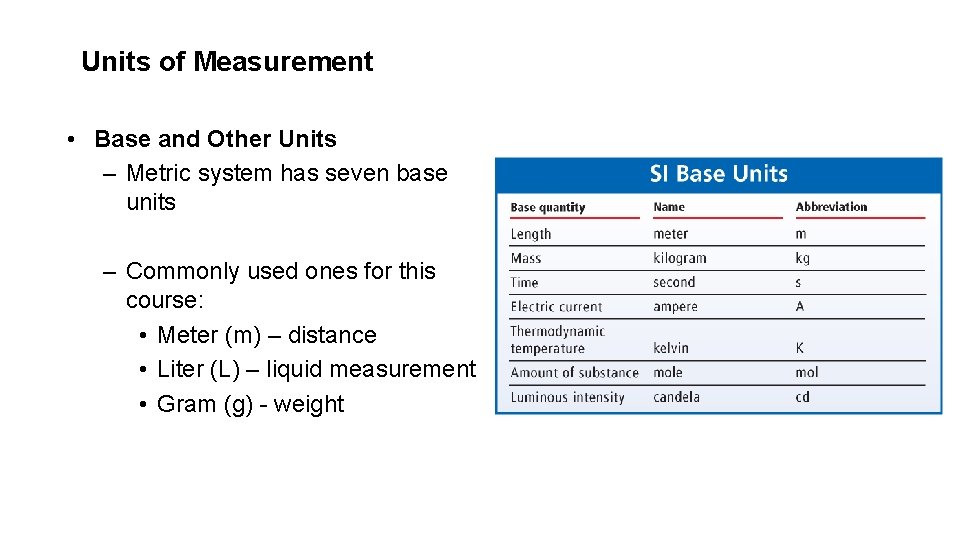
Units of Measurement • Base and Other Units – Metric system has seven base units – Commonly used ones for this course: • Meter (m) – distance • Liter (L) – liquid measurement • Gram (g) - weight