
Scientific Method Hypothesis A predicted answer to a
- Slides: 78
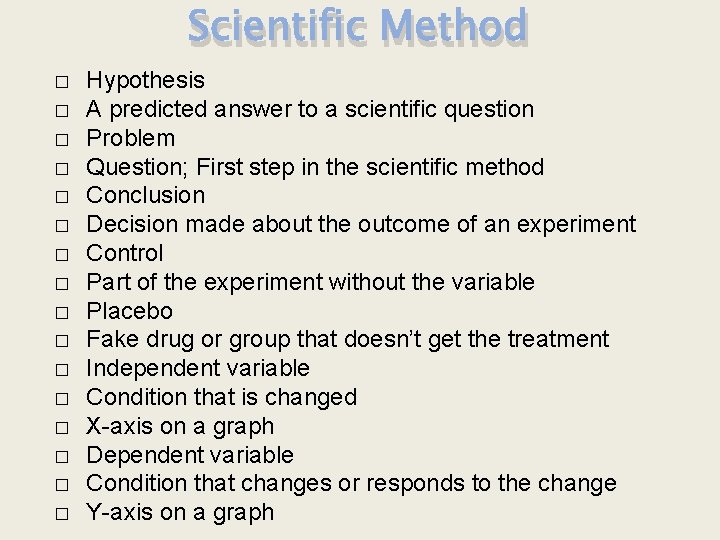
Scientific Method � � � � Hypothesis A predicted answer to a scientific question Problem Question; First step in the scientific method Conclusion Decision made about the outcome of an experiment Control Part of the experiment without the variable Placebo Fake drug or group that doesn’t get the treatment Independent variable Condition that is changed X-axis on a graph Dependent variable Condition that changes or responds to the change Y-axis on a graph
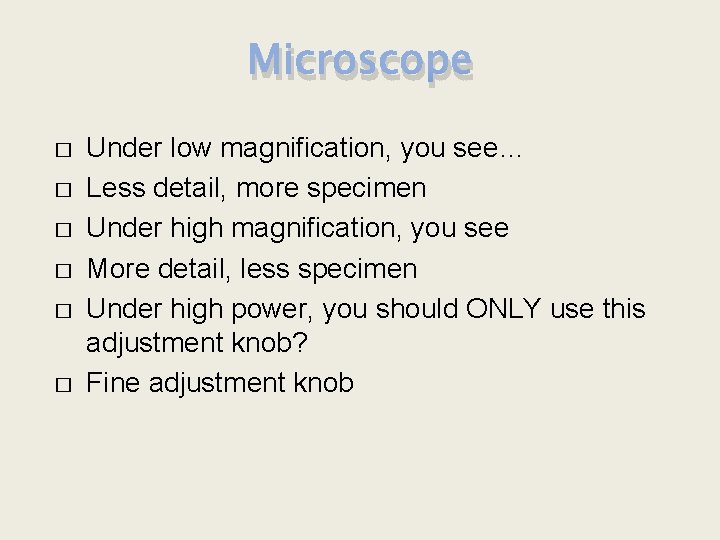
Microscope � � � Under low magnification, you see… Less detail, more specimen Under high magnification, you see More detail, less specimen Under high power, you should ONLY use this adjustment knob? Fine adjustment knob
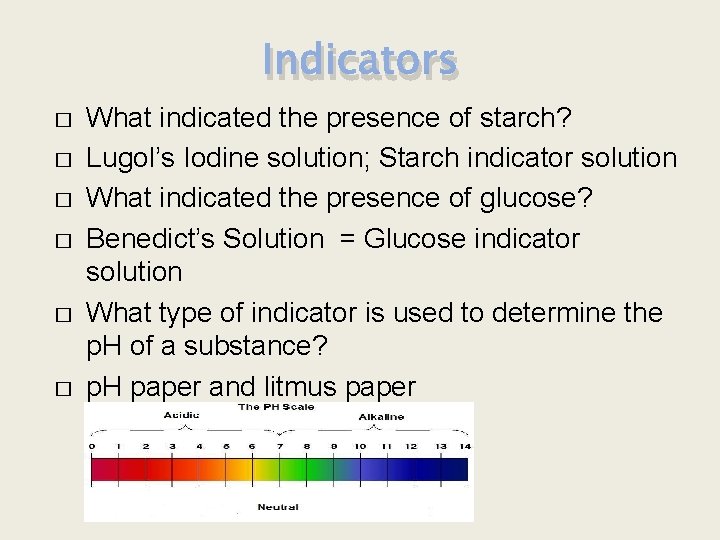
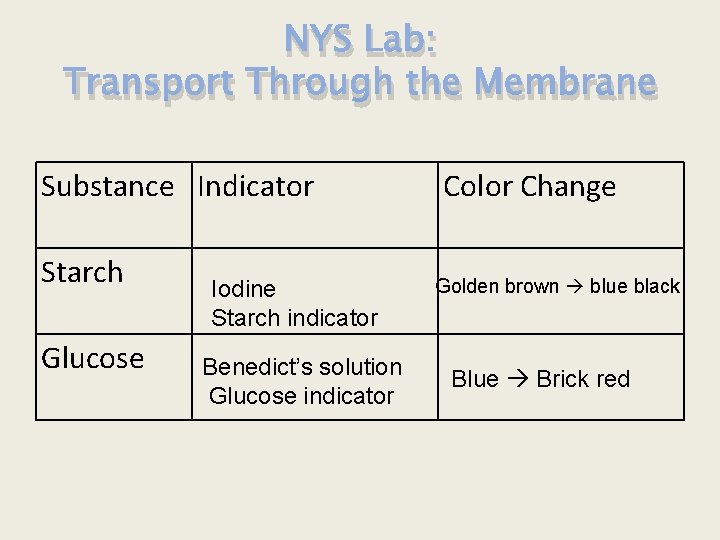
Indicators � � � What indicated the presence of starch? Lugol’s Iodine solution; Starch indicator solution What indicated the presence of glucose? Benedict’s Solution = Glucose indicator solution What type of indicator is used to determine the p. H of a substance? p. H paper and litmus paper
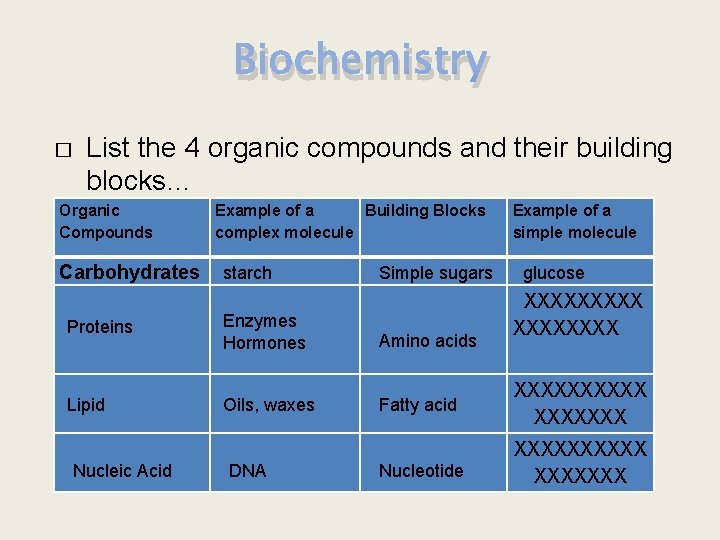
Biochemistry � List the 4 organic compounds and their building blocks… Organic Compounds Carbohydrates Example of a Building Blocks complex molecule starch Simple sugars Example of a simple molecule glucose XXXXX Proteins Enzymes Hormones Amino acids Lipid Oils, waxes Fatty acid XXXXXXX Nucleotide XXXXXXX Nucleic Acid DNA
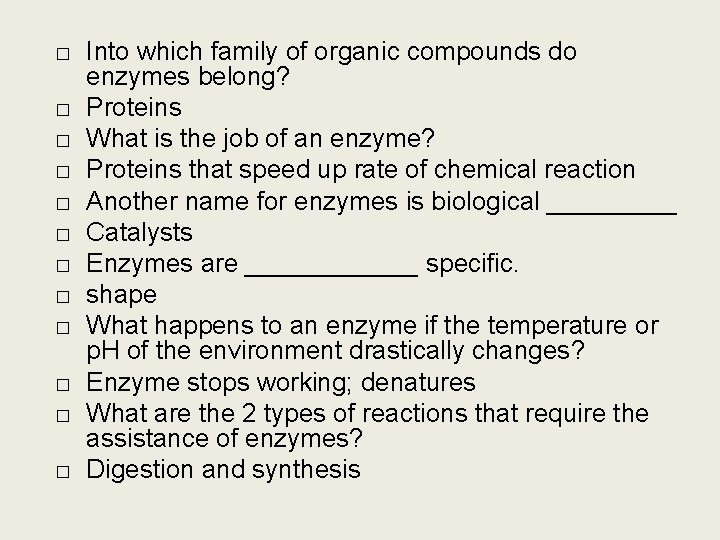
� � � Into which family of organic compounds do enzymes belong? Proteins What is the job of an enzyme? Proteins that speed up rate of chemical reaction Another name for enzymes is biological _____ Catalysts Enzymes are ______ specific. shape What happens to an enzyme if the temperature or p. H of the environment drastically changes? Enzyme stops working; denatures What are the 2 types of reactions that require the assistance of enzymes? Digestion and synthesis
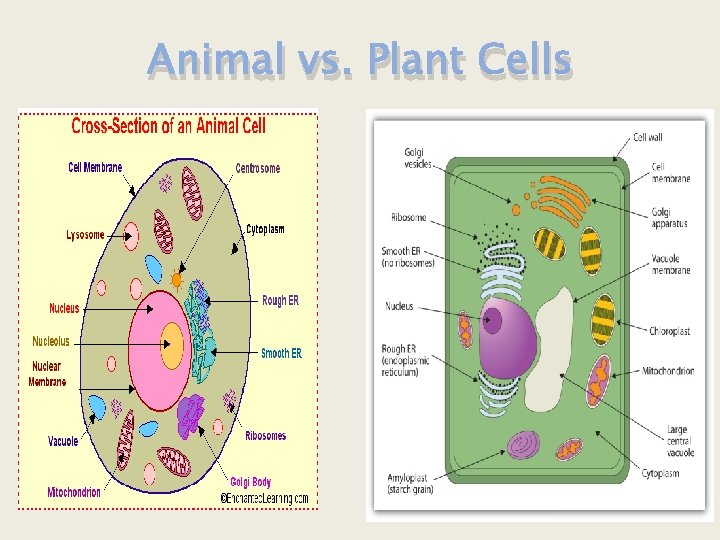
Animal vs. Plant Cells
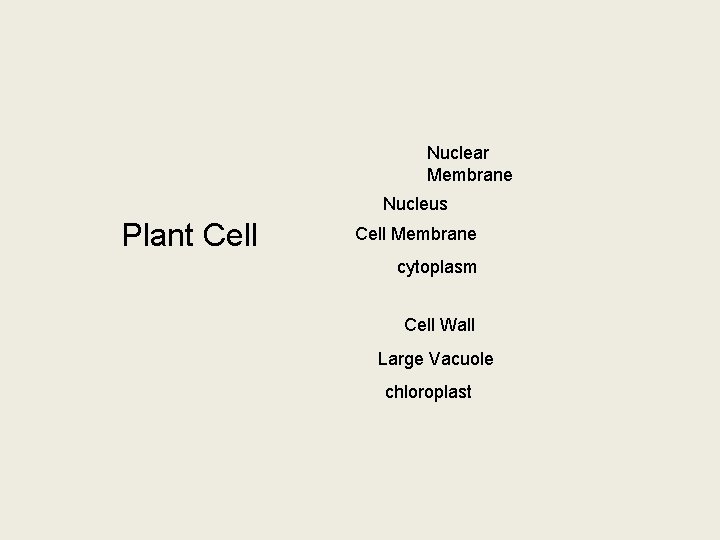
Nuclear Membrane Nucleus Plant Cell Membrane cytoplasm Cell Wall Large Vacuole chloroplast
Photosynthesize, Make it’s own food
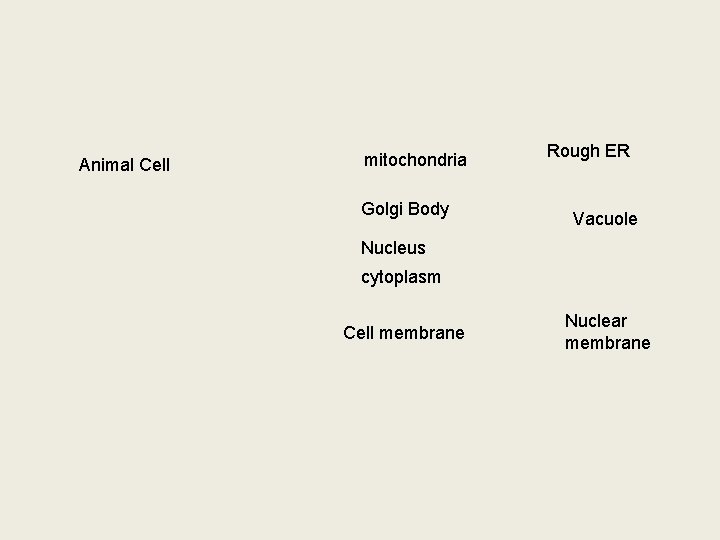
Animal Cell mitochondria Golgi Body Rough ER Vacuole Nucleus cytoplasm Cell membrane Nuclear membrane
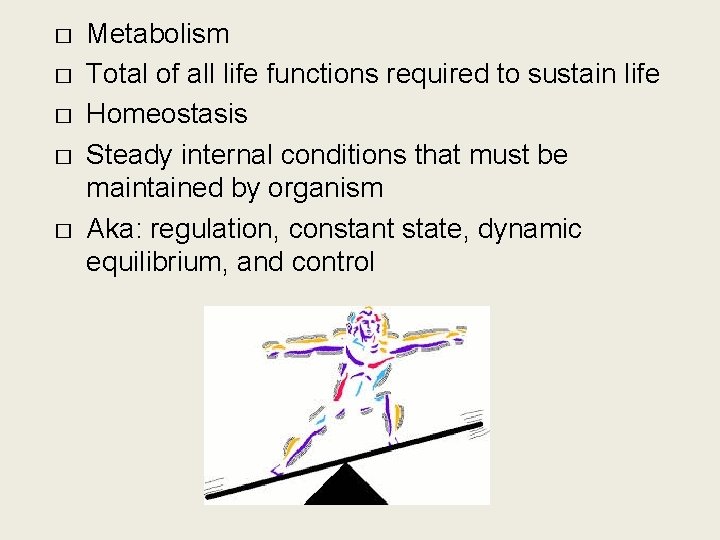
� � � Metabolism Total of all life functions required to sustain life Homeostasis Steady internal conditions that must be maintained by organism Aka: regulation, constant state, dynamic equilibrium, and control
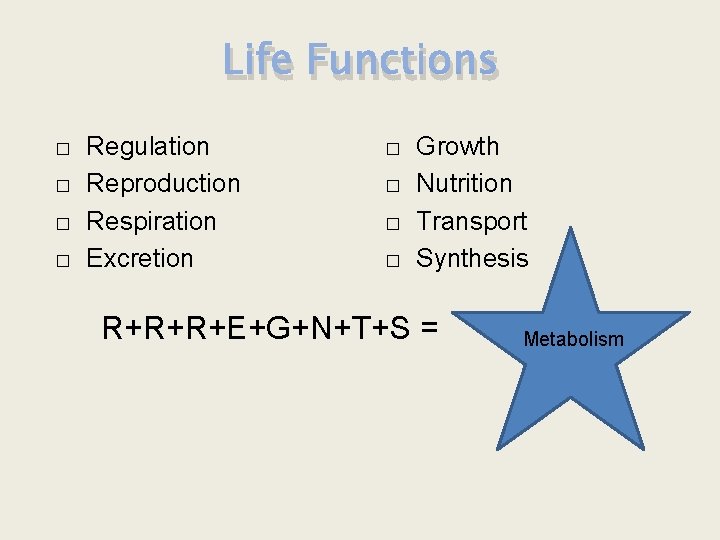
Life Functions � � Regulation Reproduction Respiration Excretion � � Growth Nutrition Transport Synthesis R+R+R+E+G+N+T+S = Metabolism
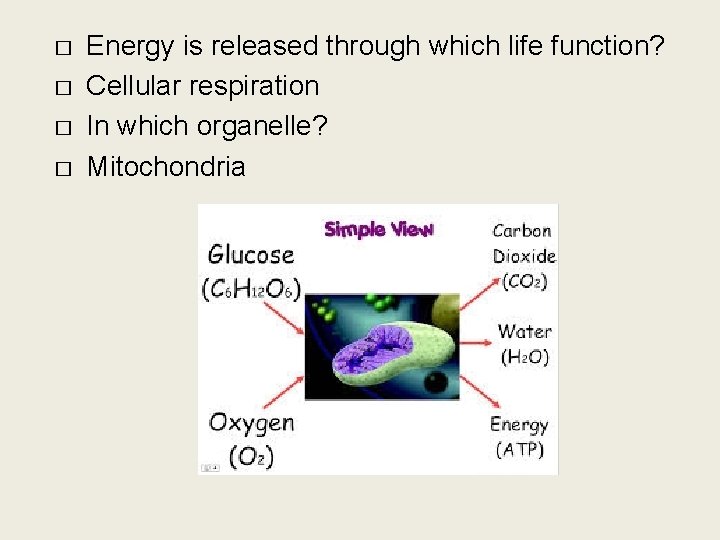
� � Energy is released through which life function? Cellular respiration In which organelle? Mitochondria
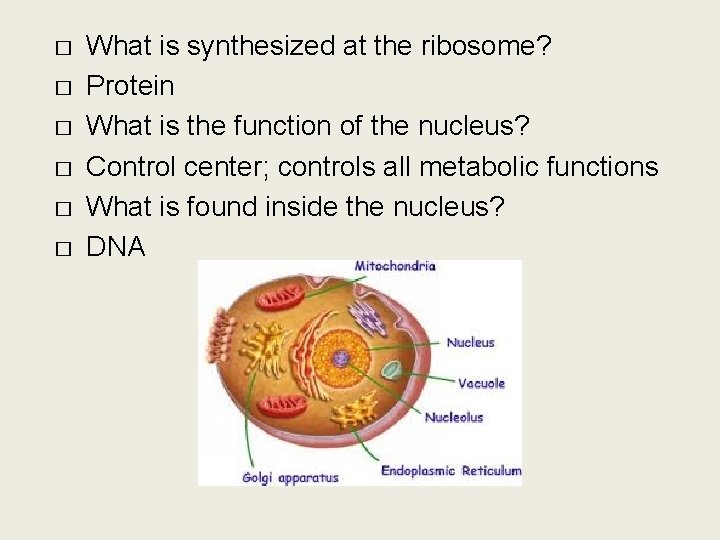
� � � What is synthesized at the ribosome? Protein What is the function of the nucleus? Control center; controls all metabolic functions What is found inside the nucleus? DNA
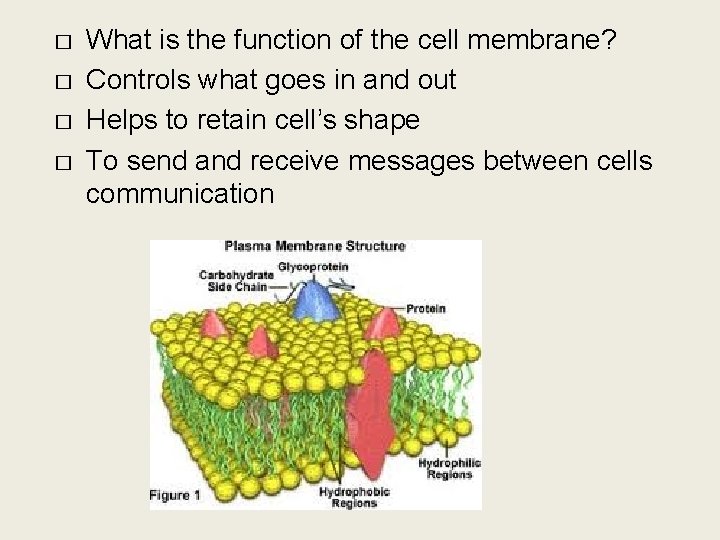
� � What is the function of the cell membrane? Controls what goes in and out Helps to retain cell’s shape To send and receive messages between cells communication
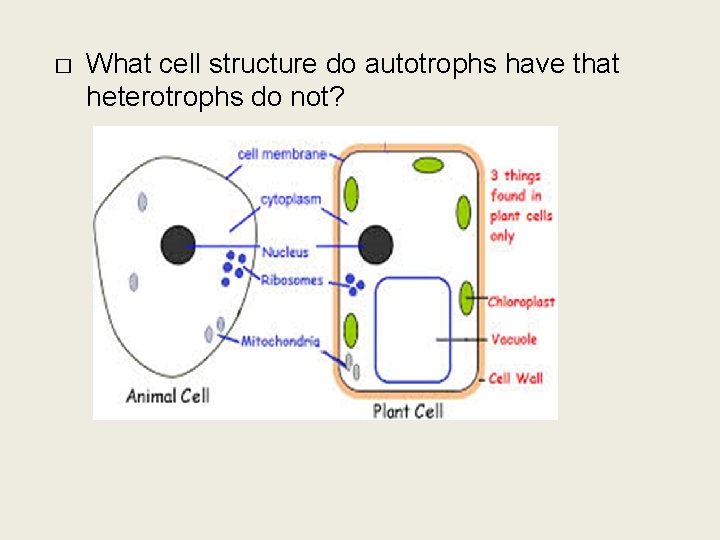
� What cell structure do autotrophs have that heterotrophs do not?
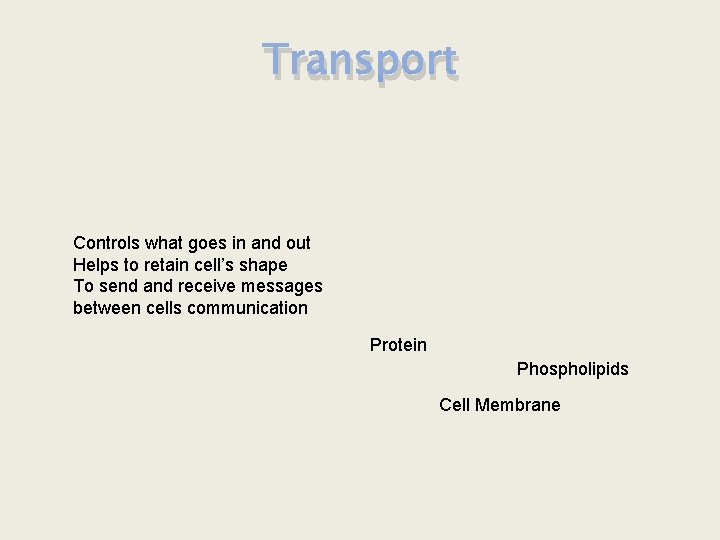
Transport Controls what goes in and out Helps to retain cell’s shape To send and receive messages between cells communication Protein Phospholipids Cell Membrane
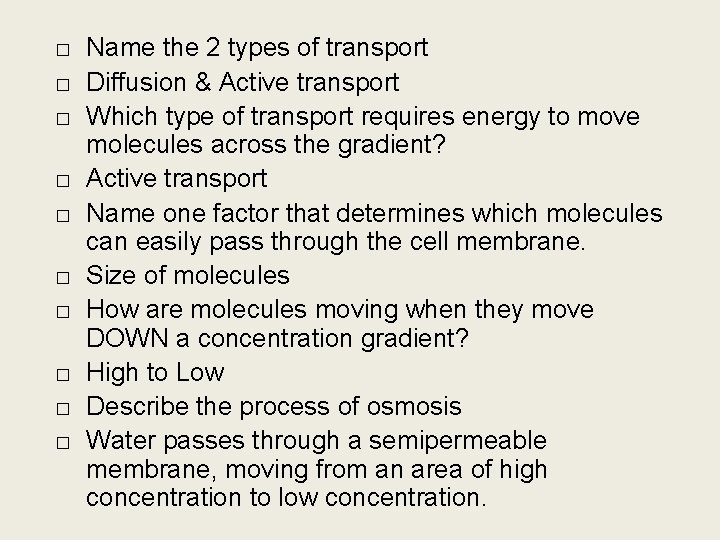
� � � � � Name the 2 types of transport Diffusion & Active transport Which type of transport requires energy to move molecules across the gradient? Active transport Name one factor that determines which molecules can easily pass through the cell membrane. Size of molecules How are molecules moving when they move DOWN a concentration gradient? High to Low Describe the process of osmosis Water passes through a semipermeable membrane, moving from an area of high concentration to low concentration.
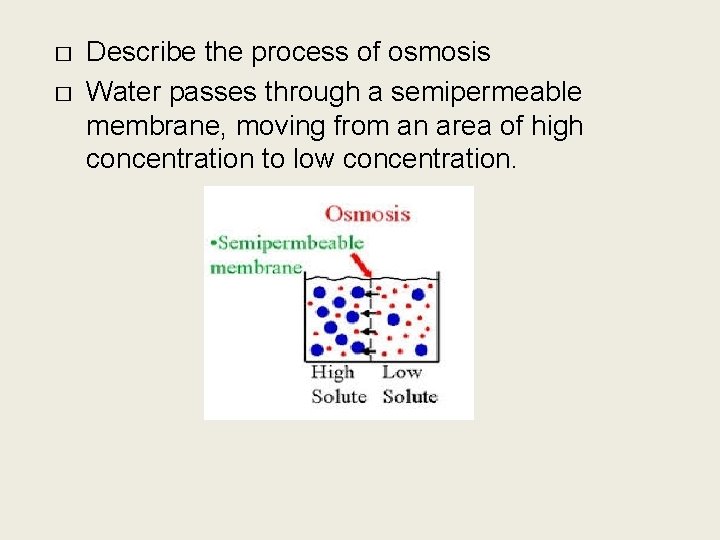
� � Describe the process of osmosis Water passes through a semipermeable membrane, moving from an area of high concentration to low concentration.
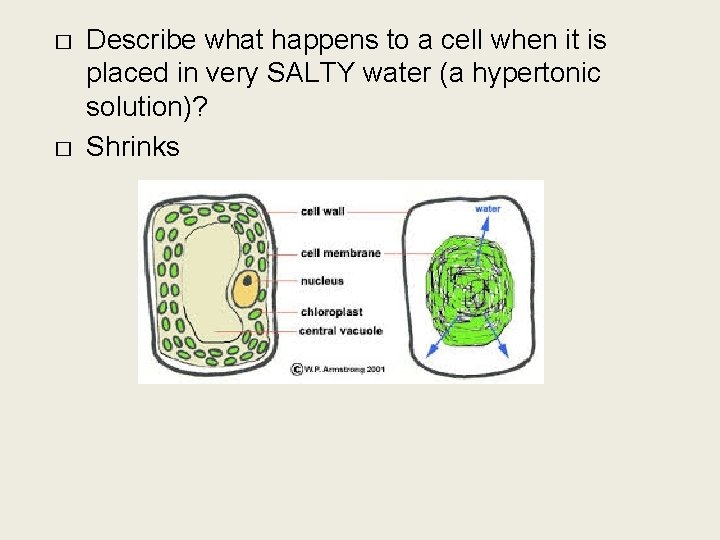
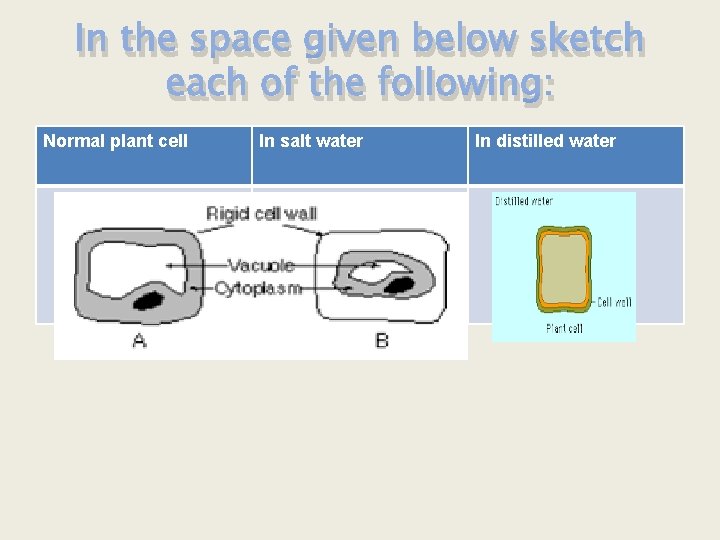
� � Describe what happens to a cell when it is placed in very SALTY water (a hypertonic solution)? Shrinks
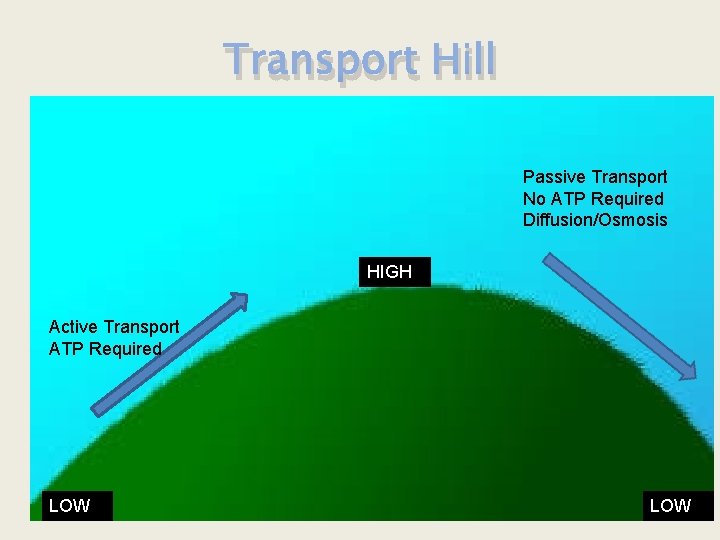
Transport Hill Passive Transport No ATP Required Diffusion/Osmosis HIGH Active Transport ATP Required LOW
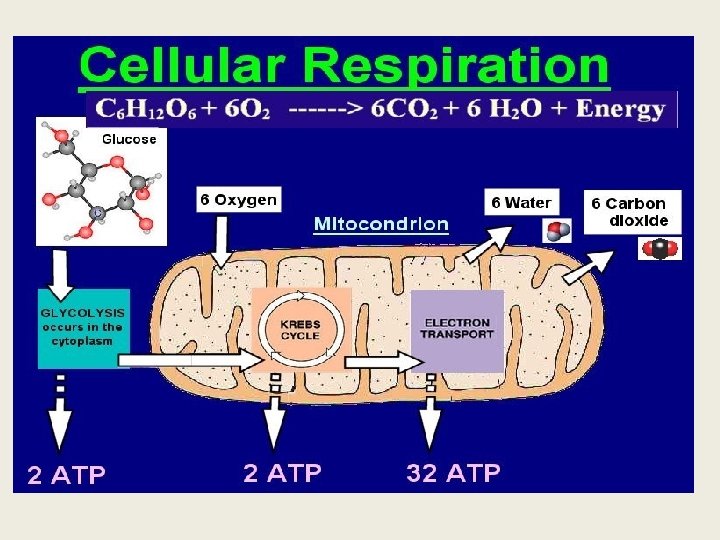
Cellular Respiration
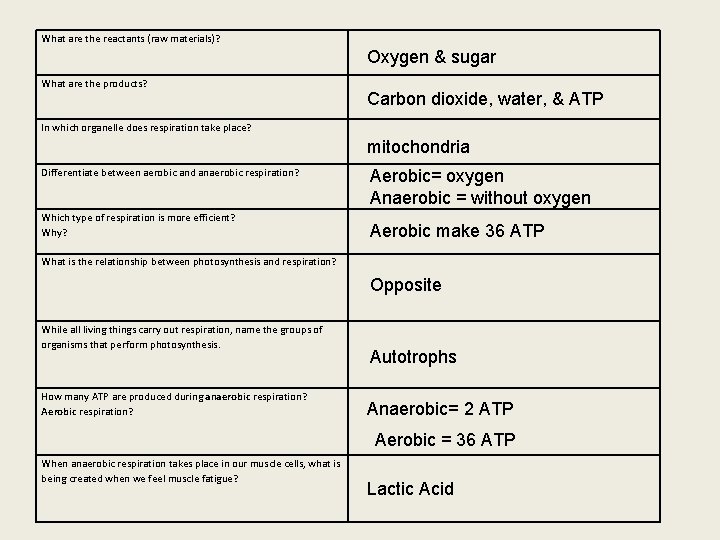
What are the reactants (raw materials)? Oxygen & sugar What are the products? Carbon dioxide, water, & ATP In which organelle does respiration take place? mitochondria Differentiate between aerobic and anaerobic respiration? Which type of respiration is more efficient? Why? Aerobic= oxygen Anaerobic = without oxygen Aerobic make 36 ATP What is the relationship between photosynthesis and respiration? Opposite While all living things carry out respiration, name the groups of organisms that perform photosynthesis. How many ATP are produced during anaerobic respiration? Aerobic respiration? Autotrophs Anaerobic= 2 ATP Aerobic = 36 ATP When anaerobic respiration takes place in our muscle cells, what is being created when we feel muscle fatigue? Lactic Acid
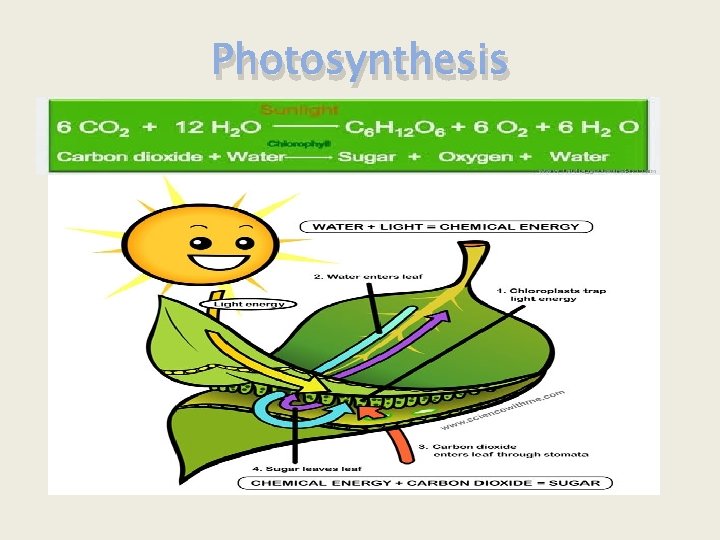
Photosynthesis
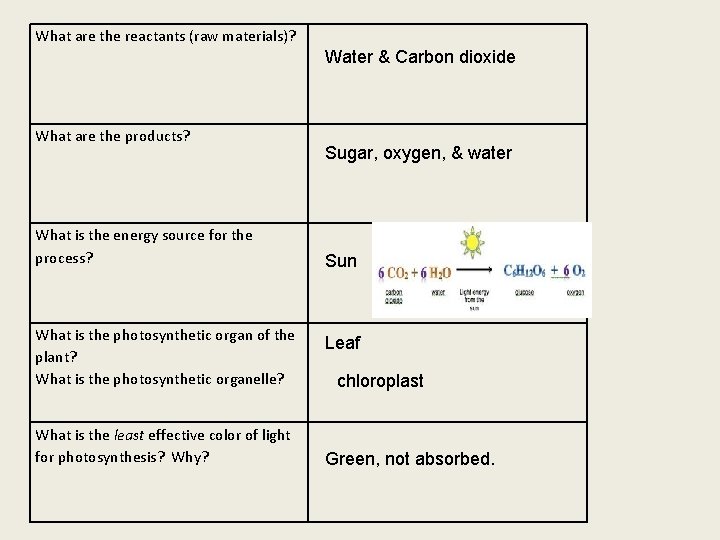
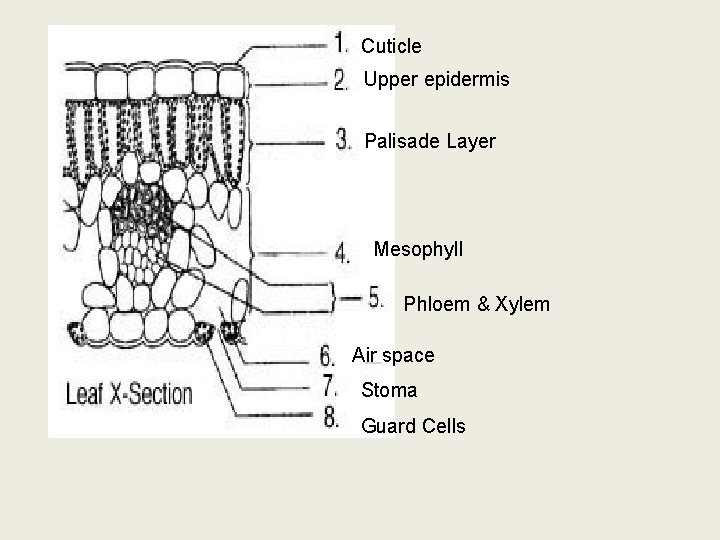
What are the reactants (raw materials)? Water & Carbon dioxide What are the products? What is the energy source for the process? What is the photosynthetic organ of the plant? What is the photosynthetic organelle? What is the least effective color of light for photosynthesis? Why? Sugar, oxygen, & water Sun Leaf chloroplast Green, not absorbed.
Cuticle Upper epidermis Palisade Layer Mesophyll Phloem & Xylem Air space Stoma Guard Cells
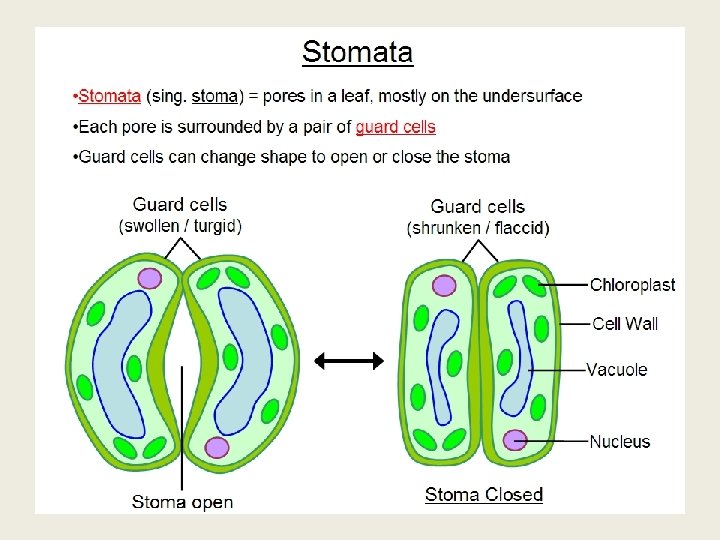
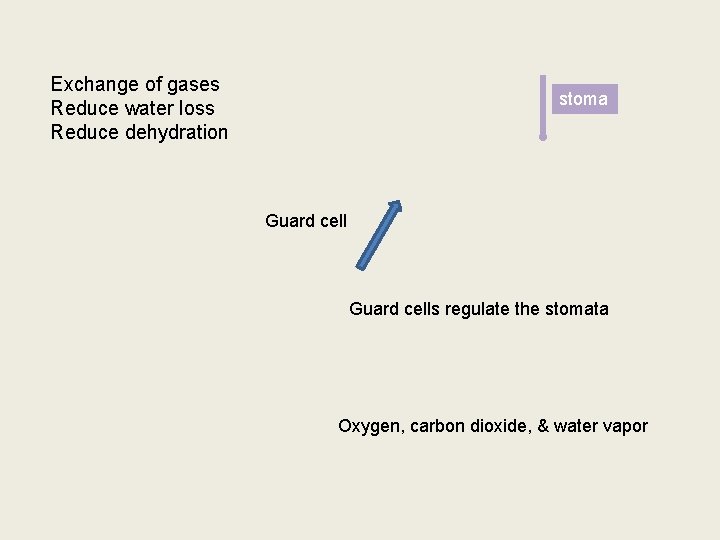
Exchange of gases Reduce water loss Reduce dehydration stoma Guard cells regulate the stomata Oxygen, carbon dioxide, & water vapor
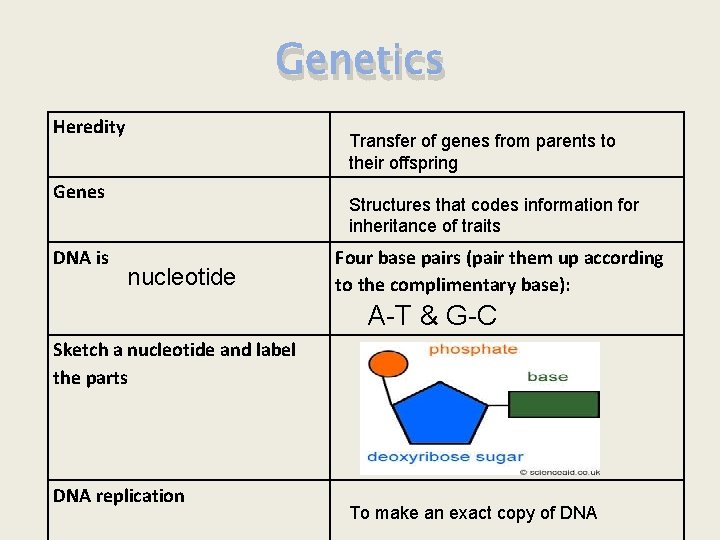
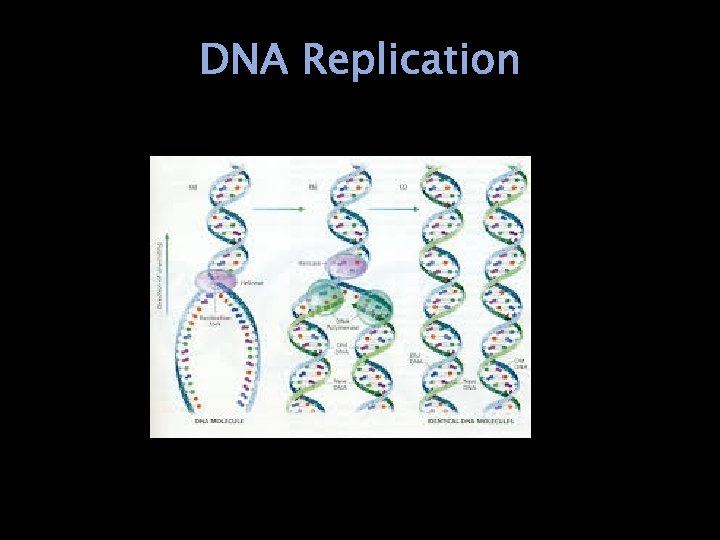
Genetics Heredity Transfer of genes from parents to their offspring Genes DNA is Structures that codes information for inheritance of traits nucleotide Four base pairs (pair them up according to the complimentary base): A-T & G-C Sketch a nucleotide and label the parts DNA replication To make an exact copy of DNA
DNA Replication
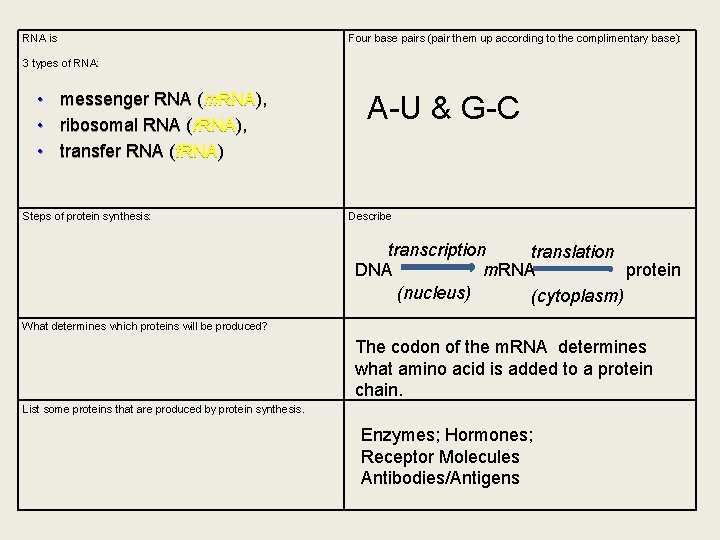
RNA is Four base pairs (pair them up according to the complimentary base): 3 types of RNA: • messenger RNA (m. RNA), • ribosomal RNA (r. RNA), A-U & G-C • transfer RNA (t. RNA) Steps of protein synthesis: Describe transcription translation DNA m. RNA protein (nucleus) (cytoplasm) What determines which proteins will be produced? The codon of the m. RNA determines what amino acid is added to a protein chain. List some proteins that are produced by protein synthesis. Enzymes; Hormones; Receptor Molecules Antibodies/Antigens
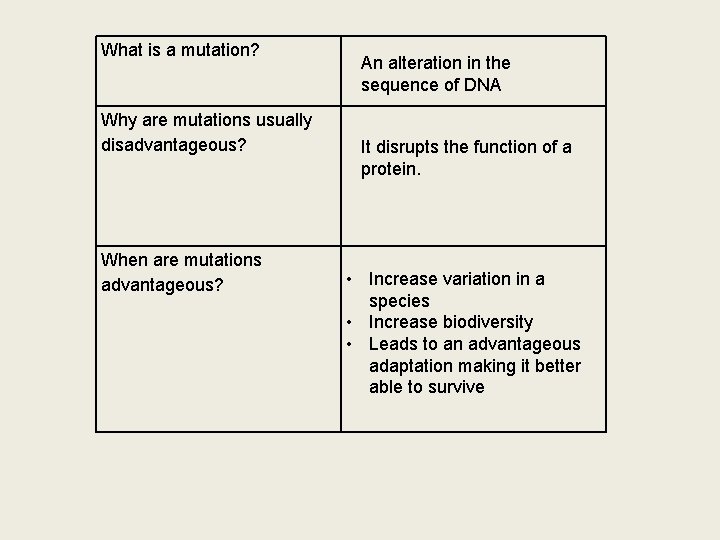
What is a mutation? Why are mutations usually disadvantageous? When are mutations advantageous? An alteration in the sequence of DNA It disrupts the function of a protein. • Increase variation in a species • Increase biodiversity • Leads to an advantageous adaptation making it better able to survive
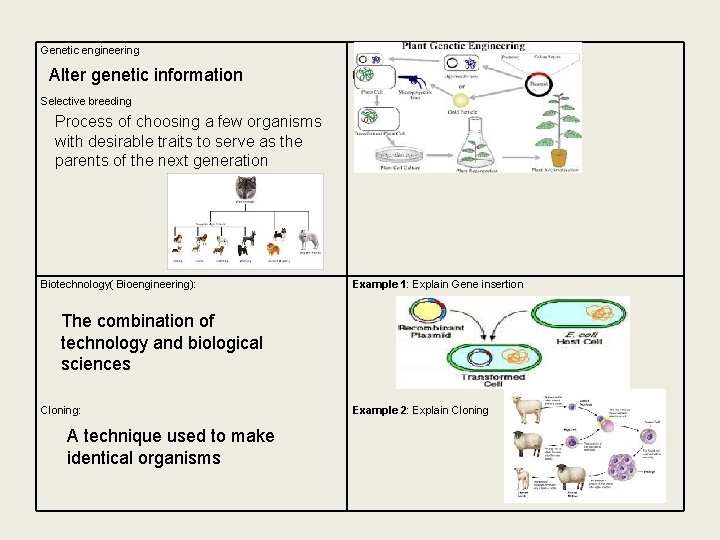
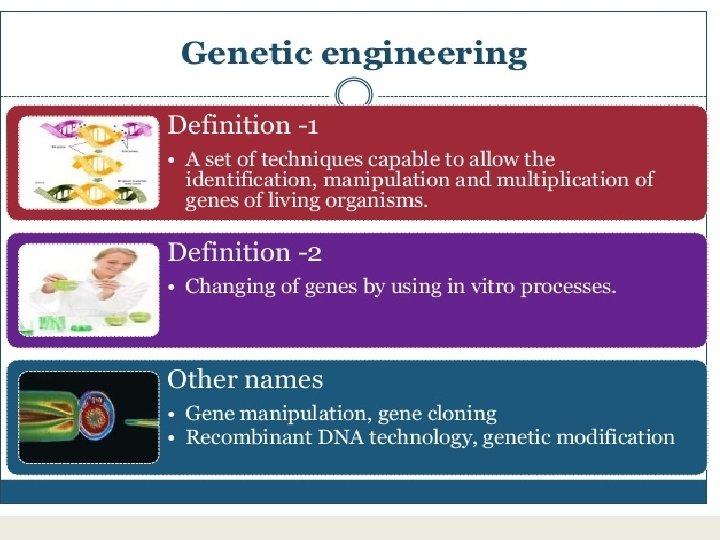
Genetic engineering Alter genetic information Example: Selective breeding Process of choosing a few organisms with desirable traits to serve as the parents of the next generation Biotechnology( Bioengineering): Example 1: Explain Gene insertion The combination of technology and biological sciences Cloning: A technique used to make identical organisms Example 2: Explain Cloning
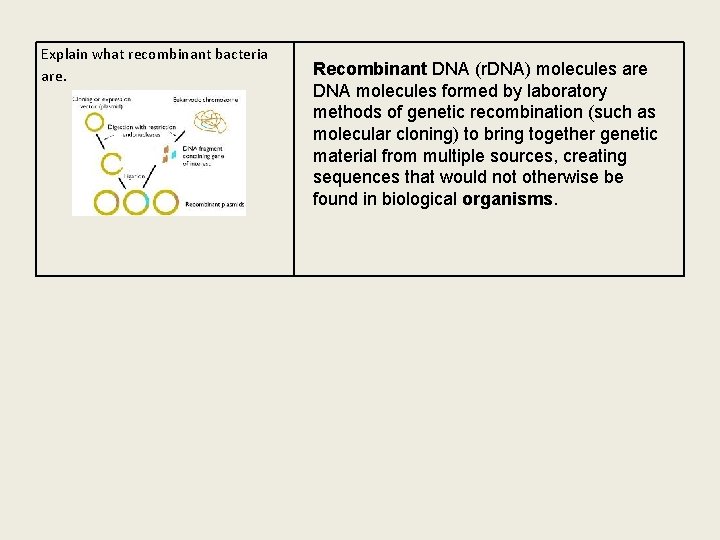
Explain what recombinant bacteria are. Recombinant DNA (r. DNA) molecules are DNA molecules formed by laboratory methods of genetic recombination (such as molecular cloning) to bring together genetic material from multiple sources, creating sequences that would not otherwise be found in biological organisms.
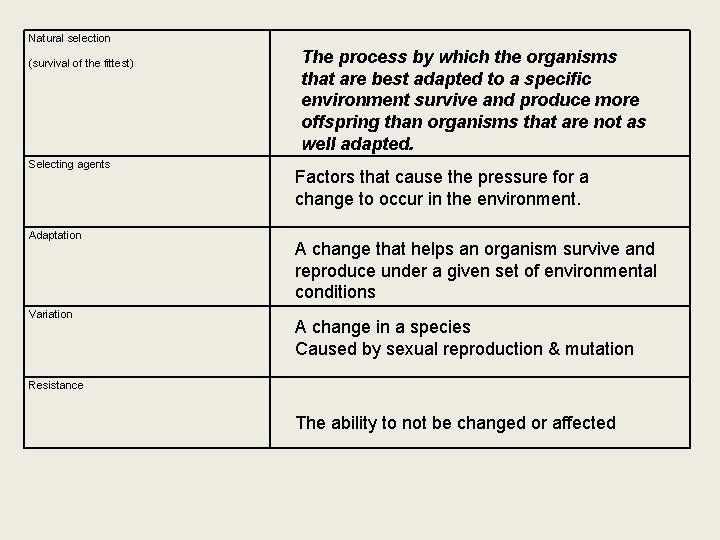
Natural selection (survival of the fittest) Selecting agents Adaptation Variation The process by which the organisms that are best adapted to a specific environment survive and produce more offspring than organisms that are not as well adapted. Factors that cause the pressure for a change to occur in the environment. A change that helps an organism survive and reproduce under a given set of environmental conditions A change in a species Caused by sexual reproduction & mutation Resistance The ability to not be changed or affected
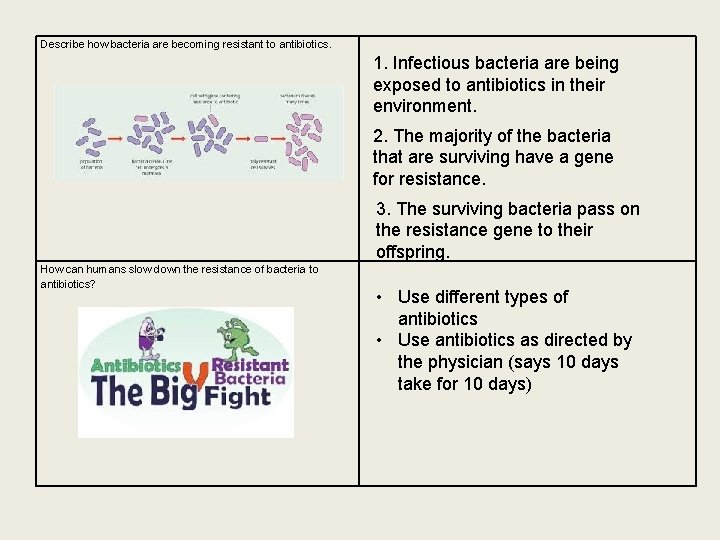
Describe how bacteria are becoming resistant to antibiotics. 1. Infectious bacteria are being exposed to antibiotics in their environment. 2. The majority of the bacteria that are surviving have a gene for resistance. 3. The surviving bacteria pass on the resistance gene to their offspring. How can humans slow down the resistance of bacteria to antibiotics? • Use different types of antibiotics • Use antibiotics as directed by the physician (says 10 days take for 10 days)
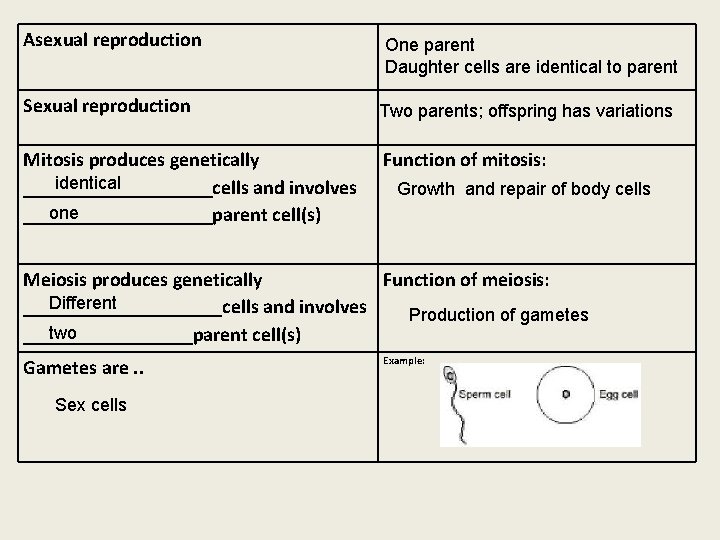
Asexual reproduction One parent Daughter cells are identical to parent Sexual reproduction Two parents; offspring has variations Mitosis produces genetically identical __________cells and involves one __________parent cell(s) Function of mitosis: Growth and repair of body cells Meiosis produces genetically Function of meiosis: Different __________cells and involves Production of gametes two _________parent cell(s) Gametes are. . Sex cells Example:
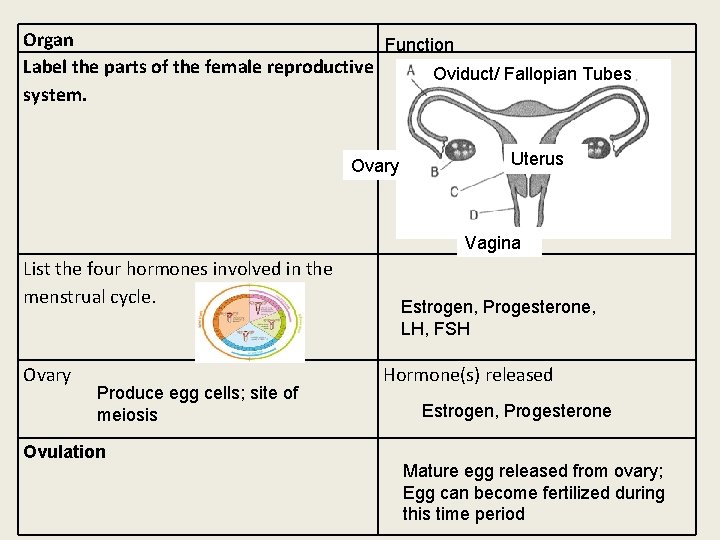
Organ Function Label the parts of the female reproductive Oviduct/ Fallopian Tubes system. Ovary Uterus Vagina List the four hormones involved in the menstrual cycle. Ovary Produce egg cells; site of meiosis Ovulation Estrogen, Progesterone, LH, FSH Hormone(s) released Estrogen, Progesterone Mature egg released from ovary; Egg can become fertilized during this time period
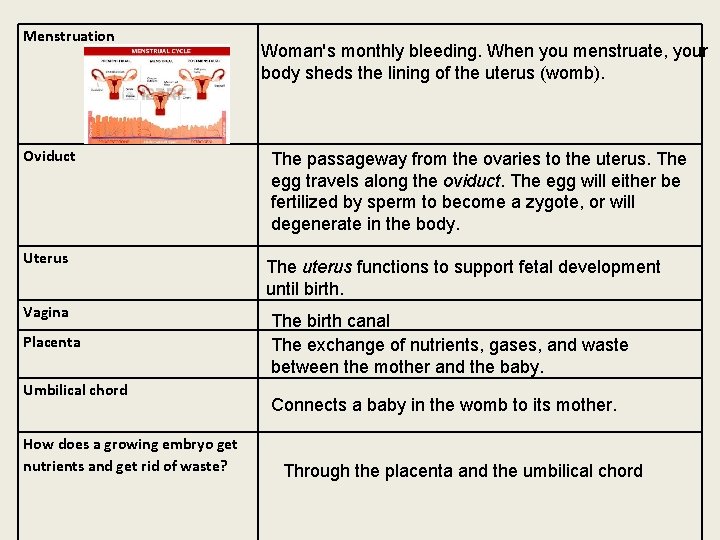
Menstruation Oviduct Uterus Vagina Placenta Umbilical chord How does a growing embryo get nutrients and get rid of waste? Woman's monthly bleeding. When you menstruate, your body sheds the lining of the uterus (womb). The passageway from the ovaries to the uterus. The egg travels along the oviduct. The egg will either be fertilized by sperm to become a zygote, or will degenerate in the body. The uterus functions to support fetal development until birth. The birth canal The exchange of nutrients, gases, and waste between the mother and the baby. Connects a baby in the womb to its mother. Through the placenta and the umbilical chord
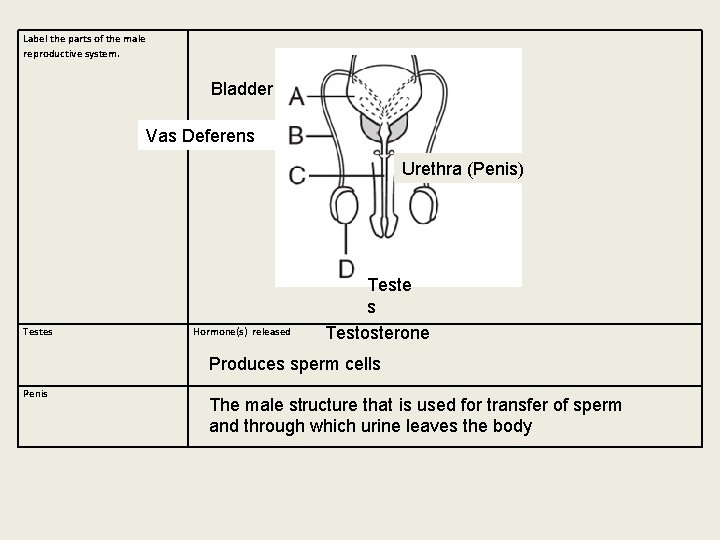
Label the parts of the male reproductive system. Bladder Vas Deferens Urethra (Penis) Testes Hormone(s) released Teste s Testosterone Produces sperm cells Penis The male structure that is used for transfer of sperm and through which urine leaves the body
June 15, 2015 � � Objective: I can review for the Living Environment Regent exam. Launch: Take out Review sheet Homework: Study for Regent Exam. Do your best!
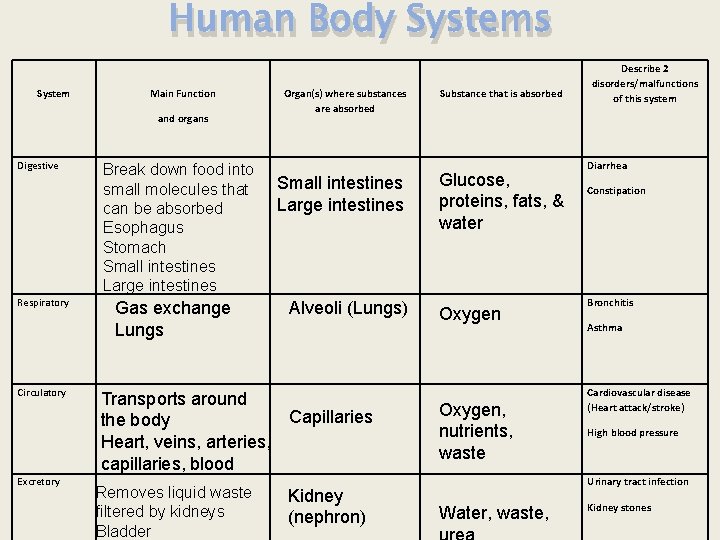
Human Body Systems System Main Function and organs Digestive Respiratory Circulatory Excretory Break down food into small molecules that can be absorbed Esophagus Stomach Small intestines Large intestines Gas exchange Lungs Organ(s) where substances are absorbed Small intestines Large intestines Alveoli (Lungs) Transports around Capillaries the body Heart, veins, arteries, capillaries, blood Removes liquid waste filtered by kidneys Bladder Kidney (nephron) Substance that is absorbed Glucose, proteins, fats, & water Oxygen, nutrients, waste Describe 2 disorders/malfunctions of this system Diarrhea Constipation Bronchitis Asthma Cardiovascular disease (Heart attack/stroke) High blood pressure Urinary tract infection Water, waste, Kidney stones
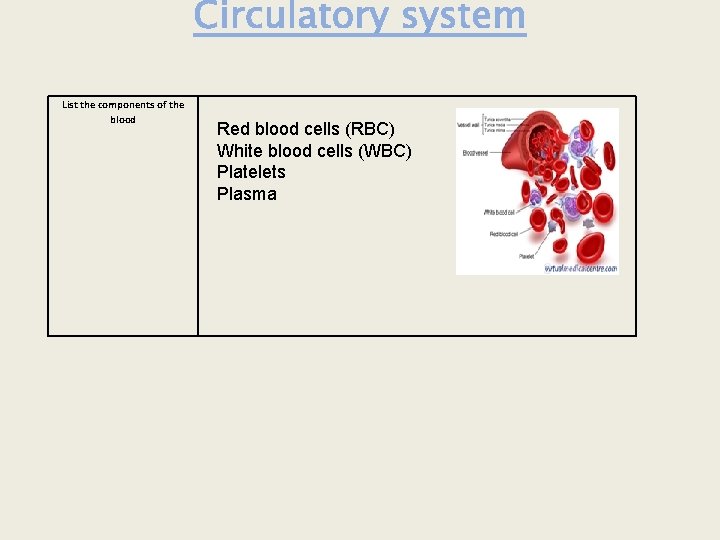
List the components of the blood Red blood cells (RBC) White blood cells (WBC) Platelets Plasma
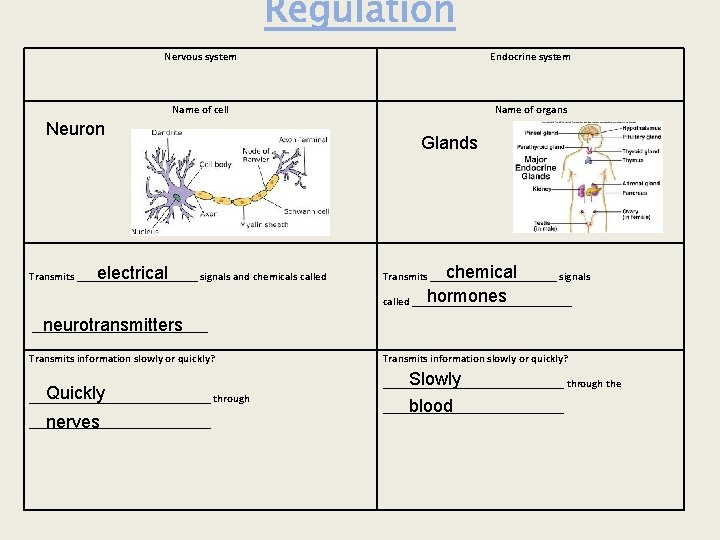
Nervous system Endocrine system Name of cell Name of organs Neuron electrical Transmits ___________ signals and chemicals called Glands chemical hormones called _______________ Transmits ____________ signals neurotransmitters ________________ Transmits information slowly or quickly? Quickly _________________ through nerves _________________ Transmits information slowly or quickly? Slowly _________________ through the blood _________________
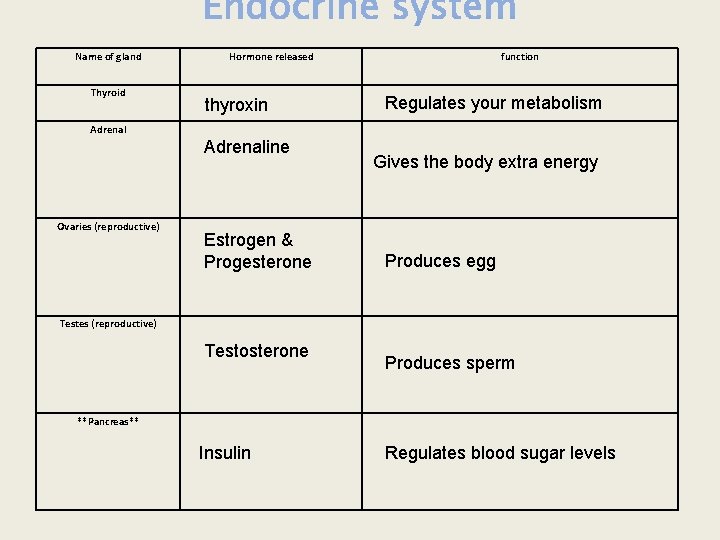
Name of gland Thyroid Hormone released thyroxin function Regulates your metabolism Adrenaline Ovaries (reproductive) Estrogen & Progesterone Gives the body extra energy Produces egg Testes (reproductive) Testosterone Produces sperm **Pancreas** Insulin Regulates blood sugar levels
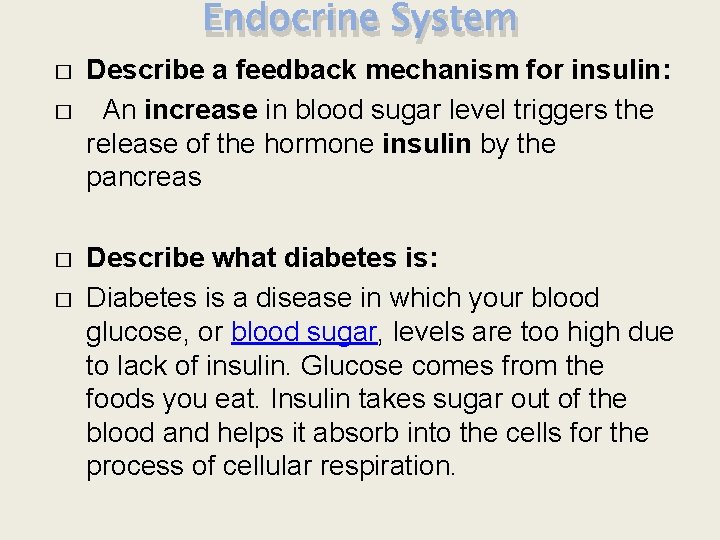
Endocrine System � � Describe a feedback mechanism for insulin: An increase in blood sugar level triggers the release of the hormone insulin by the pancreas Describe what diabetes is: Diabetes is a disease in which your blood glucose, or blood sugar, levels are too high due to lack of insulin. Glucose comes from the foods you eat. Insulin takes sugar out of the blood and helps it absorb into the cells for the process of cellular respiration.
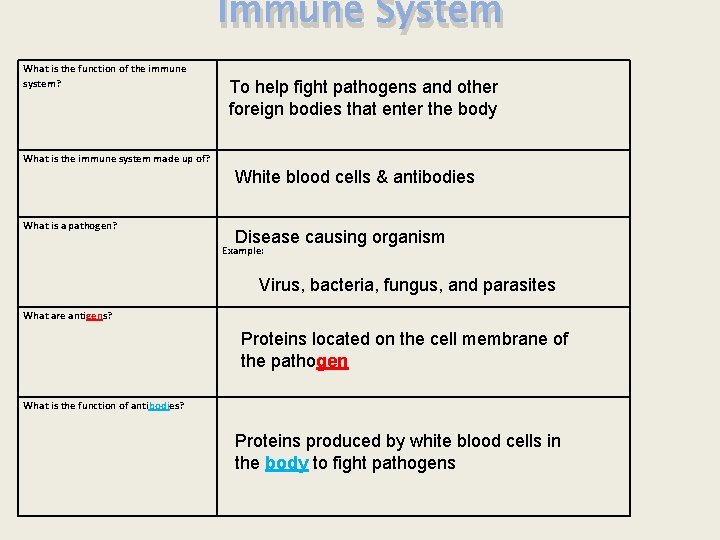
Immune System What is the function of the immune system? To help fight pathogens and other foreign bodies that enter the body What is the immune system made up of? White blood cells & antibodies What is a pathogen? Disease causing organism Example: Virus, bacteria, fungus, and parasites What are antigens? Proteins located on the cell membrane of the pathogen What is the function of antibodies? Proteins produced by white blood cells in the body to fight pathogens
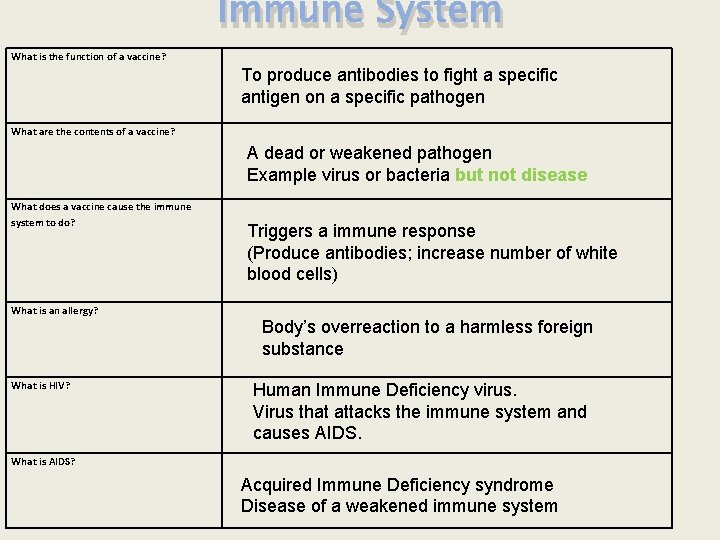
Immune System What is the function of a vaccine? To produce antibodies to fight a specific antigen on a specific pathogen What are the contents of a vaccine? A dead or weakened pathogen Example virus or bacteria but not disease What does a vaccine cause the immune system to do? What is an allergy? What is HIV? Triggers a immune response (Produce antibodies; increase number of white blood cells) Body’s overreaction to a harmless foreign substance Human Immune Deficiency virus. Virus that attacks the immune system and causes AIDS. What is AIDS? Acquired Immune Deficiency syndrome Disease of a weakened immune system
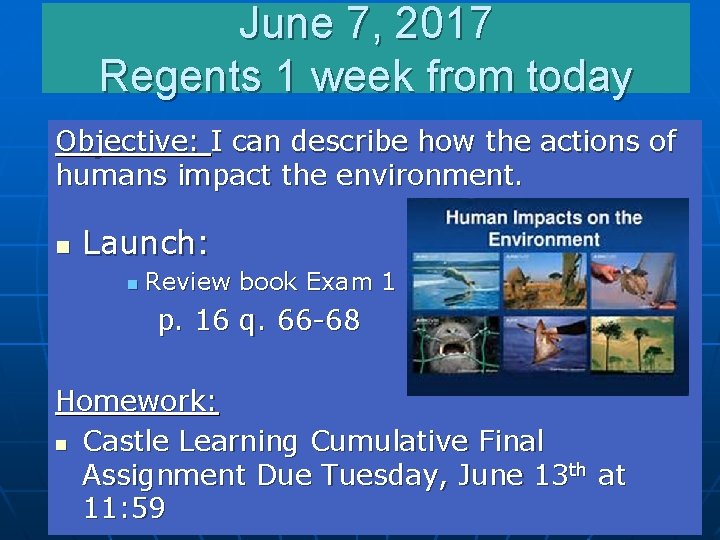
June 7, 2017 Regents 1 week from today Objective: I can describe how the actions of humans impact the environment. n Launch: n Review book Exam 1 p. 16 q. 66 -68 Homework: n Castle Learning Cumulative Final Assignment Due Tuesday, June 13 th at 11: 59
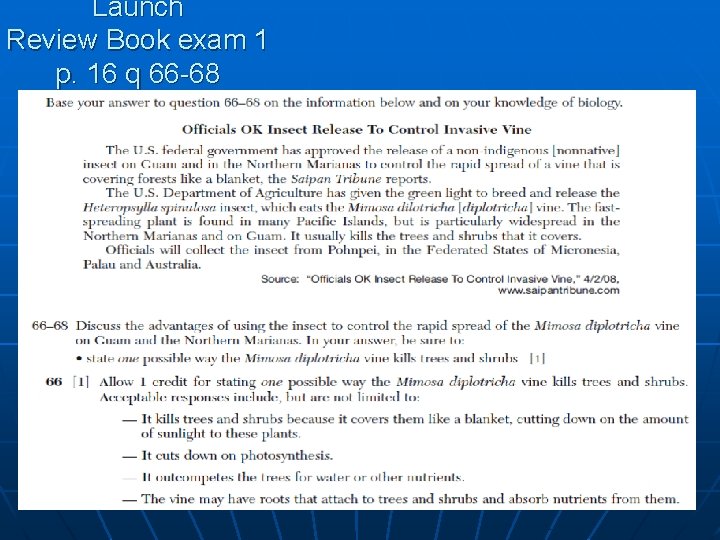
Launch Review Book exam 1 p. 16 q 66 -68
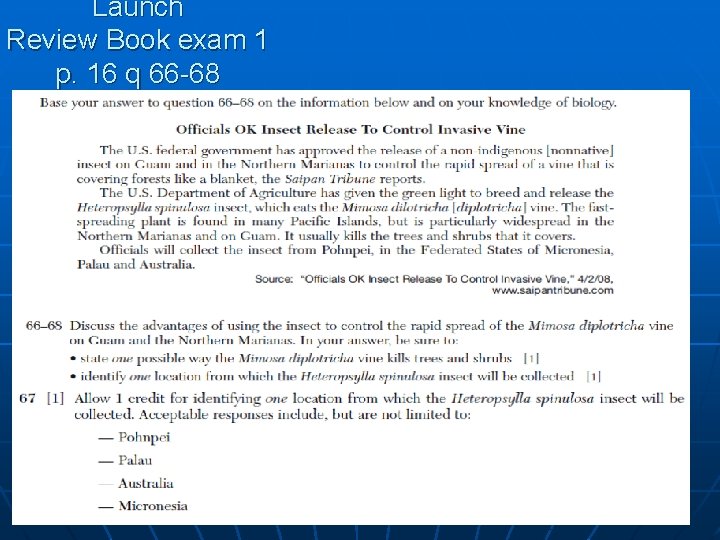
Launch Review Book exam 1 p. 16 q 66 -68
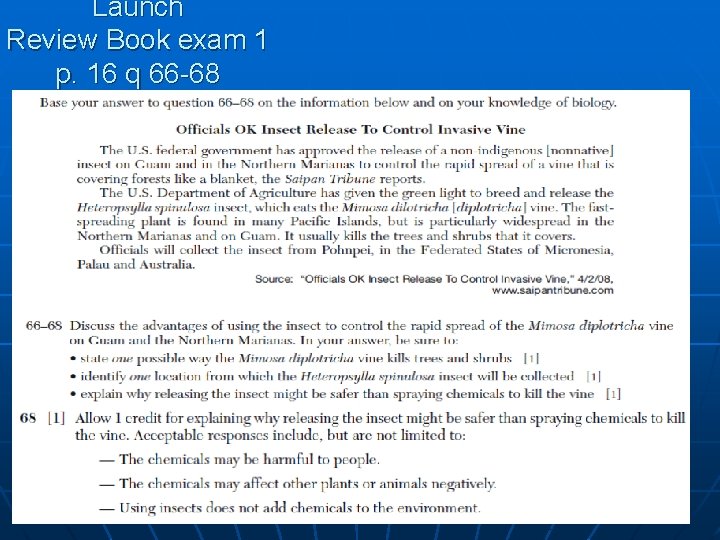
Launch Review Book exam 1 p. 16 q 66 -68
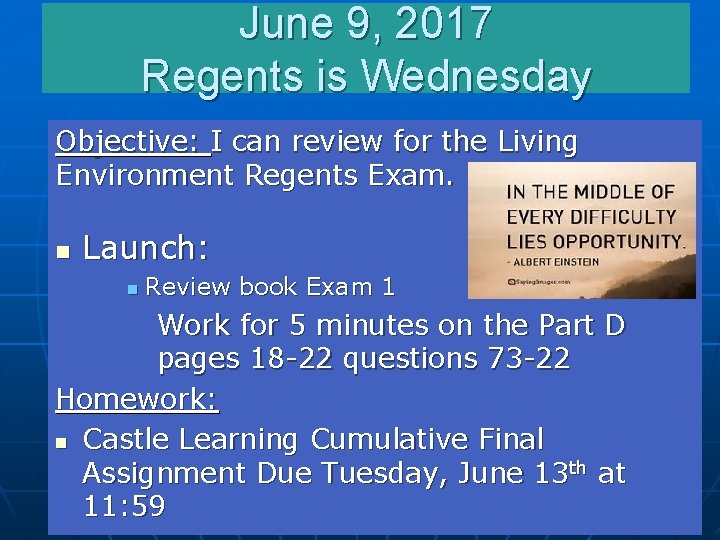
June 9, 2017 Regents is Wednesday Objective: I can review for the Living Environment Regents Exam. n Launch: n Review book Exam 1 Work for 5 minutes on the Part D pages 18 -22 questions 73 -22 Homework: n Castle Learning Cumulative Final Assignment Due Tuesday, June 13 th at 11: 59
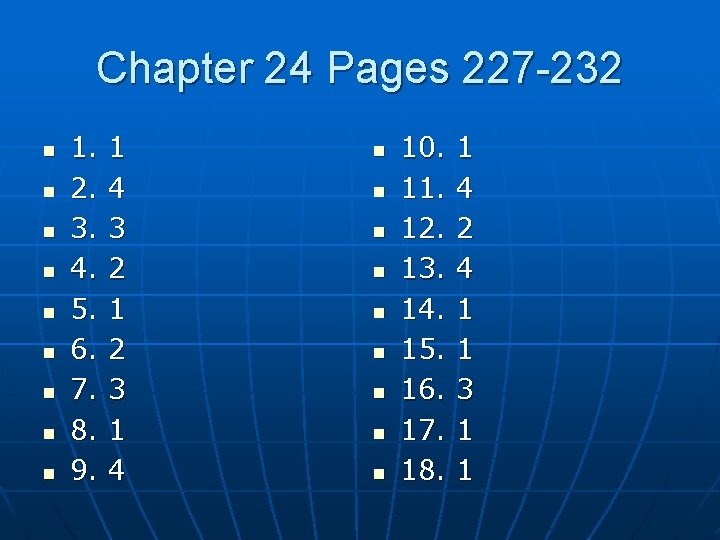
Chapter 24 Pages 227 -232 n n n n n 1. 2. 3. 4. 5. 6. 7. 8. 9. 1 4 3 2 1 2 3 1 4 n n n n n 10. 11. 12. 13. 14. 15. 16. 17. 18. 1 4 2 4 1 1 3 1 1
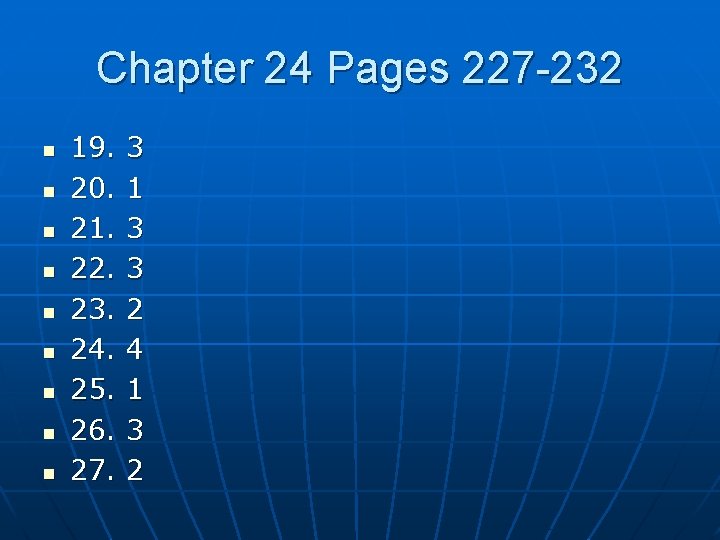
Chapter 24 Pages 227 -232 n n n n n 19. 20. 21. 22. 23. 24. 25. 26. 27. 3 1 3 3 2 4 1 3 2
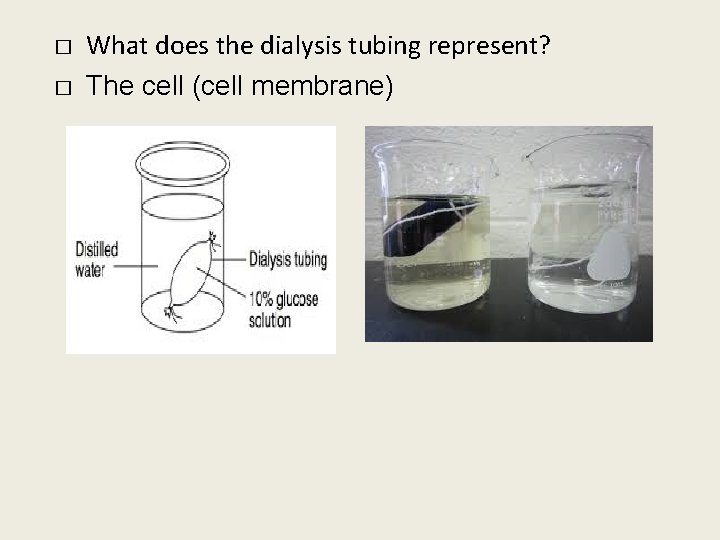
NYS Lab: Transport Through the Membrane Substance Indicator Starch Glucose Iodine Starch indicator Benedict’s solution Glucose indicator Color Change Golden brown blue black Blue Brick red
� � What does the dialysis tubing represent? The cell (cell membrane)
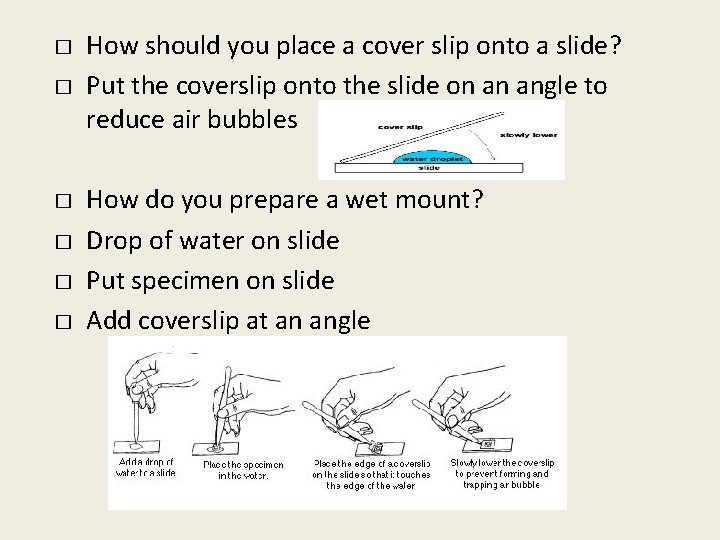
� � � How should you place a cover slip onto a slide? Put the coverslip onto the slide on an angle to reduce air bubbles How do you prepare a wet mount? Drop of water on slide Put specimen on slide Add coverslip at an angle
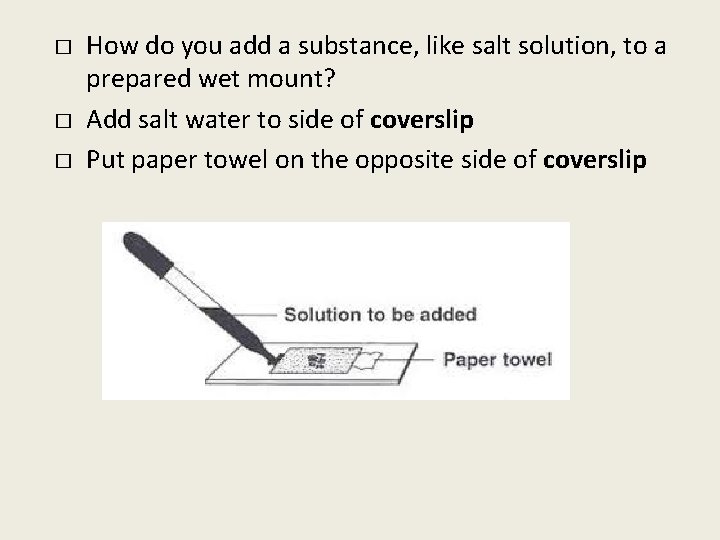
� � � How do you add a substance, like salt solution, to a prepared wet mount? Add salt water to side of coverslip Put paper towel on the opposite side of coverslip
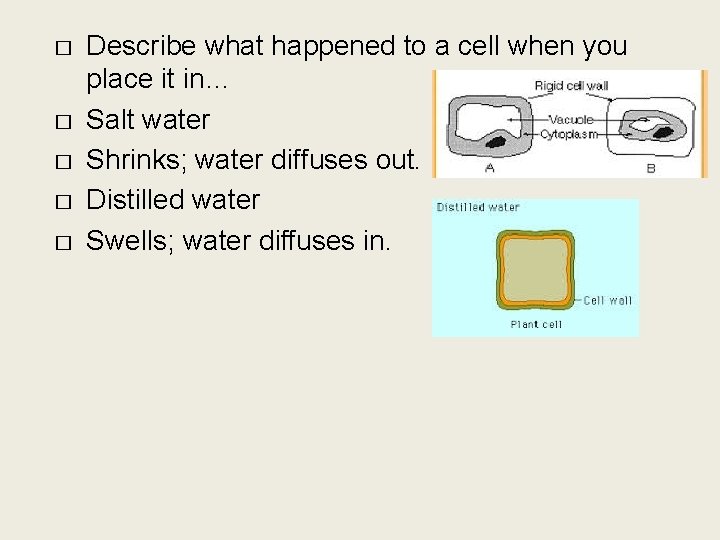
� � � Describe what happened to a cell when you place it in… Salt water Shrinks; water diffuses out. Distilled water Swells; water diffuses in.
In the space given below sketch each of the following: Normal plant cell In salt water In distilled water
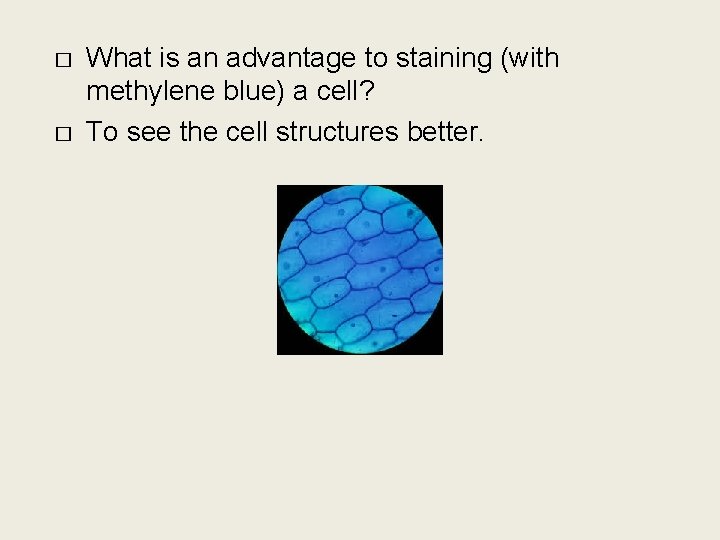
� � What is an advantage to staining (with methylene blue) a cell? To see the cell structures better.
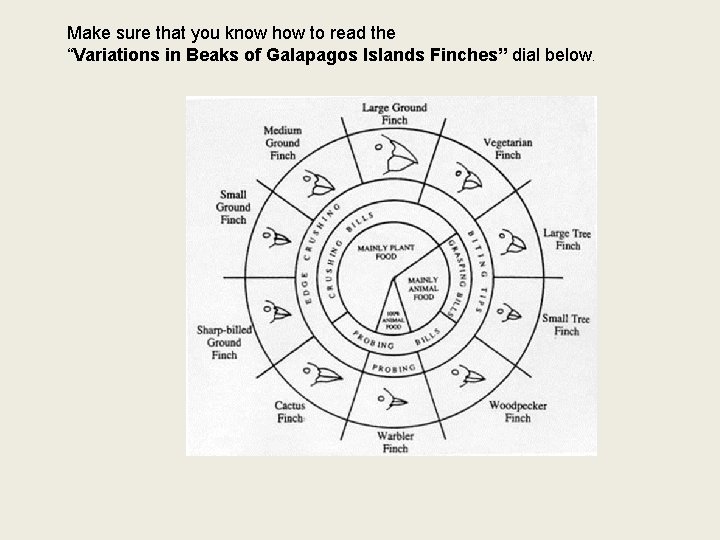
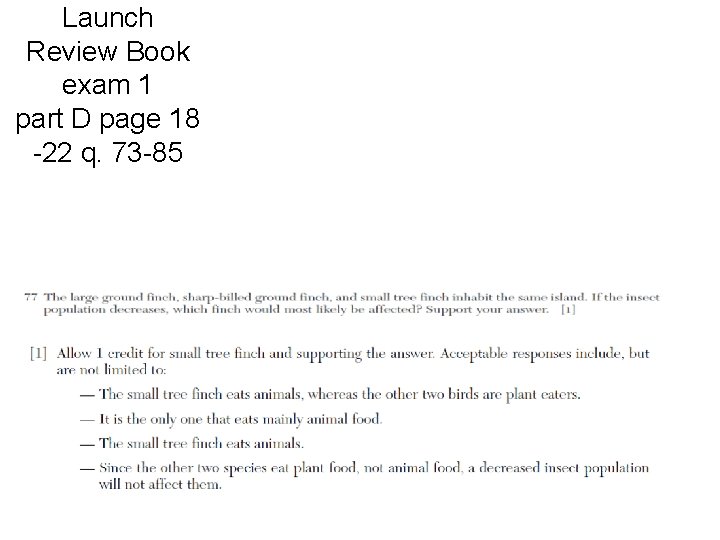
Beaks and Finches � � Explain how variation in types of beaks of finches allows different types of finches to survive living together on the same island. No competition because they eat different food because of their type of beaks. If two finches occupy the same niche, what will that cause them to do? Competition
Make sure that you know how to read the “Variations in Beaks of Galapagos Islands Finches” dial below.
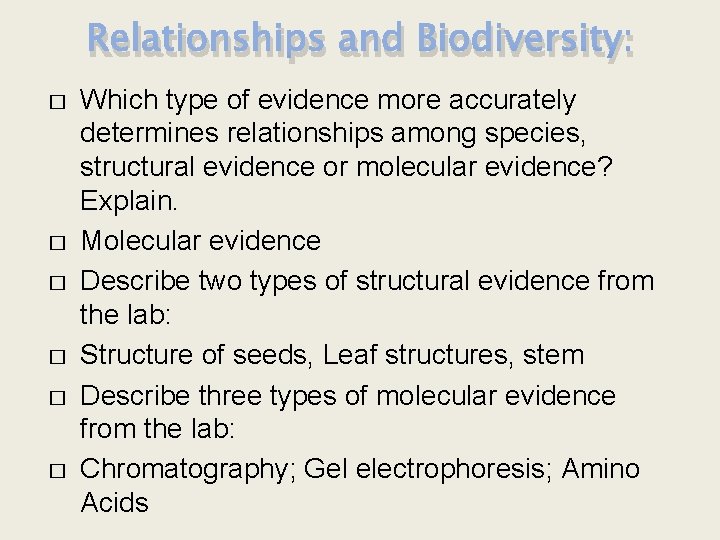
Relationships and Biodiversity: � � � Which type of evidence more accurately determines relationships among species, structural evidence or molecular evidence? Explain. Molecular evidence Describe two types of structural evidence from the lab: Structure of seeds, Leaf structures, stem Describe three types of molecular evidence from the lab: Chromatography; Gel electrophoresis; Amino Acids
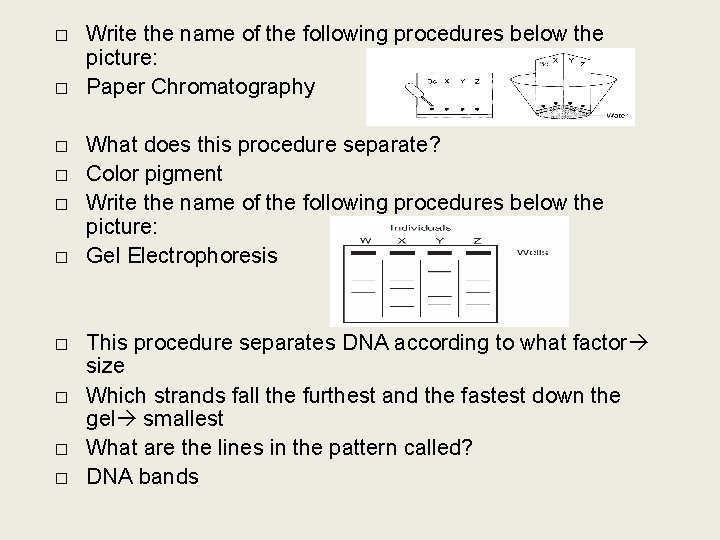
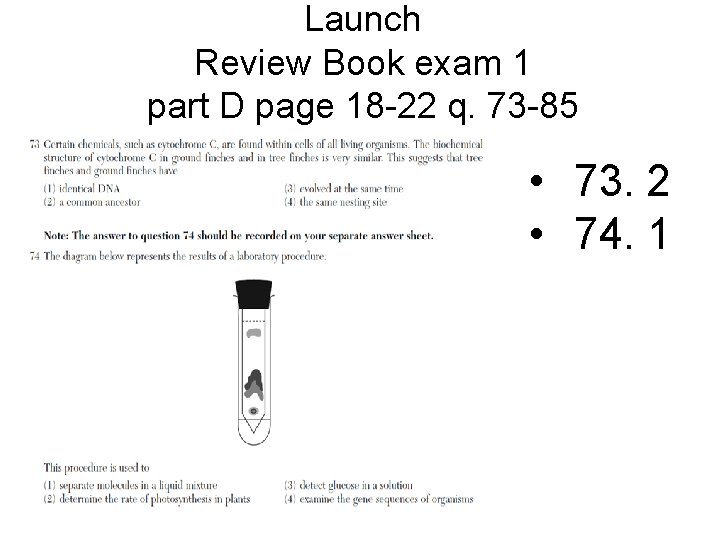
� � � � � Write the name of the following procedures below the picture: Paper Chromatography What does this procedure separate? Color pigment Write the name of the following procedures below the picture: Gel Electrophoresis This procedure separates DNA according to what factor size Which strands fall the furthest and the fastest down the gel smallest What are the lines in the pattern called? DNA bands
� � If two organisms make the same protein, how does that show a relationship between them? Make sure to use DNA and/or amino acid sequence in your answer. If two organisms have the same protein, then we know that they have the same or similar amino acid sequence and therefore same or similar DNA base sequence.
Making connections � � � Explain how 2 body systems work together to maintain homeostasis during times of exercise. Circulatory and Respiratory systems The respiratory system brings oxygen into the body from the environment and the circulatory system transports the oxygen around the body.
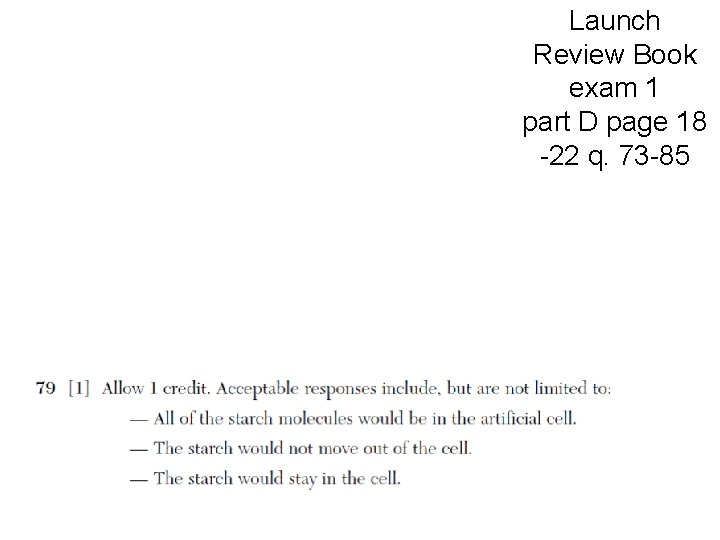
Launch Review Book exam 1 part D page 18 -22 q. 73 -85 • 73. 2 • 74. 1
Launch Review Book exam 1 part D page 18 -22 q. 73 -85 • 75. 1 • 76. 1
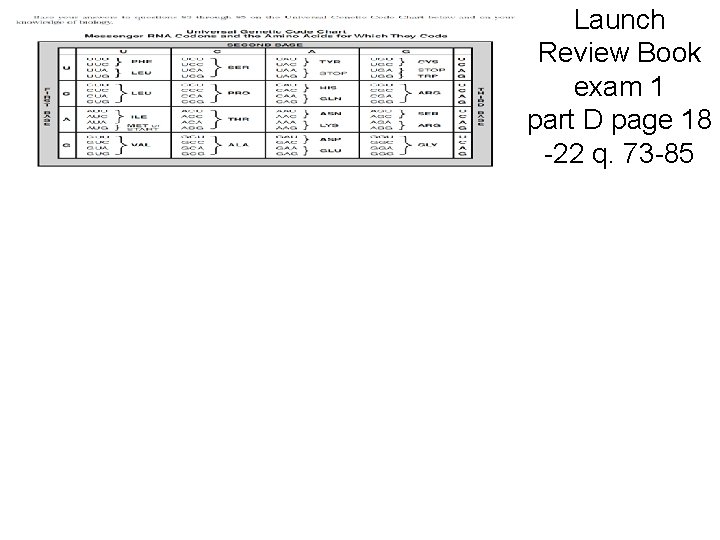
Launch Review Book exam 1 part D page 18 -22 q. 73 -85
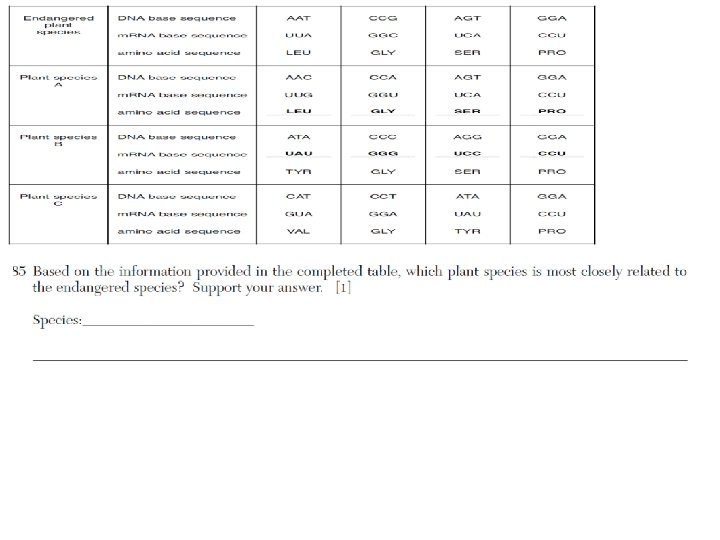
Launch Review Book exam 1 part D page 18 -22 q. 73 -85
Launch Review Book exam 1 part D page 18 -22 q. 73 -85
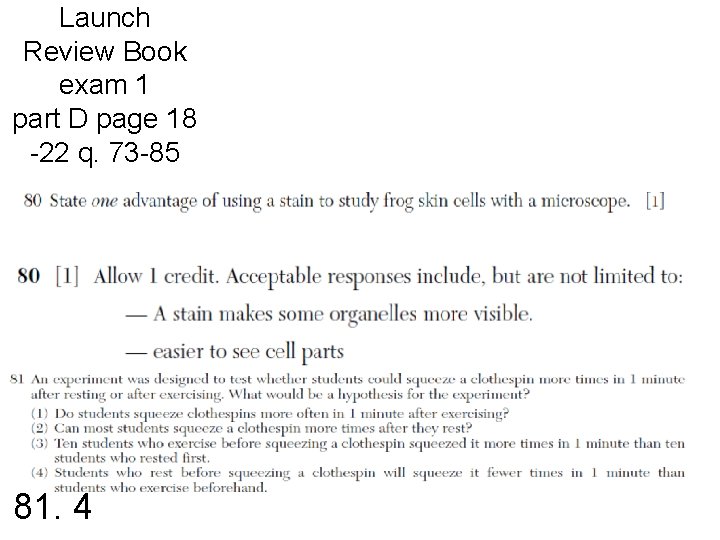
Launch Review Book exam 1 part D page 18 -22 q. 73 -85 81. 4
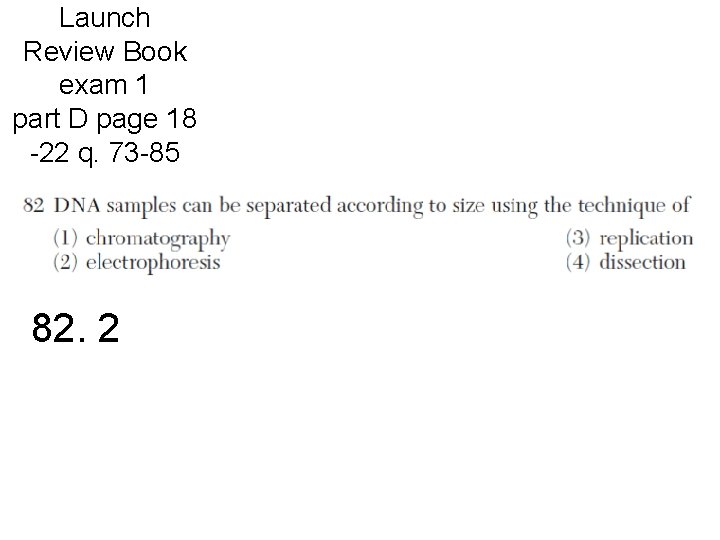
Launch Review Book exam 1 part D page 18 -22 q. 73 -85 82. 2
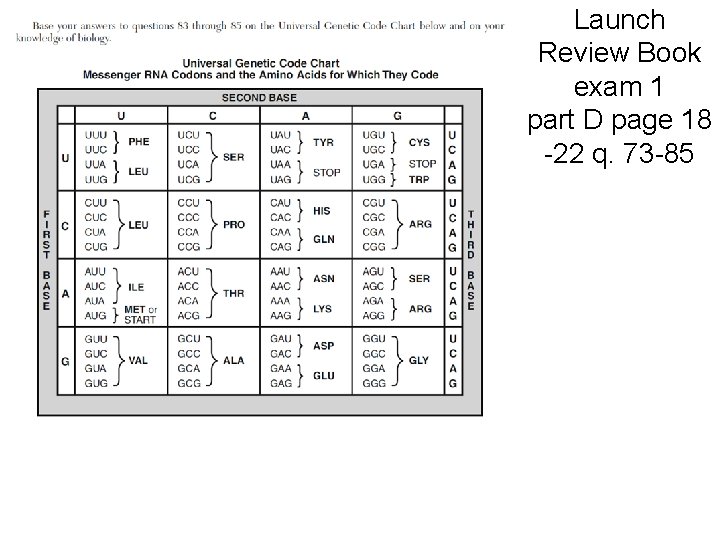
Launch Review Book exam 1 part D page 18 -22 q. 73 -85
Launch Review Book exam 1 part D page 18 -22 q. 73 -85