
Scientific Method 5 Steps in the Scientific Method

- Slides: 16
Scientific Method
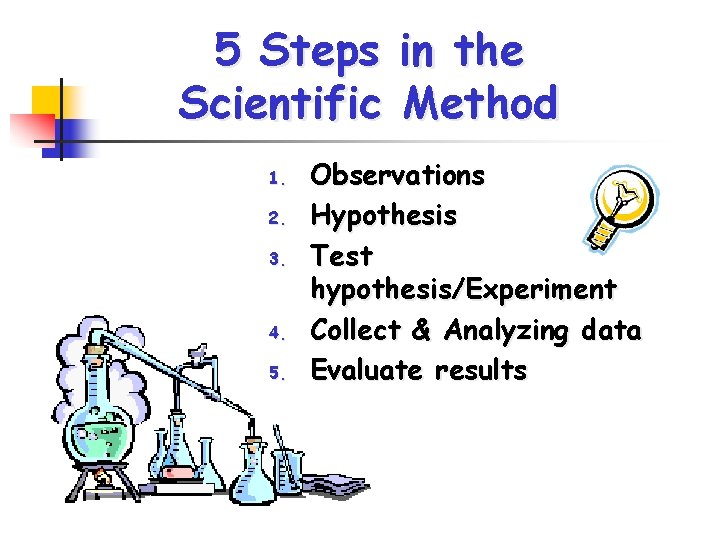
5 Steps in the Scientific Method 1. 2. 3. 4. 5. Observations Hypothesis Test hypothesis/Experiment Collect & Analyzing data Evaluate results
Observations AKA question or problem. n Ex. How did life begin? n Used to create a hypothesis. n
Hypothesis n n A suggested solution to the problem based on observations and research. Predicts an outcome Must be testable Format - If…Then… statements
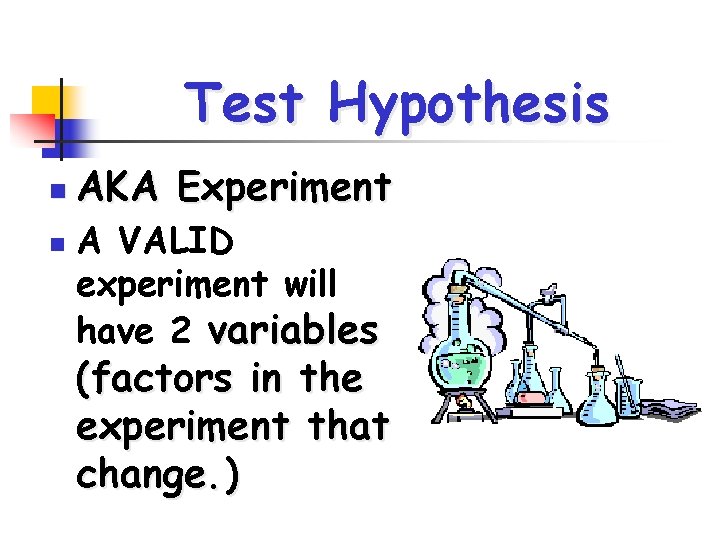
Test Hypothesis n n AKA Experiment A VALID experiment will have 2 variables (factors in the experiment that change. )
Variables n n Independent Variable – manipulated variable, the part of the experiment that is changed on purpose. Dependent Variable – responding variable, the part of the experiment that may change based on the independent variable.
Variables Continued… n n Constant - Variables in the experiment that are kept the same on purpose. Control Group - experimental group that the scientist does NOT test with the independent variable, receives no treatment, used as a comparison
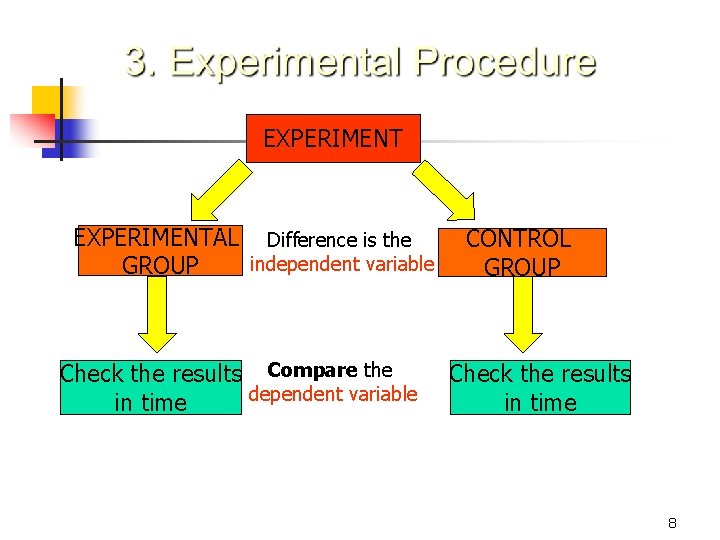
EXPERIMENTAL Difference is the independent variable GROUP Check the results Compare the dependent variable in time CONTROL GROUP Check the results in time 8
Example of Controls & Variables n n n For example, suppose you want to figure out the fastest route to walk home from school. You will try several different routes and time how long it takes you to get home by each one. Since you are only interested in finding a route that is fastest for you, you will do the walking yourself.
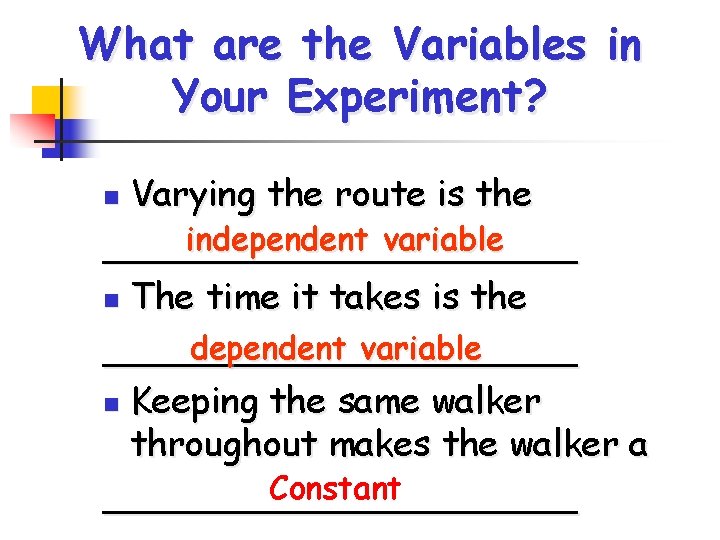
What are the Variables in Your Experiment? Varying the route is the independent variable ___________ n The time it takes is the dependent variable ___________ n Keeping the same walker throughout makes the walker a Constant ___________ n
Collect & Analyzing Data n n Qualitative data– describes characteristics Quantitative data – numbers, can count or measure
Graphing Data Line Graph – shows change over time, shows patterns over time n Bar Graph – shows comparisons of discrete data n Pie Chart – shows parts of a whole n
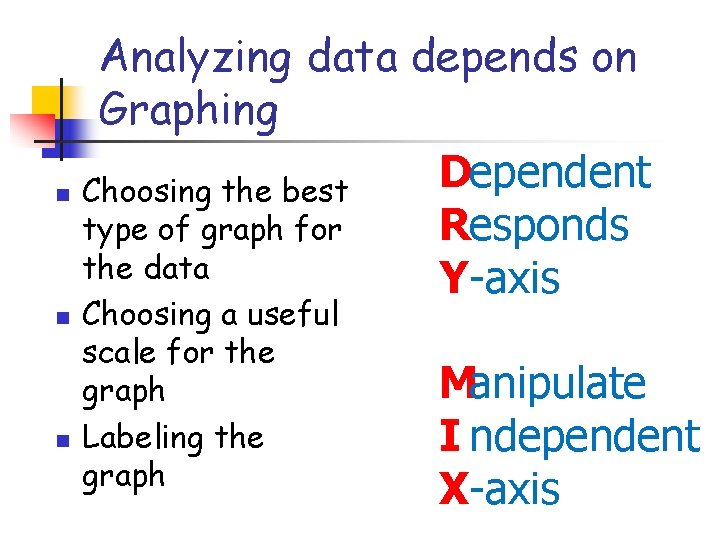
Analyzing data depends on Graphing D ependent n Choosing the best Responds type of graph for the data Y-axis n n Choosing a useful scale for the graph Labeling the graph Manipulate I ndependent X-axis
Evaluate Results AKA Make Conclusions n The answer to the hypothesis based on the data obtained from the experiment n
Theory n Seeks to explain an event or phenomenon in nature. n n Has an overwhelming amount of observations and has been tested over a wide variety of conditions by many different people. Can be modified and changed has no information emerges.
Law § § Based on experimental evidence Tells WHAT happens, not WHY