
Scientific Measurement Scientists use the International System SI
- Slides: 16
Scientific Measurement
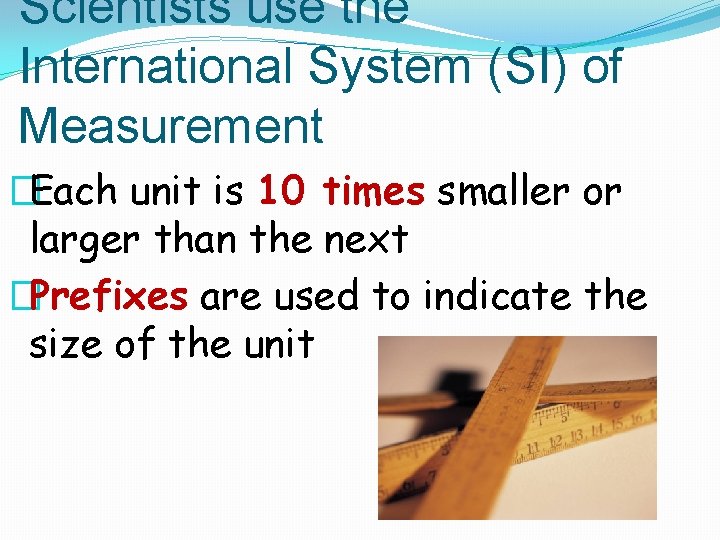
Scientists use the International System (SI) of Measurement �Each unit is 10 times smaller or larger than the next �Prefixes are used to indicate the size of the unit
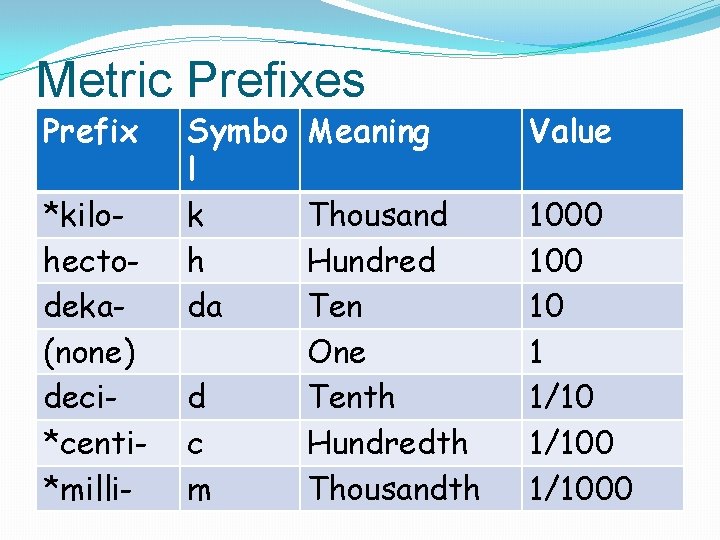
Metric Prefixes Prefix *kilohectodeka(none) deci*centi*milli- Symbo l k h da d c m Meaning Value Thousand Hundred Ten One Tenth Hundredth Thousandth 1000 10 1 1/1000
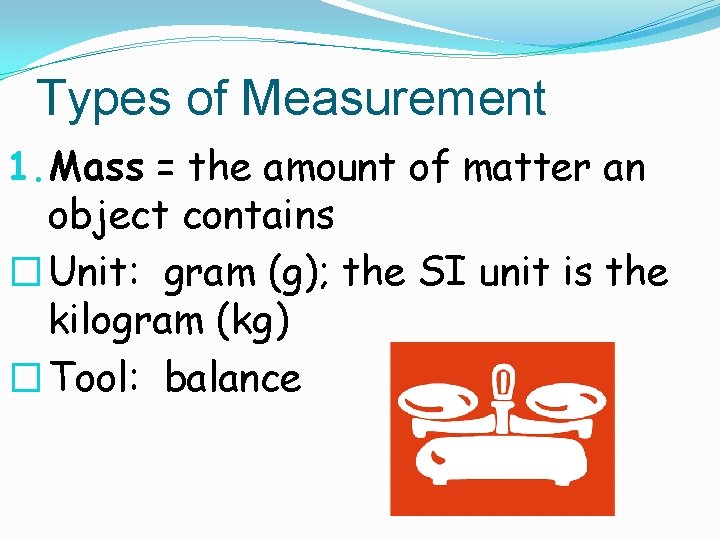
Types of Measurement 1. Mass = the amount of matter an object contains � Unit: gram (g); the SI unit is the kilogram (kg) � Tool: balance
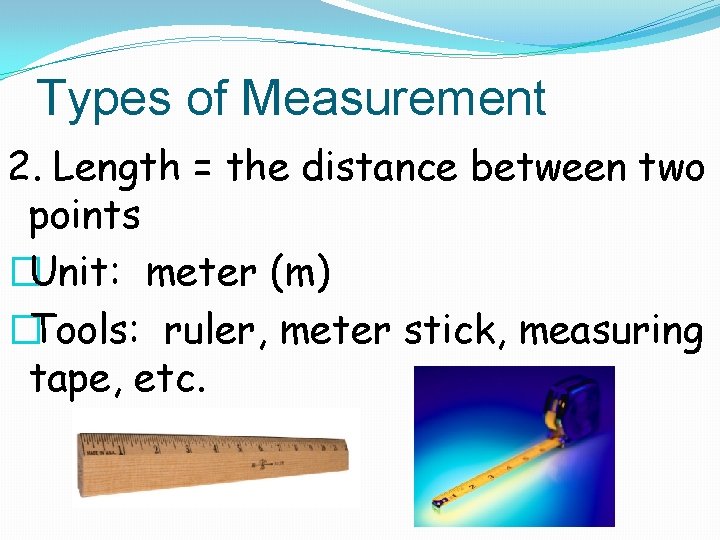
Types of Measurement 2. Length = the distance between two points �Unit: meter (m) �Tools: ruler, meter stick, measuring tape, etc.
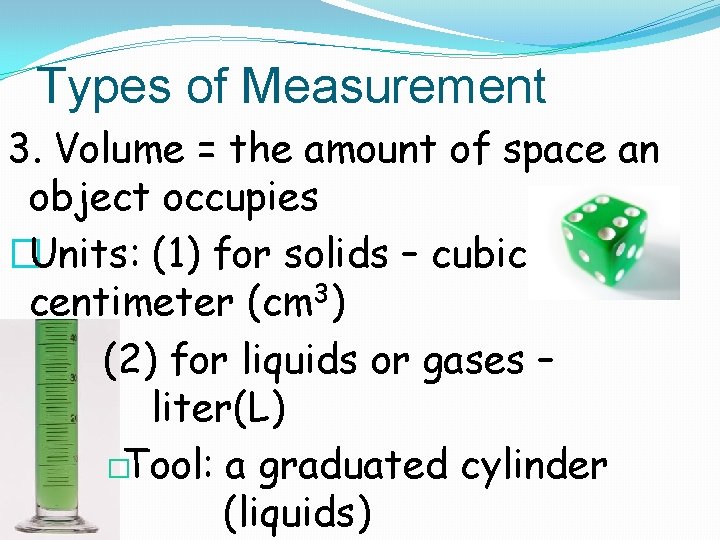
Types of Measurement 3. Volume = the amount of space an object occupies �Units: (1) for solids – cubic centimeter (cm 3) (2) for liquids or gases – liter(L) �Tool: a graduated cylinder (liquids)
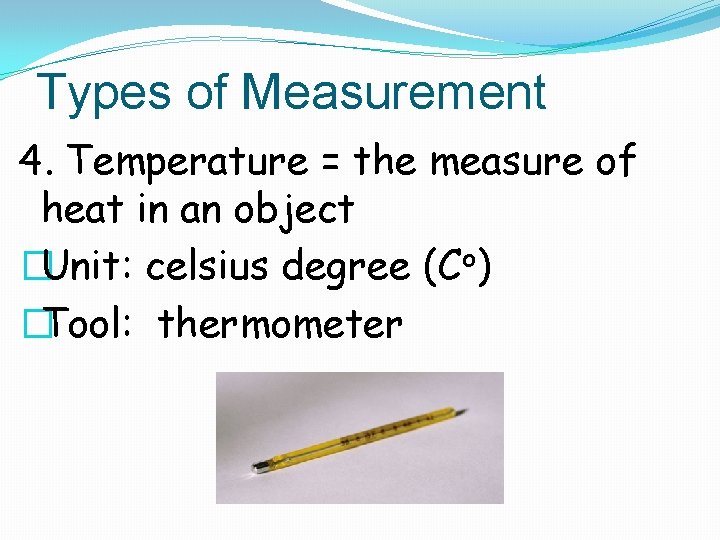
Types of Measurement 4. Temperature = the measure of heat in an object �Unit: celsius degree (Co) �Tool: thermometer
Scientific Method Steps used by scientists in order to solve problems
Scientific Method 1. Determine a Problem � Must be testable (cannot be opinion) Example Who is the prettiest girl in the class? OR Who is the tallest girl in the class?
Scientific Method 2. Form a Hypothesis �a testable statement that suggests an answer to the problem Example If all the heights of the girls in the class are measured, then Jane should be the tallest.
Scientific Method 3. Design an Experiment • The best experiments test only one variable at a time • The variable that is changed during the experiment is the independent (manipulated) variable
Scientific Method • The variable that is being observed/measured is the dependent (responding) variable • All other conditions are constant (don’t change) • The test group with normal conditions is the control
Scientific Method 4. Record Data • Quantitative data uses numbers (counts, measurements) • Qualitative data uses observations (smell, color)
Scientific Method 5. Analyze the Results • should be arranged in tables, charts, and/or graphs 6. Draw Conclusion(s) • Must state if the data rejected or supported the hypothesis
Scientific Method 7. Revise or Repeat • If the hypothesis is rejected, revise (the hypothesis or experiment) before doing again • If the hypothesis is supported, repeat the experiment to verify your results
Scientific Theory – natural phenomenon supported by a large body of experimental evidence - can be changed with additional evidence Scientific Law – natural law accepted as fact (gravity)