
Scientific Investigation What is Science Something we DO
- Slides: 21
Scientific Investigation
What is Science? Something we DO to try and understand the natural world Ø Evidence-based blend of logic and innovation Ø Durable ideas BUT still subject to change Ø l New tools & instruments significantly increased chemical knowledge at the atomic, nano-, & molecular levels
1. Ask a Question/ ID a problem Ø Naturally connected to observations What is this substance? l Why don’t all smokers get lung cancer? l Is texting while driving really more dangerous than drinking and driving? l
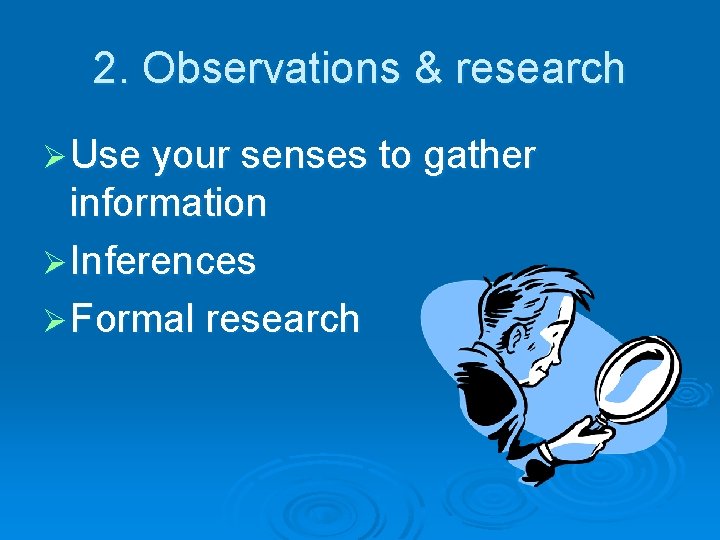
2. Observations & research Ø Use your senses to gather information Ø Inferences Ø Formal research
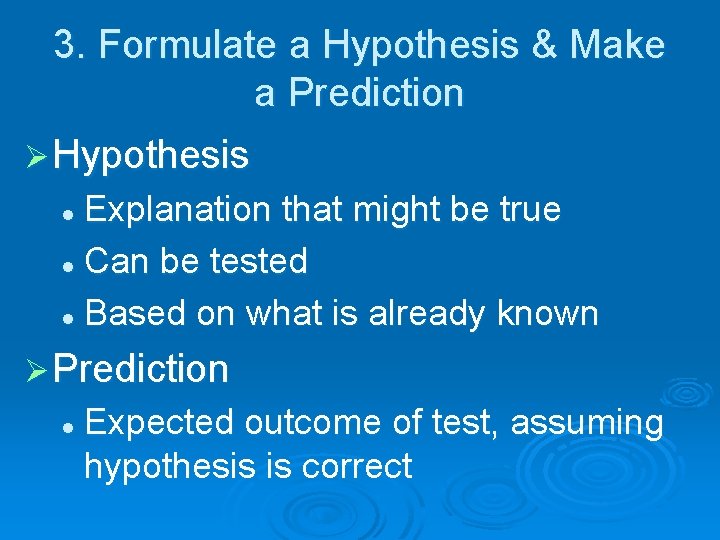
3. Formulate a Hypothesis & Make a Prediction Ø Hypothesis Explanation that might be true l Can be tested l Based on what is already known l Ø Prediction l Expected outcome of test, assuming hypothesis is correct
UNDERSTANDING CHECK
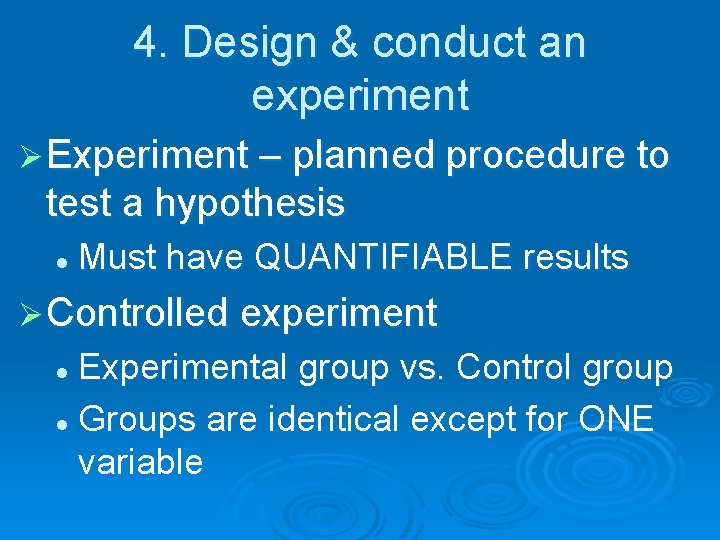
4. Design & conduct an experiment Ø Experiment – planned procedure to test a hypothesis l Must have QUANTIFIABLE results Ø Controlled experiment Experimental group vs. Control group l Groups are identical except for ONE variable l
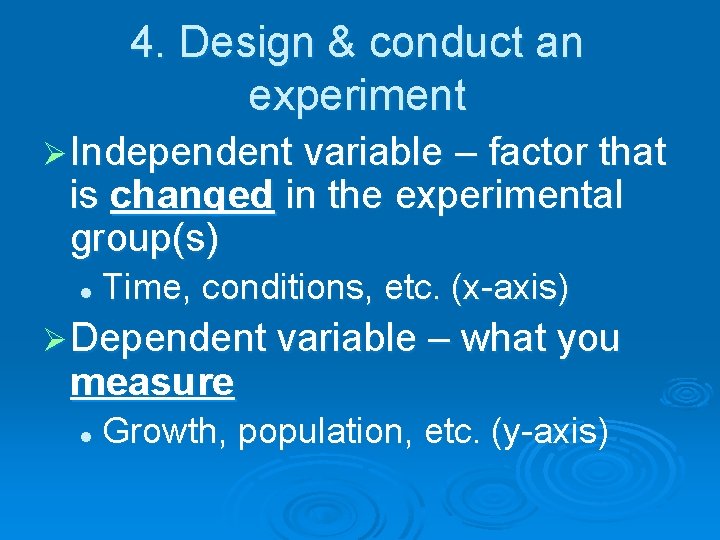
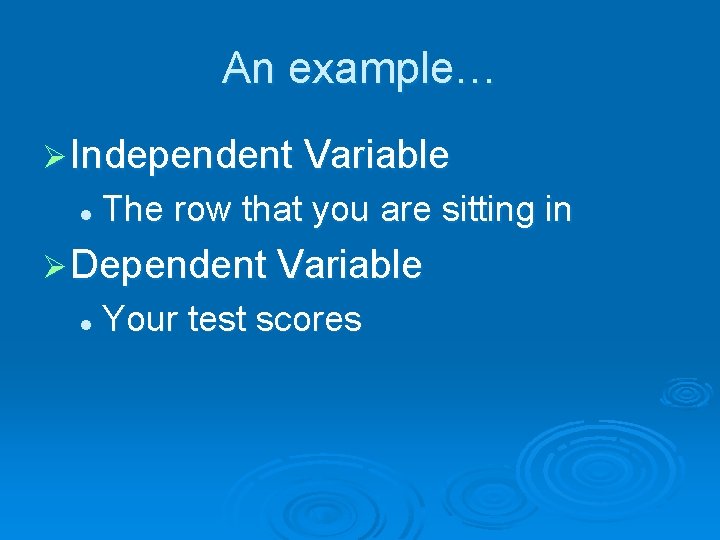
4. Design & conduct an experiment Ø Independent variable – factor that is changed in the experimental group(s) l Time, conditions, etc. (x-axis) Ø Dependent variable – what you measure l Growth, population, etc. (y-axis)
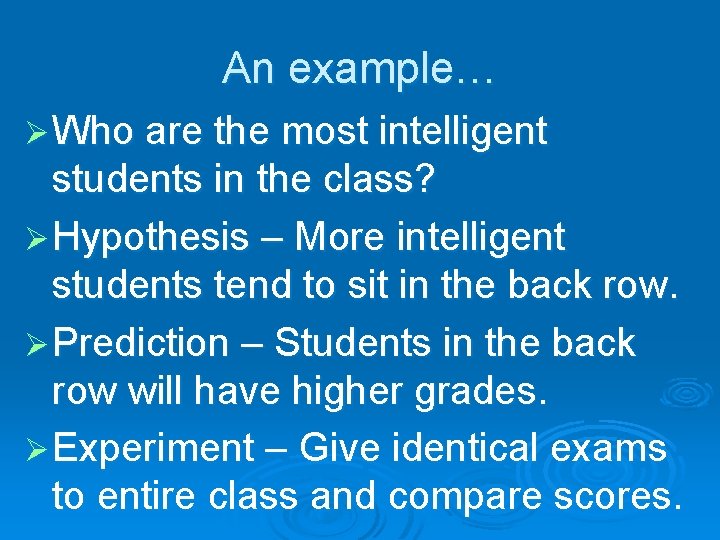
An example… Ø Who are the most intelligent students in the class? Ø Hypothesis – More intelligent students tend to sit in the back row. Ø Prediction – Students in the back row will have higher grades. Ø Experiment – Give identical exams to entire class and compare scores.
An example… Ø Independent Variable l The row that you are sitting in Ø Dependent Variable l Your test scores
UNDERSTANDING CHECK
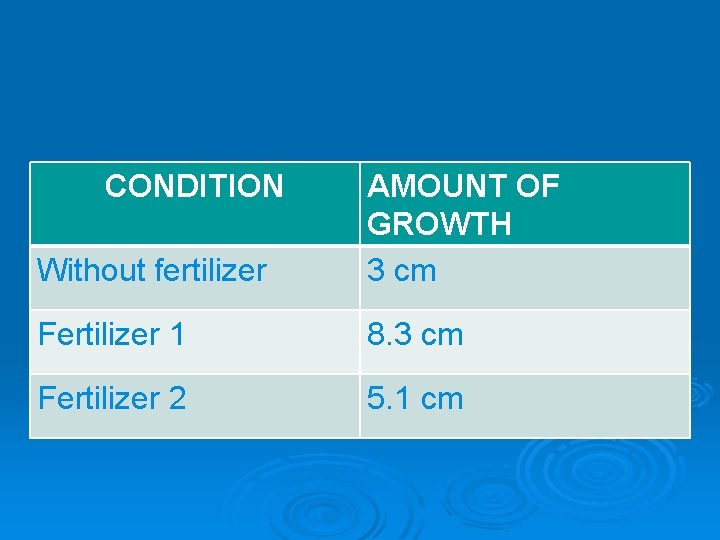
CONDITION Without fertilizer AMOUNT OF GROWTH 3 cm Fertilizer 1 8. 3 cm Fertilizer 2 5. 1 cm
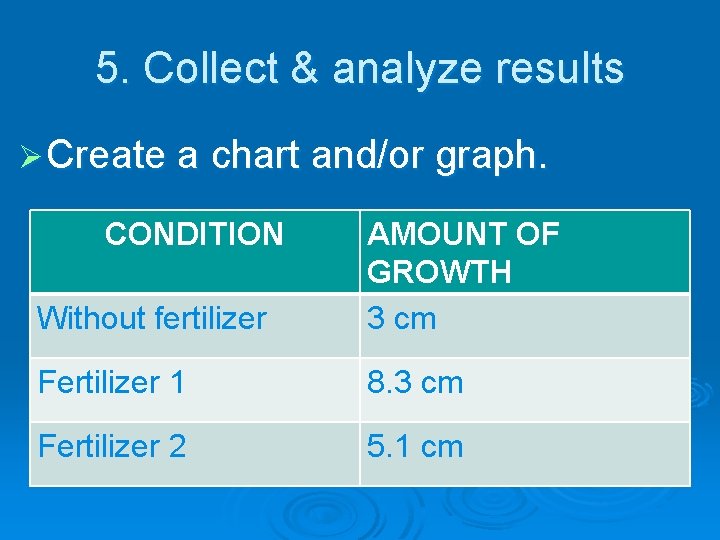
5. Collect & analyze results Ø Create a chart and/or graph. CONDITION Without fertilizer AMOUNT OF GROWTH 3 cm Fertilizer 1 8. 3 cm Fertilizer 2 5. 1 cm
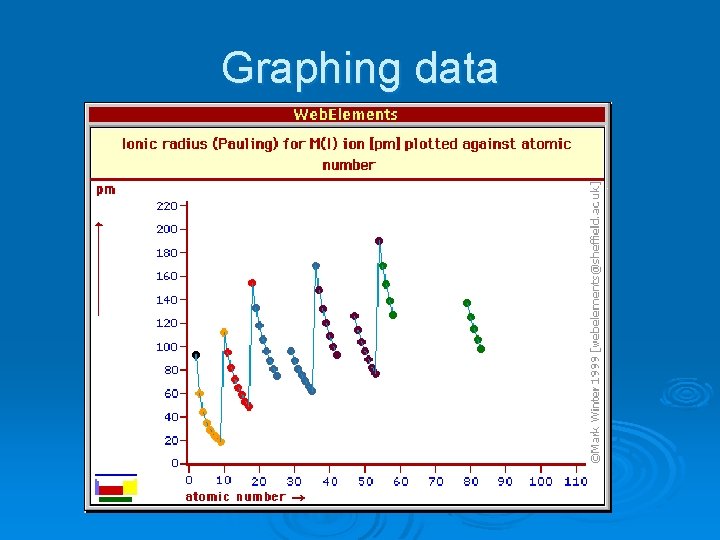
Graphing data
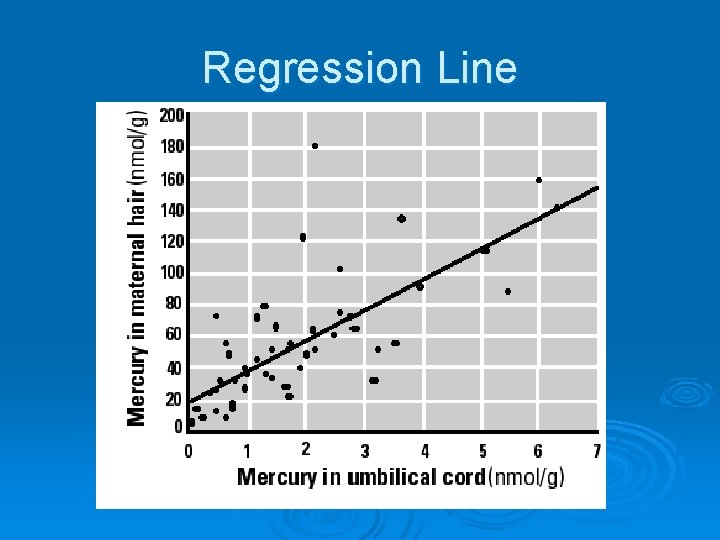
Regression Line
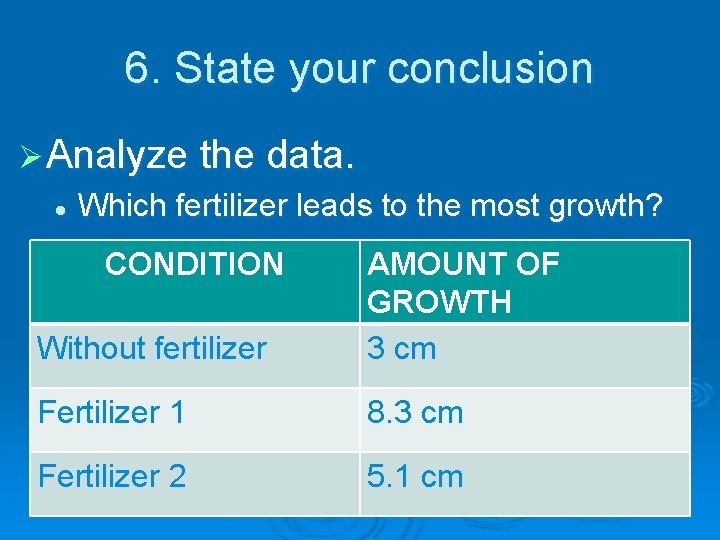
6. State your conclusion Ø Analyze the data. l Which fertilizer leads to the most growth? CONDITION Without fertilizer AMOUNT OF GROWTH 3 cm Fertilizer 1 8. 3 cm Fertilizer 2 5. 1 cm
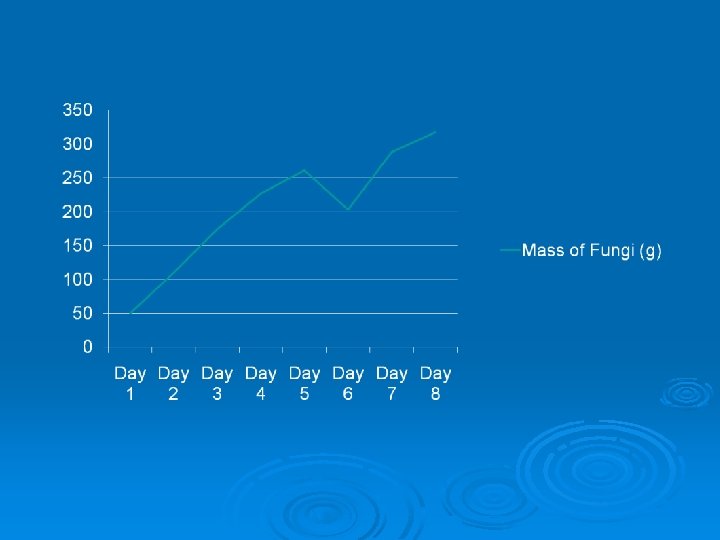
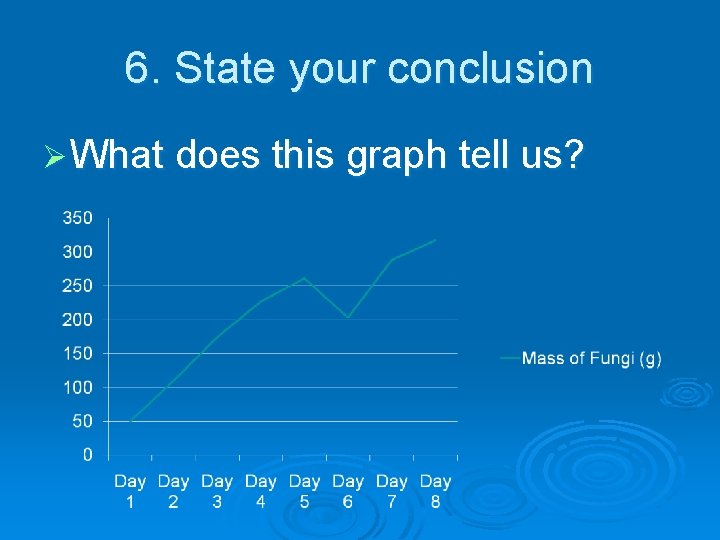
6. State your conclusion Ø What does this graph tell us?
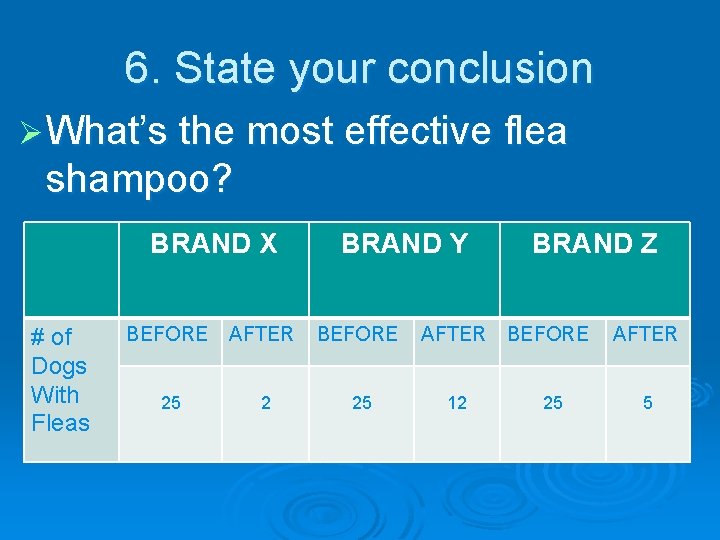
6. State your conclusion Ø What’s the most effective flea shampoo? BRAND X # of Dogs With Fleas BRAND Y BRAND Z BEFORE AFTER 25 2 25 12 25 5
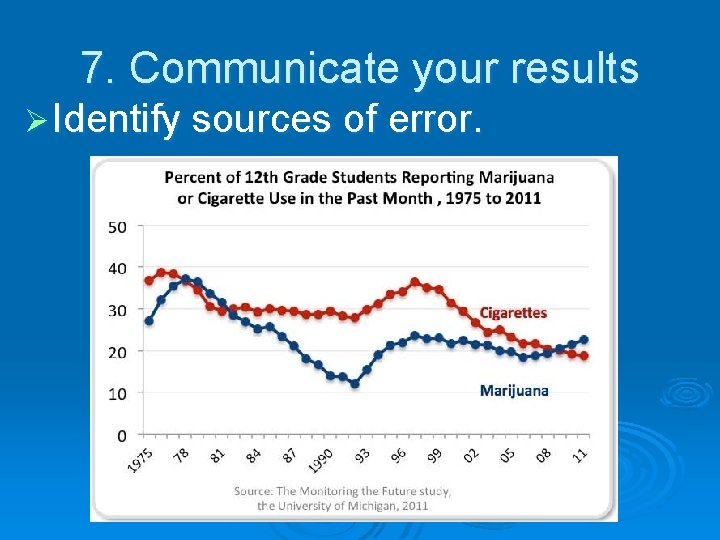
7. Communicate your results Ø Identify sources of error.
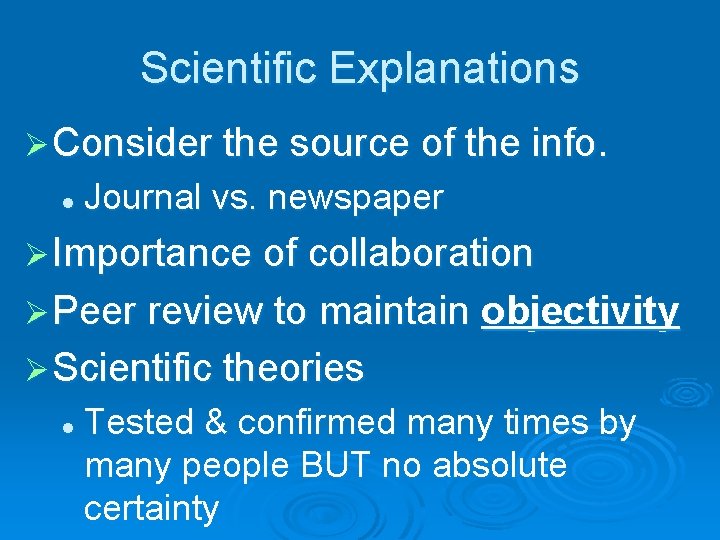
Scientific Explanations Ø Consider the source of the info. l Journal vs. newspaper Ø Importance of collaboration Ø Peer review to maintain objectivity Ø Scientific theories l Tested & confirmed many times by many people BUT no absolute certainty