
Scientific Forecasting How to Be a Better Forecaster

Scientific Forecasting: How to Be a Better Forecaster courtesy of Prof. David Schultz University of Manchester
Will your job be replaced by automated forecasts?

Not if you beat the computer! www. arrowitod. net
Advice on how to beat the computer
1. Embrace automation that saves you time - manual analyses for the TV and newspapers - gridded forecasts for public versus - manual analyses for your diagnosis - severe-weather forecasting - customer-oriented products
2. Know how to beat the models - two reasons why forecasts fail – Poor initial conditions – Model errors - how good are the initial conditions? - what are the strengths and weaknesses of the models?
3. Know climatology - real atmosphere - model atmosphere
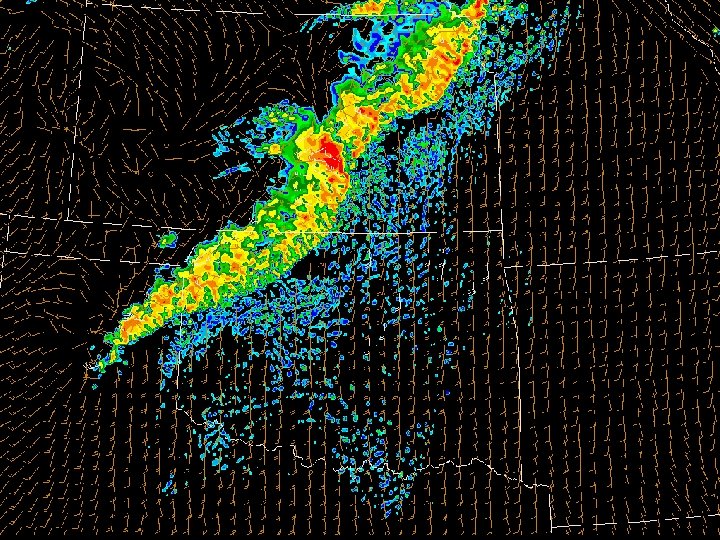
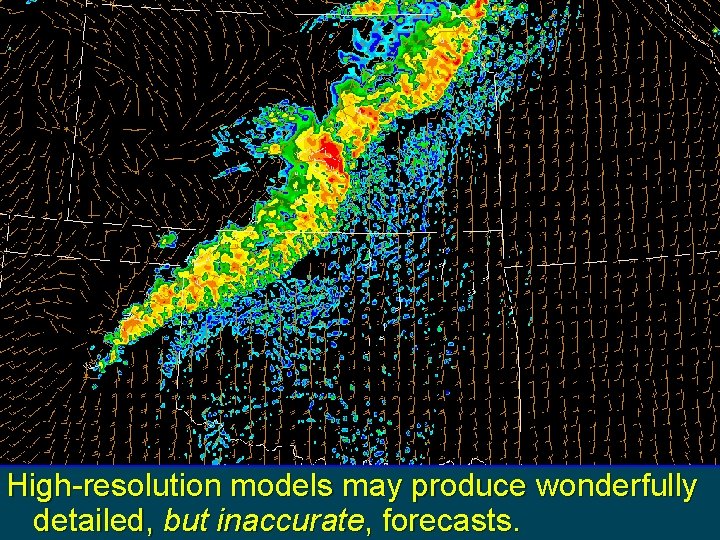
High-resolution models may produce wonderfully detailed, but inaccurate, forecasts.
4. Embrace high resolution, yet think probabilistically ensemble forecasting systems help quantify the likelihood of possibilities
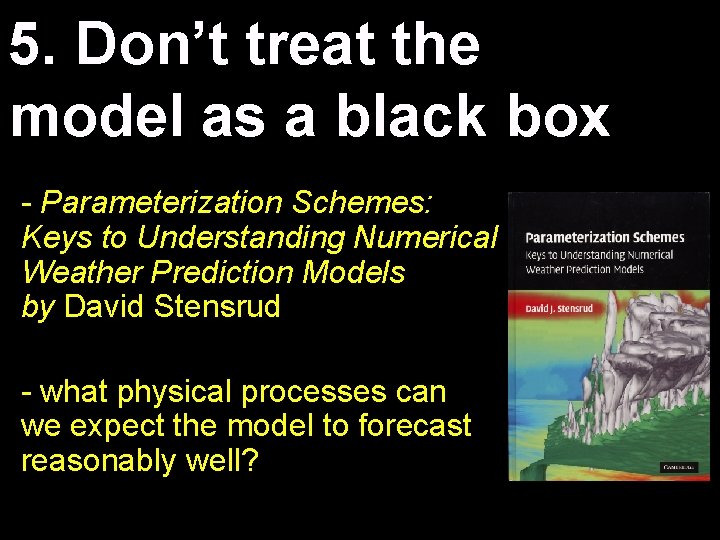
5. Don’t treat the model as a black box - Parameterization Schemes: Keys to Understanding Numerical Weather Prediction Models by David Stensrud - what physical processes can we expect the model to forecast reasonably well?
An Example Know what kind of convective parameterization scheme is in your model
6. Embrace ingredients-based forecasting techniques If forecasting severe weather was as easy as the Extreme Forecast Index, then forecasters would be out of jobs. Ingredients-based forecasting Is physically based Focuses your attention on most important processes Limits the number of charts that you look at saves you time
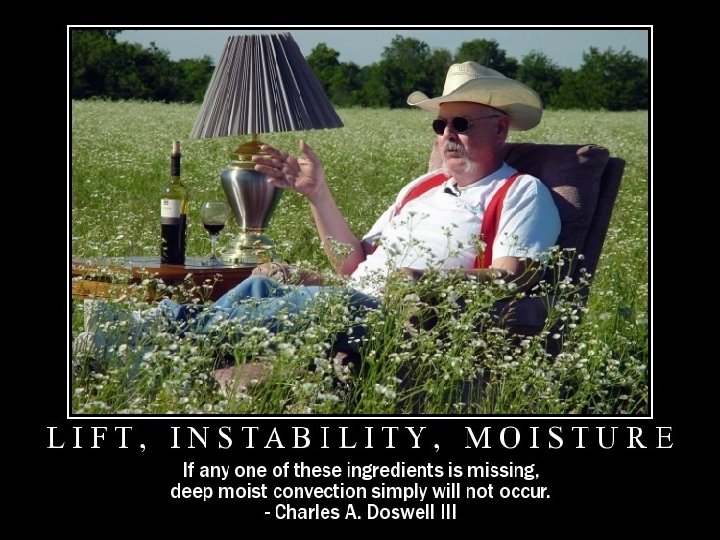
The Three Ingredients for Deep, Moist Convection Instability Lift Moisture

Ingredients-based forecasting an ingredient is something necessary and sufficient for some event to occur based on whatever we understand limited by what we don’t easily adapted to incorporate new scientific understanding (C. Doswell)
Understanding and forecasting convection is best viewed through an ingredients-based forecasting methodology. Johns and Doswell (1992)
Severe Convective Storms ≠ Severe Thunderstorms A convective storm producing hail, tornadoes or strong winds may not produce lightning.
Ingredients for Electrification deep, moist convection strong updrafts in the lower part of the mixed-phase region of the cloud
Diagnostic Quantities for Electrification LCL (~cloud base) warmer than – 10°C (ensures supercooled liquid water) Equilibrium level (~cloud top) colder than – 20°C (ensures ice nucleation over adequate depth) CAPE > 100– 200 J/kg in – 10° to – 20°C layer (ensures ascent > 6– 7 m/s in lower mixed-phase region) van den Broeke et al. (2005, WAF)
7. Approach forecasting like a scientist. be open to alternative realities question your forecasts ask the right questions
Six Questions to Ask (from Bosart 2003, “Whither the Weather Analysis and Forecasting Process? ”, Weather and Forecasting) 1. What happened? 2. Why did it happen? 3. What is happening? 4. Why is it happening? 5. What is going to happen? 6. Why is it going to happen? (Don’t be tempted to “cheat” and only consider #5!) (Courtesy of Russ Schumacher)
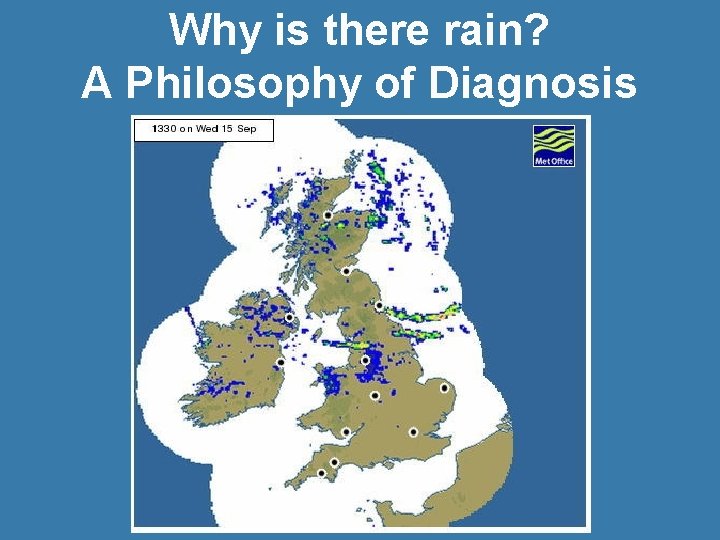
Why is there rain? A Philosophy of Diagnosis
A Philosophy of Diagnosis 1. QG thinking: advection of vorticity by thermal wind (e. g. , vorticity advection, warm advection) 2. If not QG, then try frontogenesis at different levels. 3. If not frontogenesis, then something else: topography, PBL circulations, diabatic effects, etc.
A Philosophy of Diagnosis 1. QG thinking: advection of vorticity by thermal wind (e. g. , vorticity advection, warm advection) 2. If not QG, then try frontogenesis at different levels. 3. If not frontogenesis, then something else: topography, PBL circulations, diabatic effects, etc. Note that assessing instability is also important, but secondary to this philosophy. Conditional stability or moist symmetric instability only modulates the response to the given forcing.
8. Develop your critical thinking skills Today’s complex models require intelligent users
9. Seek enlightenment attend seminars UCAR Met. Ed, EUMETCAL, ECMWF www. meted. ucar. edu read the literature - know your history - keep abreast of recent developments
10. Grow professionally continue your education testbeds? Masters degree? Ph. D. ? actively pursue research that will make your jobs easier go to conferences and present your research

Embrace change Your job now will not be the same job in the future
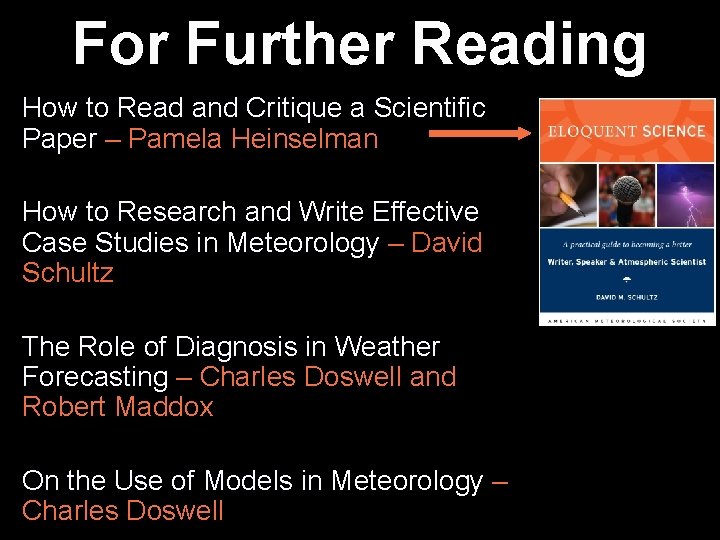
For Further Reading How to Read and Critique a Scientific Paper – Pamela Heinselman How to Research and Write Effective Case Studies in Meteorology – David Schultz The Role of Diagnosis in Weather Forecasting – Charles Doswell and Robert Maddox On the Use of Models in Meteorology – Charles Doswell
- Slides: 30