
Scientific Classification and Taxonomy SB 3 c Examine
Scientific Classification and Taxonomy SB 3 c. Examine the evolutionary basis of modern classification systems
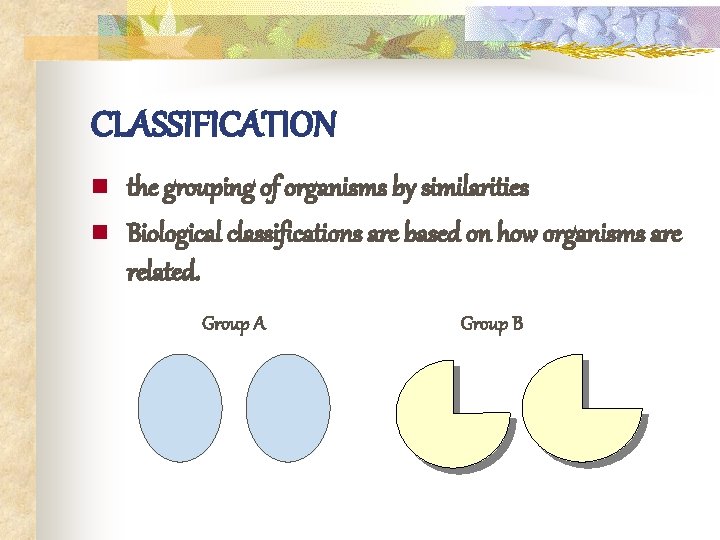
CLASSIFICATION n n the grouping of organisms by similarities Biological classifications are based on how organisms are related. Group A Group B
HISTORY: n Aristotle- developed the 1 st method of classification n He divided all living things into 2 major groups
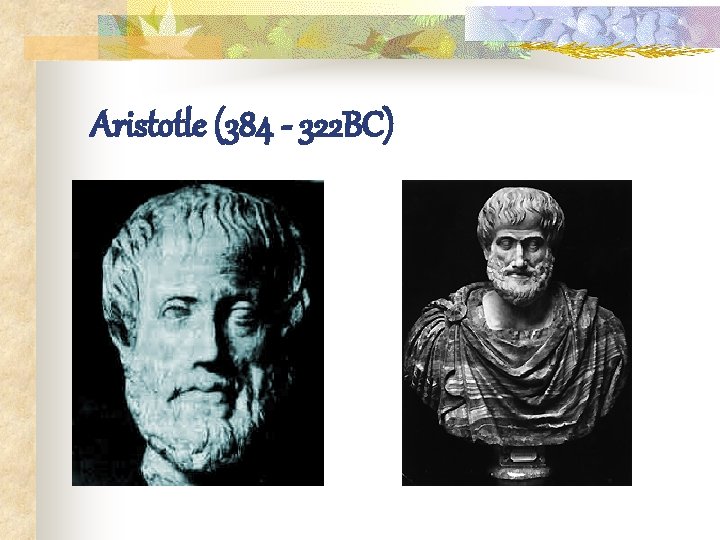
Aristotle (384 - 322 BC)
Aristotle’s Groups n n He divided all living things into 2 major groups 1. Plants n n classified by size and structure 2. Animals n classified by habitat (where they lived)
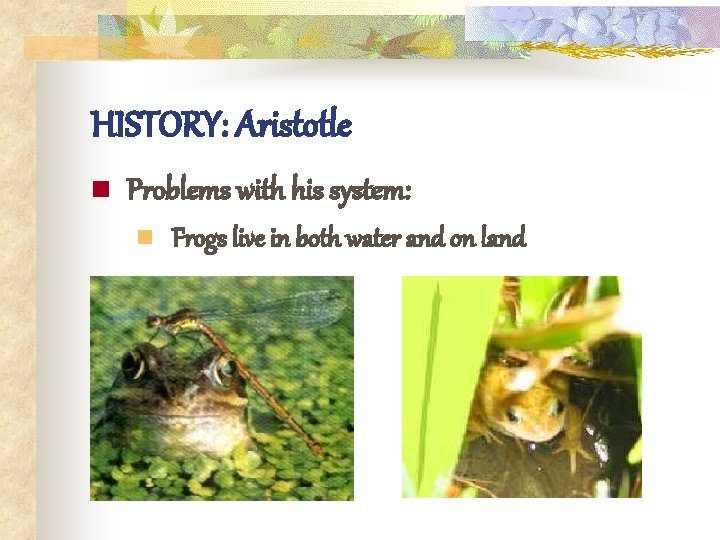
HISTORY: Aristotle n Problems with his system: n Frogs live in both water and on land
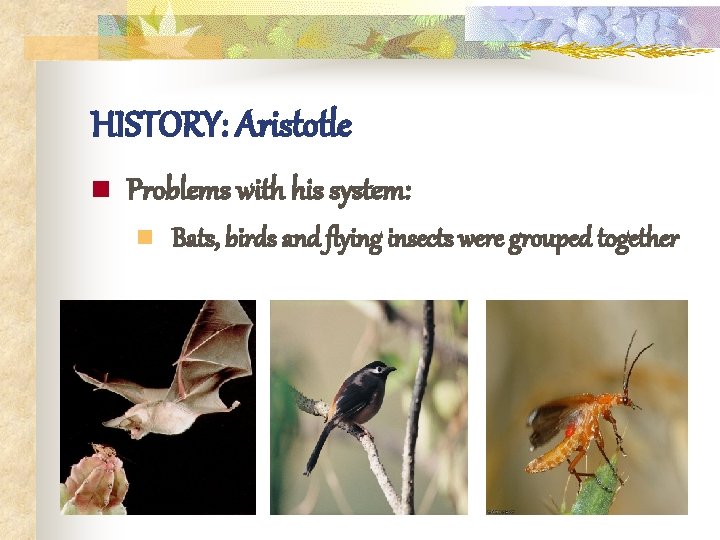
HISTORY: Aristotle n Problems with his system: n Bats, birds and flying insects were grouped together
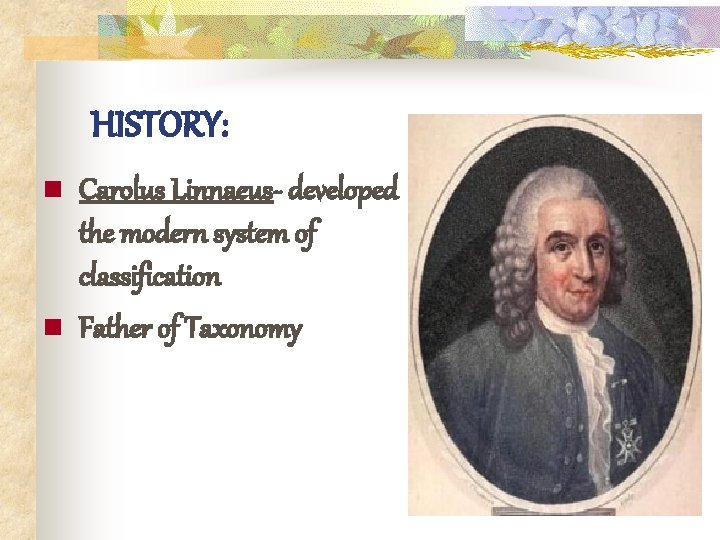
HISTORY: n n Carolus Linnaeus- developed the modern system of classification Father of Taxonomy
Taxonomy n the branch of biology concerned with the grouping and naming of organisms; the study of classification
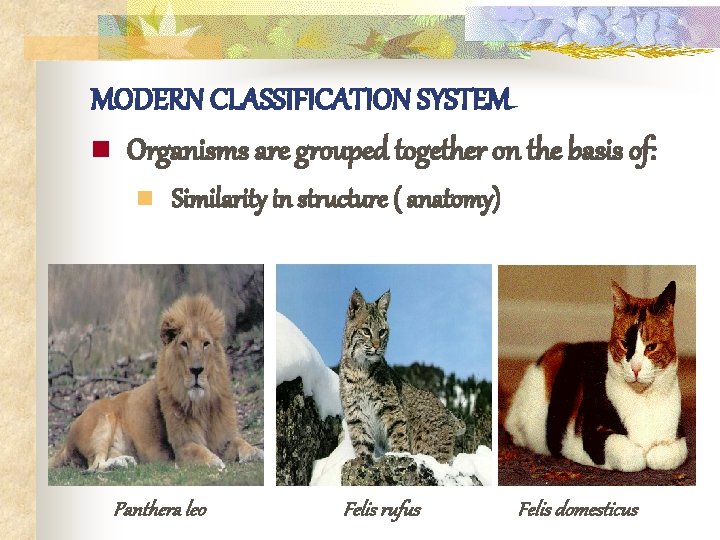
MODERN CLASSIFICATION SYSTEM n Organisms are grouped together on the basis of: n Similarity in structure ( anatomy) Panthera leo Felis rufus Felis domesticus
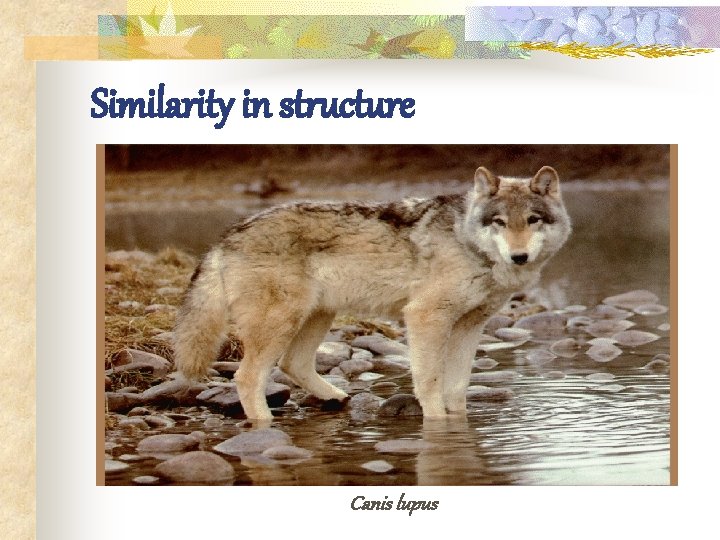
Similarity in structure Canis lupus
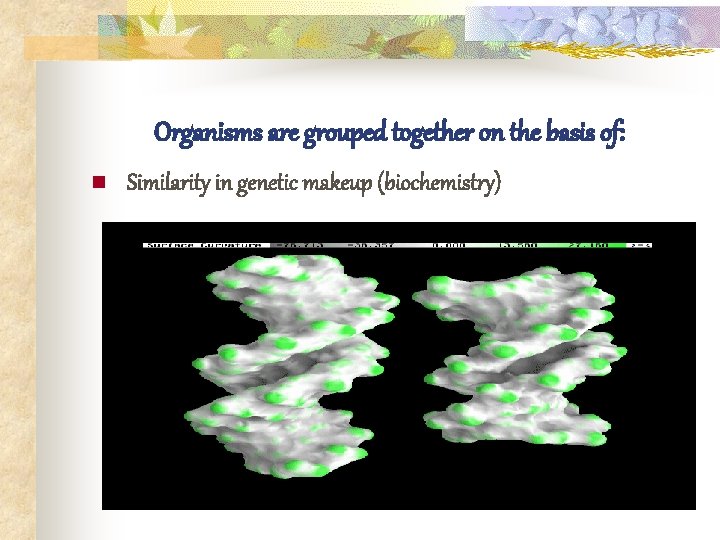
Organisms are grouped together on the basis of: n Similarity in genetic makeup (biochemistry)
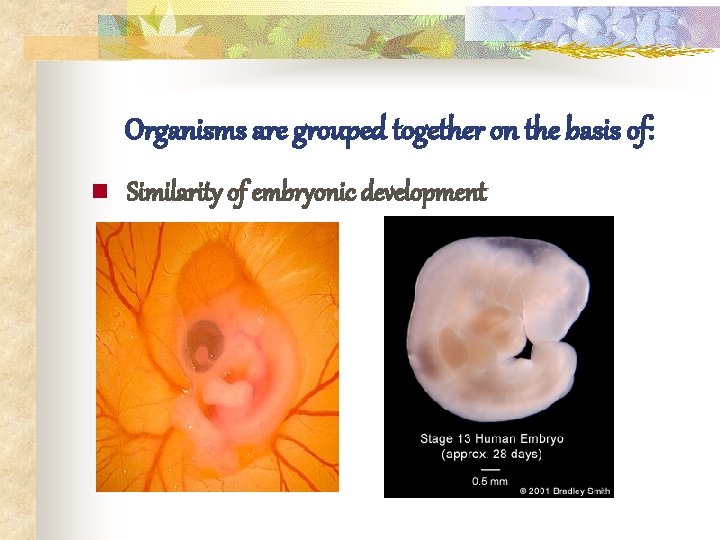
Organisms are grouped together on the basis of: n Similarity of embryonic development
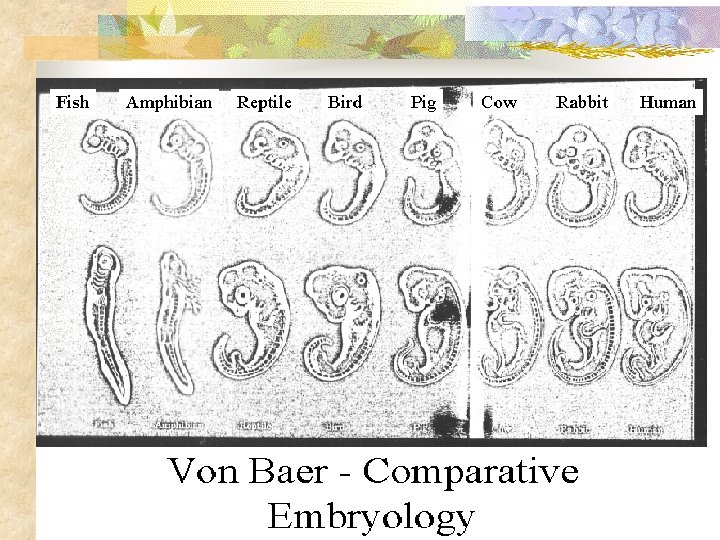
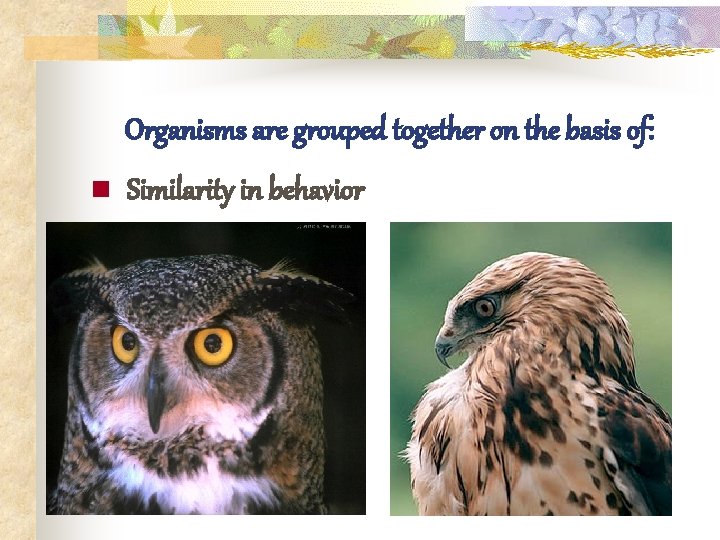
Organisms are grouped together on the basis of: n Similarity in behavior
Organisms are grouped together on the basis of: n Similarity in evolutionary history n Phylogeny: the evolutionary history of a species based on comparing relationships between species using the fossil record
n Classification is based on close evolutionary relationships of organisms. n Organisms classified in the same taxa (pl. ) (taxon, sing. ) share a common ancestry. They have evolved from the same common ancestral organism.
n Classification is hierarchal n each successive level is smaller and more closely related than the one before it
n n n Domain – Largest Group Kingdom Phylum (sing. ) n n n Phyla (pl. )(Plants don’t have phyla, they have divisions. ) Class Order Family These two taxa make up the scientific Genus Species – smallestname. taxon
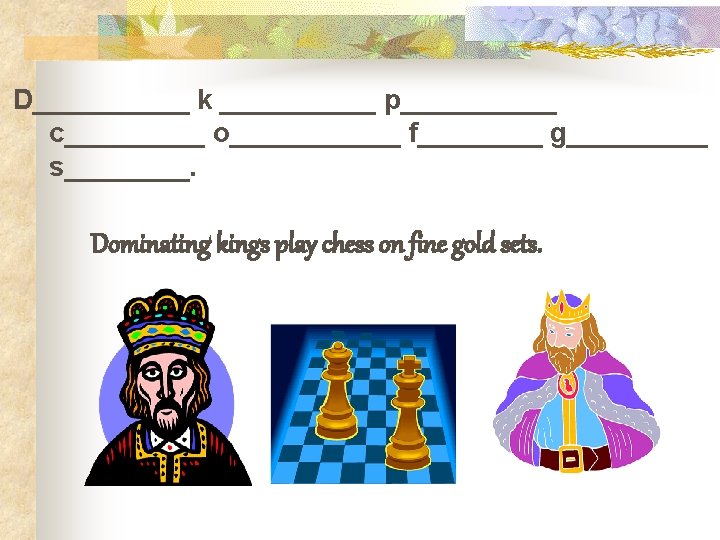
D_____ k _____ p_____ c_____ o______ f____ g_____ s____. Dominating kings play chess on fine gold sets.
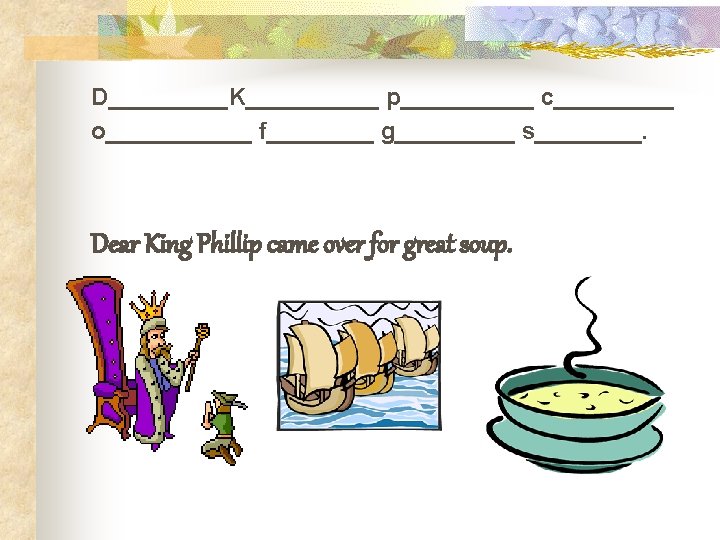
D_____K_____ p_____ c_____ o______ f____ g_____ s____. Dear King Phillip came over for great soup.
Binomial Nomenclature § Binomial nomenclature is a standard way of identifying a species with a scientific two-word name. § The first word is the genus name and the second the species name.
Binomial Nomenclature § § § Scientific name - 2 Latin names - Genus and species - Capitalize the first letter of the genus - Do NOT capitalize the species - ALWAYS underline or use italics Ex. Homo sapiens
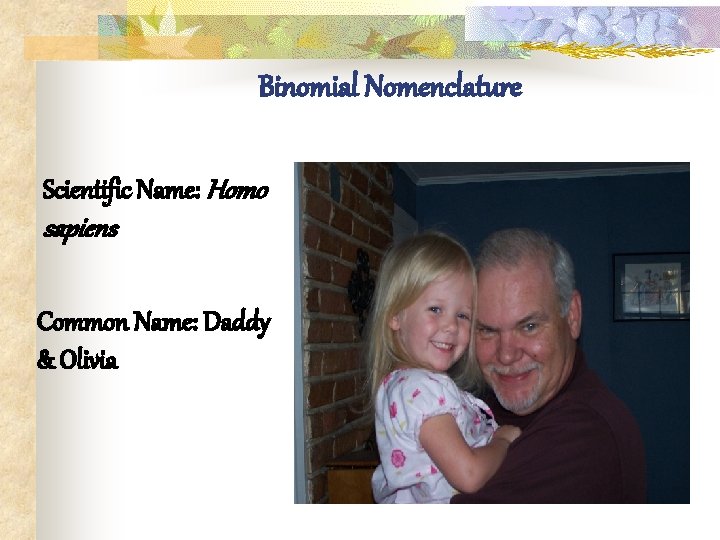
Binomial Nomenclature Scientific Name: Homo sapiens Common Name: Daddy & Olivia
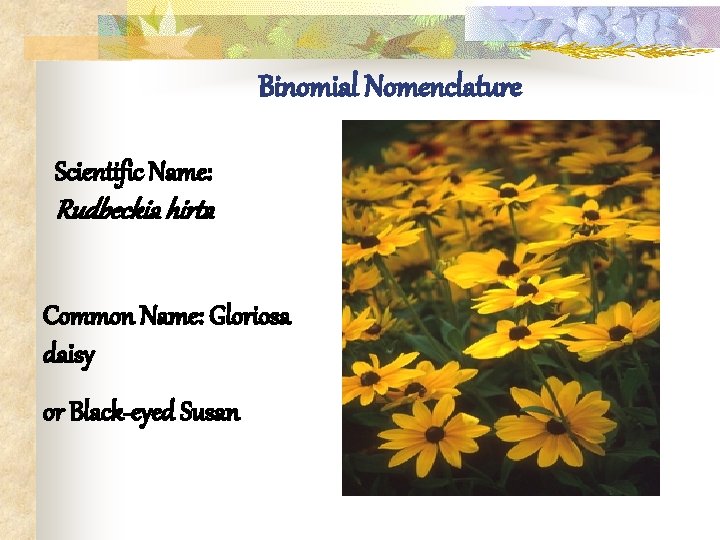
Binomial Nomenclature Scientific Name: Rudbeckia hirta Common Name: Gloriosa daisy or Black-eyed Susan
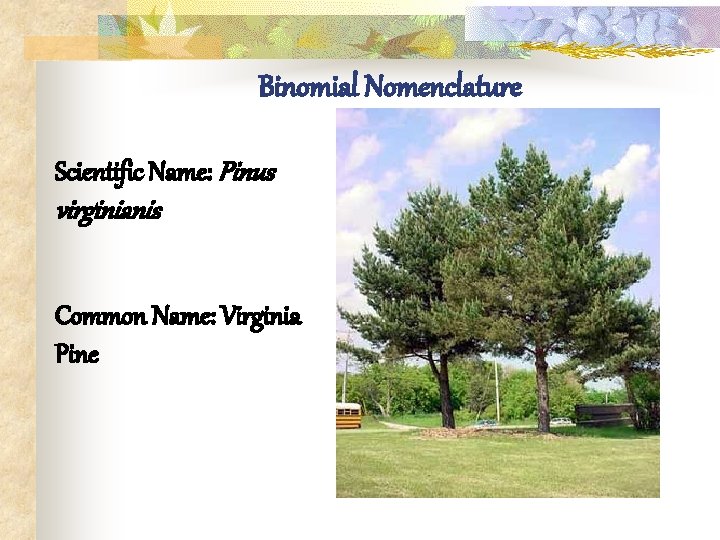
Binomial Nomenclature Scientific Name: Pinus virginianis Common Name: Virginia Pine
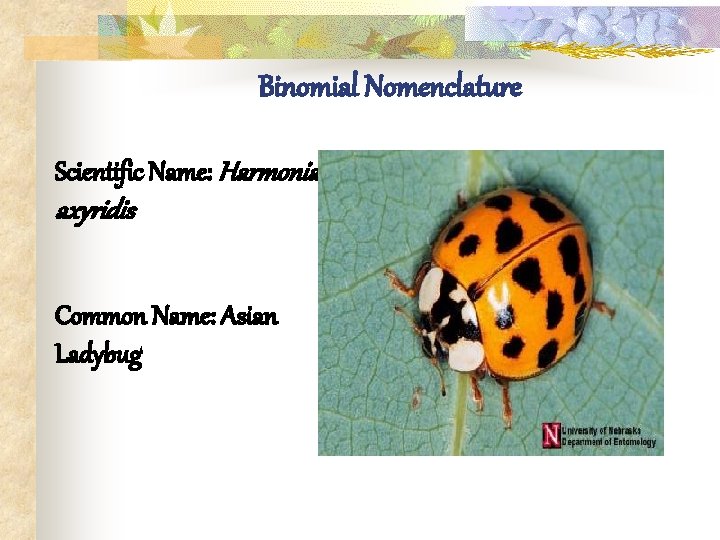
Binomial Nomenclature Scientific Name: Harmonia axyridis Common Name: Asian Ladybug
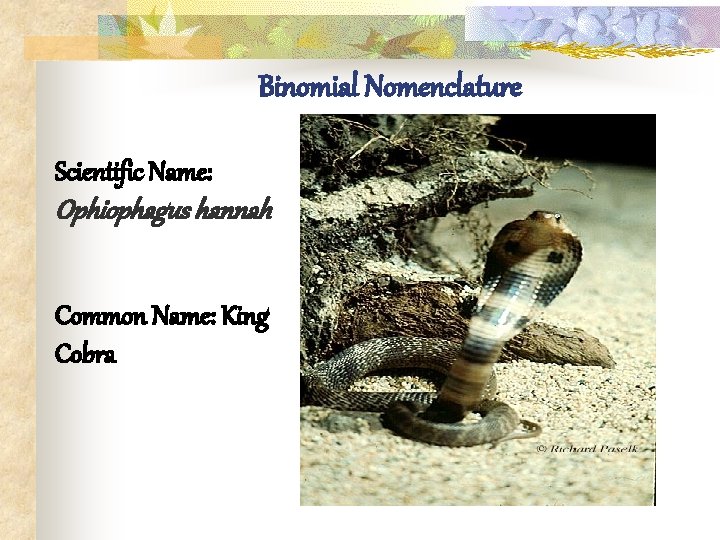
Binomial Nomenclature Scientific Name: Ophiophagus hannah Common Name: King Cobra
Why use scientific names? n Common names do not indicate how organisms are related or classified. n Common names can be misleading. (e. g. , seahorse, weeping willow) n Organisms with more than one common name leads to mass confusion.
n Why Latin? Latin is no longer spoken, and therefore, does not change as spoken languages do. § So, scientific names remain the same forever.
- Slides: 30