
Science Vocabulary By Jeffrey Conwell B 3 11210
Science Vocabulary By Jeffrey Conwell B 3 11/2/10
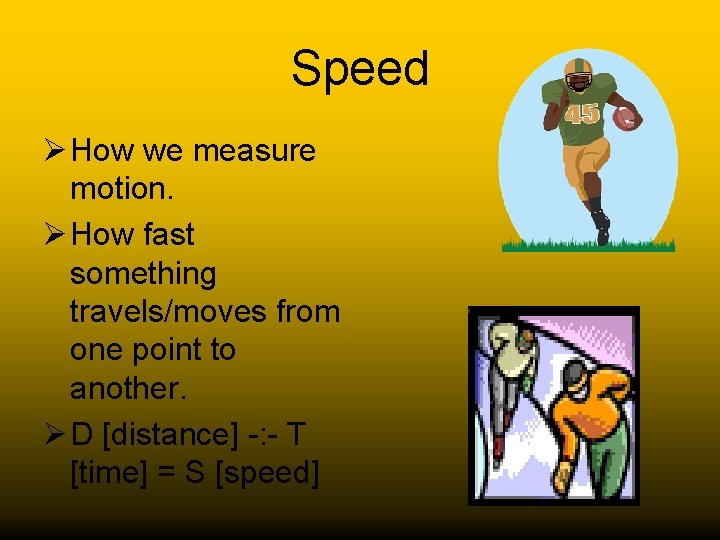
Speed Ø How we measure motion. Ø How fast something travels/moves from one point to another. Ø D [distance] -: - T [time] = S [speed]
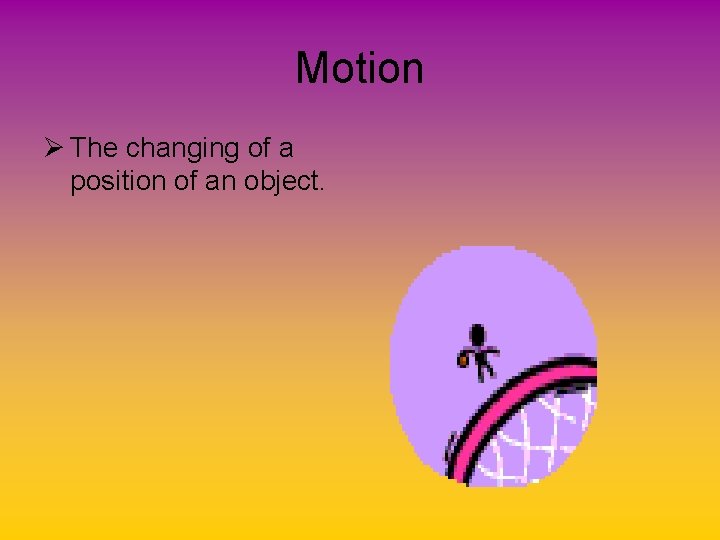
Motion Ø The changing of a position of an object.
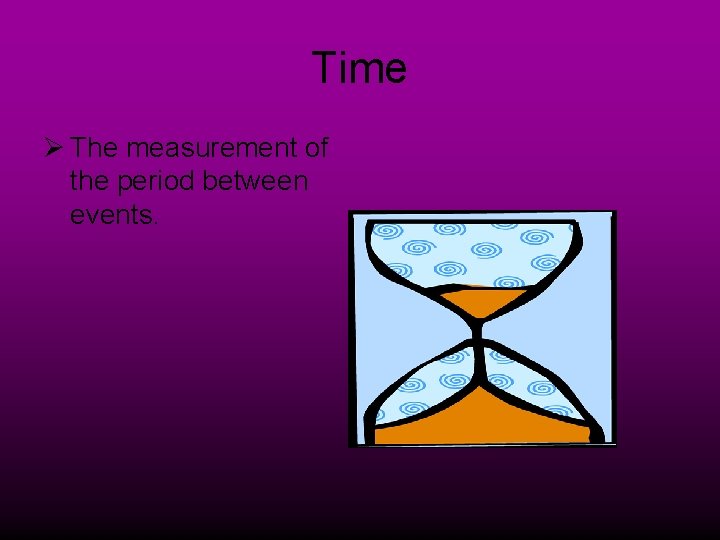
Time Ø The measurement of the period between events.
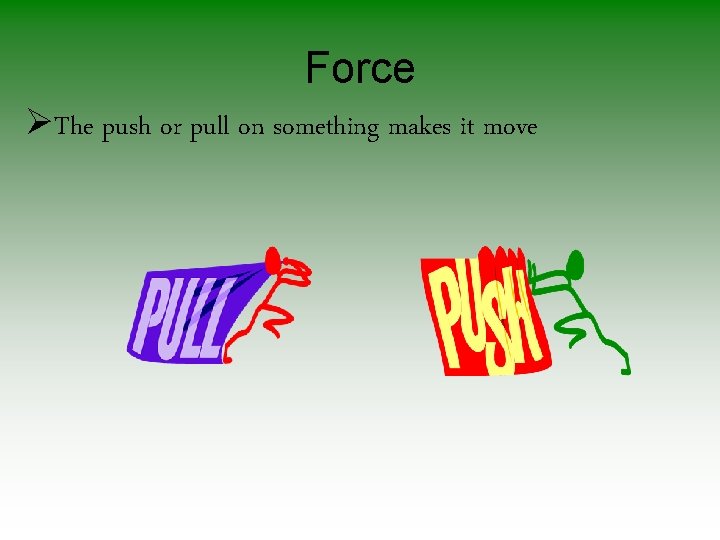
Force ØThe push or pull on something makes it move
![Newton [N] Ø Force is measured with it; about the weight of an apple](http://slidetodoc.com/presentation_image_h2/4761bd0c9ccc787affa2aa5be9c6c1d3/image-6.jpg "Newton [N] Ø Force is measured with it; about the weight of an apple")
Newton [N] Ø Force is measured with it; about the weight of an apple [approximately ¼ lb. ]
Distance Ø A measurement of how far from each other, from two points or places are. Ø How far did an object travel.
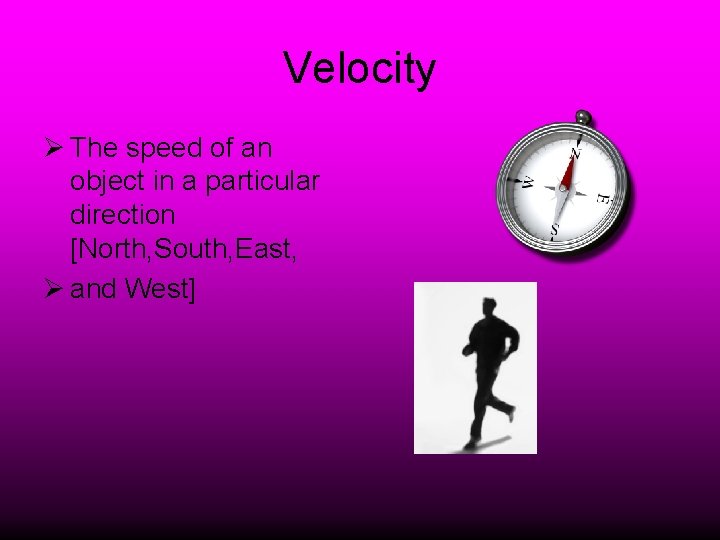
Velocity Ø The speed of an object in a particular direction [North, South, East, Ø and West]
![Acceleration Ø Any change in the speed and direction [velocity] of an objects motion.](http://slidetodoc.com/presentation_image_h2/4761bd0c9ccc787affa2aa5be9c6c1d3/image-9.jpg "Acceleration Ø Any change in the speed and direction [velocity] of an objects motion.")
Acceleration Ø Any change in the speed and direction [velocity] of an objects motion.
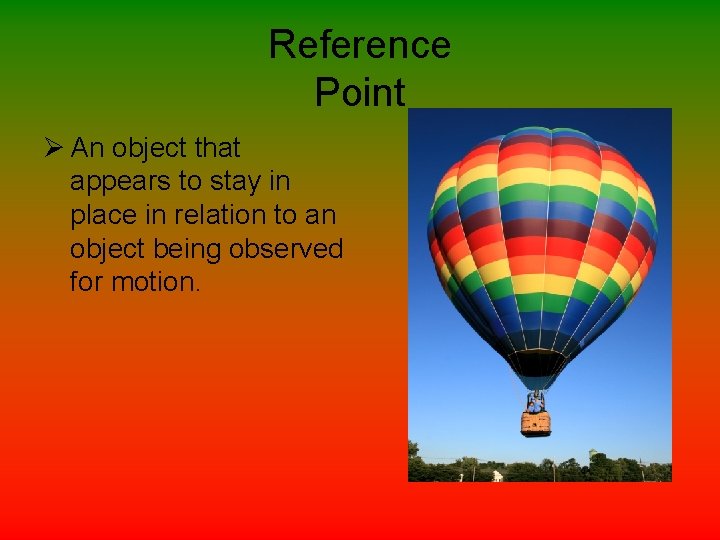
Reference Point Ø An object that appears to stay in place in relation to an object being observed for motion.
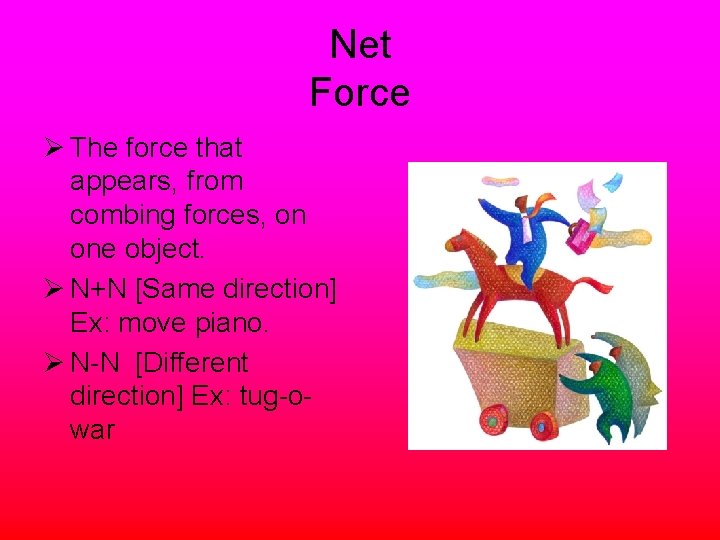
Net Force Ø The force that appears, from combing forces, on one object. Ø N+N [Same direction] Ex: move piano. Ø N-N [Different direction] Ex: tug-owar
![Balanced Forces Ø When all the push and pull [force] on something makes it](http://slidetodoc.com/presentation_image_h2/4761bd0c9ccc787affa2aa5be9c6c1d3/image-12.jpg "Balanced Forces Ø When all the push and pull [force] on something makes it")
Balanced Forces Ø When all the push and pull [force] on something makes it stay still or move at the same speed in the same direction.
![Unbalanced Forces Ø When all the push and pull [force] on something makes it](http://slidetodoc.com/presentation_image_h2/4761bd0c9ccc787affa2aa5be9c6c1d3/image-13.jpg "Unbalanced Forces Ø When all the push and pull [force] on something makes it")
Unbalanced Forces Ø When all the push and pull [force] on something makes it move if something is still, it starts to move. Ø If moving, it changes speed and direction
![Mass Ø The mass is how much stuff [matter] is in something.](http://slidetodoc.com/presentation_image_h2/4761bd0c9ccc787affa2aa5be9c6c1d3/image-14.jpg "Mass Ø The mass is how much stuff [matter] is in something.")
Mass Ø The mass is how much stuff [matter] is in something.
Gravity Ø The force that pulls things toward earth.
Weight Ø The gravitational force acting on an object.
Friction Ø The rubbing of two surfaces; it is the force of surfaces in contact with each other.
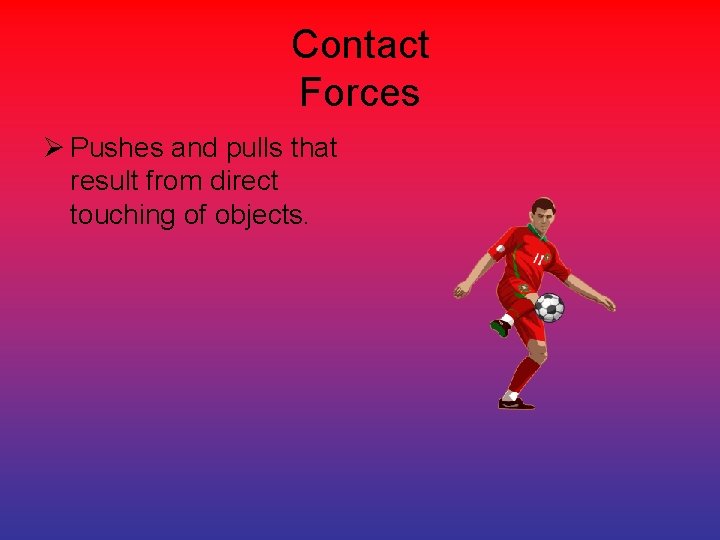
Contact Forces Ø Pushes and pulls that result from direct touching of objects.
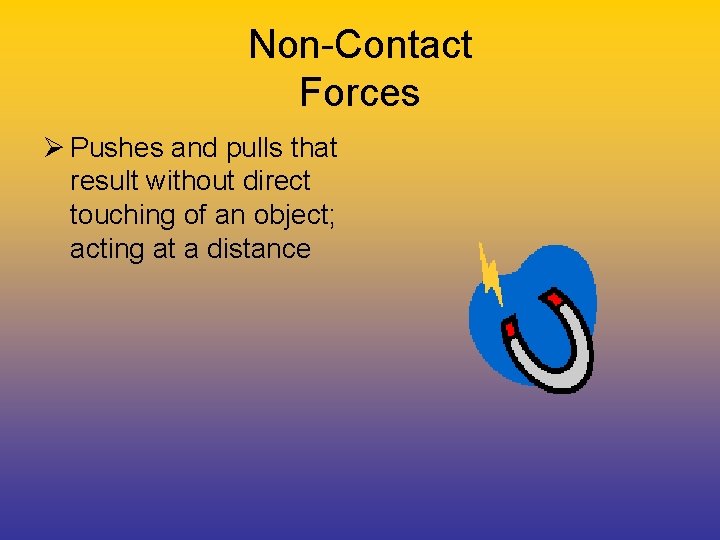
Non-Contact Forces Ø Pushes and pulls that result without direct touching of an object; acting at a distance
- Slides: 19