
Science versus Pseudoscience The problem of demarcation Alireza
Science versus Pseudo-science: The problem of demarcation Alireza Monajemi, MD-Ph. D Philosophy of Science Department, Institute for Humanities and Cultural Studies 12/3/2020
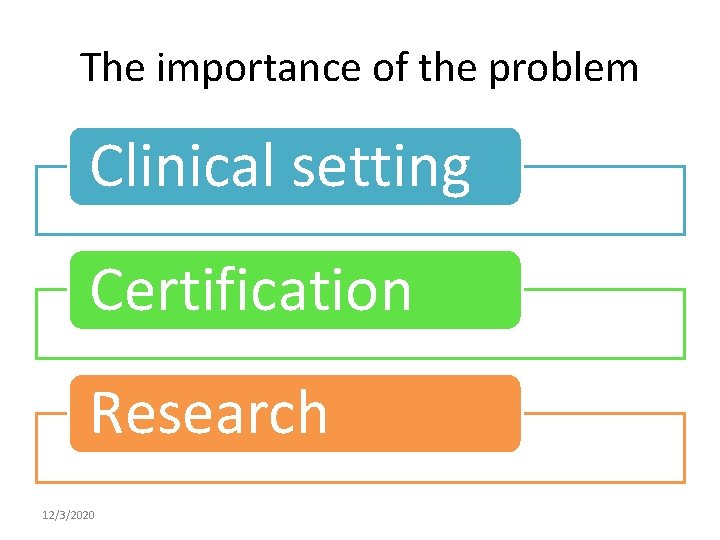
The importance of the problem Clinical setting Certification Research 12/3/2020
What is science? 12/3/2020
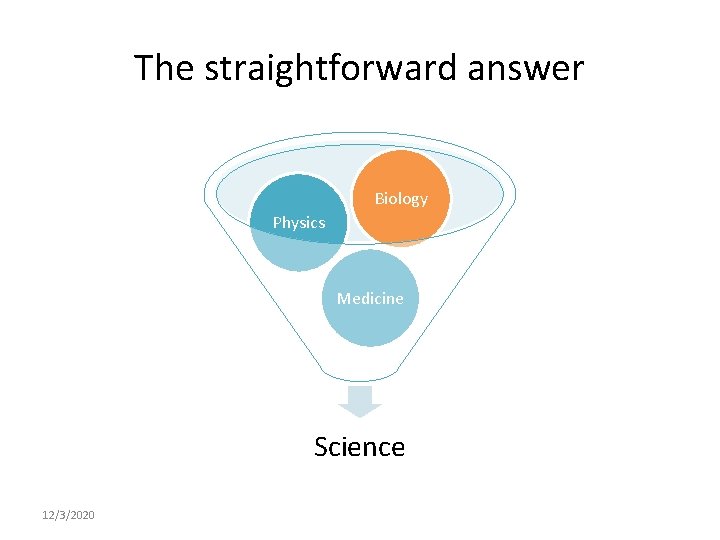
The straightforward answer Biology Physics Medicine Science 12/3/2020
• we are asking what common features all the things on that list share? = • what it is that makes something a science? 12/3/2020
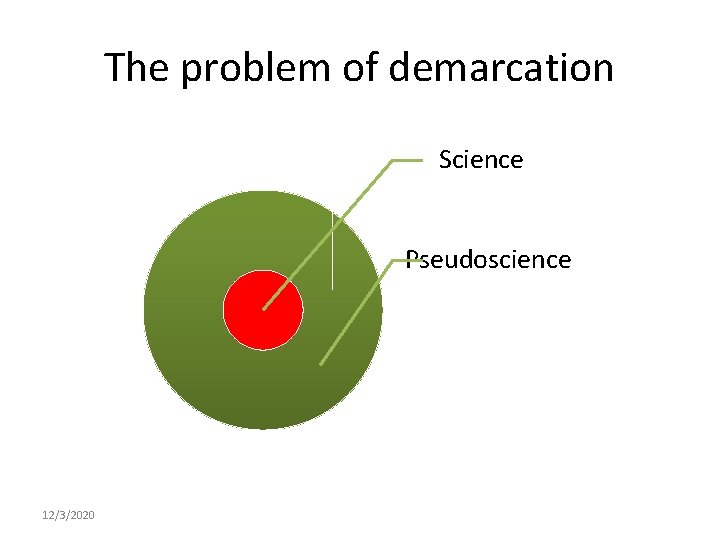
The problem of demarcation Science Pseudoscience 12/3/2020
• Science is just the attempt to understand, explain, and predict the world we live in • Although these are the features of science, but in this sense astrology are also included 12/3/2020
Philosophy of science on the problem of demarcation 12/3/2020
Vienna circle 12/3/2020
Vienna circle • The distinguishing features of science lie in the particular methods scientists use to investigate the world. • One of the key problems in philosophy of science is to understand how techniques such as experimentation, observation, and theory- construction have enabled scientists to unravel so many of nature's secrets. 12/3/2020
Vienna circle • Meaningfulness (tautology v. s empirical) • Verification • Sense data 12/3/2020
Fact, hypothesis and theories 12/3/2020
Theory • Theory is a conceptual framework that explains existing observations and predicts new ones. • It can incorporate facts, laws, inferences, and tested hypotheses 12/3/2020
Hypothesis • : A tentative statement about the natural world leading to deductions that can be tested. • If the deductions are verified, the hypothesis is provisionally corroborated. • If the deductions are incorrect, the original hypothesis is proved false and must be abandoned or modified. 12/3/2020
Fact • In science, an observation that has been repeatedly confirmed and for all practical purposes is accepted as “true. ” • Truth in science, however, is never final and what is accepted as a fact today may be modified or even discarded tomorrow. 12/3/2020
Popper • Two major criticisms of Vienna circle’s criterion of demarcation: • The problem of induction (Russell story) • Exclusion of scientific theories 12/3/2020
Popper’s criterion of demarcation • Falsifiability • ‘It will rain or not rain here tomorrow’ will not • be regarded as empirical, simply because it cannot be refuted; • whereas • the statement, ‘It will rain here tomorrow’ will be regarded as empirical. 12/3/2020
Popper’s criterion of demarcation • Theories are, therefore, never empirically verifiable. • System as empirical or scientific only if it is capable of being tested by experience. These considerations suggest that not the verifiability but the falsifiability of a system is to be taken as a criterion of demarcation. 12/3/2020
Popper’s criterion of demarcation • it must be possible for an empirical scientific system to be refuted by experiment. 12/3/2020
12/3/2020
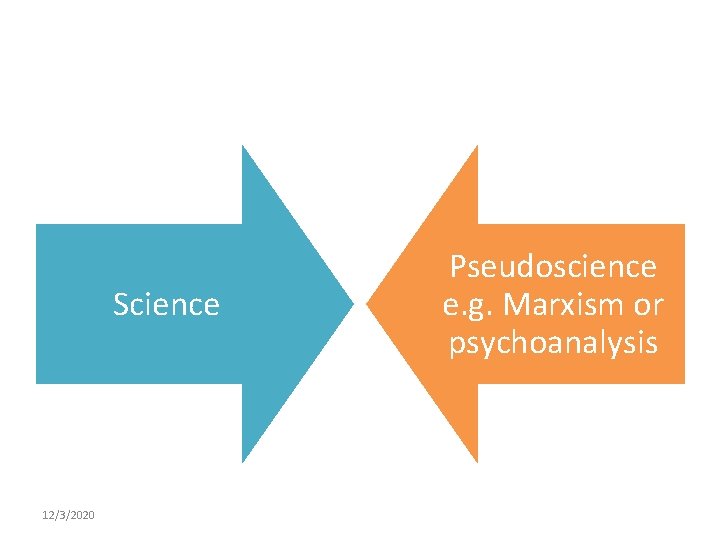
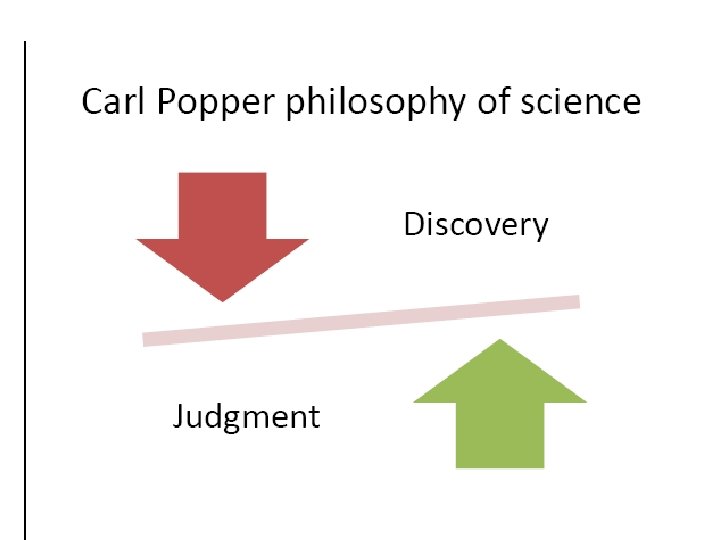
Science 12/3/2020 Pseudoscience e. g. Marxism or psychoanalysis
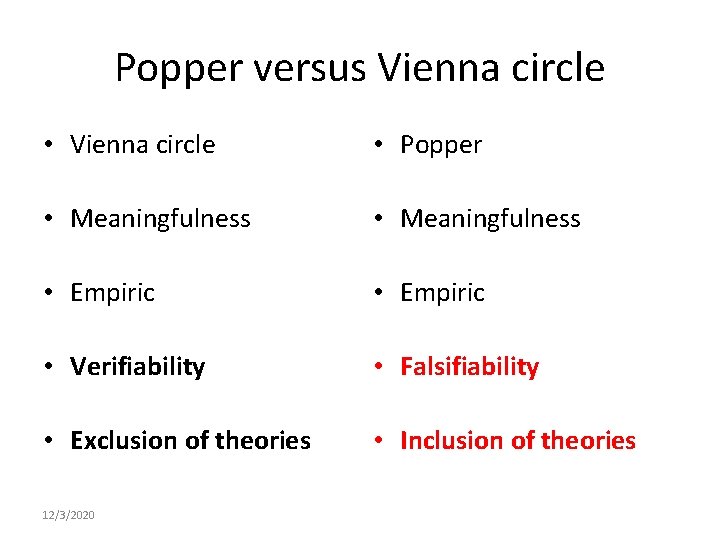
Popper versus Vienna circle • Vienna circle • Popper • Meaningfulness • Empiric • Verifiability • Falsifiability • Exclusion of theories • Inclusion of theories 12/3/2020
Lakatos criticism of Popper • Science is not some propositions but science includes some research programs. • Cross sectional studies is not enough to show that a research program is scientific or not. 12/3/2020
![Lakatos criterion for demarcation • ] Progressive scientific theories are those which have their](http://slidetodoc.com/presentation_image_h/d9c6361371506597fcc6d40072ce090c/image-24.jpg "Lakatos criterion for demarcation • ] Progressive scientific theories are those which have their")
Lakatos criterion for demarcation • ] Progressive scientific theories are those which have their novel facts confirmed • and • degenerate scientific theories are those whose predictions of novel facts are refuted. 12/3/2020
Lakatos criterion for demarcation • a theory is pseudoscientific if it fails to make any novel predictions of previously unknown phenomena, in contrast with scientific theories, which predict novel fact(s). [ 12/3/2020
Thagard critics of demarcation • The case of Cold fusion • A theory could meet all the previous criterion but still remain unscientific. 12/3/2020
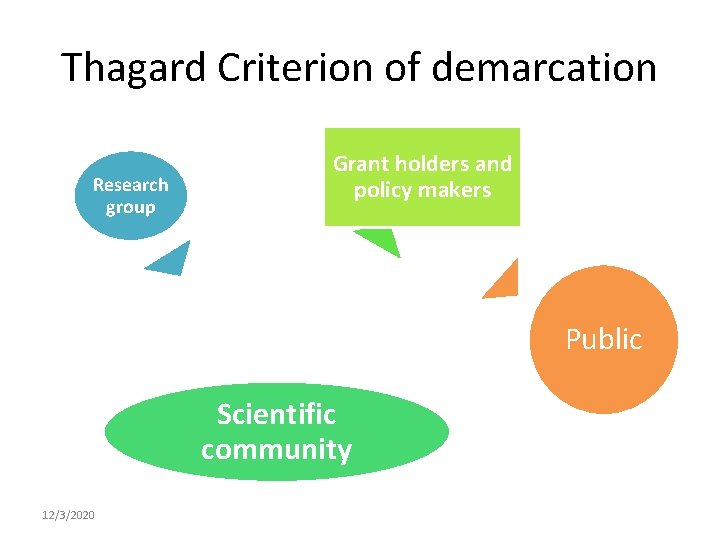
Thagard Criterion of demarcation Research group Grant holders and policy makers Public Scientific community 12/3/2020
Step 1 • Determine the proposition you encounter is a theory, or a hypothesis. 12/3/2020
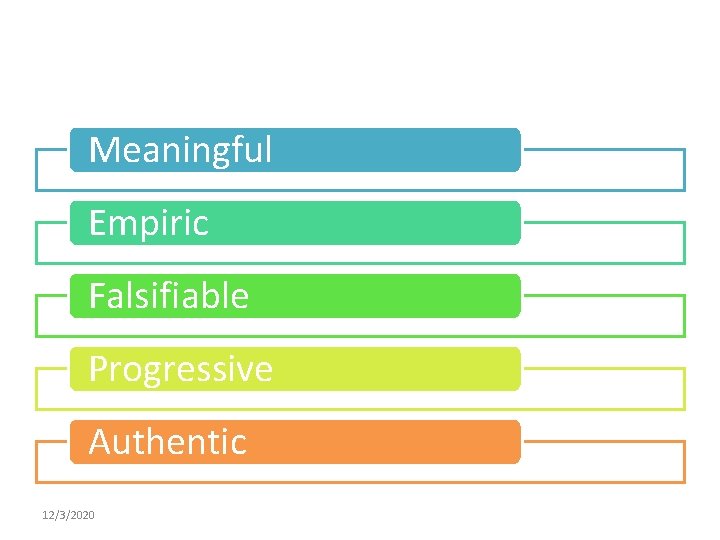
Meaningful Empiric Falsifiable Progressive Authentic 12/3/2020
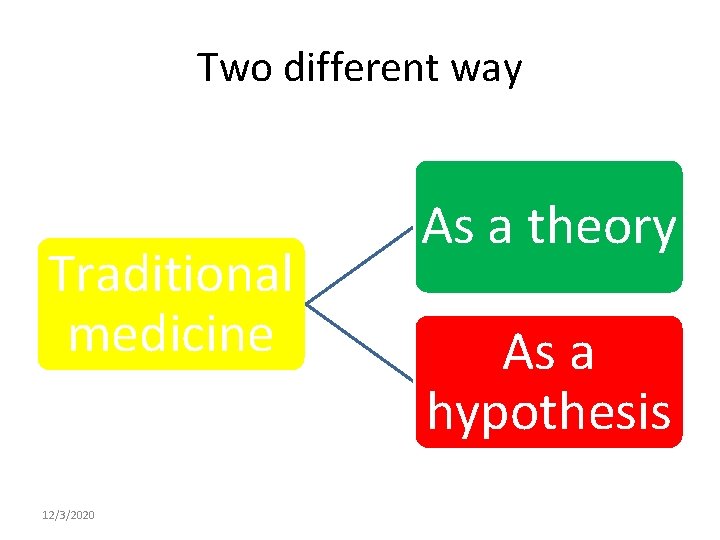
Two different way Traditional medicine 12/3/2020 As a theory As a hypothesis
- Slides: 30