
Science Tools Ms Solernou SCIENCE TOOLS To become
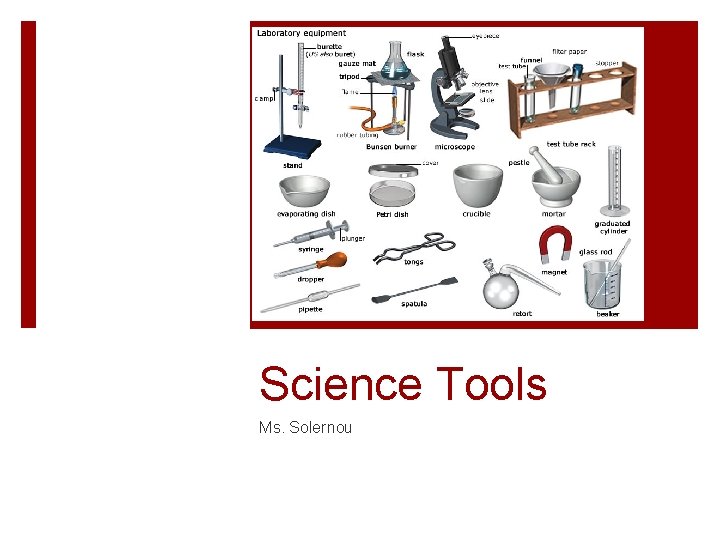
Science Tools Ms. Solernou
SCIENCE TOOLS ¡To become a successful scientists, we must be able to identify and use scientific instruments or tools. ¡These tools are for collecting data, taking measurements, and recording observations. ¡Scientists use a variety of tools to do investigations.
¡What are the different tools we use in Science?
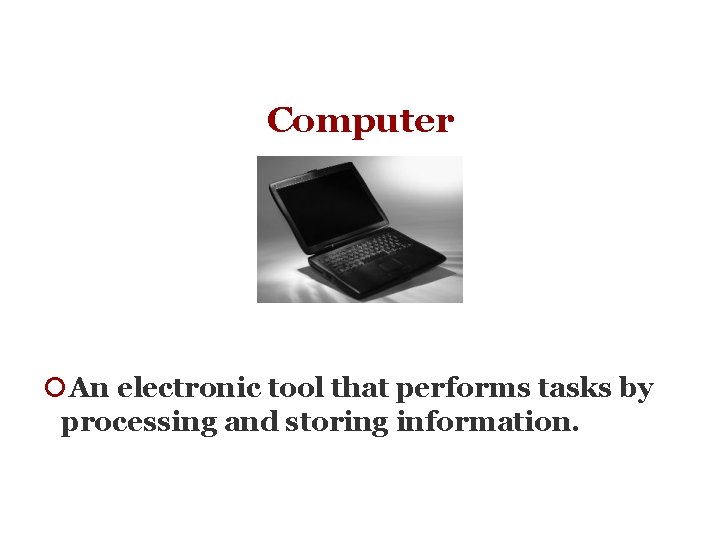
Computer ¡An electronic tool that performs tasks by processing and storing information.
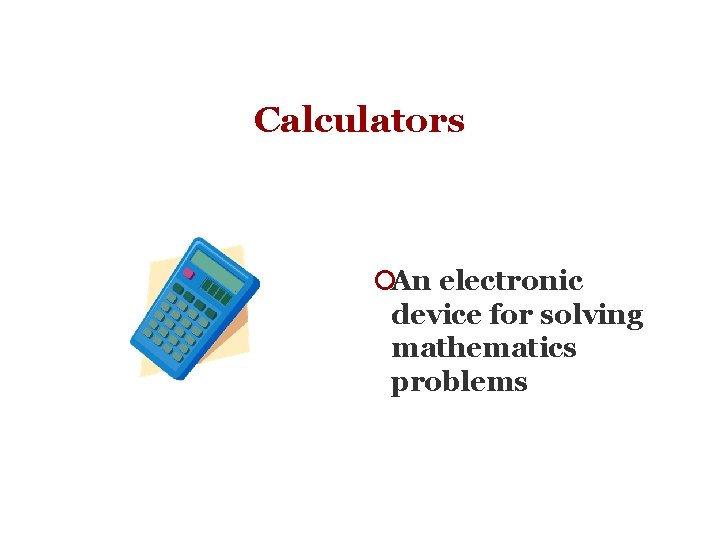
Calculators ¡An electronic device for solving mathematics problems

Hand lens /Magnifying Glass This tool will magnify, or enlarge an object’s features. Ex: observing the minerals in a rock.
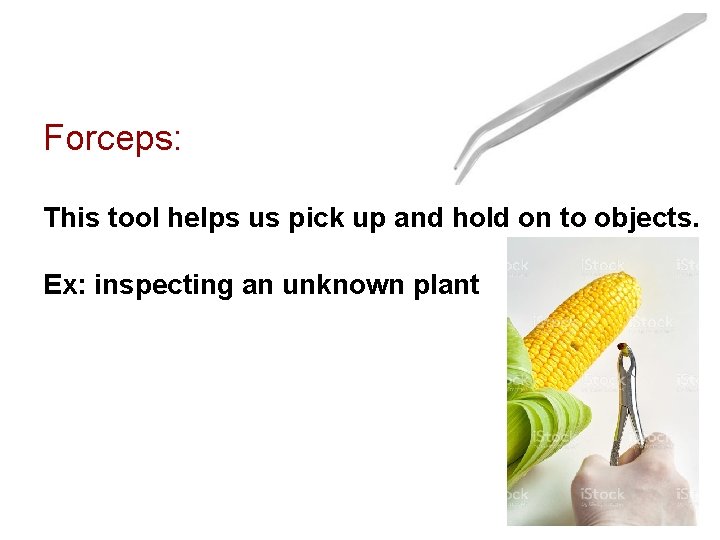
Forceps: This tool helps us pick up and hold on to objects. Ex: inspecting an unknown plant
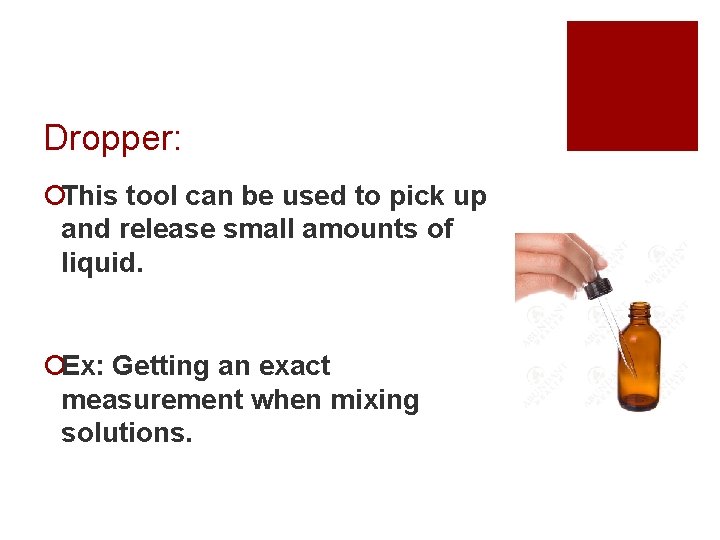
Dropper: ¡This tool can be used to pick up and release small amounts of liquid. ¡Ex: Getting an exact measurement when mixing solutions.
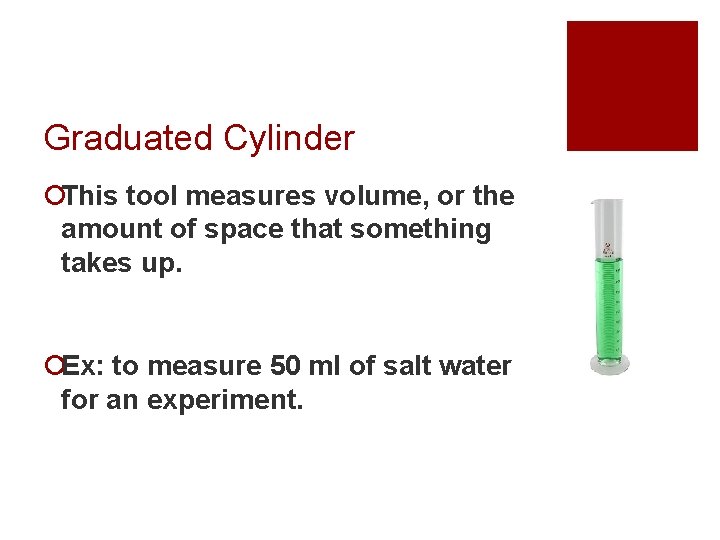
Graduated Cylinder ¡This tool measures volume, or the amount of space that something takes up. ¡Ex: to measure 50 ml of salt water for an experiment.
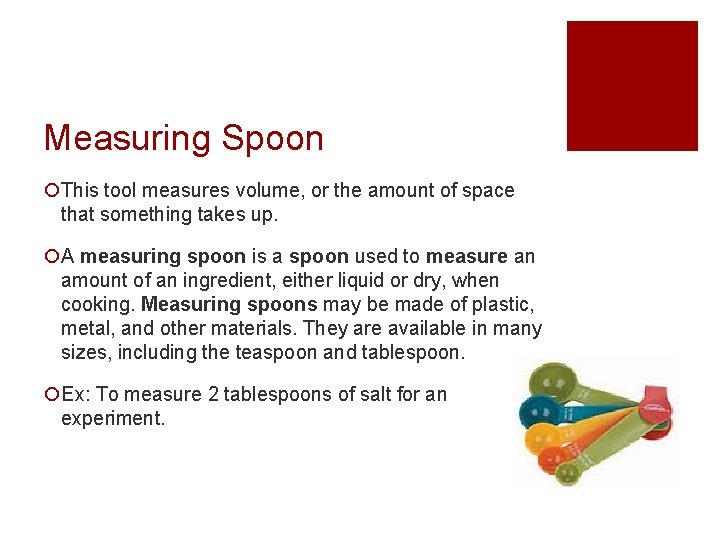
Measuring Spoon ¡This tool measures volume, or the amount of space that something takes up. ¡A measuring spoon is a spoon used to measure an amount of an ingredient, either liquid or dry, when cooking. Measuring spoons may be made of plastic, metal, and other materials. They are available in many sizes, including the teaspoon and tablespoon. ¡Ex: To measure 2 tablespoons of salt for an experiment.
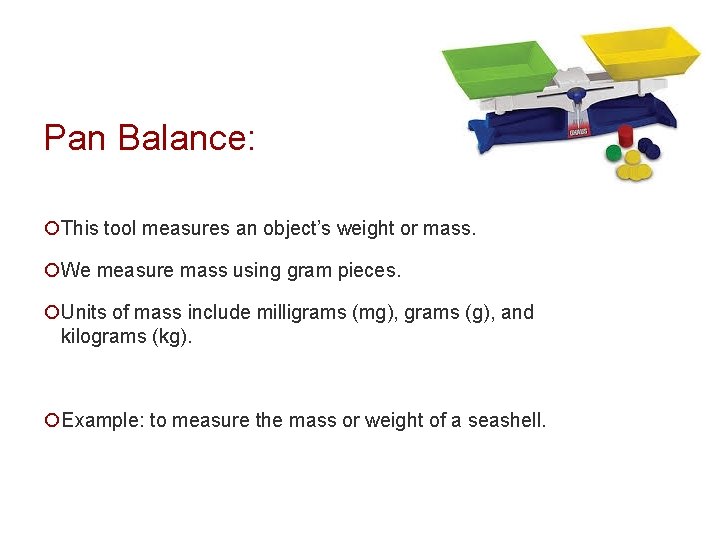
Pan Balance: ¡This tool measures an object’s weight or mass. ¡We measure mass using gram pieces. ¡Units of mass include milligrams (mg), grams (g), and kilograms (kg). ¡Example: to measure the mass or weight of a seashell.
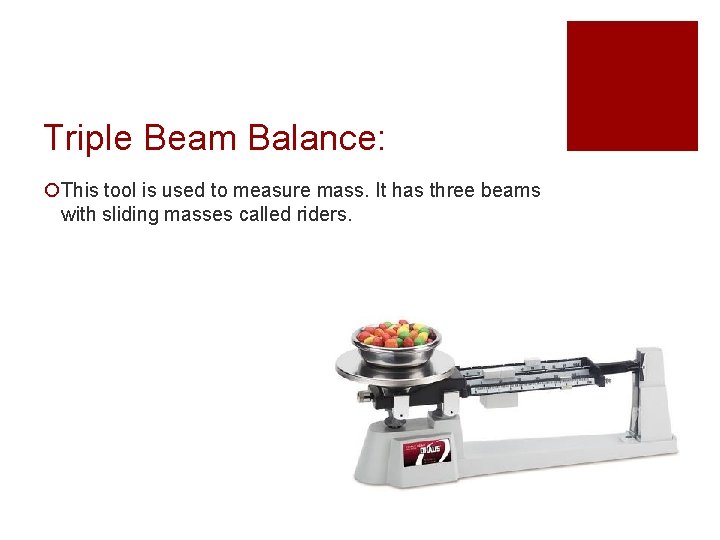
Triple Beam Balance: ¡This tool is used to measure mass. It has three beams with sliding masses called riders.
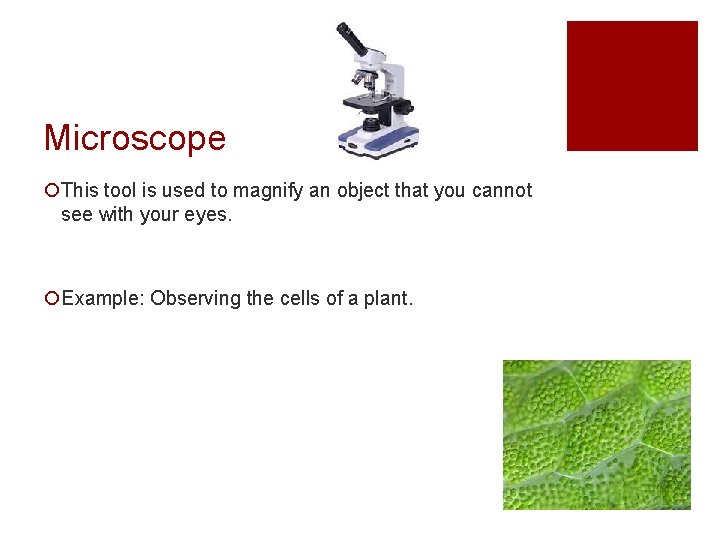
Microscope ¡This tool is used to magnify an object that you cannot see with your eyes. ¡Example: Observing the cells of a plant.
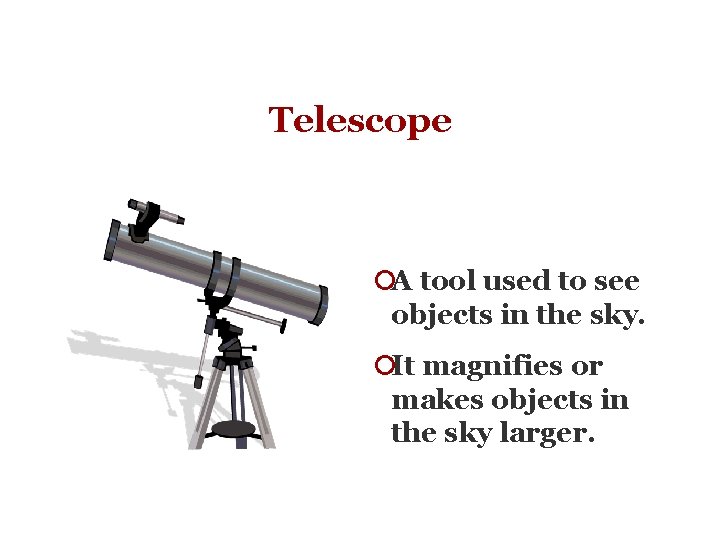
Telescope ¡A tool used to see objects in the sky. ¡It magnifies or makes objects in the sky larger.
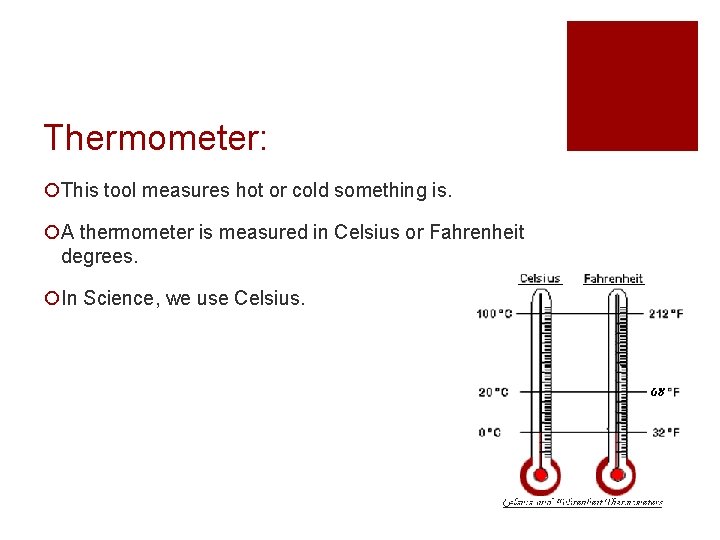
Thermometer: ¡This tool measures hot or cold something is. ¡A thermometer is measured in Celsius or Fahrenheit degrees. ¡In Science, we use Celsius.
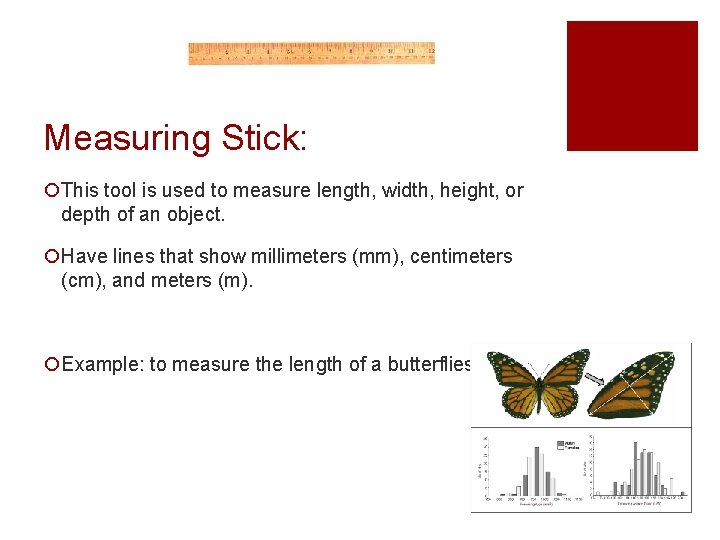
Measuring Stick: ¡This tool is used to measure length, width, height, or depth of an object. ¡Have lines that show millimeters (mm), centimeters (cm), and meters (m). ¡Example: to measure the length of a butterflies wings.
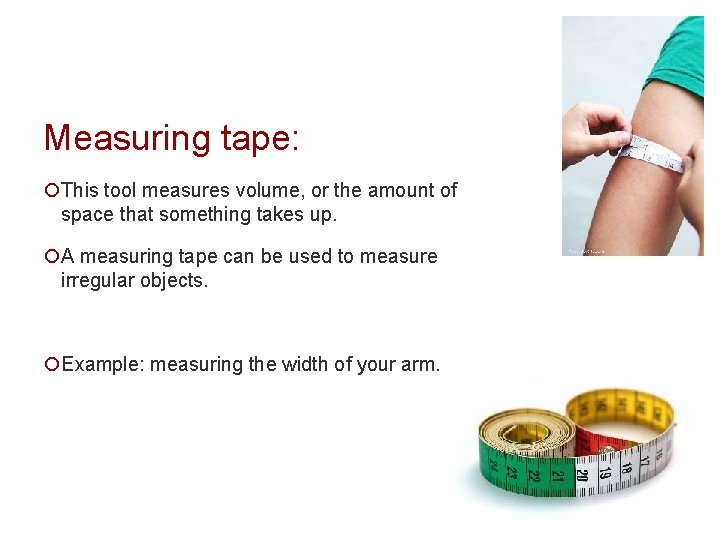
Measuring tape: ¡This tool measures volume, or the amount of space that something takes up. ¡A measuring tape can be used to measure irregular objects. ¡Example: measuring the width of your arm.
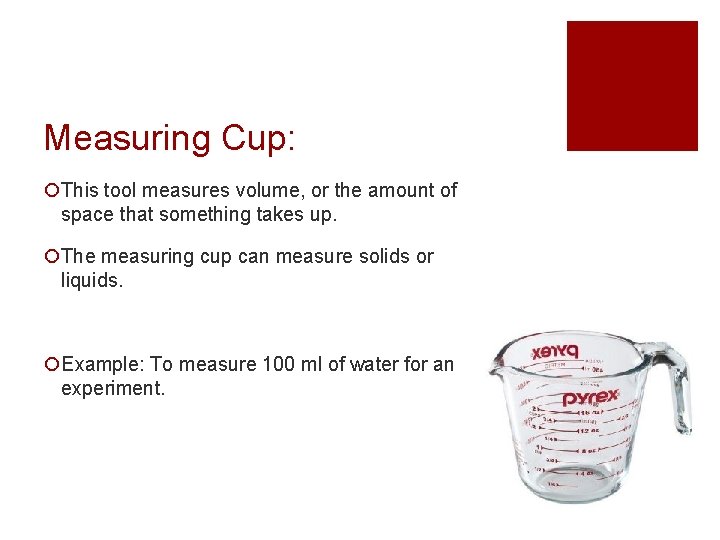
Measuring Cup: ¡This tool measures volume, or the amount of space that something takes up. ¡The measuring cup can measure solids or liquids. ¡Example: To measure 100 ml of water for an experiment.
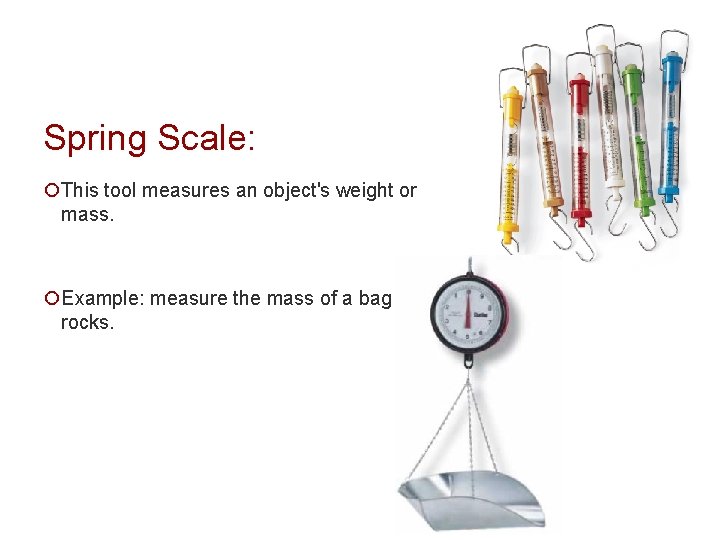
Spring Scale: ¡This tool measures an object's weight or mass. ¡Example: measure the mass of a bag of rocks.
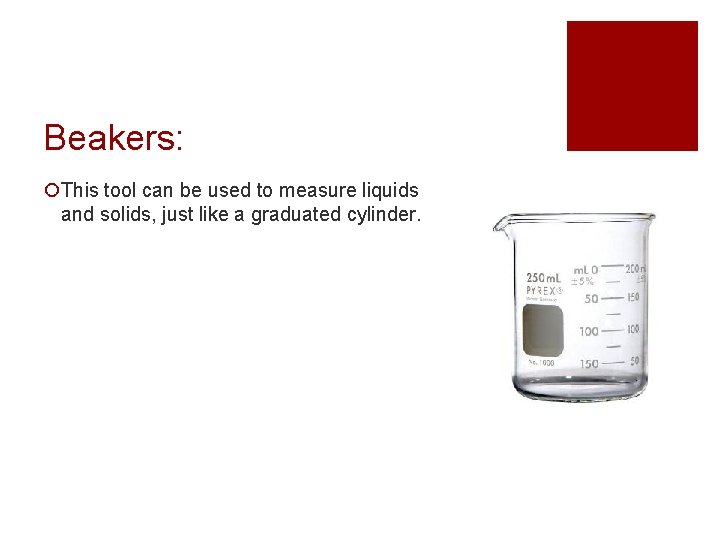
Beakers: ¡This tool can be used to measure liquids and solids, just like a graduated cylinder.
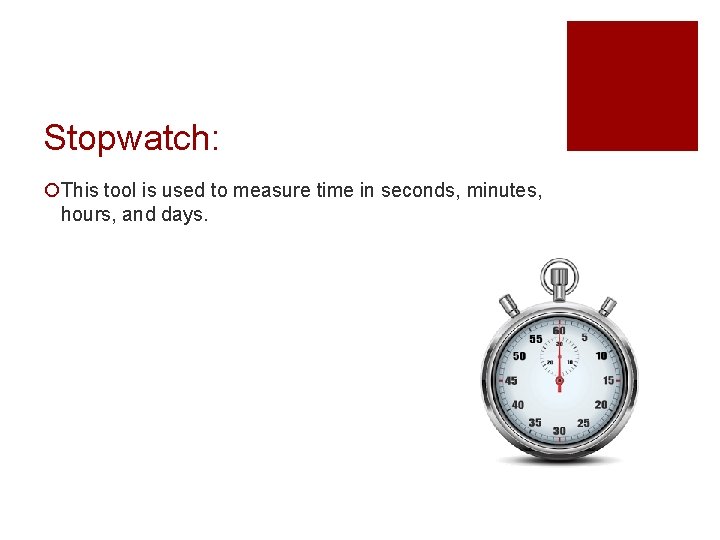
Stopwatch: ¡This tool is used to measure time in seconds, minutes, hours, and days.
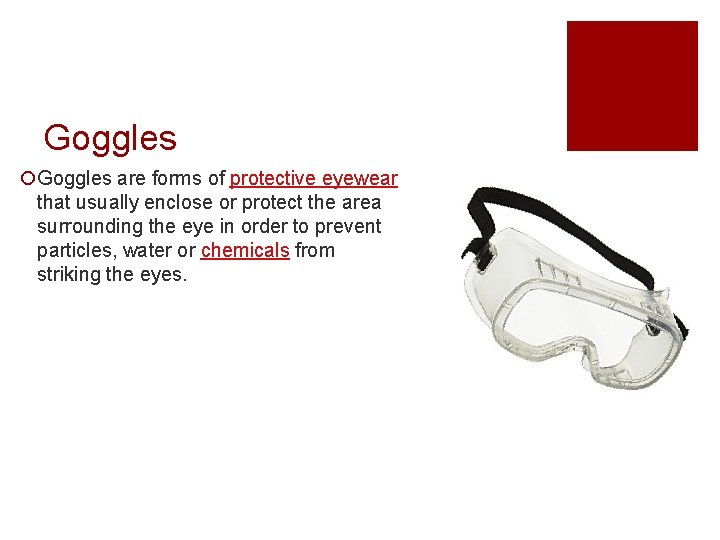
Goggles ¡Goggles are forms of protective eyewear that usually enclose or protect the area surrounding the eye in order to prevent particles, water or chemicals from striking the eyes.
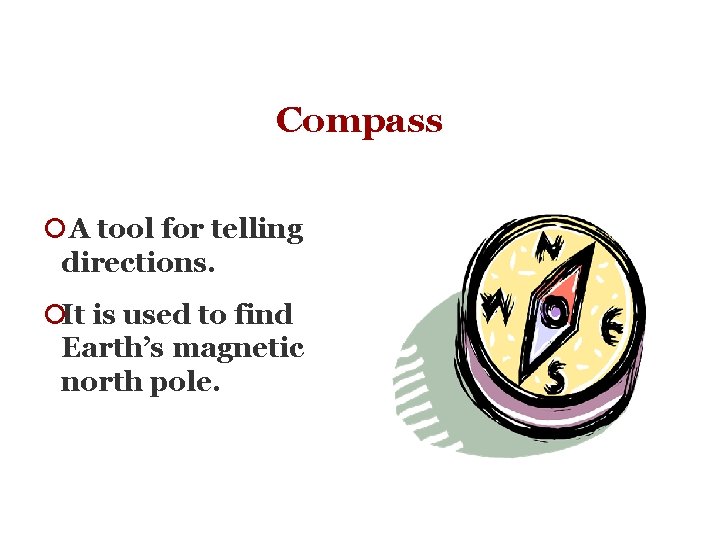
Compass ¡A tool for telling directions. ¡It is used to find Earth’s magnetic north pole.
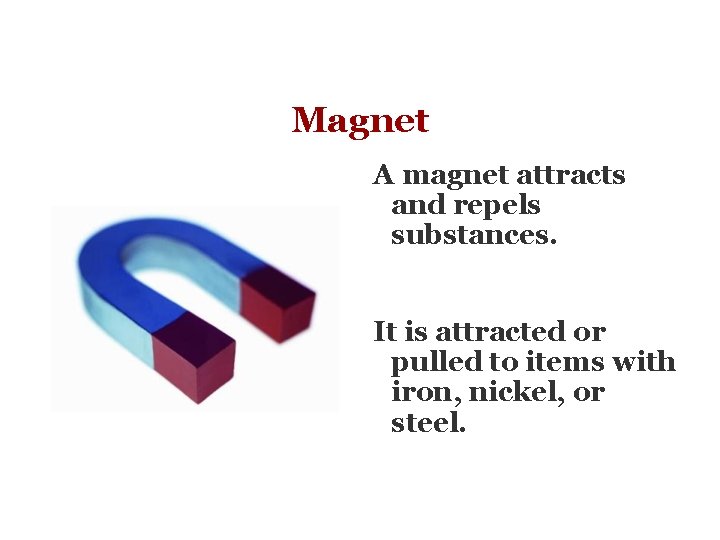
Magnet A magnet attracts and repels substances. It is attracted or pulled to items with iron, nickel, or steel.
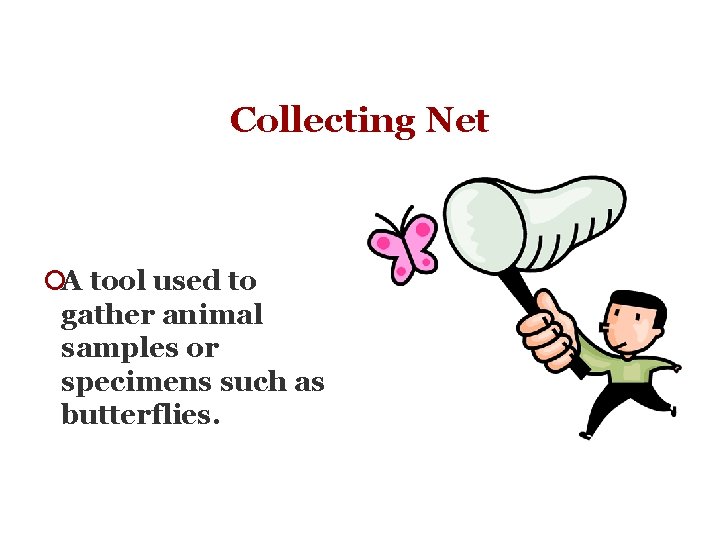
Collecting Net ¡A tool used to gather animal samples or specimens such as butterflies.
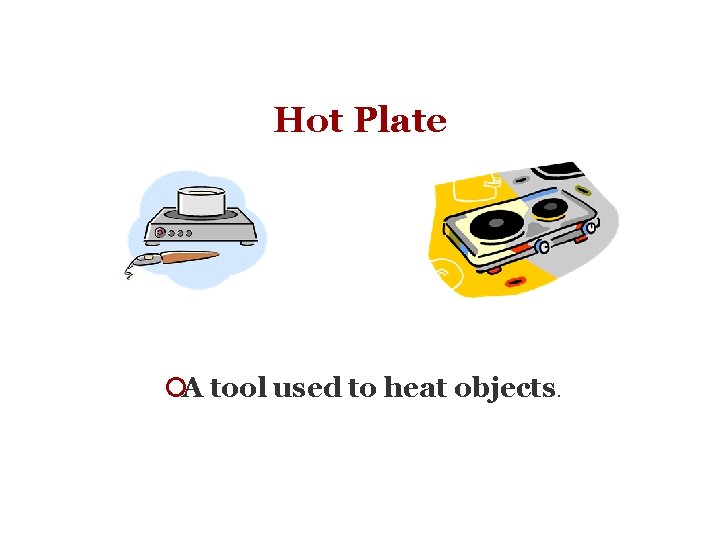
Hot Plate ¡A tool used to heat objects.
- Slides: 26