
Science to Action Thoughts on Convincing a Skeptical
- Slides: 24
Science to Action: Thoughts on Convincing a Skeptical Public William H. Press University of Texas at Austin 2015 William D. Carey Lecture April 30, 2015
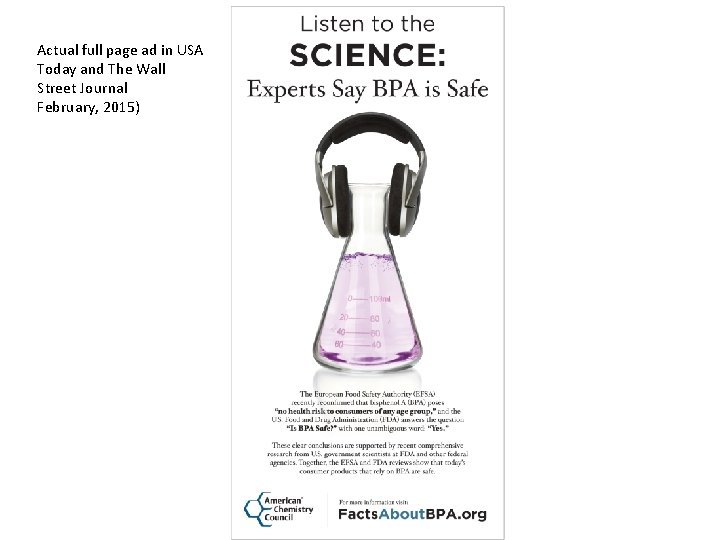
Actual full page ad in USA Today and The Wall Street Journal February, 2015)
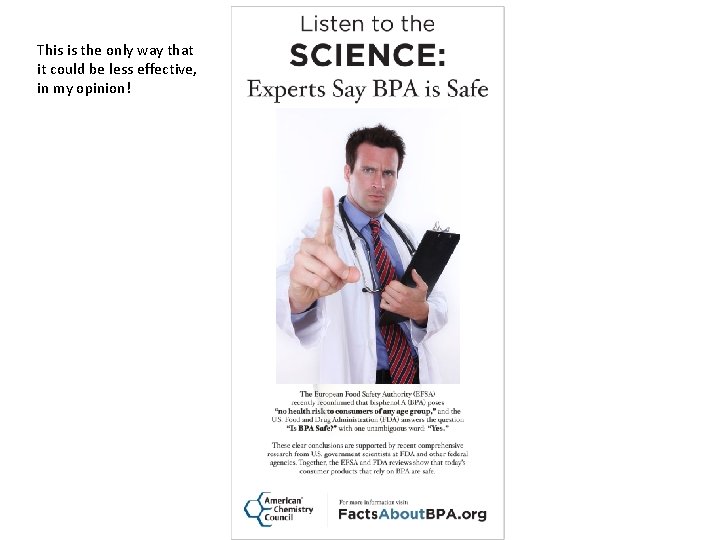
This is the only way that it could be less effective, in my opinion!
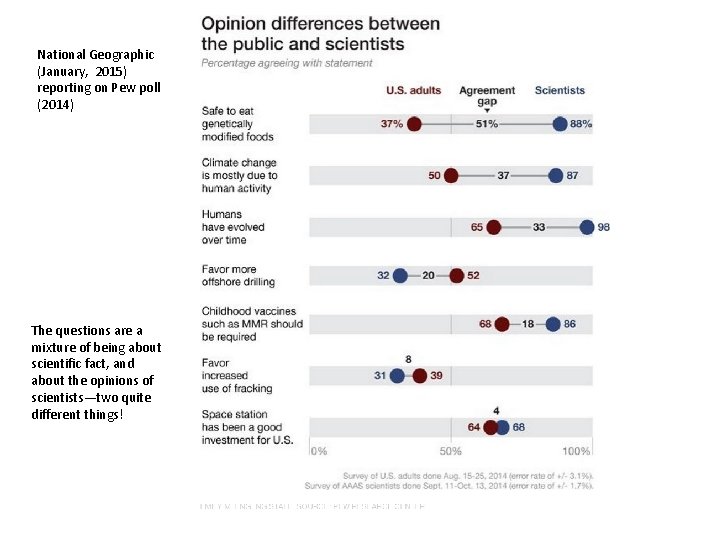
National Geographic (January, 2015) reporting on Pew poll (2014) The questions are a mixture of being about scientific fact, and about the opinions of scientists—two quite different things!
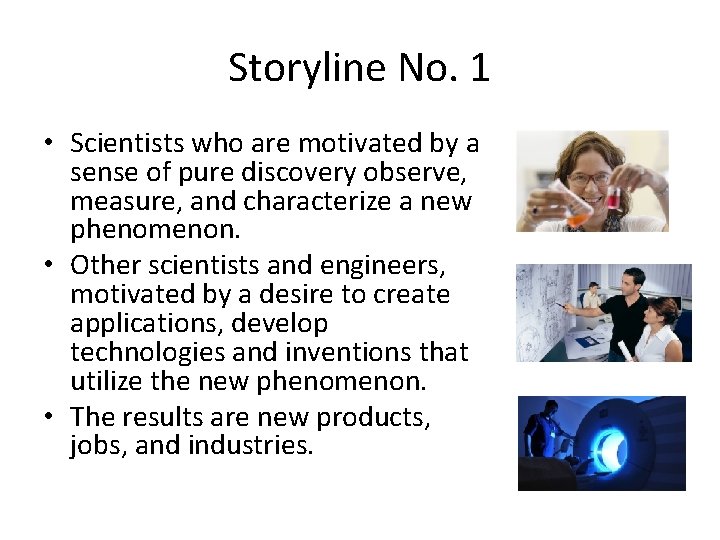
Storyline No. 1 • Scientists who are motivated by a sense of pure discovery observe, measure, and characterize a new phenomenon. • Other scientists and engineers, motivated by a desire to create applications, develop technologies and inventions that utilize the new phenomenon. • The results are new products, jobs, and industries.
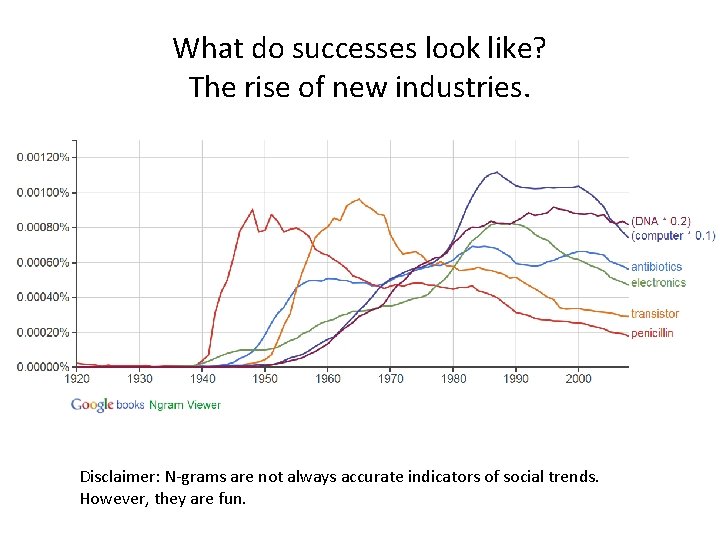
What do successes look like? The rise of new industries. Disclaimer: N-grams are not always accurate indicators of social trends. However, they are fun.
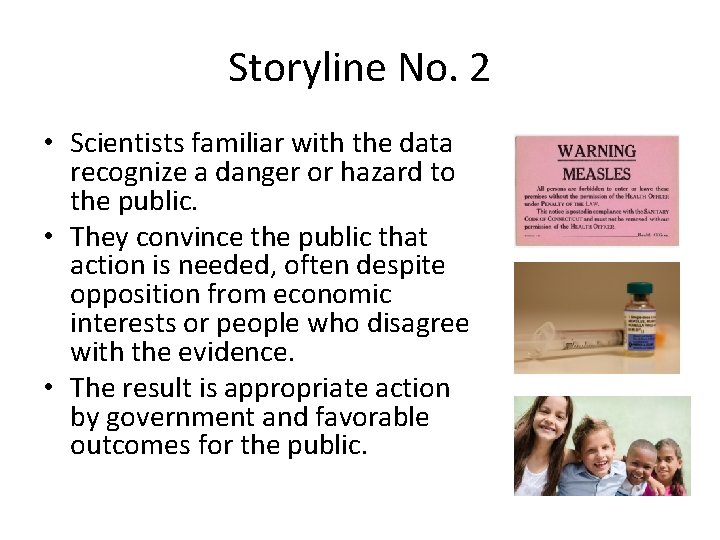
Storyline No. 2 • Scientists familiar with the data recognize a danger or hazard to the public. • They convince the public that action is needed, often despite opposition from economic interests or people who disagree with the evidence. • The result is appropriate action by government and favorable outcomes for the public.
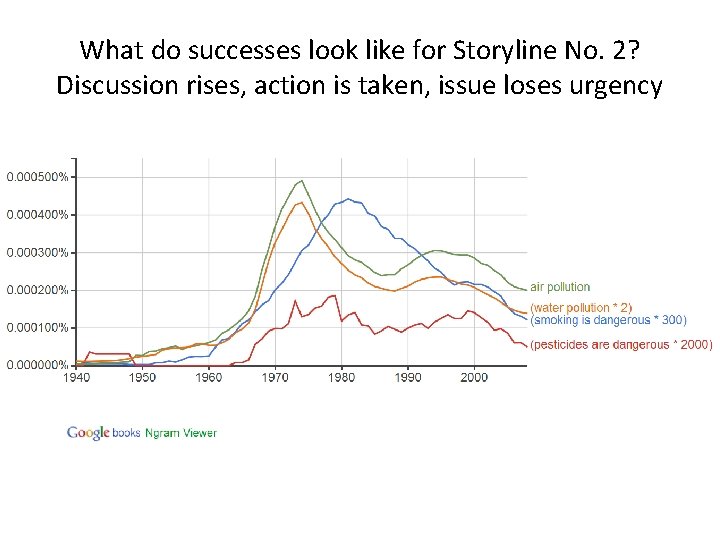
What do successes look like for Storyline No. 2? Discussion rises, action is taken, issue loses urgency
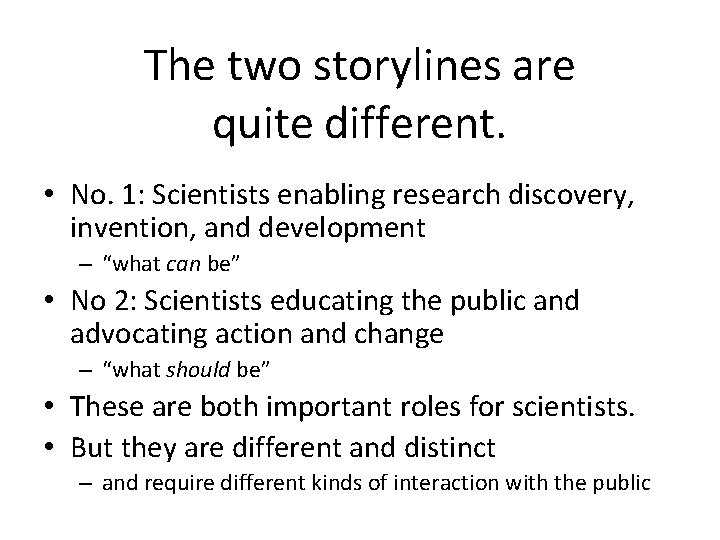
The two storylines are quite different. • No. 1: Scientists enabling research discovery, invention, and development – “what can be” • No 2: Scientists educating the public and advocating action and change – “what should be” • These are both important roles for scientists. • But they are different and distinct – and require different kinds of interaction with the public
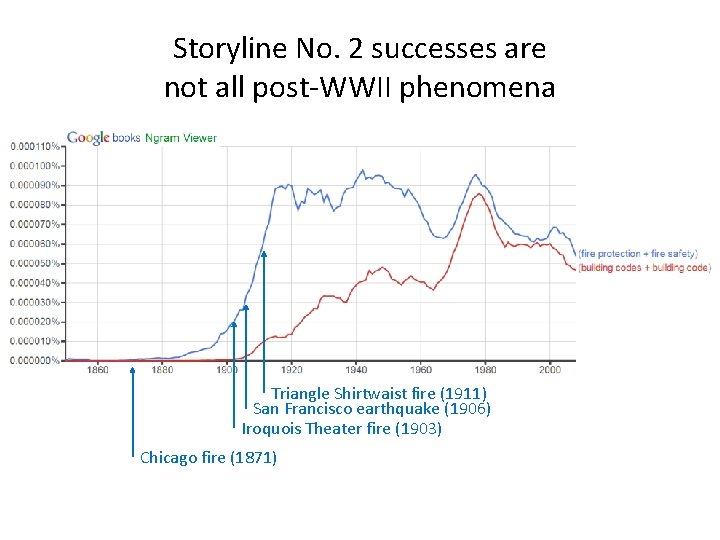
Storyline No. 2 successes are not all post-WWII phenomena Triangle Shirtwaist fire (1911) San Francisco earthquake (1906) Iroquois Theater fire (1903) Chicago fire (1871)
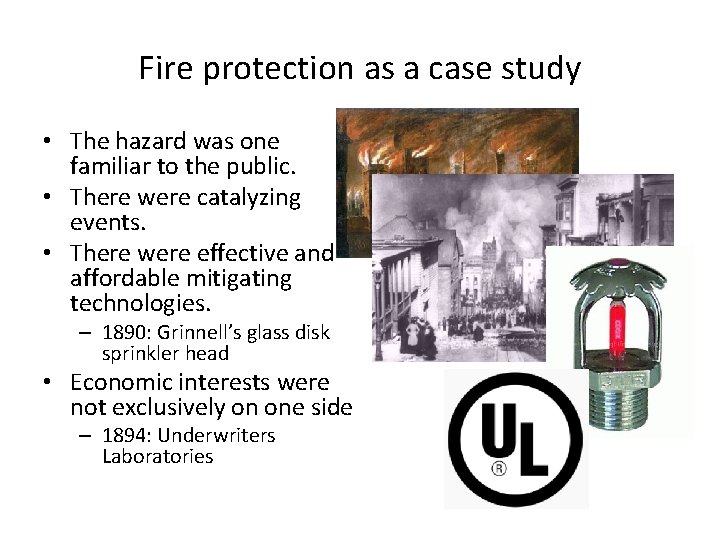
Fire protection as a case study • The hazard was one familiar to the public. • There were catalyzing events. • There were effective and affordable mitigating technologies. – 1890: Grinnell’s glass disk sprinkler head • Economic interests were not exclusively on one side – 1894: Underwriters Laboratories
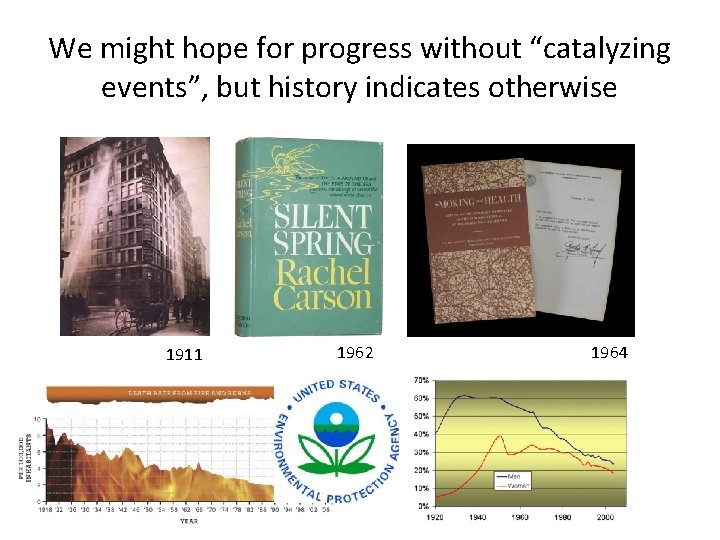
We might hope for progress without “catalyzing events”, but history indicates otherwise 1911 1962 1964
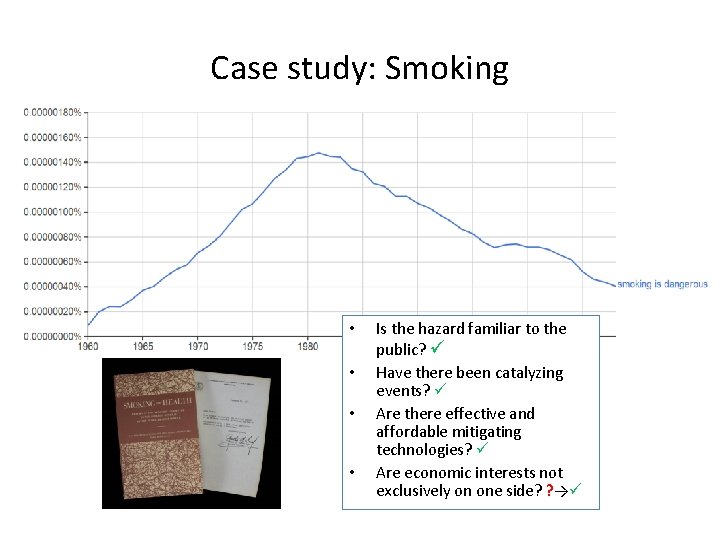
Case study: Smoking • • Is the hazard familiar to the public? Have there been catalyzing events? Are there effective and affordable mitigating technologies? Are economic interests not exclusively on one side? ? →
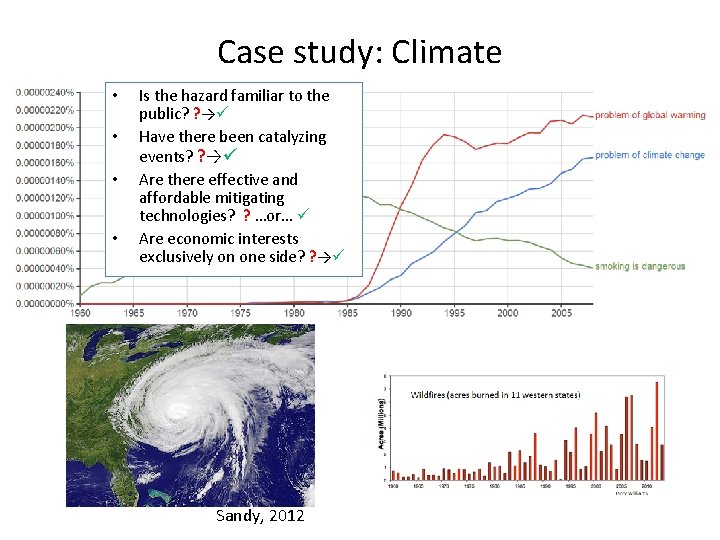
Case study: Climate • • Is the hazard familiar to the public? ? → Have there been catalyzing events? ? → Are there effective and affordable mitigating technologies? ? …or… Are economic interests exclusively on one side? ? → Sandy, 2012
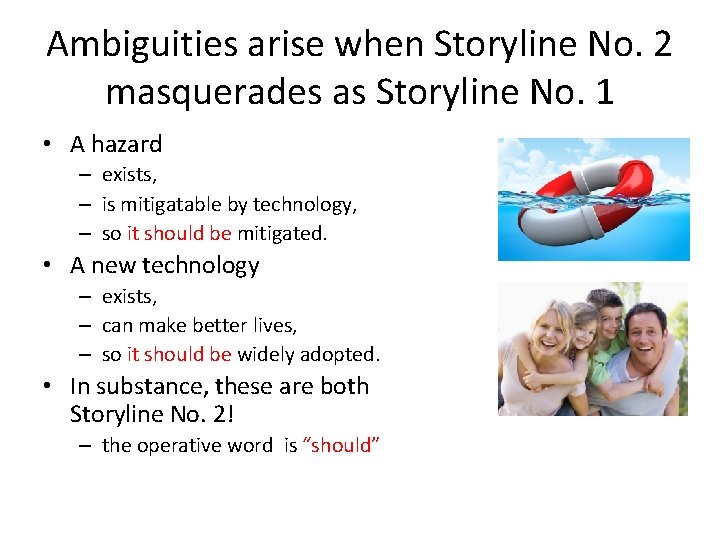
Ambiguities arise when Storyline No. 2 masquerades as Storyline No. 1 • A hazard – exists, – is mitigatable by technology, – so it should be mitigated. • A new technology – exists, – can make better lives, – so it should be widely adopted. • In substance, these are both Storyline No. 2! – the operative word is “should”
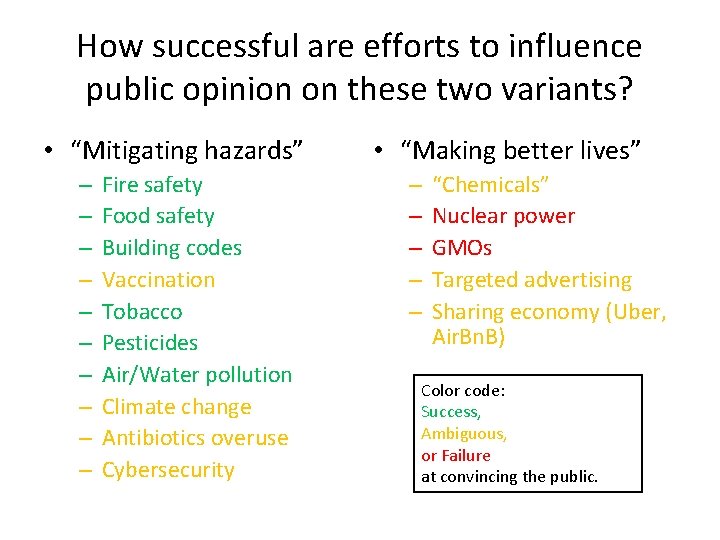
How successful are efforts to influence public opinion on these two variants? • “Mitigating hazards” – – – – – Fire safety Food safety Building codes Vaccination Tobacco Pesticides Air/Water pollution Climate change Antibiotics overuse Cybersecurity • “Making better lives” – – – “Chemicals” Nuclear power GMOs Targeted advertising Sharing economy (Uber, Air. Bn. B) Color code: Success, Ambiguous, or Failure at convincing the public.
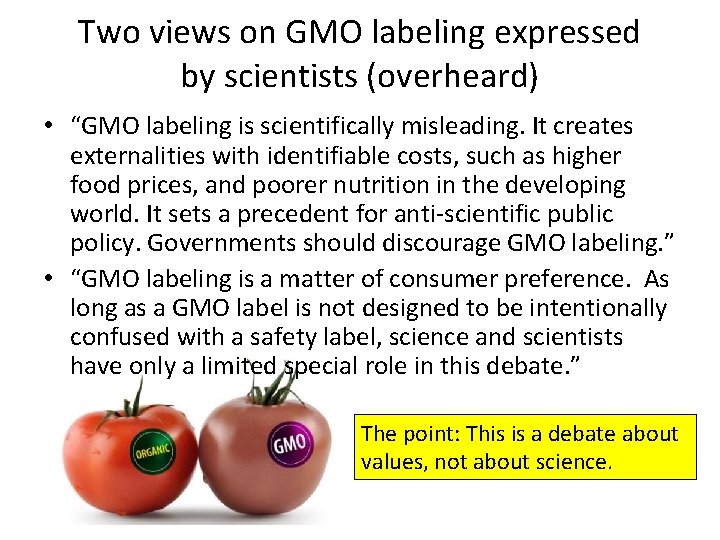
Two views on GMO labeling expressed by scientists (overheard) • “GMO labeling is scientifically misleading. It creates externalities with identifiable costs, such as higher food prices, and poorer nutrition in the developing world. It sets a precedent for anti-scientific public policy. Governments should discourage GMO labeling. ” • “GMO labeling is a matter of consumer preference. As long as a GMO label is not designed to be intentionally confused with a safety label, science and scientists have only a limited special role in this debate. ” The point: This is a debate about values, not about science.
Perils of using the word “should” • A matter of judgment, not of scientific fact – Whose judgment? – Are “people like me” represented in the process? – Do scientists have, or claim, a special role in judging? • At what cost and to whom? – Disruptive to established economic interests? – Implying a redistribution of wealth? – Implying a perturbation of political influence? • By whose moral compass? – – My values are different from yours. My priorities are different from yours. My beliefs are different from yours. My tolerance for change is different from yours.
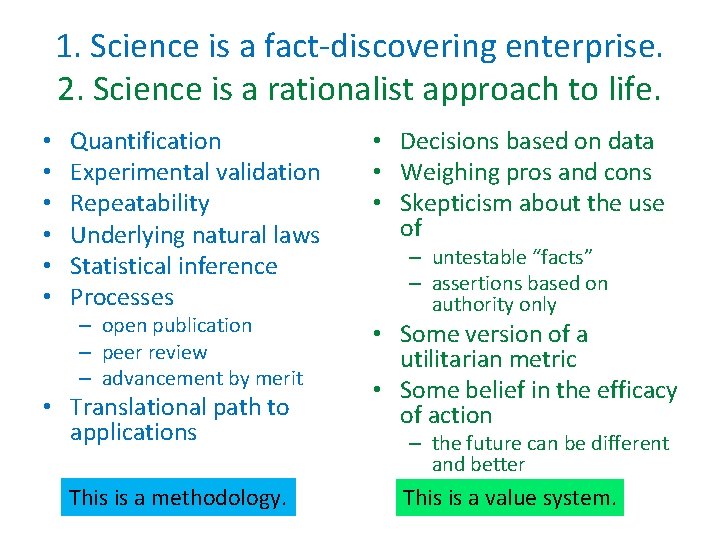
1. Science is a fact-discovering enterprise. 2. Science is a rationalist approach to life. • • • Quantification Experimental validation Repeatability Underlying natural laws Statistical inference Processes – open publication – peer review – advancement by merit • Translational path to applications This is a methodology. • Decisions based on data • Weighing pros and cons • Skepticism about the use of – untestable “facts” – assertions based on authority only • Some version of a utilitarian metric • Some belief in the efficacy of action – the future can be different and better This is a value system.
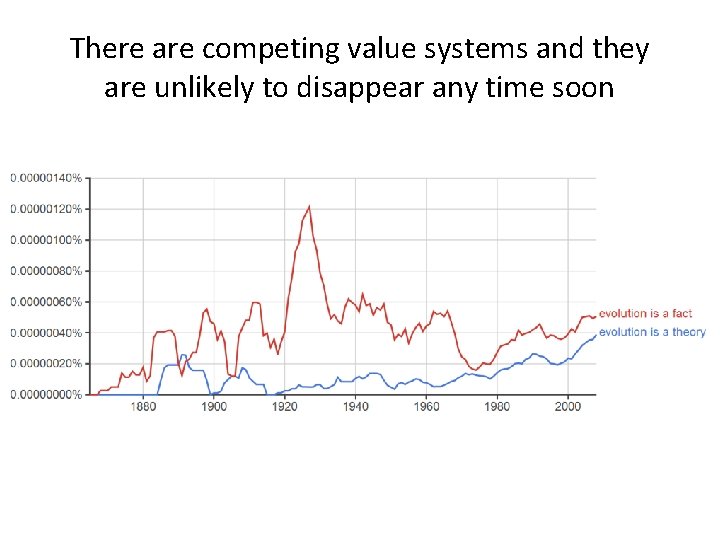
There are competing value systems and they are unlikely to disappear any time soon
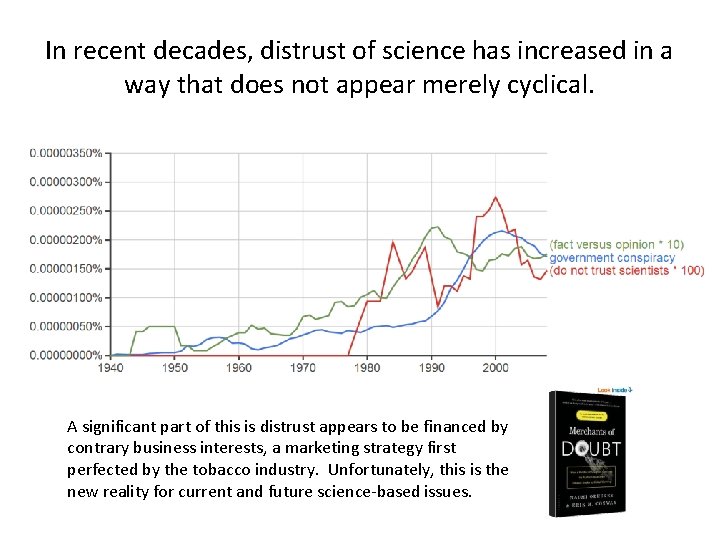
In recent decades, distrust of science has increased in a way that does not appear merely cyclical. A significant part of this is distrust appears to be financed by contrary business interests, a marketing strategy first perfected by the tobacco industry. Unfortunately, this is the new reality for current and future science-based issues.
What should* the scientific community do? I. • More clearly separate fact-based conclusions from value-based judgments, even when both are valuable – Journals should publish more opinion labeled as such – And be more rigid in excluding “should” (and its equivalents) from refereed publications • Be more active in communicating the merits of a rationalist approach to decision-making – By our own example in the public space – In education, e. g. , “How would a scientist approach this policy decision? ” • Be careful and selective in invoking science as a privileged platform – Less “This data shows that we need to…” – More “Speaking for myself…” – But not shy about “It is an accepted scientific fact that…” * using the word carefully
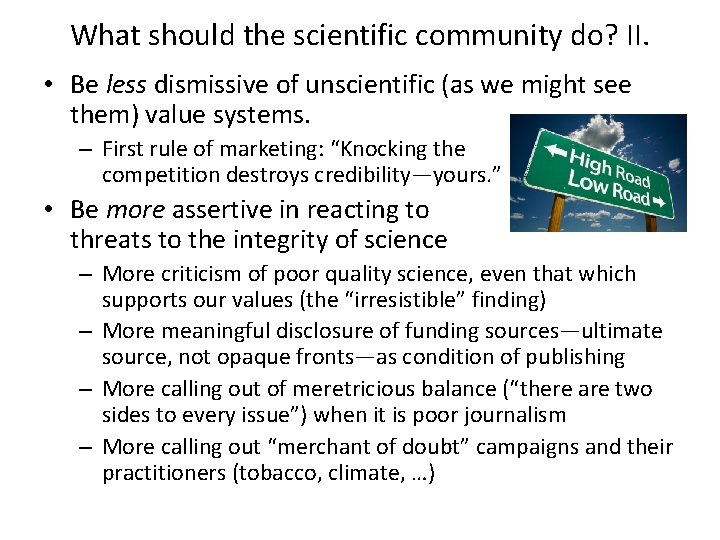
What should the scientific community do? II. • Be less dismissive of unscientific (as we might see them) value systems. – First rule of marketing: “Knocking the competition destroys credibility—yours. ” • Be more assertive in reacting to threats to the integrity of science – More criticism of poor quality science, even that which supports our values (the “irresistible” finding) – More meaningful disclosure of funding sources—ultimate source, not opaque fronts—as condition of publishing – More calling out of meretricious balance (“there are two sides to every issue”) when it is poor journalism – More calling out “merchant of doubt” campaigns and their practitioners (tobacco, climate, …)
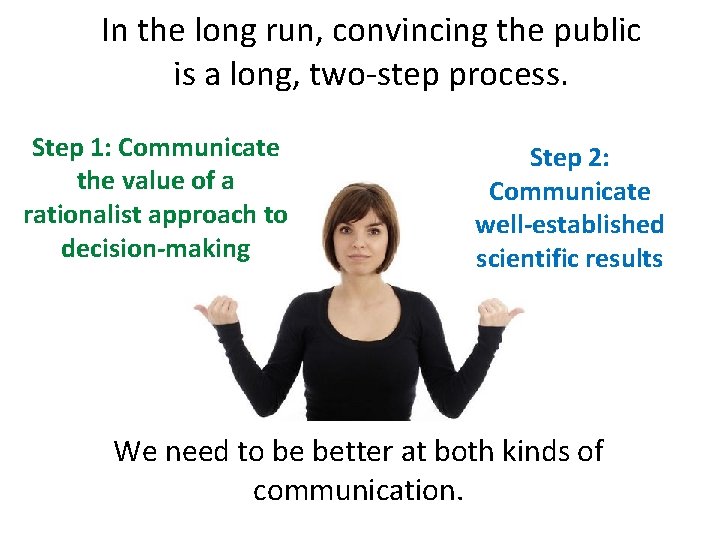
In the long run, convincing the public is a long, two-step process. Step 1: Communicate the value of a rationalist approach to decision-making Step 2: Communicate well-established scientific results We need to be better at both kinds of communication.