
Science Starter 1 What types of renewable energy
Science Starter 1. What types of renewable energy sources do you think are available in North Carolina? 2. Can you think of any renewable energy sources that are near Charlotte?
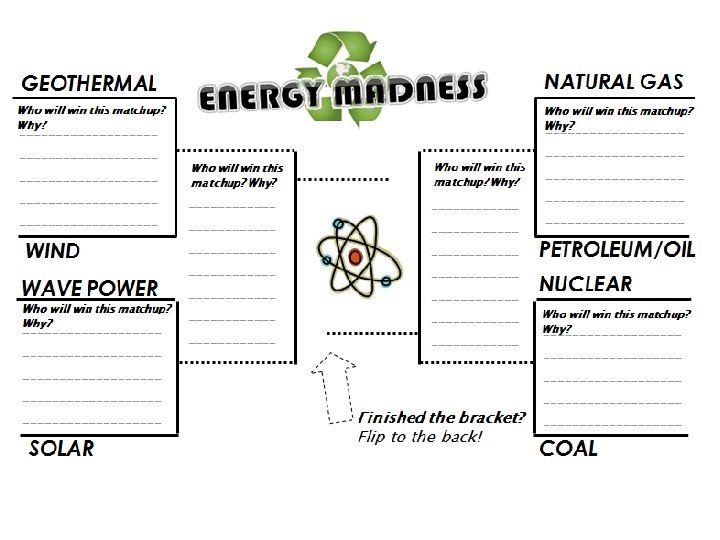
Today’s Agenda • Warm Up & Objective • Alternative Energy Sources Notes • Energy Articles • Energy Madness Brackets • Exit Ticket
Alternate Energy in North Carolina SWBAT evaluate sources of alternate energy in North Carolina
Political Connection! • NC is one of just a few states in the US that has a legislative renewable energy mandate. The NC Renewable Energy Portfolio Standard (REPS) requires that NC utilities must have a percentage of their retail sales come from renewable energy sources by specific dates – up to 12. 5% by 2021. • By 2021, 12. 5% of North Carolina’s energy must come from renewable energy sources!
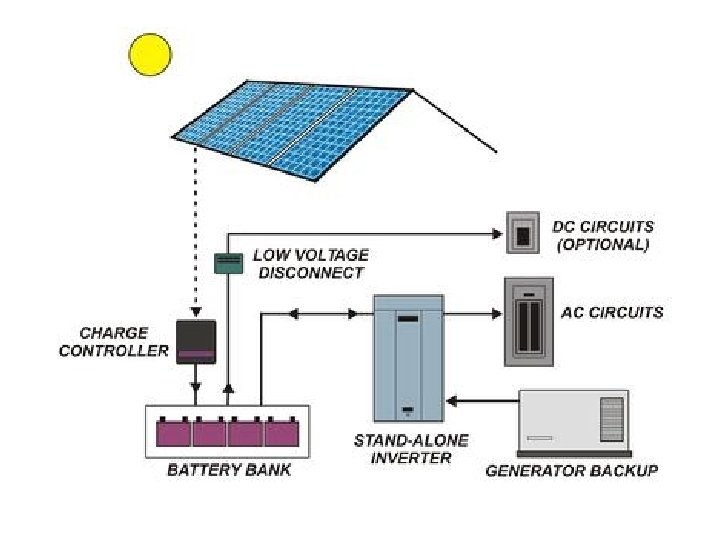
Alternate Energy Sources Solar Energy u Solar energy has two major advantages: u Instead of using fossil fuels, solar power 1. Solar energy’s “fuel” is free. technologies use photovoltaic (PV) panels to 2. Solar energy is non-polluting. convert sunlight directly into electricity. This process involves no moving parts. PV systems can be very small (using only a few panels) or many panels can be connected together to construct large systems.
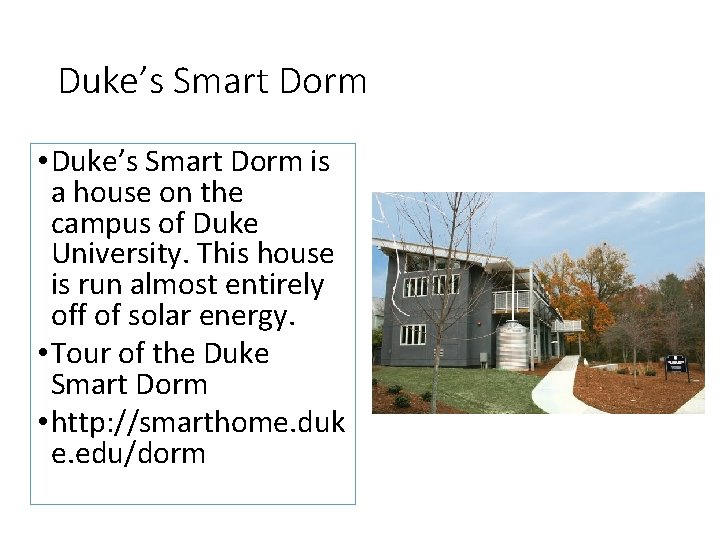
Duke’s Smart Dorm • Duke’s Smart Dorm is a house on the campus of Duke University. This house is run almost entirely off of solar energy. • Tour of the Duke Smart Dorm • http: //smarthome. duk e. edu/dorm
Solar Energy: Pros & Cons Pros Initial cost of solar panels Once they are manufactured, solar Weather can affect panels produce no effectiveness of solar pollution panels Once solar panels are Solar panels only work paid for, they continue during daylight hours. to provide free energy This means they can Solar energy production only create energy during daylight hours, is very quiet, unlike and must use stored energy created from energy during dark fossil fuels and other hours forms of energy
Alternate Energy Sources Nuclear Energy In nuclear fission, the nuclei of heavy atoms such as uranium-235 are bombarded with neutrons. The uranium nuclei split into smaller nuclei and emit neutrons and heat energy.
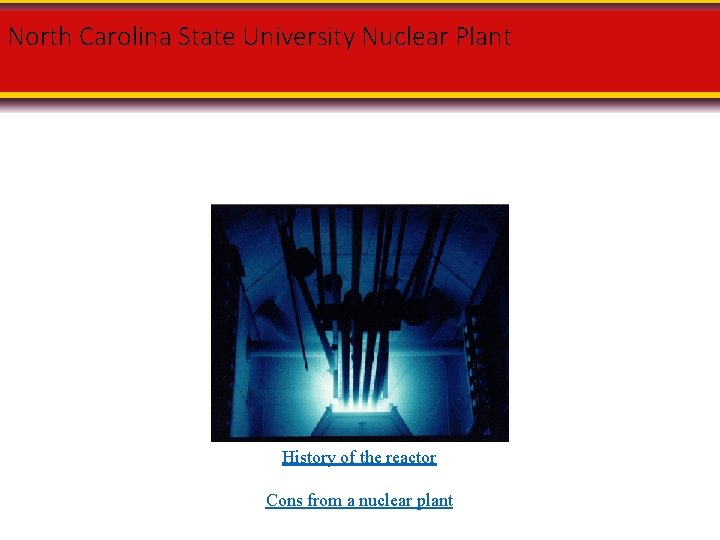
North Carolina State University Nuclear Plant History of the reactor Cons from a nuclear plant
Nuclear Energy: Pros & Cons Pros • Create very small amounts of pollution • Very reliable (require little to no outside fuel to operate) • High levels of electric energy can be created at one nuclear energy plant Cons • Radioactive waste (must be monitored for 10, 000 years after it is used • Example: Chernobyl • Where was it? • What happened? • Threat of nuclear terrorism
Alternate Energy Sources Wind Energy In the next 50 to 60 years, wind power could be used to create between 5 to 10 percent of the country’s demand for electricity.

Wind Turbines Traditional Wind Turbine
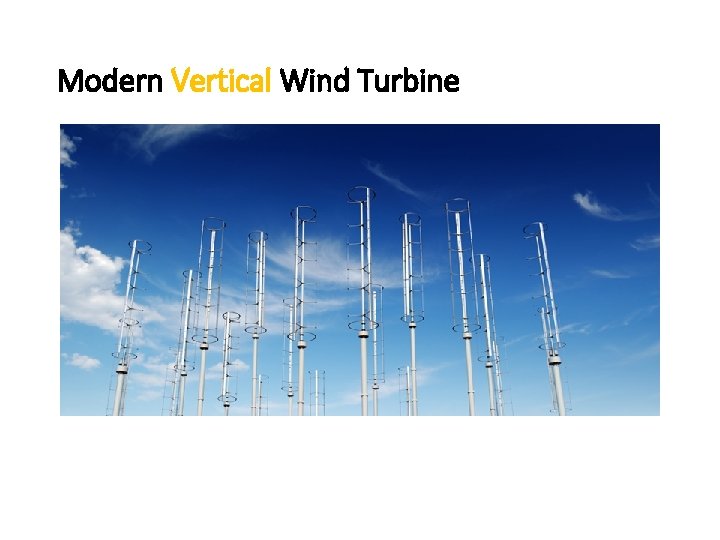
Modern Vertical Wind Turbine
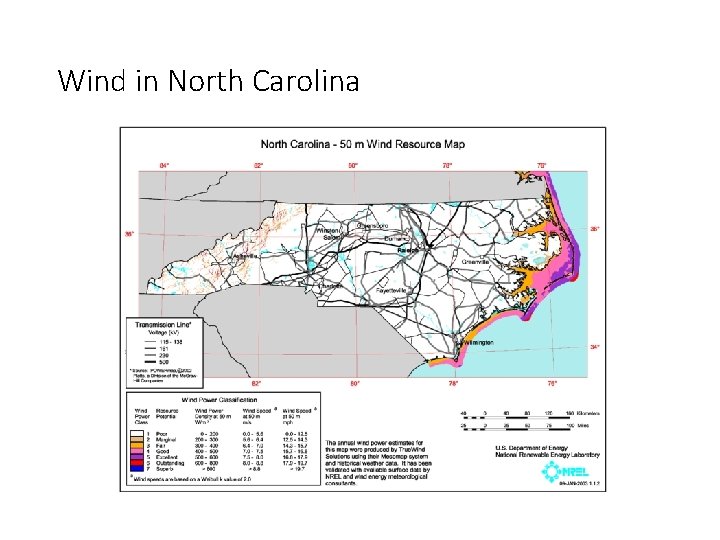
Wind in North Carolina
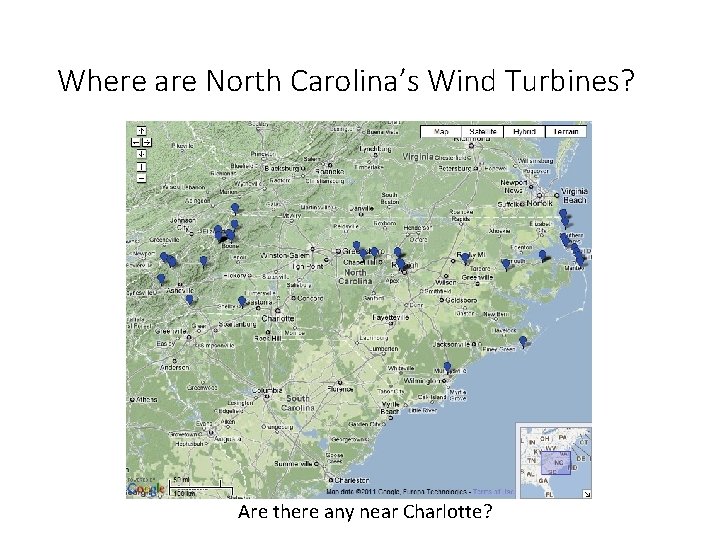
Where are North Carolina’s Wind Turbines? Are there any near Charlotte?
Wind Turbines: Pros & Cons Pros Self-sustaining (does not require support from other resources or inputs) Reliable Causes little to no harm to plant and animal life on the ground Cons Not 100% reliable (wind speeds must be at least 16 mph) Avian mortality (bird killers!) High initial cost
Alternate Energy Sources Hydroelectric Power Hydroelectric power is the power generated by falling water. The water held in a reservoir behind a dam is a form of stored energy that can be released through the dam to produce electric Thepower. strong water flow that results drives turbines and electric generators.
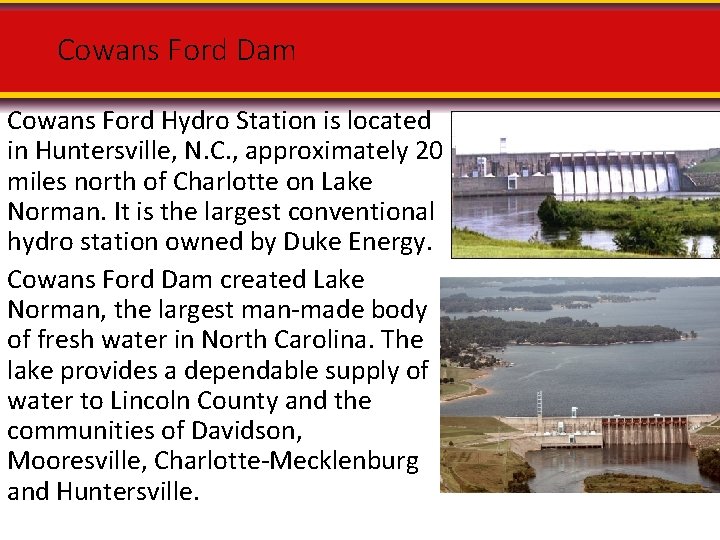
Cowans Ford Dam Cowans Ford Hydro Station is located in Huntersville, N. C. , approximately 20 miles north of Charlotte on Lake Norman. It is the largest conventional hydro station owned by Duke Energy. Cowans Ford Dam created Lake Norman, the largest man-made body of fresh water in North Carolina. The lake provides a dependable supply of water to Lincoln County and the communities of Davidson, Mooresville, Charlotte-Mecklenburg and Huntersville.
Hydroelectric Power: Pros & Cons Pros Completely independent of fossil fuels Can be shut off immediately (thermal plants can take hours, nuclear plants can take weeks) Controls flooding Very few breakdowns Cons Disrupts natural ecosystems Plant decay that is created as a result of dams can cause release of greenhouse gases Expensive to build
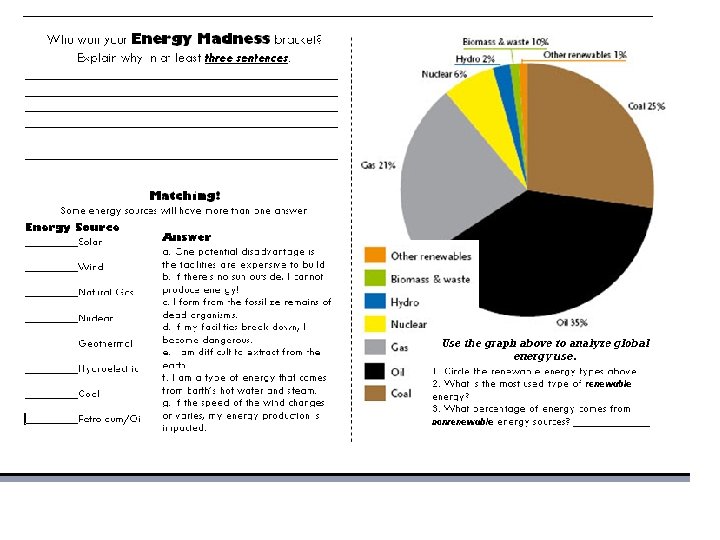
Energy Articles • Choose a partner in the classroom (only 2 people) • Both of you will receive an article about energy in North Carolina • Read the article to your partner and then list pros/cons about your energy type in the article on a piece of paper. Make it look nice! • You will have 10 minutes to do this for both!

Exit Ticket • Return to your seats for the Exit Ticket!!
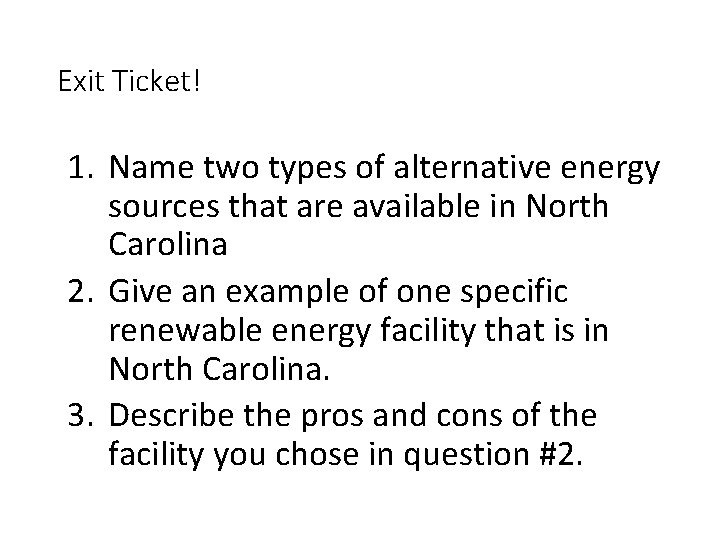
Exit Ticket! 1. Name two types of alternative energy sources that are available in North Carolina 2. Give an example of one specific renewable energy facility that is in North Carolina. 3. Describe the pros and cons of the facility you chose in question #2.
- Slides: 25