
Science STAAR Review Matter Types of Energy Science
- Slides: 29
Science STAAR Review Matter Types of Energy Science Tools
Classifying Matter • Matter is anything that has mass and takes up space • Matter has physical properties that can be observed § § § § mass magnetism physical state relative density solubility Ability to insulate or conduct heat Ability to insulate or conduct electricity
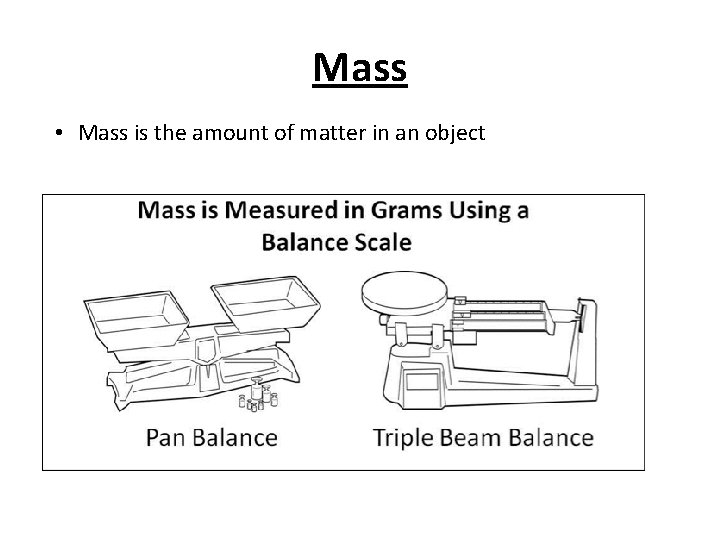
Mass • Mass is the amount of matter in an object
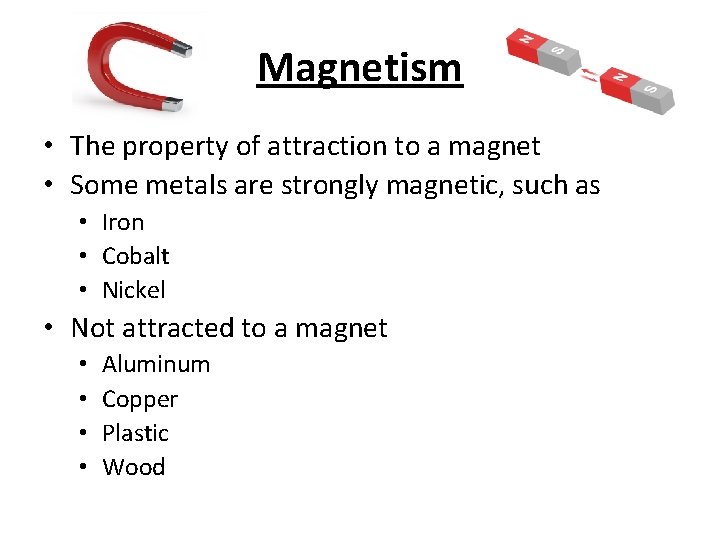
Magnetism • The property of attraction to a magnet • Some metals are strongly magnetic, such as • Iron • Cobalt • Nickel • Not attracted to a magnet • • Aluminum Copper Plastic Wood
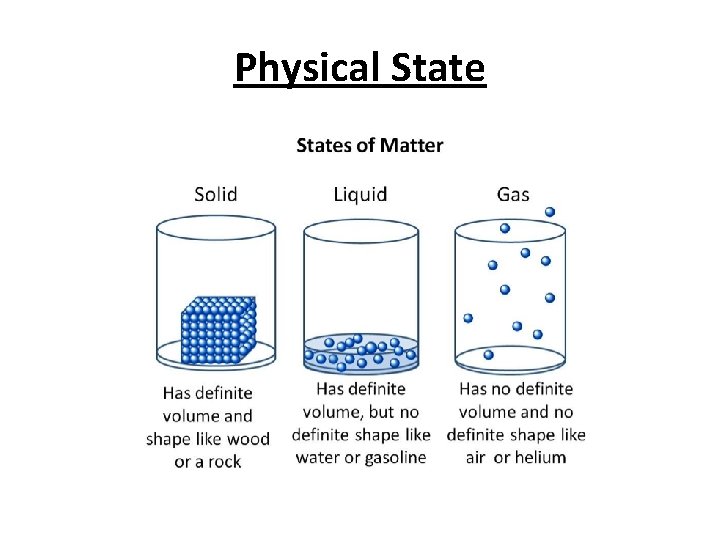
Physical State
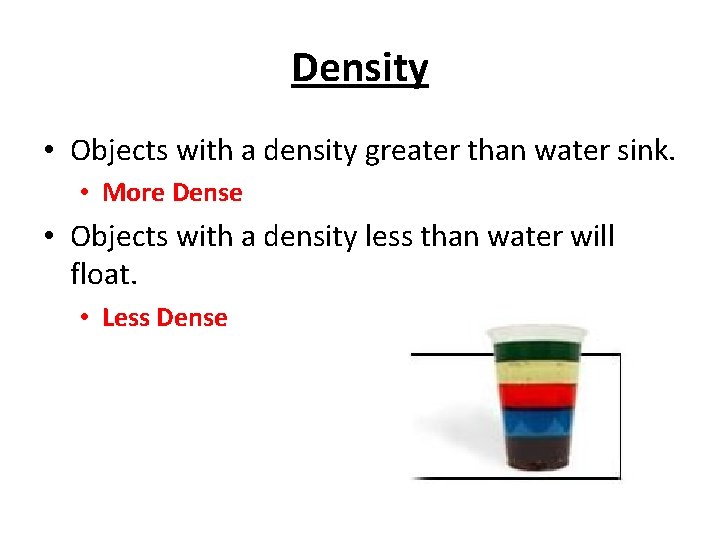
Density • Objects with a density greater than water sink. • More Dense • Objects with a density less than water will float. • Less Dense
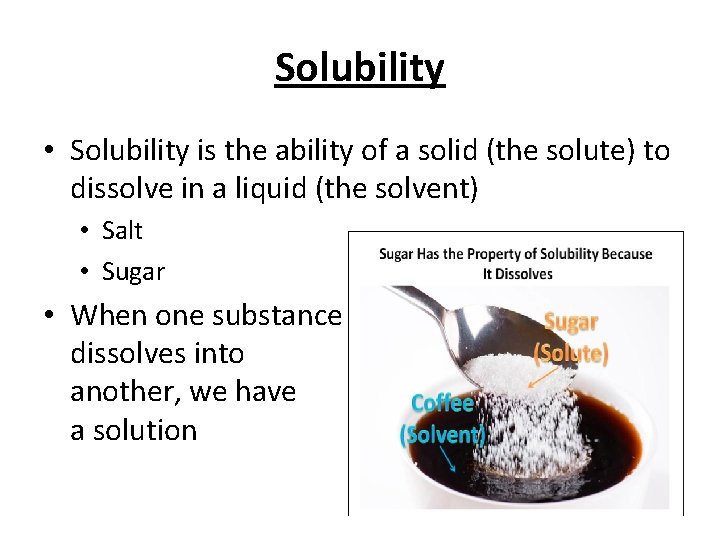
Solubility • Solubility is the ability of a solid (the solute) to dissolve in a liquid (the solvent) • Salt • Sugar • When one substance dissolves into another, we have a solution
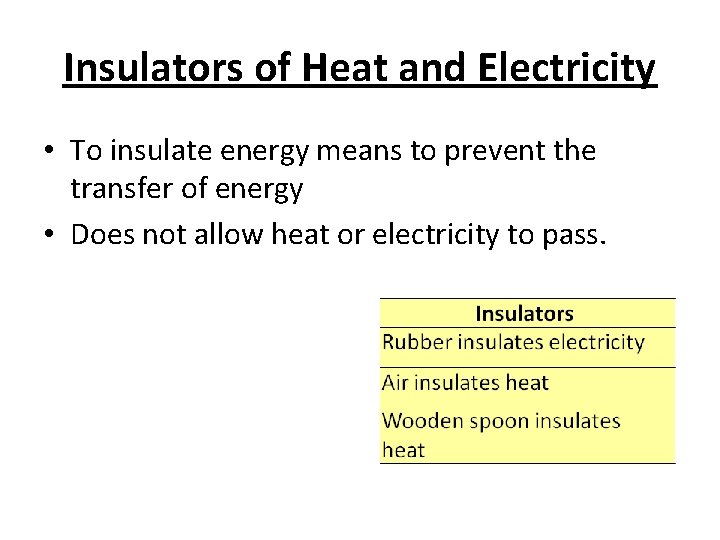
Insulators of Heat and Electricity • To insulate energy means to prevent the transfer of energy • Does not allow heat or electricity to pass.
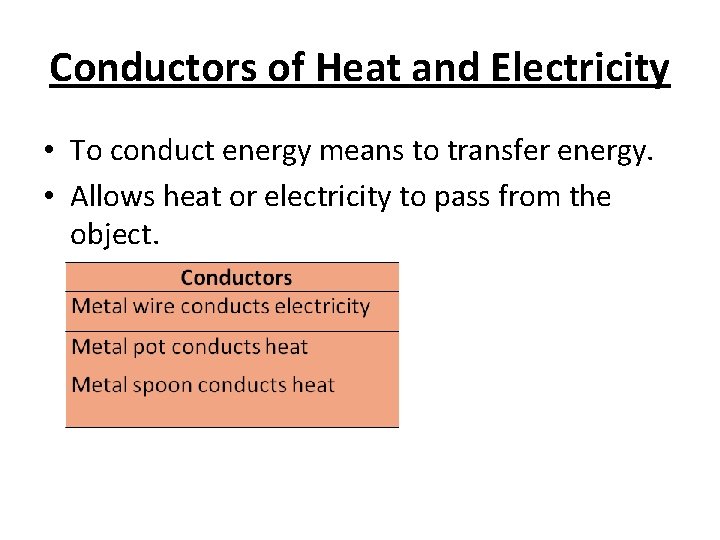
Conductors of Heat and Electricity • To conduct energy means to transfer energy. • Allows heat or electricity to pass from the object.
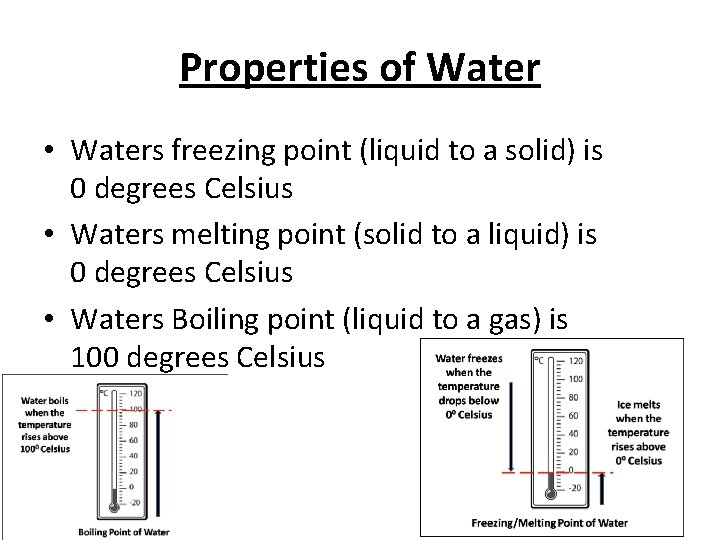
Properties of Water • Waters freezing point (liquid to a solid) is 0 degrees Celsius • Waters melting point (solid to a liquid) is 0 degrees Celsius • Waters Boiling point (liquid to a gas) is 100 degrees Celsius
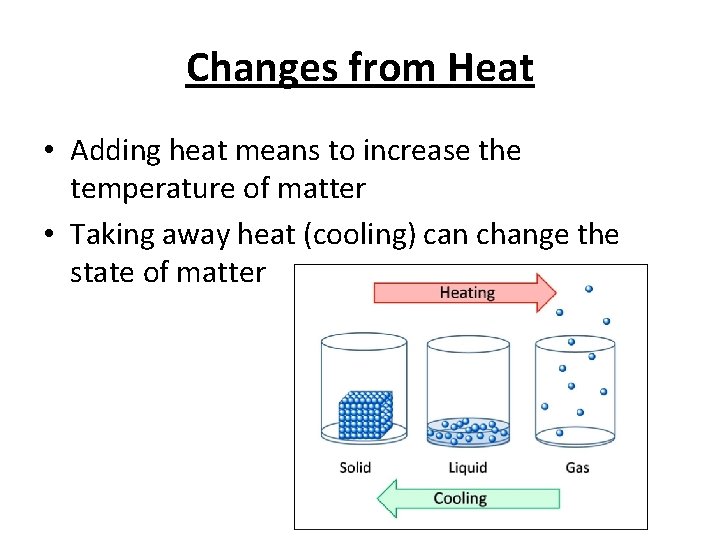
Changes from Heat • Adding heat means to increase the temperature of matter • Taking away heat (cooling) can change the state of matter
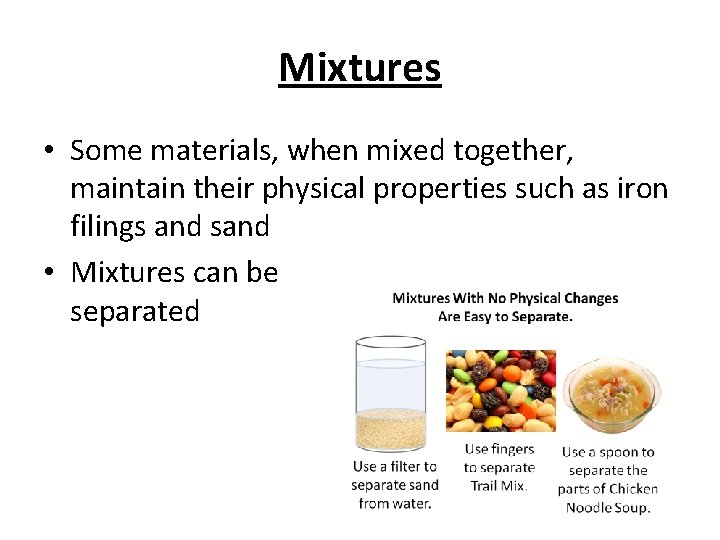
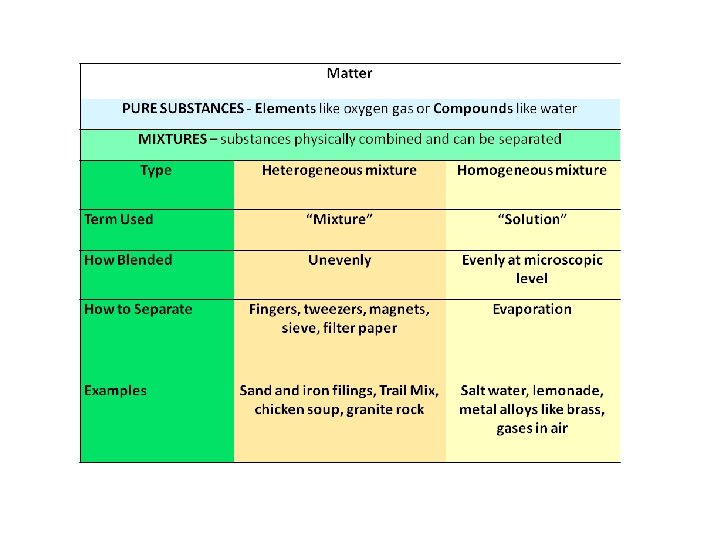
Mixtures • Some materials, when mixed together, maintain their physical properties such as iron filings and sand • Mixtures can be separated
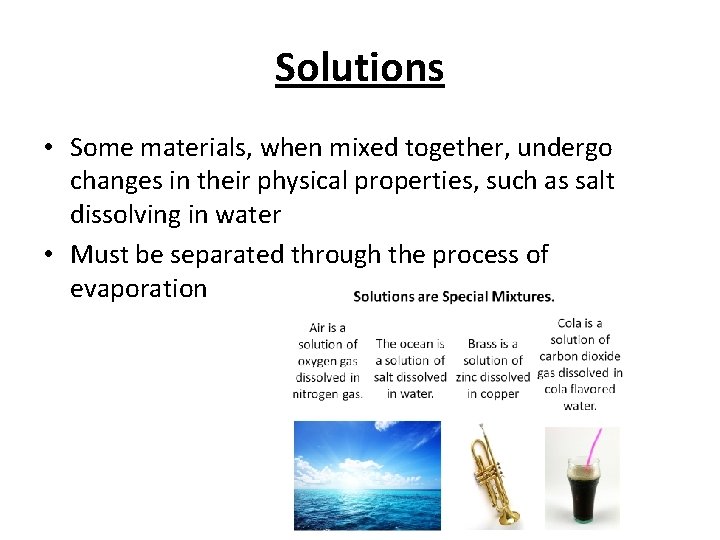
Solutions • Some materials, when mixed together, undergo changes in their physical properties, such as salt dissolving in water • Must be separated through the process of evaporation
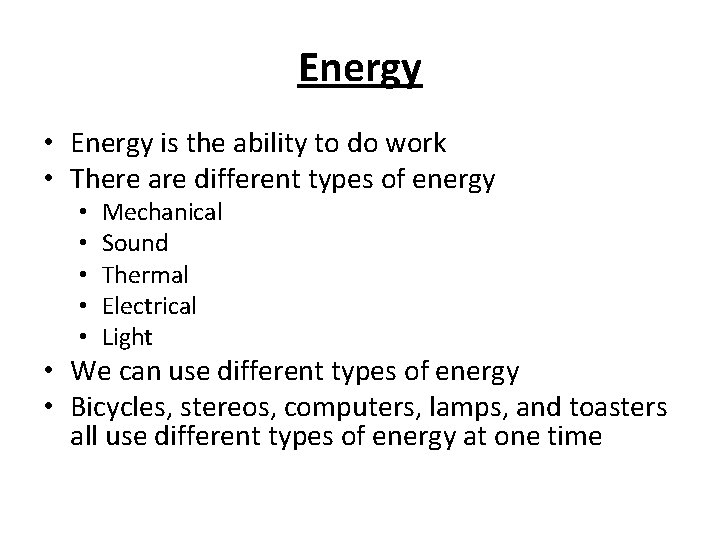
Energy • Energy is the ability to do work • There are different types of energy • • • Mechanical Sound Thermal Electrical Light • We can use different types of energy • Bicycles, stereos, computers, lamps, and toasters all use different types of energy at one time
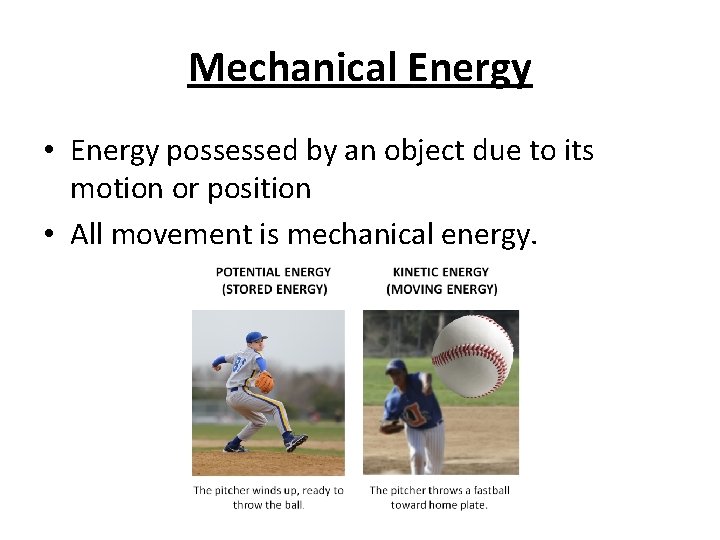
Mechanical Energy • Energy possessed by an object due to its motion or position • All movement is mechanical energy.
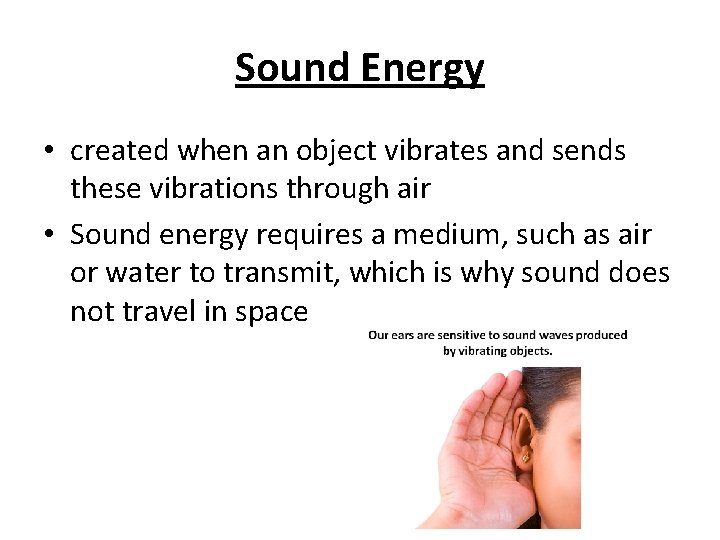
Sound Energy • created when an object vibrates and sends these vibrations through air • Sound energy requires a medium, such as air or water to transmit, which is why sound does not travel in space
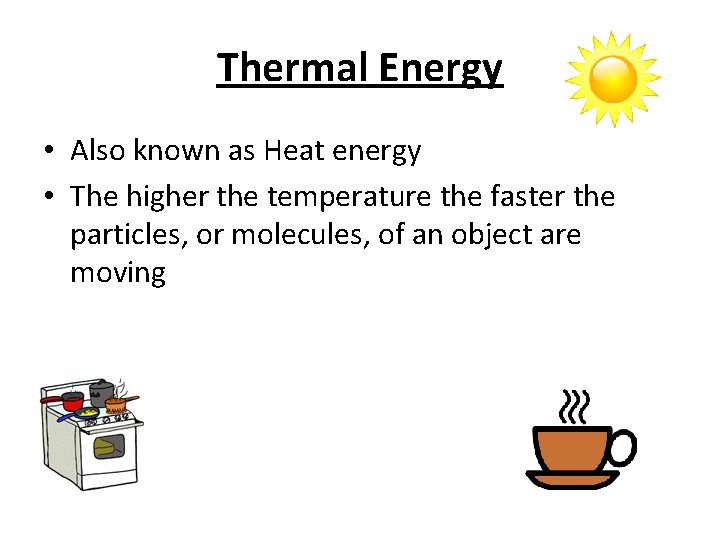
Thermal Energy • Also known as Heat energy • The higher the temperature the faster the particles, or molecules, of an object are moving
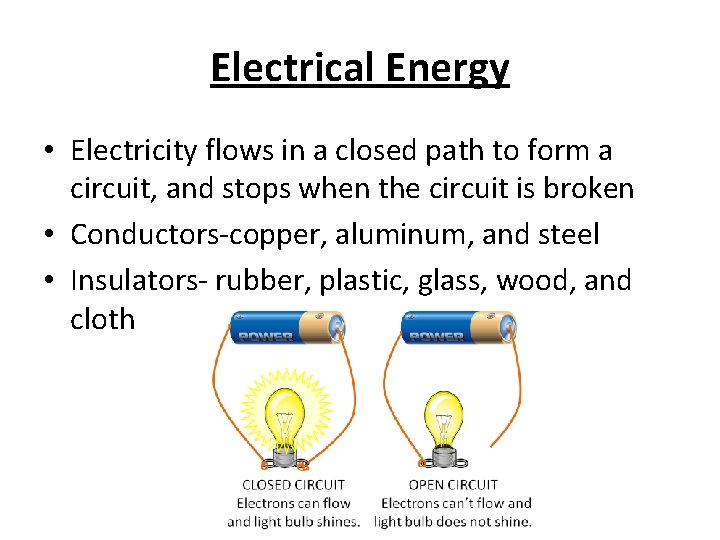
Electrical Energy • Electricity flows in a closed path to form a circuit, and stops when the circuit is broken • Conductors-copper, aluminum, and steel • Insulators- rubber, plastic, glass, wood, and cloth
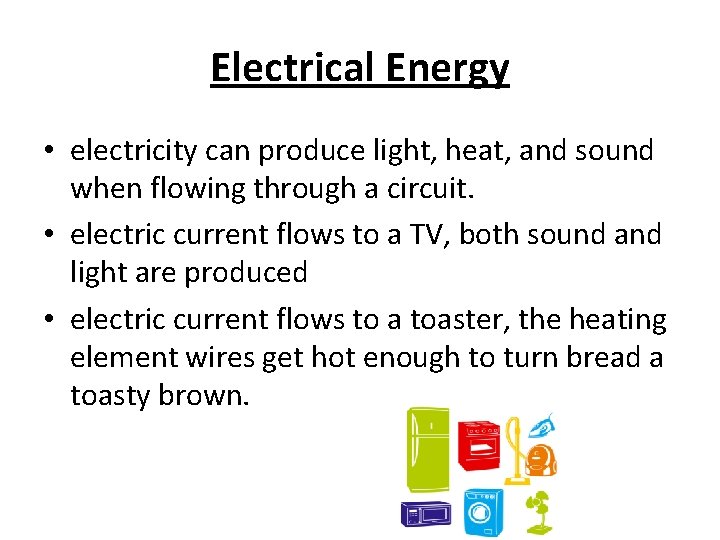
Electrical Energy • electricity can produce light, heat, and sound when flowing through a circuit. • electric current flows to a TV, both sound and light are produced • electric current flows to a toaster, the heating element wires get hot enough to turn bread a toasty brown.
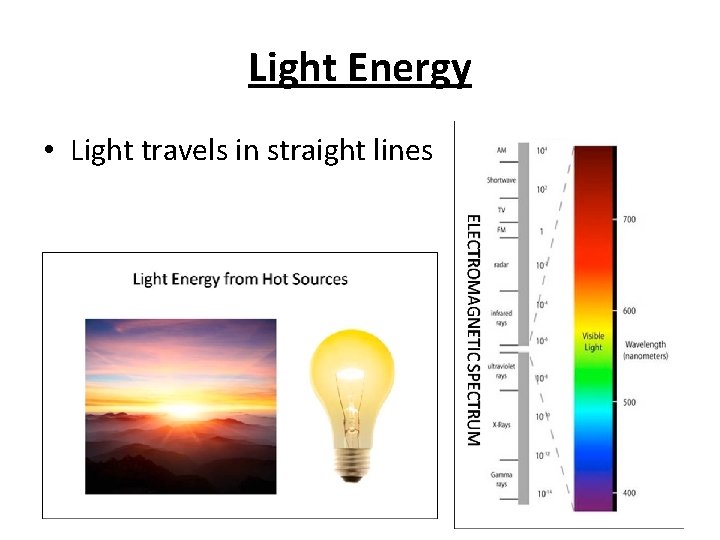
Light Energy • Light travels in straight lines
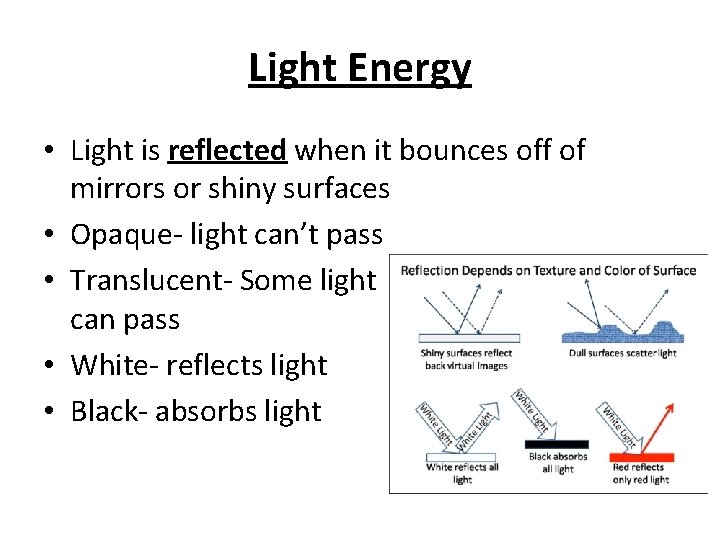
Light Energy • Light is reflected when it bounces off of mirrors or shiny surfaces • Opaque- light can’t pass • Translucent- Some light can pass • White- reflects light • Black- absorbs light
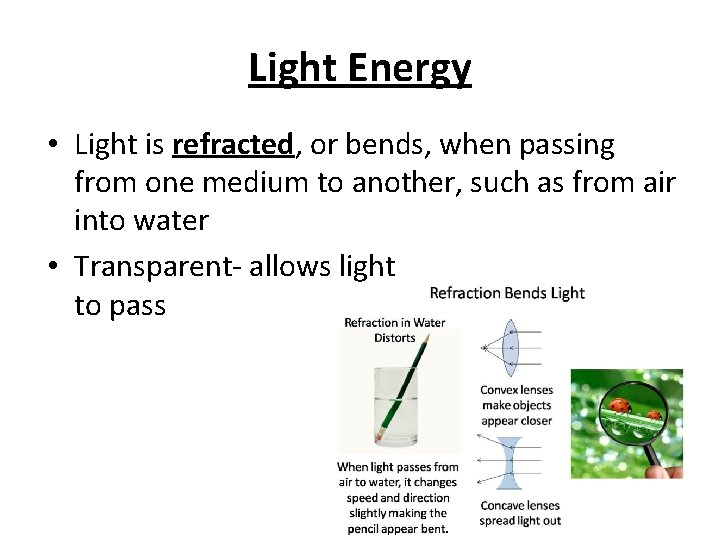
Light Energy • Light is refracted, or bends, when passing from one medium to another, such as from air into water • Transparent- allows light to pass
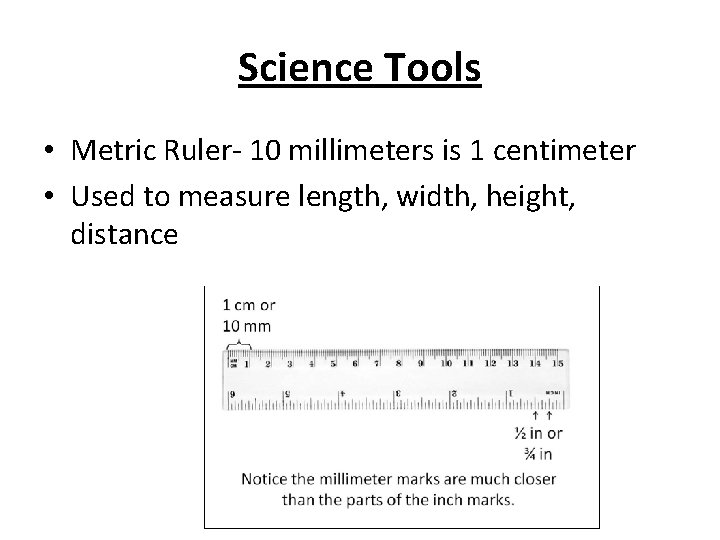
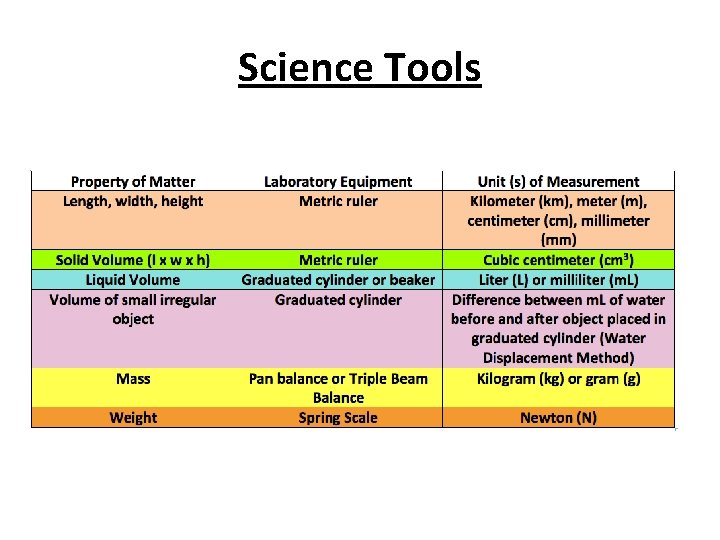
Science Tools • Metric Ruler- 10 millimeters is 1 centimeter • Used to measure length, width, height, distance
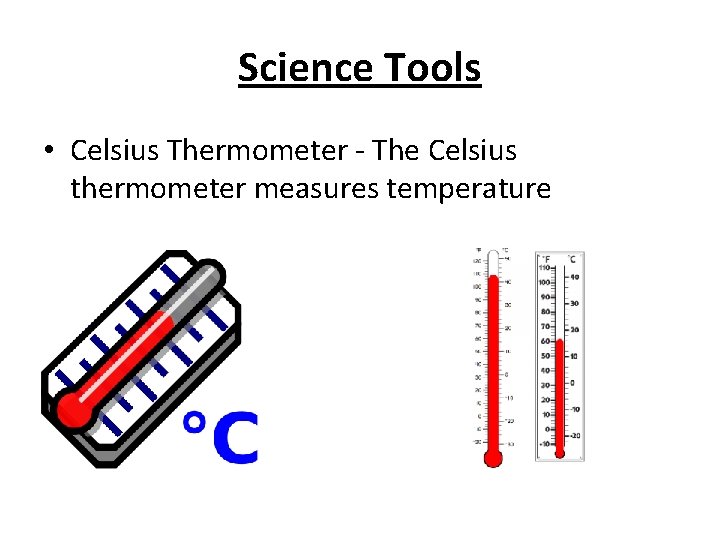
Science Tools • Celsius Thermometer - The Celsius thermometer measures temperature
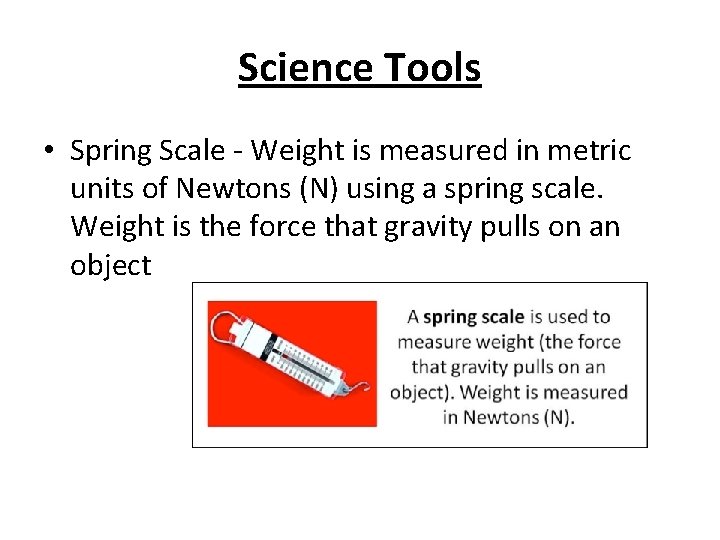
Science Tools • Spring Scale - Weight is measured in metric units of Newtons (N) using a spring scale. Weight is the force that gravity pulls on an object
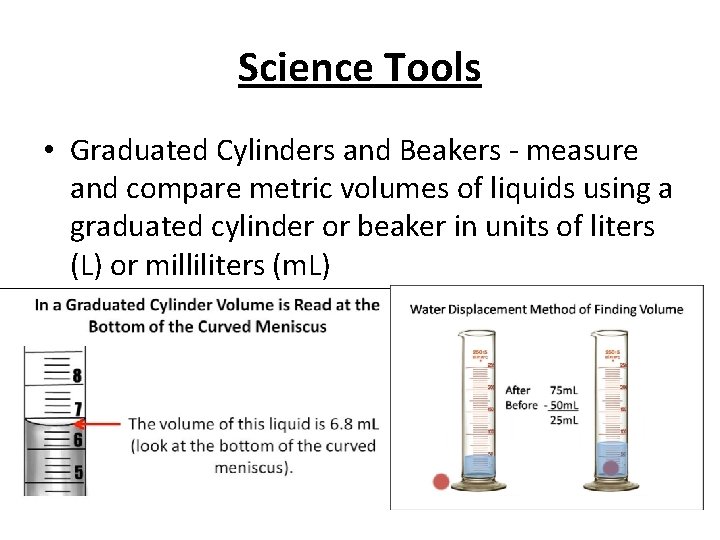
Science Tools • Graduated Cylinders and Beakers - measure and compare metric volumes of liquids using a graduated cylinder or beaker in units of liters (L) or milliliters (m. L)
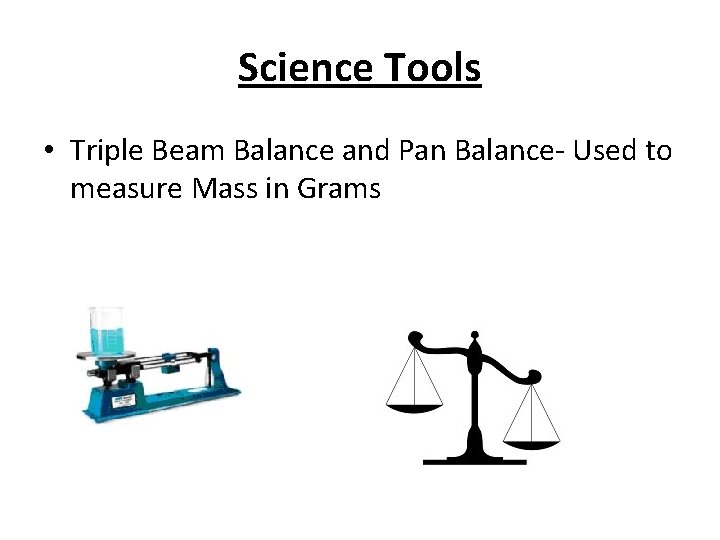
Science Tools • Triple Beam Balance and Pan Balance- Used to measure Mass in Grams
Science Tools