
Science Science is a systematic enterprise that builds

Science

Science is a systematic enterprise that builds and organizes knowledge in the form of testable explanations and predictions about the universe.
History of science
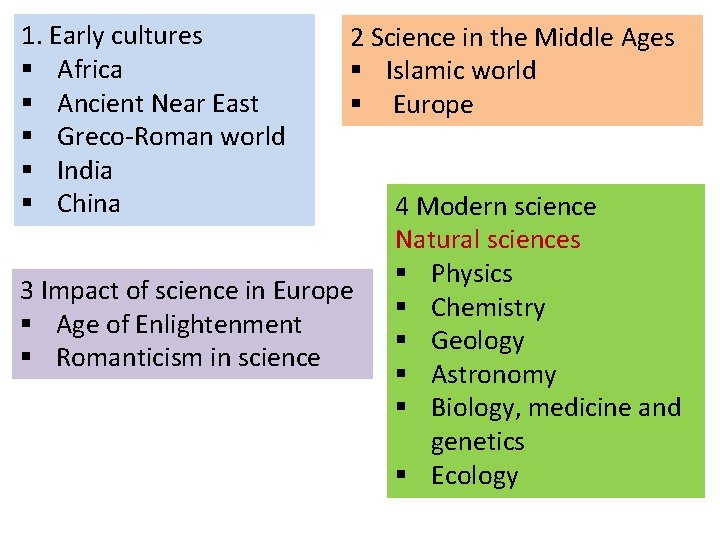
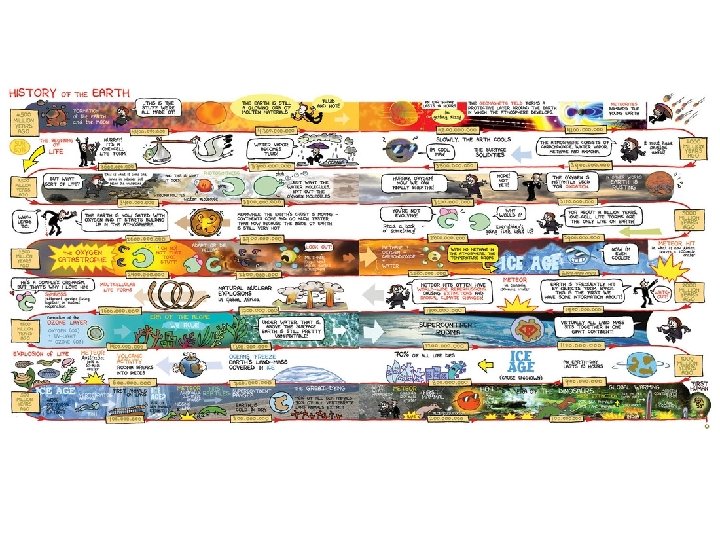
1. Early cultures § Africa § Ancient Near East § Greco-Roman world § India § China 2 Science in the Middle Ages § Islamic world § Europe 3 Impact of science in Europe § Age of Enlightenment § Romanticism in science 4 Modern science Natural sciences § Physics § Chemistry § Geology § Astronomy § Biology, medicine and genetics § Ecology
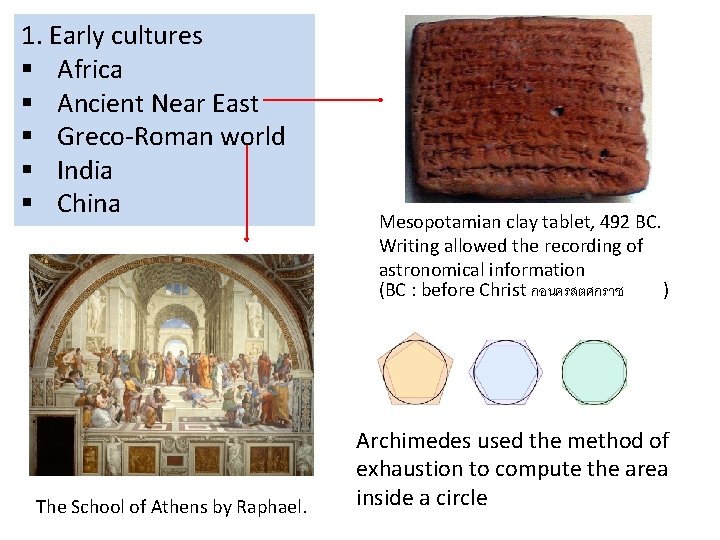
1. Early cultures § Africa § Ancient Near East § Greco-Roman world § India § China The School of Athens by Raphael. Mesopotamian clay tablet, 492 BC. Writing allowed the recording of astronomical information (BC : before Christ กอนครสตศกราช ) Archimedes used the method of exhaustion to compute the area inside a circle
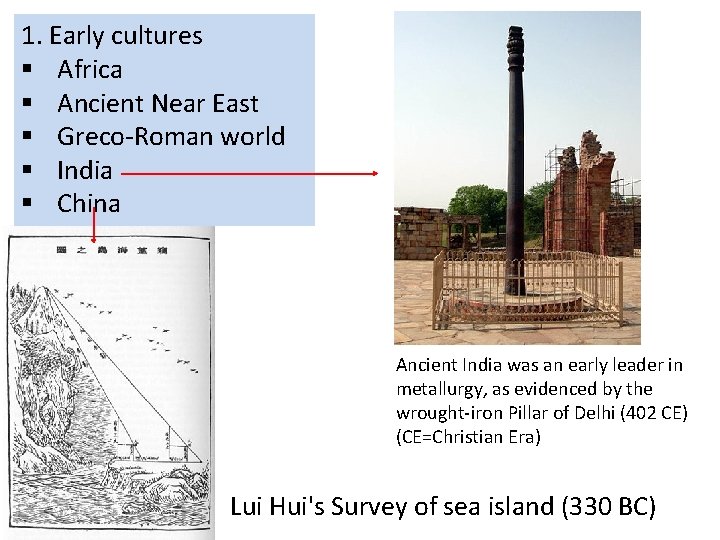
1. Early cultures § Africa § Ancient Near East § Greco-Roman world § India § China Ancient India was an early leader in metallurgy, as evidenced by the wrought-iron Pillar of Delhi (402 CE) (CE=Christian Era) Lui Hui's Survey of sea island (330 BC)
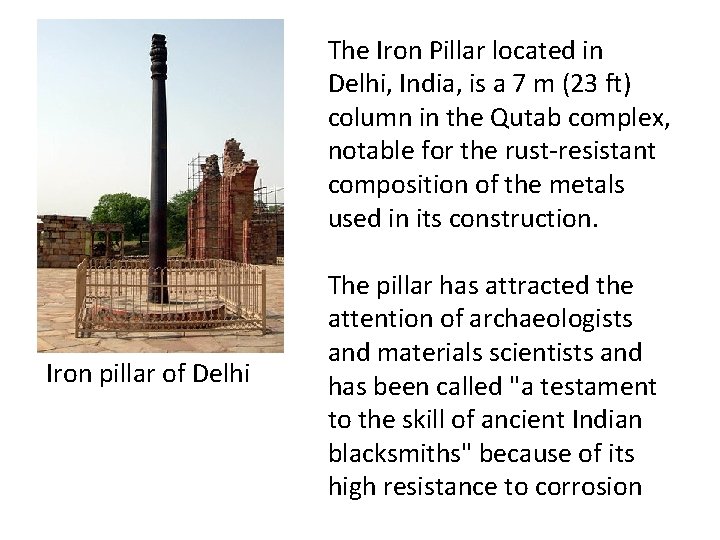
The Iron Pillar located in Delhi, India, is a 7 m (23 ft) column in the Qutab complex, notable for the rust-resistant composition of the metals used in its construction. Iron pillar of Delhi The pillar has attracted the attention of archaeologists and materials scientists and has been called "a testament to the skill of ancient Indian blacksmiths" because of its high resistance to corrosion
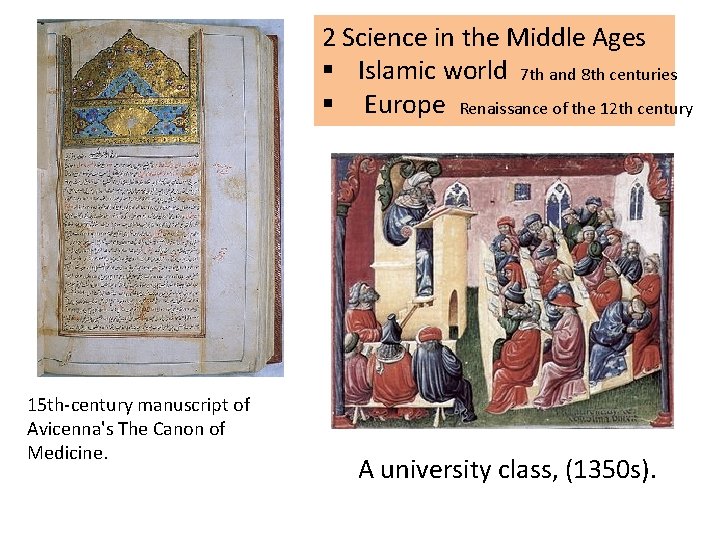
2 Science in the Middle Ages § Islamic world 7 th and 8 th centuries § Europe Renaissance of the 12 th century 15 th-century manuscript of Avicenna's The Canon of Medicine. A university class, (1350 s).
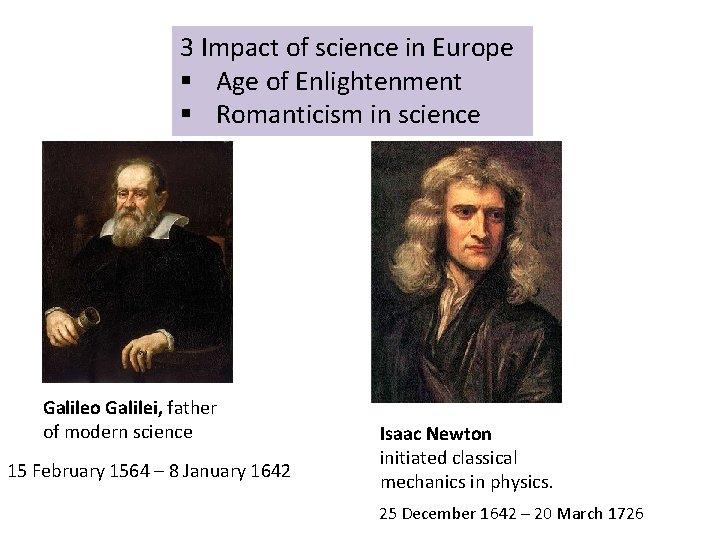
3 Impact of science in Europe § Age of Enlightenment § Romanticism in science Galileo Galilei, father of modern science 15 February 1564 – 8 January 1642 Isaac Newton initiated classical mechanics in physics. 25 December 1642 – 20 March 1726
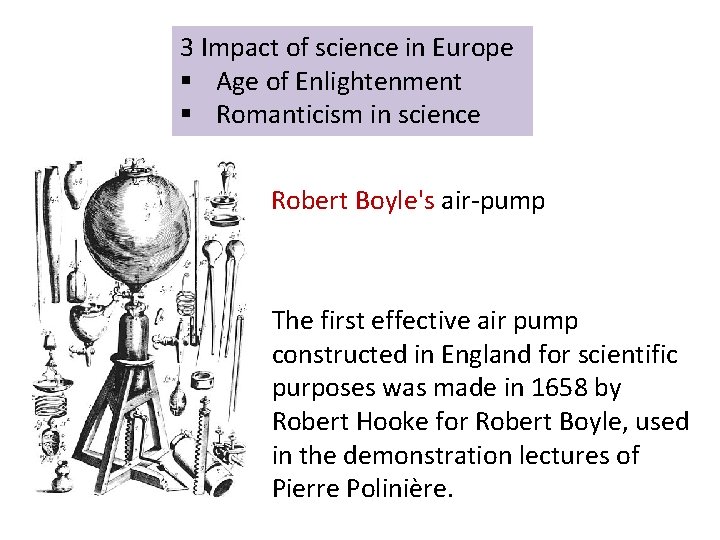
3 Impact of science in Europe § Age of Enlightenment § Romanticism in science Robert Boyle's air-pump The first effective air pump constructed in England for scientific purposes was made in 1658 by Robert Hooke for Robert Boyle, used in the demonstration lectures of Pierre Polinière.
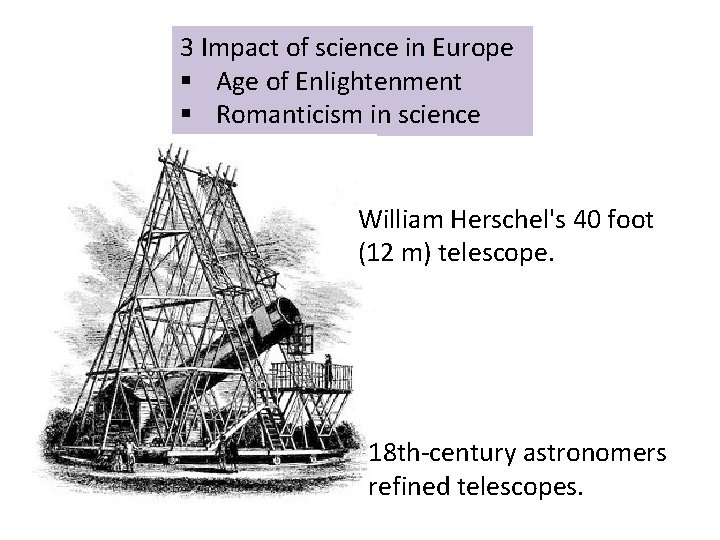
3 Impact of science in Europe § Age of Enlightenment § Romanticism in science William Herschel's 40 foot (12 m) telescope. 18 th-century astronomers refined telescopes.
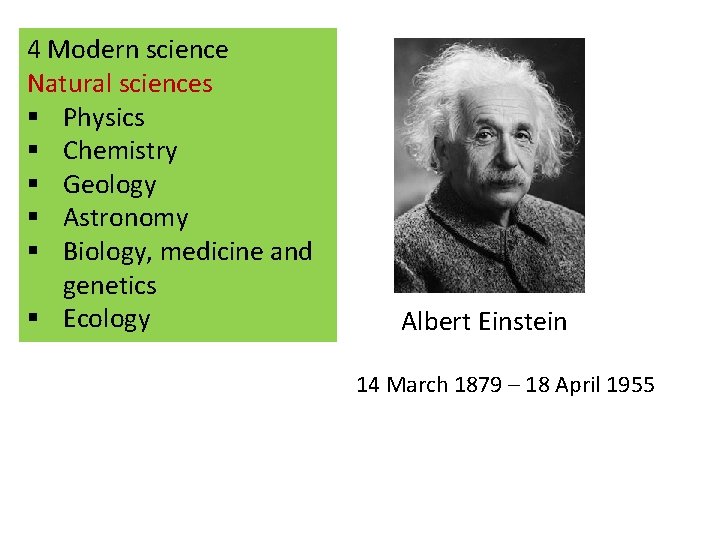
4 Modern science Natural sciences § Physics § Chemistry § Geology § Astronomy § Biology, medicine and genetics § Ecology Albert Einstein 14 March 1879 – 18 April 1955
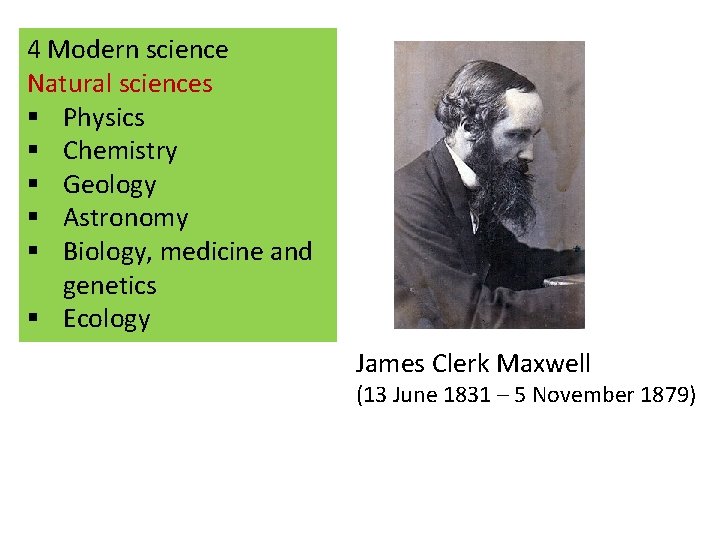
4 Modern science Natural sciences § Physics § Chemistry § Geology § Astronomy § Biology, medicine and genetics § Ecology James Clerk Maxwell (13 June 1831 – 5 November 1879)
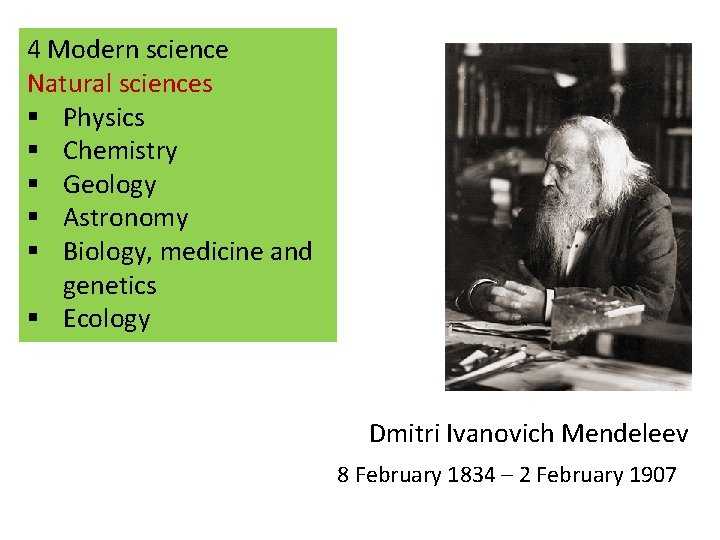
4 Modern science Natural sciences § Physics § Chemistry § Geology § Astronomy § Biology, medicine and genetics § Ecology Dmitri Ivanovich Mendeleev 8 February 1834 – 2 February 1907

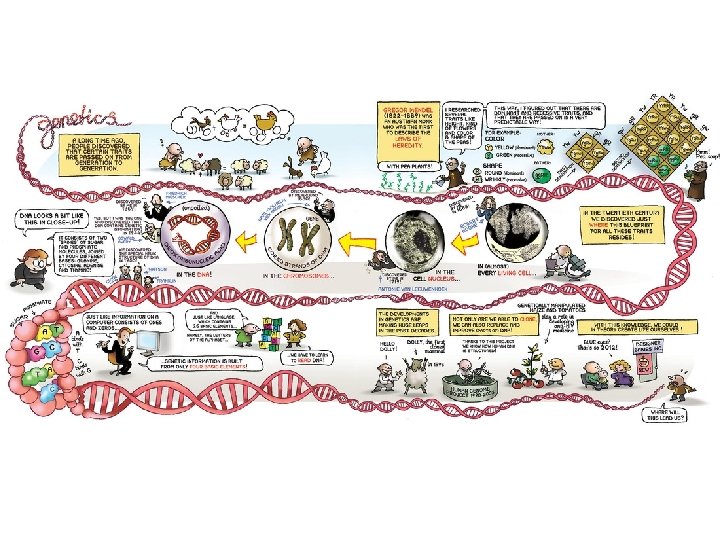
4 Modern science Natural sciences § Physics § Chemistry § Geology § Astronomy § Biology, medicine and genetics § Ecology
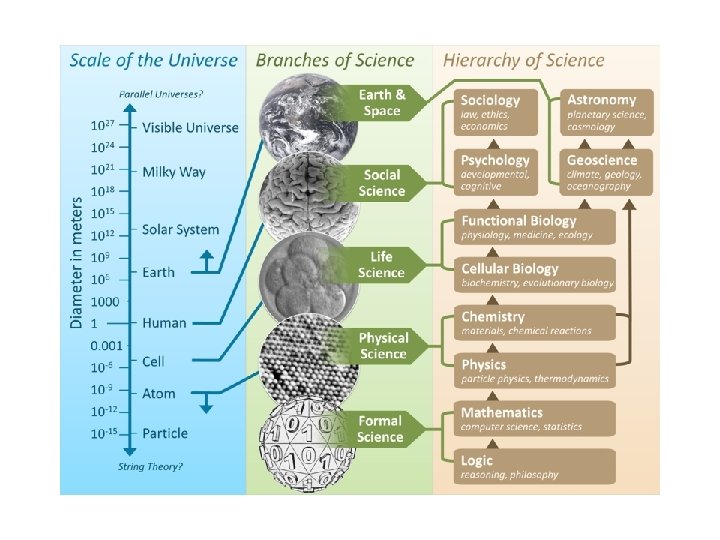
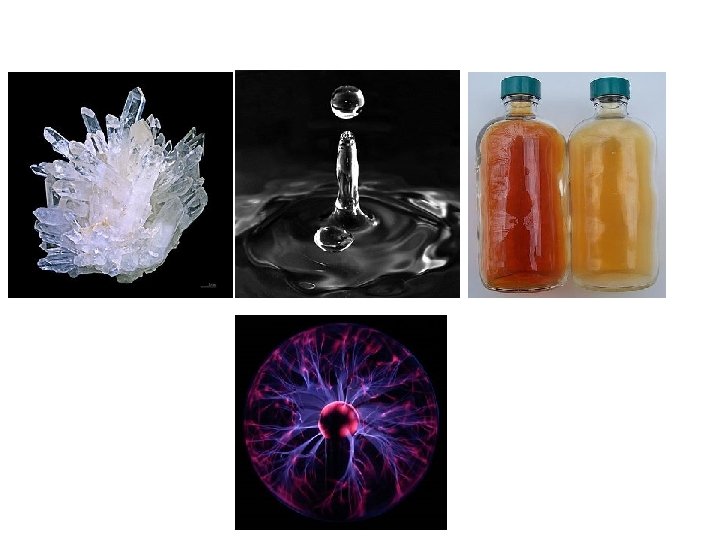
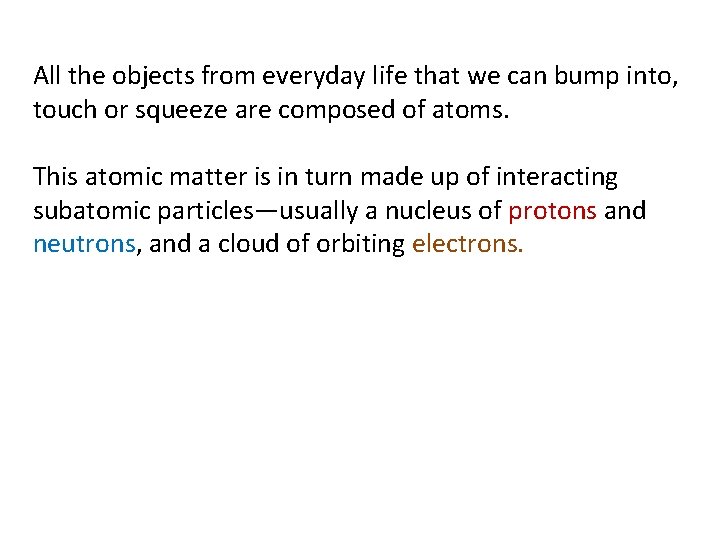
All the objects from everyday life that we can bump into, touch or squeeze are composed of atoms. This atomic matter is in turn made up of interacting subatomic particles—usually a nucleus of protons and neutrons, and a cloud of orbiting electrons.
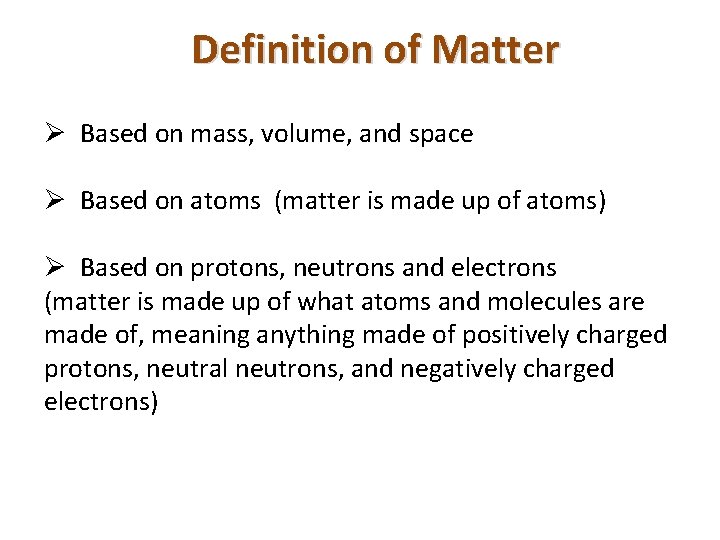
Definition of Matter Ø Based on mass, volume, and space Ø Based on atoms (matter is made up of atoms) Ø Based on protons, neutrons and electrons (matter is made up of what atoms and molecules are made of, meaning anything made of positively charged protons, neutral neutrons, and negatively charged electrons)
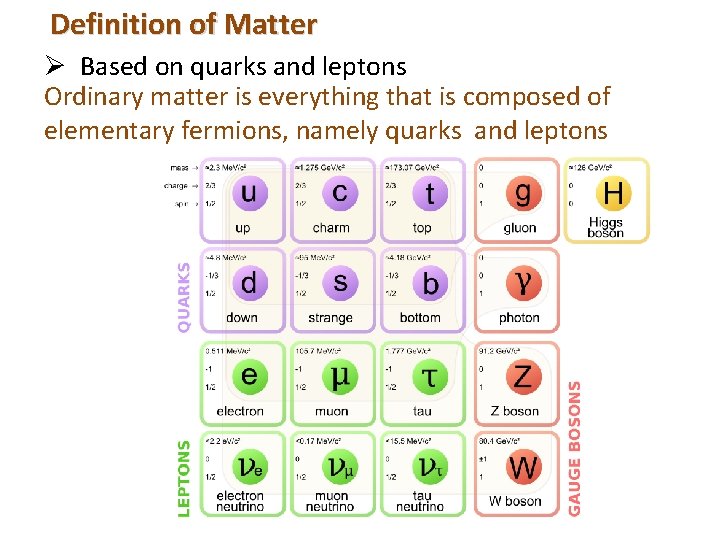
Definition of Matter Ø Based on quarks and leptons Ordinary matter is everything that is composed of elementary fermions, namely quarks and leptons
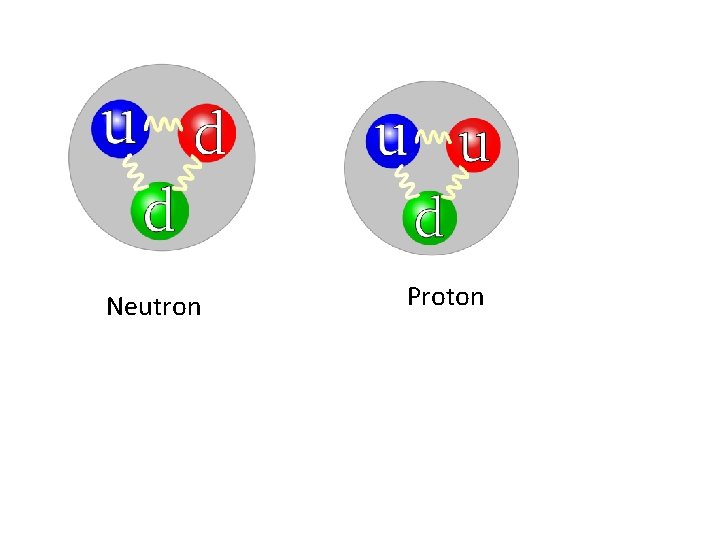
Neutron Proton
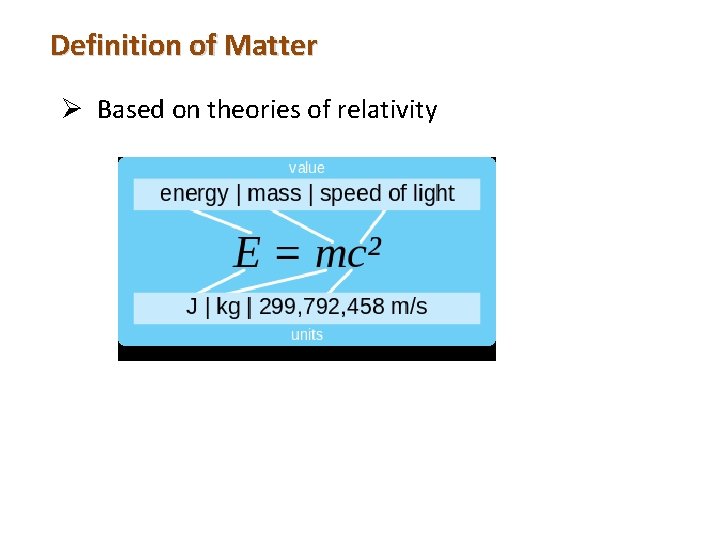
Definition of Matter Ø Based on theories of relativity
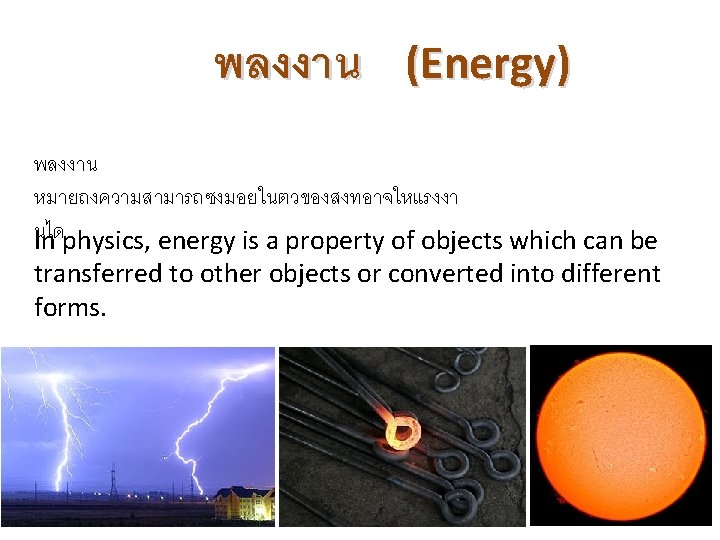
พลงงาน (Energy) พลงงาน หมายถงความสามารถซงมอยในตวของสงทอาจใหแรงงา นได In physics, energy is a property of objects which can be transferred to other objects or converted into different forms.
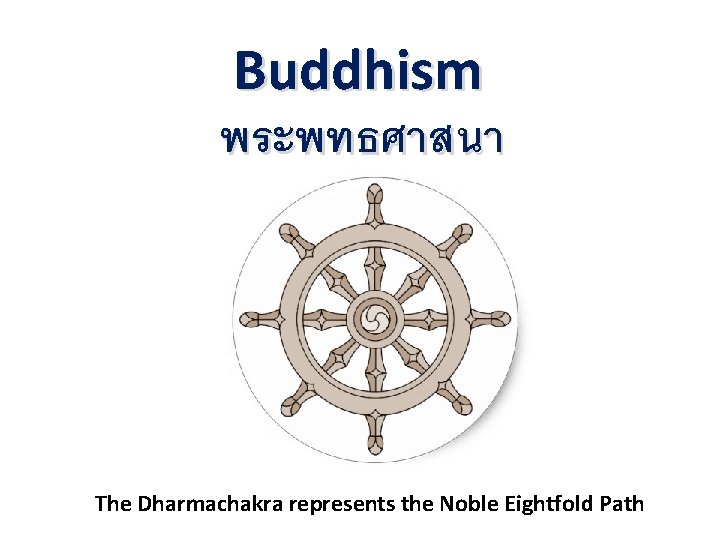
Buddhism พระพทธศาสนา The Dharmachakra represents the Noble Eightfold Path
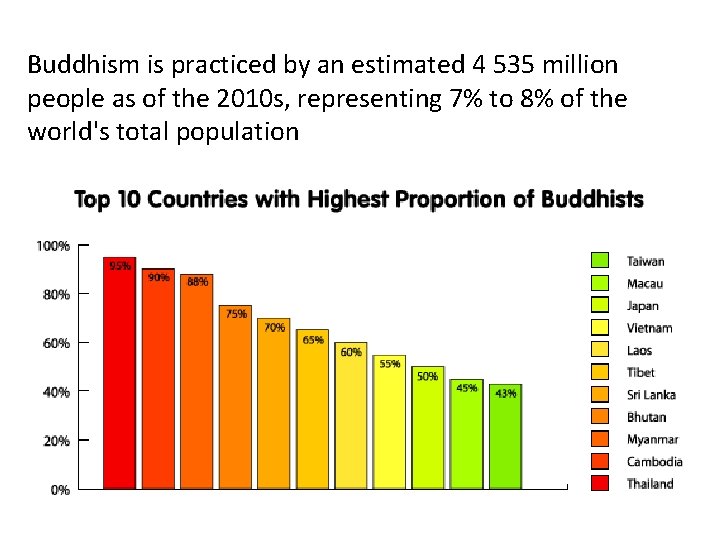
Buddhism is practiced by an estimated 4 535 million people as of the 2010 s, representing 7% to 8% of the world's total population
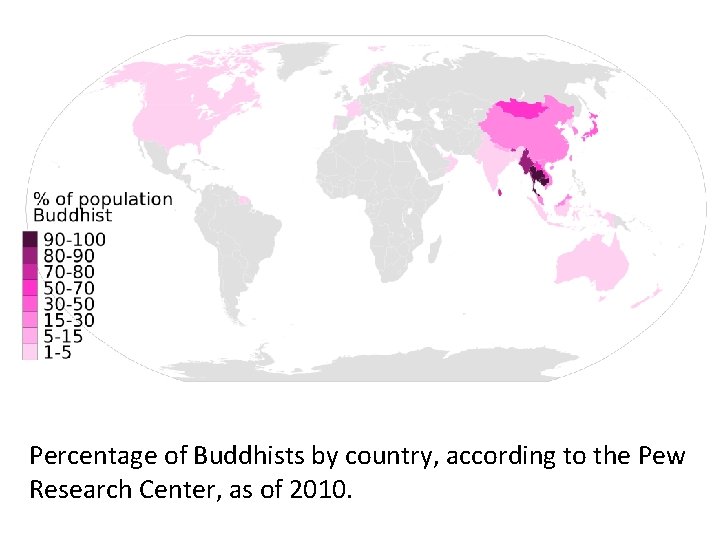
Percentage of Buddhists by country, according to the Pew Research Center, as of 2010.
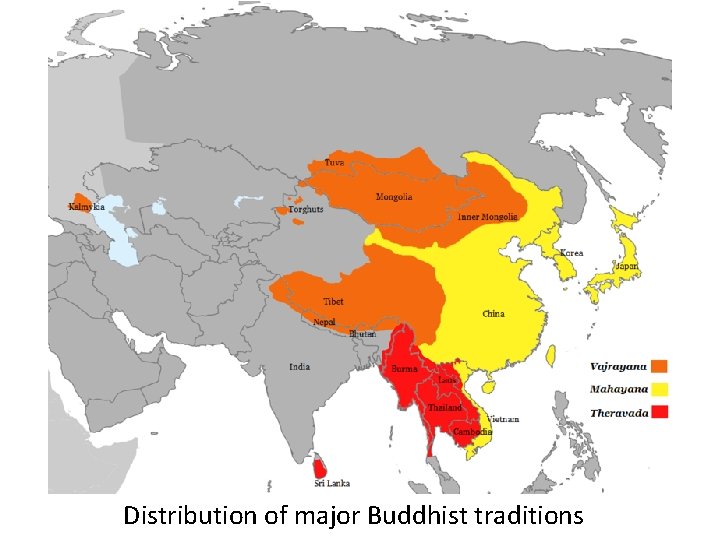
Distribution of major Buddhist traditions
Pāli Canon (Tipitaka) Pāli Canon is the standard collection of scriptures in the Theravadan Buddhist tradition, as preserved in the Pāli language. It is the first known and most complete extant early Buddhist canon
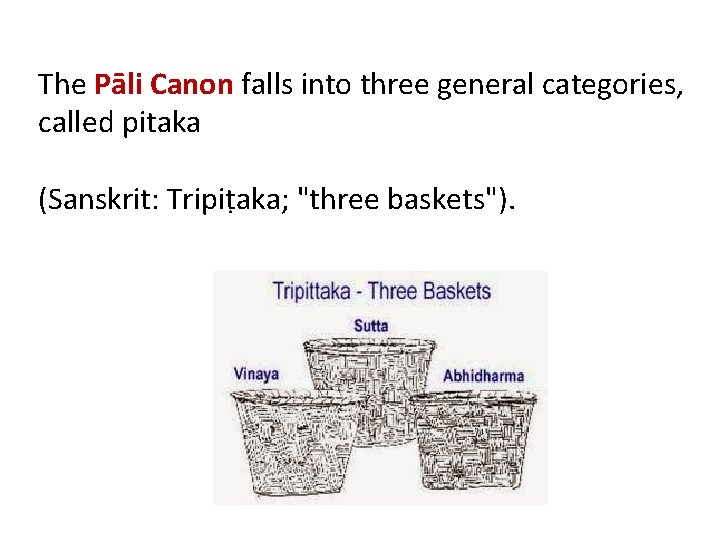
The Pāli Canon falls into three general categories, called pitaka (Sanskrit: Tripiṭaka; "three baskets").

The three pitakas are as follows: 1. Vinaya Pitaka ("Discipline Basket"), dealing with rules or discipline of the sangha. 2. Sutta Pitaka (Sutra/Sayings Basket), discourses and sermons of Buddha, some religious poetry and is the largest basket. 3. Abhidhamma Pitaka, treatises that elaborate Buddhist doctrines, particularly about mind, also called the "systematic philosophy" basket, likely composed starting about and after 300 BCE.
- Slides: 41