
Science Process Skills Laurella 2012 Observation Communication Classification
Science Process Skills Laurella, 2012
• Observation • Communication • Classification • Measurement • Inference • Prediction

Observation & Inference
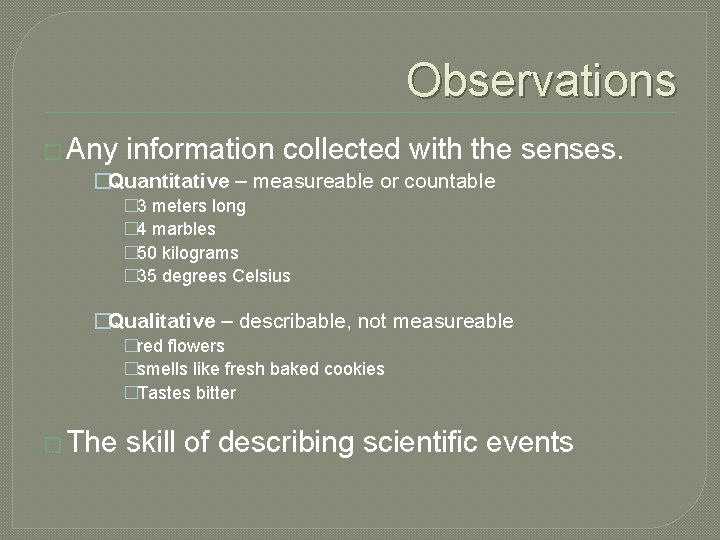
Observations � Any information collected with the �Quantitative – measureable or countable senses. � 3 meters long � 4 marbles � 50 kilograms � 35 degrees Celsius �Qualitative – describable, not measureable �red flowers �smells like fresh baked cookies �Tastes bitter � The skill of describing scientific events
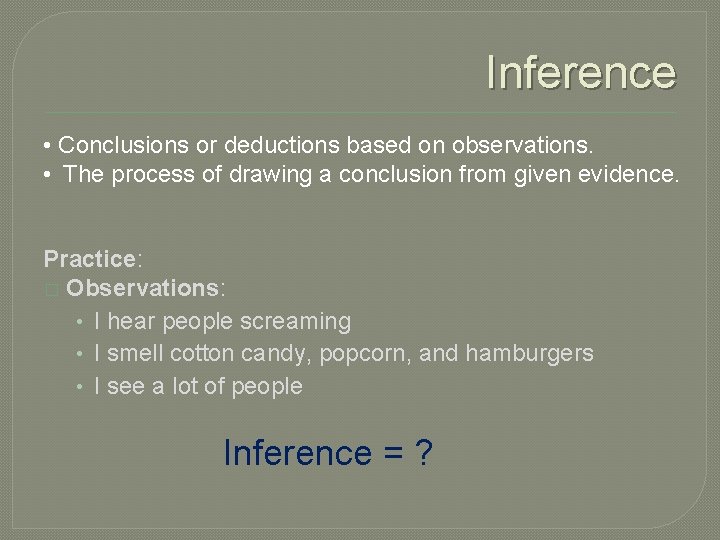
Inference • Conclusions or deductions based on observations. • The process of drawing a conclusion from given evidence. Practice: � Observations: • I hear people screaming • I smell cotton candy, popcorn, and hamburgers • I see a lot of people Inference = ?
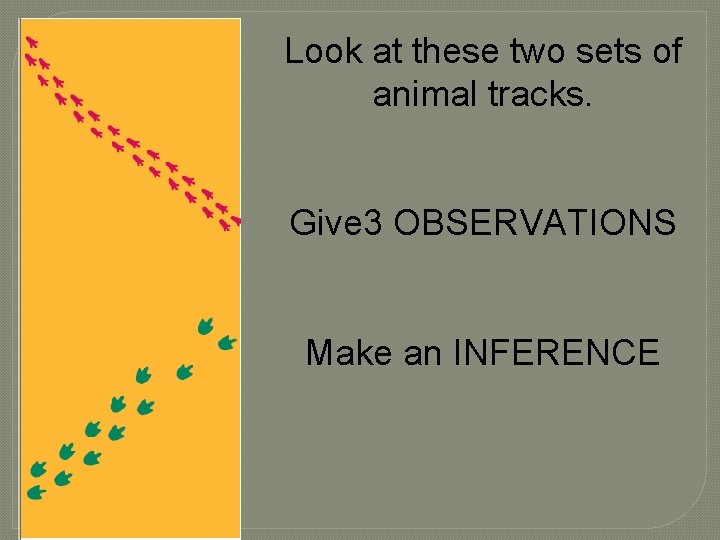
Look at these two sets of animal tracks. Give 3 OBSERVATIONS Make an INFERENCE
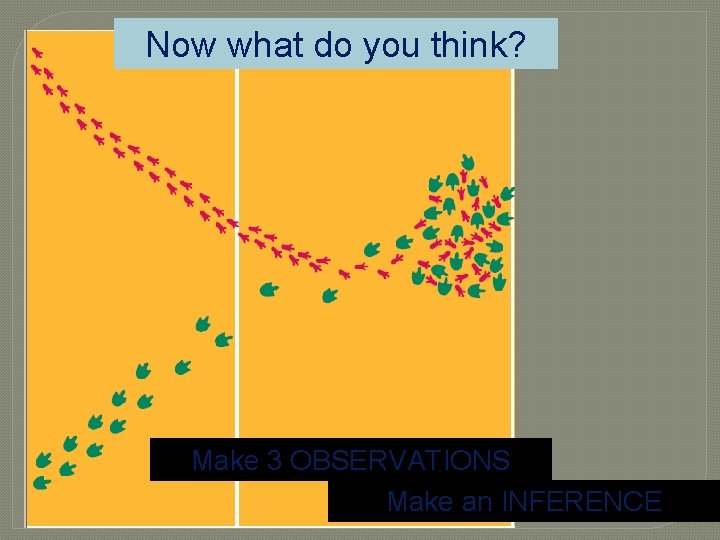
Now what do you think? Make 3 OBSERVATIONS Make an INFERENCE
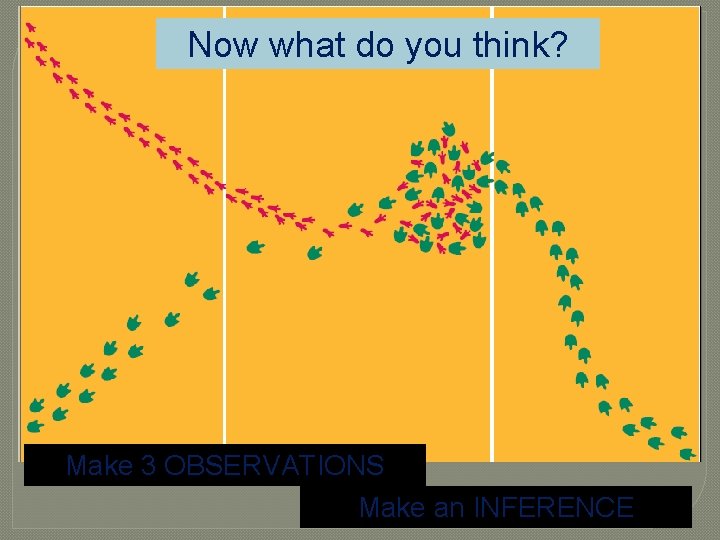
Now what do you think? Make 3 OBSERVATIONS Make an INFERENCE
Communication How do scientists communicate information? • verbally through interviews and conversations • through writing in journals and papers • pictures • graphs • charts • maps • diagrams • visual demonstrations
Classification Grouping similar items together based on certain characteristics or rules. Examples: • arranging fractions or metric units from smallest to largest (serial sort) • arranging the elements into a periodic table
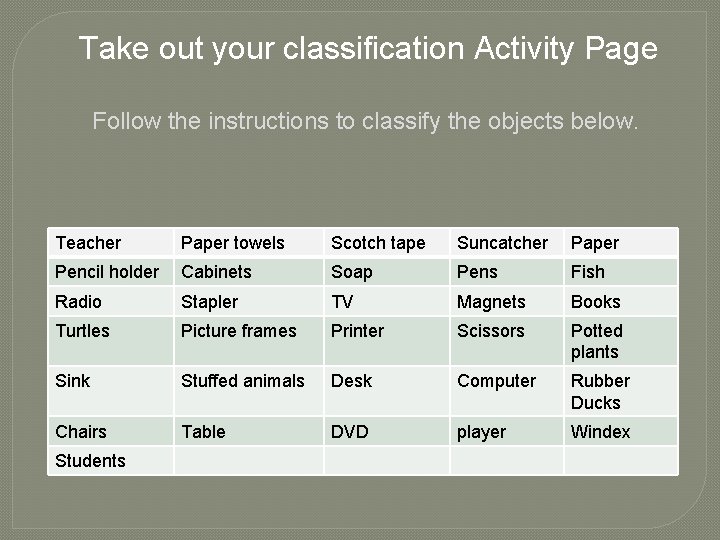
Take out your classification Activity Page Follow the instructions to classify the objects below. Teacher Paper towels Scotch tape Suncatcher Paper Pencil holder Cabinets Soap Pens Fish Radio Stapler TV Magnets Books Turtles Picture frames Printer Scissors Potted plants Sink Stuffed animals Desk Computer Rubber Ducks Chairs Table DVD player Windex Students
Prediction • making a logical inference about a future event based on current evidence or past experience. • scientists test predictions by executing controlled experiments and making observations.
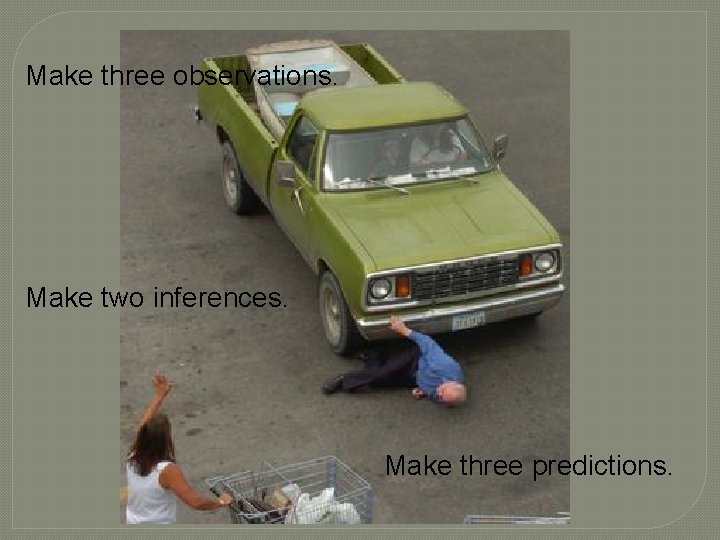
Make three observations. Make two inferences. Make three predictions.
Measuring • Scientists use the SI, International System of measurement. • SI uses the metric system for measurements. • SI is used because it is universal and easy to use.
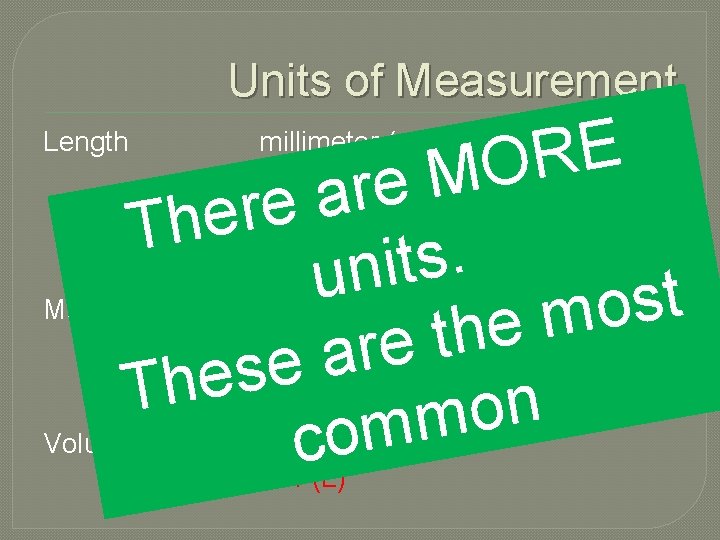
Units of Measurement E R O M e r a e r e Th. s t i n u t Mass milligram (mg) s o m e gram (g) h t e r a kilogram (kg) e s e Th n o m m Volume milliliter (ml) o c liter (L) Length millimeter (mm) centimeter (cm) meter (m) kilometer (km) Base unit
How would you measure? The height of the grass outside. How much water a large fish tank could hold. A rope to play tug of war The mass of a motorcycle The distance to the Moon. How much jello would feed the whole school The width of a finger The distance to the next town. The water in an ice cube.
Integrated Science Process Skills Controlling variables - being able to identify variables that can affect an experimental outcome, keeping most constant while manipulating only the independent variable. Example: Realizing through past experiences that amount of light and water need to be controlled when testing to see how the addition of organic matter affects the growth of beans. Defining operationally - stating how to measure a variable in an experiment. Example: Stating that bean growth will be measured in centimeters per week. Formulating hypotheses - stating the expected outcome of an experiment. Example: The greater the amount of organic matter added to the soil, the greater the bean growth. Interpreting data - organizing data and drawing conclusions from it. Example: Recording data from the experiment on bean growth in a data table and forming a conclusion which relates trends in the data to variables. Experimenting - being able to conduct an experiment, including asking an appropriate question, stating a hypothesis, identifying and controlling variables, operationally defining those variables, designing a "fair" experiment, conducting the experiment, and interpreting the results of the experiment. Example: The entire process of conducting the experiment on the affect of organic matter on the growth of bean plants. Formulating models - creating a mental or physical model of a process or event. Examples: The model of how the processes of evaporation and condensation interrelate in the water cycle.
- Slides: 17